The World Noodle Encyclopedia
Every Noodle, Explained.
Seven culinary traditions. 11+ deeply-researched noodle types. Every guide covers history, cultural context and the products worth trying.
Browse by Region
The Seven Noodle Cultures
Each cluster is a complete encyclopedia of one cuisine's noodles — history, regional styles, ingredients and buying guides.
- Korean NoodlesRamyeon, japchae, jjajangmyeon — and 5 more.8 types →
- Vietnamese NoodlesPhở, bún chả, bún bò Huế — the herb-plate cuisine.8 types →
- Japanese NoodlesRamen, udon, soba, sōmen — precision noodle cooking.8 types →
- Thai & SE AsianPad thai, laksa, mì goreng — the four-flavor balance.8 types →
- Chinese Wheat NoodlesLo mein, dan dan, biang biang — eight regional traditions.8 types →
- Italian PastaSpaghetti, rigatoni, orecchiette — 350+ pasta shapes.8 types →
- Specialty & Alt-FlourGluten-free, keto, shirataki — noodles for every diet.5 types →
- Ramen Deep-DiveTonkotsu, shoyu, miso, shio — every classical ramen style in one place.6 types →
Encyclopedia
Browse Every Noodle
55 individual noodle entries — filter by name, origin, or type.
55 noodles shown
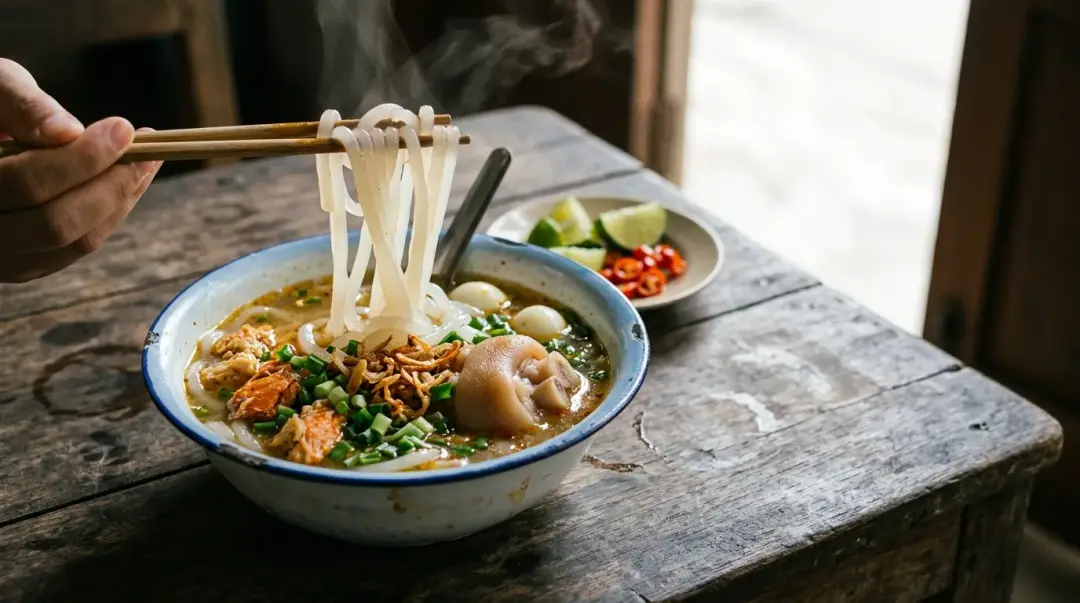 VietnameseBanh Canhbánh canhGet the texture you came for: thick chewy rice-and-tapioca noodles in crab, pork hock, or fish broth, with the bouncy slip you know from boba.
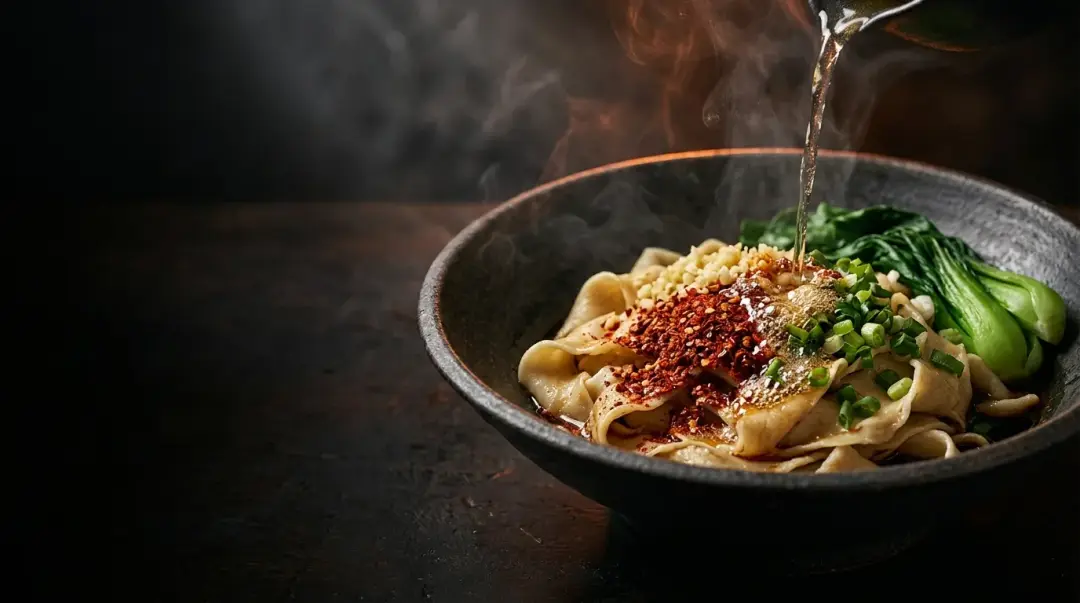 ChineseBiang Biang𰻞𰻞麵See why Shaanxi's dramatically wide hand-slapped noodle has a character so complex even the Chinese government won't standardize how to type it.
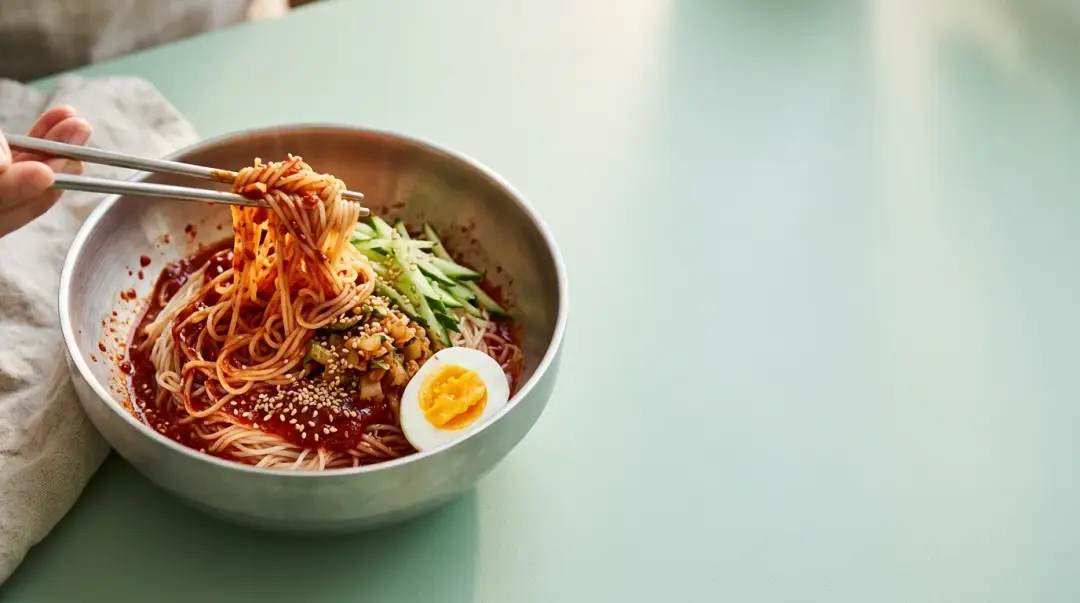 KoreanBibim Guksu비빔국수Discover Bibim Guksu, Korea's spicy cold somyeon tossed with gochujang, vinegar, and crisp cucumber. Learn the home-cook technique and why you mix at the table.
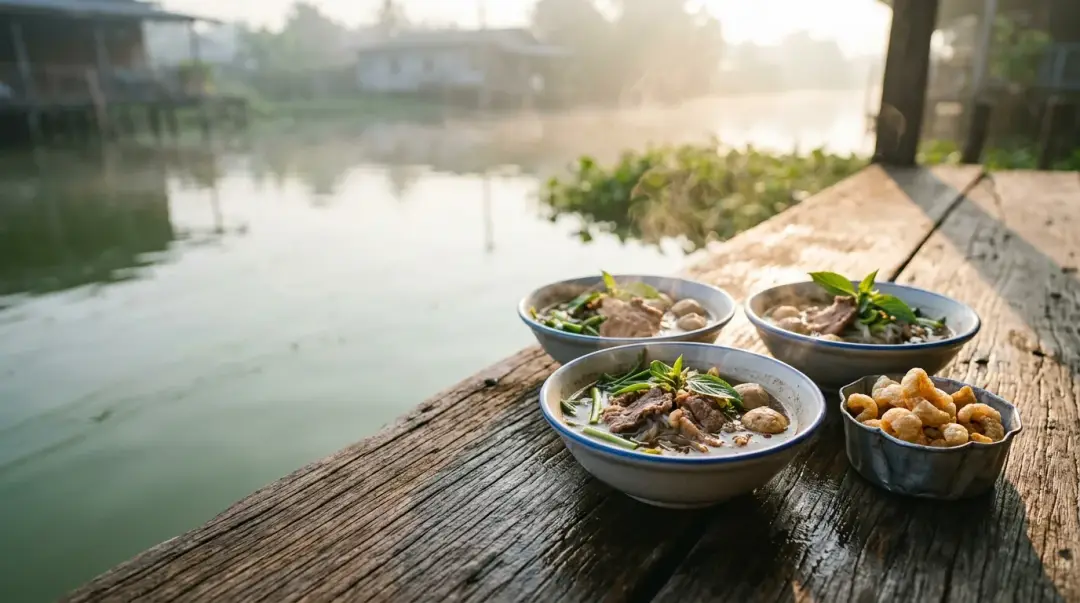 Thai & SE AsianBoatก๋วยเตี๋ยวเรือBoat noodles (kuay teow reua) explained: Rangsit canal origins, tiny bowls, blood-thickened nam tok broth, and where to eat them in Los Angeles and Queens.
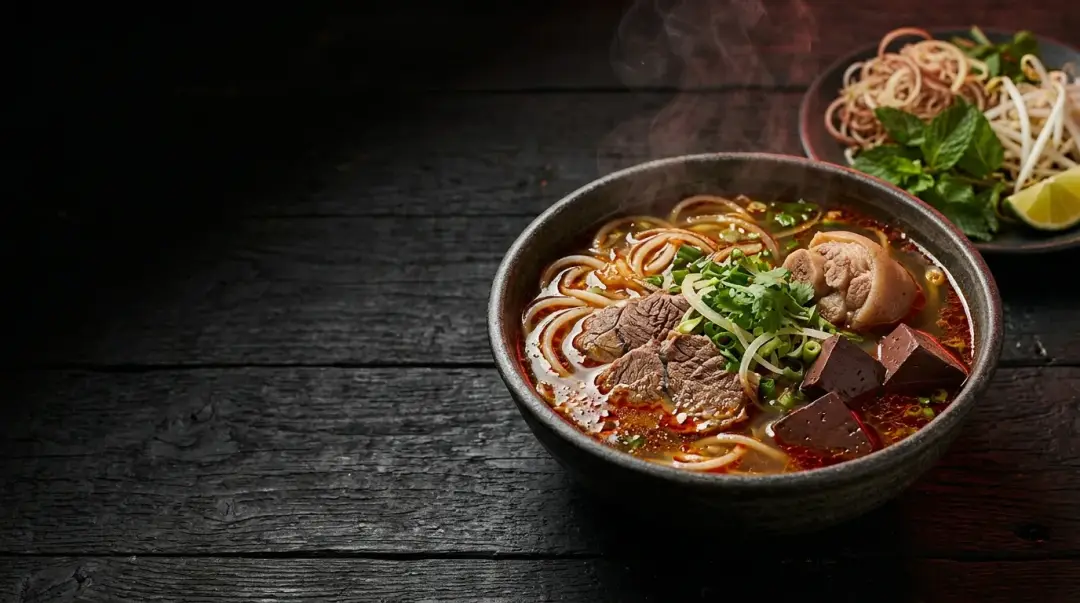 VietnameseBun Bo Huebún bò HuếFind out why your Bun Bo Hue bowl tastes funky-bright: pork-hock broth, lemongrass, fermented shrimp paste, and thick round rice vermicelli from Hue.
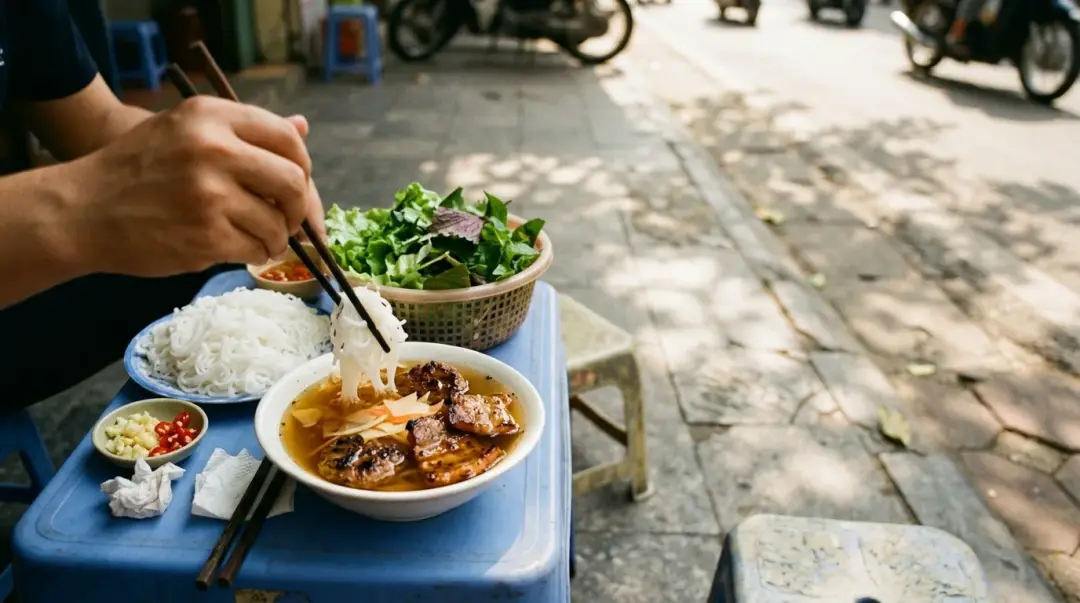 VietnameseBun Chabún chảDiscover the Hanoi lunch Obama ate with Bourdain: smoky grilled pork patties, warm fish-sauce dip, cold rice vermicelli, and a herb plate you build yourself.
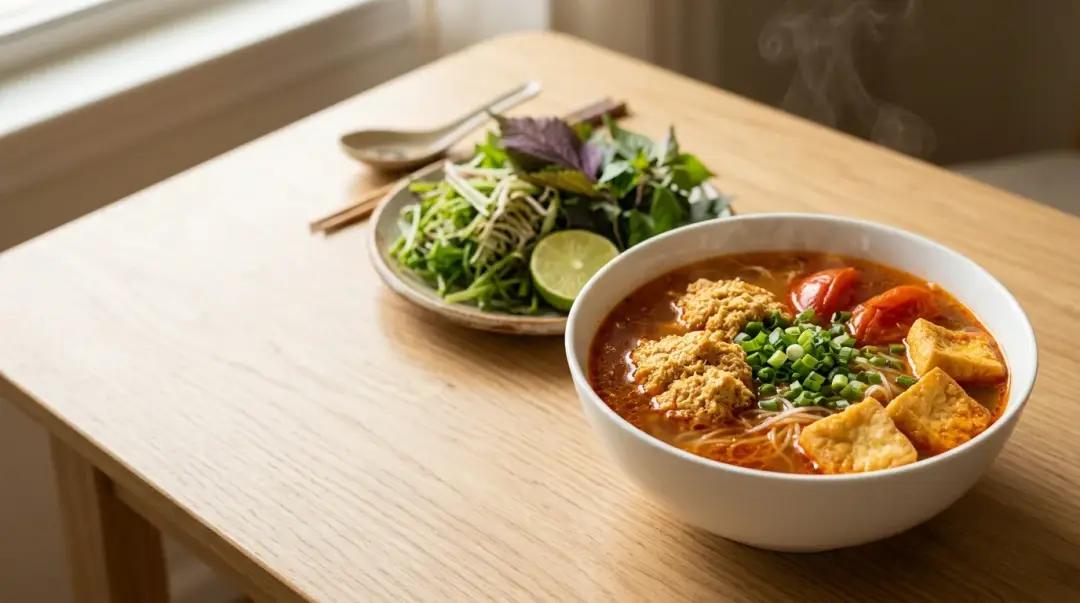 VietnameseBun Rieubún riêuLearn how Bun Rieu builds its red broth: blended freshwater rice-paddy crab, ripe tomato, annatto, soft tofu, and bun rice vermicelli you can find in the US.
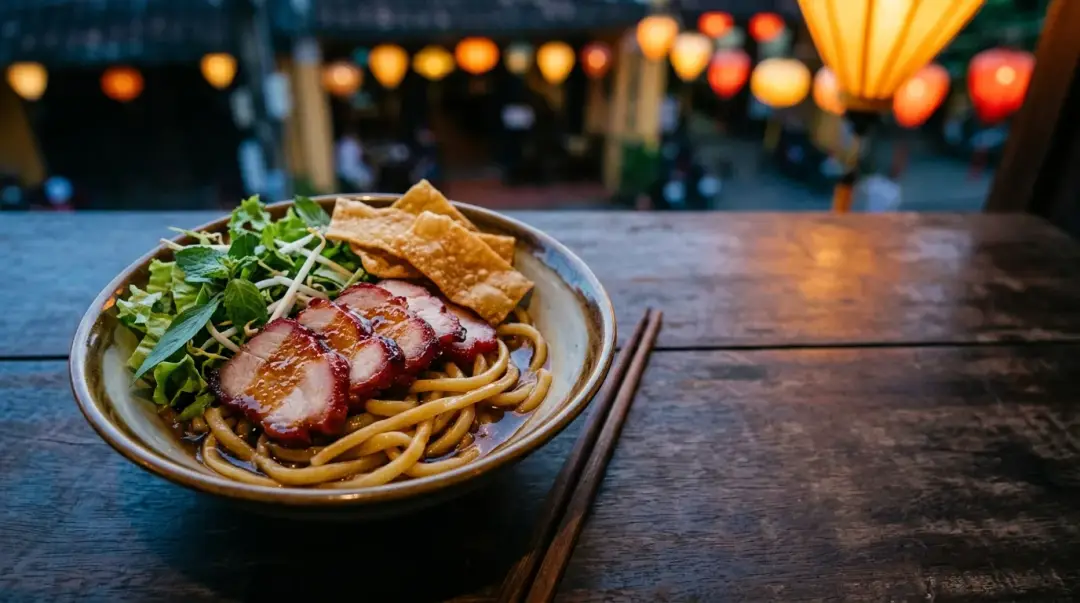 VietnameseCao Laucao lầuSee why Cao Lau only tastes right in Hoi An: lye-treated chewy noodles, Chinese char-siu pork, Vietnamese herbs, and crispy fried noodle shards on top.
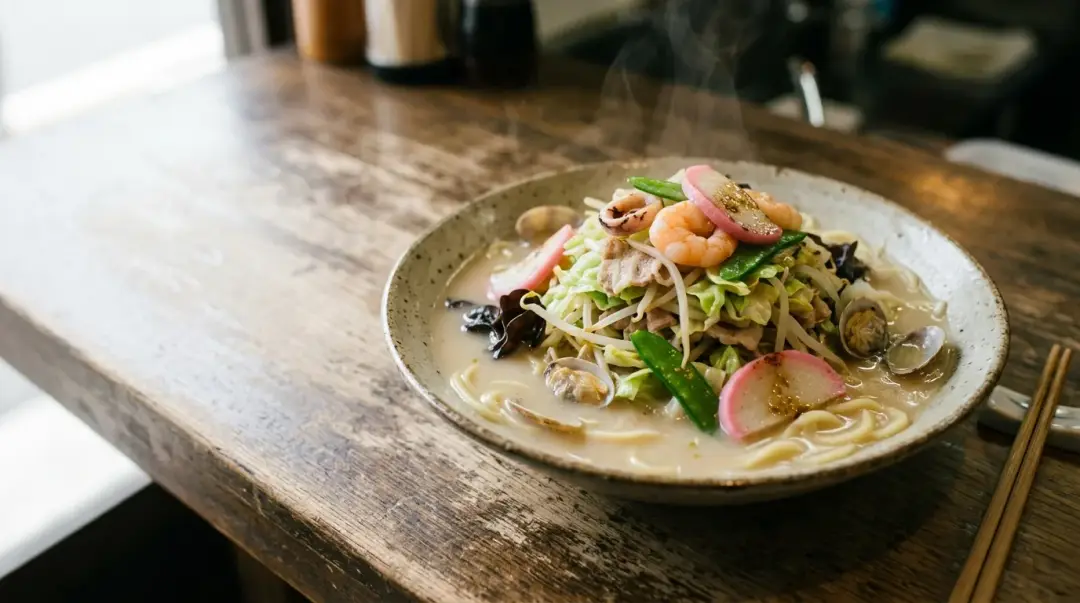 JapaneseChamponちゃんぽんLearn how 1899 Nagasaki built your bowl: thick alkaline noodles, fast-boiled milky pork-seafood broth, and 8 to 10 toppings piled on in one wide bowl.
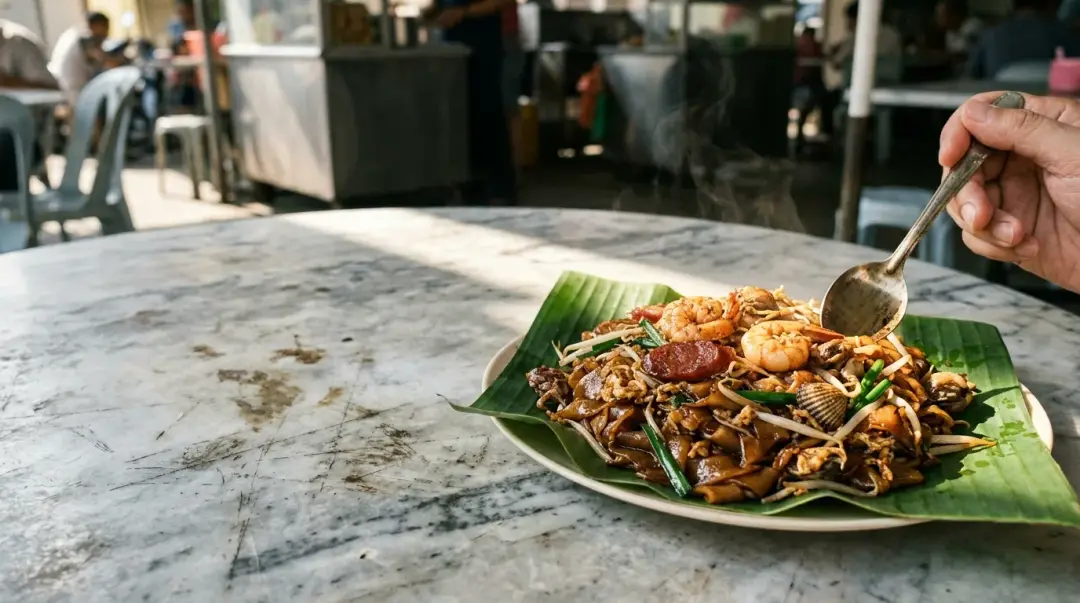 Thai & SE AsianChar Kway Teow炒粿條Discover Char Kway Teow: wide rice noodles, dark soy char, lap cheong, prawns, Chinese chives, smoky wok hei. See Penang's hawker-stall noodle done right.
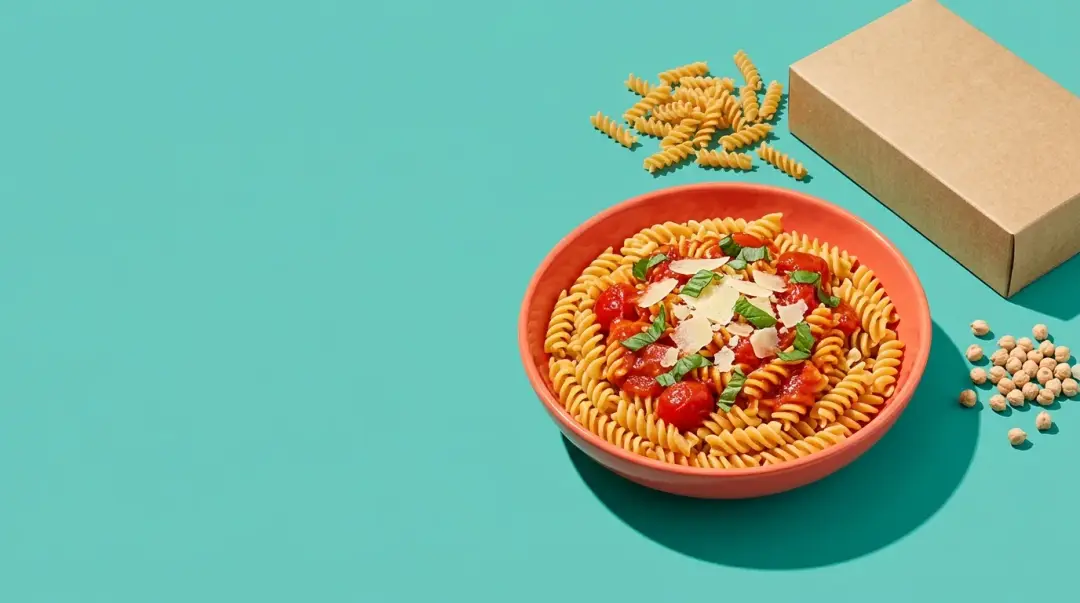 SpecialtyChickpeaChickpea PastaFind the chickpea pasta worth buying — Banza, Barilla, and Modern Table compared on 20g protein, bronze-die sauce grip, and where to shop in 2026.
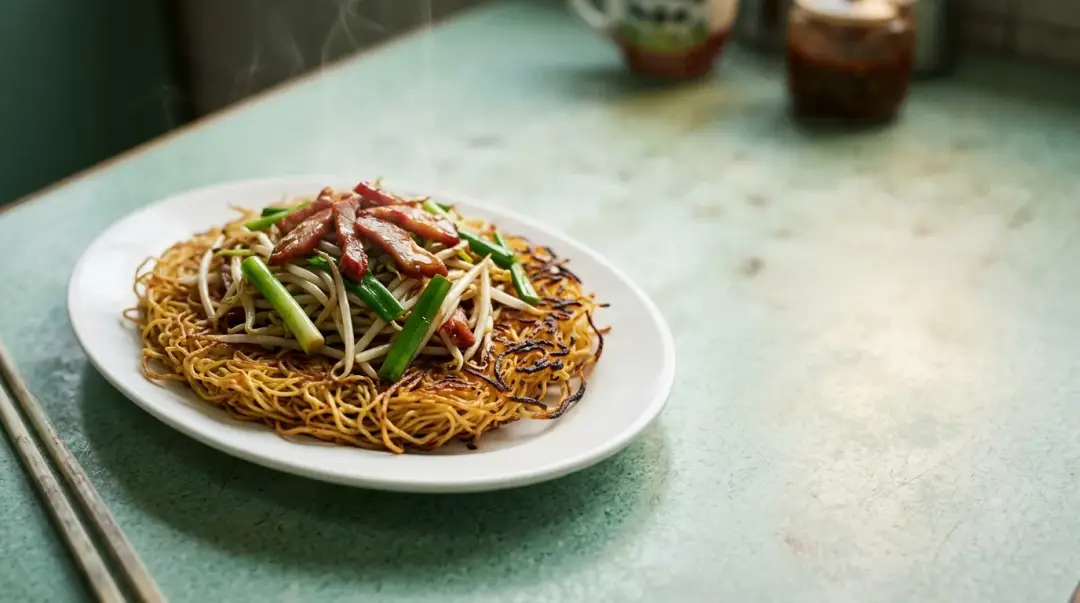 ChineseChow Mein炒麵Find out why real Cantonese chow mein needs wok hei at 600°F, how it splits from lo mein, and where to order the Hong Kong crispy-cake version.
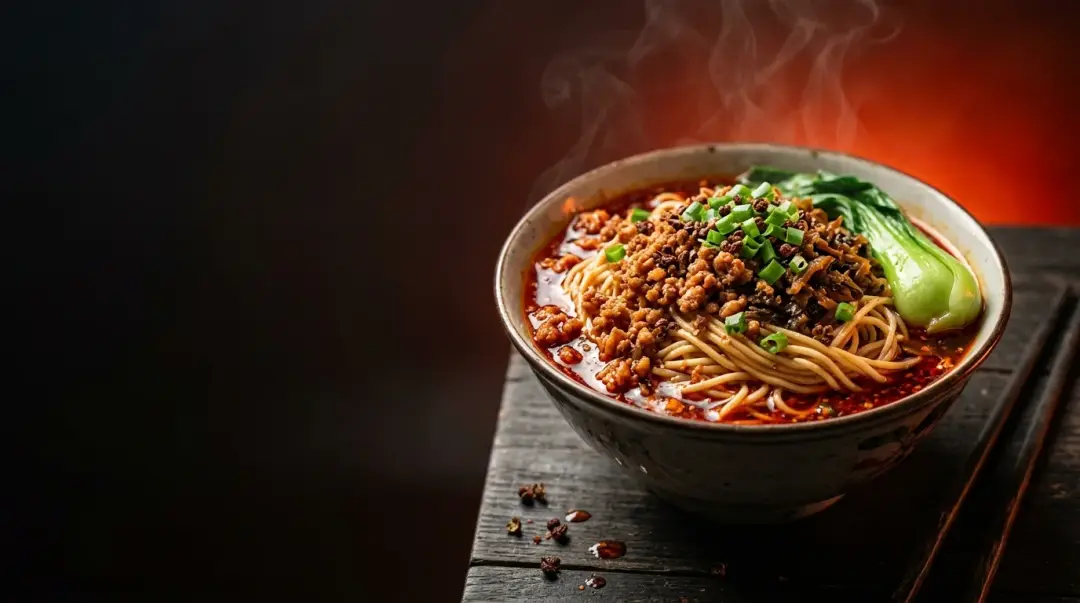 ChineseDan Dan擔擔麵Master Sichuan's peddler noodle: how má-là numbing heat, sesame paste, ya cai, and crispy pork stack into your bowl, and where to get it right.
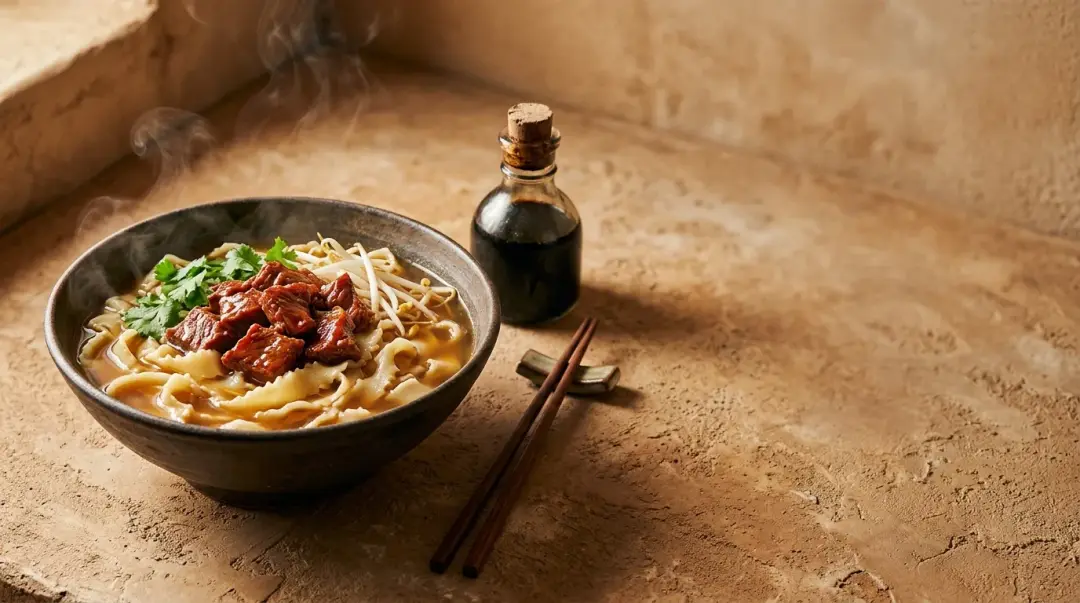 ChineseDao Xiao Mian刀削麵Dao xiao mian are Shanxi's knife-cut noodles, shaved off a dough block into the pot. Datong vs Taiyuan styles, toppings, and where to eat them in the US.
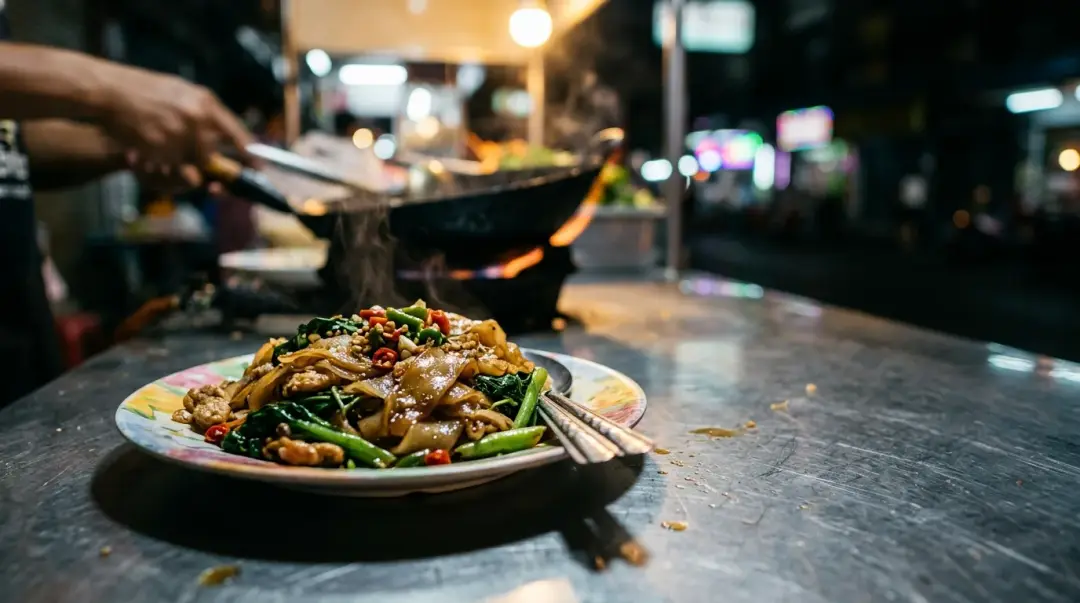 Thai & SE AsianDrunkenผัดขี้เมาLearn Pad Kee Mao: wide sen yai rice noodles, bird's-eye chili, holy basil, oyster sauce, garlic. Get the locals' Thai stir-fry your hangover wants.
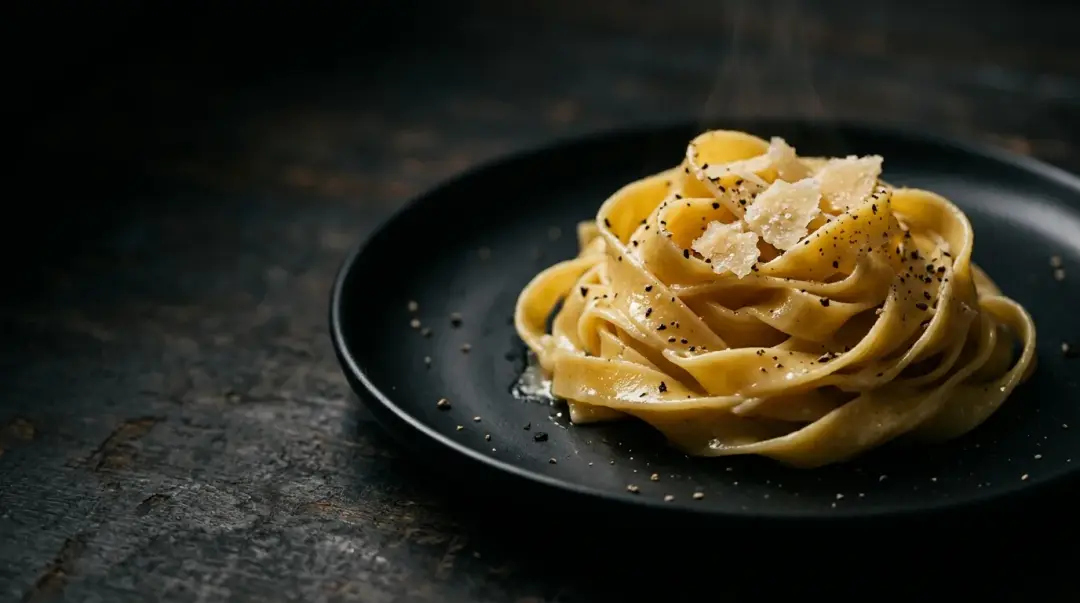 ItalianFettuccinefettuccineLearn why fettuccine — not tagliatelle — is Alfredo's true partner. The ribbon width that holds cream, the egg-pasta tradition, and what to buy.
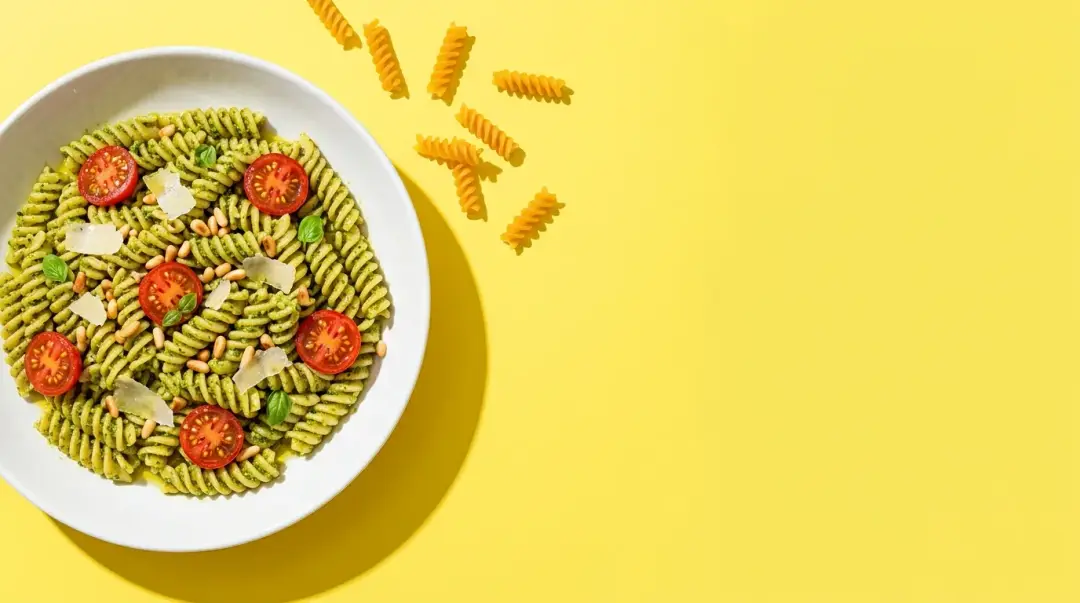 ItalianFusillifusilliDiscover why fusilli's corkscrew shape beats every other spiral for pesto and chunky sauces — plus the brands and cook times pros stand by.
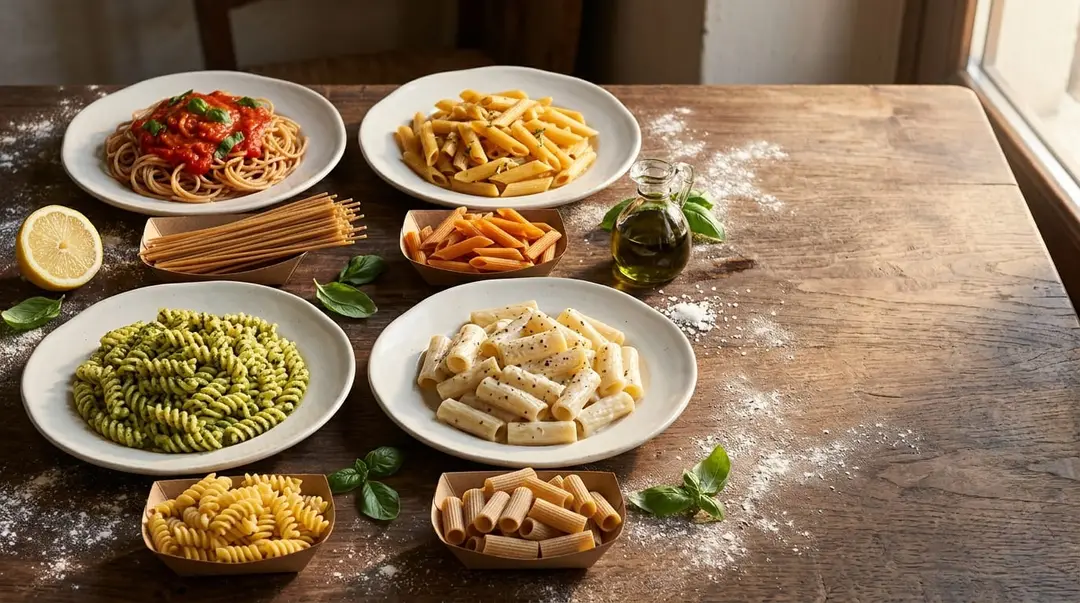 SpecialtyGluten-FreeGluten-Free PastaLearn which gluten-free pasta actually works for you — Jovial, Banza, Tinkyada, and Barilla GF ranked by texture, cook time, and celiac safety.
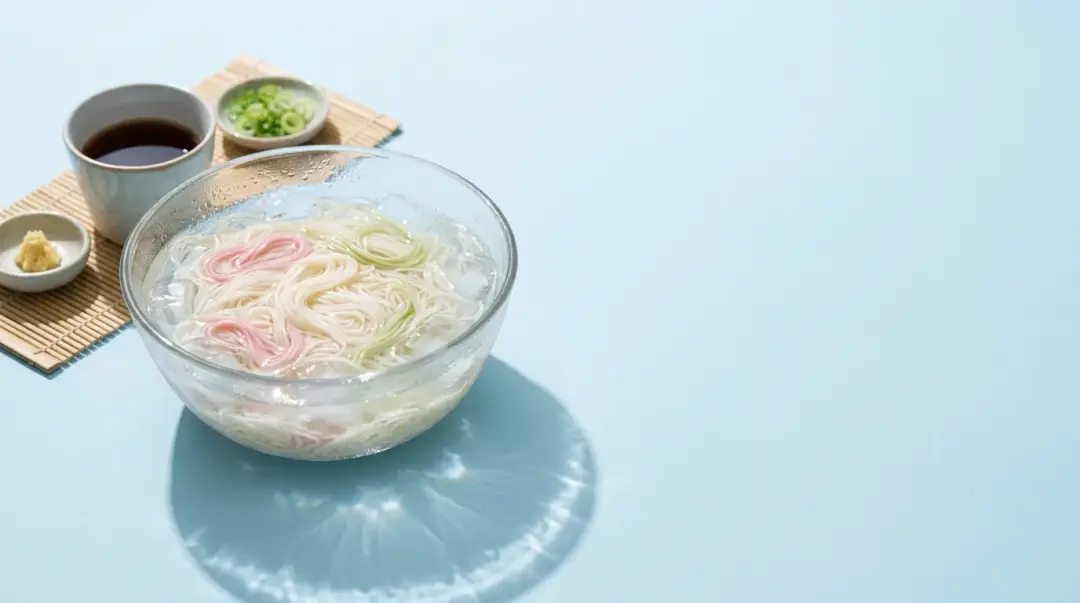 JapaneseHiyamugi冷麦See why hiyamugi sits between somen and udon: 1.3-1.7mm cut noodles, a 2-3 minute boil, and those pink-and-green strands flagging your summer pack.
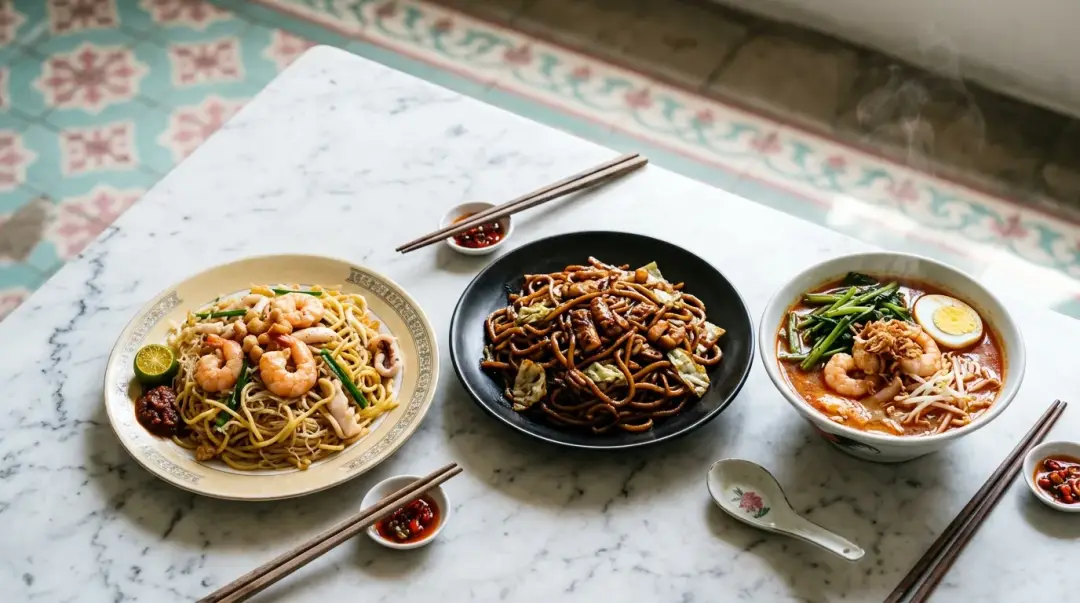 Thai & SE AsianHokkien Mee福建麵Hokkien mee is three dishes: Singapore's fried prawn noodles, KL's dark soy noodles and Penang's prawn soup. How to tell them apart, and where to eat them.
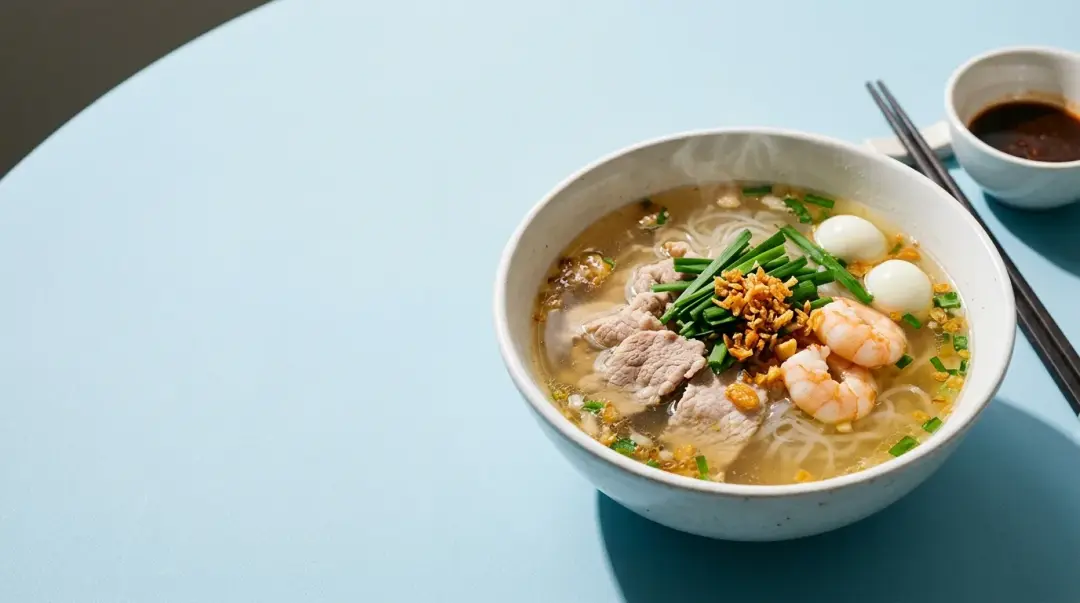 VietnameseHu Tieuhủ tiếuCompare Hu Tieu to Pho: lighter Mekong Delta broth with rock sugar and dried squid, thin rice noodles, pork, shrimp, and quail eggs, wet or dry.
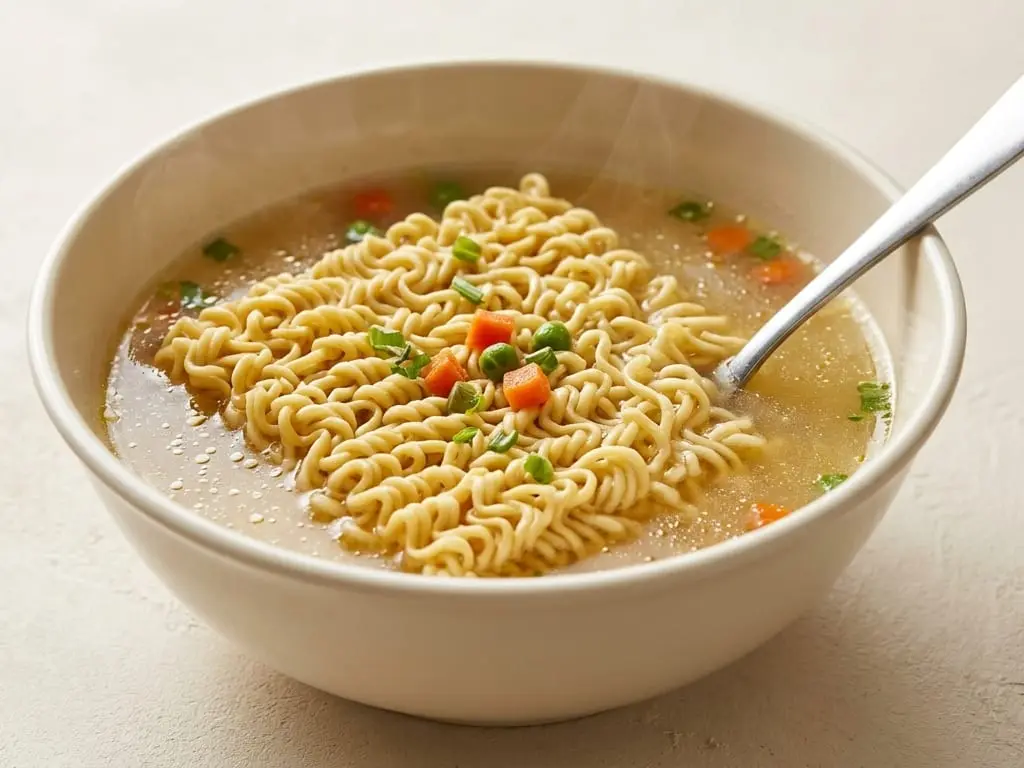 USAInstant Ramen (American-style)Sold as single bricks or in cases of 24, it is one of the cheapest meals on a US grocery shelf. American-style instant ramen is a flash-fried wheat noodle block sold with a seasoning powder packet, cooking in 3 minutes in boiling water or 4 minutes with hot water directly in the cup. The two dominant brands — Maruchan (a Japanese-owned company that opened its California factory in 1977) and Nissin's Top Ramen (on US shelves from 1970) — together account for the majority of the roughly 4–5 billion instant noodle servings Americans consume annually.
The noodles are made from wheat flour, salt, and palm oil, flash-fried and dried. They rehydrate quickly and deliver a soft, slightly starchy texture with mild wheat flavor — a blank canvas. The American food culture around instant ramen is built around hacking the packet: adding a soft-boiled egg, chili oil, peanut butter, miso paste, sliced scallion, or any combination that upgrades the base into something more substantial. Food media and social platforms have documented thousands of these upgrades since the mid-2000s.
Cup Noodles — the same technology in a Styrofoam or paper cup that doubles as the cooking and eating vessel — arrived in the US in November 1973, sold as "Cup O'Noodles." Shorter noodles designed for a spoon rather than chopsticks, fewer flavor variants than the Japanese original, and the eventual name change to "Cup Noodles" in 1993 reflect how thoroughly Nissin adapted the product for American consumption.
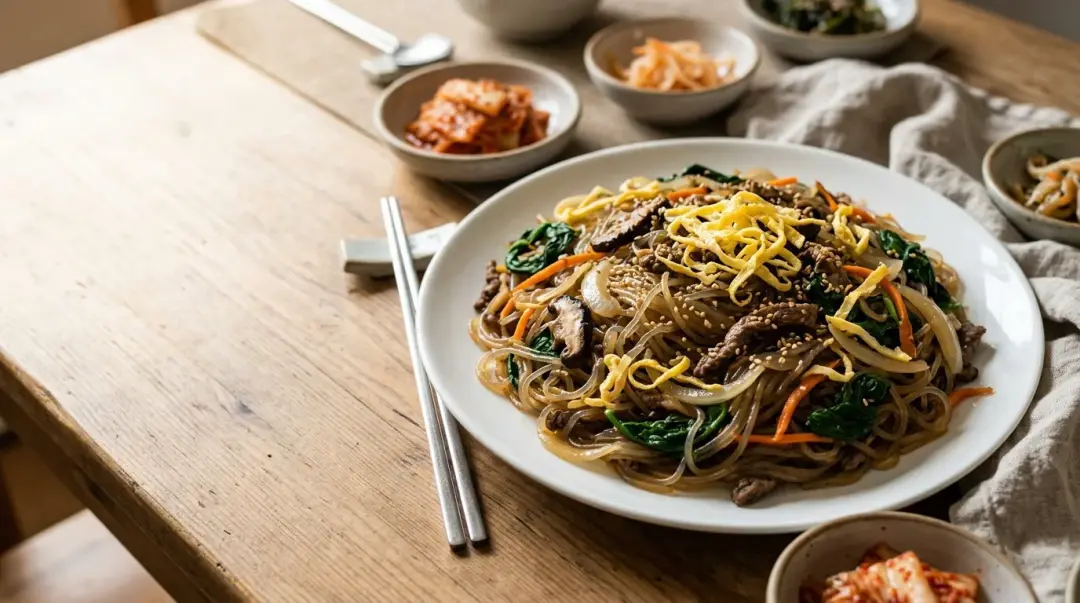 KoreanJapchae잡채Japchae is a Korean stir-fried noodle dish made with dangmyeon — translucent glass noodles from sweet potato starch — combined with julienned vegetables, mushrooms, and typically beef, all seasoned with soy sauce and sesame oil. Each component is prepared separately to its own optimal texture before being combined. A well-made japchae has distinct layers: the slightly sweet, silky noodles; tender-crisp vegetables including spinach, julienned carrot, sliced shiitake, and onion; and thin strips of soy-marinated beef.
Japchae is served at room temperature, which is what makes it practical for celebrations. It can be prepared ahead and set out on platters at birthdays, weddings, and holiday gatherings without losing texture or needing a warming station. The name is instructive: jap means "to mix" and chae means "vegetables" — a dish defined by combination rather than any single dominant ingredient.
In the United States, japchae appears on Korean restaurant menus as a side dish or appetizer and is increasingly made at home. Dangmyeon is sold dried at Asian grocery stores and requires a 30-minute soak before cooking. That hydration step determines final texture more than cooking time does.
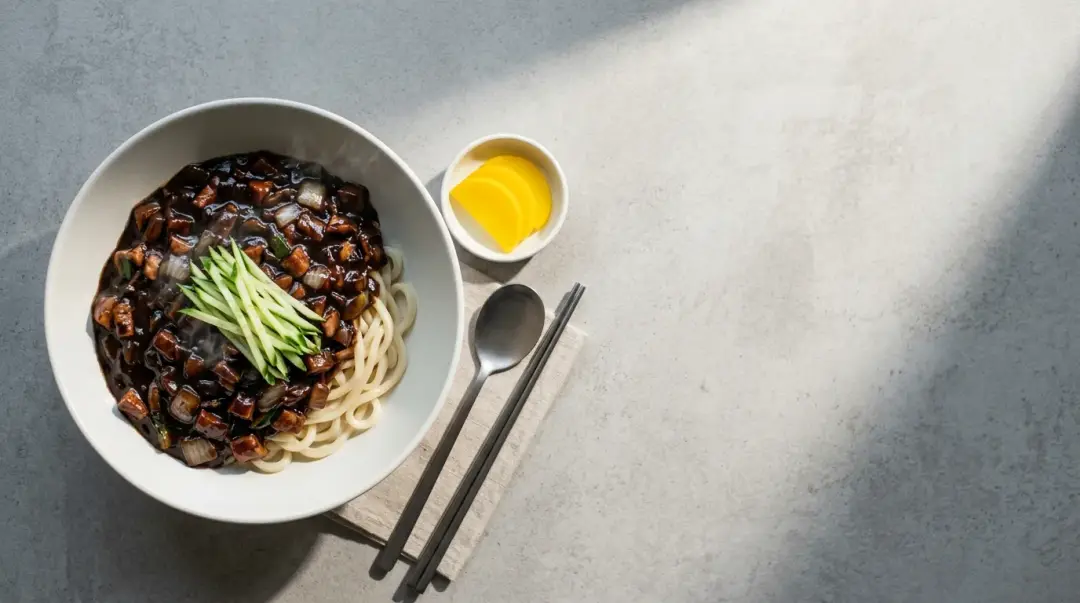 KoreanJjajangmyeon짜장면Learn why Jjajangmyeon, Korea's caramel-black-bean wheat noodle, is the country's top delivery order — its Incheon origins, your best brands, and pairings.
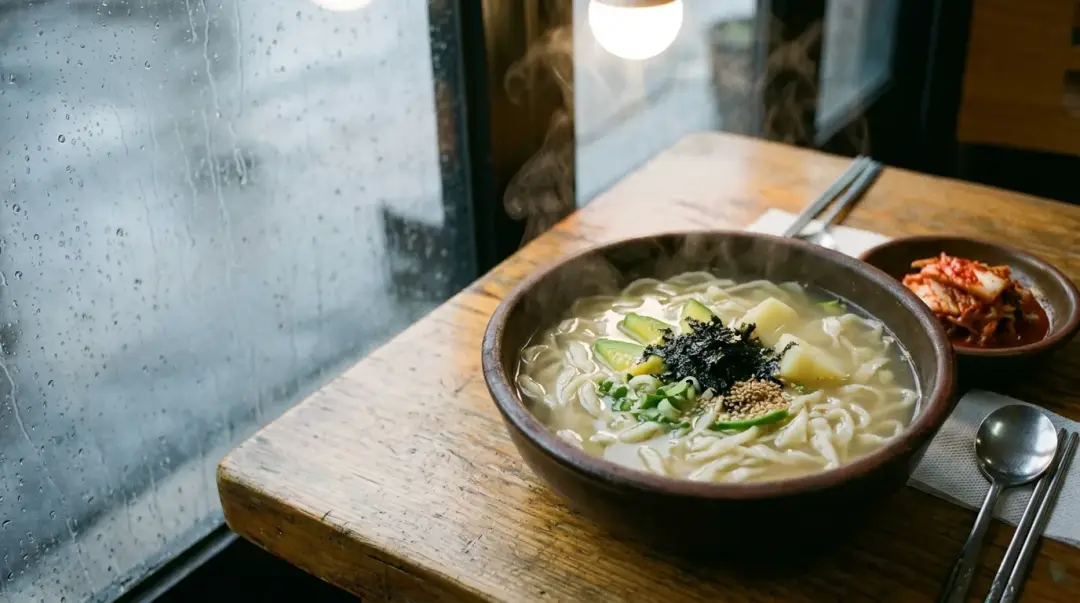 KoreanKalguksu칼국수Learn about Kalguksu, Korea's hand-cut wheat noodles in anchovy-kelp broth. See why it's the rainy-day classic, how to roll the dough, and your top US spots.
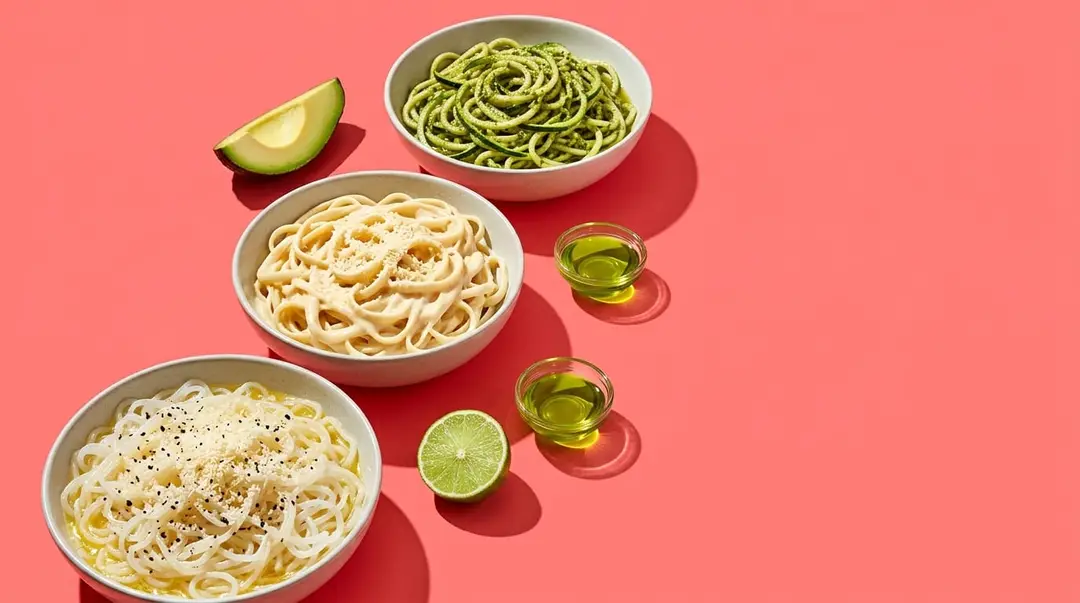 SpecialtyKetoKeto NoodlesFind the keto noodles that don't taste like cardboard — shirataki, Palmini, and zoodles ranked by texture, carb count, and where to buy in the US.
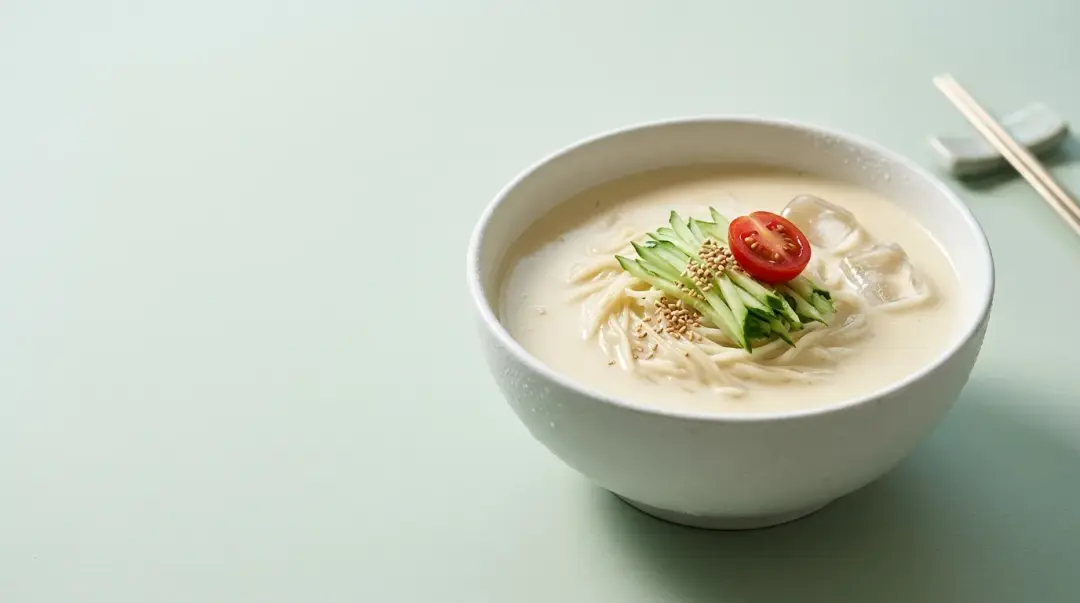 KoreanKongguksu콩국수Learn about Kongguksu, Korea's chilled soybean-milk wheat noodle. Discover its Jeolla roots, summer-only window, and where you can find it.
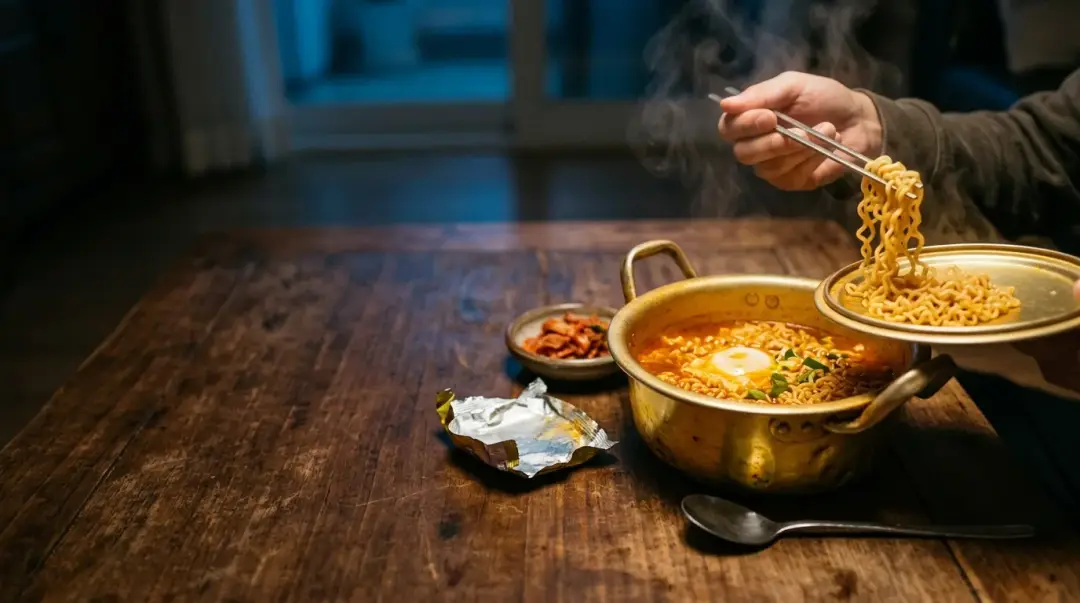 KoreanKorean Ramyeon라면South Korea consumes more instant noodles per capita than any country on earth — roughly 75–80 servings per person per year, about once every four to five days. Ramyeon is the Korean category that drives those numbers: wheat noodle products cooking in 3–5 minutes in boiling water, distinct from Japanese ramen in both texture and flavoring. Korean instant noodles use a firmer, thicker noodle block, aggressive spice profiles built on gochugaru (Korean red pepper flakes) and gochujang, and a broth calibrated for intensity rather than nuance.
Buldak ramyeon — Samyang Foods' Buldak Bokkeum Myun (fire chicken stir noodle), launched in 2012 — is the most internationally recognized Korean instant noodle. It is a dry-sauce format: most of the cooking water is discarded, and a thick, intensely spiced sauce packet gets mixed with the drained noodles. The Scoville level varies by variant; the original runs around 4,400 SHU, the Habanero variant reaches 8,808 SHU. Viral challenge videos starting around 2014 pushed Buldak to a global audience.
Older brands like Nongshim's Shin Ramyun (launched October 1, 1986), Neoguri, and Samyang's original ramyeon remain the everyday staples of Korean pantries. Shin Ramyun alone holds roughly 25% of the domestic Korean instant noodle market and is exported to over 100 countries.
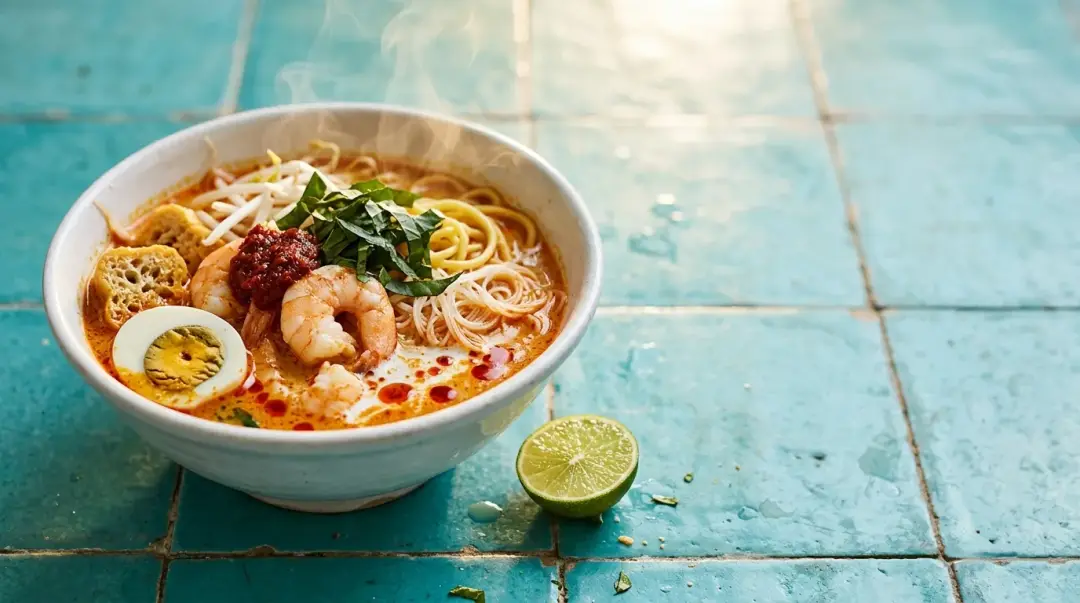 Thai & SE AsianLaksa叻沙Master laksa: coconut-curry broth, lemongrass, galangal, shrimp paste, rice vermicelli, prawns, tofu puffs. Compare your Peranakan bowl: curry vs asam.
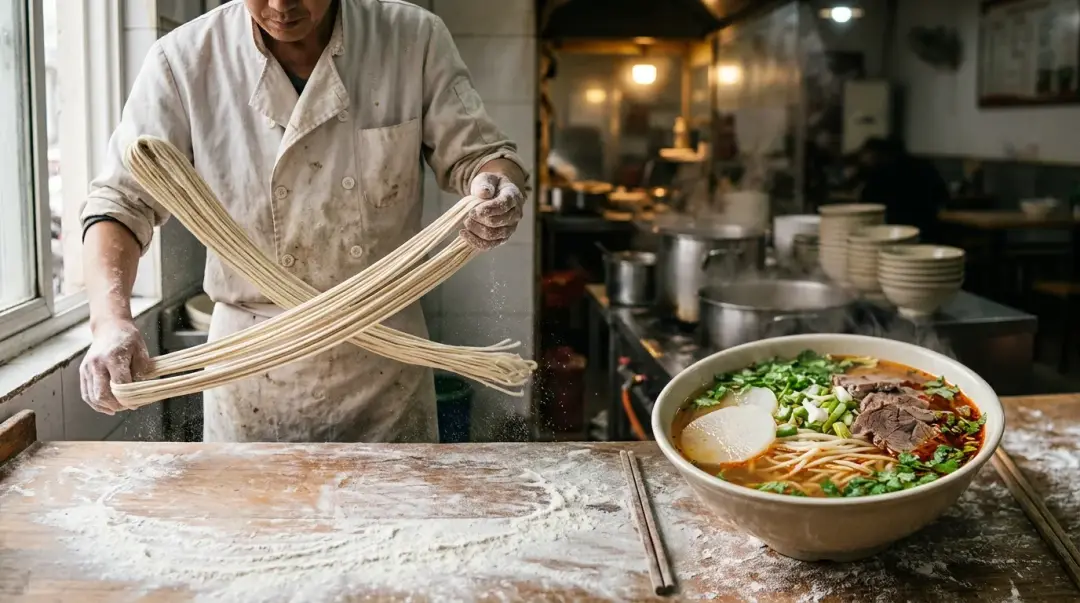 ChineseLamian拉麵Learn how Lanzhou's hand-pulled lamian splits one rope into hundreds of strands, how it relates to Japanese ramen, and what to order at your local shop.
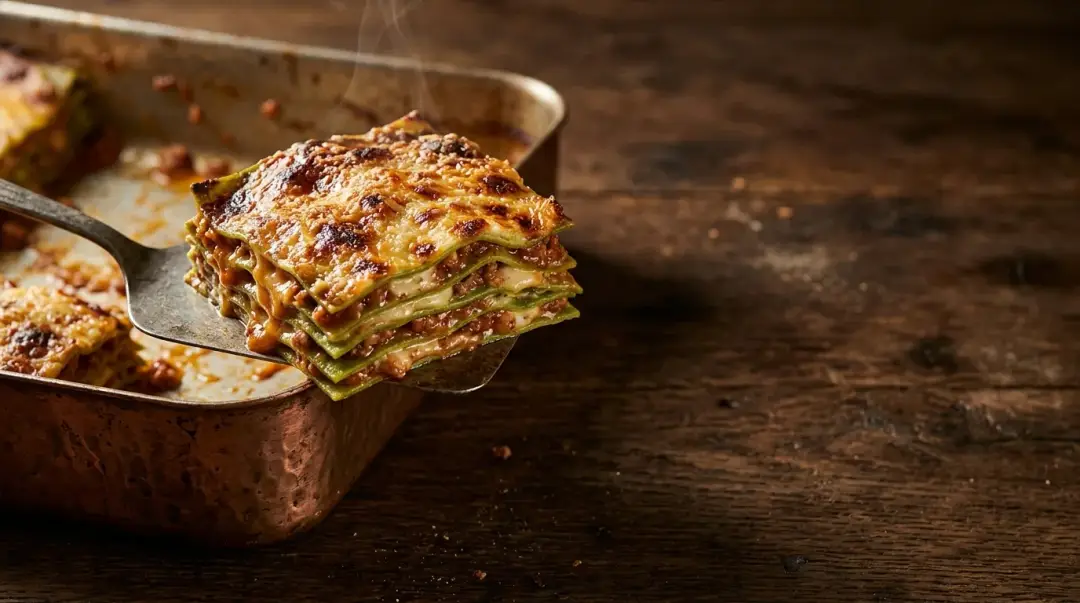 ItalianLasagnalasagneLasagna noodles explained: flat vs ricce (wavy) sheets, how no-boil oven-ready pasta works, Bologna vs Naples lasagne, and which US boxes to buy.
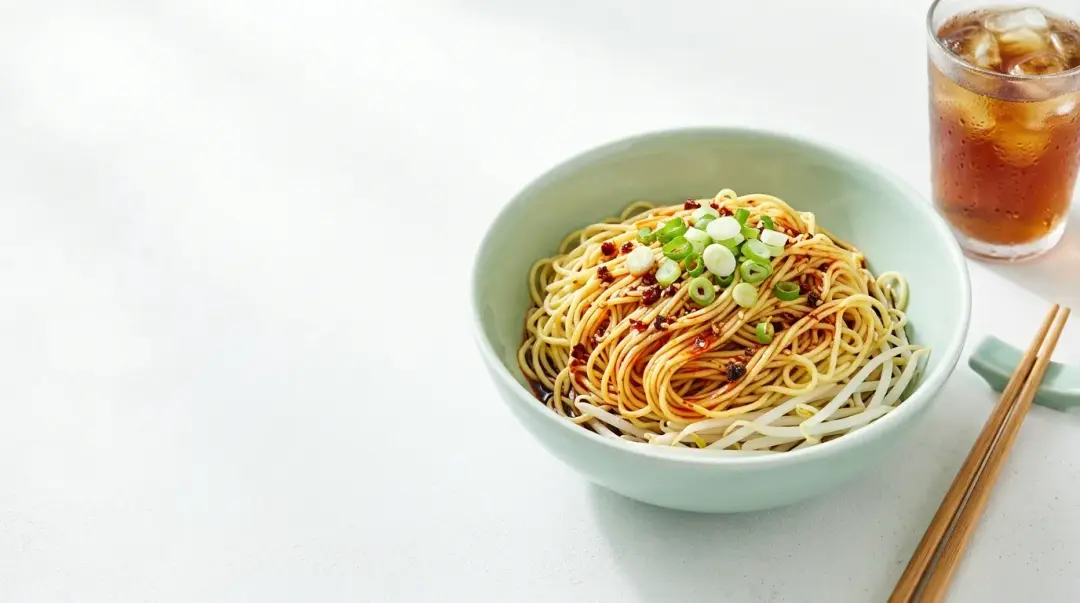 ChineseLiang Mian涼麵Liang mian are Chinese cold noodles: Sichuan's chili-vinegar bowl, Shanghai's peanut-sauce summer noodle, and why liangpi is a different dish entirely.
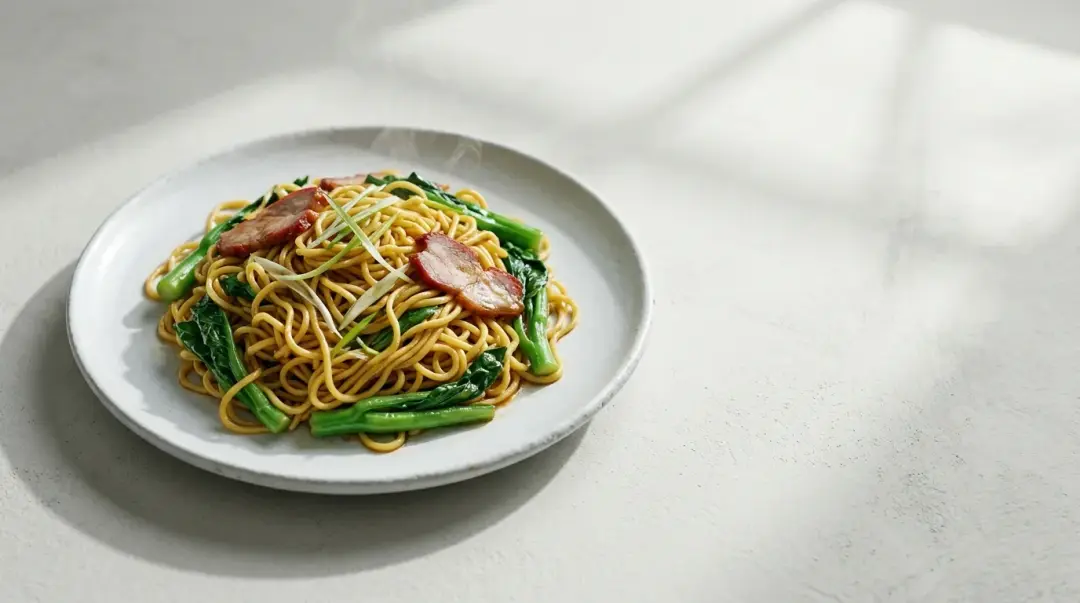 ChineseLo Mein撈麵Lo mein (from the Cantonese lou mian, meaning "tossed noodles") is a Chinese wheat egg noodle dish in which boiled noodles are drained and tossed with sauce, vegetables, and protein. The cooking verb is the defining technical detail: lo (to toss or stir by scooping) versus chow (to stir-fry at high heat). Lo mein noodles are cooked first in boiling water, then combined with pre-cooked ingredients and a sauce — typically oyster sauce, soy sauce, sesame oil, and a touch of sugar — rather than being fried directly in the wok.
The result is a soft, saucy noodle dish where the noodles carry the sauce rather than crisping up. Noodle thickness matters: good lo mein noodles are thick enough (typically 4–5 mm) to absorb sauce without going limp, and made with egg for structural elasticity. Common proteins include chicken, beef, shrimp, and roast pork; common vegetables include bok choy, cabbage, snap peas, and scallion.
In the United States, lo mein is the soft-noodle option on Chinese-American takeout menus, typically contrasted with chow mein — a distinction that itself differs by coast. On the East Coast, chow mein means crispy fried noodles and lo mein means the soft tossed version. On the West Coast, chow mein is the standard noodle and lo mein designation is used less frequently.
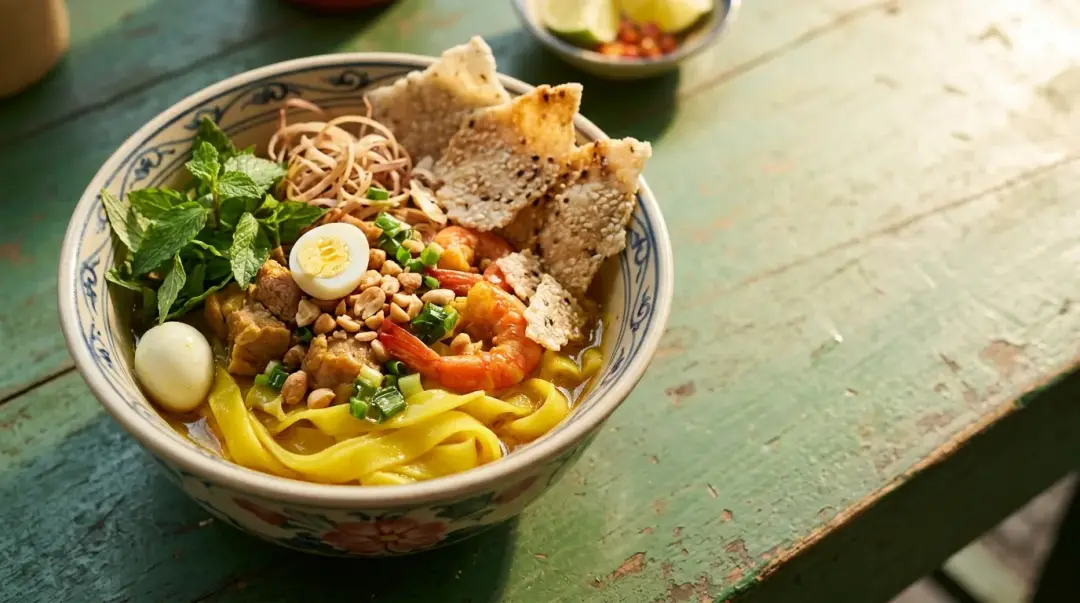 VietnameseMi Quangmì QuảngMaster Mi Quang at home: wide turmeric noodles, layered shrimp and pork, just a few spoons of broth, crushed peanuts, and a sesame rice cracker on top.
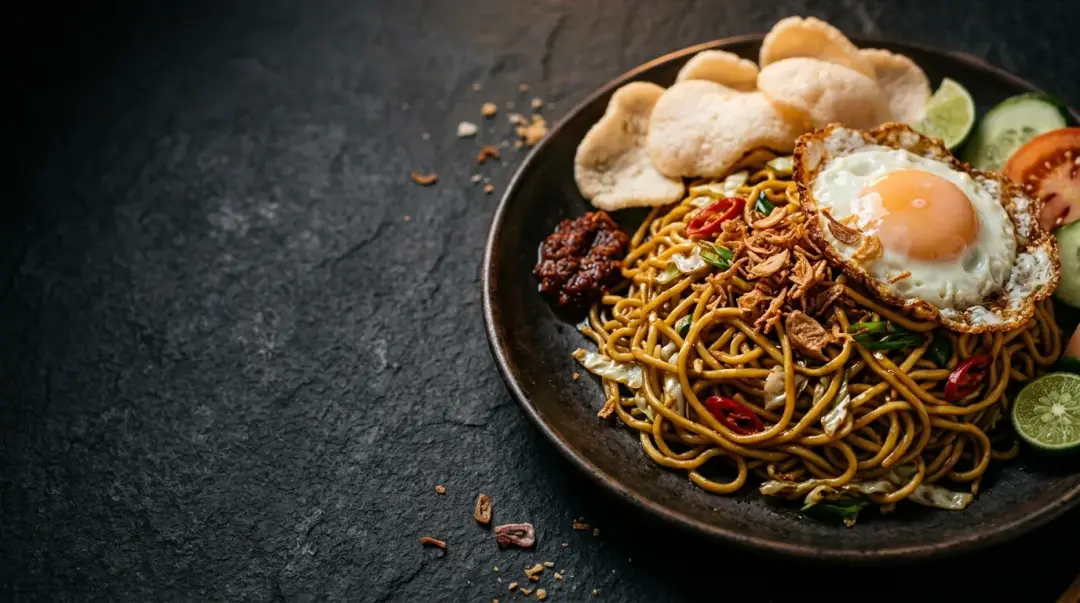 Thai & SE AsianMie GorengMi GorengMie goreng — Indonesian and Malay for "fried noodles" — is a stir-fried noodle dish made with thin yellow wheat noodles cooked in a wok at high heat with garlic, shallots, egg, vegetables, and a protein (typically chicken or shrimp, as Indonesia is a predominantly Muslim country and pork is not used). The ingredient that defines the dish is kecap manis, a thick Indonesian sweet soy sauce made from fermented soybeans and palm sugar, which gives mie goreng its glossy, dark coating and mild sweetness. The finish — crispy fried shallots, a wedge of tomato, sliced cucumber, and sambal on the side — is consistent across warungs (roadside food stalls) from Jakarta to Bali.
The Indomie brand's instant mie goreng format, introduced in 1982, made the dish globally accessible. It is not technically goreng (stir-fried) in instant form — the noodles are boiled and the water discarded, then mixed with flavor sachets including kecap manis, chili sauce, seasoning oil, and fried shallot flakes. Indomie mie goreng is sold in over 100 countries and is particularly popular in Australia, Nigeria, the Netherlands, Saudi Arabia, and the United States.
At home or at a warung, the fresh version requires a very hot wok, small batch size (overcrowding the wok steams instead of fries), and kecap manis added in the last 30 seconds to prevent burning.
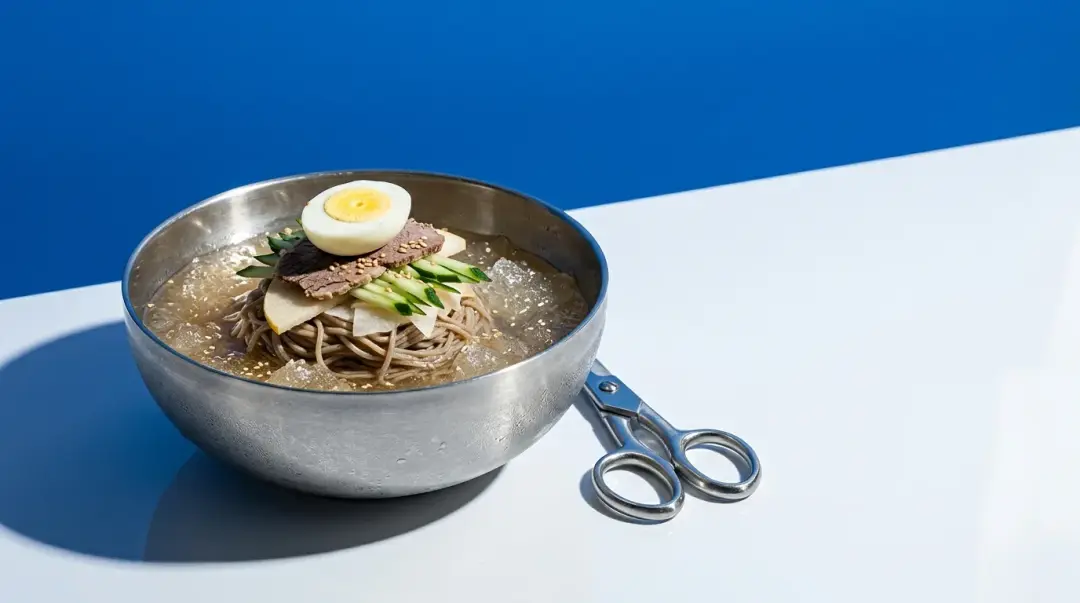 KoreanNaengmyeon냉면Discover Naengmyeon, Korea's icy buckwheat noodle in beef-radish broth. Learn the Pyongyang vs Hamhung split, why scissors hit the table, and where to order.
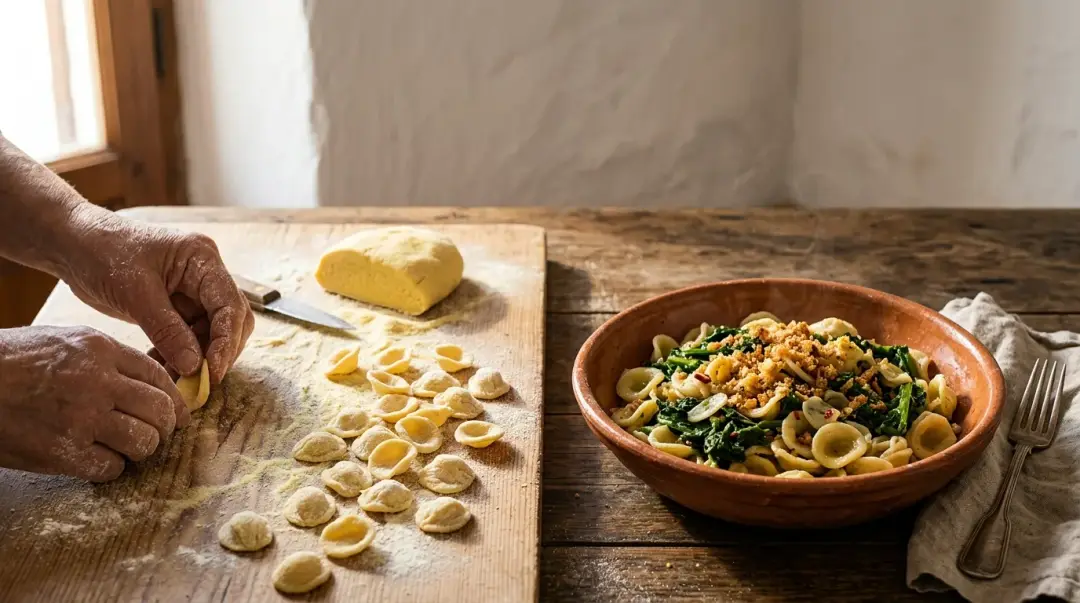 ItalianOrecchietteorecchietteGet the story behind Puglia's hand-shaped 'little ears' — the bitter-greens tradition, why the concave dimple matters, and where to find the real ones.
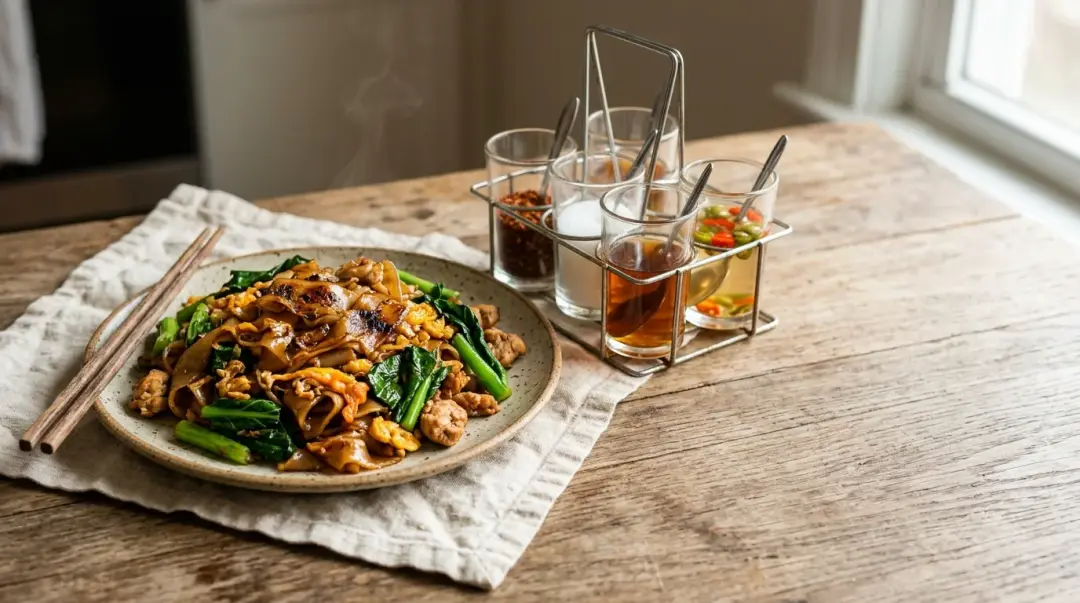 Thai & SE AsianPad See Ewผัดซีอิ๊วDiscover Pad See Ew: wide sen yai rice noodles, dark soy caramel, gai lan, egg ribbons, wok hei char. Pick the mild Thai noodle your whole table can eat.
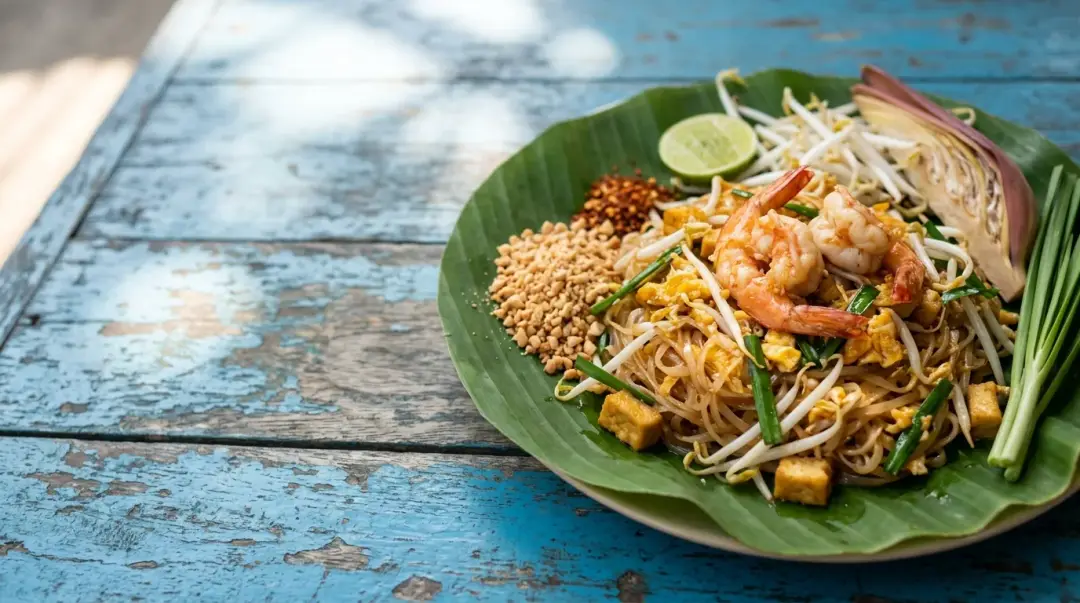 Thai & SE AsianPad ThaiผัดไทยTamarind paste is what separates pad thai from other stir-fried noodle traditions. The dish uses sen lek — thin, flat rice noodles roughly 3 mm wide — cooked at high heat in a wok with eggs, a protein (shrimp, tofu, or chicken being most common), bean sprouts, and garlic chives, all seasoned with tamarind, fish sauce, and palm sugar. That tamarind backbone gives pad thai its sweet-sour character, which is different from Chinese or Vietnamese stir-fried noodle traditions that use soy as their primary seasoning. Crushed roasted peanuts and a lime wedge come alongside for tableside finishing.
A properly made pad thai in a restaurant wok takes under 3 minutes of active cooking once the mise en place is assembled. That speed depends on the wok reaching high enough heat to briefly char the noodles and eggs before the sauce goes in. At home, without a commercial gas burner reaching 150,000 BTU, the technique adjusts: smaller batches, maximum heat, patience between additions.
Regional variants exist. In Chanthaburi Province on Thailand's eastern coast, pad thai is made with sen chan (an even thinner rice noodle named after the province), minced blue crab, and a palo gravy. This style predates the centralized version promoted during the 1930s–40s and may be closer to the dish's Teochew Chinese culinary roots.
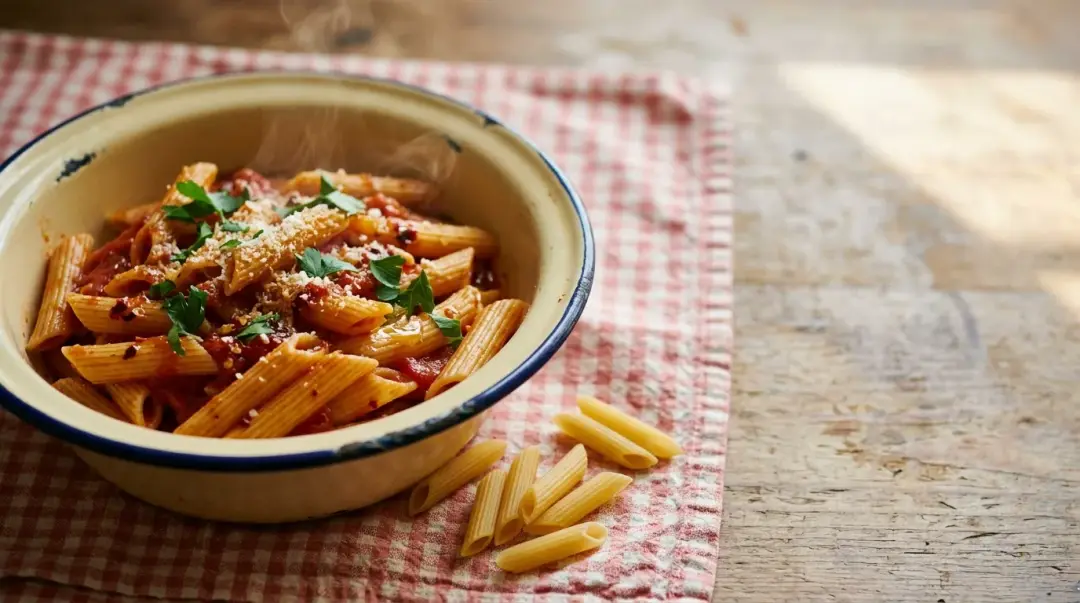 ItalianPennepenneFind out why penne is America's most-ordered pasta shape — the diagonal cut, the ridged-vs-smooth divide, and the four sauces it actually holds best.
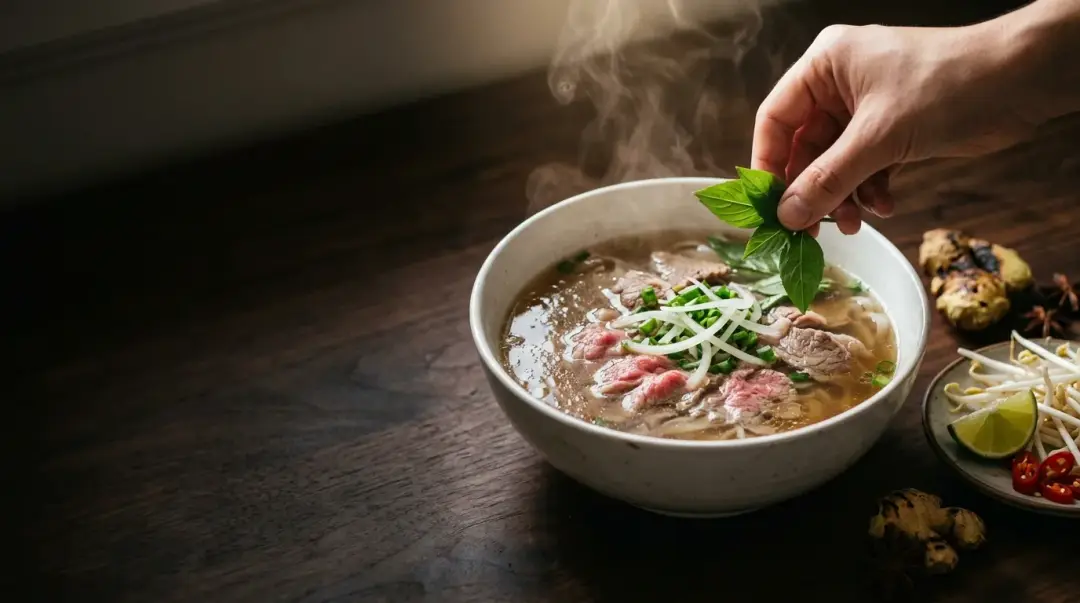 VietnamesePhophởPho is a Vietnamese noodle soup built on a slow-simmered beef or chicken broth, flat rice noodles called banh pho, and thinly sliced meat. The broth is the technical challenge: marrow-rich beef bones and oxtail are parboiled to remove impurities, then simmered 8–12 hours with charred onion and ginger, and spiced with whole star anise, cinnamon sticks, cardamom pods, cloves, and coriander seeds toasted first to bloom their volatile compounds. This is not a broth you rush.
Northern style (pho Bac, from Hanoi) uses a clear, restrained broth with minimal sweetness and minimal table additions — a few scallion rings, cilantro, pickled garlic, perhaps a squeeze of lime. Southern style (pho Nam, from Saigon / Ho Chi Minh City) runs sweeter and cloudier, and arrives with a plate of bean sprouts, Thai basil, sliced fresh chili, hoisin sauce, and sriracha for aggressive customization. This north-south divide is as much cultural as culinary.
Pho ga (chicken pho) uses a lighter chicken broth with the same aromatic spice profile. It was developed as a practical alternative when beef was unavailable — traditionally on Mondays and Fridays when beef wasn't delivered to markets — and has developed its own devoted following.
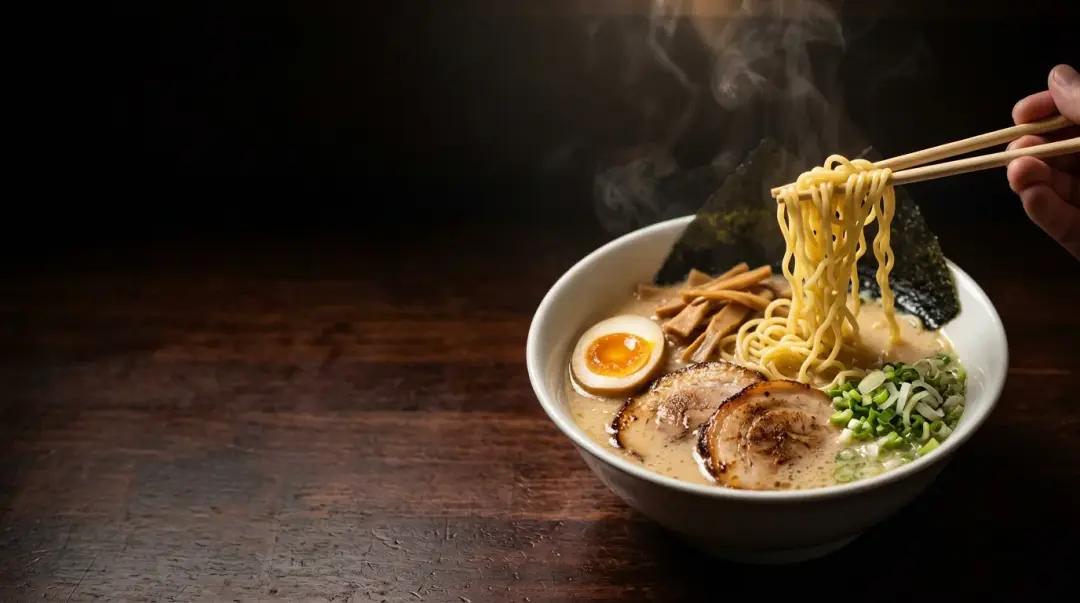 JapaneseRamenラーメンGet the four classical ramen styles (shoyu, shio, miso, tonkotsu), why kansui matters in your noodles, and where to slurp the real bowl.
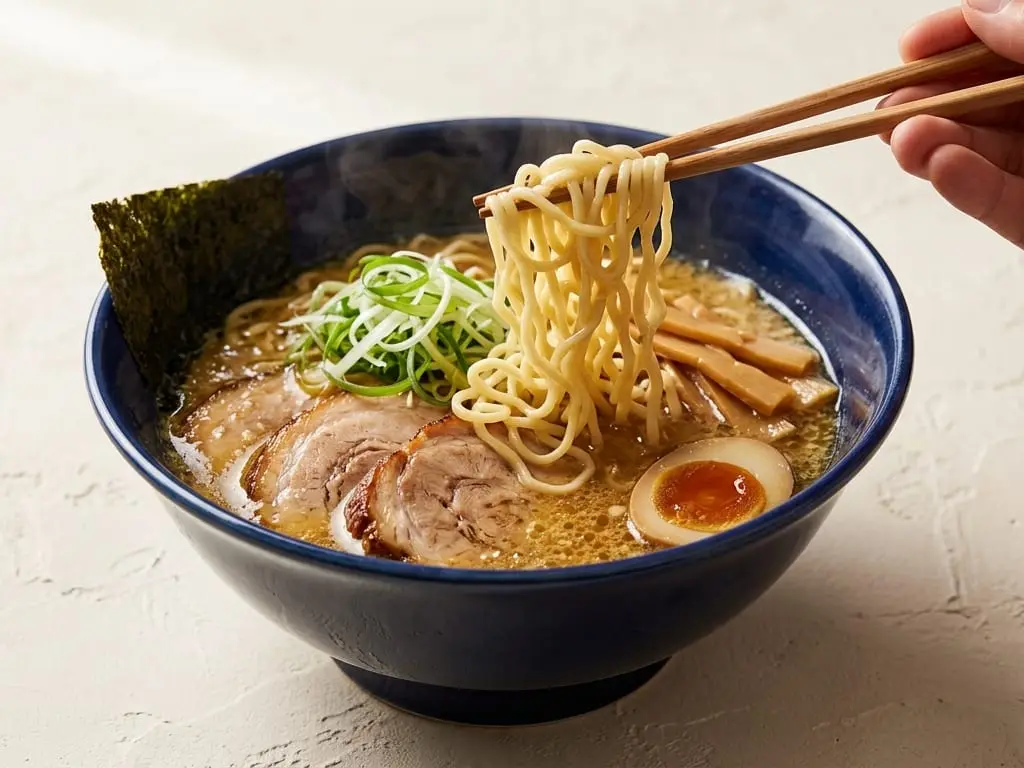 JapanRamenThe noodle defines the bowl. Ramen is built on alkaline wheat noodles — springy, slightly chewy, with a faint mineral note from kansui — served in one of four primary broths: tonkotsu (pork bone), shoyu (soy sauce), miso (fermented soybean paste), or shio (salt). Noodles and broth are prepared separately and combined per bowl; that structural rule holds across every regional style.
Most bowls arrive with chashu (braised pork belly), a soft-boiled egg marinated in soy-mirin brine, bamboo shoots called menma, sheets of nori, and scallion. The exact toppings shift by region. A tonkotsu bowl from Fukuoka typically includes thin straight noodles and a side bowl of extra noodles called kaedama; a Sapporo miso bowl arrives with corn, butter, and thick wavy noodles.
In the United States, ramen means two different things: the instant block found in every grocery store for under a dollar, and the craft ramen served at specialty shops that built a serious dining movement from the mid-2010s onward. Both descend from the same lineage, separated by about six decades of industrial development and a cultural shift toward quality.
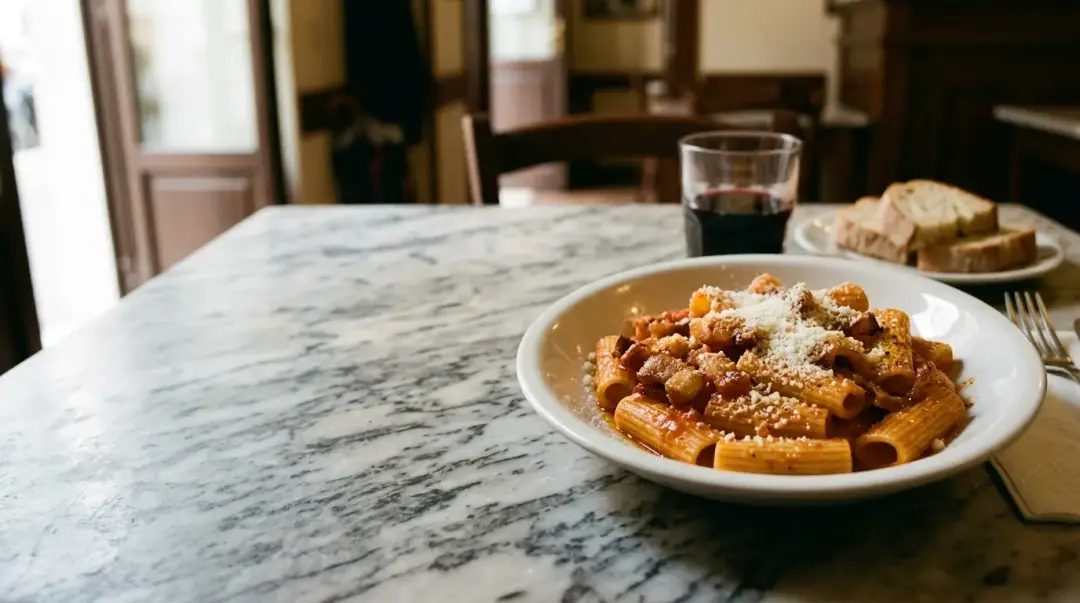 ItalianRigatonirigatoniLearn why rigatoni — not penne — is Rome's true vodka-sauce vessel. The 15mm tube, the amatriciana tradition, and what to buy for your next bake.
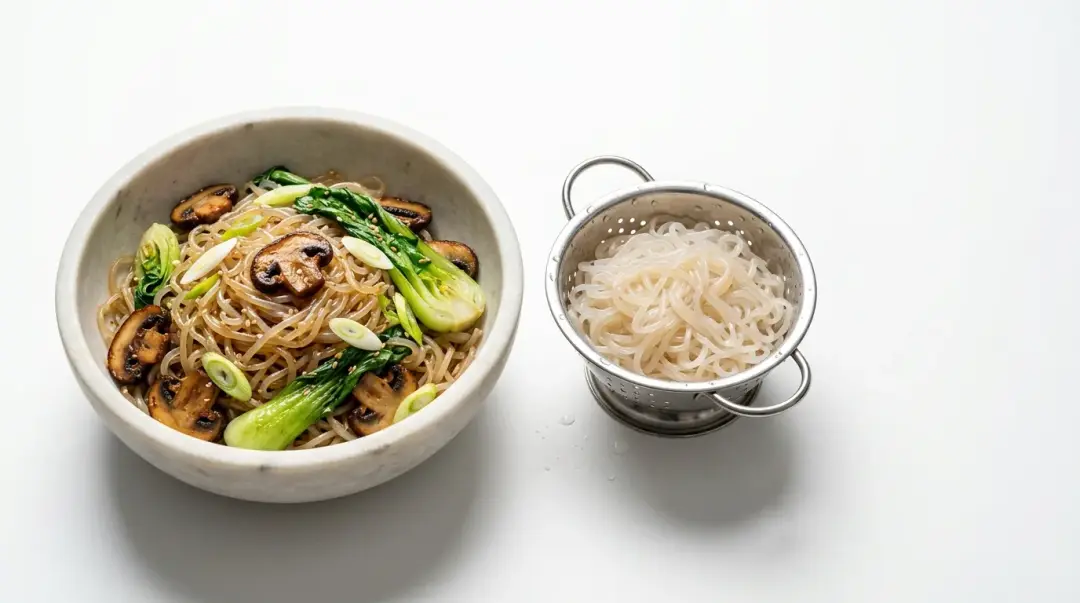 SpecialtyShirataki白滝Discover shirataki noodles, the Japanese konjac strand at 5 calories and 1g net carbs — how to rinse, dry-fry, and pair it without the rubbery bite.
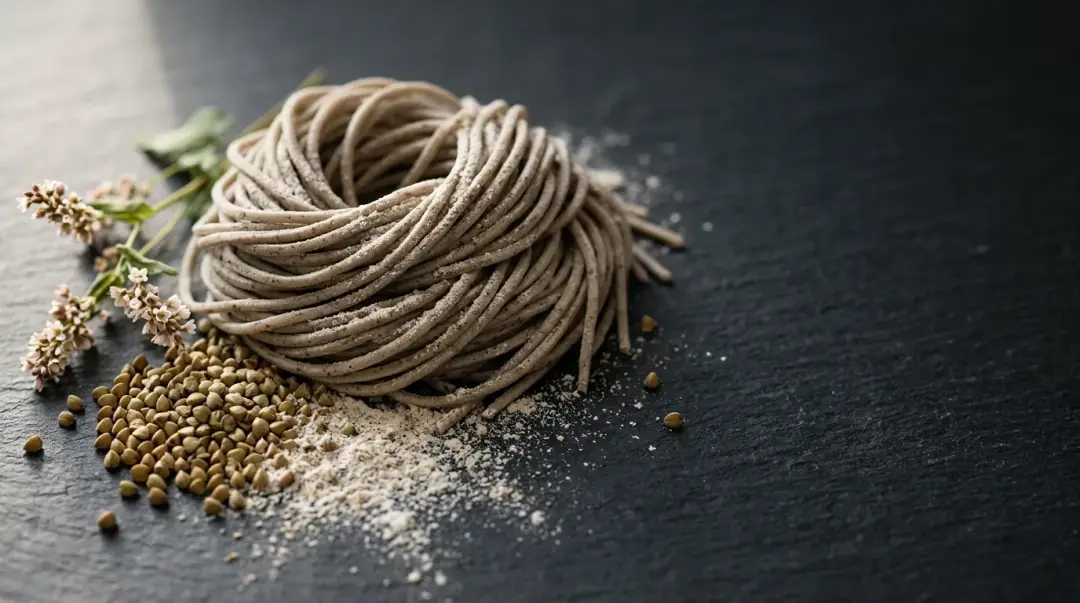 JapaneseSobaそばBuckwheat has no gluten. That single fact shapes everything about soba — why pure buckwheat noodles (juwari soba) cook in 90 seconds, why they break easily, and why making them well demands considerably more technique than wheat noodles. Most commercial soba blends buckwheat with wheat flour in a roughly 4:1 ratio (ni-hachi soba, meaning "two-eight"), which adds structure. Both styles have the same earthy, nutty flavor and a slight grayish-brown color that distinguishes them immediately from white udon or yellow ramen.
Soba is served in two primary formats: zaru soba, chilled noodles on a bamboo tray with a cold tsuyu dipping sauce of dashi, soy sauce, and mirin, accompanied by wasabi and sliced scallion; and kake soba, served hot in a bowl of clear dashi broth. Regional variations include tempura soba, tanuki soba (topped with fried tenkasu crisps), and duck soba (kamo nanban), a winter preparation from Tokyo.
Buckwheat contains all eight essential amino acids and is naturally gluten-free in its pure form — though the wheat blended into most commercial soba means ni-hachi soba is not celiac-safe. Soba draws more nutritional attention than any other noodle in the Japanese repertoire, partly deserved and partly overstated.
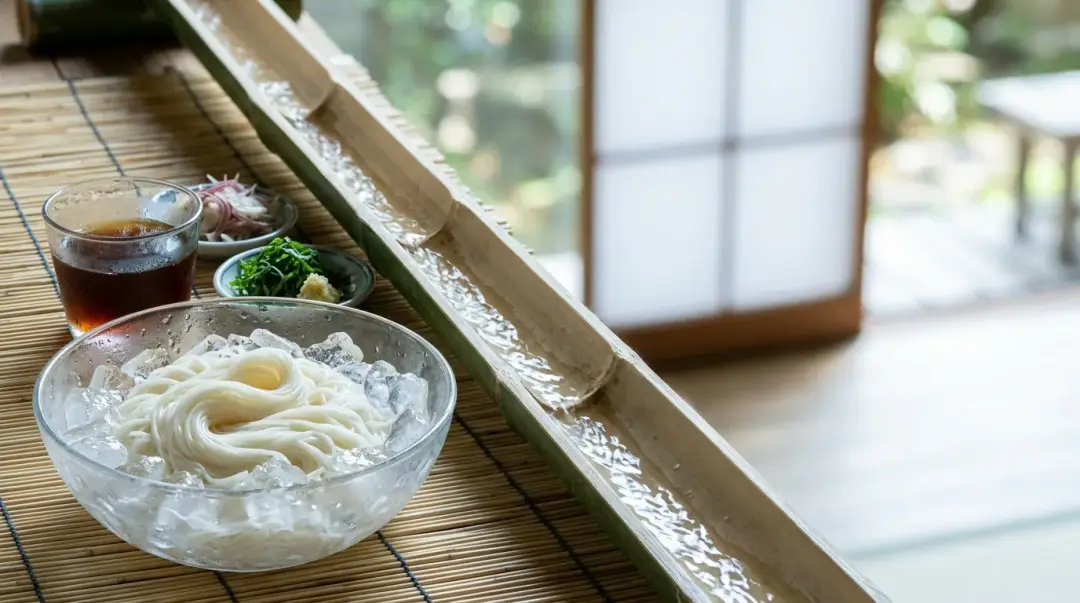 JapaneseSomenそうめんDiscover Nara's 1mm hand-stretched summer noodle: 90-second cook, ice-cold plating, chilled tsuyu, and where to find your Miwa-region brand.
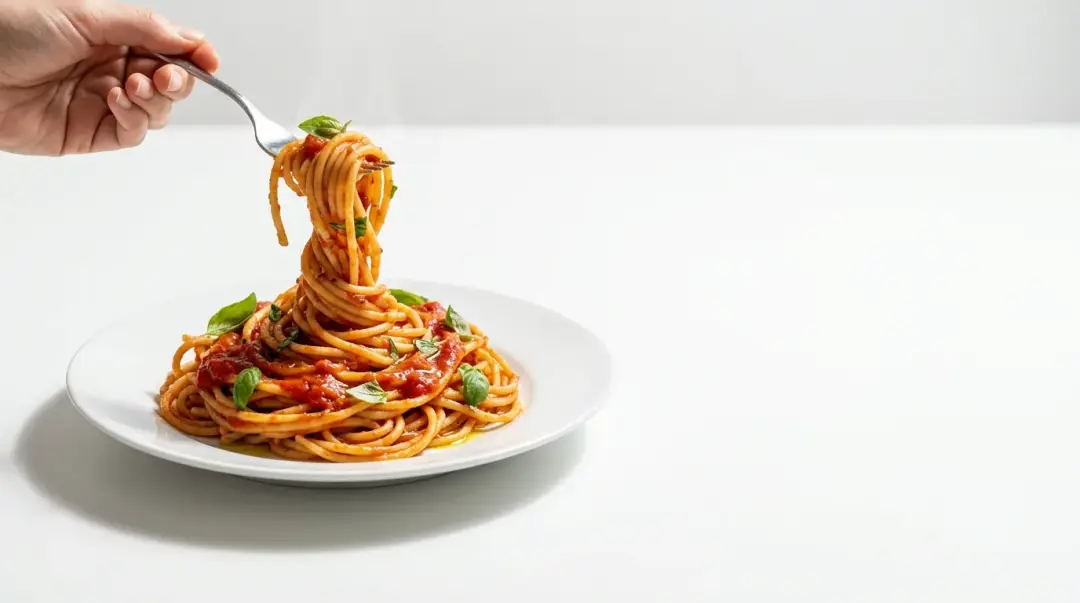 ItalianSpaghettispaghettiThe name comes from the Italian word spago (string), with the diminutive suffix making it "little strings" — which accurately describes what spaghetti is: a long, cylindrical pasta extruded or rolled from semolina (coarsely ground durum wheat) to a diameter of approximately 1.8–2 mm. Cooked to al dente — firm to the bite, with a visible white core when cut cross-section — spaghetti has a slightly rough surface from the semolina that helps sauce cling.
The long, thin shape handles light oil-based sauces (aglio e olio, carbonara), tomato-based sauces (marinara, amatriciana), and seafood preparations equally well. The sauce-to-pasta ratio matters: too thick a sauce and the strands clump; too thin and it pools at the bottom of the bowl. In Italian tradition, pasta is finished in the pan with its sauce for the last 60–90 seconds of cooking, letting the pasta absorb flavor and the starchy cooking water bind the sauce.
In the United States, spaghetti is the most consumed pasta shape, accounting for a significant share of the roughly 9 kg per person of pasta Americans eat annually. The Italian-American canon established by Campanian immigrants in the late 19th and early 20th centuries made spaghetti with tomato sauce the gateway dish — the first Italian food that millions of non-Italian American families cooked at home.
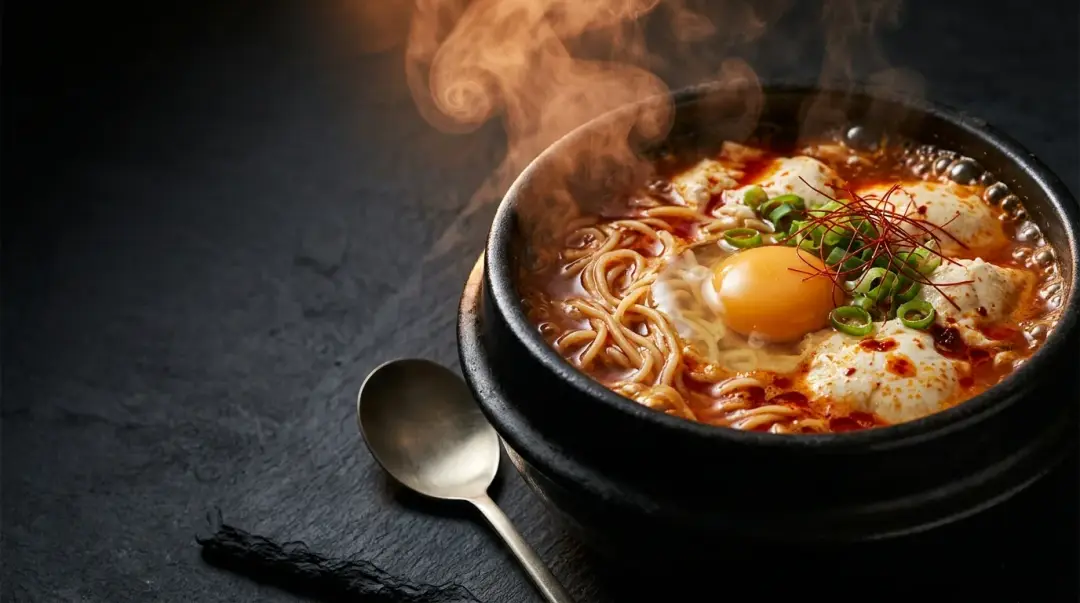 KoreanSundubu Guksu순두부국수Learn about Sundubu Guksu, Korea's silken-tofu wheat noodle stew in a spicy anchovy broth. See your tableside raw-egg ritual, BCD Tofu House, and pantry picks.
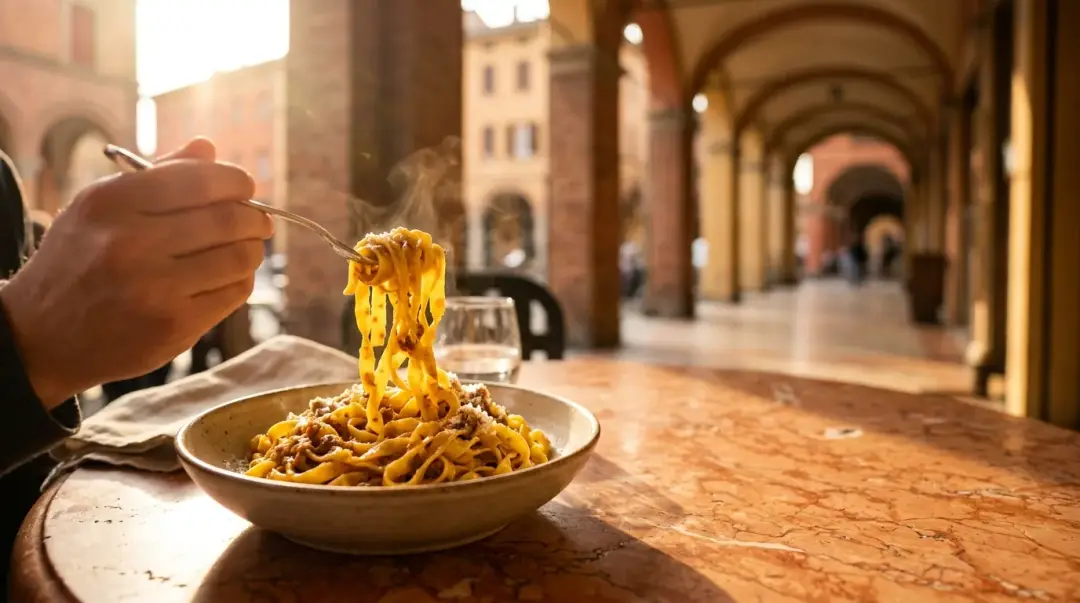 ItalianTagliatelletagliatelleTagliatelle is Bologna's egg-pasta ribbon, fixed at 8mm cooked by a 1972 standard. Its history, the ragù pairing, how it differs from fettuccine, what to buy.
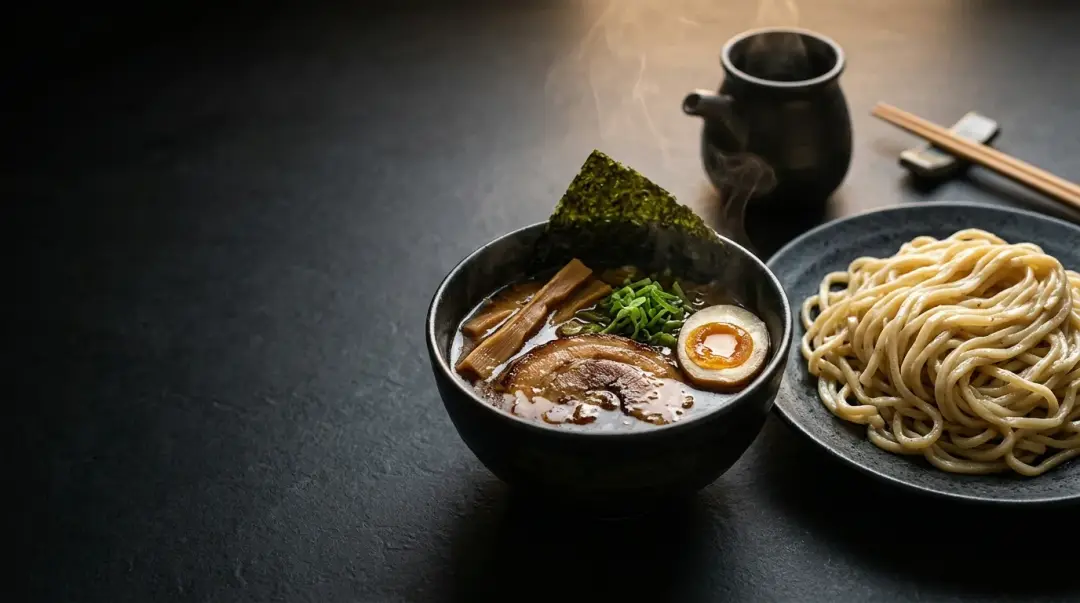 JapaneseTsukemenつけ麺Learn the 1961 Taishoken format: cold-rinsed thick noodles, 3-4x concentrated tsukejiru broth, and the wari-suri kettle that finishes your bowl.
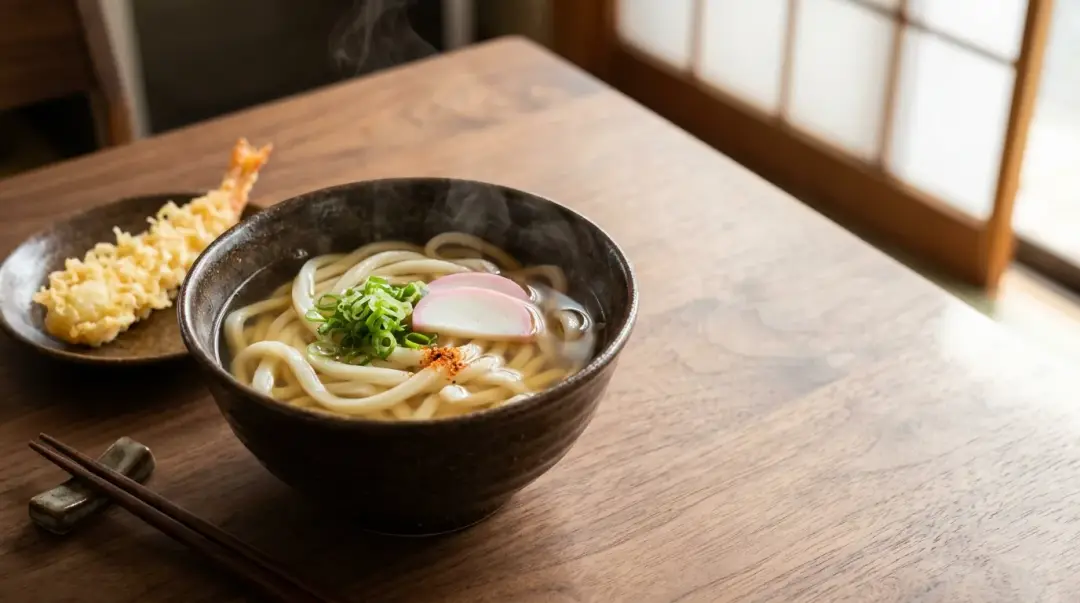 JapaneseUdonうどんUdon are thick, white wheat noodles with a smooth exterior and firm, chewy bite — the widest noodle in the Japanese repertoire at roughly 2–4 mm in diameter. Made from wheat flour, water, and salt with no alkaline agent, they have a soft texture and neutral flavor that picks up broth rather than competing with it. Sanuki producers describe a good udon noodle by three qualities: hada (smooth skin), tsuya (gloss), and koshi (elastic chew).
Udon is served hot or cold depending on season. Hot preparations arrive in dashi-based broth seasoned with soy sauce and mirin, topped with aburaage (fried tofu) in kitsune udon or a shrimp tempura in tempura udon. Cold udon — zaru udon — is served on a bamboo tray with a tsuyu dipping sauce. In Kagawa Prefecture, the heartland of Sanuki udon, self-serve shops let customers order the plain boiled noodle and add toppings from the counter, a format that keeps prices low and lines long.
In the United States, udon is sold dried, fresh, and par-cooked in sealed packages. It holds up well in stir-fries where its bulk handles high heat without dissolving, making it a practical substitute for lo mein noodles when a thick, slurpable texture is the goal.
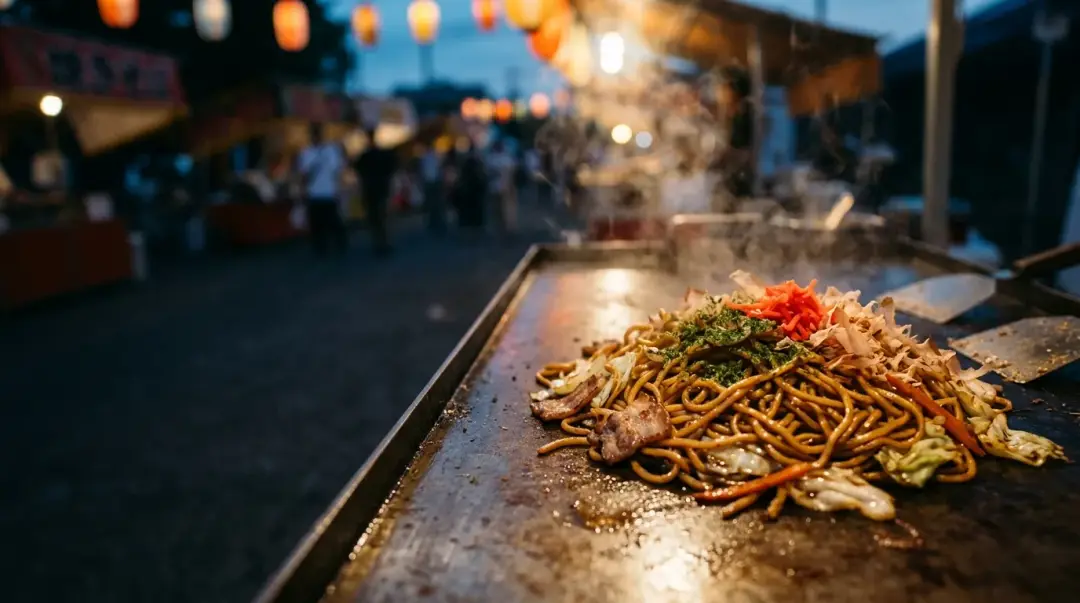 JapaneseYakisoba焼きそばKnow why yakisoba uses ramen-style wheat (no buckwheat), how Otafuku sauce and beni shoga define your plate, and where to find festival-grade kits.
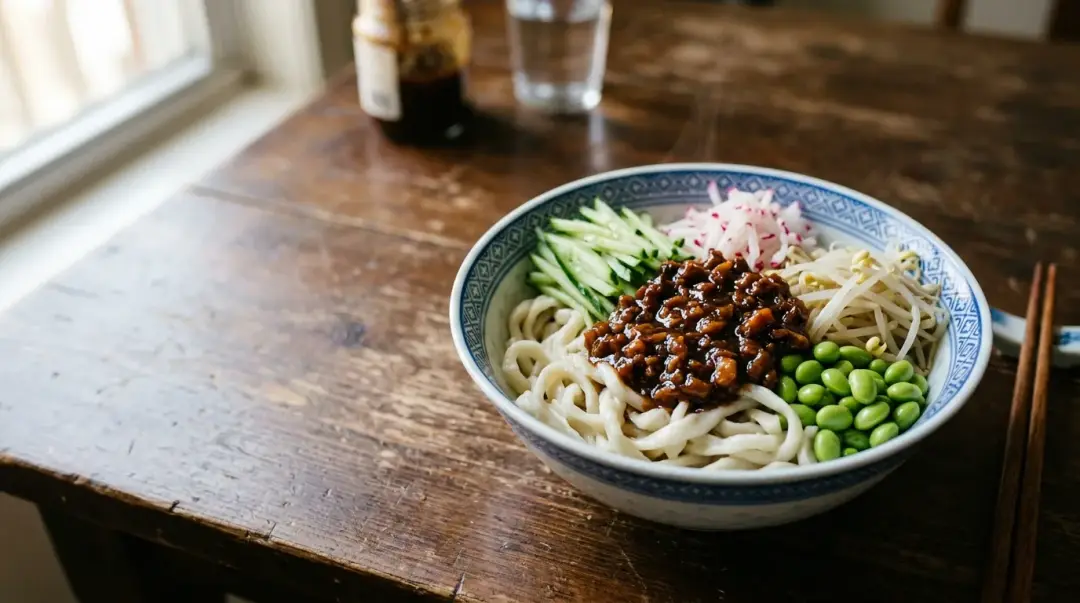 ChineseZhajiangmian炸醬麵Learn why Beijing's fried-sauce noodles taste nothing like the Korean jjajangmyeon version: the bean paste, the cucumber, and how the dish is made.
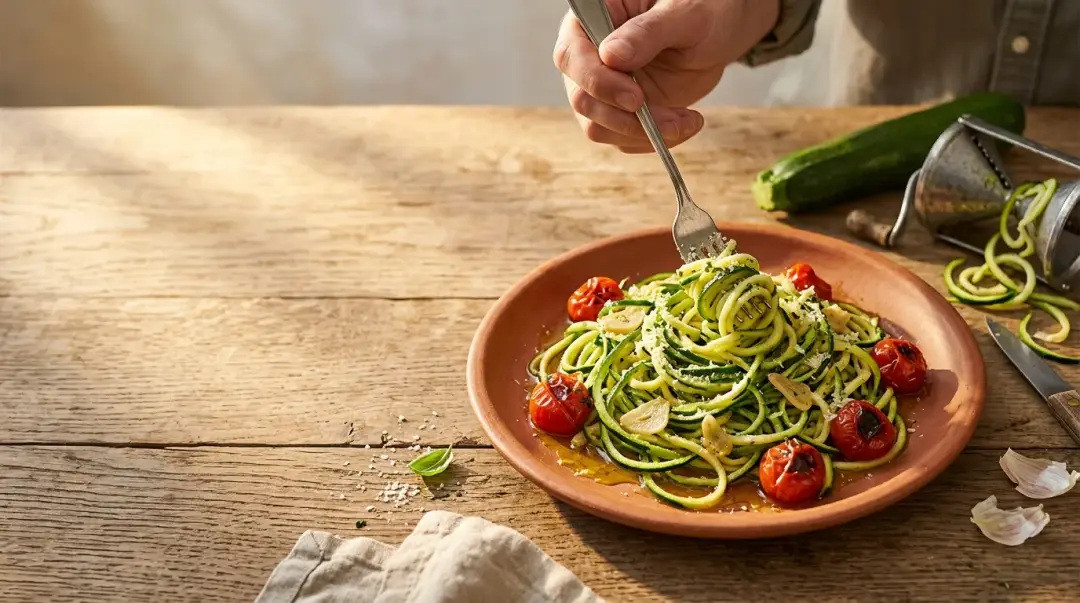 SpecialtyZucchiniZucchini NoodlesMaster zoodles at home — spiralize, salt, squeeze, and sauté your zucchini in 90 seconds for a 4g net carb pasta swap that won't puddle on the plate.
Reference Guides
Cross-Cultural Noodle Guides
- How to Make Buldak Less Spicy: 6 Ways That WorkMake Buldak less spicy with dairy, egg, fat, sweetness, starch, less sauce or a milder flavor. Why each works, and what to skip when the heat hits.
- Instant Noodle Scoville Chart: SHU by BrandBuldak Original is 4,404 SHU and Shin Ramyun 3,400. Instant noodle Scoville chart by heat band, every figure sourced, plus noodles with no number found.
- Is Buldak Safe? Denmark Recall and FactsIs Buldak safe? The dated Denmark recall, what the cancer warning label means, the 2026 batch recalls and who should take care, with sources.
Buying Guides
Products Worth Trying
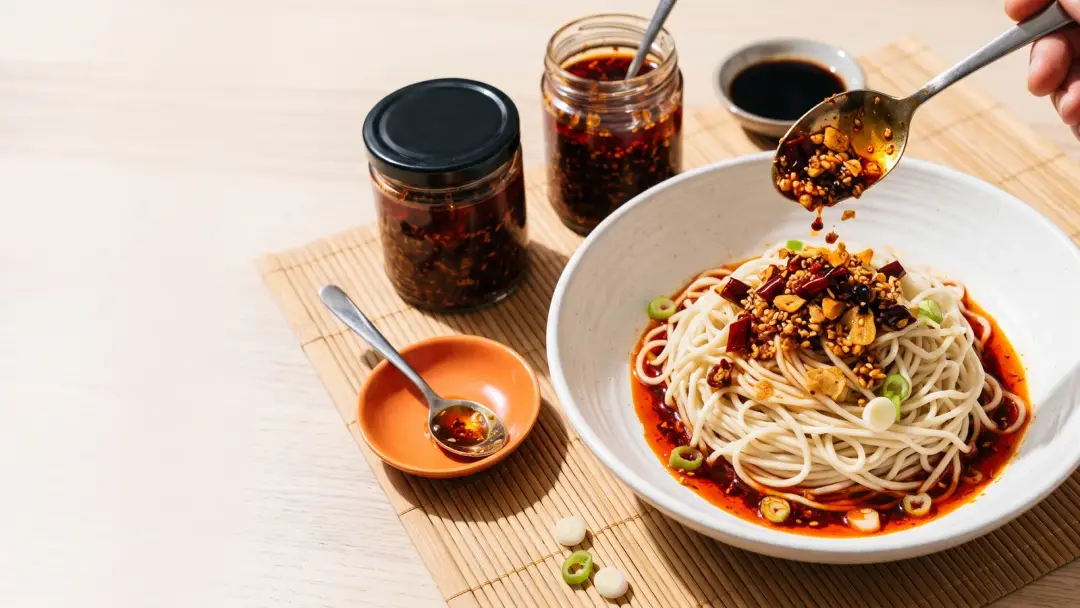
Best Chili Crisp and Chili Oil for Noodles: Top Jars (2026)
Our pick: Lao Gan Ma Spicy Chili Crisp Hot Sauce
8 picks · Oct 2026
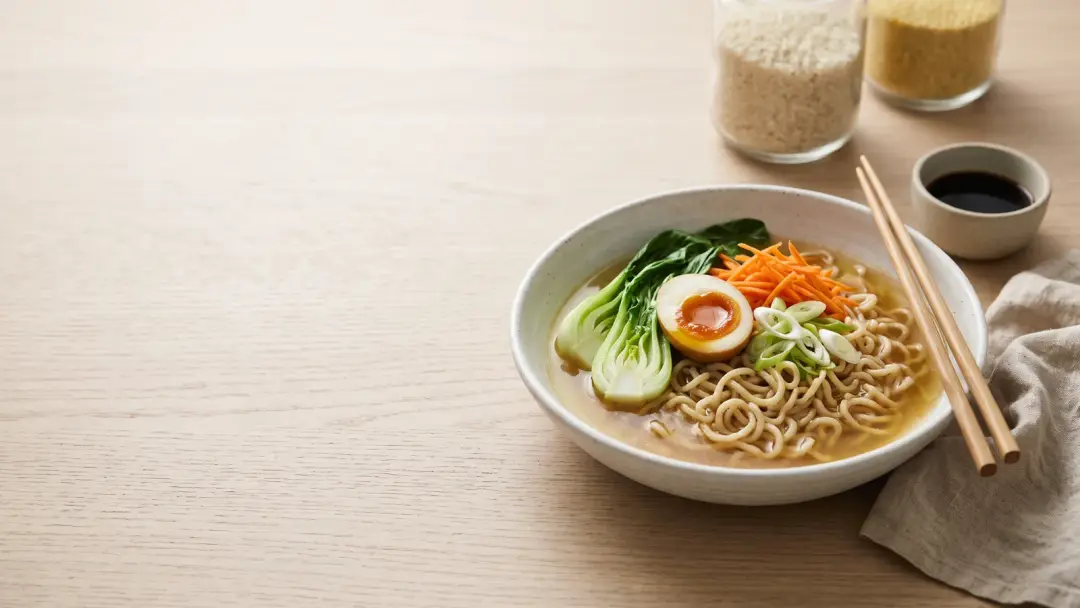
Best Gluten-Free Ramen: Certified Noodles and Cups (2026)
Our pick: Lotus Foods Organic Millet and Brown Rice Ramen
8 picks · Oct 2026
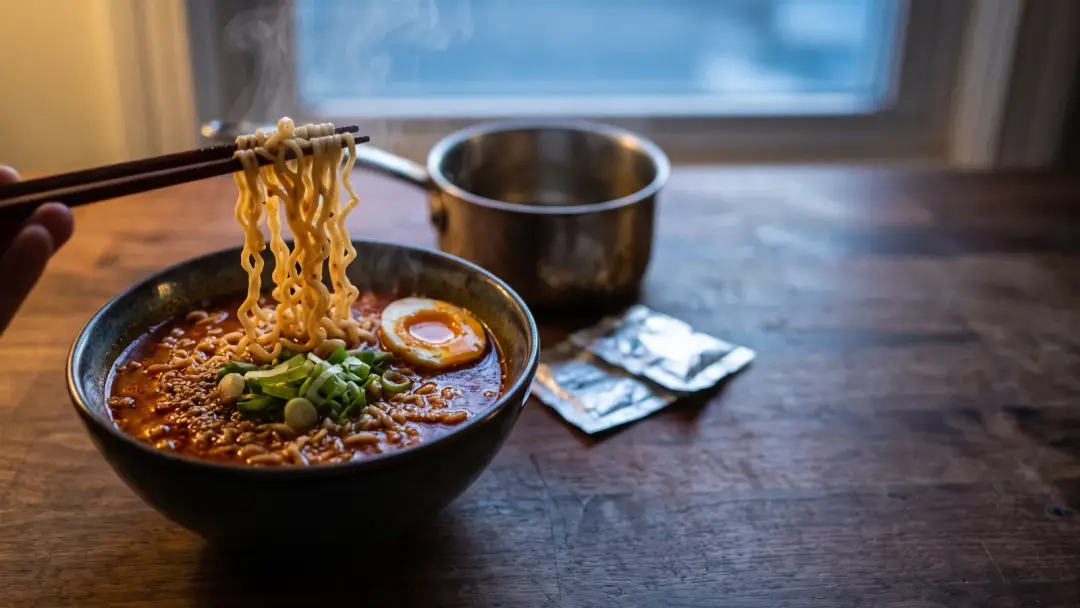
Best Instant Ramen: Top Picks by Type and Budget (2026)
Our pick: Nongshim Shin Ramyun
13 picks · Oct 2026
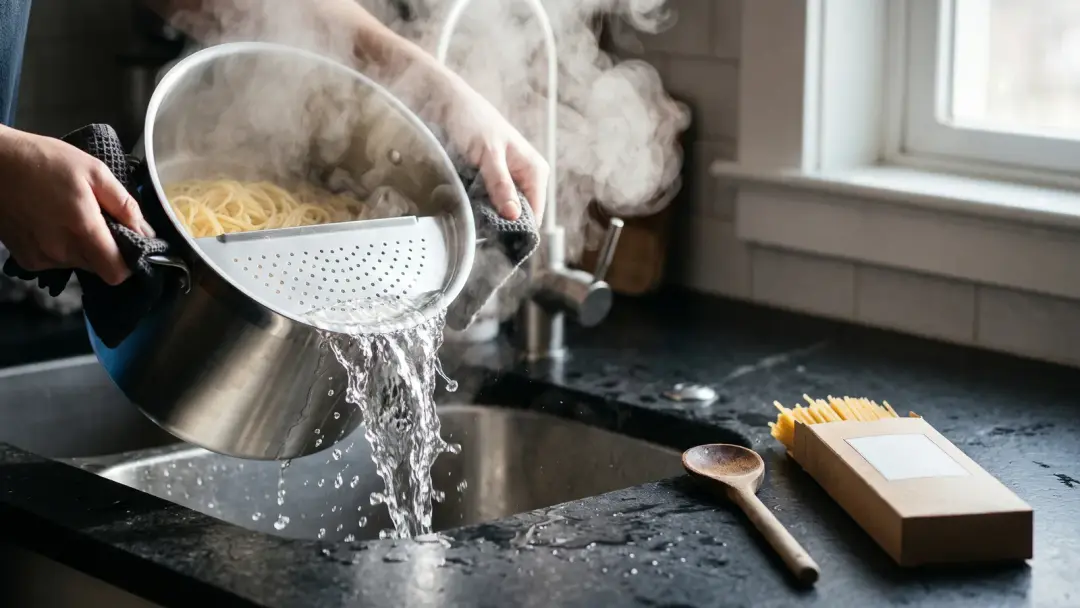
Best Pasta Pot with Strainer: Lids and Inserts (2026)
Our pick: Cuisinart Chef's Classic 6 Qt Stainless Pasta Pot with Straini…
8 picks · Oct 2026