Glass vs Rice vs Wheat Noodles: Key Differences
· 6 min read · NoodleDex Editorial
Rice noodles vs wheat noodles: rice is tender and gluten-free, wheat is chewy and has gluten. Glass noodles add bounce. Texture, cooking and best dishes.
This page contains affiliate links. We may earn a commission at no extra cost to you. Disclosure
On this page(13 sections)
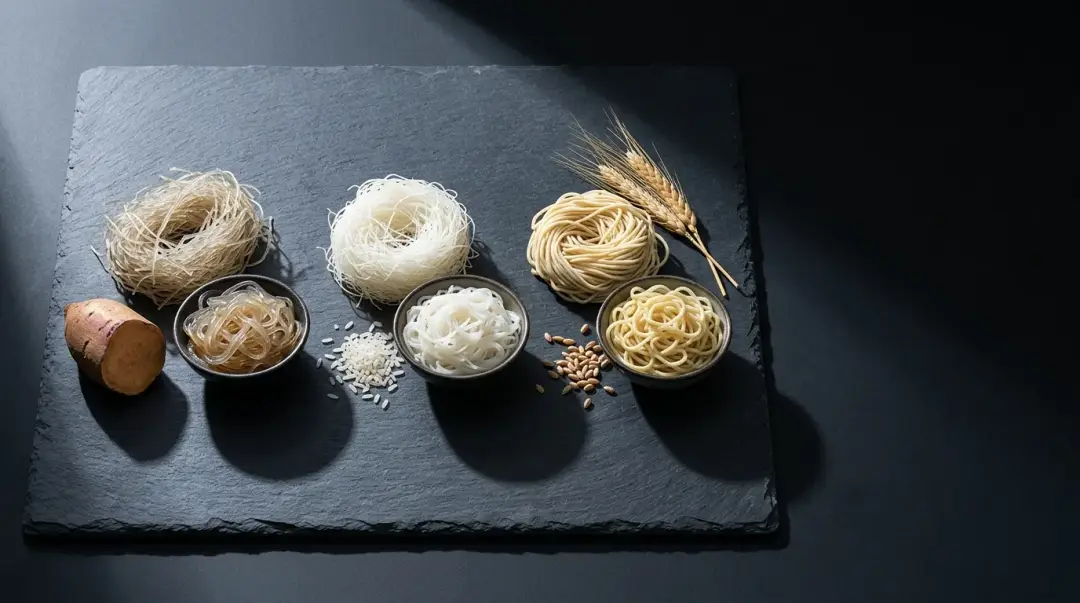
Every "Asian noodle" at the grocery store comes from one of three starch families: glass (mung bean, sweet potato, or cassava starch), rice (rice flour), or wheat (wheat flour, sometimes alkaline). They look interchangeable in the package. They are not interchangeable in the wok or the bowl.
The Headline Difference
The starch decides almost everything downstream — texture, cooking method, gluten content, which dish it belongs in. Wheat noodles bring chew and absorb sauce evenly. Rice noodles bring tenderness and absorb broth aggressively. Glass noodles bring bounce and absorb nothing, because they're 95% pure starch with no protein structure. Pick the family first, then pick the format within it. Skip that step and your japchae goes mushy, your pho noodles disintegrate, or your stir-fry won't take the sauce.
Side-by-Side Comparison
The Three Noodle Starch Families — Compared
| Glass Noodles | Rice Noodles | Wheat Noodles | |
|---|---|---|---|
| Made from | Mung bean / sweet potato / cassava starch | Rice flour | Wheat flour (often with kansui for alkaline noodles) |
| Gluten-free? | Yes | Yes | No |
| Cooked appearance | Translucent, glossy | Opaque white or translucent | Opaque cream/yellow |
| Texture | Bouncy, chewy, slippery | Tender, slightly chewy | Springy, varied (chewy to soft) |
| Cooking method | Soak then briefly boil | Soak (rice stick) or briefly boil (rice vermicelli) | Boil 4-12 min depending on type |
| Best for | Stir-fries, cold dishes | Soup, stir-fry, salads | Soup, stir-fry, sauced dishes |
| Iconic dishes | Japchae, pad woon sen, sundubu jjigae | Pho, pad thai, kway teow | Ramen, ramyeon, udon, lo mein |
How They Behave in the Pan
Each starch family has predictable kitchen behavior worth knowing before you cook:
Wheat noodles release starch into the cooking water, which is why pasta water is gold for finishing Italian sauces — that starchy water emulsifies oil and binds sauce to noodle. Cook wheat noodles in plenty of salted boiling water. They take 4-12 minutes depending on thickness and absorb seasoning as they cook.
Rice noodles release very little starch and don't benefit from heavily salted water. Cook them briefly (1-3 minutes for thin, 3-5 minutes for wide) or soak in cold water (20-30 minutes), then drain hard. They absorb broth aggressively after cooking — which is why phở noodles should be cooked separately and combined with the broth at serving, never simmered in it.
Glass noodles release almost no starch because they're pure starch already. They go from undercooked to mushy in 30 seconds — watch them. Cook 2-3 minutes max, rinse cold immediately, and toss with a little oil to prevent clumping. They take sauce but not flavor into the strand — glass noodles are surface-only.
Glass Noodles (Cellophane Noodles)
"Glass noodles" is an umbrella term for several starch-based gluten-free noodles. The two most common in Korean and Chinese cooking:
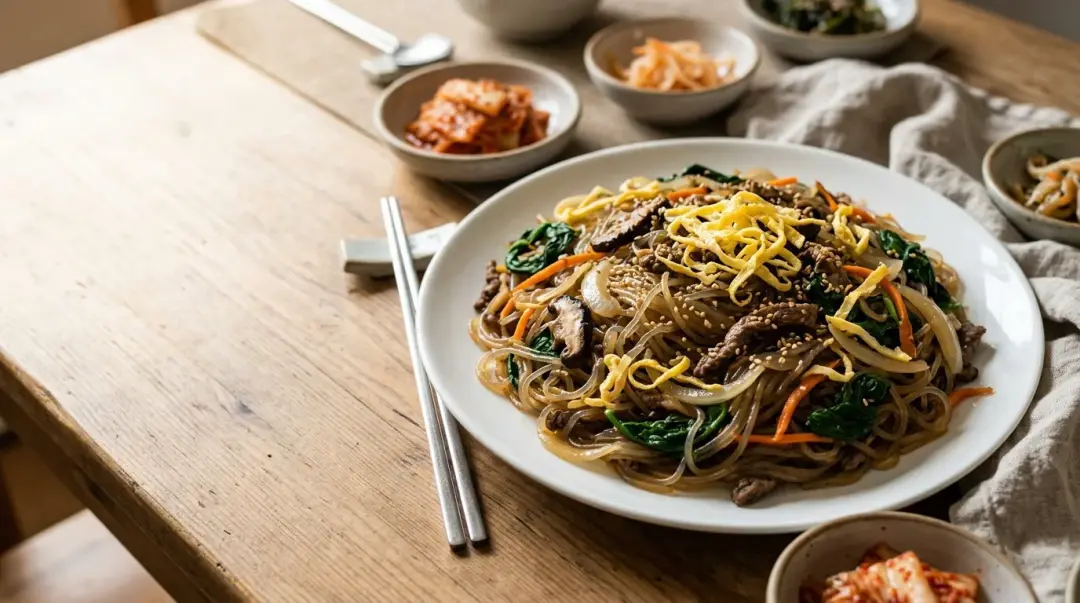
- Dangmyeon (Korean sweet potato glass noodles) — used in japchae. Larger, gray-tinted, extra-bouncy.
- Fensi (Chinese mung bean glass noodles) — used in pad woon sen, hot pot, spring rolls. Thinner, more translucent.
Both rehydrate in cold water in 20-30 minutes or cook in 2-3 minutes of boiling water. They have no flavor of their own — they're carriers for sauce.
Rice Noodles
Rice noodles come in several formats:
- Banh pho — flat, wide Vietnamese rice noodles for pho
- Sen lek — flat, thin Thai rice noodles for pad thai
- Mai fun / bee hoon — thin rice vermicelli, very common in Chinese stir-fries
- Ho fun / shahe fen — wide, thick rice noodles for Cantonese stir-fries
All rice noodles are gluten-free, mildly chewy, and absorb broth aggressively. They typically need only a brief soak or quick boil — overcooked rice noodles become mushy quickly.
Wheat Noodles
The largest and most varied category. Includes:
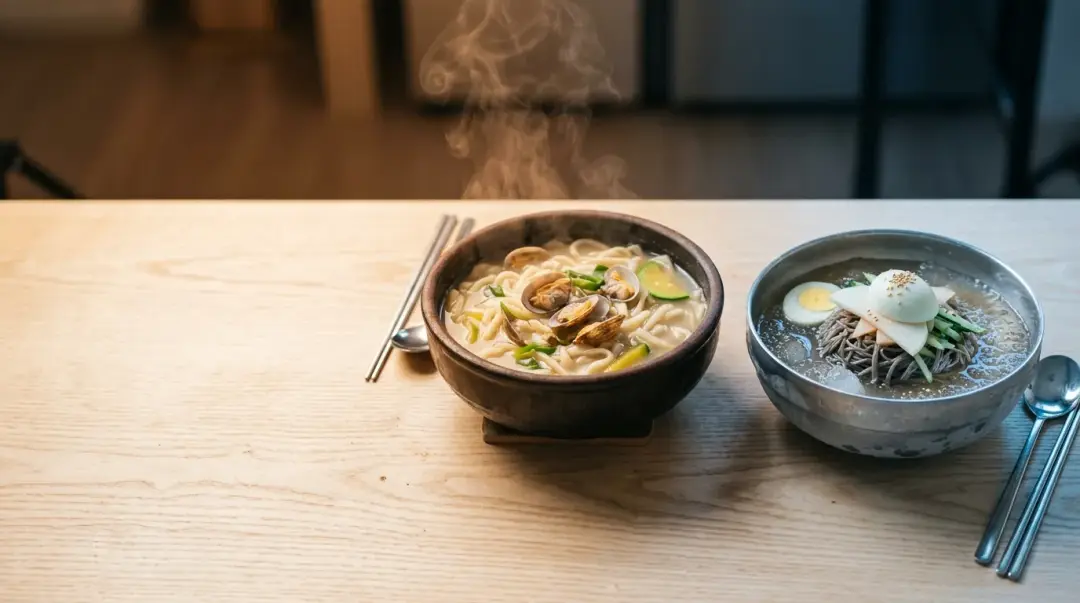
- Korean ramyeon, kalguksu, bibim guksu, sundubu guksu
- Japanese ramen, udon, somen, hiyamugi, yakisoba
- Chinese lo mein, chow mein, dan dan, biang biang, lamian
- Italian pasta (technically wheat-based, though made from durum semolina rather than soft wheat)
Within wheat noodles, the most important distinction is alkaline vs non-alkaline. Alkaline wheat noodles (treated with kansui or lye-water) develop the springy yellow texture of Japanese ramen and Chinese lamian. Non-alkaline wheat noodles are softer — Italian pasta, Japanese udon, Korean kalguksu.
The Gluten Question
Only wheat noodles contain gluten. Glass noodles and rice noodles are gluten-free in their pure form. The non-obvious complications:
- Soba (Japanese buckwheat noodles) is partly wheat — most US soba is 70-80% wheat with 20-30% buckwheat. Only juwari soba (100% buckwheat) is fully gluten-free, and it's rare in US groceries outside specialty Japanese shops.
- Korean ramyeon noodles are wheat-based and contain gluten, even though Korean cuisine has strong gluten-free options elsewhere (japchae, naengmyeon-if-100%-buckwheat).
- Cross-contamination at the factory is the celiac concern. "Made in a facility that also processes wheat" appears on many rice and glass noodle packages — verify if celiac is a real medical concern, not just preference.
The gluten-free Asian noodle map: rice noodles (all formats), glass noodles (mung bean, sweet potato, cassava), and juwari soba. Everything else either contains wheat or risks cross-contamination.
Brand Picks Per Family
Wheat noodles for ramen:
- Sun Noodle (Hawaii/California) — supplier to most serious US ramen shops. Fresh kits at Whole Foods, sold as two-serving boxes.
- Nongshim Shin Ramyun — the default Korean instant.
- Sapporo Ichiban Original — the entry-tier Japanese instant.
Wheat noodles for udon and lo mein:
- Hime Sanuki Udon (frozen) — the texture target for udon at home.
- Twin Marquis Hong Kong Style Pan Fried Noodles — fresh thin Cantonese egg noodles, refrigerated section at most Chinese groceries.
Rice noodles:
- Three Ladies Banh Pho (3mm) — gold standard for pho.
- Erawan Sen Lek — Thai pad thai noodles.
- Wai Wai Sen Yai (about 9–10 mm, dry) — wide flat for pad see ew, drunken noodles.
Glass noodles:
- Ottogi Dangmyeon — Korean sweet potato glass noodles for japchae.
- Lung Fung or Sailing Boat Fensi — Chinese mung bean glass noodles for hot pot, pad woon sen.
When to Choose Which
- Building a stir-fry? Glass noodles soak up flavor without going mushy; great for Korean japchae or Thai pad woon sen. Wheat noodles also work for soy-forward stir-fries (lo mein, yakisoba).
- Making a soup? Wheat noodles (ramen, udon, ramyeon) for substantial bowls where the noodle holds its own against rich broth. Rice noodles (pho, pad thai broth, bun bo Hue) for lighter, broth-forward bowls where you want the soup to dominate.
- Gluten-free dietary need? Glass or rice noodles — both are fully gluten-free if pure (verify the package; some brands cross-process). Buckwheat soba sounds gluten-free but most US soba is 70-80% wheat — only juwari (100% buckwheat) is safe.
- Cold noodle dish? Buckwheat (technically a fourth starch family — soba, naengmyeon), sweet-potato dangmyeon (japchae cold-leftover-style), or wheat-based bibim guksu.
- Adding to hot pot? Glass noodles or wide rice noodles. They cook fast in the simmering broth and stay textural.
Cooking Notes That Apply Across All Three
- Salt the water for wheat noodles only. Rice and glass don't absorb salt the same way.
- Cold-water rinse after cooking for rice and glass noodles, always. Otherwise they clump. A large colander handles the draining for all three families, and a fine-mesh strainer is handy for the rinse.
- Undercook for stir-fries by about 30-50% — the wok finishes them.
- Don't store cooked noodles in broth. They go mushy in 15 minutes. Cook separately, combine at serving.
If You Only Remember One Thing
Wheat for chew, rice for tenderness, glass for bounce. Match the starch family to the dish first — then the specific format (banh pho width, sen lek thickness, dangmyeon vs fensi) becomes a detail rather than a guess.
FAQ
What is the difference between rice noodles and wheat noodles?
Rice noodles are tender, gluten-free and absorb broth aggressively. Wheat noodles bring chew, absorb sauce evenly and contain gluten. Use rice for pho and pad thai, wheat for ramen, udon and lo mein.
Are rice noodles or wheat noodles gluten-free?
Rice noodles are gluten-free in their pure form; wheat noodles are not. If you are celiac, check the pack for cross-contamination, because some rice noodles are made in facilities that also process wheat.
Which is better for soup, rice noodles or wheat noodles?
Wheat noodles (ramen, udon, ramyeon) suit substantial bowls where the noodle holds its own against rich broth. Rice noodles (pho, bun bo Hue) suit lighter, broth-forward soups.
Read Next
Products mentioned in this guide
This section contains affiliate links. We may earn a commission at no extra cost to you.

Ottogi Dangmyeon Sweet Potato Glass Noodles
The Korean glass noodle for japchae. Cook 2 to 3 minutes, rinse cold and toss with a little oil so the strands don't clump.
View on Amazon
Three Ladies Brand Rice Stick, 14 oz (Pack of 4)
Flat rice noodles for pho. Cook them separately and add the broth at serving, since rice noodles soak it up fast.
View on Amazon
Nongshim Shin Ramyun Original (20-pack)
The default Korean instant and an easy way to taste what alkaline wheat brings to a soup noodle. It contains gluten.
View on Amazon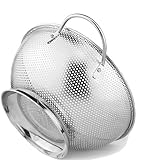
DLD Stainless Steel Micro-Perforated 5-Quart Colander
All three starches drain in a colander, and a large one lets you cold-rinse glass and rice noodles right away so they don't clump. This listing is a 5 quart stainless steel colander with micro-perforations, a wide base and a handle.
View on Amazon
OXO Good Grips 3-Piece Strainer Set
A fine strainer rinses glass and rice noodles without losing strands through the holes. This listing is a nesting set of fine mesh strainers in 3, 6 and 8 inch sizes.
View on Amazon