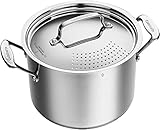




- Best overall: Cuisinart Chef's Classic 6 qt with straining cover
- Best for long strands and big batches: Cook N Home 8 qt with strainer insert
- Best for a crowd: Cuisinart 12 qt pasta and steamer set
- Smaller kitchens: Oster Sangerfield 5 qt
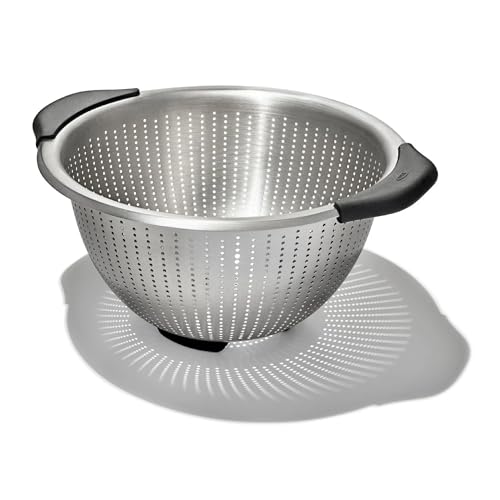
- Already own a pot: OXO 5 qt stainless colander
This is a research-based guide. We did not cook with these pots for this page; we compared maker information and published specifications. Links to Amazon are affiliate links, and NoodleDex earns a commission on qualifying purchases at no cost to you.
Four ways to strain
Four designs cover almost every pasta strainer people search for.
A strainer lid is a pot lid with holes or slots that lets you tip the pot over the sink. A pot with an insert basket has a perforated basket that sits inside the pot and lifts out with the pasta. A colander is a separate bowl with holes that sits in the sink. A clip-on strainer is a flat mesh panel that clamps to the rim of an ordinary pot, so you can drain without changing pots.
Each answers a different problem. A lid saves a colander. An insert saves lifting the full pot. A colander works with any pot you already own. A clip-on works with the pot you already have, at the cost of holding the pot steady while you pour.
Pots with strainer lids
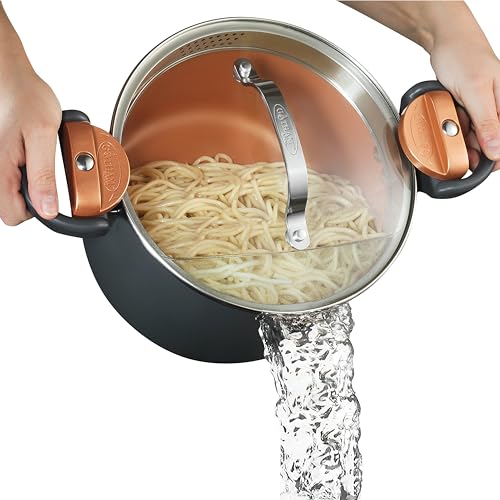
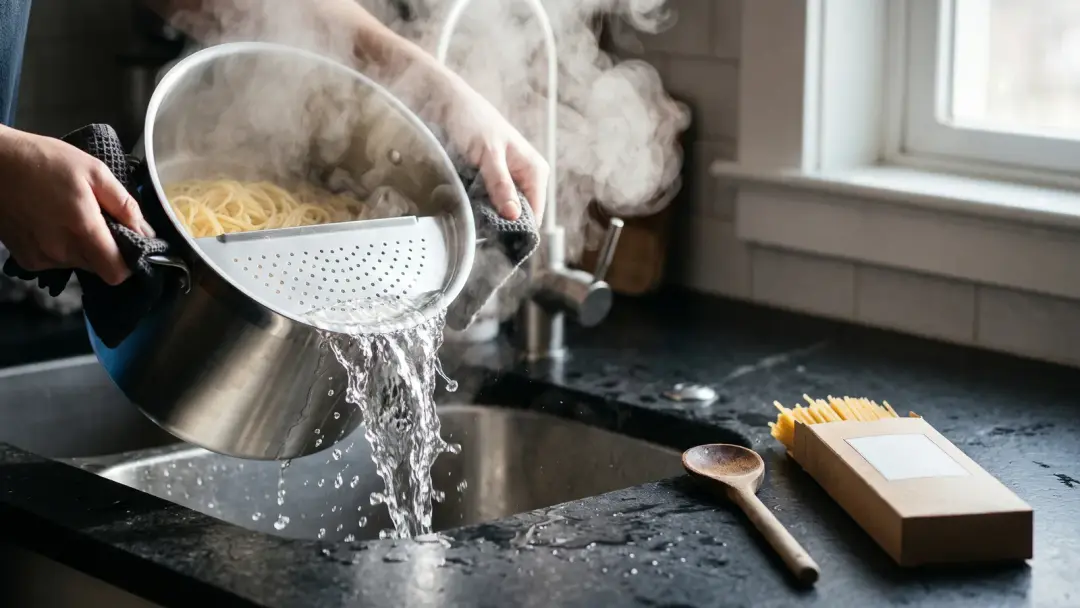
A strainer lid is the quickest way to cut a tool out of the kitchen. The pot cooks the pasta, the lid locks or rests on top, and you pour the water into the sink through the holes.
The Cuisinart Chef's Classic 6 Quart (model 766S-22) is a stainless steel pot with a straining cover that fastens on, with cup and liter measurements marked inside. Cuisinart lists it as compatible with all stovetops, including induction. It is the best-documented pot on this page, because the maker publishes the material and cooktop details. Six quarts holds a pound of pasta with room for the water.
The Gotham Steel 5 quart is a nonstick pot with a locking strainer lid built in. The listing says it is not designed for induction. Nonstick helps with cleanup and hurts with metal utensils, so use a wooden or silicone spoon.
Pots with removable insert baskets
An insert means you do not tip the full pot. You lift the basket, the water falls back into the pot, and you carry only the pasta to the sink. The water stays in the pot, which also helps if you want to cook a second batch or save some for a sauce.
The Cook N Home 8 Quart set is a stainless pot with a strainer insert, a steamer insert and a glass lid. It already appears on our Italian pasta shape guide, where the depth matters most for long strands such as spaghetti and bucatini. The Amazon listing describes it as induction compatible, with 18/10 stainless steel; we did not find the maker's own page, so confirm before you buy.
The Cuisinart 12 quart pasta and steamer set is the large version, a four-piece set with a pasta insert and a steamer insert that lift out. It suits a big batch, a stockpot job or soup, and it is heavy to move when it is full. For a pot used only for simmering and boiling, see our stock pot guide. The Oster Sangerfield 5 quart set includes a steamer insert and a strainer insert and is the compact option; five quarts is the least a pound of long pasta needs. Its listing says it is not compatible with induction cooktops.
Colanders and clip-on strainers
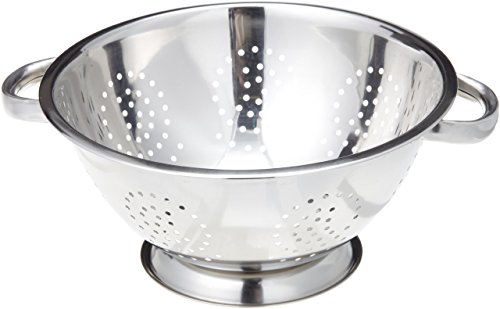
If you own a pot you like, a colander is the lowest-cost fix. The OXO Good Grips 5 Quart is a stainless steel colander with elevated, non-slip handles and three raised feet, and it nests inside OXO's stainless mixing bowls for storage, according to OXO. The ExcelSteel 5 quart is a similar size with a self-draining base, according to its listing.
The Gevoli collapsible set has three sizes, 3, 4 and 5 quarts, and stacks down for a small kitchen. The listing names food-grade BPA-free material but no heat rating, so confirm the rating before you pour boiling water through it.
A clip-on pot strainer is not on the picks list because we have not confirmed a specific model. Browse the clip-on chip below, and check that the clamp fits the rim of your pot. A spider strainer, a wide mesh basket on a long handle, is the one tool worth owning next to any of these: it moves pasta straight into the sauce. Our spider strainer and noodle strainer basket guide compares them.
What to check
- Capacity and depth. Use 4 quarts of water per pound of pasta, so a pot should hold at least 5 to 6 quarts for a pound with headroom. Long strands such as spaghetti need depth to submerge without bending, which favors a taller 8 quart pot. Our pasta shape guide and spaghetti guide cover the shapes.
- Material. Stainless steel is the standard, and a layered base spreads heat. Nonstick scratches. Aluminum pots usually do not work on induction unless they have a magnetic base.
- Lid fit and steam. A lid that fastens or locks keeps the pasta in. Tipping a pot of boiling water releases a plume of steam, so hold the lid with a mitt and tip the pot away from your face.
- Handles. Handles should be sturdy and stay cool enough to grip. Water weighs about 8.3 pounds per gallon, so a full pot is heavy before you count the pot, and the handle needs to hold that.
- Induction compatibility. An induction cooktop needs cookware with a magnetic base. Look for the word induction on the product page, as Cuisinart gives for the 766S-22, or hold a magnet to the bottom as Whirlpool suggests.
Pot size by pasta shape
| Pasta | Pot to use | Why |
|---|---|---|
| Spaghetti, linguine, bucatini (long strands) | 8 quart | Depth to submerge strands without bending |
| Penne, rigatoni, fusilli (short shapes) | 6 quart | A wide pot works; depth matters less |
| Fresh ribbons (tagliatelle, fettuccine) | 6 to 8 quart | Cook in plenty of water so ribbons do not clump |
| Large batch, a crowd | 12 quart | Fits two pounds with water |
A gallon of water per pound is the rule of thumb in our spaghetti guide, and the shape guide explains why crowded water makes strands clump. For brands to put in the pot, see best Italian pasta and De Cecco versus Barilla.
Beyond pasta: ramen, udon and rice noodles
A strainer pot works for other wheat noodles. Ramen and udon boil the same way as pasta, and the lid or insert drains them. Rice noodles are different: many are soaked rather than boiled, so a colander is the better tool. Our rice noodles guide covers soaking and boiling. Gluten-free pasta behaves differently in the pot, and best gluten-free pasta covers it. For fresh versus dried noodles, see fresh versus dried noodles.
FAQ
Do pasta pots with strainer lids actually work?
Yes. A lid with holes lets you tip the pot over the sink and drain without a colander, and it keeps the pasta from sliding out. The weak point is steam and weight: a pot of boiling water is heavy and the steam vents toward your hands. Hold the lid with a mitt, tip the pot away from you and wait for the steam to clear.
What size pasta pot do I need?
A 6 to 8 quart pot suits most households. Use 4 quarts of water per pound of pasta, so a 6 quart pot holds one pound with headroom, and an 8 quart pot leaves room for long strands such as spaghetti and bucatini. Go to 12 quarts only if you cook for a crowd.
Is a pasta insert better than a strainer lid?
An insert lifts the pasta out of the water, so you do not tip a full pot. A lid is simpler and has fewer parts, but you handle the hot water. Choose an insert if you cook large batches or want the cooking water left in the pot.
Can you use a pasta pot on an induction cooktop?
Only if the pot has a magnetic base. Whirlpool's guidance is to hold a magnet to the bottom: if it sticks firmly, the cookware should work on induction. The Cuisinart 766S-22 is listed by Cuisinart for induction, and the Oster and Gotham Steel pots on this page are listed as not for induction. Check the product page for the word induction.
How do you drain pasta without a colander?
Use a pot with a strainer lid, a clip-on strainer, or a slotted spoon or spider to lift the pasta into the sauce pan. A spider strainer, a wide flat mesh basket, moves cooked pasta straight into the sauce and keeps the starchy water in the pot for finishing.
Should you salt the water in a pasta pot?
Yes. America's Test Kitchen suggests about 1 tablespoon of table salt per 4 quarts (1 gallon) of water for a pound of pasta, and a bit more if you use kosher salt. Add it once the water boils in a stainless steel pot, because stainless cookware makers such as All-Clad advise adding salt after boiling, since undissolved salt on the base can leave small pits or white spots.