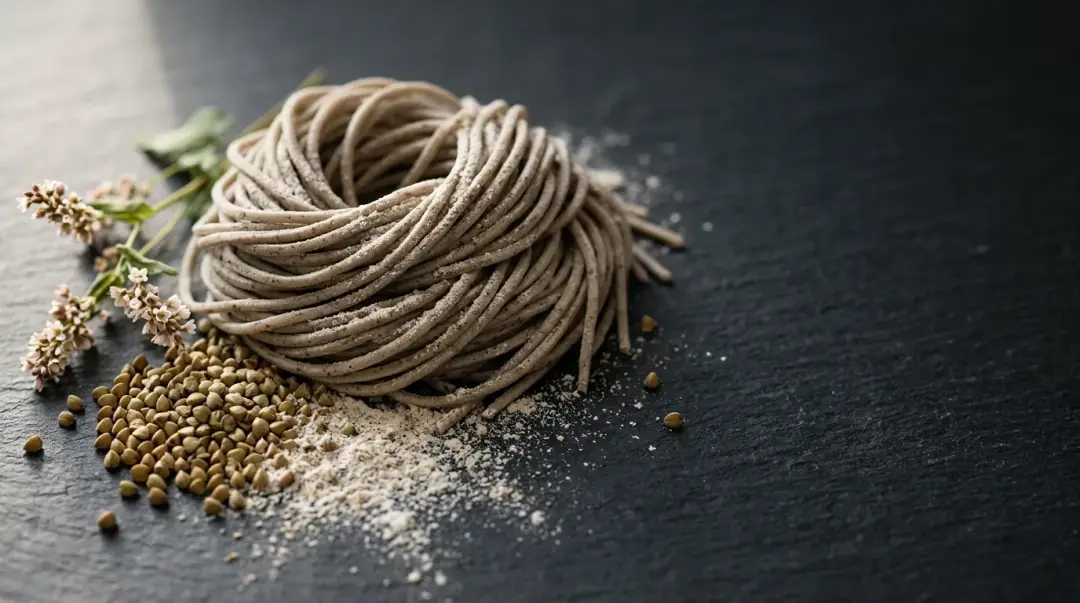
Soba noodles are Japanese noodles made from buckwheat flour, usually blended with some wheat flour to bind the dough. They are thin, grayish-brown, and firmer than wheat noodles, and they are eaten two ways: chilled with a dipping sauce, or hot in a dashi broth.
That is the short version. The longer version is that almost everything interesting about soba comes down to one number on the back of the package.
What Soba Noodles Are Made Of
Buckwheat, despite the name, is not wheat and not a grain. It is the seed of a flowering plant related to rhubarb. Ground into flour, it has no gluten, which is exactly the problem: with nothing to form an elastic network, buckwheat dough tears instead of stretching.
So most soba includes wheat flour as a binder, and the ratio is the single most useful thing to know about any package you pick up.
Soba by Buckwheat Ratio
| Name | Buckwheat | What Changes |
|---|---|---|
| Juwari | 100% | Strongest buckwheat flavor, brittle, breaks easily, gluten-free |
| Nihachi | 80% | The standard at good shops. Clear flavor, still holds together |
| Supermarket blends | 30% to 60% | Milder, chewier, more forgiving to cook, cheapest |
Nihachi means "two-eight," the two parts wheat to eight parts buckwheat that most soba shops treat as the working balance between flavor and structure. Juwari is the purist's version and the fragile one. It snaps in the pot, breaks on the tray, and falls apart in hot broth faster than a blended noodle would.
Watch the low end. US supermarket soba sometimes lists wheat flour first in the ingredients, which means there is more wheat in the package than buckwheat. It is still soba by name. It will taste closer to thin wheat noodles.
Is Soba Gluten-Free?
Usually not.
Buckwheat contains no gluten. Soba often does, because of the wheat flour holding it together. Only juwari soba, made from 100% buckwheat with no binder, is genuinely gluten-free.
Two things make this harder than it should be. Packages marketed on the health shelf lean hard on the word buckwheat without stating a percentage. And "soba" on a restaurant menu tells you nothing about the ratio in the kitchen, so a celiac diner has to ask rather than assume.
If you need strict avoidance, look for juwari on the label or a plain 100% buckwheat ingredient line, and treat everything else as containing wheat.
The Main Types of Soba
Beyond the ratio, soba varies by which part of the buckwheat seed gets milled and by regional technique.
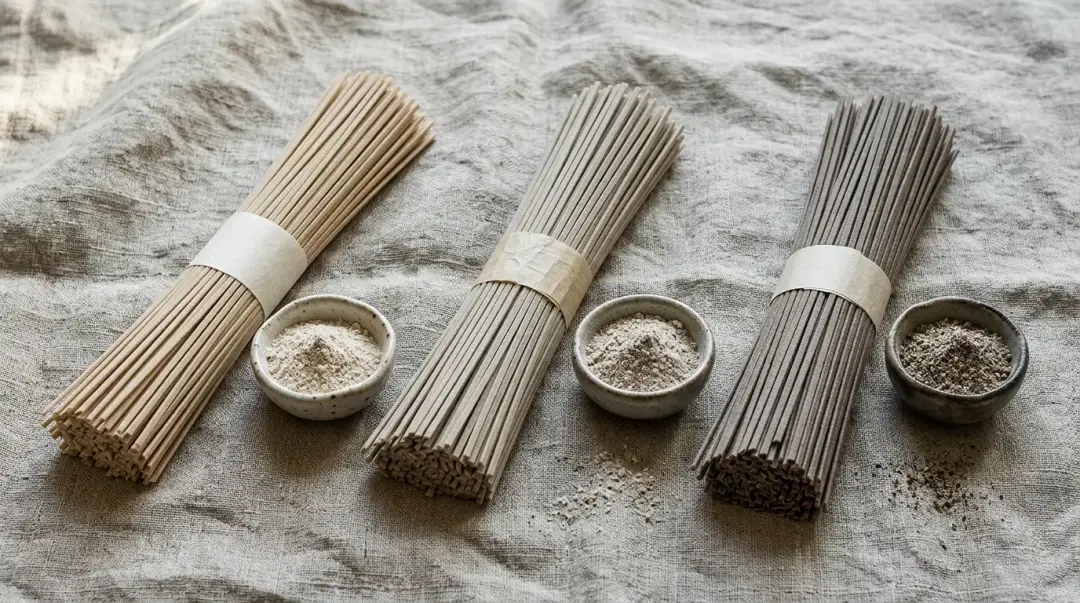
Sarashina soba is made from the refined center of the seed. It comes out pale, almost white, delicate, and much milder than standard soba. It is the elegant version and the one that tastes least like buckwheat.
Inaka soba goes the other direction. Country-style, milled coarse with more of the hull included, it is darker, thicker, rougher in texture, and much more assertive.
Cha-soba is made with powdered green tea worked into the dough. It comes out green, tastes faintly of matcha, and is almost always served cold.
Togakushi soba comes from a village near Nagano City and is traditionally served in small coiled bundles on a woven basket. Hegi soba, from Niigata, uses funori seaweed as the binder instead of wheat, which gives it a distinctly slippery, springy texture, and it is served in ribbons laid across a flat wooden board called a hegi.
Where Soba Comes From
Buckwheat grows where rice does not. It tolerates cool temperatures, thin soil, and short seasons, which made it a survival crop in Japan's mountainous regions long before it became a noodle.
For most of that history it was eaten as porridge or as a dumpling-like cake called sobagaki. The cut noodle we now call soba emerged during the Edo period, when it became fast food for a crowded city, sold from stalls and eaten standing up.
Nagano Prefecture is the region most associated with it. The climate suits buckwheat, and the prefecture has villages where soba-making is treated as a craft with lineage. Nagano is also where the Togakushi style comes from.
Hot and Cold Soba
Soba is served both ways, and the difference is bigger than temperature.
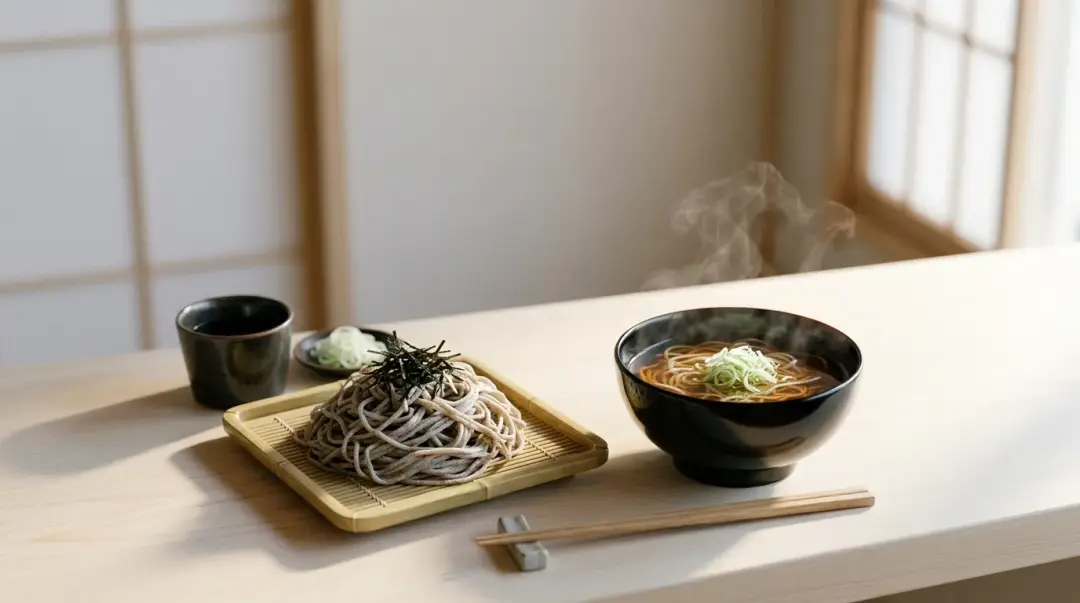
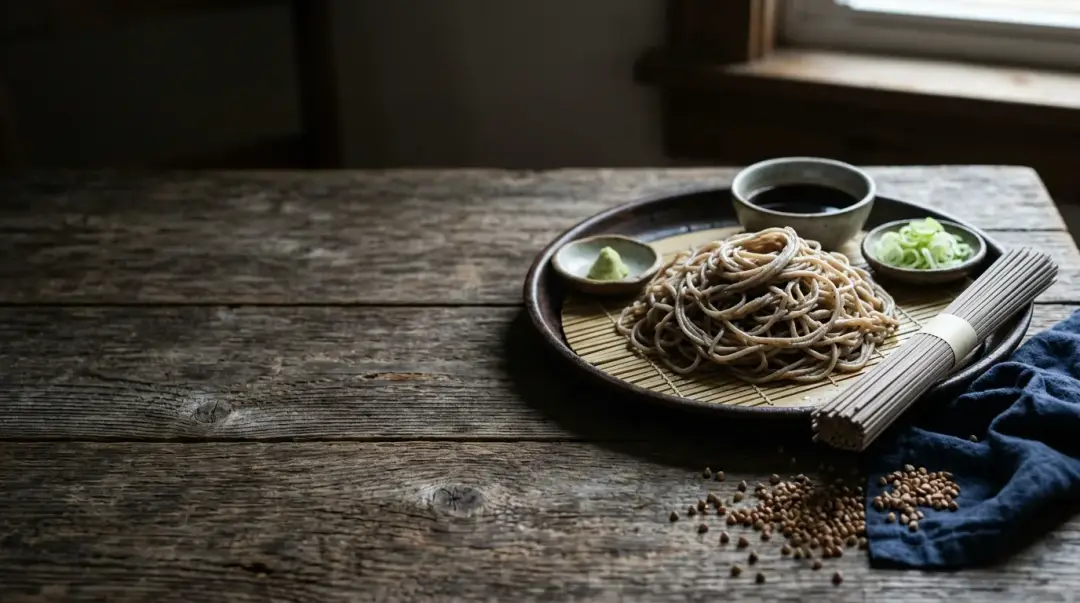
Cold soba, served as zaru or mori, comes drained on a bamboo tray with a small cup of concentrated dipping sauce called tsuyu. You dip the bottom third of the strand and eat. Hot soba, kake soba and its topped variants, comes in a bowl of thin broth you can drink.
The cold version tastes more of buckwheat, for a mechanical reason covered below. It is the version specialist shops want you to order first.
For the full breakdown of vessels, toppings, etiquette, and which to order when, see Hot Soba vs Cold Soba.
Flavor Profile
Soba is earthy, faintly nutty, mineral, and restrained. The buckwheat gives it a gray-brown color and a background sweetness that shows up more as the noodle cools. Cold soba reads bright and clean. Hot soba reads grounding, though the dashi does most of the talking.
Compared with the rest of the Japanese noodle canon it is the least rich (our soba vs ramen comparison shows the gap). Ramen is built on fat and salt, udon on soft chew and broth. Soba is built on the flavor of one ingredient, which is why a bad soba is so obvious.
How Soba Differs from Other Buckwheat Noodles
Japan is not the only place that turns buckwheat into noodles.
Korean memil guksu, the noodle inside naengmyeon, is also buckwheat-based but built for a different texture. Added starches make it chewier and far stretchier, elastic enough that Korean restaurants hand you scissors to cut it at the table. Japanese soba is comparatively short and clean-breaking.
If you have eaten naengmyeon, you have eaten a relative of soba with almost none of the same mouthfeel.
How to Cook Soba
Soba is cooked differently from most dried noodles, and two of the steps are easy to get wrong.
- Boil a large pot of water and do not salt it. Salt toughens buckwheat rather than seasoning it.
- Add the soba and cook about four to five minutes. Start tasting at three. Package times usually run long, and soba goes from firm to mush in under a minute.
- Drain and rinse under cold running water, rubbing the strands with your hands until they stop feeling slippery. This step is not optional, and it applies to hot dishes too.
- For cold soba, chill briefly in ice water, then drain hard. Water pooling on the tray ruins the texture you just built.
- For hot soba, warm the rinsed noodles in plain hot water, drain, and pour the broth over them in the bowl. Boiling them in the broth clouds it and turns the finish gluey.
For dipping tsuyu, mix one part soy sauce, one part mirin, and three parts dashi, and chill it.
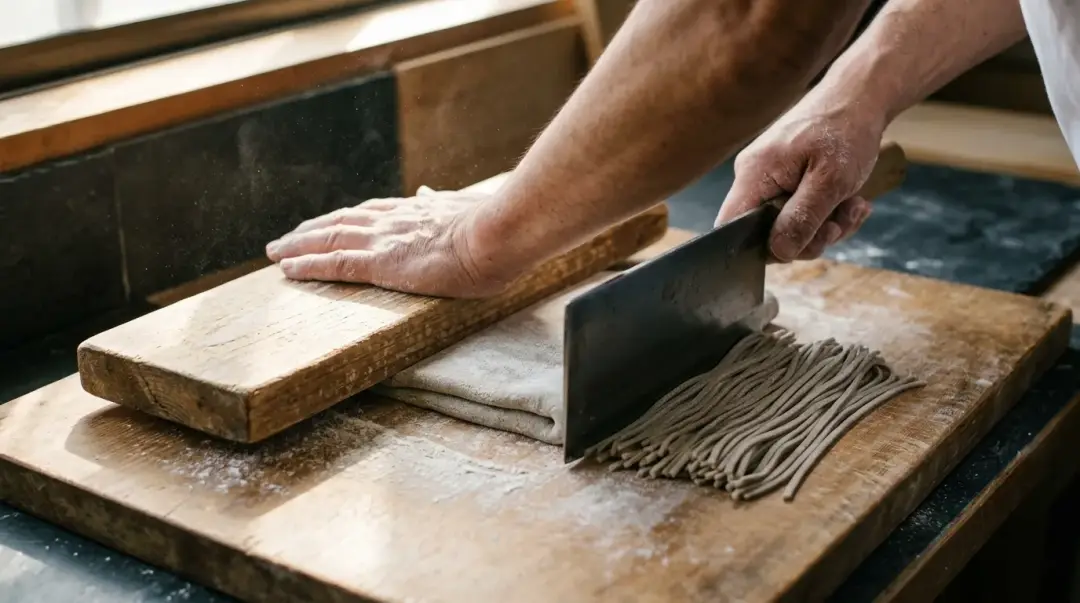
A few pieces of tableware do real work here. A bamboo zaru tray lets the drained noodles sit dry, tsuyu goes in a small cup called a sobachoko, and soba shops that cut by hand use a soba-kiri knife (a wide, straight noodle knife). Our Japanese cookware guide covers the options.
The rinse is worth explaining, because it is the step people skip. Soba sheds far more starch into the water than wheat pasta does. Left on the noodle, that starch sets into a pasty film that flattens the buckwheat flavor and muddies any broth it touches. Rinsing strips it off, and the cold shock tightens the strand into something with actual snap.
Soba-yu
At a good soba shop, finishing a tray of cold soba gets you a small lacquered pot of cloudy warm liquid. That is soba-yu: the starchy water the noodles boiled in.
You pour it into your cup on top of the leftover tsuyu, which turns sauce that was too salty to sip into a light, nutty broth. It is the last course of the meal and the one visitors most often wave away without knowing what it is.
It only appears with cold service, since hot soba leaves no concentrated sauce behind to dilute.
Buying Soba in the US
Dried soba is easy to find. Whole Foods, H Mart, most Japanese groceries, and Amazon all stock it, and Hakubaku is the most widely available brand worth buying. Their 100% buckwheat version is the one to get if you want juwari.
Read the ingredient list rather than the front label. The order of flours tells you the ratio the marketing will not.
Fresh soba is a different matter and rarely sold outside Japanese specialty stores. Specialist soba restaurants are uncommon in the US, though a handful exist, including Cocoron and Soba Totto in New York.
For specific picks, see Best Soba Brands.
Toshikoshi Soba
On New Year's Eve, Japanese households eat toshikoshi soba, "year-crossing soba." The long strands stand for a long life, and the fact that soba cuts cleanly stands for cutting off the year's misfortunes.
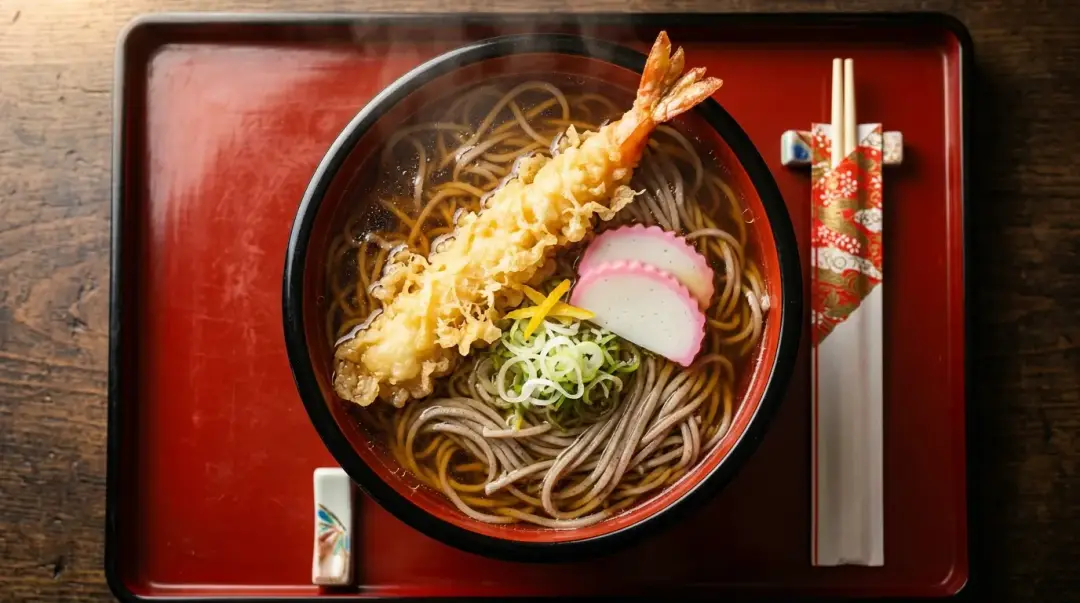
It is usually served hot, though this varies by household and region. Many H Mart and Japanese grocery locations in the US stock New Year's soba sets in late December.
Frequently Asked Questions
What are soba noodles made of?
Buckwheat flour, usually cut with some wheat flour to hold the dough together. The percentage varies. Juwari soba is 100% buckwheat, nihachi soba is 80% buckwheat and 20% wheat, and inexpensive supermarket soba can drop well below half buckwheat despite the name on the package.
Are soba noodles gluten-free?
Only if they are juwari, made from 100% buckwheat. Buckwheat itself contains no gluten, but most soba sold in the US includes wheat flour as a binder and is not safe for celiac diets. Check the ingredient list rather than the front of the package.
What do soba noodles taste like?
Earthy and faintly nutty, with a mineral edge and a subtle sweetness from the buckwheat. The flavor is much easier to detect in cold soba, because rinsing the cooked noodles in cold water strips the surface starch that otherwise mutes it.
Are soba noodles healthy?
Buckwheat is a complete protein containing all nine essential amino acids, and it carries more fiber than refined wheat flour. How much of that reaches your bowl depends on the buckwheat percentage, so a high-ratio soba delivers more of it than a mostly-wheat one.
Do you rinse soba noodles after cooking?
Always, for hot and cold dishes alike. Soba sheds a lot of starch while it boils, and that starch leaves a pasty coating that dulls flavor and clouds broth. Rinse under cold running water and rub the strands until they no longer feel slippery.
What is the difference between soba and udon?
Ingredients and texture. Soba is a thin buckwheat noodle with an earthy flavor and a firm bite. Udon is a thick wheat noodle, white and neutral, with a soft chew. They are used in different dishes and are not interchangeable.
Is soba eaten hot or cold?
Both. Cold soba (zaru or mori) is served chilled on a bamboo mat with a dipping sauce, and it is the best way to taste the buckwheat. Hot soba (kake) comes in a dashi broth, often with tempura or other toppings. Our hot soba vs cold soba guide covers which to order when.