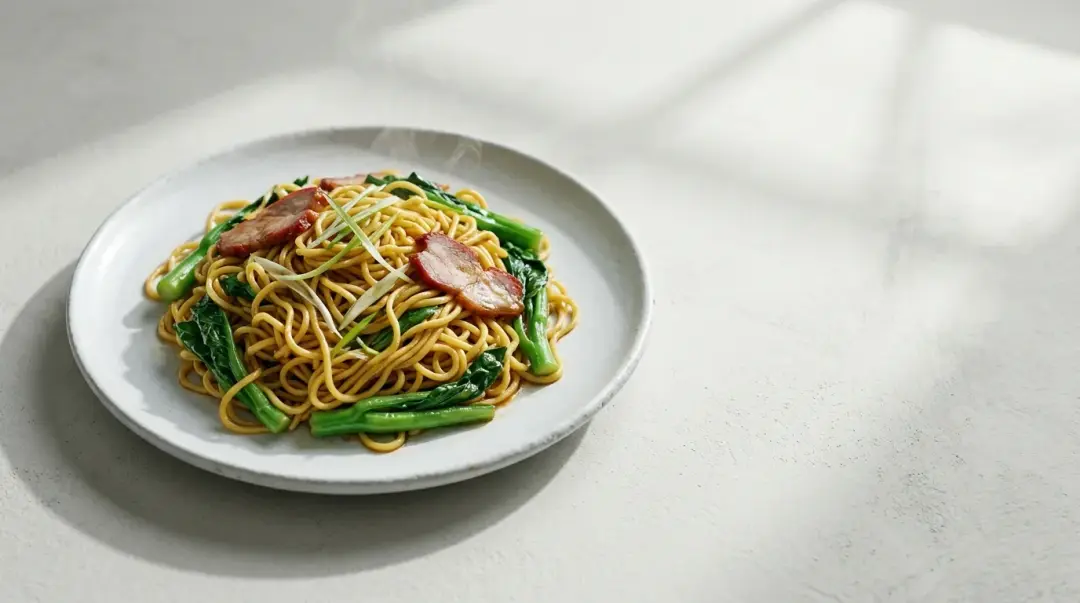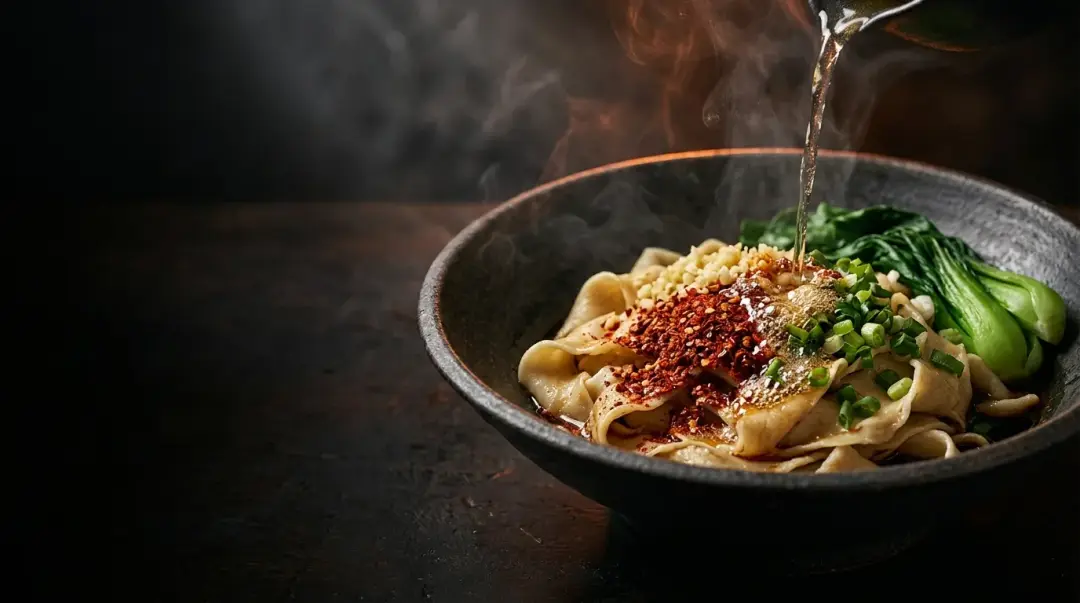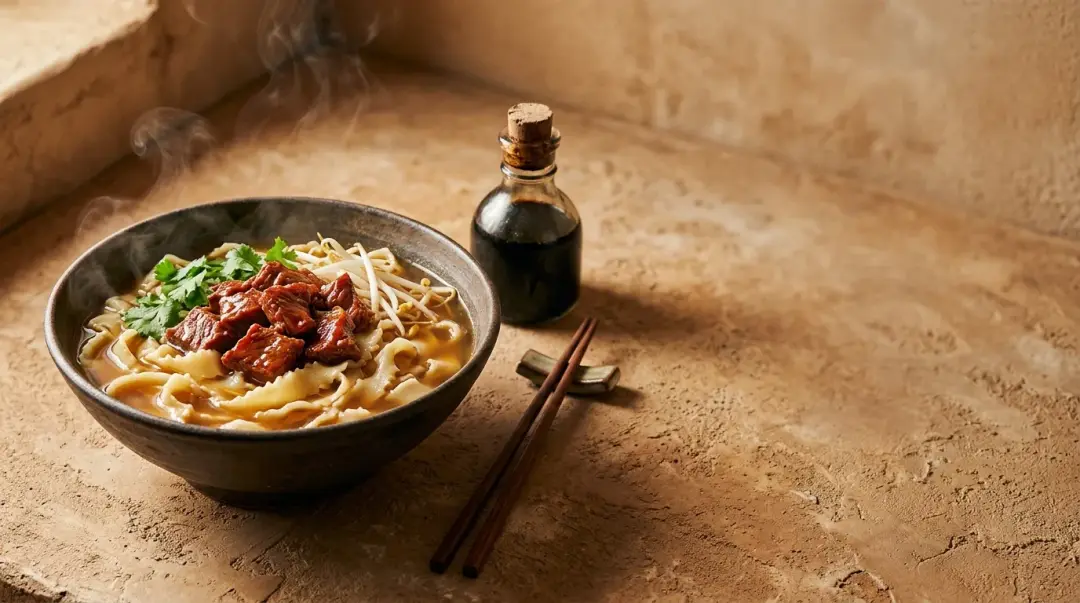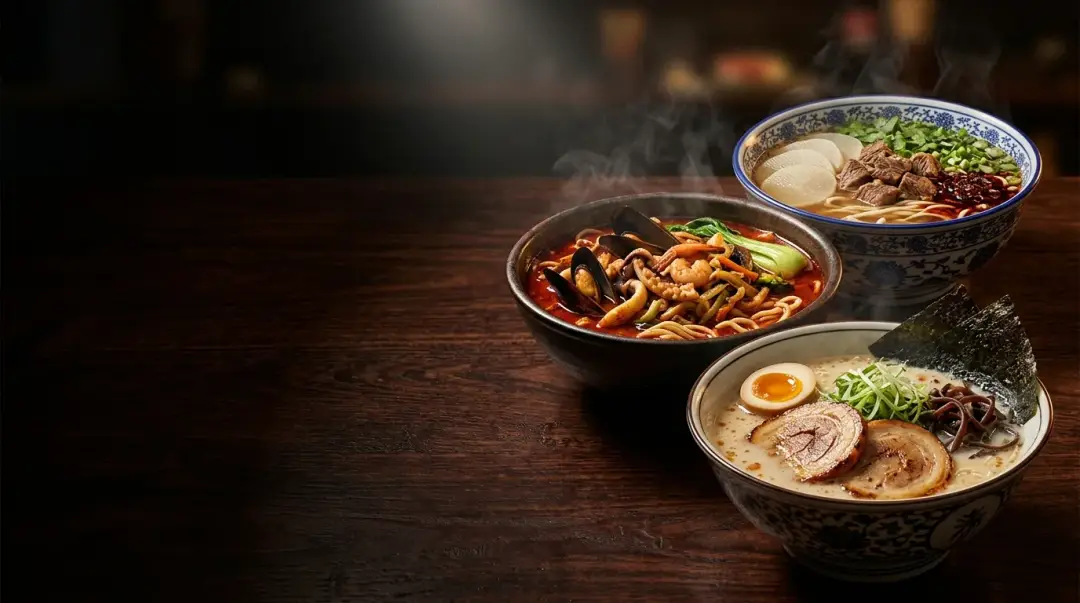
Lamian (拉麵, "pulled noodles") is northern China's hand-pulled wheat noodle — an alkaline dough stretched and folded until one rope splits into hundreds of fine strands, dropped into boiling broth seconds after pulling. Its US vehicle is Lanzhou-style beef noodle soup, served at chains like Lanzhou Beef Hand Pull Noodles in Flushing and the San Gabriel Valley. It matters as lineage: Japanese ramen borrowed lamian's name, though historians trace ramen itself mainly to Cantonese-style noodle soups served in Yokohama's Chinatown.
What Is Lamian?
Lamian (拉麵 — "pulled noodles") is the ancestral hand-pulled noodle technique that produced Chinese fresh wheat noodles for centuries and lent its name, though not its method, to Japanese ramen. The technique:
- Make alkaline wheat dough — wheat flour + water + a tiny amount of food-grade lye water (the same kansui that defines Japanese ramen)
- Rest it for hours to relax the gluten
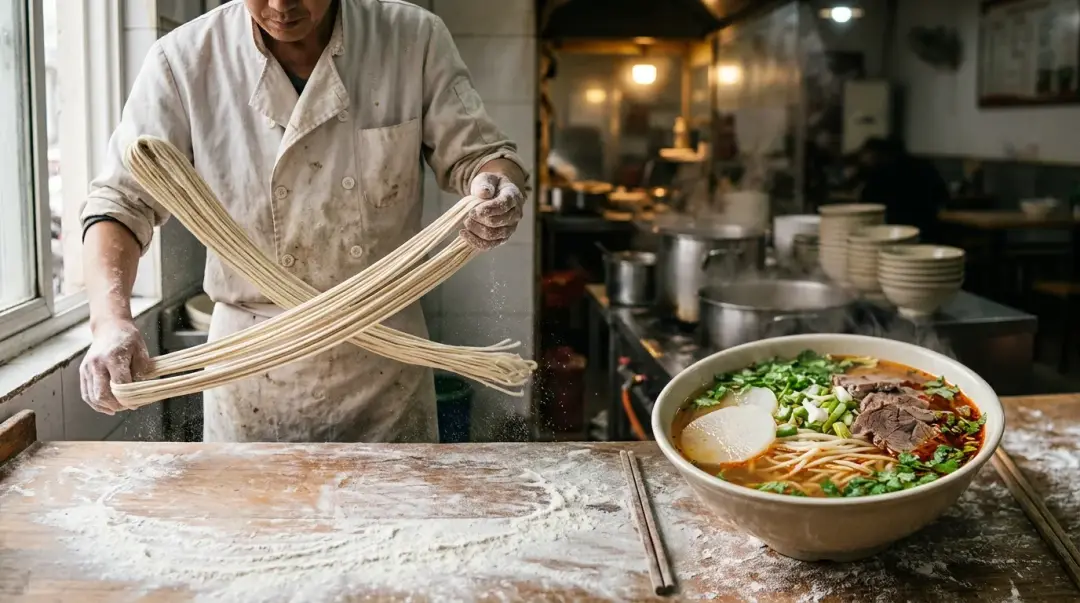
- Pull and fold — stretch the dough into a rope, fold in half, stretch again. With each fold, the number of strands doubles.
- After 8-10 folds, you have 1024+ individual noodle strands from one piece of dough
- Drop into boiling broth seconds after pulling
The whole process is theatrical — a skilled lamian master can pull noodles in 60 seconds. Watching it done well is part of the experience at Lanzhou-style restaurants.
Lanzhou Beef Noodle Soup — The Iconic Use
Lanzhou lamian (蘭州拉麵) is the most famous lamian dish — beef broth lamian from the Gansu Province capital of Lanzhou. The bowl features:
- Hand-pulled lamian with diner-selected thickness (8 standard sizes from thread-thin to belt-wide)
- Clear beef broth simmered for hours with twenty-plus spices
- Sliced beef, daikon radish, garlic chives, cilantro, chili oil
- A halved hard-boiled egg sometimes
- A drop of red chili oil for color and heat
Lanzhou noodle restaurants are everywhere in China. They have a specific format — open kitchen with the lamian master visible, broth bubbling in a giant cauldron behind. The dish is meant to be eaten fast, hot, in 10 minutes.
Lamian vs Japanese Ramen — The Family Tree
Lamian is a cousin, not a direct parent. The word ramen likely borrows from lamian, but historians trace Japanese ramen mainly to Cantonese-style wheat noodle soups sold in Yokohama's Chinatown in the late 1800s. Both use alkaline dough; ramen's is machine-cut, not pulled. See the history of ramen.
Differences today:
- Lamian is freshly pulled at most Chinese restaurants. Ramen noodles are often factory-made.
- Lamian broth is clear-bright (Lanzhou style). Ramen broth is layered-dense (tonkotsu, miso, shoyu).
- Lamian thickness is diner-selected. Ramen thickness is shop-determined.
Both are wonderful. Different traditions.
Flavor Profile
Lamian itself is wheat-forward, chewy, slightly alkaline. The dish flavor depends on the broth — Lanzhou-style is clear and beefy; Hui-Muslim style adds more spices and lamb.
Where to Eat Lamian in the US
Lanzhou-style restaurants have spread in US cities:
- Lan Sheng (NYC) — Lanzhou specialist
- Master Wok (Chicago)
- Lanzhou Beef Hand Pull Noodles (Multiple US cities)
- King's Noodle House (Bay Area)
Look for restaurants with "Lanzhou" in the name for authentic preparation.
Making Lamian at Home
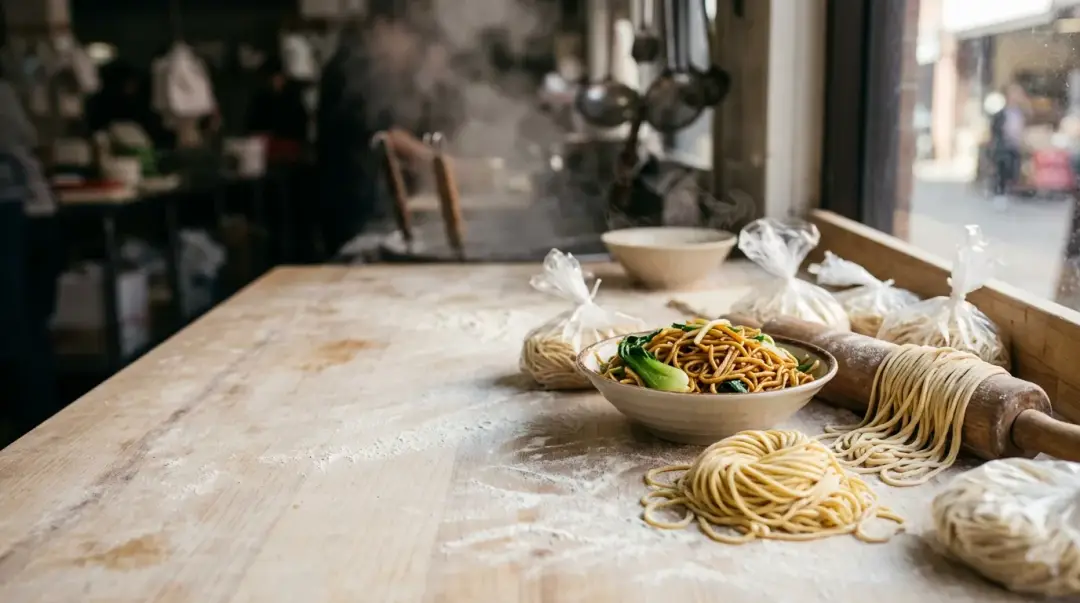
Hand-pulled lamian at home is genuinely difficult — the alkaline ratio matters and the pulling technique takes years to master. Cooks who try it weigh the flour and water on a scale, rest the dough in a covered bowl and divide it with a bench scraper. Realistic alternatives:
- Fresh hand-pulled noodles (refrigerated) from Chinese groceries
- Wide alkaline wheat noodles from Twin Marquis
- Dry premium ramen-style noodles (Sun Noodle's thicker varieties)
For the broth, simmer beef bones with star anise, cinnamon, cloves, ginger, scallion, and white pepper for 2 hours. Strain clear. Season with salt and a drop of soy.
FAQ
What is lamian?
Lamian means pulled noodles. It is northern China's hand-pulled wheat noodle, made from an alkaline dough that is stretched and folded and dropped into boiling broth seconds after pulling.
How many strands does one piece of lamian dough make?
Each fold doubles the number of strands. After 8 to 10 folds, one piece of dough yields 1024 or more individual strands.
Is lamian the same as ramen?
No. Lamian is a cousin, not a direct parent. The word ramen likely borrows from lamian, but historians trace Japanese ramen mainly to Cantonese-style noodle soups sold in Yokohama's Chinatown, and ramen noodles are machine-cut rather than pulled.
What is Lanzhou beef noodle soup?
It is the best-known lamian dish: hand-pulled noodles in a clear beef broth with sliced beef, daikon, garlic chives, cilantro and chili oil. Diners pick the noodle thickness from eight standard sizes.
Can you make lamian at home?
It is genuinely difficult, because the alkaline ratio matters and the pulling technique takes years to master. Refrigerated hand-pulled noodles from Chinese groceries are a realistic alternative.