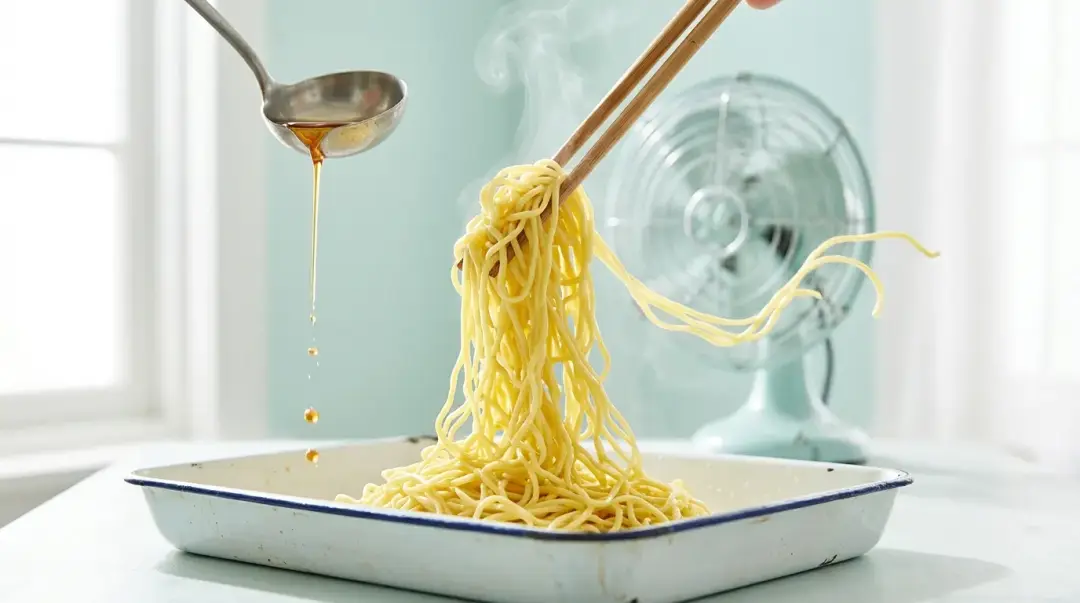
The tool that matters most in a cold noodle stall is a fan. Wikipedia's entry on Taiwanese cold noodles says vendors cool the noodles with electric fans before tossing them in oil, and The Mala Market's Sichuan recipe tells cooks to lift the drained noodles with chopsticks "while fanning dry." Its Chengdu chicken-noodle recipe quotes a Chengdu cook who aims an electric fan at the noodles "when she just can't wait."
The Mala Market's reasoning is about the surface of the noodle: cool it to the touch before oiling, and handle it as little as possible so the surface starch doesn't leach out. Red House Spice takes the faster route and rinses the noodles under running water to stop the cooking. Either way, the noodle is cooled and coated in oil before any sauce goes on, and every regional style of liang mian starts from there. What changes from city to city is the sauce.
What Is Liang Mian?
Liang means cool or cold and mian means wheat noodle. The recipe site Red House Spice calls liang mian a xiao chi (小吃, "small eat," the snack category of Chinese street food) "popular in many regions of China," sold at stalls and made at home. The Mala Market points out a practical reason it stays popular: the dish travels, and it needs no microwave or oven before serving.
The default noodle is thin, round and alkaline. Red House Spice describes it as yellowish, with a "slippery, springy texture." Wikipedia notes that Sichuan cooks add baking soda to the noodles, and Red House Spice credits the alkaline agent for the yellow tint. The Mala Market suggests fresh alkaline noodles or dried jianshui mian (碱水面, "alkaline-water noodles") from Wenzhou.
The cooking step is short. Boil the noodles to about 80% done, no more than 5 minutes per The Mala Market. Then the fan, then the oil. In Chengdu the oil is often caiziyou (菜籽油, roasted rapeseed oil), heated until it smokes.
Four Regional Styles
The name covers a family of dishes. These are the four you're most likely to meet, plus the one that gets mistaken for them.
Chinese cold noodles by region
| Style | Noodle | Sauce base | Typical toppings |
|---|---|---|---|
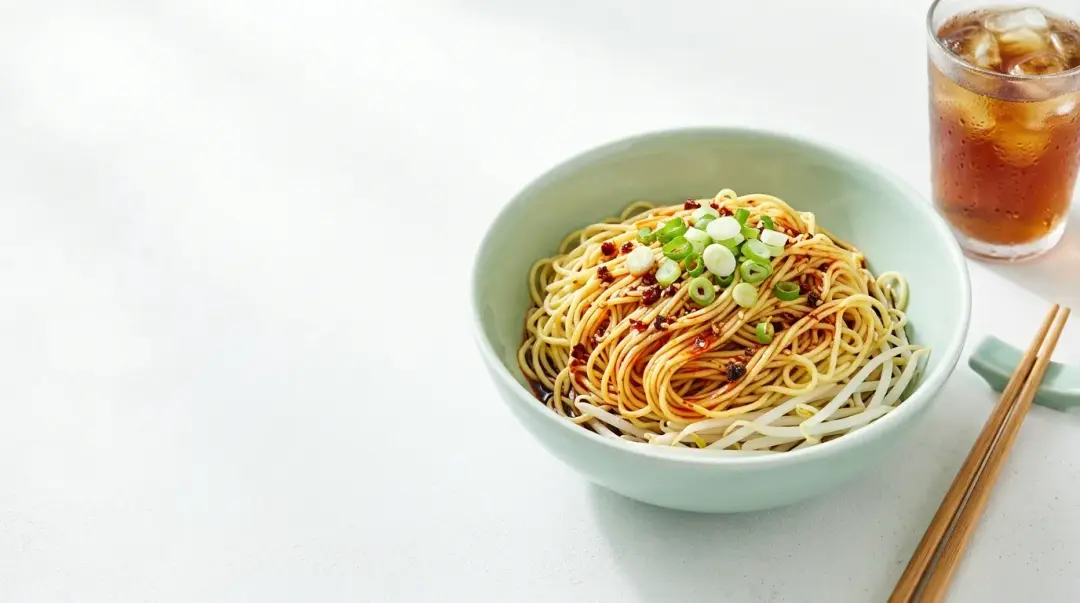
| Sichuan liang mian | Thin alkaline wheat, boiled and fan-cooled | Black vinegar, chili oil, garlic water, sugar, soy, Sichuan pepper | Scallion, blanched bean sprouts underneath |
| Chengdu jisi liang mian | Same thin alkaline noodle | Adds aromatic sweet soy and sesame paste | Shredded chicken, peanuts |
| Shanghai cold noodles | Shanghai-style wheat noodle, steamed then boiled | Peanut butter or sesame paste, vinegar, light soy, sugar | Cucumber, braised gluten, shredded eel or bamboo shoot |
| Taiwanese liang mian | Yi noodles or oil noodles, fan-cooled | Sesame paste or peanut sauce, soy, vinegar, garlic | Julienned cucumber, optional chili oil |
| Liangpi (not liang mian) | Steamed wheat or rice starch sheet, cut into strips | Chili oil, vinegar, soy, sesame | Wheat gluten cubes, cucumber |
Sichuan liang mian
The Sichuan bowl balances three tastes the cooks name outright: suan (sour), tian (sweet) and la (spicy), as The Mala Market puts it. Its recipe uses 2 tablespoons of Baoning black vinegar, a little sugar, two kinds of chili oil, light soy, ground Sichuan pepper and a spoon of minced garlic and ginger steeped in water. Red House Spice's version adds star anise to the infused water. For a store-bought jar, see our chili crisp guide.
Chengdu serves it over a bed of blanched bean sprouts, about one third the dry weight of the noodles, with scallions on top. A common Chengdu variation, jisi liang mian (鸡丝凉面, cold noodles with shredded chicken), adds sesame paste and fuzhi jiangyou (复制酱油, aromatic sweet soy), a syrup of light soy simmered for 15 to 20 minutes with sugar, star anise, cassia, Sichuan pepper and black cardamom.
Shanghai cold noodles
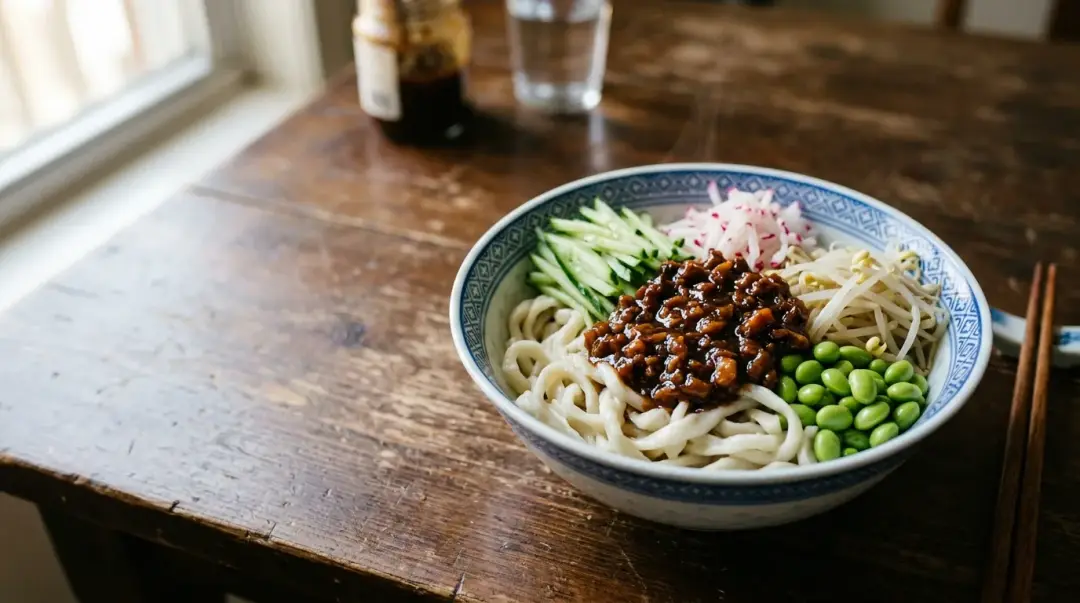
Shanghai's version is built around nut paste instead of chili. Wikipedia describes Shanghai cold noodles as made with Shanghai-style noodles that are "steamed and then cooked" for extra chew, with peanut butter in the sauce. A Shanghai home recipe from the Pandemic Noodles project steams the noodles for 10 minutes, boils them for another 10, rinses them and coats them in oil, then dresses them with peanut butter, vinegar, light soy, sugar, sesame oil and salt.
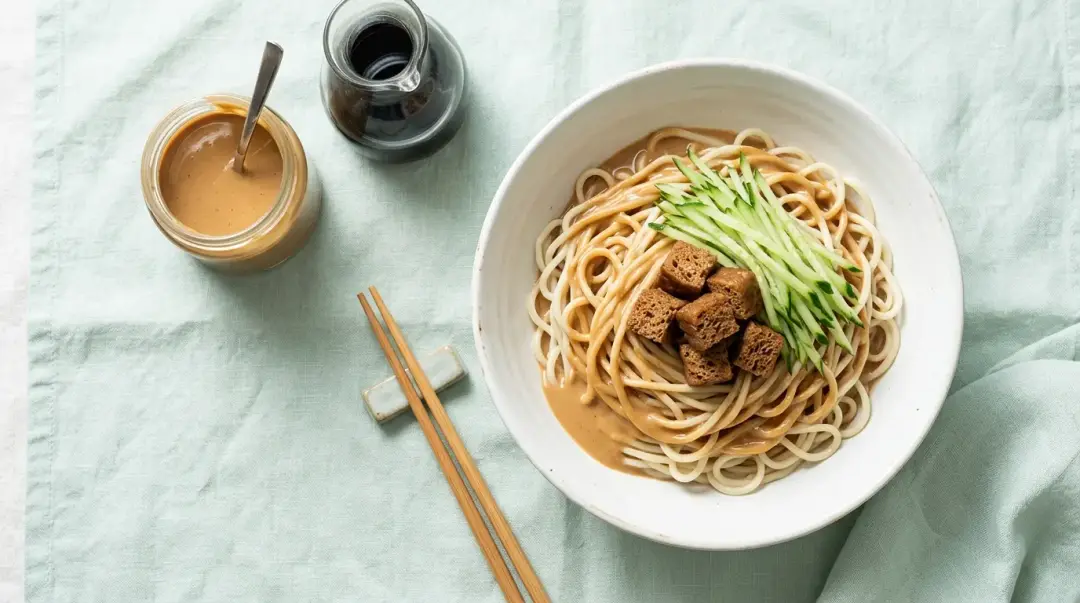
In Shanghai itself the dish is a summer fixture. Shanghai food writer Rachel Gouk describes the standard bowl as sesame sauce with shredded cucumber, with vendors mixing sesame and peanut in their own ratios and adding soy, vinegar or chili oil. Toppings run from shredded vegetables and minced meat to kaofu (烤麸, braised wheat gluten). The traditional Shanghai toppings listed in the Pandemic Noodles write-up are more elaborate: shredded eel, and shredded bamboo shoot stir-fried with green pepper.
Taiwanese and northern versions
Taiwan's liang mian uses yi noodles or oil noodles cooled by fan and tossed in oil, per Wikipedia, with sesame paste, peanut sauce, soy, vinegar, garlic and julienned cucumber. The city of Chiayi dresses its wide flat version with mayonnaise. Farther north, PBS SoCal's guide to Los Angeles cold noodles points to Shenyang's buckwheat liang mian with pickled cabbage and cucumber, closer in spirit to Korean naengmyeon than to the Sichuan bowl.
Liang Mian vs Liangpi
This is the confusion that matters most on a menu, because both dishes are cold, both get chili oil and vinegar, and Xi'an restaurants often list liangpi in the same section.
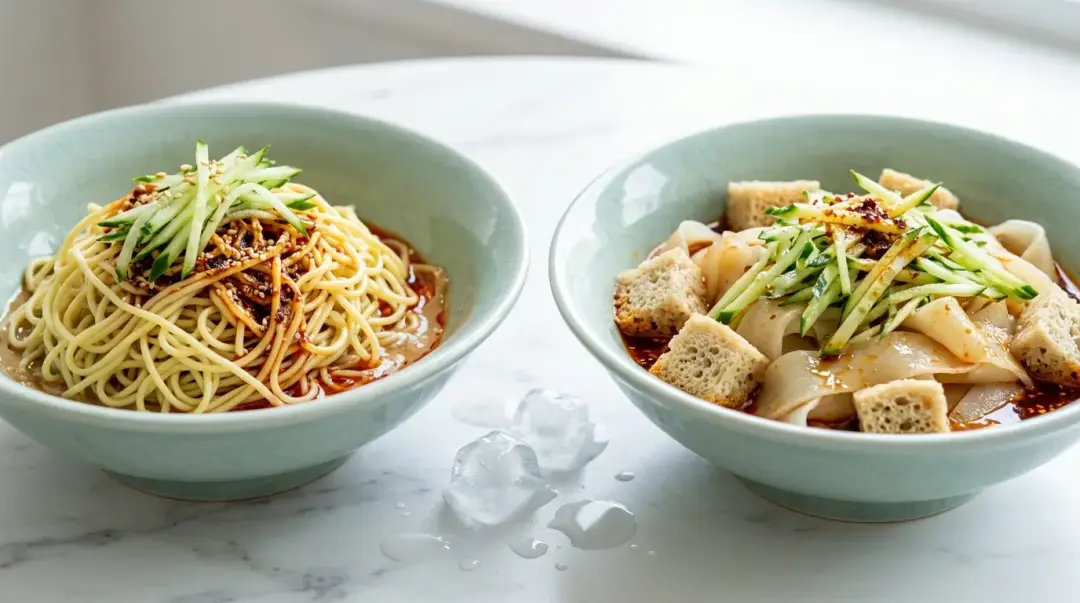
Liangpi (LYAHNG-pee, 涼皮, "cold skin") comes from Xi'an in Shaanxi. It isn't a boiled noodle. Wikipedia lays out the method: cooks mix wheat or rice flour with water, rinse the dough until the water runs "muddy white" with starch, discard the dough, let the starch settle overnight, then steam a thin layer of it on a plate and cut the sheet into strips. The spongy cubes on top of mianjin liangpi are mianjin (面筋, wheat gluten).
The result eats differently. Liangpi is soft, slick and slightly translucent, with almost no spring. Liang mian is an ordinary wheat noodle with bite. Liangpi is also vegan by default, per Wikipedia, while liang mian toppings often include chicken or pork.
Two quick tells on a menu: if the dish comes with gluten cubes, or the strips look pale, flat and translucent, it's liangpi. If the noodles are thin, round and yellow, it's liang mian. In New York, Xi'an Famous Foods sells liangpi next to its biang biang noodles; our Chinese regional noodles guide covers the rest of that Shaanxi menu.
Liang Mian vs Dan Dan Mian
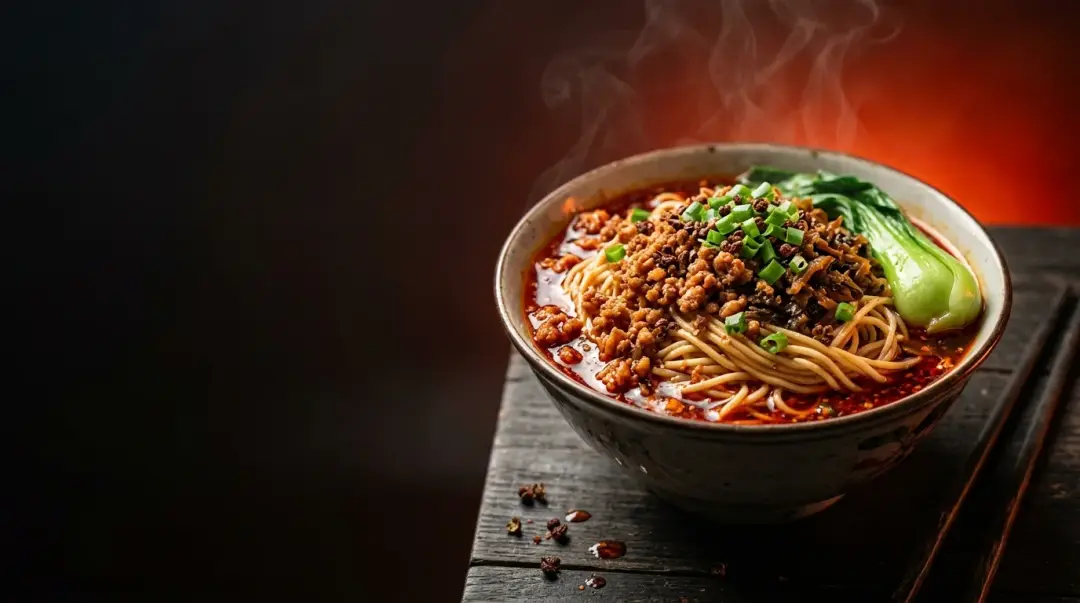
Dan dan mian is the best-known Sichuan noodle outside China, and it shares a pantry with Sichuan liang mian: chili oil, black vinegar, sesame paste, Sichuan pepper. Temperature divides them. Dan dan is a warm bowl, hot noodles tossed in sauce and topped with crisp minced pork and ya cai (preserved mustard greens). Liang mian is cooked ahead, cooled and oiled, and its Sichuan dressing leans on black vinegar and sugar for the sour-sweet-hot balance described above.
They work as a pair. Our dan dan page notes that Chengdu shops serve dan dan next to liang ban (凉拌, cold-tossed) dishes, and liang mian belongs in that cold column.
New York's Cold Sesame Noodles
Chinese American menus often list cold noodles as "cold sesame noodles," a dish with a specific New York history. Shorty Tang, a Sichuan-born chef who cooked in Taiwan before moving to New York, made them the signature of Hwa Yuan, his restaurant at 42 East Broadway in Manhattan's Chinatown. In 2007, New York Times critic Sam Sifton wrote that "it was Shorty Tang who cooked the best cold sesame noodles Manhattan ever tasted," a line NY Press quoted in a 2017 piece on the family. Hwa Yuan Szechuan is open again on East Broadway.
Its sesame sauce puts it closer to the Taiwanese and Shanghai styles than to the chili-and-vinegar Sichuan bowl, even though Tang was born in Sichuan.
Where to Eat Liang Mian in the US
On menus, look for "cold noodles," "sesame noodles" or "spicy cold noodles" as well as liang mian.
- Hwa Yuan Szechuan, East Broadway, Manhattan. Cold sesame noodles from the Shorty Tang lineage.
- Chengdu Taste, 651 W. Duarte Rd., Arcadia, CA. PBS SoCal lists its cold sesame noodles with shredded chicken, cucumber, carrot, garlic sauce and chili oil, a close match for Chengdu's jisi liang mian.
- Lao Xi'er Noodle House, Arcadia, CA. The Eat the World LA blog lists a cold noodle with sesame sauce among its Shanxi dishes.
- Shen Yang Restaurant, San Gabriel, CA. Shenyang-style buckwheat cold noodles, per PBS SoCal.
- Shaanxi Gourmet, Rosemead, CA, if you want to taste liangpi side by side.
Build a Bowl at Home
Cold noodles are a pantry dish once you have the noodle step down. The method, using The Mala Market's quantities as a guide for a 200 g serving:
- Boil thin alkaline wheat noodles until just under done, no more than 5 minutes.
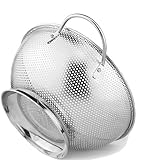
- Drain in a large colander, spread them out and fan them dry until cool to the touch. Handle them as little as possible.
- Toss, in a large bowl, with ½ tablespoon of toasted sesame oil or cooled roasted rapeseed oil.
- Pick a sauce. For Sichuan: black vinegar, chili oil with flakes, light soy, a pinch of sugar, ground Sichuan pepper and garlic-ginger water. For Shanghai: peanut butter or Chinese sesame paste thinned with water, vinegar, light soy, sugar and sesame oil.
- Serve over blanched bean sprouts with scallion (Sichuan) or with julienned cucumber (Shanghai and Taiwan).
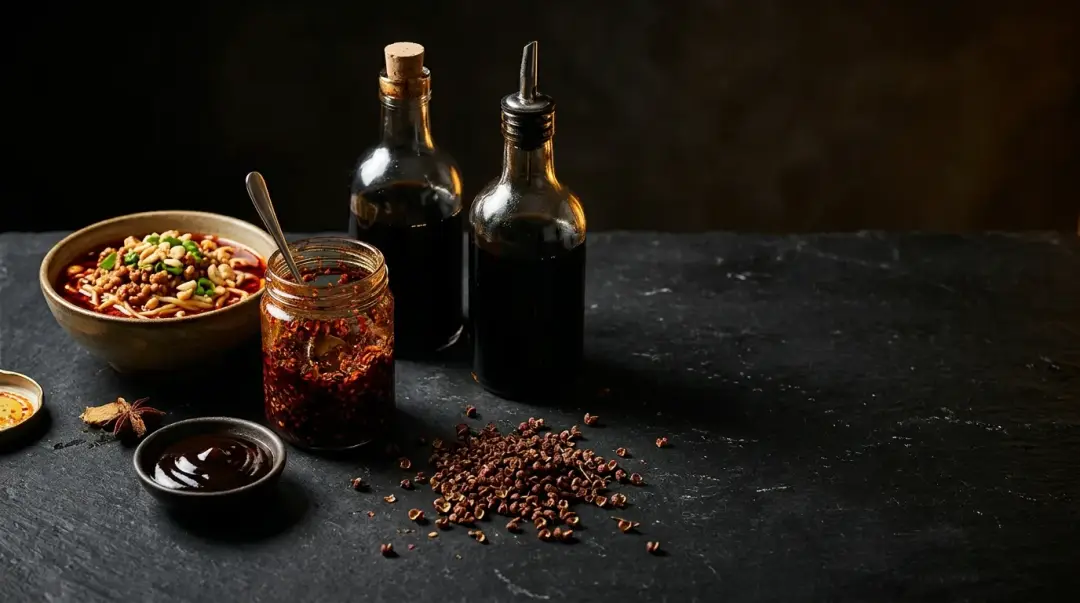
The sauces draw on the same three bottles: black vinegar, sesame paste and chili oil. Our Chinese pantry essentials guide covers which brands to buy at a Chinese grocery.
FAQ
What is liang mian?
Liang mian (涼麵) means cold noodles. It is a Chinese snack of wheat noodles boiled just to done, cooled quickly, tossed with oil so they don't stick, and dressed with a cold sauce. The sauce changes by region: chili oil, black vinegar and garlic in Sichuan, peanut or sesame sauce with vinegar in Shanghai and Taiwan.
What is the difference between liang mian and liangpi?
Liang mian is a wheat noodle served cold. Liangpi, from Xi'an in Shaanxi, is not a boiled noodle at all. Cooks wash the starch out of wheat or rice dough, let it settle overnight, steam the starch into thin sheets and cut them into strips. Liangpi is softer, slicker and more translucent, and it often comes with cubes of wheat gluten.
What noodles are used for Sichuan cold noodles?
Thin, round alkaline wheat noodles, slightly yellow and springy. The Mala Market recommends fresh alkaline noodles or dried Wenzhou-style jianshui mian, boiled to about 80 percent done. Wikipedia notes that Sichuan cooks add baking soda to the noodles, which gives them their firm, springy bite.
Are Shanghai cold noodles made with peanut butter?
Often, yes. Wikipedia's entry on cold noodles says Shanghai cooks add peanut butter and other seasonings, and Shanghai vendors often blend sesame paste with peanut sauce, then add soy sauce, vinegar and sometimes chili oil. The Shanghai method also steams the noodles before boiling them, which makes them chewier.
How do you keep cold noodles from sticking?
Undercook them slightly, drain, and spread them out to cool before adding oil. Chengdu cooks fan the noodles dry, and Taiwanese vendors use electric fans. Once they are cool to the touch, toss them with a little toasted sesame oil or roasted rapeseed oil. Handle them as little as possible so the surface starch stays put.
Are dan dan noodles a type of liang mian?
No. Dan dan mian is served warm, with hot noodles tossed in chili oil, sesame paste and crisp fried pork. Liang mian uses similar Sichuan seasonings but on noodles that have been cooled and oiled ahead of time. The two often appear on the same Sichuan menu, one hot and one cold.