Italian Pasta Shapes: 14 Cuts and Their Sauces
· 7 min read · NoodleDex Editorial
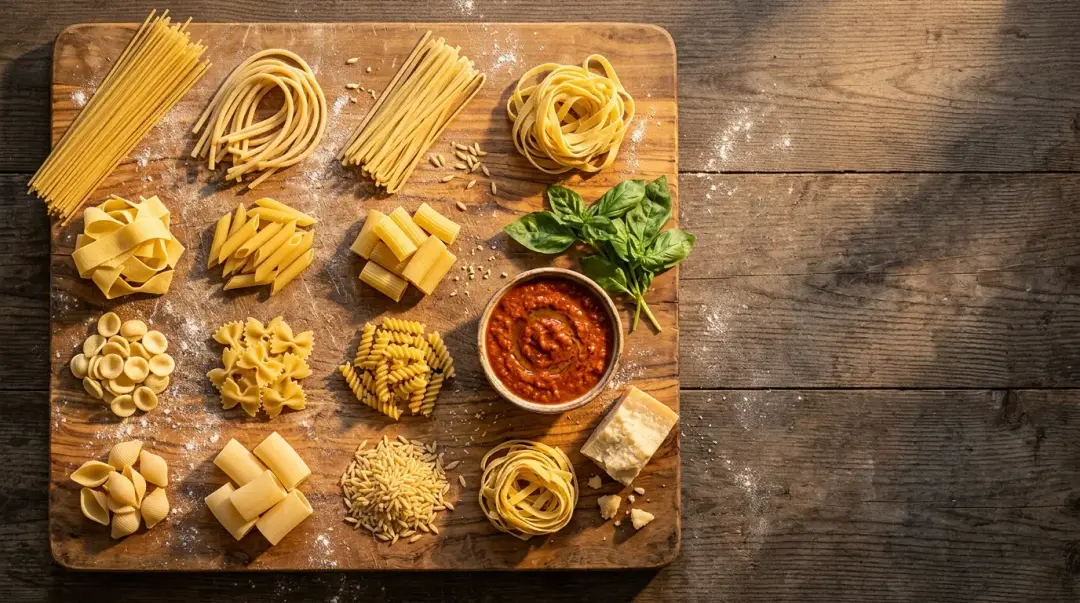
Learn which Italian pasta shape grips your sauce — spaghetti, bucatini, rigatoni, orecchiette. 14 cuts paired by ridge, channel, and pocket logic.
This page contains affiliate links. We may earn a commission at no extra cost to you. Disclosure
Italian pasta is engineered, not decorative. There are roughly 350 shapes documented across Italy, and each one was designed for a specific category of sauce — usually by a town or a region that wanted its sauce to cling, scoop, hold, or thread a certain way. Match the shape to the sauce and the dish works. Mismatch them and you get pesto sliding off rigatoni, or carbonara drowning angel hair.
The Headline Difference
The single principle behind every pasta-shape rule: surface area, channels, and pockets determine how sauce attaches. Thin, smooth strands present a slick surface — light oil-based sauces coat them; heavy ragùs slide off and pool at the bottom. Ridged tubes and concave shapes are landscapes — sauce gets caught in the ridges, the curl, or the cavity, and stays there bite to bite. The classical Italian pairing rules are not aesthetic preferences. They are a thousand years of cooks figuring out which sauce stays on which shape.
Side-by-Side: Pasta Shape and Sauce
Pasta Shape × Sauce Pairing
| Pasta | Best Sauces | Avoid |
|---|---|---|
| Spaghetti | Oil-based, light tomato, seafood | Heavy ragùs |
| Angel hair (capellini) | Brothy seafood, light butter | Anything chunky or thick |
| Bucatini | Amatriciana, cacio e pepe, pomodoro | Cream-only |
| Linguine | Pesto, clam sauce, pesto-cream | Heavy ragùs |
| Fettuccine | Cream, butter, mushroom (Alfredo) | Light oil-only sauces |
| Tagliatelle | Bolognese, hearty meat sauces | Light tomato |
| Pappardelle | Wild boar, duck ragù, game | Delicate sauces |
| Penne | Vodka sauce, arrabbiata, baked pasta | Cream-only sauces |
| Rigatoni | Carbonara, amatriciana, sausage ragù | Delicate seafood broths |
| Orecchiette | Broccoli rabe + sausage, pesto | Heavy cream sauces |
| Fusilli | Pesto, pasta salads, chunky veg | Cream-only |
| Conchiglie (shells) | Peas, cream, small chunks | Long-strand sauces |
| Farfalle (bowties) | Cream-and-pea, pasta salads | Heavy meat ragù |
| Gemelli | Pesto, baked pasta | Brothy seafood |
The Logic Behind Each Pairing
Long thin shapes (spaghetti, angel hair, linguine) need light sauces because thick sauces overwhelm them visually and texturally — and worse, slide off. The pasta is the showcase. Spaghetti aglio e olio works because the oil lubricates every strand without weighing it down. Try spaghetti bolognese (an export dish, not an Italian one; see below) and you'll watch the meat sauce collect in a pile at the bottom of the bowl while the noodles stay bare.
Bucatini is the outlier in the long-strand category — a thick hollow spaghetti with a channel down the middle. The hole captures sauce internally, which is why bucatini handles amatriciana (tomato-guanciale-pecorino) better than spaghetti does. The classic Roman triad of cacio e pepe, amatriciana, and gricia is built for bucatini or spaghetti, never penne.
Wide flat shapes (fettuccine, tagliatelle, pappardelle) are sauce platforms. The flat surface gives sauce somewhere to land. Pappardelle's two-inch width is built for wild boar ragù, duck ragù, anything where meat shreds need a noodle as wide as the chunks. Tagliatelle is the canonical Bolognese vehicle. Fettuccine pairs with cream and butter for the same reason — cream needs a broad surface to cling to.
Tube shapes (penne, rigatoni, ziti, paccheri) function as cargo holds. Ridges on the outside (penne rigate means "ridged") grip sauce; the hollow center catches chunks. Carbonara on rigatoni is mechanically superior to carbonara on spaghetti — the cheese-egg sauce coats the inside of every tube, holding double the sauce per bite. Vodka sauce on penne works for the same reason. Cream-only sauces underperform here because cream coats smooth surfaces; it doesn't fill tubes.
Concave shapes (orecchiette, conchiglie, lumache, cavatelli) scoop and hold. Orecchiette ("little ears") was designed in Puglia to cup small chunks of broccoli rabe and crumbled sausage in each piece. The shape is the spoon. Pair concave with any sauce that has small inclusions you want each bite to capture — peas, sausage, finely chopped greens.
Spirals (fusilli, rotini, gemelli, cavatappi) wrap themselves in sauce. The corkscrew geometry creates massive surface area in a small footprint, so pesto and other emulsified sauces cling thoroughly. Fusilli is also the canonical cold-pasta-salad shape because spirals tangle nicely with vegetables and dressing without breaking.
Regional Pasta Identity
Within Italy, specific pasta shapes are regional signatures, and treating them as such is how you eat in Italy without looking lost:
- Bologna (Emilia-Romagna) → Tagliatelle al ragù. Never spaghetti. In 1972 the Italian Academy of Cuisine deposited the official tagliatelle width (8 mm cooked) with the Bologna Chamber of Commerce, and in 1982 its ragù recipe, in part to fight the global "spaghetti bolognese" misnomer.
- Rome (Lazio) → Bucatini, rigatoni, spaghetti for cacio e pepe / amatriciana / carbonara / gricia.
- Bari (Puglia) → Orecchiette, often handmade on doorsteps in the old city by the city's famous pasta nonnas.
- Liguria (Genoa) → Trofie (and to a lesser extent fusilli) with pesto Genovese.
- Naples (Campania) → Spaghetti, vermicelli, paccheri with simple tomato sauces and seafood.
- Sicily → Bucatini con le sarde, anelletti, busiate with pesto trapanese.
- Sardinia → Malloreddus (gnocchetti sardi), fregola.
"Spaghetti bolognese" is the giveaway that someone hasn't been to Bologna. They serve tagliatelle al ragù. Spaghetti bolognese is largely a UK/Australian/American export invented to suit dry spaghetti's wider international availability.
The Italian Restaurant Hierarchy
You can read how serious an Italian restaurant outside Italy is by which pasta shapes they use and whether they pair them to the source dish:
- Spaghetti and penne only → American Italian (Olive Garden tier).
- Spaghetti, penne, fettuccine, plus one specialty → Mid-tier neighborhood Italian.
- Variety including rigatoni, bucatini, orecchiette, pappardelle → Real Italian kitchen.
- Tagliatelle for ragù, rigatoni for carbonara, bucatini for amatriciana → Italian-trained chef cooking the regional canon.
- House-made fresh pasta of any shape on the menu → Take the recommendation, whatever it is.
When to Choose Fresh Over Dry
Italian pasta culture has a clear rule that many cooks outside Italy invert: dry pasta is not "lower-quality fresh pasta." They're different products for different sauces.
- Dry pasta (pasta secca) holds its bite under heavy sauces. Made from durum semolina and water, no eggs. The default choice for spaghetti, penne, rigatoni, bucatini, and most of the everyday Italian repertoire. Lasts indefinitely in the pantry.
- Fresh pasta (pasta fresca) is softer, more tender, and absorbs sauce differently. Made from soft wheat (00 flour) and eggs in northern Italian tradition, or just flour and water in southern Italian tradition. The default choice for tagliatelle, pappardelle, ravioli, tortellini, and most stuffed pastas. Cooks in 90 seconds to 3 minutes.
The pairing logic: cream and butter sauces want fresh pasta, because fresh absorbs dairy. Hearty meat ragùs want fresh ribbon pasta (tagliatelle, pappardelle), because the wide tender ribbon holds the sauce without going soft. Tomato, oil, seafood, and tube-friendly chunky sauces want dry pasta, because dry's al dente bite stands up to acid and texture.
At home, fresh ribbons need somewhere to rest before they hit the water, and hanging them on a drying rack keeps strands apart so they do not stick together. If you roll your own, our pasta maker buying guide covers the machines. For cooking dried shapes, see our best pasta pot with strainer guide.
If an Italian restaurant offers both fresh and dry, the fresh pasta menu (typically ravioli, tortellini, tagliatelle, pappardelle) is where the kitchen is showing off. Order from it.
How to Read a Pasta Box at the Grocery
Three quality signals on a dry pasta box, in order of importance:
- Bronze-die extruded (trafilata al bronzo): rougher surface that holds sauce better than Teflon-extruded. Look for it on the side panel. De Cecco, Rummo, Setaro, and the premium Barilla lines all use bronze dies.
- Slow-dried at low temperature: traditional drying is 50-72 hours below 50°C. Cheap mass-market pasta dries in 4-6 hours at 90°C+ and loses flavor.
- Single-origin durum semolina: "100% Italian durum wheat" or specific origin (Gragnano IGP, for instance) signals a quality grain.
Premium dry pasta (Rummo, Setaro, Sfoglini) is worth choosing over standard Barilla for sauce-forward dishes where the pasta is the star.
If You Only Remember One Thing
Match shape to sauce-attachment style: smooth strands take light sauces, wide ribbons take cream and slow-braised meat, ridged tubes hold chunks and dairy, concave scoops carry small inclusions, and spirals wrap pesto. The Italians worked this out centuries before anyone wrote it down — and the rules still hold in your kitchen tonight.
FAQ
Which sauce goes with which Italian pasta shape?
Thin smooth strands like spaghetti and linguine suit light oil-based or seafood sauces. Ridged tubes like rigatoni and penne catch carbonara, vodka sauce and ragù, and wide ribbons like tagliatelle and pappardelle carry Bolognese and game ragùs.
Is spaghetti bolognese an Italian dish?
Not in Bologna, where the ragù is served with tagliatelle. Spaghetti bolognese is largely a UK, Australian and American export, and in 1972 the Italian Academy of Cuisine deposited the official tagliatelle width with the Bologna Chamber of Commerce.
Which pasta shape is best for carbonara?
Rigatoni holds the cheese-egg sauce inside and outside every tube. The Roman classics cacio e pepe, amatriciana and gricia are built for bucatini or spaghetti.
Is fresh pasta better than dry pasta?
They are different products. Dry pasta (pasta secca) is made from durum semolina and water and holds its bite under heavy sauces, while fresh pasta (pasta fresca) is softer and suits tagliatelle, pappardelle, ravioli and tortellini.
How do you pick good dry pasta at the grocery?
Look for three signals: bronze-die extrusion (trafilata al bronzo), slow drying at low temperature, and single-origin durum semolina. De Cecco, Rummo and Setaro all use bronze dies.
Read Next
Products mentioned in this guide
This section contains affiliate links. We may earn a commission at no extra cost to you.

De Cecco Bucatini No. 15
Bronze-die hollow strands for amatriciana and cacio e pepe. The center channel holds sauce the way this guide explains.
View on Amazon
Rummo Rigatoni No. 50
Ridged, wide tubes that carry carbonara and sausage ragù inside and out. Rummo uses bronze dies and slow drying.
View on Amazon
Rummo Lenta Lavorazione Linguine No. 13 (15-pack)
Flat-edged strands for pesto and clam sauce. A case makes sense if linguine is already a weekly shape in your kitchen.
View on Amazon
Marcato Atlas 150 Manual Pasta Maker Machine
Tagliatelle, fettuccine and pappardelle are fresh ribbons, and a hand-cranked machine rolls the sheets to an even thickness; its cutter does fettuccine, and wider ribbons are cut by hand. This is a manual Italian-made machine with a 150 mm roller, a hand crank and a clamp, with adjustable thickness of roughly 0.5 to 4.8 mm.
View on Amazon
Cook N Home 8 Quart Stainless Steel Pasta Pot with Strainer Lid
Long strands like spaghetti and bucatini need room to submerge, and an 8-quart pot gives dried shapes space to cook evenly. This listing is a stainless steel pot with a strainer insert, a vegetable steamer insert and a glass lid.
View on Amazon
Browse more related items
Opens Amazon · affiliate links