Lo Mein vs Chow Mein: The Real Difference (2026)
· 8 min read · NoodleDex Editorial
Lo mein vs chow mein: same egg noodle, two cooking methods. Tossed vs fried, East vs West Coast menus, USDA calorie data, yakisoba, and what to order.
This page contains affiliate links. We may earn a commission at no extra cost to you. Disclosure
Why the Takeout Menu Confuses Everyone
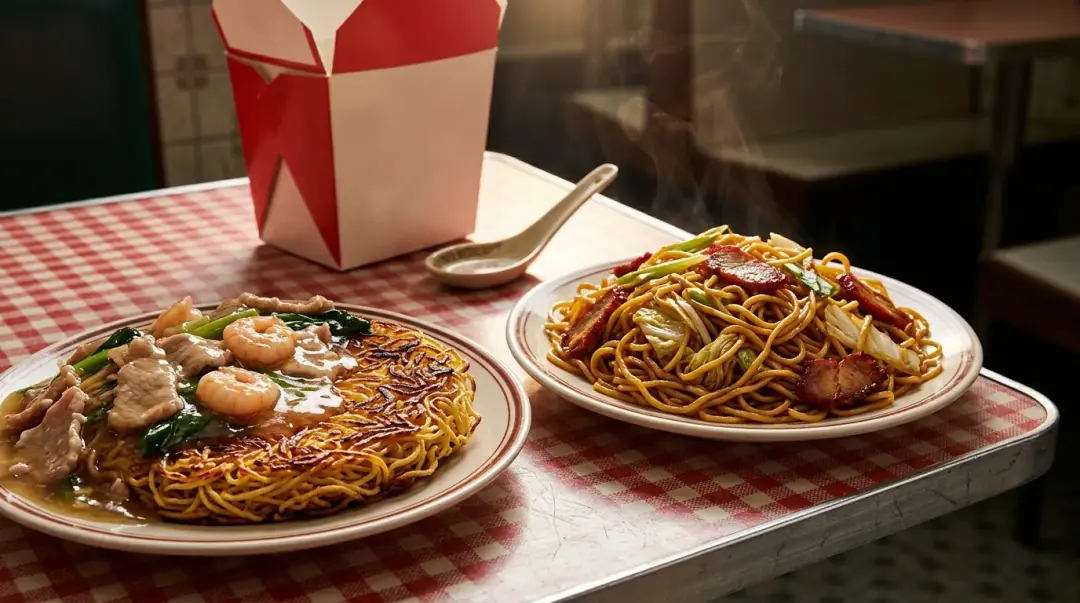
Order chow mein in Boston and you might get vegetables in brown gravy with a handful of crunchy fried noodles. Order it in Los Angeles and you get soft, glossy stir-fried noodles. Order it at a Cantonese restaurant in Hong Kong or Flushing and you could get a golden noodle pancake with a sauce poured over the top. All three are honest uses of the name, and that is the root of the confusion.
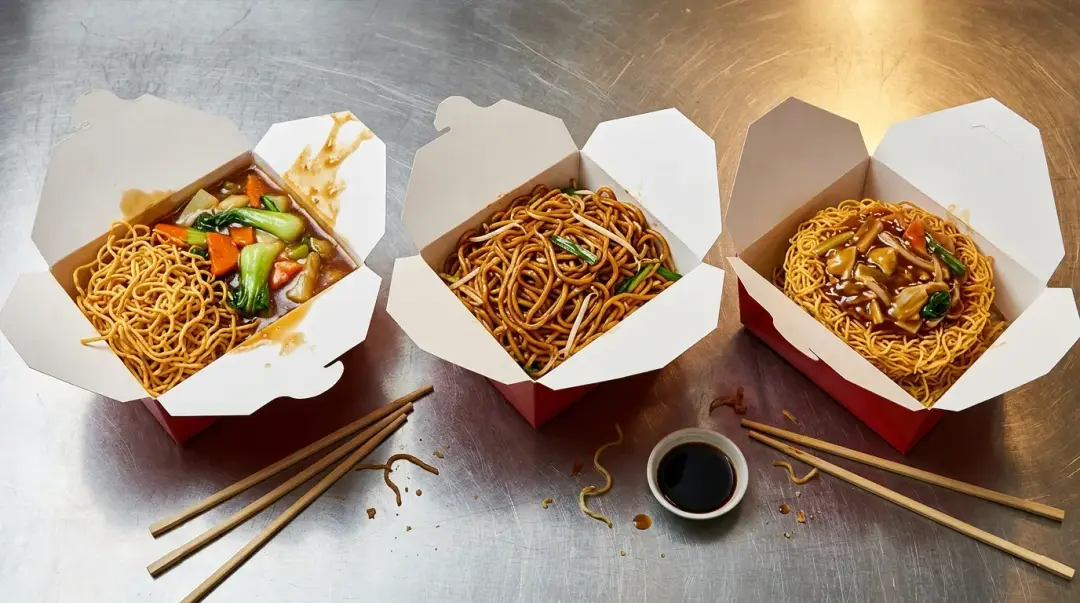
The names themselves are clear. Lo mein is 撈麵, Cantonese lou min (US English: LOH-mayn), which means "stirred" or "tossed" noodles. Chow mein is 炒麵, Cantonese chaau min (US English: CHOW-mayn), "fried noodles." Mein (麵) is simply the word for wheat noodles. One name describes tossing, the other describes frying, and that is the whole distinction in the original Cantonese.
American restaurants blurred it. Wikipedia's entry on lo mein notes that US lo mein is usually stir-fried in a soy-based sauce, which makes it "sometimes considered synonymous with chow mein." Then the two coasts split the vocabulary in opposite directions.
On the East Coast, chow mein is usually the crispy version, with noodles deep-fried crunchy (sometimes the same ones sold in cans), and the soft stir-fried dish goes by lo mein. On the West Coast, chow mein almost always means the soft, stir-fried style, and lo mein turns up far less often on menus. Hong Kong and Cantonese dim sum houses keep the original split: lo mein is boiled noodles dressed with oyster sauce or served with sauce on the side, often topped with wontons, char siu (Cantonese roast pork) or beef brisket, while chow mein is fried, and its showpiece version is a crisp noodle cake.
So when a West Coast reader and an East Coast reader argue about which one is crunchy, both are right about their own menus.
Same Noodle, Different Pan
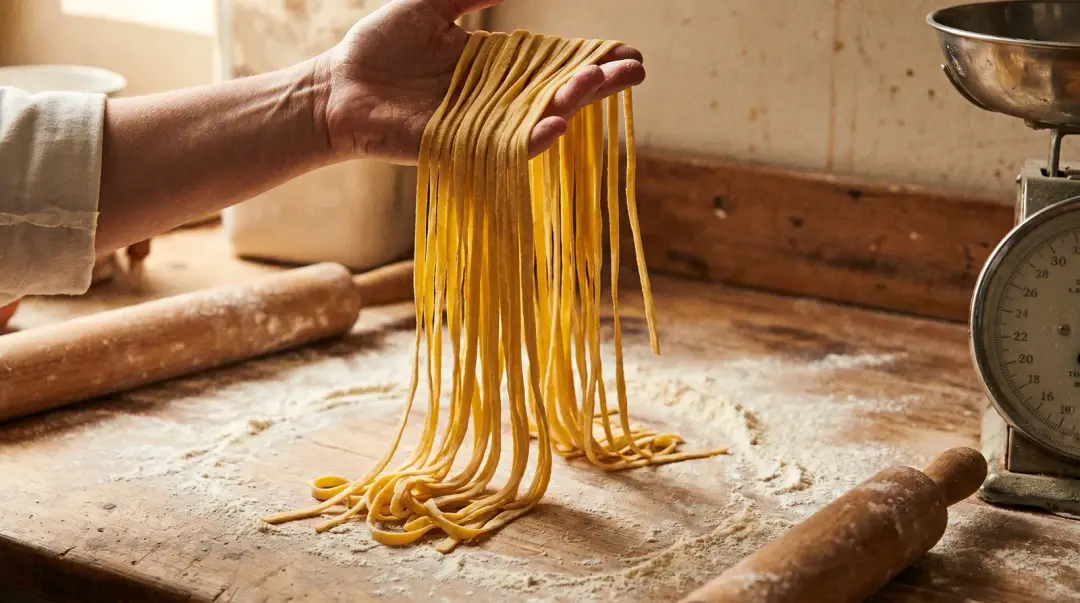
Strip away the regional naming and the mechanism is simple. Both dishes start from thin yellow noodles made of wheat flour, egg and water, usually with an alkaline salt that firms the bite (our egg noodles explainer covers the dough in detail). What happens after the noodles leave the boiling water decides which dish you get.
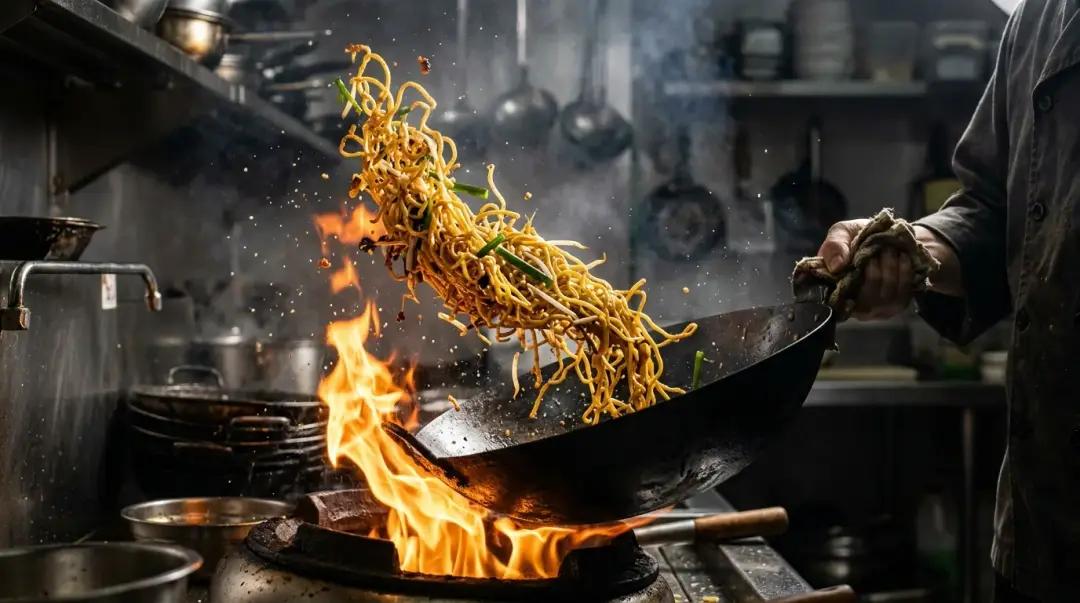
Lo mein keeps the noodle soft. The noodles boil until just tender, get rinsed and drained, then go into the wok for a minute or two of tossing with sauce and stir-fried vegetables or meat. The sauce is the point. Every strand ends up slick and seasoned, and the texture stays soft and slippery from end to end.
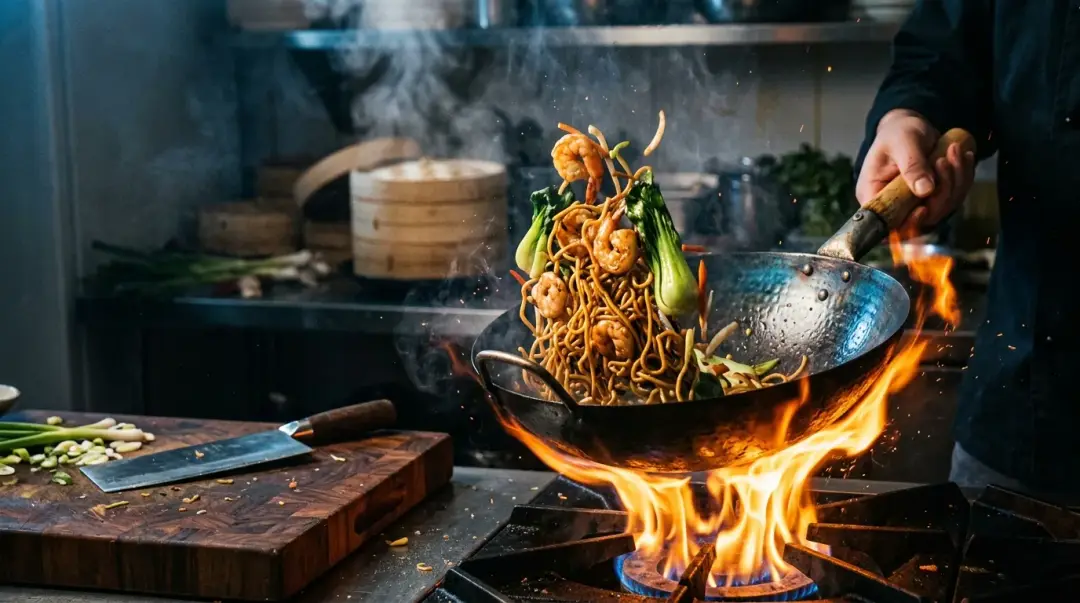
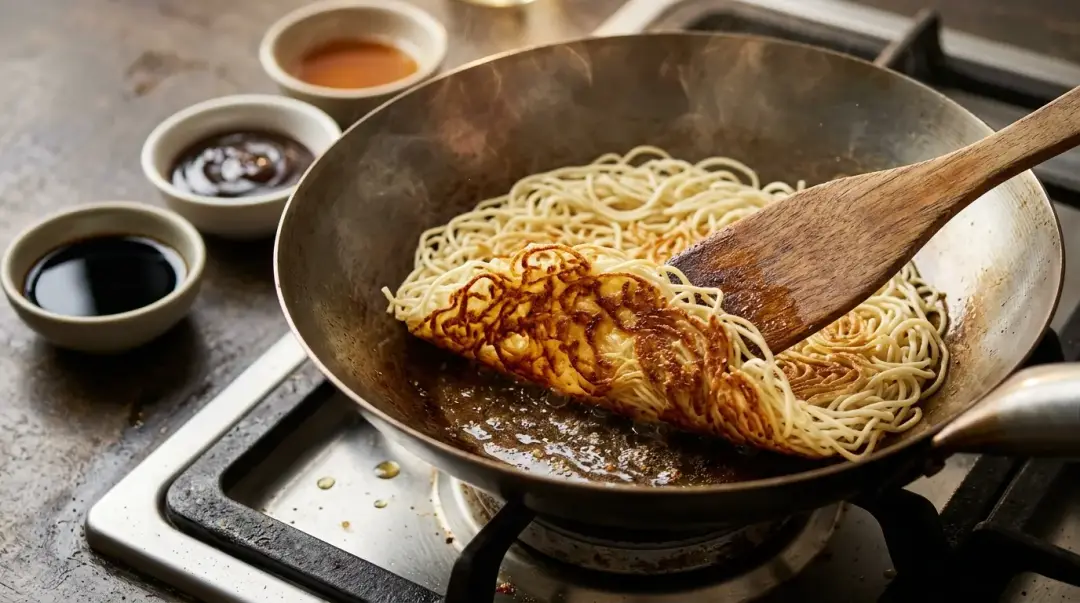
Chow mein uses the same parboil, then a much drier, hotter pan. The Cantonese technique is gàn chǎo (乾炒, "dry-fry"): little liquid, a smoking wok, and noodles left alone long enough for the underside to brown before they are tossed. Restaurant cooks chase wok hei (鑊氣, literally "wok breath"), the smoky, slightly charred flavor that only comes from very high heat. The finished noodle has browned edges and a firmer chew, and there is less sauce in the box.
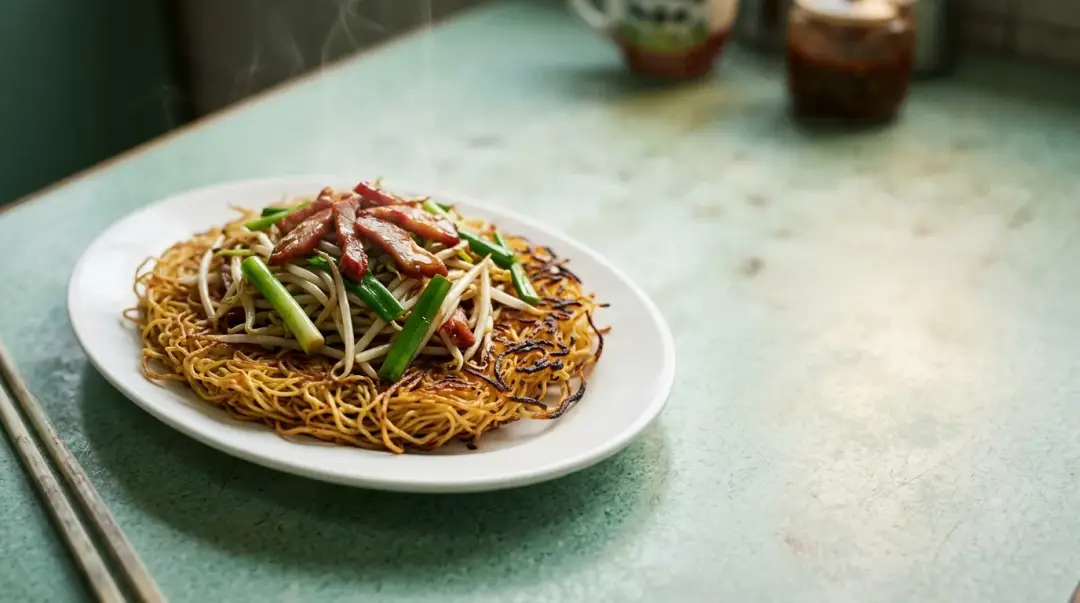
The Hong Kong pan-fried noodle cake takes frying further. The Michelin Guide traces it to liang mian huang ("two sides yellow"), a Shanghai and Suzhou dish of noodles fried slowly until crisp outside and still moist within. When Shanghainese cooks arrived in Hong Kong in the mid-20th century, Cantonese fried noodles shifted from stir-frying toward pan-frying and deep-frying. Today's version arrives as a golden disc with a stir-fry of pork, shrimp or beef in a cornstarch-thickened gravy poured over it, plus a dash of Chinkiang (Zhenjiang black) vinegar at the table.
Lo Mein vs Chow Mein Side by Side
The calorie row uses two USDA FoodData Central entries for restaurant dishes and Panda Express's published nutrition for its soft chow mein. They are different portions and recipes, so read them as reference points.
Lo mein vs chow mein at a glance
| Lo mein (撈麵) | Chow mein (炒麵) | |
|---|---|---|
| Noodle | Thin egg-wheat noodle, often fresh | Same family; thin Hong Kong-style pan-fry noodles crisp best |
| Cook method | Boil, drain, toss in sauce 1–2 min | Boil briefly, drain dry, fry until browned or crisp |
| Texture | Soft, slippery, uniform | Seared edges and firm chew (soft style) or crunchy (crispy style) |
| Sauce amount | More; coats every strand | Less; or a gravy poured over a crisp cake |
| Oil | Mostly from the stir-fry and sesame oil | More, because the noodles fry in it |
| Takeout reference (calories) | USDA restaurant vegetable lo mein: 121 kcal per 100 g; 897 kcal per 741 g order | Panda Express chow mein: 510 kcal per 9.4 oz side; USDA restaurant chicken chow mein (veg-heavy): 513 kcal per 604 g order |
| Sodium reference | USDA order: about 3,190 mg | Panda side: 860 mg; USDA order: about 1,880 mg |
Three things stand out. Per gram, Panda Express's chow mein (about 190 kcal per 100 g by our math) is denser than USDA's lo mein sample (121 kcal per 100 g), which fits a noodle that soaks up frying oil. USDA's "chicken chow mein" is the lightest of the three per gram because the restaurant version it measured leans on vegetables and sauce, closer to the East Coast style. And the full USDA lo mein order, at 741 g, is big enough that its total of 897 kcal outruns everything else on the table. A shared order of lo mein can easily come in under a solo box of chow mein.
Sodium follows the sauce. The USDA lo mein order carries about 3,190 mg, above the FDA's 2,300 mg Daily Value in one box. If that matters to you, the low-sodium noodles guide has the numbers.
Yakisoba vs Lo Mein vs Chow Mein
Yakisoba (焼きそば, YAH-kee-soh-bah, "fried noodles") belongs in this conversation because it is a Japanese branch of the same tree. Despite the soba in its name, it contains no buckwheat. It uses chūka men (中華麺, "Chinese noodles"), the same alkaline wheat noodle that goes into ramen. Street vendors started frying these noodles around 1918, picking up technique from Chinese cooks in Yokohama and Tokyo's Asakusa district.
What separates yakisoba from chow mein is the sauce and the garnish. Yakisoba is seasoned with a Japanese Worcestershire-style sauce, sweeter and tangier than soy and oyster sauce, then topped with beni shōga (shredded red pickled ginger), aonori (powdered green seaweed), katsuobushi (smoked bonito flakes) and often a stripe of Japanese mayonnaise.
Three wheat-noodle stir-fries compared
| Lo mein | Chow mein | Yakisoba | |
|---|---|---|---|
| Origin | Cantonese | Cantonese | Japan, about 1918 |
| Noodle | Egg-wheat | Egg-wheat | Chūka men (alkaline wheat) |
| Method | Tossed | Fried | Fried on a griddle or pan |
| Sauce base | Soy, oyster | Soy, oyster; gravy for crispy style | Worcestershire-style |
| Signature toppings | Char siu, wontons, brisket | Pork, shrimp, bean sprouts | Pickled ginger, aonori, bonito |
In practice yakisoba sits closest to soft West Coast chow mein: fried noodles, cabbage, pork, and a sauce that clings without pooling. Our yakisoba page covers the festival-stall version in detail.
Cooking Both at Home
Home stoves run cooler than restaurant wok burners, so you will not match a takeout kitchen's wok hei. You can still get the textures right, and the textures are what separate the two dishes. A carbon-steel wok helps, mostly because it heats fast and holds heat when cold noodles land in it; our carbon steel wok buying guide covers which ones work on a flat electric or induction top.
How lo mein is made
Lo mein starts with fresh egg noodles boiled just to tender, then rinsed in cold water to wash off surface starch and drained thoroughly. Vegetables and protein are stir-fried over high heat, and the noodles and sauce go in last, tossed with a scooping motion for a minute or two until the sauce is evenly spread. The sauce is built on soy sauce and oyster sauce, which already carry plenty of salt, so seasoning with extra salt is usually unnecessary.
How chow mein is made
Chow mein calls for the thin noodles labeled for pan-frying, often sold as Hong Kong style pan-fried noodles, rather than the thicker wonton noodles. They get a brief boil, a cold rinse and a very thorough drain, because water on the noodles steams them instead of frying them.
A long-handled wok spatula (a chuan) slides under the noodle layer for the flip, and tongs are the easier tool for tossing lo mein. For soft chow mein, the wok is hot, the noodles are spread out and left alone until the underside browns, then flipped to crisp the second side before being tossed with aromatics and a light soy-based sauce. The Hong Kong crispy cake goes lower and slower: the noodles fry for a longer time on each side over medium heat, and a cornstarch-thickened gravy of pork, shrimp or beef is poured over the finished cake.
For noodle brands that hold up to the pan, see our best Chinese wheat noodles picks.
Order This, Not That
| If you want | Order this | Not that |
|---|---|---|
| Crunch, on the East Coast | Chow mein | Lo mein, which is the soft dish there |
| Soft noodles, on the West Coast | Chow mein | Lo mein, which many West Coast menus don't list |
| Maximum crunch anywhere | Hong Kong-style pan-fried noodles | Soft chow mein, which only crisps at the edges |
| Saucy, slippery noodles | Lo mein | Crispy chow mein, where the sauce sits on top |
| A lighter box | Chow mein with extra vegetables, or split a lo mein order | A full USDA-size lo mein order (897 kcal) for one |
| Less sodium | Ask for sauce on the side | Extra sauce on lo mein (USDA order: about 3,190 mg) |
| Something sweet and tangy | Yakisoba | Either Chinese dish, which runs savory |
FAQ
What is the difference between lo mein and chow mein?
Both use the same thin wheat-and-egg noodle. Lo mein (撈麵, tossed noodles) is boiled soft and tossed with sauce, so it eats slippery and saucy. Chow mein (炒麵, fried noodles) is fried in the wok or pan until parts of it crisp or sear, and it carries less sauce. The cooking verb is the whole difference.
Which is healthier, lo mein or chow mein?
Neither wins by default. USDA data puts a restaurant vegetable lo mein at 121 kcal per 100 g and 897 kcal per full order. Panda Express lists its soft chow mein at 510 kcal for a 9.4 oz side, which is denser per gram because fried noodles hold more oil. Portion size moves the total more than the dish name does.
Are lo mein and chow mein noodles the same?
Usually yes. Both are thin yellow wheat noodles made with egg. Groceries sell fresh coils for lo mein and drier, thin Hong Kong-style noodles meant for pan-frying, but the dough is the same family. You can make either dish with either noodle; the pan-frying style just crisps better with a thinner, drier strand.
Why is chow mein crispy in some restaurants and soft in others?
Geography. On the US East Coast, chow mein often means vegetables in sauce with deep-fried crunchy noodles, while the soft noodle dish is called lo mein. On the West Coast, chow mein almost always means soft stir-fried noodles. Hong Kong restaurants serve a third version: a noodle cake pan-fried crisp on both sides.
Is yakisoba the same as chow mein?
Close cousins. Yakisoba (焼きそば, fried noodles) is a Japanese street dish built from Chinese-style wheat noodles, so it sits in the chow mein family. The difference is the sauce: yakisoba uses a sweet, tangy Worcestershire-style sauce and gets pickled ginger, seaweed powder and bonito flakes on top, where chow mein leans on soy and oyster sauce.
How do you say lo mein and chow mein?
In US English, lo mein is LOH-mayn and chow mein is CHOW-mayn. The Cantonese originals are lou min (roughly loh-meen) and chaau min (roughly chow-meen), with the same mein (麵) meaning wheat noodles in both. Either pronunciation gets you the right box at a takeout counter, and staff at Cantonese restaurants will recognize the original.
Read Next
Products mentioned in this guide
This section contains affiliate links. We may earn a commission at no extra cost to you.

Twin Marquis Lo Mein Egg Noodle, 16 oz (2 bags)
Fresh egg noodles in the soft, springy style this page boils and tosses for lo mein. Rinse them cold after cooking so the sauce coats every strand.
View on Amazon
Wel-Pac Chow Mein Stir-Fry Noodles (Case of 12 × 6 oz)
A thin, dry noodle that browns well when you leave it alone in a hot pan. Pick this one if you want the seared edges of a soft chow mein.
View on Amazon
Lee Kum Kee Oyster Sauce (Premium, 30 oz)
Oyster sauce is one of the two backbone seasonings in lo mein, alongside soy sauce. The premium bottle has a rounder, less salty flavor than budget brands.
View on Amazon
Joyce Chen 14-inch Carbon Steel Wok (Hand-Hammered)
Carbon steel heats fast and recovers quickly when cold noodles hit it, which is what you need to brown chow mein on a home stove.
View on Amazon
OXO Good Grips 12-Inch Tongs with Silicone Head
Lo mein is tossed rather than fried, and tongs lift and fold the slippery noodles through the sauce without breaking them. This listing is a 12-inch stainless steel tong with silicone heads, rated heat resistant to 600°F.
View on Amazon
Browse more related items
Opens Amazon · affiliate links
Buying guides for this topic
- Buying guideBest Chinese Wheat Noodles in 2026The best fresh and dry Chinese wheat noodles available on Amazon — Twin Marquis fresh, Wel-Pac dry, and premium hand-pulled options.
- Buying guideBest Carbon Steel Wok for Home Cooks: Size and Care (2026)The best carbon steel woks for home stoves: size, flat or round bottom, hand-hammered or machine-made, and how to season one and keep it rust-free.
- Buying guideBest Chinese Pantry Essentials in 2026Soy, oyster sauce, Sichuan peppercorn, chili crisp, fermented bean paste, Chinese sesame paste — the Chinese cooking foundation, ranked.
- Buying guideBest Egg Noodles: Reames to Pennsylvania DutchReames, Pennsylvania Dutch, No Yolks and Hakubaku: the four US egg noodle brands worth buying, ranked for stroganoff, soup and stir-fry.