

Real ramen lives or dies on the noodle, and real ramen noodles require kansui (alkaline mineral water) — not just any wheat. Sun Noodle, the LA-based supplier behind most US ramen shops, sells the same fresh refrigerated bowl pack at H Mart and Whole Foods. That's the top pick. The other three options cover budget instant, kit-format, and the day Sun Noodle is sold out.
How We Pick
- We compared noodles from 8 brands across four formats: fresh refrigerated, dry shelf-stable, restaurant take-home kit and mainstream instant.
- We required kansui in the ingredient list for the fresh and kit tiers. Without it, the noodle is closer to lo mein than ramen — soft, less elastic, and the broth slides off.
- We weighed how each maker pairs its noodle with shoyu, miso and tonkotsu broths, using maker guidance and published reviews.
The Top Pick: Sun Noodle Fresh Ramen Bowl Pack
If you've eaten at a US ramen shop in the last decade, there's a good chance you've eaten Sun Noodle. Momofuku Noodle Bar, Ivan Ramen and Tsujita are among the restaurants press reports name as customers. The Hawaii-founded, LA-based company supplies fresh alkaline ramen to a large share of US ramen restaurants and also packages a retail version for home cooks. The bowl pack contains two portions of noodles plus a soup base, sold refrigerated at Whole Foods and H Mart, and in a 4-pack via Amazon Fresh in supported metros (NY, LA, Bay Area, Seattle, Chicago).
The noodles are made with kansui, which gives them the yellow color, the spring, and the chew that defines real ramen. They cook in 90 seconds in boiling water. The included soup base is a respectable shoyu — not restaurant-level, but well above instant. Strain the included broth into a pot, add a half-cup of dashi or chicken stock, and finish with a tablespoon of tare of your choice. That bowl rivals a restaurant version.
The catch: refrigerated shipping. Amazon Fresh only delivers to specific metros, and the supermarket stock varies by store. Plan ahead or have a backup.

SUN NOODLE Kaedama Ramen Noodles
The US ramen-shop standard — what most US ramen restaurants use
Best Budget: Hakubaku Organic Ramen (Dry)
Sold as a 3-pack on Amazon US and at most Whole Foods locations. This is Hakubaku's higher-end dry noodle line — organic wheat, no MSG, cooks in 4 minutes. The texture is drier than Sun Noodle but distinctly better than orange-pack instant. Use this when fresh isn't available or you need a shelf-stable option.

Hakubaku Organic Ramen Noodles
Hakubaku's higher-end ramen line
Standard Pick: ICHIRAN Take-Home Tonkotsu Kit
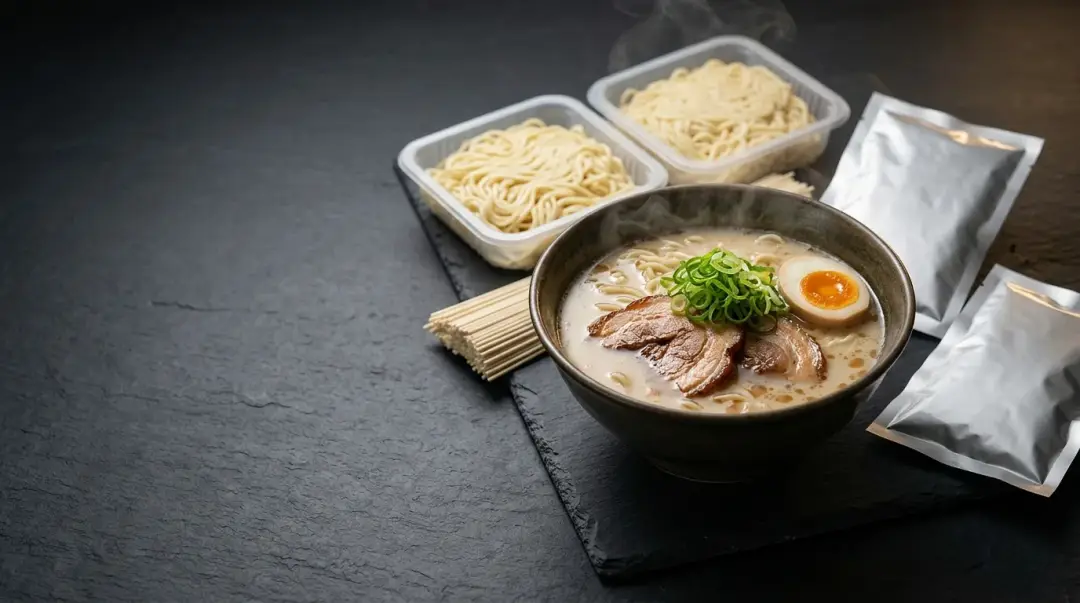
The Fukuoka-born ICHIRAN chain (founded 1960, famous for single-customer counter booths designed to eliminate distraction) licenses an official 5-serving take-home kit through Amazon. The kit ships straight dry noodles, a tonkotsu (pork-bone) broth concentrate, and ICHIRAN's signature akai himitsu no tare — the red secret powder that defines the chain's flavor profile. Reconstitute the broth in 2 cups of hot water per serving, drop the noodles in for 90 seconds, finish with the red sauce to taste. The result is recognizably Hakata-style: cloudier than Tokyo tonkotsu, leaner than the heavily emulsified Yokohama versions, with that signature soft chile-and-sesame finish. It costs more per bowl than Sun Noodle fresh — but the kit saves you the 12-hour pork-bone simmer that the actual ICHIRAN kitchens run nightly.

Official ICHIRAN Take-Home Ramen Kit
Official take-home kit from ICHIRAN, the iconic Fukuoka Hakata-style tonkotsu chain (founded 1960, global cult-status counter restaurants)
Best for Beginners: Maruchan Ramen Noodle Soup (Picante Chicken, 24-pack)
The orange-package Maruchan is the iconic American instant ramen — sold in nearly every US grocery, and cheapest per packet in the 24-pack format on Amazon. The Picante Chicken flavor is the slightly-spiced sibling of the original Chicken — same pre-fried noodle, hotter broth. This isn't real ramen by Japanese standards: no kansui worth mentioning, ~830 mg sodium per packet, ingredient list 20+ deep. It's included here for honesty — for many shoppers outside Japan, this is what ramen means. Our best instant ramen guide ranks the packs themselves. The 3-minute cook plus mainstream availability earns it the beginner slot, and the 24-pack keeps it cheaper per meal than almost anything else you can put in a bowl.

Maruchan Ramen Noodle Soup
The iconic American instant ramen — universally available + recognized
What to Look For
- Kansui in the ingredient list, not just "alkaline salt." The yellow color and elastic chew of real ramen depend on it.
- Refrigerated, not shelf-stable, if you want true fresh ramen. Anything sold dry or at room temperature has been processed to last and won't match shop texture.
- A tare (concentrated sauce base) sold separately or included. Ramen is broth + tare + noodles + toppings. A noodle pack alone is half the recipe.
- Ingredient count under 8. Cheap instant ramen runs 20+ ingredients of stabilizers and flavor enhancers. Premium instant and fresh stay closer to wheat, water, salt, kansui.
- A ramen-noodle specialist, not a generic Asian-noodle distributor. Sun Noodle, Yamachan, Myojo, Marusan — these are the names worth recognizing.
Common Mistakes
- Buying the orange-package Maruchan for "real" ramen. It's fine as nostalgia food. It is not actual ramen, and treating it like one disappoints everyone at the table.
- Cooking fresh ramen in the included broth. The starchy noodle water clouds the soup. Cook the noodles in a separate pot, then transfer to a bowl with pre-warmed broth.
- Boiling fresh ramen past 90 seconds. Sun Noodle's recommended time is 90-120 seconds. At 3 minutes, the noodle blooms and goes soft. Set a timer.
- Skipping the tare. A bowl of broth without the concentrated soy or miso base will read flat. Either buy a separate tare or use the included packet.
- Buying "Asian noodle" multi-packs. These are usually generic wheat noodles labeled in three languages, and they don't contain kansui. They're lo mein with the wrong marketing.
FAQ
What is kansui?
Alkaline mineral water, traditionally sourced from Inner Mongolian lakes high in sodium carbonate and potassium carbonate. The alkalinity changes how wheat proteins bond, producing the yellow color and elastic chew that distinguish ramen from any other wheat noodle.
Can I make ramen noodles from scratch?
Yes, but you need either bottled kansui or a substitute — bake baking soda at 250°F for an hour to convert sodium bicarbonate to sodium carbonate, then dissolve in water. Result is close to real kansui. Plan two hours of dough work for one bowl's worth.
Where can I buy Sun Noodle outside major metros?
Many Whole Foods locations stock it, plus regional Asian groceries (H Mart, Mitsuwa, Marukai, 99 Ranch). Sun Noodle's own site lists US retailers by ZIP. If nothing's nearby, Yamachan ships frozen ramen nationally via Amazon.
What's the difference between tonkotsu, shoyu, miso, and shio?
The tare — the concentrated flavor base. Tonkotsu adds pork-bone-stock richness; shoyu uses soy sauce; miso uses fermented soybean paste; shio is salt-based. The noodles can be identical across all four; the broth changes everything.
Are restaurant ramen noodles different from grocery Sun Noodle?
Often the same product, sometimes a slightly different cut or alkaline ratio specced for the restaurant. The retail bowl pack is the closest home cooks can get.