Reading a Slice from the Bottom Up
Cut a square from a finished tray and look at the side before you eat it. You can work out most of what went into the pan from that cross-section.
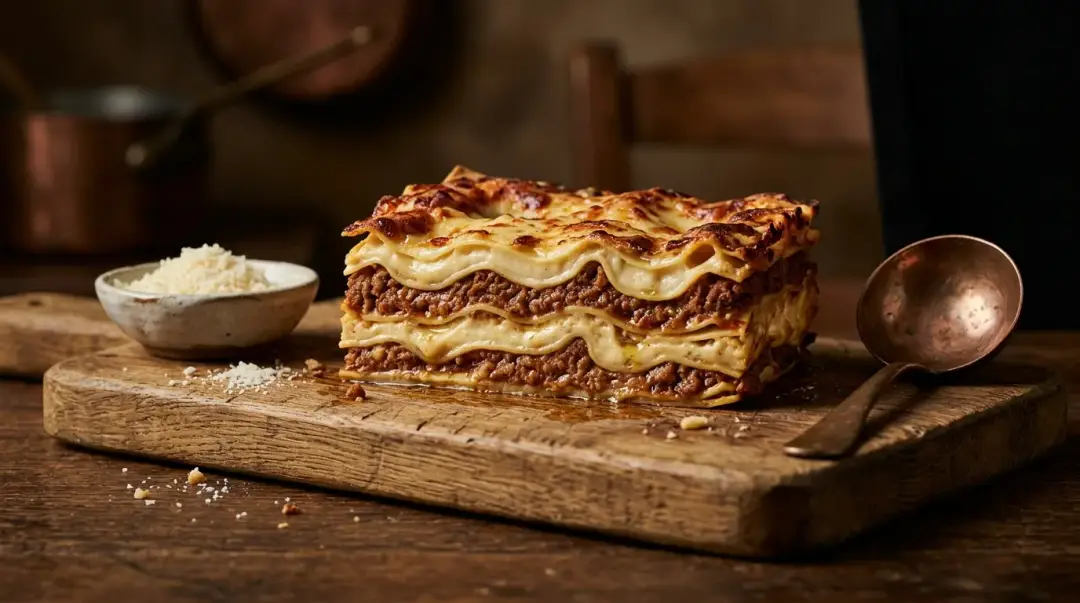
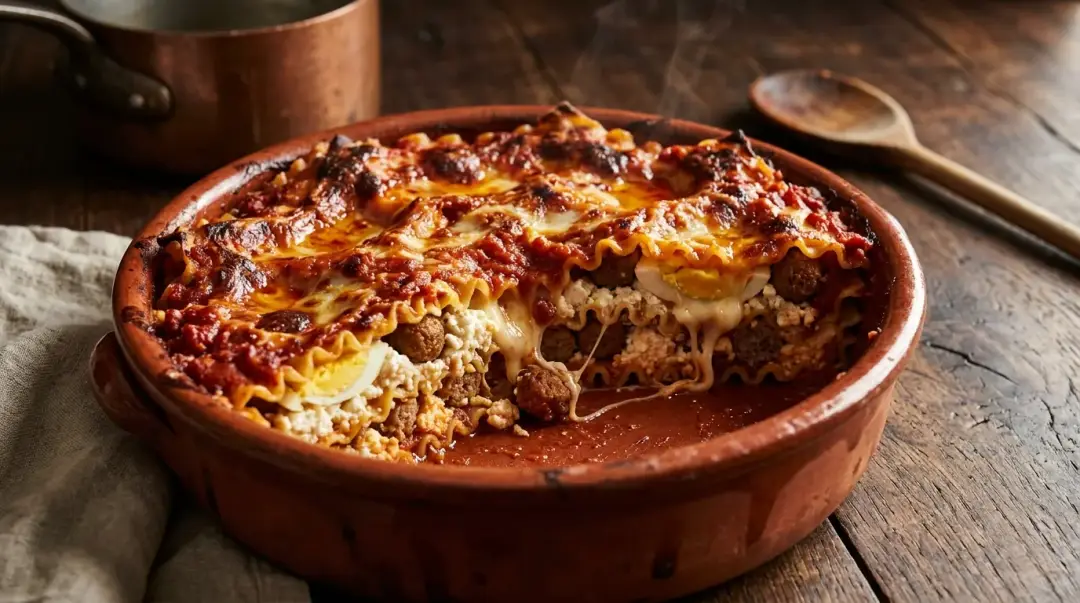
Count the pasta lines first. Thin, almost translucent layers mean fresh egg sheets that the cook rolled out by hand, the way Bologna does it. Thick, distinct bands with a firm edge point to dried durum-semolina sheets, the supermarket standard. If the edges of each layer ripple instead of running straight, the cook used ricce (REE-cheh), the curly-edged sheets of southern Italy.
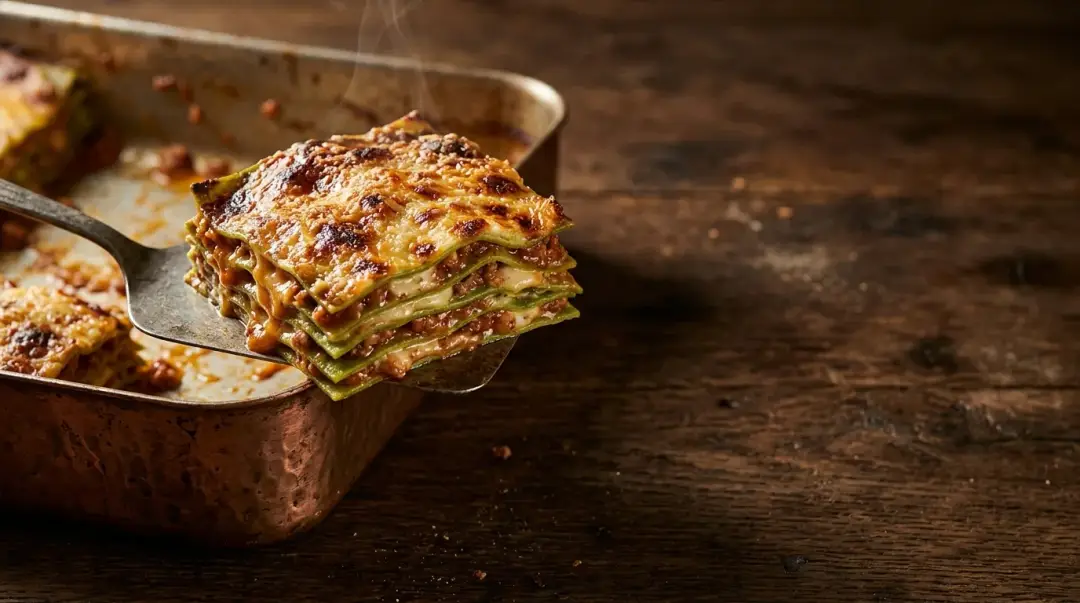
The filling tells you which tradition you're in. A pale, creamy seam between layers is béchamel, the white sauce of the north. White curds mean ricotta, which is how Naples and most of Italian America build the dish. Small round bumps are polpettine (pol-pet-TEE-neh, tiny fried meatballs), and you'll almost only see them in a Neapolitan tray. If the sheets themselves are green, the dough has spinach in it and you're looking at lasagne verdi (VEHR-dee), the Bologna original.
A cross-section can also give away a mistake. A pale, papery corner at the top usually means oven-ready sheets that went into the oven without enough liquid. That problem gets a section of its own below.
Lasagna is about as rich as pasta dishes get, and the noodle has the least say in how it tastes. Baking takes the sheets well past al dente, so the bite comes from the sauces setting around them, not from the pasta. Good sheets keep their layers distinct when you cut a slice. Bad ones melt into a single soft mass.
What Lasagna Noodles Are
Lasagna (lah-ZAHN-yah) is the name of the pasta sheet and also of the baked dish. The spelling depends on where you are. Northern Italy says lasagne, the plural, and southern Italy says lasagna, the singular. British English took the northern form and American English took the southern one.
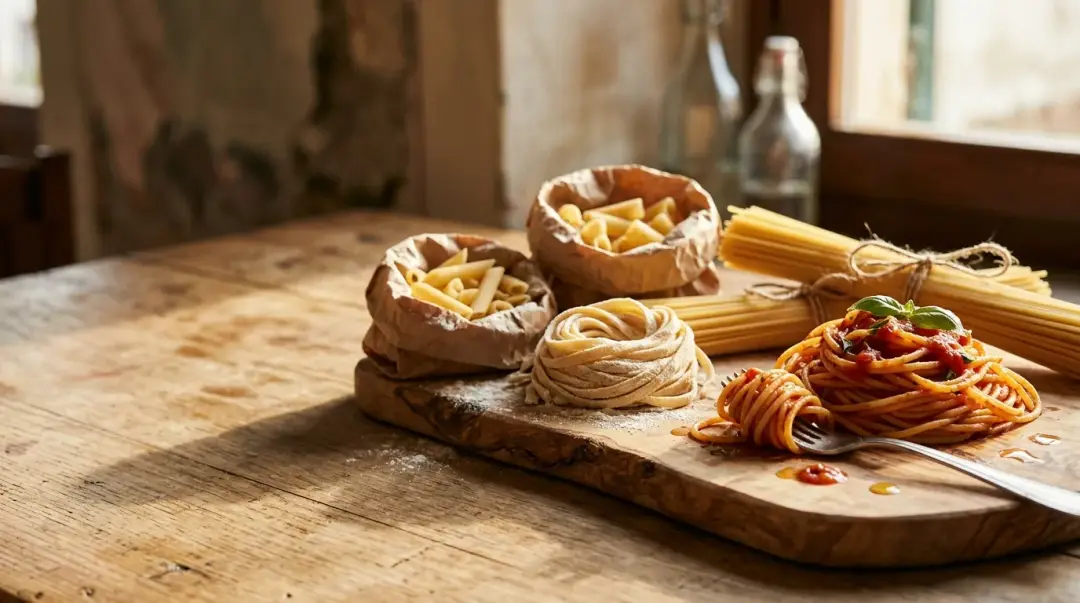
Sheets come in two doughs. Egg pasta is the northern version. Bologna rolls it from roughly one egg per 100 grams of flour, the same sfoglia (SFOH-lyah, hand-rolled pasta sheet) it uses for tagliatelle and tortellini. Bologna Welcome's guide to sfoglia notes that lasagna sheets are rolled a little thicker than tagliatelle sheets. The other dough is durum wheat semolina and water. It's the southern base and goes into most dried boxes sold in the US. Look at the ingredient line to tell them apart, because both kinds come in the same blue-and-white packaging.
From Lagana to Lasagne
The word is ancient. One line of etymology goes back to the Greek laganon, a flat sheet of dough cut into strips. Another points to Greek lasana, a pot stand, which Latin borrowed as lasanum, cooking pot. The Roman cookbook attributed to Apicius describes a layered dish called lasana. Garofalo repeats a version of this history on its lasagna riccia product page, saying the shape's ancestors were the lagana of ancient Rome, strips of dough fried in oil.
The first recipe that's recognizably lasagna appears in the Liber de Coquina, a cookbook from the early 1300s. Its version uses fermented dough rolled into thin sheets, boiled, then sprinkled with cheese and spices. It has no tomato, since tomatoes hadn't reached Europe yet, and no ragù. The modern dish came together much later and split into two regional schools.
Bologna vs Naples
Bologna and Naples make the most famous lasagne, and from the shape of the sheet to the cheese, they disagree on almost everything.
Two Italian lasagne traditions
| Bologna (lasagne verdi) | Naples (lasagna di Carnevale) | |
|---|---|---|
| Pasta sheet | Green egg pasta with spinach, flat | Durum semolina, ricce (curly edges) |
| Sauce | Ragù alla bolognese | Ragù napoletano, cooked the day before |
| Binder | Béchamel | Ricotta (sheep's milk) |
| Extras | Butter flakes, Parmigiano-Reggiano | Polpettine, cervellatine sausage, hard-boiled egg, smoked provola |
| Standard | Accademia recipe, deposited 2003 | Carnival dish for Martedì Grasso |
Bologna. The Bologna delegation of the Accademia Italiana della Cucina (the Italian Academy of Cuisine) formally adopted its lasagne verdi alla bolognese recipe on May 28, 2003. It deposited the recipe at the Bologna Chamber of Commerce, in the Palazzo della Mercanzia, on July 4 that year. The proportions are specific. A kilogram of green pasta gets 350 grams of cooked spinach. The rest of the dish is a kilogram of ragù, béchamel made with 100 grams of flour to a liter of milk, and 400 grams of grated Parmigiano-Reggiano. The recipe asks for at least six layers and 25 to 30 minutes at 180°C (356°F), plus a five-minute rest before cutting. There's no ricotta or mozzarella in it.
Naples. The Neapolitan version is a Carnival dish, eaten on Martedì Grasso (mar-teh-DEE GRAHS-soh, Fat Tuesday), traditionally the last big meal before Lent. It's built on lasagna riccia of durum semolina. The pork-based ragù napoletano gets cooked a day ahead, and the layers hold sheep's-milk ricotta, cervellatine (cher-vel-lah-TEE-neh, thin Neapolitan sausages), smoked provola, sliced hard-boiled eggs and the tiny fried meatballs. Ricotta does the job that béchamel does in Bologna.
American lasagna, with ricotta, mozzarella and red sauce, sits closer to the Naples side.
Flat, Ricce or Oven-Ready
The box you choose matters more than the brand, because each sheet type cooks differently.
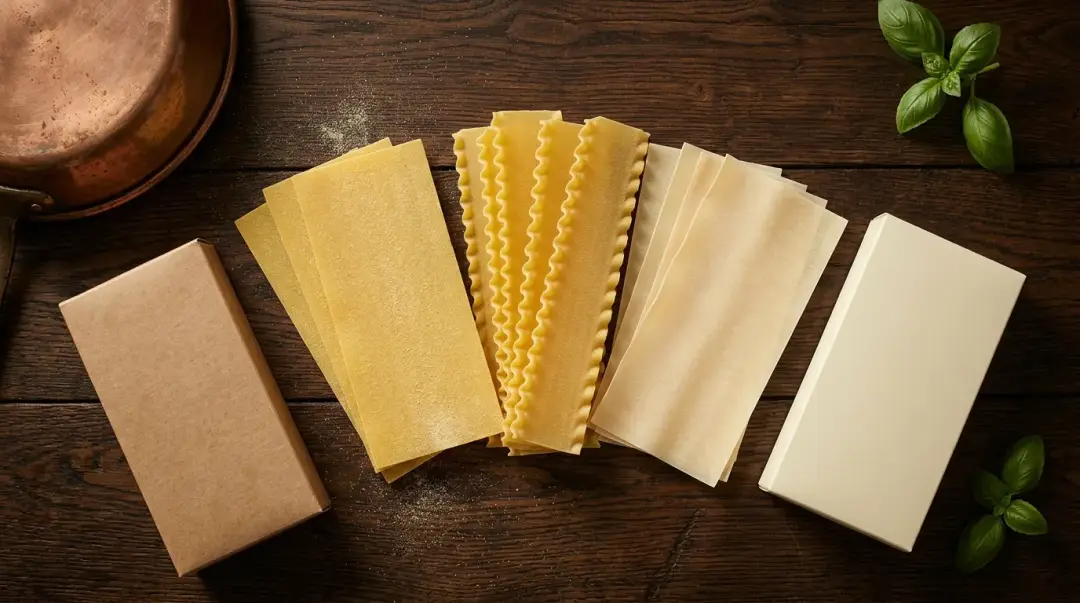
Lasagna noodle types on US shelves
| Type | Boil first? | Typical dough | Best for |
|---|---|---|---|
| Flat dried | Usually, short boil | Durum semolina or egg | Bolognese-style layering with béchamel |
| Ricce / wavy | Yes (Barilla: 8 min) | Durum semolina | Ricotta lasagna, Neapolitan style |
| Oven-ready (no-boil) | No | Often egg pasta, thinner | Weeknight trays with loose tomato sauce |
| Fresh egg sheets | Varies by recipe | Egg + flour | Lasagne verdi, the thinnest layers |
How no-boil works. Oven-ready sheets aren't raw. Food scientist Jessica Gavin explained the process to HuffPost. The dough is mixed and extruded, run through a water bath that partly cooks it, then dried by machine. In the oven, the sheet soaks up liquid from the sauce and finishes cooking. That's why no-boil lasagna tends to fail in one particular way. If the sauce is too thick, the pasta absorbs all of it and the top corners stay hard. Use a wetter tomato sauce, cover every edge, and bake under foil for most of the time. Chef Gian Paolo Bruschi told the same outlet that a béchamel lasagna made with no-boil sheets needs extra liquid.
Ricce. Italian factories make several wavy-edged sheets, sold as lasagna riccia, doppio festone or sciabò. The ruffled edge does two jobs. It traps sauce along the long sides, and it keeps stacked sheets from fusing into one flat slab in the pot. Ricce sheets always get a boil.
Flat dried. The middle option. Some flat sheets are sold for both methods. De Cecco Lasagne No. 1 lists an oven-ready route (about 24 minutes at 425°F) and a boil-first route (about 4 minutes in the pot, then 20 in the oven).
Buying Lasagna Noodles in the US

The noodle to buy
Barilla Oven-Ready Lasagne
The no-boil default. Thin egg-pasta sheets, made in Italy, that go straight from box to pan as long as the sauce is loose enough to hydrate them.
All three dried types are easy to find in US supermarkets.
- Barilla Oven-Ready Lasagne is the no-boil standard, in 9 oz and 16 oz boxes. Barilla says it's made with egg pasta. It's one of the few Barilla products sold in the US that's still made in Italy, as our Barilla brand page explains.
- Barilla Wavy Lasagne is the American ricce. It's durum semolina with ridged edges and needs an 8-minute boil. It's sold at Walmart, Albertsons and most chains.
- De Cecco Lasagne No. 1 is flat semolina sheets that you can cook either way. The same brand makes Egg Lasagna No. 112, sold at Whole Foods, with cage-free eggs, a bronze-die surface and slow drying. Pick the egg version for anything Bolognese.
- Garofalo makes a Lasagna Riccia (No. 1-24) from Gragnano semolina. Whole Foods carries Garofalo lasagna, and Italian grocers stock the 500-gram bag.
Our Italian pasta buying guide argues that premium bronze-die pasta matters less in a baked dish, because the oven takes every brand past al dente. We agree for weeknight lasagna. The exception is the egg sheet. Its color and flavor still come through after baking, and for lasagne verdi it's what makes the dish. For the head-to-head between the two biggest brands, see De Cecco vs Barilla.
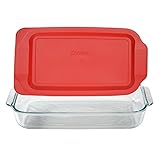
You can also make green sheets at home on a hand-crank roller. The pasta maker guide covers the Marcato Atlas 150 and its rivals. You only need the roller. Lasagna is the one shape that doesn't need a cutter attachment, though a cutter wheel trims the sheets to the pan, and a deep glass 9 x 13 baking dish is the usual vessel for the bake.
Where to Eat It
Ricotta-style lasagna is the usual order at American red-sauce restaurants. Bologna-style trays are harder to find. Eataly's Il Pastaio counters, including the one in NYC's Flatiron District, roll pasta from scratch every day in view of the dining room, which makes them a reliable bet for fresh egg sheets. In New York, Don Angie serves a pinwheel lasagna for two that Scott Tacinelli and Angie Rito made famous. They roll the layers up, slice them like cinnamon buns and bake the rounds. The fillings take from both traditions: fresh pasta, besciamella and Bolognese from the north, plus robiola in place of ricotta, mozzarella and sweet Italian sausage. The chefs say they later learned that Italy already has a similar rolled dish, the rotolo.
Lasagna vs Rigatoni al Forno
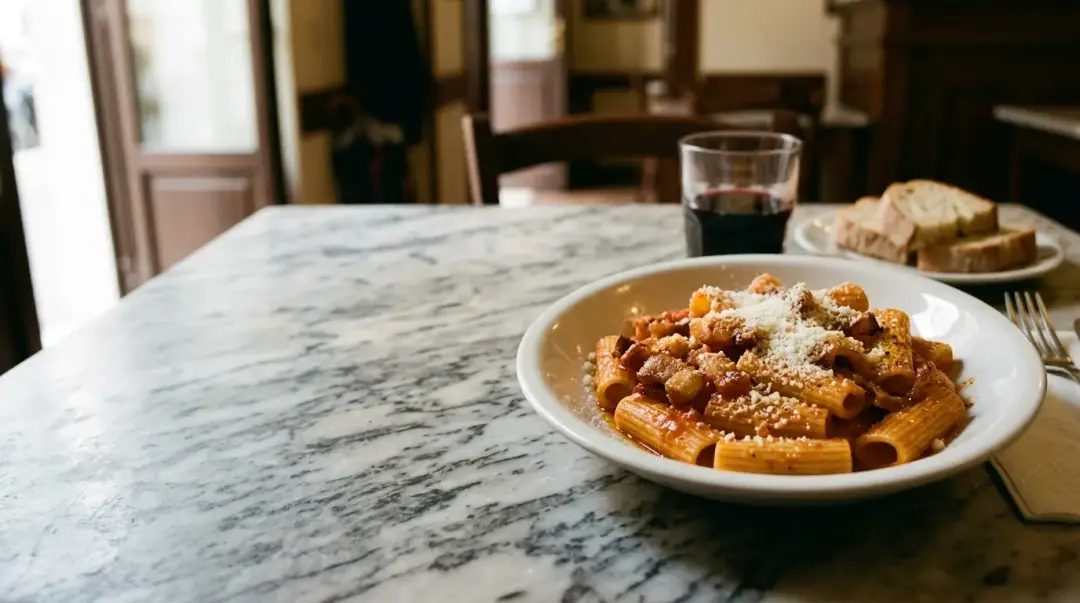
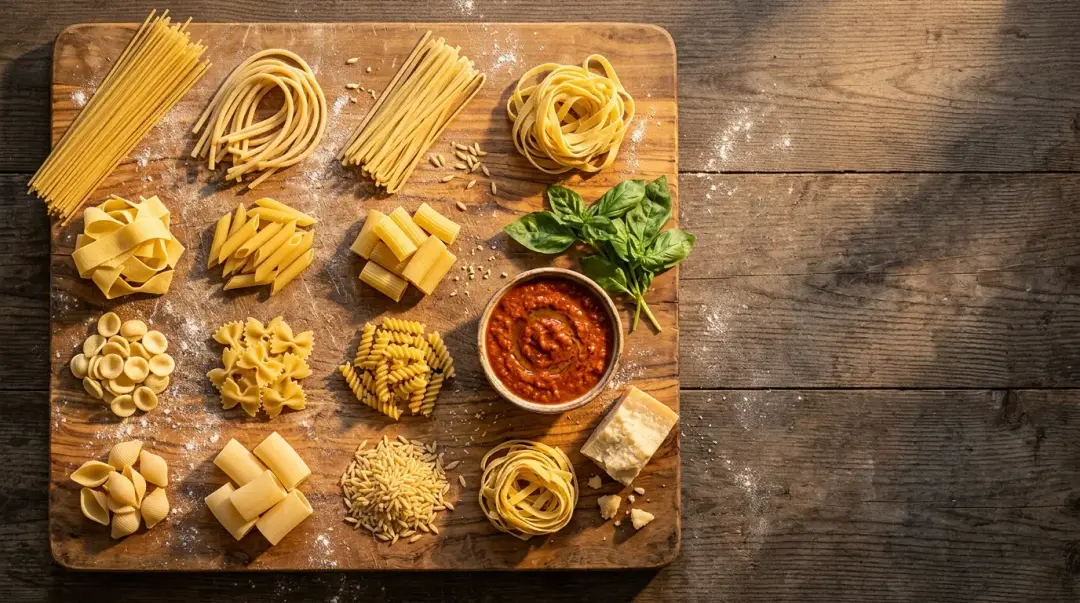
The closest relative to lasagna in our Italian cluster is a tube. Rigatoni is the go-to shape for pasta al forno (baked pasta), and it uses the same sauces and cheeses as lasagna. The difference is structure. Lasagna sheets create layers you can cut into squares. Rigatoni tubes fill with sauce and make a looser bake that you scoop instead of slicing. Use rigatoni when you want baked pasta with less assembly. Use lasagna sheets when you want a slice that holds its shape on the plate. For how sheets relate to ribbons, see the Italian pasta shape guide.
Four Ways a Tray Goes Wrong
Dry no-boil corners. The sheets take liquid from the sauce, and whatever pasta isn't covered stays hard. Spread sauce all the way to the pan's edges and over the top sheet.
Oiled boiling water. Barilla's own instructions say to salt the water and skip the oil, because oil keeps sauce from sticking to the pasta. Stack boiled sheets on a damp towel instead.
No rest. The Bologna recipe asks for five minutes out of the oven before cutting. If you cut right away, the layers slide apart.
Mixed traditions. Ricotta and béchamel in the same tray make a heavy, muddy filling. Choose either the Bologna version or the Naples version and stick with it.
FAQ
Do you have to boil lasagna noodles?
Only regular sheets. Oven-ready (no-boil) noodles are precooked in a water bath at the factory and then dried, so they finish softening in the sauce while the dish bakes. Standard sheets such as Barilla Wavy Lasagne need about 8 minutes in boiling water first. Some boxes, like De Cecco Lasagne No. 1, list both methods.
What is the difference between lasagna and lasagne?
Mostly grammar and geography. Lasagne is the Italian plural and the usual form in northern Italy, which is why British English uses it. Lasagna is the singular, more common in southern Italy, and it became the standard American spelling for both the noodle and the baked dish.
Can you use oven-ready noodles in any lasagna recipe?
Yes, with more liquid. No-boil sheets soak up moisture from the sauce, so a thick ragù or a stiff béchamel can leave dry, leathery corners. Use a looser tomato sauce, thin the béchamel with a little milk, make sure the top layer is fully covered, and bake under foil for most of the time.
What are ricce lasagna noodles?
Ricce (REE-cheh, "curly") sheets have ruffled edges along the long sides. They are a southern Italian standard, used in Neapolitan Carnival lasagna, and are sold as lasagna riccia by brands such as Garofalo. In US supermarkets the same idea appears as wavy lasagna. The ruffles hold sauce at the edges and keep sheets from fusing flat.
What is the original lasagna from Bologna?
Lasagne verdi alla bolognese: green egg-pasta sheets made with spinach, layered with ragù, béchamel and Parmigiano-Reggiano. The Bologna delegation of the Accademia Italiana della Cucina deposited its reference recipe at the city's Chamber of Commerce on July 4, 2003. It calls for at least six layers and contains no ricotta or mozzarella.
Is lasagna pasta made with egg?
It depends on the box. Bologna-style sheets are egg pasta, and so are Barilla Oven-Ready and De Cecco Egg Lasagna No. 112. Most standard and wavy dried sheets, including De Cecco Lasagne No. 1 and Barilla Wavy, are durum wheat semolina and water. Check the ingredient list if you need to know.