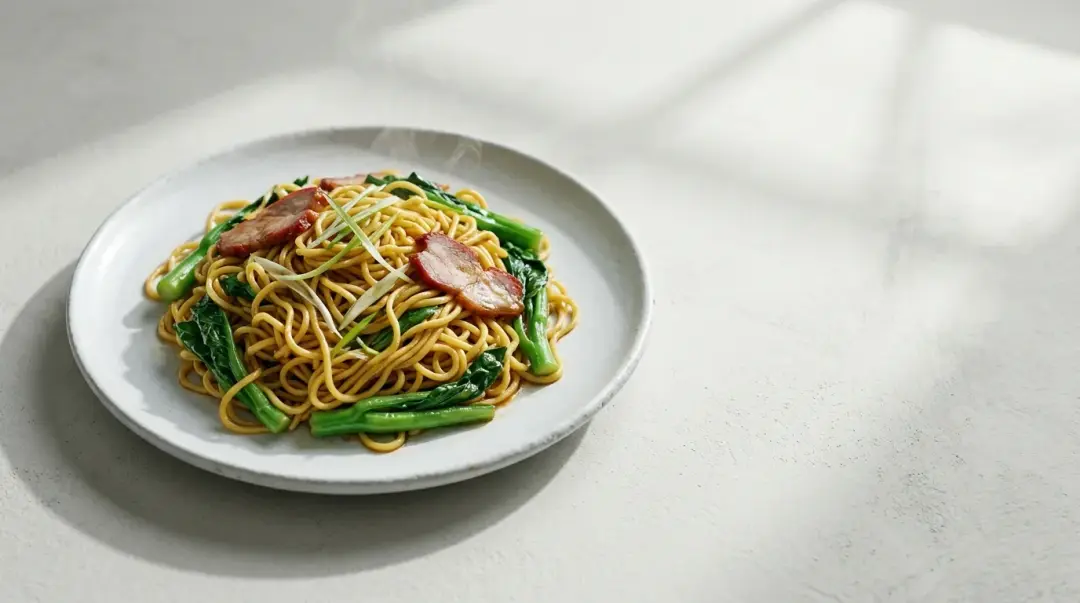
Lo mein (撈麵, "tossed noodle") is a Cantonese wheat-and-egg noodle, parboiled and finished by tossing in a light sauce of soy, oyster, and sesame oil. It is a staple of American-Chinese restaurant menus, and a real Cantonese dish in its own right. The point worth getting straight up front: lo mein is tossed, not pan-fried. That single verb separates it from chow mein (chǎo miàn, "stir-fried noodle"), which uses the same noodle but a different pan.
What is Lo Mein?
Lo mein is Cantonese in origin — Guangzhou and Hong Kong, the dialect region that fed most of the 19th- and 20th-century Chinese diaspora to the US. The name is functional: lāo (撈) is the verb "to scoop" or "to toss," and miàn (麵) is "noodle." Together the dish is named after how it's cooked. The noodles drop into boiling water, parboil to just-tender, drain, then land in a wok or mixing bowl where a sauce coats them by tossing — the cook lifting and folding the strands until every one is glossed.
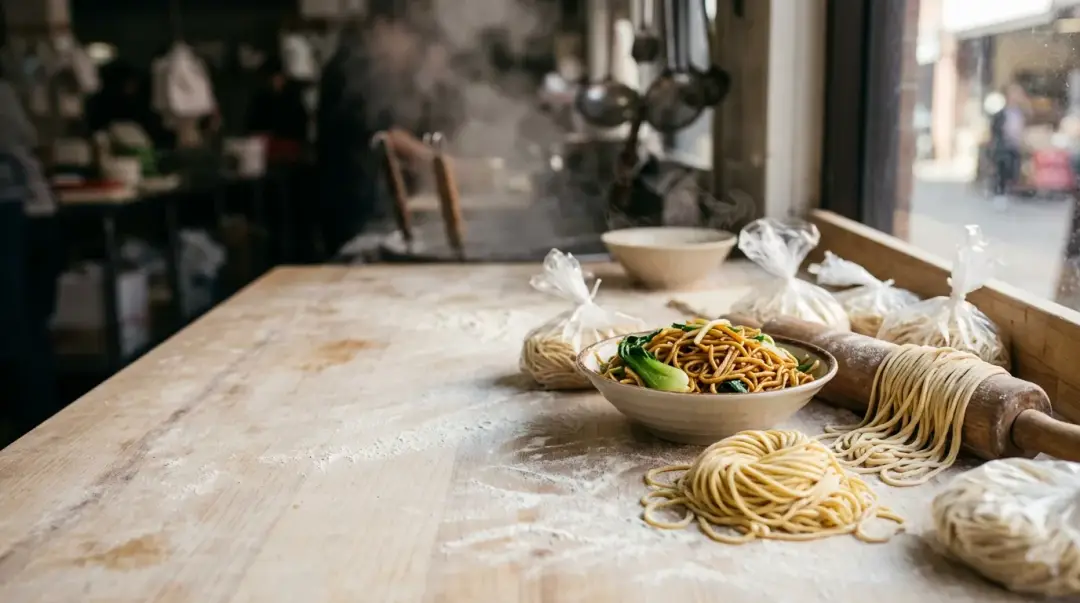
The noodle is a wheat-and-egg dough, rolled thin and cut into long strands roughly the diameter of spaghetti. It typically includes a kansui-like alkaline solution — sodium or potassium carbonate dissolved in water, the same mineral salts that give ramen and Cantonese wonton noodles their springy bite and faint yellow color. The alkaline lift firms the gluten; the strand stays chewy through the parboil and doesn't go gummy when sauce hits it. Twin Marquis fresh lo mein noodles, a brand many Chinese groceries stock, are made this way.
The parboil-and-toss technique is what gives the dish its character. Stir-fried noodles need hot oil and aggressive heat. Lo mein needs neither. The wok is barely warm; the noodles are already cooked; the sauce is the medium. Done right, the strands emerge soft and slick, each carrying a thin film of sauce without sitting in a puddle.
Flavor Profile
Lo mein eats soft and chewy, with a sauce that coats rather than soaks. The base is three ingredients: sesame oil for nuttiness, oyster sauce for the salt-sweet umami depth, and a splash of light soy for color and salinity. Aromatics — minced garlic, grated ginger, and a generous handful of scallion greens cut on the bias — go in at the end and lift the dish off the plate. The blend reads savory-first, with a low background sweetness from the oyster sauce.
What lo mein does not have is wok hei (鑊氣, "breath of the wok" — the smoky, slightly charred aroma that only develops when a noodle hits a screaming-hot wok with hot oil and a tossing motion that briefly ignites the vapors). That signature is the entire point of chow mein and the reason a good chow mein at a Cantonese specialist tastes like nothing you can replicate on a home stove. Lo mein operates in a different register: gentler, sauce-forward, the noodle and the aromatics doing the work.
Lo Mein vs Chow Mein vs Hong Kong Style
Same noodle, different cooking method. Spotting which is which on a plate:
- Lo mein — Noodles parboiled and tossed in sauce. Soft, slick, glossy. No char, no crisp.
- Chow mein — The same noodles stir-fried in a hot wok with oil. Edges crisp up; some strands carry visible browning. The dish smells of wok hei.
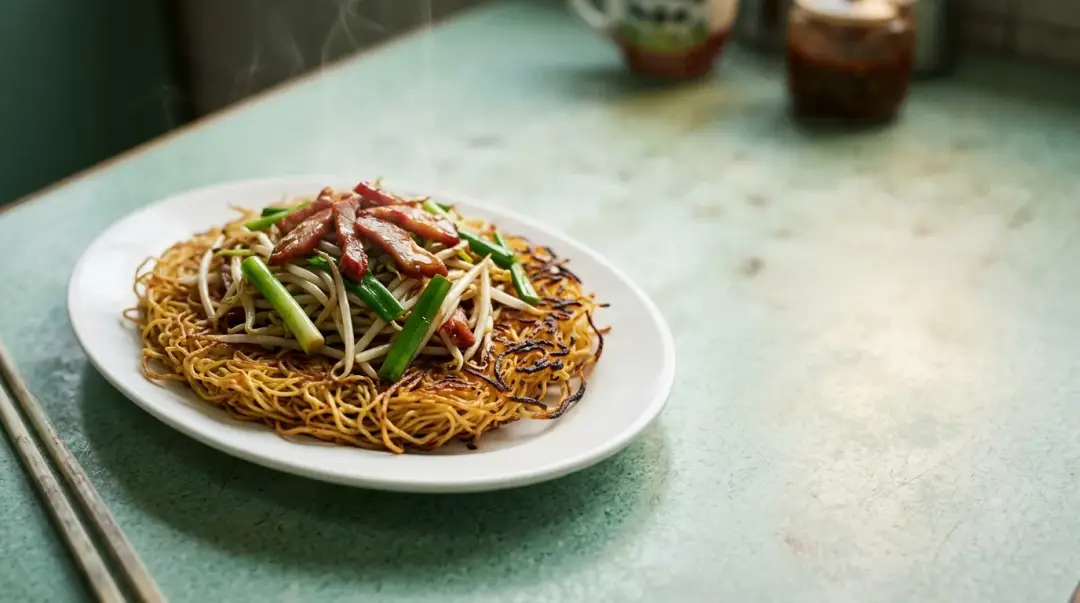
- Hong Kong-style chow mein (港式炒麵) — The crisp-cake version. Parboiled noodles are pressed into a wok and pan-fried on both sides until the bottom forms a single golden, brittle disc. Stir-fried protein and vegetables go on top in a glossy sauce. The contrast — crackling noodle base, saucy topping — is the dish.
- Cantonese chow mein vs American chow mein — In a real Cantonese kitchen, chow mein is the egg-noodle stir-fry described above. In American-Chinese takeout, "chow mein" often means crispy fried noodle strands served as a topping over saucy chicken or beef. Two different dishes wearing the same name.
The wrong label is endemic to takeout menus. A plate of soft, sauce-coated noodles served as "chow mein" is lo mein. A plate of crisped, browned-edged noodles served as "lo mein" is chow mein.
Where to Find Lo Mein in the US
Lo mein is on every American-Chinese restaurant menu in the country. The chains adapt it: PF Chang's serves a sweeter, soy-forward version as an entrée; Panda Express keeps a vegetable lo mein on the steam line as a side. These versions are heavily Americanized — softer noodles, sweeter sauces — but they're the lo mein many diners know first.
The authentic Cantonese version lives in the same neighborhoods that hold the rest of the cuisine. Flushing, Queens — Main Street and 41st Avenue, the New World Mall food court. San Gabriel Valley in Los Angeles, along Valley Boulevard from Monterey Park east to Rowland Heights. Chicago Chinatown on Wentworth and Cermak. San Francisco in Chinatown proper and the Sunset and Richmond districts. Look for Cantonese-specialist signs (roast meats — char siu, roast duck, soy-sauce chicken — hanging in the window) and order lo mein off the noodle section, not the chef's-special page.
For the ingredient itself, Asian grocery chains carry it. H Mart stocks Twin Marquis fresh lo mein noodles in the refrigerated noodle case, typically in a 16-ounce bag. 99 Ranch, T&T in the Pacific Northwest, and any Cantonese-leaning Chinatown grocery carry the same brand or a regional equivalent. Dry lo mein noodles exist but lose the springy bite; the fresh refrigerated bags are the upgrade.
Making Lo Mein at Home
Lo mein is among the more approachable Chinese noodle dishes to make at home. It needs only a pot of boiling water, a wok or wide skillet, and a short list of pantry staples.
The noodle is usually fresh lo mein, such as Twin Marquis from H Mart or another Chinese grocery. Dry Hong Kong-style egg noodles work as a backup, and thin spaghetti is an emergency substitute that is visibly different in texture. The sauce rests on Lee Kum Kee Premium Oyster Sauce (the gold-cap version rather than the panda-label one), light soy sauce and toasted sesame oil, sometimes with a little sugar and Shaoxing wine. Garlic, fresh ginger and scallions supply the aromatics, and the protein is shrimp, sliced beef or chicken, or a mix of bok choy, mushrooms and bell pepper for a vegetable version.
The technique is forgiving. The noodles are parboiled just short of done, drained and lightly oiled with sesame oil so they don't stick. The protein and aromatics sear in the wok, then vegetables go in, and the noodles return with the sauce. The cook lifts and folds the strands rather than stir-frying them, until everything is coated and hot through, and serves the dish while the noodles are still glossy. A long-handled wok spatula handles the searing and tongs handle the folding; our carbon steel wok buying guide covers the options.
What to Pair With Lo Mein
In a Cantonese meal, lo mein is a starch alongside the proteins that define Cantonese cooking: char siu (叉燒, the lacquered, sweet-savory Chinese BBQ pork hung in roast-meat shop windows), roast duck, soy-sauce chicken, and crispy pork belly. A plate of mixed roast meats with a side of plain lo mein is a standard Cantonese lunch and the move at any roast-meat shop in Chinatown.
As a one-bowl meal, lo mein wears its protein in the name: shrimp lo mein, beef lo mein, chicken lo mein, vegetable lo mein, and the American-Chinese restaurant invention House Special or Combination Lo Mein — shrimp, chicken, pork, and beef tossed together, the maximalist takeout-menu version of the dish.
A Cultural Note
Lo mein traveled to the US with the Cantonese diaspora. The first wave arrived from 1850 onward, drawn by the California Gold Rush and railroad work, and built the original Chinatowns on the West Coast. The Chinese Exclusion Act of 1882 cut off most further immigration for 60 years, but the Cantonese restaurants that survived spread eastward — the chop suey houses of the early 1900s, then the takeout-counter Chinese-American restaurants that became fixtures of every US city by mid-century. The "Combination Lo Mein" you see on a Brooklyn or Queens takeout menu is a product of this period: a Chinese-American restaurant invention, not a dish that exists in Guangzhou.
The deeper menu came later. The Immigration and Nationality Act of 1965 ended the national-origins quota system and opened US immigration to the full geography of China — Sichuan, Hunan, Shanghai, Fujian, the northern wheat-belt provinces. The regional Chinese cuisines that now define neighborhoods like Flushing and the San Gabriel Valley arrived in that wave. Lo mein stayed; it was Cantonese first and is Cantonese still, but it shares the menu now with hand-pulled Lanzhou beef noodle, Sichuan dan dan noodles, and Shanghai scallion oil noodles. The American-Chinese restaurant has gotten deeper. The tossed noodle is still the gateway.
FAQ
What does lo mein mean?
Lo mein (撈麵) means tossed noodle. Lāo is the verb to scoop or toss, and miàn is noodle, so the name describes how the dish is cooked.
What is the difference between lo mein and chow mein?
Both use the same wheat-and-egg noodle. Lo mein is parboiled and tossed in sauce, so it is soft and glossy with no char. Chow mein is stir-fried in a hot wok, which crisps the edges and adds a smoky wok aroma.
Is lo mein fried?
No. The noodles are boiled until just tender, drained and then folded through sauce in a barely warm wok or bowl. Frying belongs to chow mein.
What noodles are used for lo mein?
A wheat-and-egg noodle with an alkaline solution, cut into strands about the diameter of spaghetti. Twin Marquis fresh lo mein is a brand many Chinese groceries stock.
Where can you buy lo mein noodles in the US?
H Mart, 99 Ranch, T&T in the Pacific Northwest and Cantonese-leaning Chinatown groceries carry fresh lo mein in the refrigerated case. Dry versions exist but lose some of the springy bite.
See Best Chinese Wheat Noodles and the Japanese vs Korean vs Chinese noodle guide.