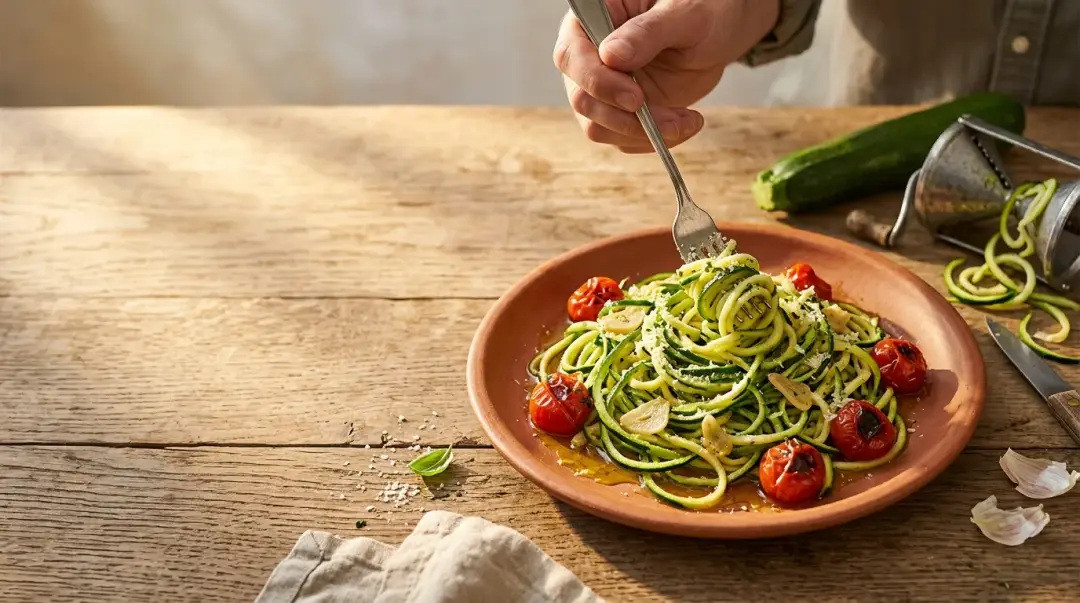
Zucchini noodles — zoodles — are spiralized fresh zucchini eaten as a pasta substitute, roughly 4g net carbs (total carbs minus fiber, the figure low-carb eaters actually count) per medium squash and gluten-free by default. They are made at home with a spiralizer, the hand-cranked or counter-clamped kitchen tool that turns a whole vegetable into long noodle-shaped strands. Zoodles are the keto-and-low-carb darling that, more than any single dish, put hearts of palm and shirataki (translucent yam-flour noodles from Japan) on supermarket shelves.
What Are Zucchini Noodles?
Zucchini noodles are the most-eaten member of a category that barely existed before 2012: the spiralized vegetable noodle. Take a firm vegetable, run it through a spiralizer's blade, and out comes a long strand shaped like spaghetti. Zucchini works because its flesh is dense enough to hold the strand and mild enough to wear any sauce.
The category exists because the tool exists. The spiralizer is a 2010s kitchen invention — a handheld or bench-clamped device with rotating blades that julienne a vegetable into continuous noodle-shaped strands. The first widely sold consumer model was the Paderno World Cuisine Tri-Blade, on Amazon around 2012. Ali Maffucci's blog Inspiralized launched in 2013, her cookbook landed in 2015, and by year's end every cooking-equipment brand from OXO to KitchenAid had a spiralizer in the catalog. Whole Foods began selling pre-spiralized zucchini in refrigerated tubs around 2014. The word zoodle — a portmanteau of zucchini and noodle — followed the tool into home kitchens.
The single non-obvious thing about zoodles is water. A medium zucchini is roughly 95% water by weight, and that water has to go somewhere. The technique that separates an edible plate from a soggy one is the salt-and-squeeze: toss the raw strands with a teaspoon of kosher salt, pile them in a colander for 15 minutes, then wring them in a clean towel before they hit the pan. Skip the step and the zoodles will leach water into the sauce and turn the plate into broth.
Flavor Profile and Texture
Zoodles taste like raw zucchini, because they are raw zucchini until 60 seconds before they reach the plate. The flavor is faintly sweet, faintly grassy — close to cucumber on the spectrum, with none of the wheat warmth or chew that defines pasta. They are a delivery vehicle for sauce, not a flavor.
Texture is the variable. Three states, narrow gaps:
- Raw or barely warmed. Crisp, with a clean snap. The right state for cold pasta-salad preparations.
- Sautéed 60 to 90 seconds in a hot pan. Tender but holding shape. The closest a zoodle gets to al dente (Italian, "to the tooth" — pasta cooked through but with a slight bite at the center). The target for hot dishes.
- Cooked past two minutes. Limp, watery, structurally gone. The plate fills with liquid as the strands collapse.
Boiling zoodles, the way you would boil spaghetti, skips the tender stage entirely and arrives at mush. The pan is the only correct vessel.
Zoodles vs Sweet Potato Noodles vs Beet Noodles
The three spiralized vegetables most shoppers will see — at Whole Foods, in Inspiralized recipes, on the cover of any 2018-era keto cookbook — sort cleanly:
- Zucchini noodles — roughly 4g net carbs and ~33 calories per medium squash. Neutral flavor. Pale green. The default. The one that disappears under sauce.
- Sweet potato noodles — roughly 24g net carbs and ~115 calories per medium sweet potato. Sweet, starchy, dramatically more substantial than zucchini. Not low-carb in any meaningful sense, but a real-food whole-vegetable swap that holds shape and browns in a hot pan.
- Beet noodles — roughly 8g net carbs and ~58 calories per medium beet. Earthy, mineral, slightly sweet. The visual ringer — raw beets spiralize into a magenta strand that stains everything, including the cutting board. Best raw or barely warmed in cold salads.
Carrot, daikon, and butternut squash round out the category. Zucchini wins the volume war because it's sold year-round, mild, and yields the longest unbroken strand.
Where to Find Zucchini Noodles
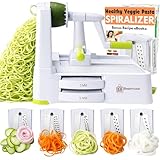
The noodle to buy
Brieftons 5-Blade Countertop Vegetable Spiralizer
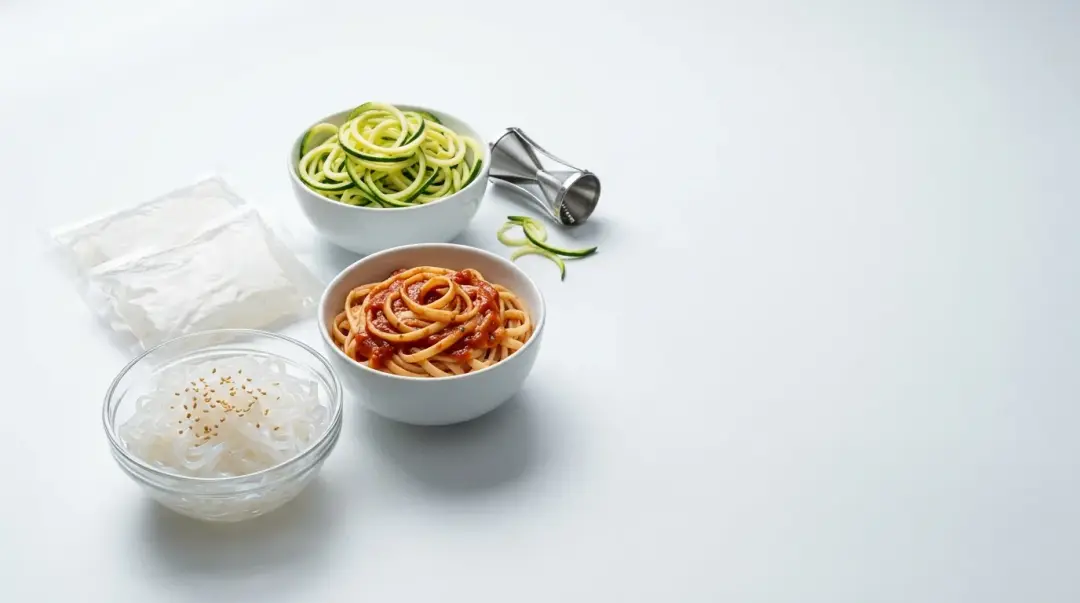
A blade spiralizer turns a firm zucchini into zoodles in about 30 seconds. This is a countertop model with five blades of Japanese 420-grade steel.
Two routes — pre-spiralized in a refrigerated tub, or a whole zucchini plus the hardware.
Pre-spiralized, refrigerated. Whole Foods stocks 12oz bags in the produce cold-case, branded under the 365 line or Mann's Veggie Noodles. Trader Joe's runs a comparable bag, sporadically — TJ's drops and reintroduces zucchini spirals on a months-long cycle. Sprouts carries them year-round, sometimes under the Cece's Veggie Co. label. Pre-spiralized bags save 15 minutes of prep; the trade-off is they're already shedding water by the time you open them, so the salt-and-squeeze step matters more, not less.
Whole zucchini. Almost every grocery carries it year-round. One medium zucchini is roughly six ounces and yields about two cups of spiralized strands — a single serving.
Spiralizer hardware. Target, Whole Foods home-goods aisle, and Amazon. The market sorts by volume:
- Brieftons 5-Blade Countertop Spiralizer — sold on Amazon. Five interchangeable blades. Right for a household cooking zoodles once a week.
- OXO Good Grips 3-Blade Spiralizer — bench-clamped, suction-cup feet. The default upgrade and where most kitchens land.
- KitchenAid Spiralizer Attachment — bolts onto the stand-mixer power hub. For cooks spiralizing multiple vegetables weekly or running meal prep.
Making Zucchini Noodles at Home
The technique, not a recipe:
- Pick the right zucchini. Firm, straight, six to eight inches long. Soft zucchini spiralizes into limp strands.
- Trim and load. Cut off both ends. Center the zucchini on the spiralizer's prongs.
- Spiralize. Hand-crank or motor through. One medium zucchini takes about 30 seconds.
- Salt and drain. Toss with a teaspoon of kosher salt in a colander. Wait 15 minutes, then wring in a clean kitchen towel — you'll pull a quarter-cup of water out of a single zucchini. A salad spinner is another way to dry them.
- Hot pan, fast cook. Drop the drained strands into a hot pan with olive oil. Toss for 60 to 90 seconds. Pull them while they still have spring. Serve immediately.
The single most common mistake is cooking them in the sauce. Don't. Cook the sauce in one pan, the zoodles in another, combine off the heat, serve.
What to Pair With Zoodles
Zoodles cannot anchor a plate the way a wheat noodle can. The sauce has to do the work, and the sauces that work best are dense, fatty, and emulsified:
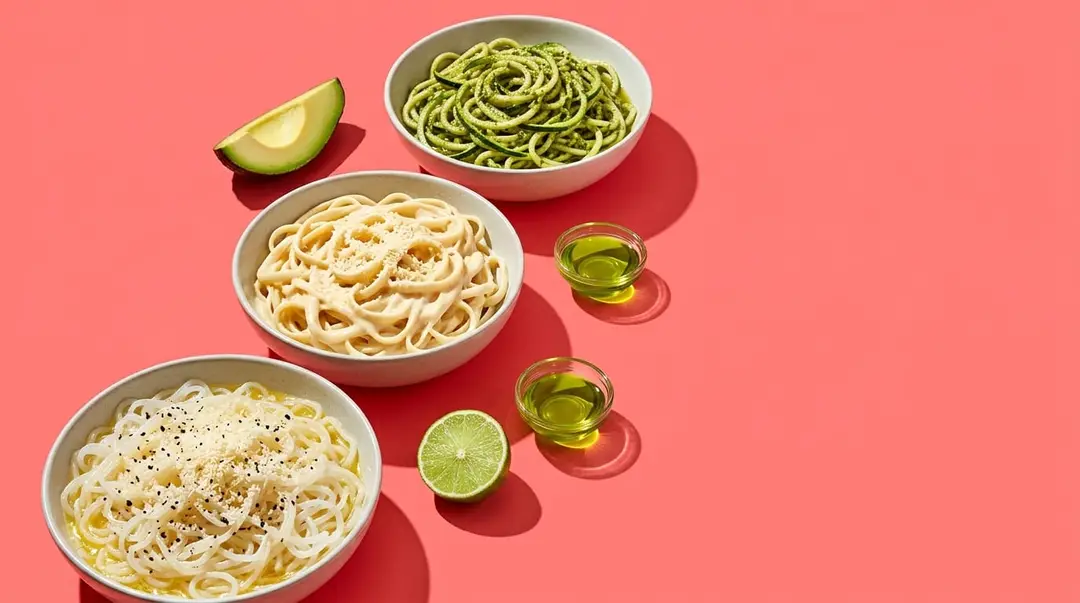
- Alfredo and cream sauces. Heavy cream, butter, Parmesan. The fat coats the strand and masks the residual water. Keto-canon pairing.
- Cream-and-bacon sauces. A keto carbonara variation — guanciale or bacon, egg yolks, Pecorino, black pepper. The fat is the dish.
- Garlic shrimp scampi. Butter, garlic, white wine, lemon, shrimp. The strand stays out of the way; the shrimp earns the plate.
- Pesto. Basil, pine nuts, olive oil, Parmesan. The classic Inspiralized pairing, and the one that converts the most skeptics.
- Marinara and tomato sauces. They work, but tomato adds back about 6g of carbs per half-cup, which defeats half the point on a strict keto plate. Better as a 50/50 split with regular pasta.
- Cold raw zoodles, pasta-salad style. Vinaigrette, halved cherry tomatoes, feta, olives, herbs. No cook step at all — the pairing most underused by home cooks.
What fails is anything that needs the strand to hold up — long-simmered Bolognese, baked ziti, cacio e pepe. The zoodle has no chew to balance a meat ragù and no surface to grip a starch-thickened cheese sauce.
A Cultural Note
The spiralizer is one of the cleanest case studies of a kitchen gadget riding a diet trend into the mainstream. The LA Times and Good Housekeeping both flagged spiralizers as a trending kitchen item in 2014, years before most home cooks had heard of them. Paderno's Tri-Blade, Inspiralized's Maffucci, OXO's bench model, and the KitchenAid attachment did the consumer work. Pinterest did the marketing.
Two threads merged. The first was the interest in vegetable-as-substitute, which Bonnie Plants had nurtured through retail spaghetti squash sales — that gourd, roasted and forked into strands, was the pre-spiralizer ancestor of the zoodle. The second was Israeli-British chef Yotam Ottolenghi's spiralized-vegetable cooking in Plenty More (2014), which moved the category out of the diet aisle and into the food-magazine front-of-book.
The detonator was keto. The ketogenic diet's mainstream US explosion from roughly 2018 onward — driven by social media before-and-afters and a wave of cookbooks that needed a pasta workaround — sent spiralizer sales into a second-act spike. By 2020 the zoodle was a default Whole Foods category, a pre-bagged Trader Joe's SKU, and a fixture in any keto recipe collection. The hearts-of-palm and shirataki sections in the same refrigerated aisle exist downstream of the path zoodles cleared.
FAQ
How many carbs are in zucchini noodles?
Roughly 4g net carbs and about 33 calories per medium zucchini. Sweet potato noodles run about 24g net carbs and beet noodles about 8g per medium vegetable.
How do you keep zoodles from getting watery?
Zucchini is about 95% water by weight. Toss the raw strands with kosher salt, drain them in a colander for 15 minutes, then wring them in a clean towel before cooking.
How long do you cook zucchini noodles?
Sauté for 60 to 90 seconds in a hot pan. Past two minutes they turn limp and release liquid, and boiling takes them straight to mush.
Where can you buy pre-spiralized zucchini noodles?
Whole Foods sells 12 oz bags in the produce cold-case, Trader Joe's carries a comparable bag on an irregular cycle, and Sprouts stocks them year-round. Pre-spiralized strands shed water sooner, so the salt-and-squeeze step matters more.
Which sauces work with zoodles?
Dense, fatty, emulsified sauces such as alfredo, pesto and garlic shrimp scampi. Long-simmered Bolognese and starch-thickened cheese sauces fail because zoodles have no chew or surface grip.
See Best Keto Noodles and the Specialty Noodle Guide.