What Are Vietnamese Noodles?
Vietnamese noodles cover a wider range of shapes, broths, and serving styles than most Westerners realize. Most diners outside Vietnam know phở — the iconic clear-broth beef soup — and stop there. But Vietnam has at least eight distinct noodle traditions, each tied to a specific region, broth philosophy, and cultural ritual.
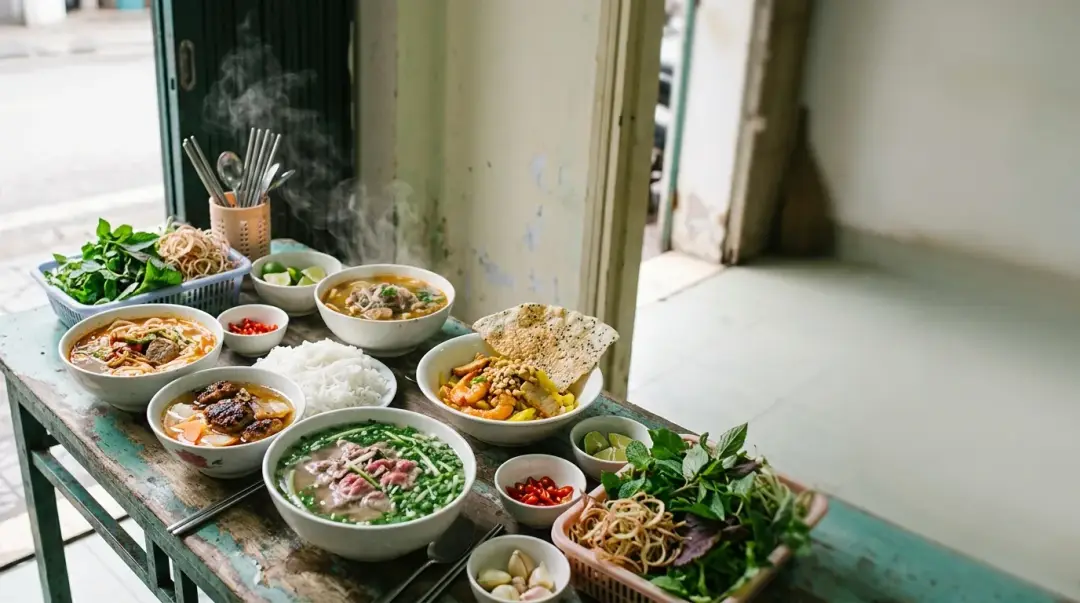
The defining feature of Vietnamese noodle culture is freshness: bowls arrive with a side plate of mint, basil, bean sprouts, lime, and chilies you add yourself. The diner finishes the dish, not the cook.
This is the complete guide to all eight.
The Eight Core Vietnamese Noodles
Each Vietnamese noodle below has its own deep-dive page. Click through for history, regional context, flavor profile, where to buy, and brand recommendations.
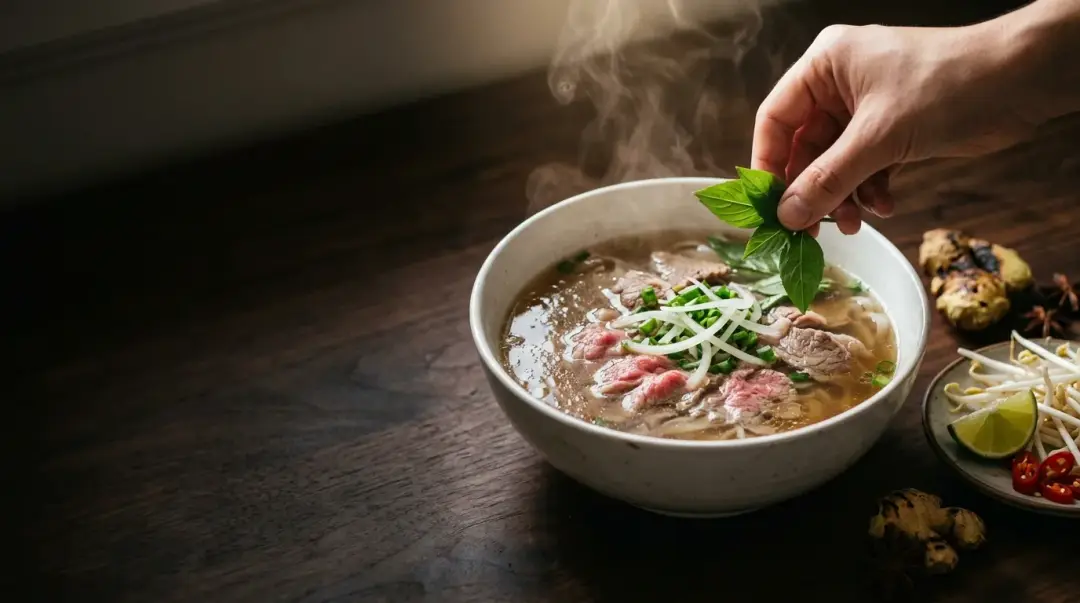
- Phở — The iconic Vietnamese beef noodle soup. Hanoi-style or Saigon-style, with deeply spiced clear broth.
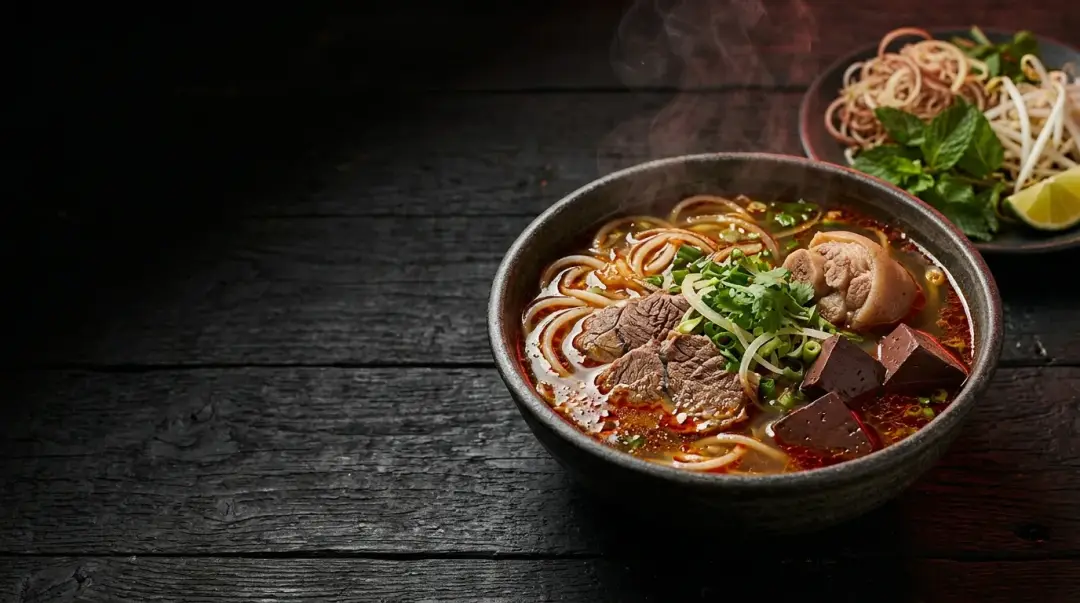
- Bún Bò Huế — Central Vietnam's spicy beef noodle soup, with lemongrass and shrimp paste.
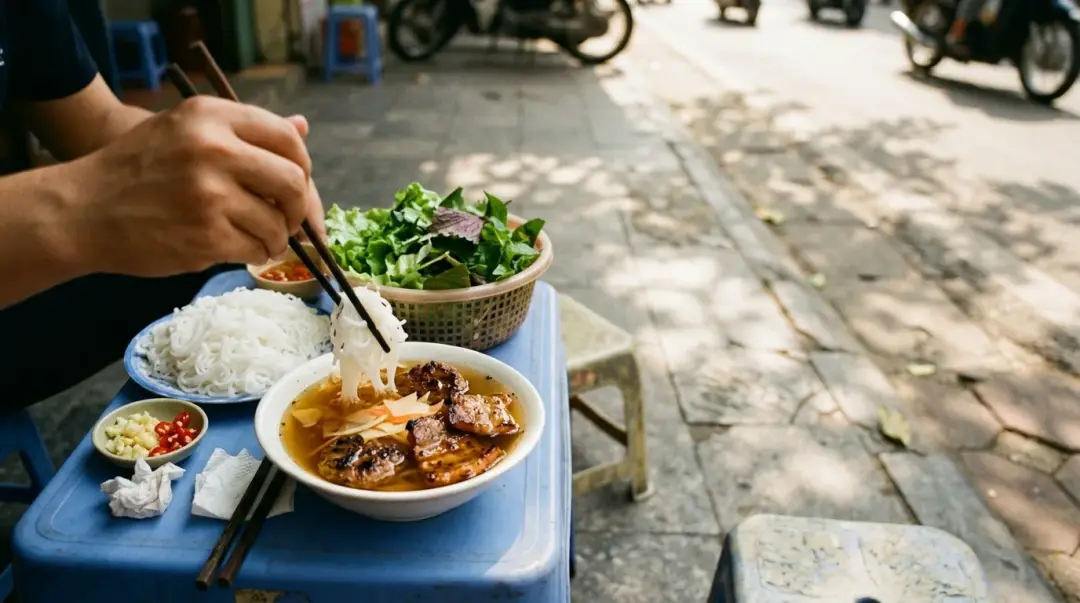
- Bún Chả — Hanoi grilled pork over rice vermicelli — the dish Obama famously ate with Anthony Bourdain.
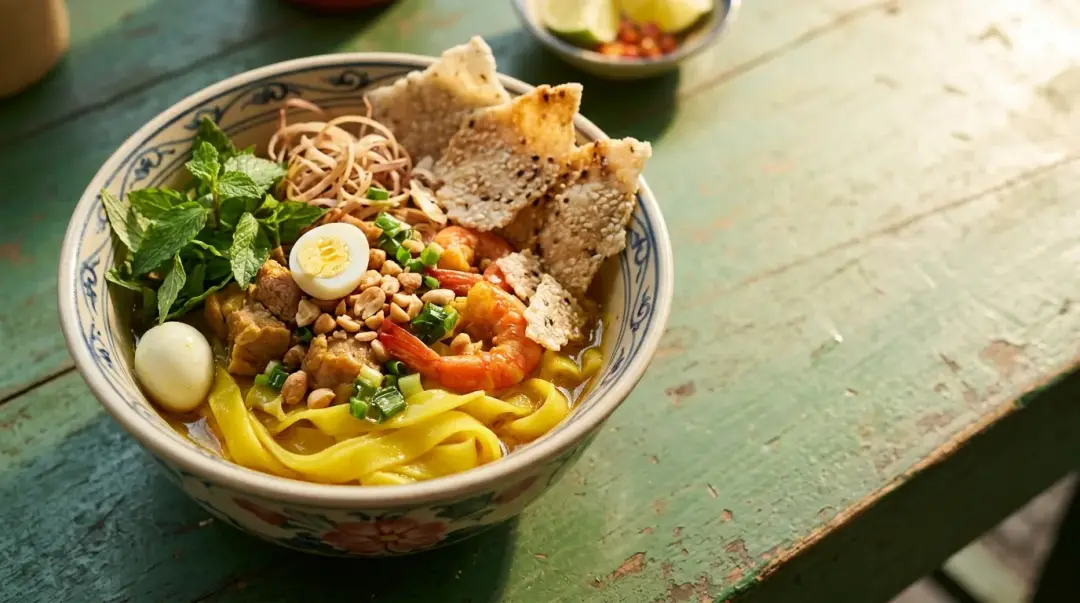
- Mì Quảng — Da Nang's turmeric-yellow noodle dish with just a little broth and crispy rice cracker.
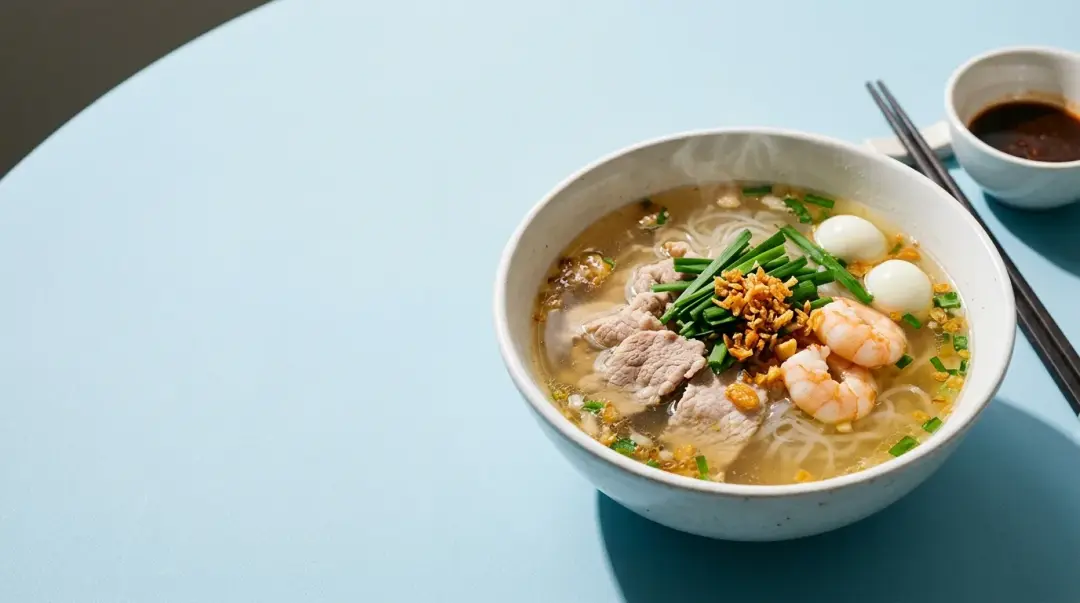
- Hủ Tiếu — Southern Vietnam's clear pork-and-seafood noodle soup, with Cambodian-Chinese roots.
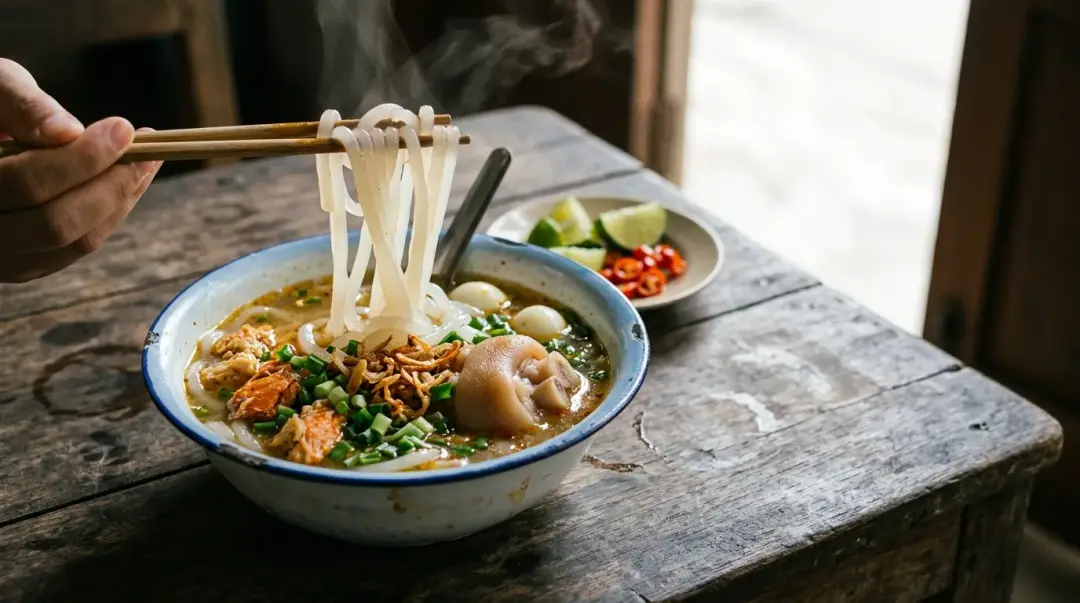
- Bánh Canh — Thick, chewy tapioca-and-rice noodles in rich broth.
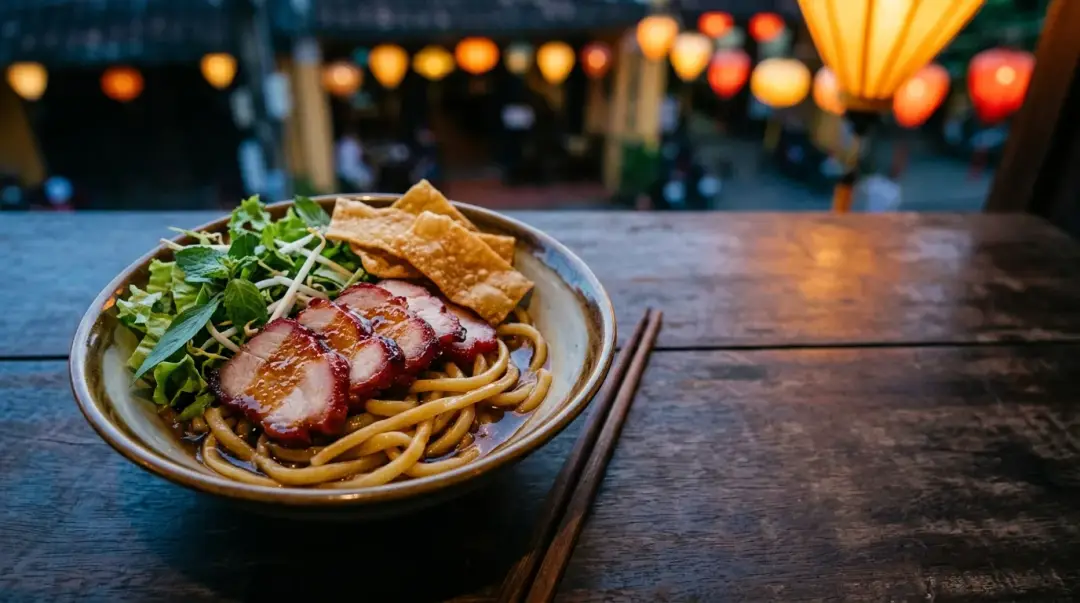
- Cao Lầu — Hoi An's specialty — chewy ash-treated noodles only made in that one town.
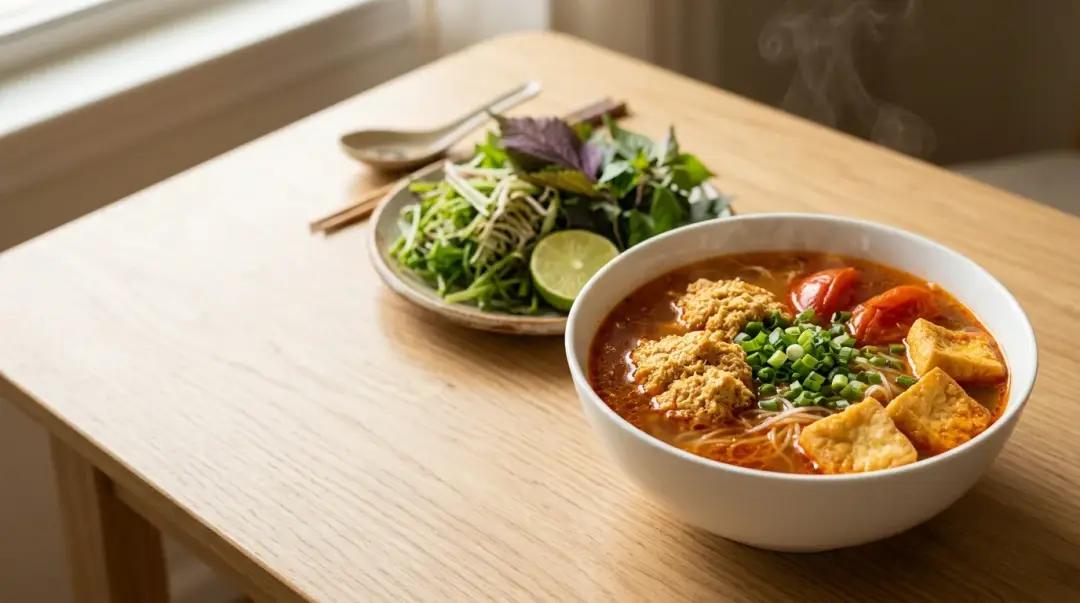
- Bún Riêu — Crab-and-tomato broth with rice vermicelli, deeply umami.
Regional Identity Matters in Vietnamese Cooking
Unlike the "Vietnamese food" found in many restaurants abroad (which leans heavily on phở and bánh mì), Vietnam itself has a sharp north-central-south divide:
- North (Hanoi) — Clean, restrained, less sweet, more herbal. Original phở comes from here.
- Central (Hue, Da Nang, Hoi An) — Spicy, intense, fermented. Bún bò Huế and mì quảng.
- South (Saigon) — Sweeter, more abundant, more herbs. Modern phở with the table garnish plate.
You'll see this in our type pages — same "noodle category," different cooking philosophy by region.
How Vietnamese Noodles Differ from Chinese and Thai
Vietnamese noodles share Chinese ancestry (centuries of cultural exchange across the border) and culinary kinship with Thailand (lemongrass, fish sauce, fresh herbs). But Vietnamese cuisine is distinguished by:
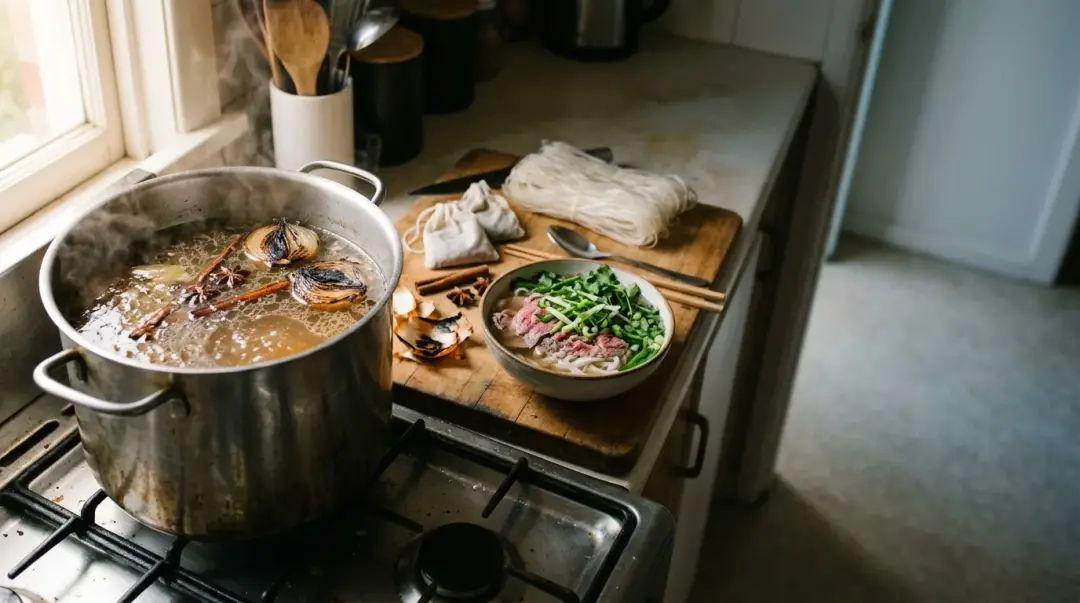
- Clear, layered broths. Vietnamese pho takes 12+ hours to build, but the result is crystal-clear. Chinese broths often skew thicker; Thai broths use coconut milk for richness.
- Fresh herbs at the table, not in the bowl. The herb plate is a Vietnamese signature.
- Less spice, more balance. Except in central Vietnam (Hue), Vietnamese cooking is less aggressive with chili than Thai food.
- Rice as the primary noodle base. Vietnamese cuisine is heavily rice-noodle focused, while Chinese cuisine leans on wheat.
Read more in Vietnamese vs Thai vs Chinese Noodles.
Where to Buy Vietnamese Noodles
In the US, Vietnamese groceries (called chợ Việt in Vietnamese-American communities) carry the deepest selection — particularly in Orange County CA, Houston TX, the DC suburbs, and Boston. H Mart and 99 Ranch Market stock the basics. For online, Amazon US ships every major brand:
- Three Ladies — bánh phở rice noodles, the US standard
- A Taste of Thai — easy-find rice noodles at mainstream groceries
- Wel-Pac — Asian-grocery-grade dried noodles
FAQ
What are the main Vietnamese noodle dishes?
Eight core traditions: phở, bún bò Huế, bún chả, mì quảng, hủ tiếu, bánh canh, cao lầu and bún riêu. Each ties to a region, a broth style and a serving ritual.
How do Vietnamese noodles differ from Chinese and Thai noodles?
Vietnamese bowls lean on clear, layered broths, a fresh herb plate at the table, and rice as the main noodle base. Chinese cooking leans on wheat, and Thai broths often use coconut milk for richness.
Which Vietnamese noodle dish is the spiciest?
Bún bò Huế from central Vietnam. Outside Hue, Vietnamese cooking is generally less aggressive with chili than Thai food.
Where can you buy Vietnamese noodles?
In the US, Vietnamese groceries carry the deepest selection, especially in Orange County CA, Houston, the DC suburbs and Boston. H Mart and 99 Ranch Market stock the basics, and Three Ladies is the standard US brand of bánh phở rice noodles.
What you need
Vietnamese broths reward patience and a few well-chosen tools.
Pho bowls. Vietnamese soups are served in a big, wide bowl that leaves room for herbs and noodles. This listing is a set of four 8-inch, 40-ounce ceramic bowls described as suitable for pho and ramen, and as microwave and dishwasher safe. View on Amazon
12-quart stainless steel stockpot. Pho broth simmers for hours, which calls for a tall pot with room for bones and water. This Tramontina pot has an impact-bonded tri-ply base, is induction compatible and includes a lid. View on Amazon
4-cup fat separator. A fat separator lets you pour broth out from under the fat layer when you degrease a pho stock. This OXO Good Grips model has a 4-cup capacity and a strainer lid. View on Amazon
For more pots, bowls and spoons, see our Vietnamese cookware guide.
Buying guides: