Bún bò Huế is central Vietnam's flagship beef-and-pork noodle soup — thick round rice vermicelli in a lemongrass-and-shrimp-paste broth from the former imperial capital of Hue. It's the second-most-ordered Vietnamese noodle soup in US restaurants after phở, common in Westminster CA, Houston, and any city with a central-Vietnamese diaspora. What sets it apart is the seasoning logic — fermented shrimp paste and lemongrass give it a bold, funky, deeply spiced character that phở deliberately avoids.
What Is Bún Bò Huế?
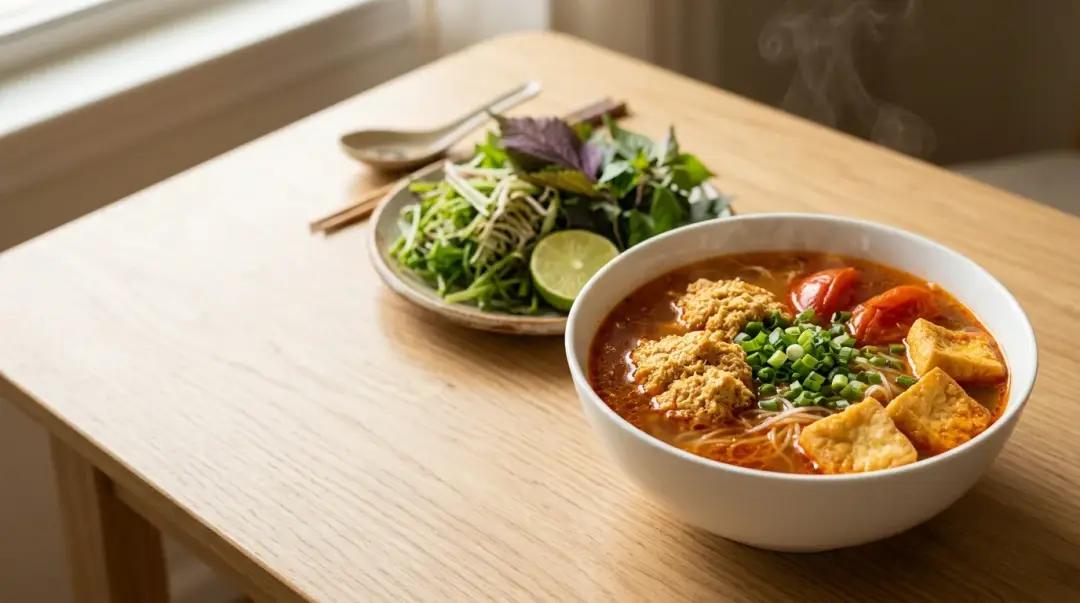
Bún Bò Huế — literally "beef noodles, Hue style" — is central Vietnam's flagship noodle soup. It uses thicker, round rice vermicelli (different from phở's flat noodles), a broth built on beef bones AND pork hocks, and is seasoned with two flavors that define the dish: lemongrass and mắm ruốc (fermented shrimp paste). The result is a soup that's spicy, deeply savory, and aromatically completely distinct from phở.
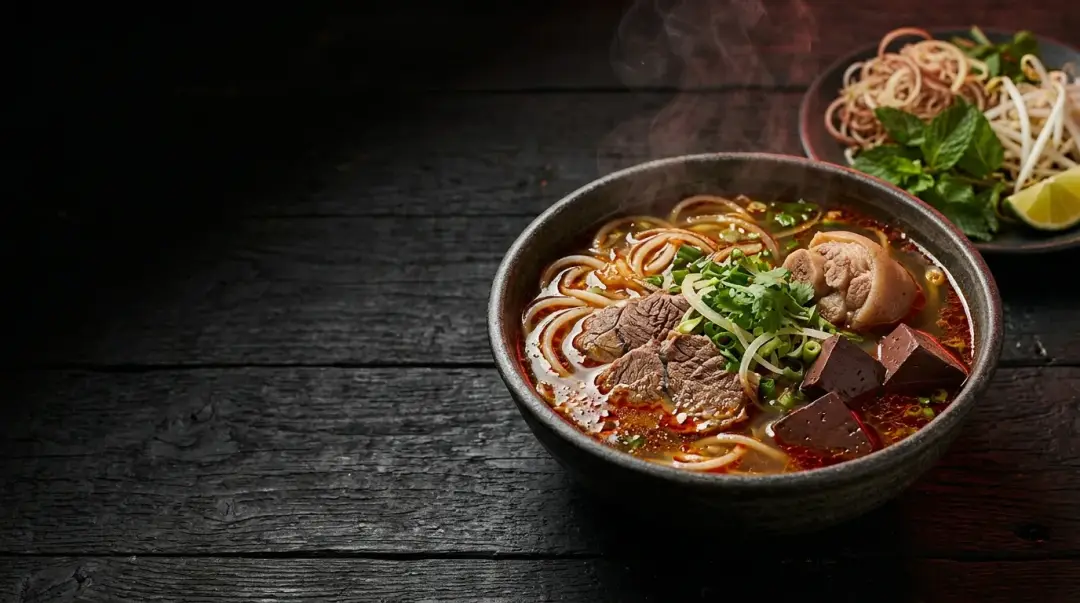
The bowl typically contains: pork hock, beef shank, chả lụa (Vietnamese pork roll), congealed pig's blood (yes, really — it's a delicacy in Hue), and sometimes a beef ball or two. The broth is reddish-orange from chili oil and annatto.
Why It's Spicier Than Phở
Bún Bò Huế comes from Hue, the former imperial capital of Vietnam, which sits in the country's central region. Central Vietnamese food is famously bold, spicy, and unforgiving — partly cultural heritage from the imperial kitchens, partly the climate (hot, humid, more chili-forward agriculture).
Whereas phở reflects Hanoi's restrained Northern style, bún bò Huế reflects central Vietnam's "if it doesn't make you sweat, it's not seasoned" philosophy.
Flavor Profile
Bún Bò Huế hits with lemongrass-citrus brightness, immediate spice, deep meaty richness from pork and beef, and a fishy-funky background note from shrimp paste. The texture contrast — bouncy round noodles, soft pork hock, firm chả lụa — is the dish's signature.
If phở is the elegant cousin, bún bò Huế is the loud, opinionated one who's also more interesting to talk to.
How Eaten in Vietnam
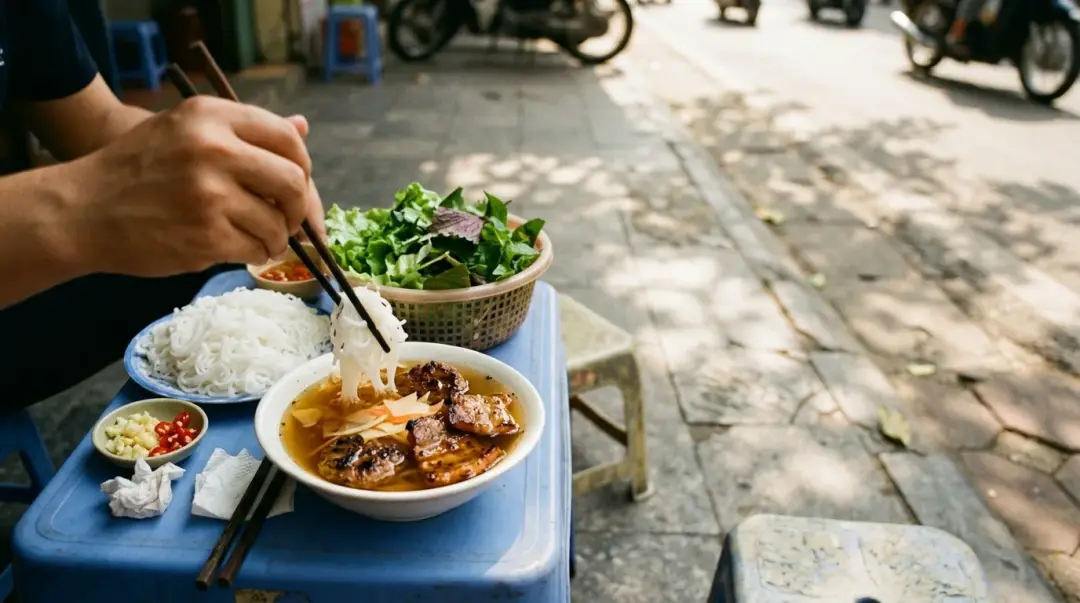
In Hue, bún bò Huế is breakfast food. Locals eat it before 9am, then move on with their day. In Saigon and abroad, it's eaten as lunch or dinner. The dish always comes with a garnish plate: shredded banana blossom, lime wedges, mint, perilla leaves, and sliced raw onion. Some restaurants serve a small dish of additional shrimp paste on the side for diners who want to amp the funk.
Where to Find Bún Bò Huế Outside Vietnam

The noodle to buy
Large 8 Inch Thai Granite Mortar and Pestle
The reddish chili oil on top starts with minced lemongrass and chili, and a granite mortar crushes the lemongrass fibers instead of just chopping them. This listing is a solid granite, Thai-style 8-inch mortar with a rough grinding interior and a large pestle.
It's less common than phở in Vietnamese restaurants in the US, but most metro-area Vietnamese restaurants serve it — particularly in:
- Westminster, CA (Little Saigon — the US capital of Vietnamese food)
- Houston, TX (large central-Vietnamese diaspora)
- Boston, MA (Dorchester's Vietnamese district)
- Falls Church, VA (DC suburbs)
Look for restaurants with "Hue" or "Trung" in the name — they typically specialize in central-Vietnamese style.
Making It at Home
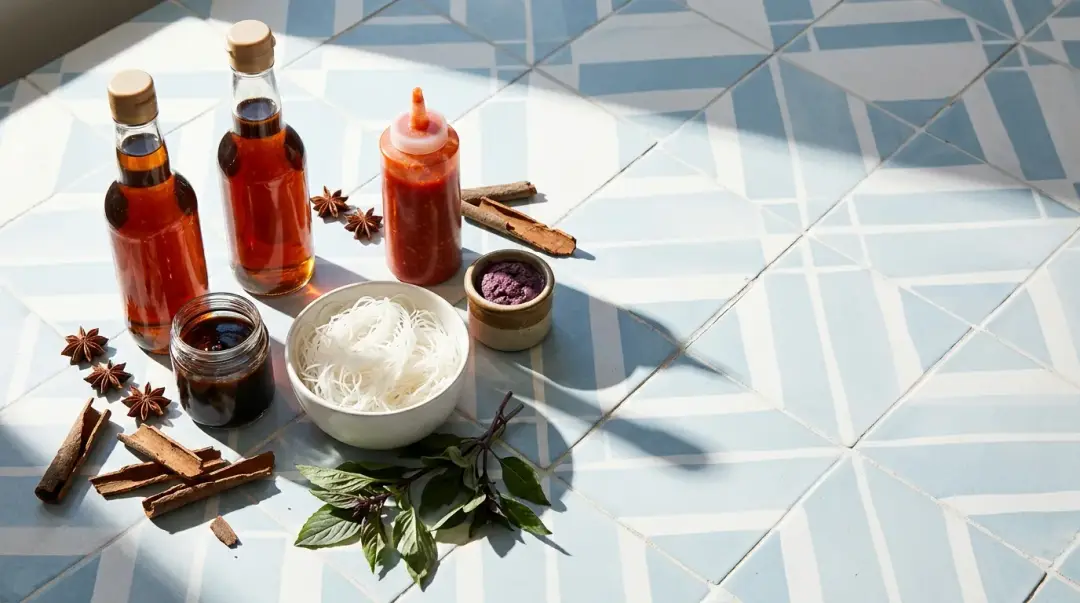
The hardest ingredient to source: mắm ruốc (Vietnamese shrimp paste). It's sold in Asian groceries, usually in pink-orange jars. Three Crabs brand is the standard. There's no real substitute — it's the signature flavor.
You'll also need:
- Bún bò Huế-style noodles — round, thicker than phở noodles. Same brands (Three Ladies, Wel-Pac) often make them.
- Lemongrass stalks — fresh or frozen
- Annatto powder or oil — for the reddish color
- Beef bones + pork hocks — the broth foundation
- Chả lụa — sold at Vietnamese groceries, refrigerated
A mortar is handy for pounding minced lemongrass and chili for the chili oil, and the finished soup goes in a large bowl with room for the garnish. For bowls and stockpots suited to Vietnamese soups, see our Vietnamese cookware guide.
See our Vietnamese Pantry Essentials buying guide for the full ingredient list.
A Bowl That Tells You Where Vietnamese Food Actually Lives
Many diners outside Vietnam think Vietnamese food = phở and bánh mì. That's a Southern Vietnamese export, spread abroad by refugees from the Saigon area after 1975. Bún bò Huế is a window into central Vietnamese cuisine — bolder, spicier, less Western-palatable, and arguably the most interesting category of Vietnamese cooking.
If you've only had phở, try bún bò Huế next. You're tasting a completely different culinary tradition.
FAQ
What is bun bo Hue?
Bún bò Huế is central Vietnam's flagship noodle soup from Hue. It uses thick round rice vermicelli in a broth of beef bones and pork hocks seasoned with lemongrass and fermented shrimp paste (mắm ruốc).
Is bun bo Hue spicy?
Yes. Central Vietnamese cooking is bold and spicy, and the broth is reddish-orange from chili oil and annatto. It is spicier than phở.
What is in a bowl of bun bo Hue?
Typically pork hock, beef shank, chả lụa (Vietnamese pork roll), congealed pig's blood, and sometimes a beef ball. A garnish plate of banana blossom, lime, mint, perilla and raw onion comes alongside.
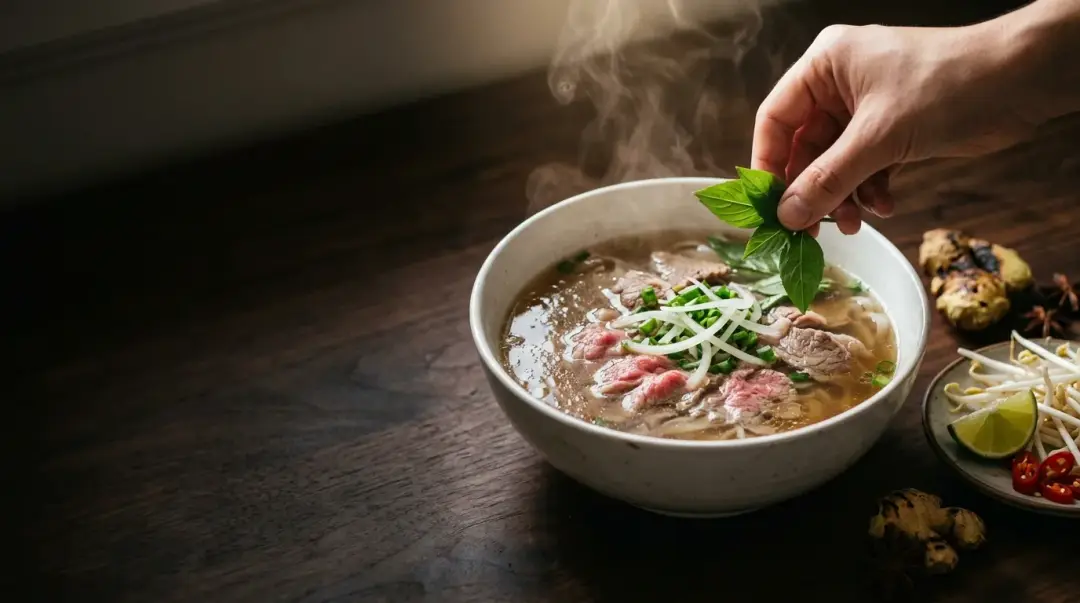
How is bun bo Hue different from pho?
Phở uses flat noodles and a restrained, clear broth. Bún bò Huế uses thicker round noodles and a spicy broth flavored with lemongrass and shrimp paste.