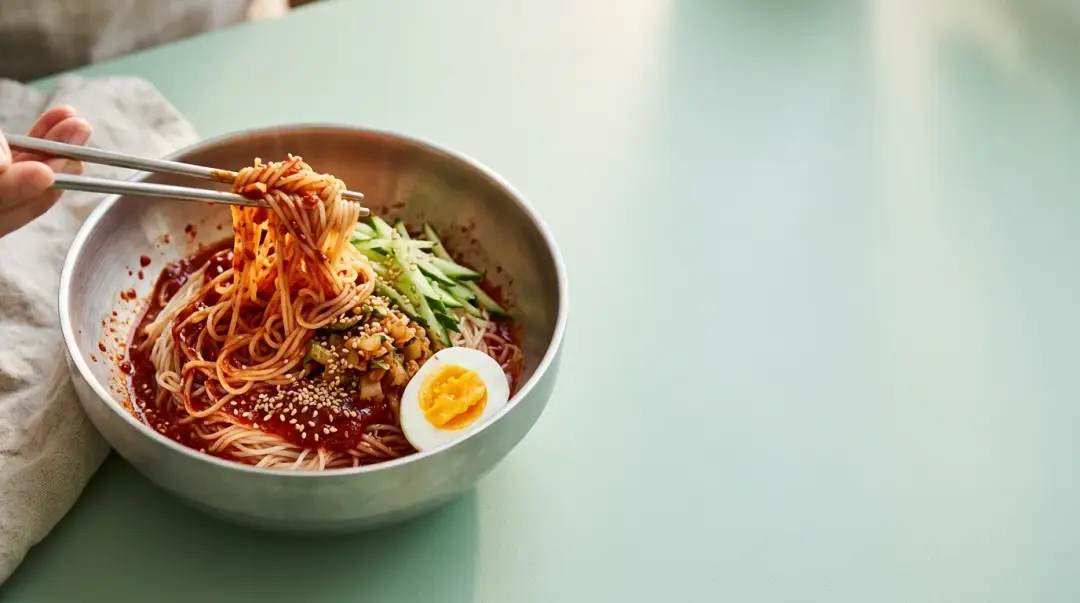
Bibim-guksu (비빔국수, "mixed noodles") is Korea's spicy cold-mixed wheat noodle dish — thin noodles tossed with gochujang, gochugaru, vinegar, soy, sugar, and sesame oil, then topped with cucumber, kimchi, egg, and gim. It sits alongside naengmyeon as the summer staple Koreans default to when it's too hot for hot food, but where naengmyeon is restaurant formal, bibim-guksu is the dish every Korean home cook keeps in muscle memory.
What Is Bibim-Guksu?
Bibim-guksu (비빔국수) is the homestyle anchor of Korea's bibim family — dishes built on the technique of mixing everything together at the table just before eating. Bibim (비빔, "mixed") names a category, not a single dish. The family includes bibimbap (mixed rice with vegetables and gochujang), bibim-myeon (the instant noodle variant, dominated by Paldo's iconic yellow packet), and bibim-naengmyeon (the buckwheat-blend cold noodle version served in formal restaurants). They share a common move: a sharp gochujang-based dressing tossed by hand or chopstick into a base — rice or noodle — right before the first bite. Guksu (국수, "noodle") is the generic Korean word for noodle, and bibim-guksu specifically means thin wheat noodles in the somyeon style.
The dish as it exists today is a mid-twentieth-century homestyle invention rather than a deep historical recipe. Wheat became affordable in Korea after US grain aid in the 1950s and 60s, and Korean home cooks built a fast cold-noodle dish around it — somyeon was already a pantry staple for soup noodles like janchi-guksu, and the gochujang-vinegar mixing sauce was the obvious summer move. Unlike naengmyeon, which arrived from North Korea with a centuries-old pedigree and complicated broth, bibim-guksu was always meant to be quick. It's a Korean home recipe in the truest sense — fifteen minutes, no broth, everything from the fridge.
The defining gesture is the mix itself. Sauce, noodles, and toppings hit the bowl as separate layers, and the eater hand-mixes vigorously with chopsticks until every noodle is coated bright red. Eating it un-mixed is wrong. The mixing is the dish.
Flavor Profile
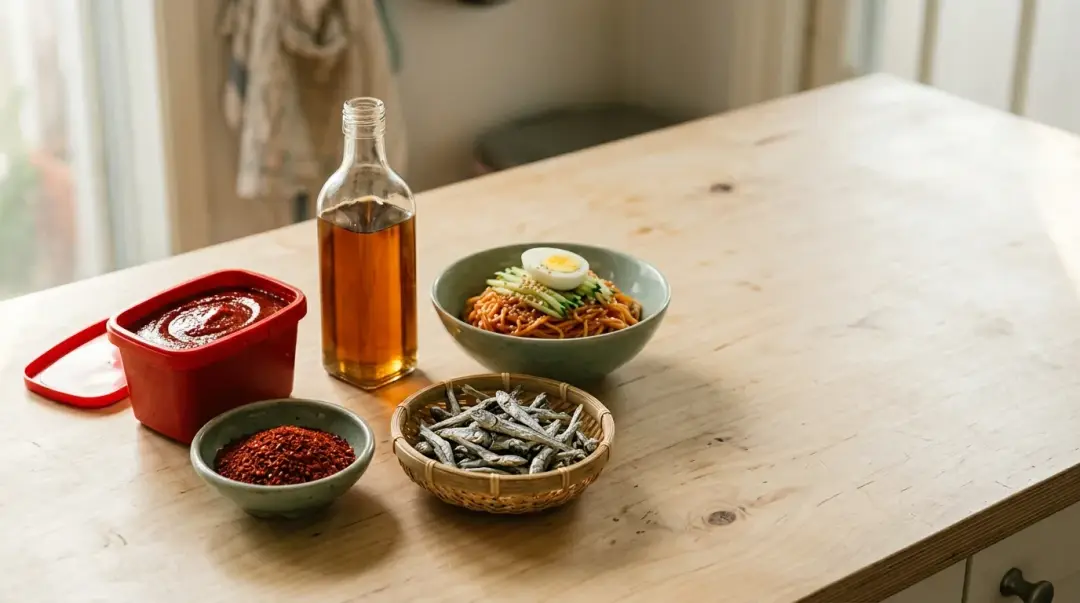
Bibim-guksu is the spiciest Korean noodle in mainstream rotation — a bright, sharp heat rather than a slow burn. The dressing is built on gochujang (the fermented red chili paste that's Korea's most distinctive sauce ingredient) layered with gochugaru (coarse Korean red chili flakes used as a finishing spice), then balanced with rice vinegar for acid, sugar for round, soy sauce for salt, and a generous pour of toasted sesame oil for nuttiness. Asian pear or apple puree shows up in family recipes that lean sweet.
The toppings carry the textural counterweight. Julienned cucumber adds cold crunch. Crisp, well-fermented kimchi pulls in funk and acid that punches through the sauce. A jammy or hard-boiled egg sits on top split lengthwise — runny-yolk versions are the home-cook flex. Gim (Korean roasted seaweed sheets, the same product sold as Korean nori) gets crumbled over everything at the end for a smoky salt-paper finish. The noodles themselves are quiet — thin, soft, slightly chewy — and exist to carry sauce. The total experience is sharp, acidic, hot, cold, and crunchy at once, with almost no richness. It's the opposite of ramyeon.
Bibim-Guksu vs Bibim-Myeon vs Bibim-Naengmyeon
The three are routinely confused at H Mart and in Korean menus. They share the gochujang-mix dressing but split on noodle and format.
- Bibim-guksu uses somyeon (thin Korean wheat noodles) and is almost always homemade. This is the dish you make in your kitchen.
- Bibim-myeon is the instant version — almost always referring to Paldo Bibim-Myeon, the bagel-yellow packet that has owned the category since 1984. Same flavor concept; different noodle (flash-fried instant wheat) and a powdered-sauce shortcut packaged inside.
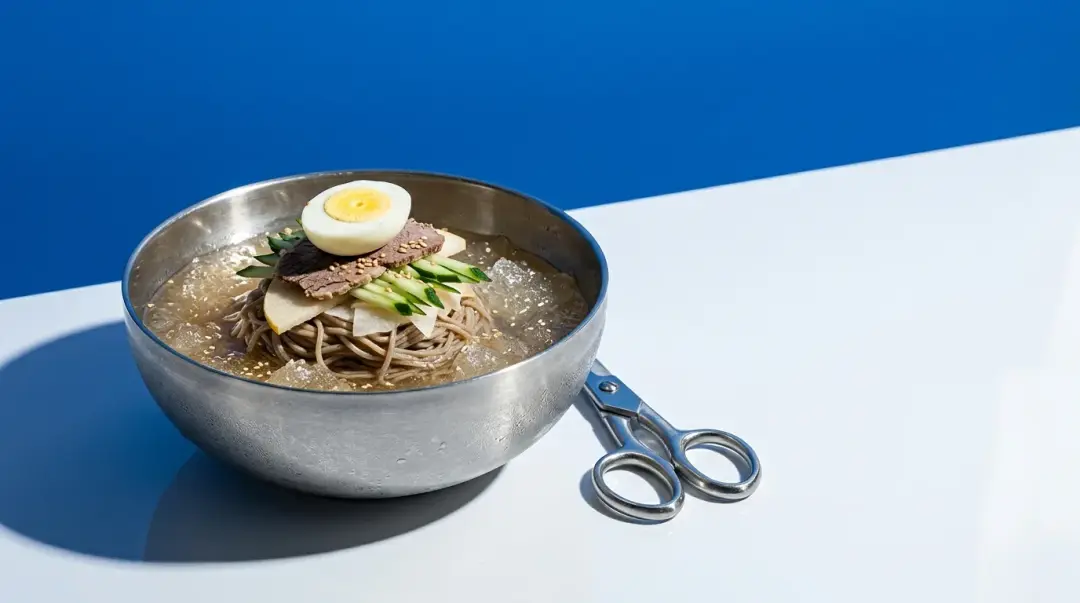
- Bibim-naengmyeon uses the sweet-potato-and-buckwheat blended cold noodle of regular naengmyeon, served chewier and more elastic. It's the restaurant version — ordered at naengmyeon specialty shops as the spicy alternative to mul-naengmyeon (the iced beef-broth version).
- All three are eaten cold or near-cold and mixed aggressively at the table.
- None of them are interchangeable — a Korean diner ordering bibim-naengmyeon would not accept bibim-guksu.
Where to Find Bibim-Guksu
The noodle to buy
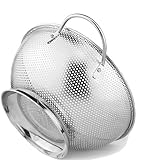
DLD Stainless Steel Micro-Perforated 5-Quart Colander
Cold noodles have to drain hard or the sauce turns watery, and a large colander does that in one pour. This one is 5-quart stainless steel with micro-perforations, a wide base and an easy-grasp handle.
Bibim-guksu is a Korean home dish, not a restaurant centerpiece, so it shows up outside Korea the way home dishes do — at groceries and on summer menu specials rather than as a flagship order.
Restaurant-side, it surfaces as a summer rotation special at K-town diners and casual Korean restaurants in LA Koreatown, Flushing's Northern Boulevard, Annandale Virginia, and the Buford Highway corridor in Atlanta. It rarely runs as a year-round menu item. When it appears, it's usually billed as bibim guksu or spicy mixed noodles.
The dominant format outside Korea is the instant version, Paldo Bibim-Myeon, which is in the dry-noodle aisle of every H Mart, every 99 Ranch, every Hannam Chain location, most large mainstream Asian groceries, and on Amazon. The packet is the same one Korean college students have been eating since the mid-1980s. It comes in 5-packs and as single packets at H Mart. Paldo also sells a Bibim-Myeon Sauce squeeze bottle separately, which Korean home cooks use as a cheat for fresh somyeon. That's the closest thing to a shortcut.
For the from-scratch dish, Korean home cooks in the diaspora make it themselves. There's no shortage of recipes — Maangchi and Seonkyoung Longest have both run versions on YouTube that built the diaspora muscle memory — and the ingredients are universally stocked at H Mart.
Making Bibim-Guksu at Home
Bibim-guksu is one of the genuinely fast Korean dishes — water-boiling time plus chopping time, roughly fifteen minutes. The ingredient list is short and the technique is mostly mixing.
- Somyeon (소면, thin Korean wheat noodles) — sold in pound bundles at H Mart. Pulmuone and Chongga are the default brands. Cook 3 minutes, shock in ice water, drain hard.
- Gochujang — CJ Haechandle (red tub) is the Korean home default and the brand easiest to find outside Korea. Sunchang and Chung Jung One are the other major players.
- Gochugaru — Tae-kyung is the standard. Sun-dried Korean coarse flake, not the fine powder. The fresh heat sits on top of the gochujang base.
- Rice vinegar — Korean (Ottogi) or Japanese (Marukan) both work. Avoid white distilled.
- Toasted sesame oil — Ottogi or Kadoya. Not light sesame oil.
- Garnish bar — julienned English cucumber, ripe kimchi (the older and funkier the better), one egg per person hard-boiled or jammy, crumbled gim, toasted sesame seeds.
Two routes from there. The instant route is Paldo Bibim-Myeon straight from the packet — boil the noodles, drain, toss with the included sauce packet plus the sesame-oil packet, garnish with whatever fresh stuff you have. It's good. The homemade route is somyeon plus a from-scratch sauce: gochujang, gochugaru, vinegar, soy sauce, sugar, sesame oil, minced garlic, and a splash of Asian pear puree if you have one. Mix everything in the bowl, hand-toss until every noodle is bright red, top, eat immediately.
Cold matters. Bibim-guksu warmed even slightly above room temp loses the structural snap. The noodles should be cold-water-rinsed twice and the bowl should be chilled if you're patient enough. A large colander drains the noodles fast, a fine-mesh strainer rinses off the surface starch so the sauce coats, and a stainless bowl holds the ice-water bath.
Our Korean pantry essentials guide covers the gochujang and gochugaru brands worth stocking.
What to Pair With Bibim-Guksu
The pairing logic is fried-and-crisp against cold-and-spicy. Korean home meals built around bibim-guksu almost always include a hot, savory, oil-rich side that contrasts the dish's bright acidity.
- Kimchi-jeon (kimchi pancake) — the canonical pairing. Old kimchi, flour, water, pan-fried in a thin disc. The fat and the sour kimchi land exactly where the noodles don't.
- Pajeon (scallion pancake) — milder than kimchi-jeon, equally fried, equally appropriate.
- Dongchimi (cold radish water kimchi) — the traditional cooling palate-reset. A clear, slightly fermented radish broth that reads almost like a brine. Drink the liquid between bites.
- Cold Korean beer — Cass, Hite, or Terra. The carbonation pulls heat off the tongue. Soju also works but rougher.
FAQ
What does bibim guksu mean?
Bibim means mixed and guksu means noodle. The dish is thin somyeon wheat noodles mixed by hand with a gochujang-based sauce at the table.
Is bibim guksu spicy?
Yes. It is the spiciest Korean noodle in mainstream rotation, with a bright, sharp heat from gochujang and gochugaru.
What is the difference between bibim guksu and bibim myeon?
Bibim guksu uses somyeon and is usually homemade. Bibim myeon is the instant version, most often Paldo Bibim-Myeon, with a powdered-sauce packet.
What noodles are used for bibim guksu?
Somyeon, thin Korean wheat noodles sold in bundles at H Mart. They are boiled about 3 minutes, shocked in ice water and drained well.
What do you serve with bibim guksu?
Kimchi-jeon (kimchi pancake) is the classic pairing, followed by pajeon and dongchimi (cold radish water kimchi).
A Cultural Note
The bibim family — bibimbap, bibim-myeon, bibim-naengmyeon, bibim-guksu — is defined by a technique, not an ingredient. Mixing at the table is the move. Pre-mixed bibim dishes served already tossed read as wrong in Korea the way pre-cut sushi reads as wrong in Japan. The mix is the act of cooking that the eater completes.
Paldo Bibim-Myeon's bright yellow packaging has been a visual landmark of Korean shelves since 1984 — instantly recognizable across generations, the way Coca-Cola red is elsewhere. The packet is on every H Mart endcap and in every Korean college dorm. K-drama fans may remember the bibim-guksu scene in Reply 1997, where the family eats it together on a hot Busan summer day — a small, accurate piece of Korean home life that the show used to anchor a moment of warmth. The dish lives in that register: not a restaurant centerpiece, not a tourist photo op, just the noodle you make on a Tuesday in July.