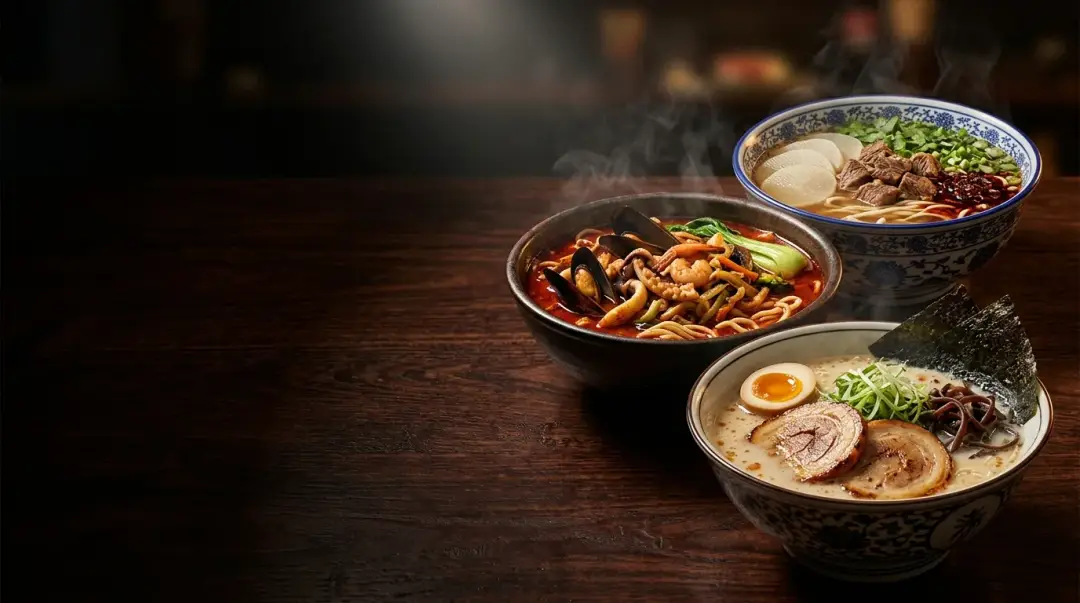
Ramen is Japan's globally famous noodle soup — alkaline wheat noodles in slow-built broth, organized into four classical styles (shoyu, shio, miso, tonkotsu) plus dozens of regional variants. The ramen scene outside Japan has matured dramatically since 2010, with specialist shops like Ippudo, Jinya, Tsujita, and Tatsu-Ya operating in major cities. What makes ramen technically ramen is kansui (alkaline mineral water) in the noodle dough — without it, you have lo mein, not ramen.
What Is Ramen?
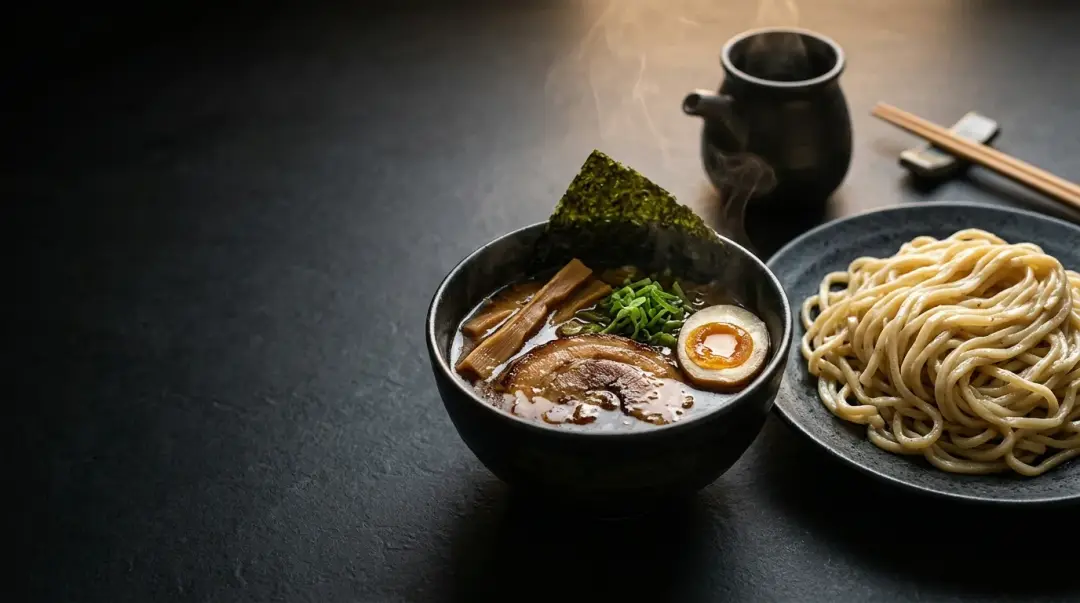
Ramen is alkaline wheat noodles in a slow-built broth, finished with toppings that vary by regional style. The defining technical feature is the noodle itself — wheat dough treated with kansui (alkaline mineral water containing sodium and potassium carbonates), which gives ramen noodles their characteristic yellow color, springy chew, and distinct smell. Without kansui, you have lo mein. With kansui, you have ramen. The broth is the second technical pillar: built over hours from pork, chicken, or seafood bones, often combined with dashi (kombu and bonito) for layered depth. Standard toppings include sliced chashu pork, soft-boiled marinated eggs (ajitsuke tamago), menma (fermented bamboo shoots), nori, and scallions. Instant ramen traces to 1958, when Momofuku Ando invented it at Nissin Foods — but restaurant ramen culture in Japan dates to early 20th-century Yokohama Chinatown, where Chinese cooks served Cantonese-style wheat noodle soups that Japanese shops adapted (see the history of ramen).
The Four Classical Styles
Ramen organizes by tare (the seasoning base added to the bowl before broth):
- Shoyu (醤油) — Soy-sauce tare. Tokyo style. Clear-ish brown broth. The original.
- Shio (塩) — Salt tare. Hakodate / Hokkaido style. Pale, almost clear broth.
- Miso (味噌) — Miso tare. Sapporo style. Rich, opaque, slightly sweet.
- Tonkotsu (豚骨) — Pork bone broth (technically a broth style, not a tare, but the categorization is treated similarly). Hakata / Fukuoka style. Milky white, deeply rich.
A fifth modern category, gyokai (魚介) — fish/shellfish-forward — has emerged in Japan since the 2000s.
Modern Regional Variants
Beyond the four classics, ramen has split into dozens of regional styles:
- Iekei — Yokohama style; tonkotsu-shoyu hybrid with spinach and nori
- Tantanmen — Sichuan-influenced spicy sesame ramen
- Tsukemen — Dipping ramen (dedicated page)
- Mazemen — Brothless ramen with sauce mixed at table
- Yokohama Iekei — Iekei evolution with thick chewy noodles
- Hokkaido Curry Ramen — Curry-broth ramen from Muroran
Flavor Profile
Ramen is deeply savory, often rich, sometimes salty-bright (shoyu) or full-bodied creamy (tonkotsu). Spice is style-dependent — most ramen is mild; tantanmen and Buldak-style variants run hot.
How Ramen Differs from Korean Ramyeon
The two share a name root but are fundamentally different dishes — see the full comparison. Quickly: ramen is fresh shop-made; ramyeon is instant. Ramen is slow-built broth; ramyeon is seasoning-packet broth. Ramen is mild by default; ramyeon is spicy by default.
Where to Eat Ramen Outside Japan
The ramen scene outside Japan has matured dramatically since 2010. Well-known shops, most of them US-based:
- Ippudo (Tokyo Hakata chain, multiple US locations) — tonkotsu specialist
- Jinya (LA-founded chain, nationwide) — Tokyo-style
- Tsujita (LA) — tsukemen specialist
- Hide-Chan (NYC) — Hakata tonkotsu
- Tatsu-Ya (Austin) — modern take
Look for shops that use Sun Noodle fresh noodles — the LA-based supplier most US ramen shops rely on.
Making Ramen at Home
For home cooks, two paths:
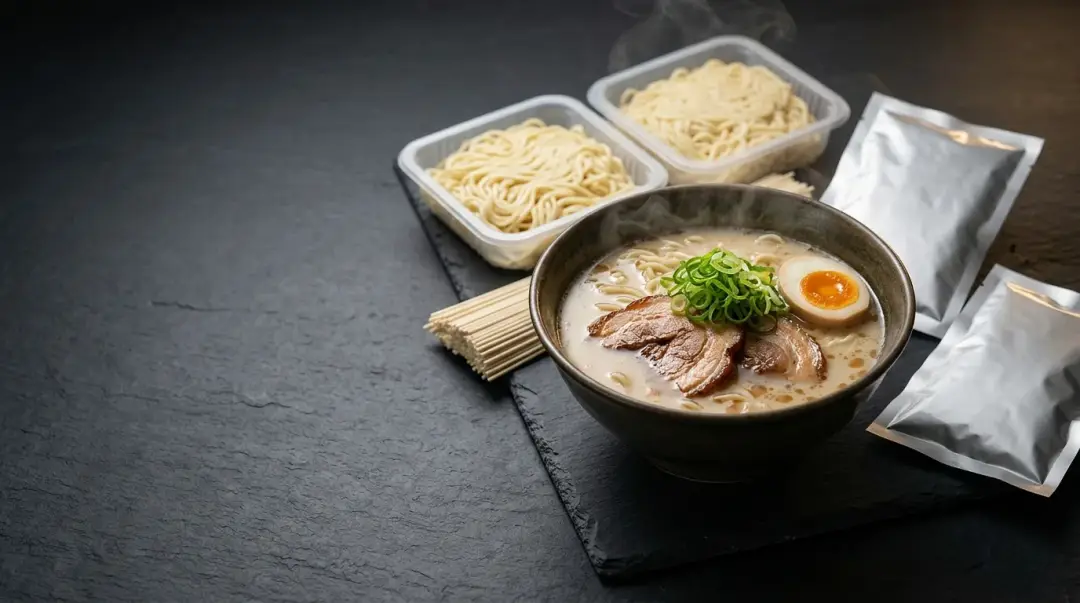
Path 1: Premium instant. Buy Sun Noodle fresh ramen, build a quick broth from chicken stock + dashi + miso/soy/salt. 20 minutes. Good ramen, not great.
Path 2: Full scratch tonkotsu. Pork bones, 12+ hour boil at rolling temperature (different from gentle pho simmer — ramen broth WANTS the agitation). The result is restaurant-quality ramen at home — but it's a project.
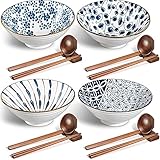
Either way, the bowl matters: a deep ceramic bowl, a deep spoon and grippy chopsticks do more for the eating than any extra topping. See our ramen bowl buying guide for options.
See Best Ramen Noodles & Kits for the right starter products.
A Note on Slurping
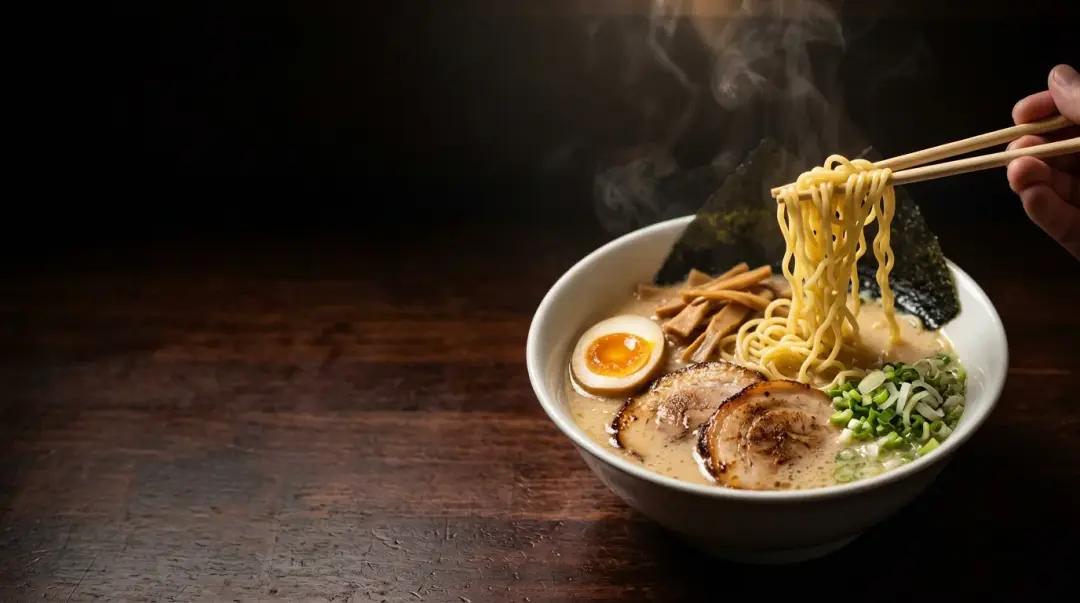
In Japan, slurping noodles is good manners — it signals you're enjoying the food and cools the noodles as you eat. In many other countries, the cultural default is the opposite. Slurp anyway. Japanese ramen is designed to be eaten quickly while still hot, and slurping is part of the technical practice.
FAQ
What makes ramen different from other noodle soups?
Ramen noodles are made with kansui, an alkaline mineral water that gives them their yellow color and springy chew. Without kansui, the noodle is closer to lo mein.
What are the four classic ramen styles?
Shoyu (soy sauce), shio (salt), miso and tonkotsu (pork bone). The first three are named for their seasoning base, or tare, and tonkotsu is named for its milky pork bone broth.
What is the difference between ramen and Korean ramyeon?
Ramen is a fresh, shop-made dish with a slow-built broth and is mild by default. Ramyeon is instant, uses a seasoning-packet broth and is spicy by default.
Is slurping ramen rude?
No. In Japan, slurping is good manners because it signals enjoyment and cools the noodles, and ramen is designed to be eaten quickly while hot.