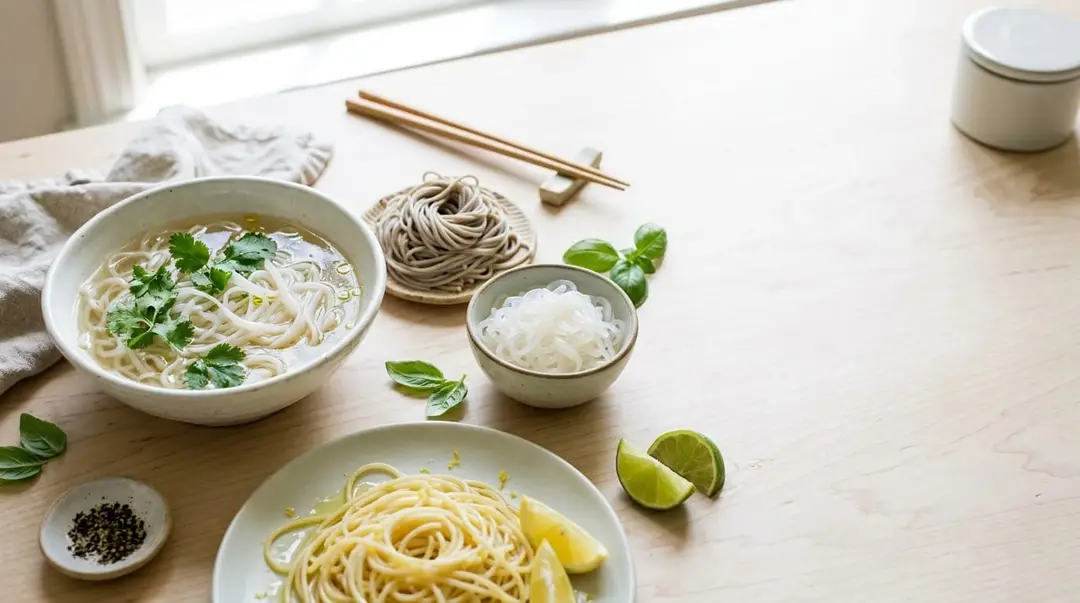
Low sodium noodles are noodles that meet the FDA's labeling threshold of 140 mg of sodium or less per serving — a bar that rules out almost every instant ramen on the market and most pre-seasoned soba kits, but lets in plain rice noodles, 100% buckwheat soba, shirataki, and unsalted dried wheat pasta. For someone managing hypertension (chronically elevated blood pressure), kidney disease, or any low-sodium prescription, the shortlist is short on purpose: noodles where you, not a seasoning sachet, control the salt.
What "low sodium" actually means for noodles
The FDA defines four sodium claims you'll see on US grocery labels: sodium-free (less than 5 mg per serving), very low sodium (35 mg or less), low sodium (140 mg or less), and reduced sodium (at least 25% less than the reference product). The full set of definitions and the 2,300 mg Daily Value are on the FDA's Sodium in Your Diet page. The 140 mg threshold is the one that matters for grocery shopping — it's what the front-of-pack "low sodium" claim legally requires.
The recommended daily ceilings sit one tier up. The FDA's Daily Value for sodium is 2,300 mg per day for adults. The American Heart Association recommends no more than 2,300 mg as the general limit and an optimal goal of 1,500 mg per day for most adults — particularly those with hypertension. Mayo Clinic clinicians echo the 1,500 mg target for hypertensive patients in their patient-education materials. The current US adult average sits above 3,300 mg.
The math is what makes instant noodles a problem. A single packet of Nongshim Shin Ramyun carries roughly 1,620 mg of sodium, about 70% of the FDA daily value. Samyang Buldak Original lists about 1,630 mg on the US 140 g pack label, about 71% of the daily value. A whole package of Nissin Top Ramen Chicken is about 1,580 mg; the 790 mg figure people quote is the label's half-package serving.
The shortlist below is built around a single principle: the noodle itself contributes under 140 mg per serving, leaving room for you to add salt — controlled, measured, and aimed at the sauce, not the strands.
The shortlist — five noodle types that fit
These are the categories where the dry, unseasoned noodle meets the FDA "low sodium" definition. All sodium figures are per cooked serving, drawn from manufacturer Nutrition Facts panels.
| Noodle type | Sodium per serving | Why it fits | Where to find it |
|---|---|---|---|
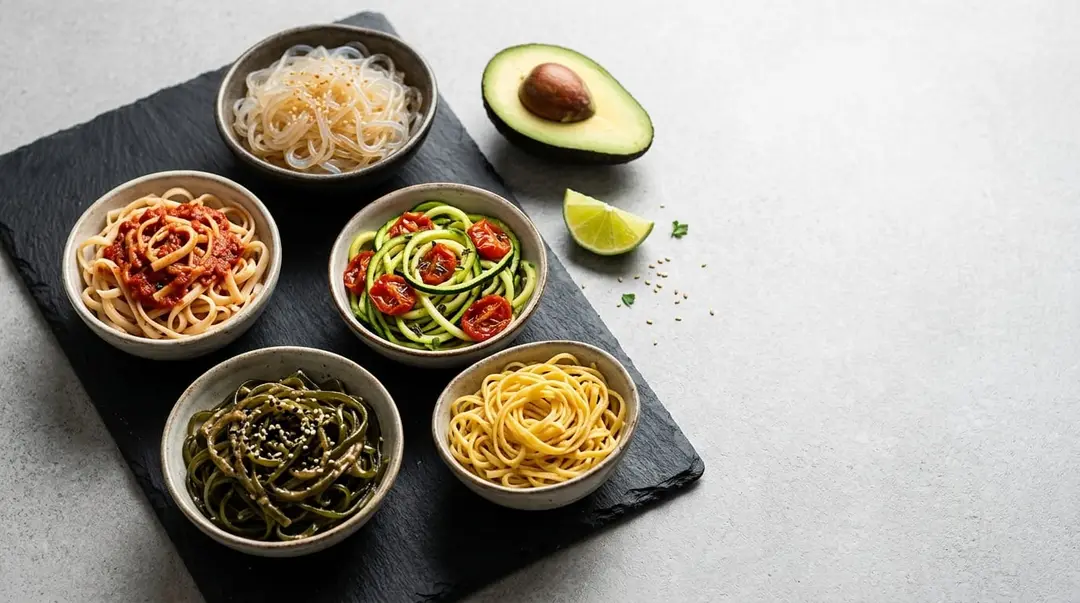
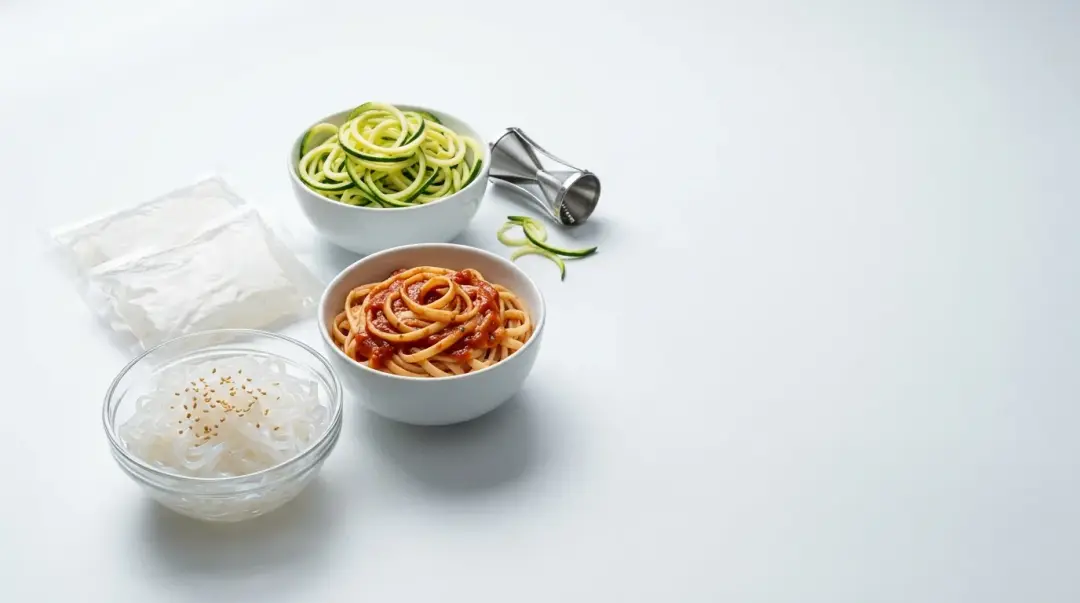
| Shirataki (konjac) | 0-15 mg per 4 oz | Konjac yam plus calcium hydroxide — no salt in the alkaline-set process | House Foods at Whole Foods, Sprouts, Kroger; Miracle Noodle on Amazon |
| 100% buckwheat soba | 0-15 mg per 2 oz dry | No added salt in the dough; pure buckwheat doesn't need it for gluten development | Eden Foods, King Soba, Mitsuwa |
| Plain dried rice noodles | 0-30 mg per 2 oz dry | Rice flour and water are the only ingredients; no structural need for salt | H Mart, 99 Ranch, Whole Foods, Amazon |
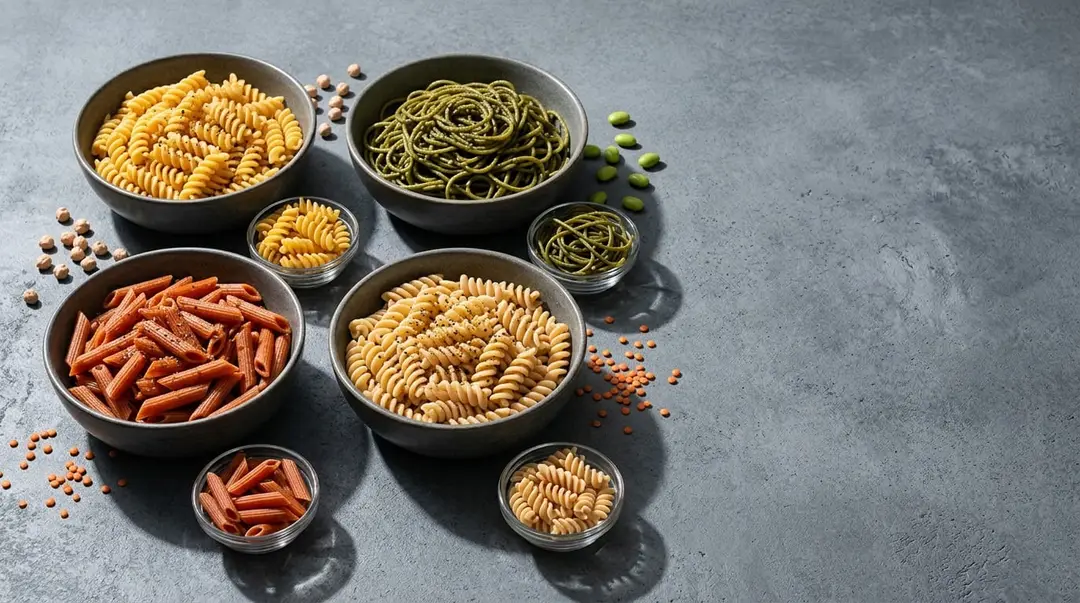
| Unsalted dried wheat pasta | 0-10 mg per 2 oz dry | Standard dry pasta — De Cecco, Barilla, Bionaturae — is naturally low; salt enters at the boiling pot | Nearly every grocery store |
| Zucchini noodles (zoodles) | 10 mg per medium zucchini | A vegetable, not a processed noodle — sodium is whatever's native to the squash | Any produce section + spiralizer |
A note on the wheat-pasta line: standard supermarket dry pasta is one of the most overlooked low-sodium options. Plain Barilla spaghetti lists 0 mg sodium per 2-oz dry serving. The sodium load on a wheat-pasta dinner is almost entirely in what you add — the boiling-water salt, the sauce, the parmesan. Skip the boiling-water salt and use a low-sodium tomato base, and a full plate of spaghetti can come in under 200 mg total.
The category to avoid: pre-cooked refrigerated noodles. Fresh rice noodles, refrigerated lo mein, and shelf-stable "ready in 2 minutes" noodle pouches frequently carry 300-600 mg of sodium per serving as a shelf-life preservative — even the ones with no flavor packet attached.
Brand picks
This section contains affiliate links. We may earn a commission at no extra cost to you.
House Foods Tofu Shirataki is the daily-driver low-sodium noodle for most shoppers. Each 4-oz packet lists 15 mg of sodium and 20 calories on the Nutrition Facts panel — under the FDA low-sodium ceiling by a factor of nine. The tofu-konjac blend softens the rubbery bite of pure konjac into something close to a tender pasta. Available at Whole Foods, Sprouts, and most Kroger and Safeway refrigerated tofu sections. Amazon sells it as a 12-pack. The catch is the rinse-and-dry-fry prep step (60 seconds under cold water, then 2-3 minutes in a hot dry pan), without which residual brine smells faintly fishy. See the full breakdown in the Shirataki Type Guide.
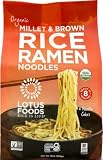
View on AmazonLotus Foods Organic Millet & Brown Rice Ramen is the rice-ramen pick for people who want the noodle-cake format without the seasoning sachet that defines mainstream instant ramen. Lotus ships the cakes unseasoned, and retailer Nutrition Facts listings show 0 mg of sodium per 70 g cake. The Amazon listing is a 10 oz bag of four cakes, and the brand is stocked at some natural-foods grocers. Cook it as the package directs; build your own broth with low-sodium dashi, a single teaspoon of miso (around 200 mg), and aromatics. Add up the label sodium for each ingredient; a bowl built this way can land far below what a Shin Ramyun packet delivers.
View on AmazonEden Foods 100% Buckwheat Soba is the soba pick for sodium control. Most supermarket soba — including Hakubaku and many Japanese-imported brands — uses brined buckwheat flour and lands at 400-600 mg of sodium per dry serving. Eden's 100% buckwheat version lists 5 mg per 2-oz dry serving because no salt is added during milling or extrusion. Sold in 8-oz packages at natural-foods grocers and online. The texture is more delicate than salt-stabilized soba; cook 4 minutes, drain, and rinse immediately to stop carryover.
View on AmazonAnnie Chun's Maifun Brown Rice Noodles are thin rice vermicelli at 10 mg of sodium per 2-oz dry serving. Widely available at Whole Foods and Sprouts in 8-oz packages, and on Amazon in 6-packs. The strands rehydrate in 2-3 minutes of off-heat soaking — useful for cold noodle salads, summer rolls, and any bowl where you want a neutral base for a controlled sauce. Pair with a quick nuoc cham built on lime, fish sauce (use sparingly — 1,400 mg per tablespoon), and water dilution.
View on AmazonKing Soba Organic 100% Buckwheat Noodles are the closest thing to a true sodium-free noodle in the wheat-and-grain category. The Nutrition Facts panel lists 0 mg of sodium per 2-oz dry serving. Certified gluten-free, sold in 8.8-oz packs at Whole Foods and natural-foods stores. Amazon sells it as a 6-pack. Use as a direct substitute for any soba application — zaru soba, cold dipping noodles, or hot broth bowls where you control the broth sodium.
View on AmazonWhat to avoid + why
The seasoning sachet is where the sodium hides. Across the entire mainstream instant-noodle category, the noodle brick itself is usually fine — it's the powder, oil, and liquid sachets that push a single serving past 1,500 mg.
- Nongshim Shin Ramyun (Original) — ~1,620 mg per packet. About 70% of the FDA daily value in one bowl, and more than the AHA's full hypertensive ceiling of 1,500 mg. The flagship Korean instant since 1986 and a category-defining sodium load. See Shin Ramyun, explained for the full nutrition panel.
- Samyang Buldak (Original) — ~1,630 mg per pack on the US label. About 71% of the daily value and above the AHA's hypertensive ceiling of 1,500 mg. Full breakdown here.
- Nissin Top Ramen (Chicken) — ~1,580 mg per package. The label splits it into two 790 mg servings, but most people eat the whole block, which is about 69% of the daily value.
- Maruchan Instant Lunch cups — typically ~1,100-1,500 mg per cup, depending on flavor.
- Pre-seasoned soba kits — Hakubaku's flavored cups, Marutai's tonkotsu sets, and similar "just add water" Japanese kits frequently exceed 1,800 mg per cup.
- "Low sodium" labeled rice noodles with MSG — read the panel, not the front. MSG contributes about a third of the sodium of table salt by weight, and several "low sodium" rice-noodle SKUs use MSG to hit the 140 mg threshold while preserving flavor. Not harmful, but if your prescription targets total sodium, it counts.
- Restaurant pho and ramen broths — typically 1,500-3,500 mg per bowl depending on the restaurant. The noodles themselves are usually fine; the broth is the problem.
The honest reframe: instant noodles are not banned for low-sodium eaters. They're just not a base — they're an occasional indulgence with a known sodium cost. Using half the seasoning sachet cuts the sodium a lot, which turns a ~1,620 mg Shin packet into a little over 800 mg, since the noodle block carries some sodium too. Still high. Better.
One more category worth naming: the broth. A bowl of plain rice noodles at 10 mg sodium picks up 860 mg from every cup of regular Swanson chicken broth, and carton stocks vary widely from brand to brand (Kitchen Basics Original lists 440 mg per cup). The fix is the same fix Japanese home cooks have used for centuries: build the broth from dashi (a 10-minute infusion of kombu and bonito flakes in cold-then-hot water) which delivers deep umami with far less sodium than regular carton stock, then finish with a measured half-teaspoon of light soy or a quarter-teaspoon of miso. Add up the sodium on the labels of whatever goes in the bowl. Same noodle, same satisfaction, a fraction of the salt.
Portion control is the other lever the labels don't print. The serving sizes on the Nutrition Facts panel are reference amounts — 2 oz dry pasta, 4 oz cooked shirataki — and real bowls regularly run 1.5x to 2x that. A digital kitchen scale settles the question: weigh the dry noodles once and you know the serving. Cooking one portion in a small saucepan of unsalted water keeps the amount honest. Two servings of unsalted dry pasta is still 0 mg from the noodle. Two servings of Eden soba is 10 mg. The math only breaks when you treat a 1,600 mg instant packet as a single serving and eat it as a single bowl — which is exactly how the category is sold.
Low-sodium ramen: what you can actually buy
Instant ramen is built around a seasoning sachet, so a lower-sodium ramen bowl takes a different route from the standard packet. There are four, ordered from the closest to ramen to the most hands-on.
Unseasoned rice or millet ramen cakes. Ramen cakes sold with no seasoning sachet, like the Lotus Foods millet and brown rice ramen above, contain only the sodium you add. They are the closest match to the instant-ramen format. Our best gluten-free ramen guide lists more rice and millet ramen. The noodles are rice-based rather than wheat, so the texture is lighter than a standard ramen block.
Reduced-sodium instant packs and cups. Some mainstream brands sell a "less sodium" version, such as Maruchan's. Two label traps apply. First, reduced sodium only means at least 25% less than the brand's regular product. Maruchan's less-sodium chicken ramen lists about 560 mg per half-package serving, which is roughly 1,100 mg for a whole package, about three-quarters of the AHA's 1,500 mg goal in one bowl. Second, check the serving size. Top Ramen's label shows 790 mg per serving, but that serving is half a package, and some other packs split into two servings as well. Sodium per package is the number that matches the bowl you eat. For how cups and bagged packs differ, see cup noodles vs bagged ramen.
Part of the packet plus low-sodium broth. Most of the sodium sits in the seasoning, so using half the sachet cuts a Shin Ramyun packet from about 1,620 mg to a little over 800 mg. The noodle block itself carries some sodium, so the saving is smaller than half. Loosening the bowl with a broth labeled low sodium, which has to meet the FDA's 140 mg per serving limit, brings the total down further than the sachet alone. Regular Swanson chicken broth lists 860 mg per cup, and even its 33% less sodium version lists 570 mg.
Heat and aroma instead of salt. Chili, ginger and scallion add flavor with almost no sodium. A little chili or ginger warmed in hot oil, or scallion added at the end, makes a bowl taste fuller. These do not lower the sodium in the packet, so they work alongside the half-sachet route, not in place of it. Vegan and vegetable-flavored ramen is not automatically lower in sodium; the label decides, and our vegan ramen guide covers the category.
Use the AHA's 1,500 mg daily goal as the yardstick, and weigh a bowl against it by sodium per package. For calories and the nutrition panels of common brands, see ramen calories. Our best instant ramen guide compares sodium per full pack across mainstream picks. If you have a personal sodium limit from a clinician, follow that number instead.
FAQ
What counts as a low sodium noodle?
Under FDA labeling rules, low sodium means 140 mg or less per serving. Most dry pasta, plain rice noodles, and 100% buckwheat soba clear that bar easily. Instant ramen, pre-seasoned soba kits, and any noodle sold with a flavor packet almost never do.
Is instant ramen ever low sodium?
Not as sold. A single Shin Ramyun packet carries roughly 1,620 mg of sodium, about 70% of the FDA daily value, and Buldak Original about 1,630 mg. Using half the seasoning sachet cuts that sharply, but the bowl still sits well above any low-sodium threshold.
Are rice noodles always lower in sodium than wheat noodles?
Usually, but check the label. Plain dried rice vermicelli runs 0-15 mg per serving because rice flour and water don't need salt for structure. Some refrigerated fresh rice noodles add salt for shelf life — fresh pho noodles from a refrigerated case can run 200-400 mg.
Is shirataki low sodium?
Yes — and it's the lowest-sodium noodle by a wide margin. House Foods Tofu Shirataki lists 15 mg per 4-oz serving; pure-konjac brands like Miracle Noodle list 0-5 mg. The konjac yam needs no salt for the alkaline-set process that gives the noodle its structure.
How much sodium per day is too much for someone with hypertension?
The American Heart Association recommends an optimal ceiling of 1,500 mg per day for most adults, and explicitly for adults with high blood pressure. The general FDA daily value is 2,300 mg. A single Shin Ramyun packet at ~1,620 mg blows past the hypertensive target in one bowl.
Is there a low sodium instant ramen?
Reduced-sodium instant ramen exists, but reduced sodium means at least 25% less than the regular product, not 140 mg or less. Unseasoned rice or millet ramen cakes, such as Lotus Foods, are the closest thing, because the only sodium is what you add. Check sodium per package, not per serving.
How much sodium is in a packet of instant ramen?
It varies by brand. A Nongshim Shin Ramyun packet carries roughly 1,620 mg, Nissin Top Ramen Chicken about 1,580 mg per package, and Samyang Buldak Original about 1,630 mg on the US label. Top Ramen lists 790 mg per serving because the label counts half a package as one serving.
Does using half the ramen packet help?
Yes, but not enough on its own. Most of the sodium sits in the seasoning, so using half the sachet cuts a roughly 1,620 mg Shin Ramyun packet to a little over 800 mg, because the noodle block carries some sodium too. That is still more than half the AHA 1,500 mg goal in one bowl, so pair it with unsalted noodles or low-sodium broth.
What about "reduced sodium" soy sauce — does that fix my noodle bowl?
It helps but doesn't solve it. Reduced-sodium soy sauce still runs 500-600 mg per tablespoon vs ~900 mg for regular. If you're stacking 2 tablespoons of soy on a bowl, you're still adding 1,000+ mg before the noodles. Use shio kombu, rice vinegar, citrus, or a single teaspoon of miso instead.