What Makes Italian Pasta Different
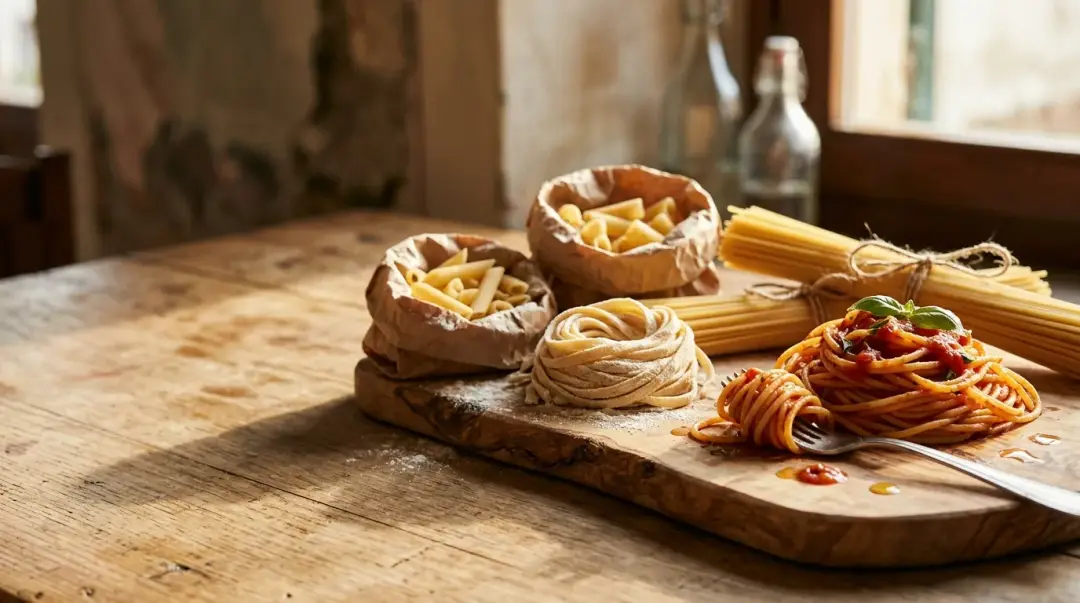
Italian pasta isn't really "noodles" in the broader Asian sense — it's a category of its own. The defining differences:
- Durum wheat semolina — Italian pasta is made from a specific high-protein wheat (durum), not soft wheat
- No alkaline treatment — unlike Chinese lamian or Japanese ramen
- Shape-as-design — Italians use 350+ distinct pasta shapes, each engineered for specific sauces
- Bronze die extrusion — premium pasta is pushed through bronze (not Teflon) dies, creating a rough surface that holds sauce better
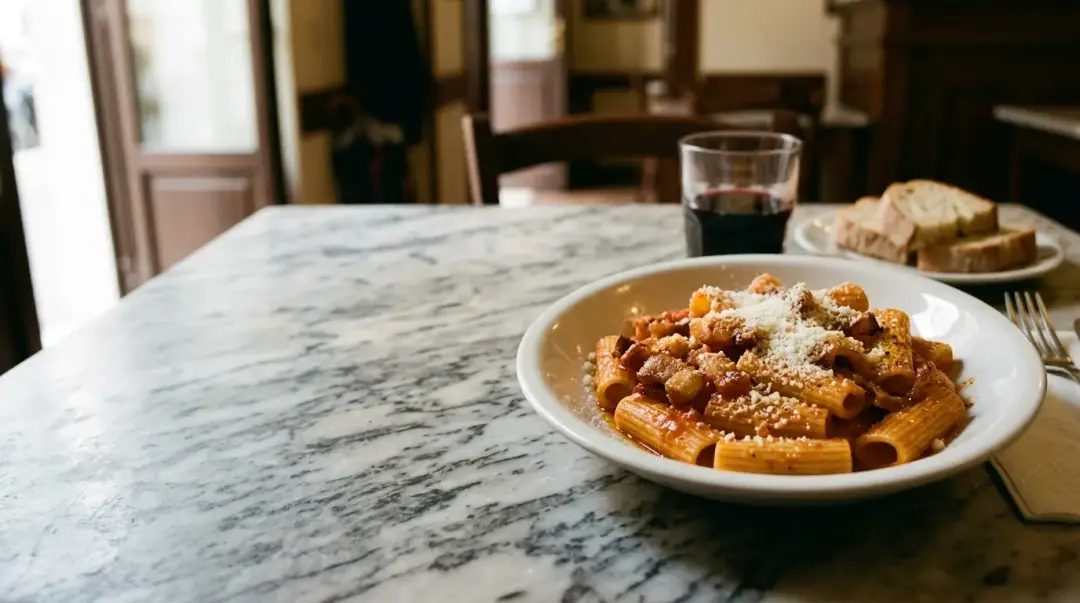
The cuisine is built on shape-sauce pairing — a rigatoni-with-amatriciana logic that Italians take seriously. Get the shape right and the dish works; get it wrong and even great sauce slides off.
This guide covers the most-eaten Italian pasta shapes available to home cooks.
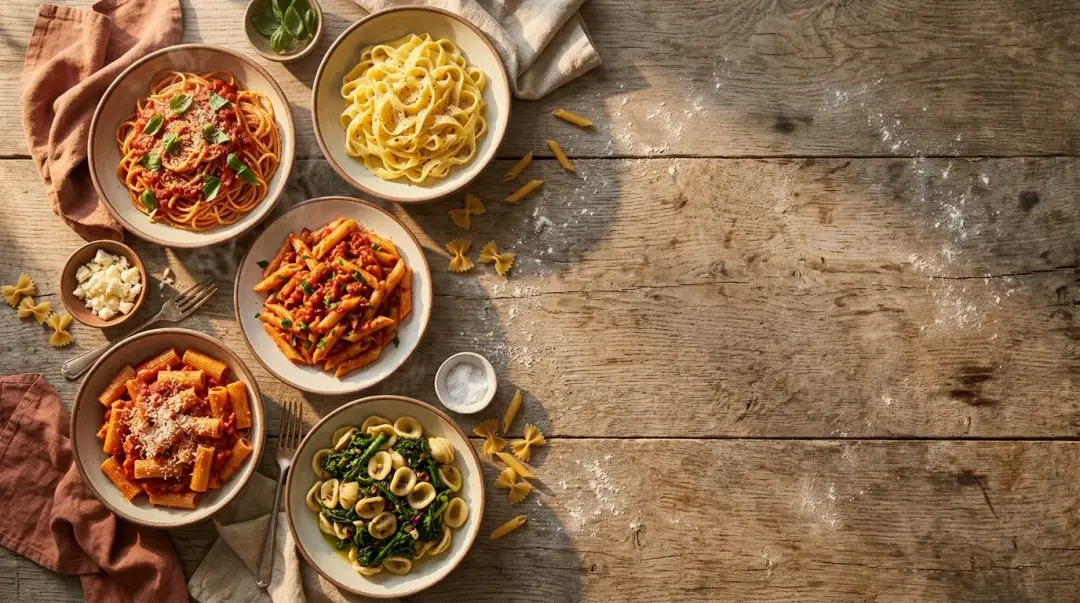
The Eight Core Italian Pasta Shapes
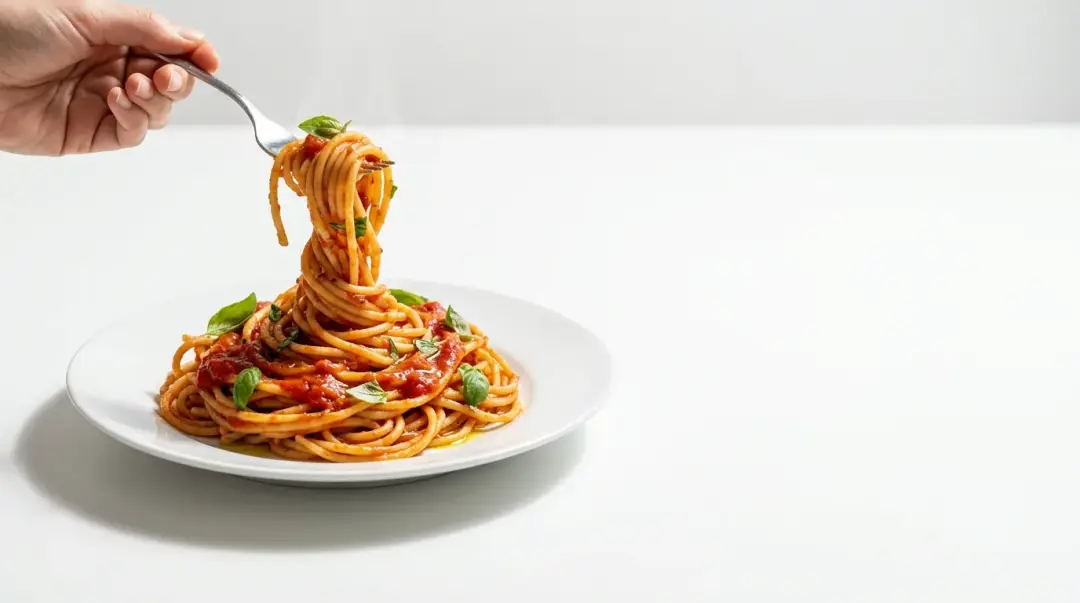
- Spaghetti — Long thin strand. The global pasta default. Pairs with light tomato, oil-based, or seafood sauces.
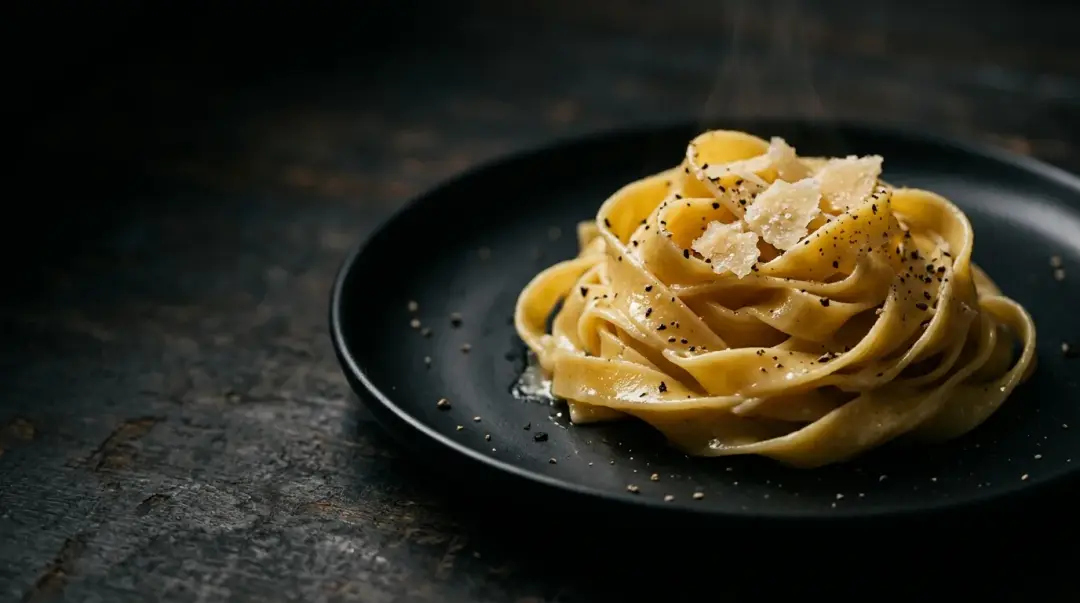
- Fettuccine — Long flat ribbon. Best with creamy sauces (Alfredo, carbonara).
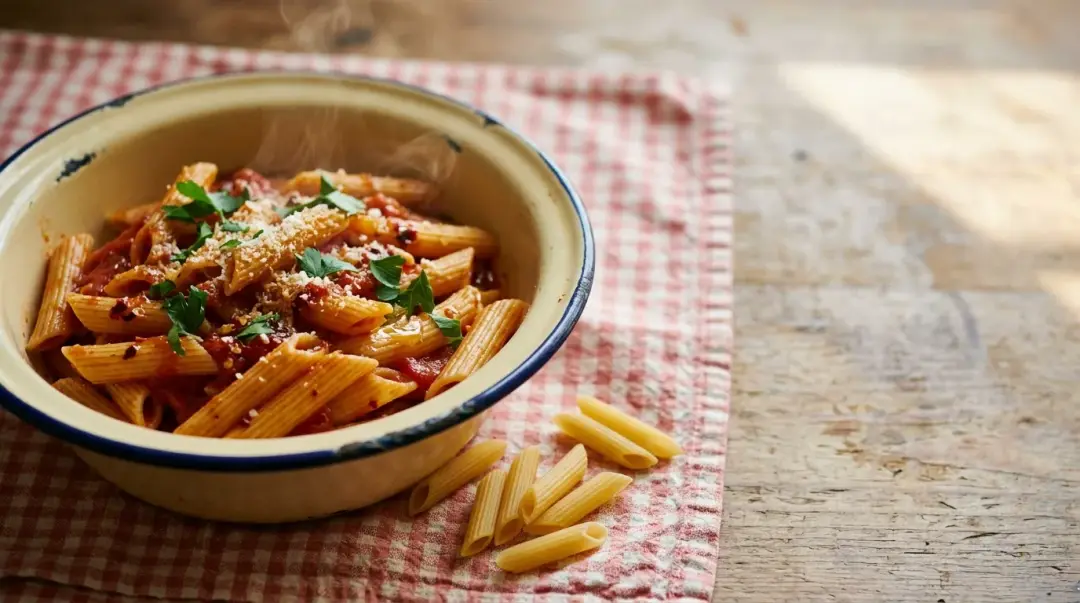
- Penne — Diagonal-cut tube. Holds chunky tomato and pesto sauces.
- Rigatoni — Larger ridged tube. The Roman pasta — amatriciana, cacio e pepe.
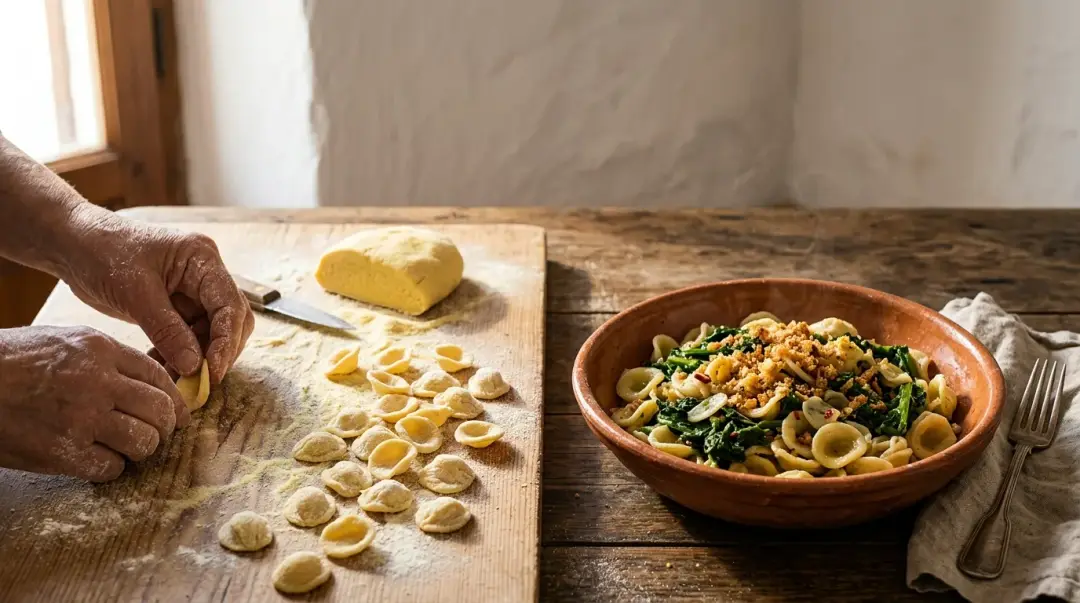
- Orecchiette — Small "little ears." Puglian; pairs with broccoli rabe and sausage.
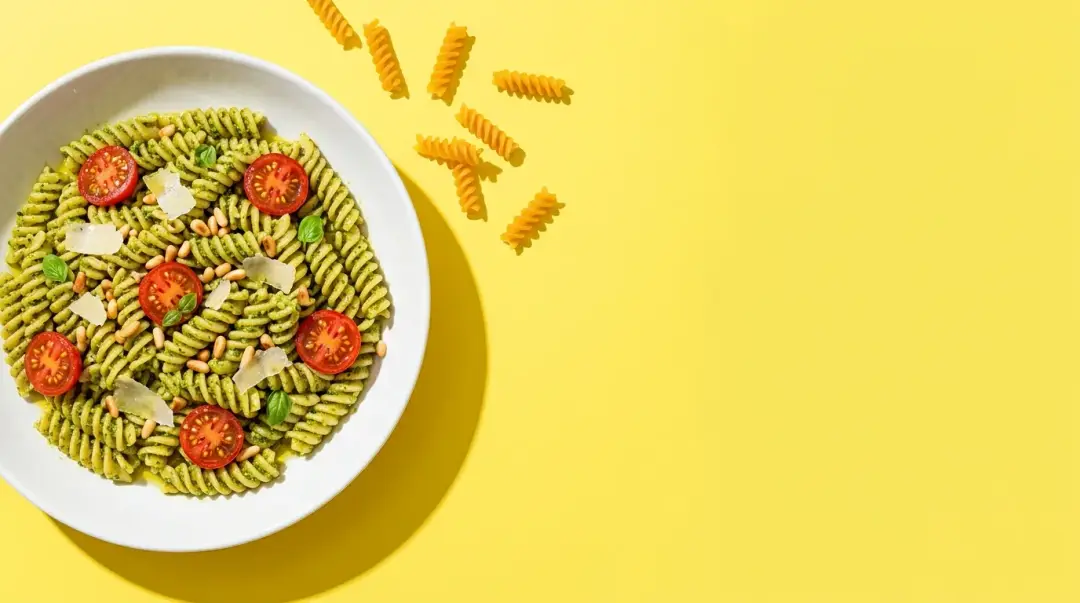
- Fusilli — Corkscrew spiral. Pasta salads, chunky sauces.
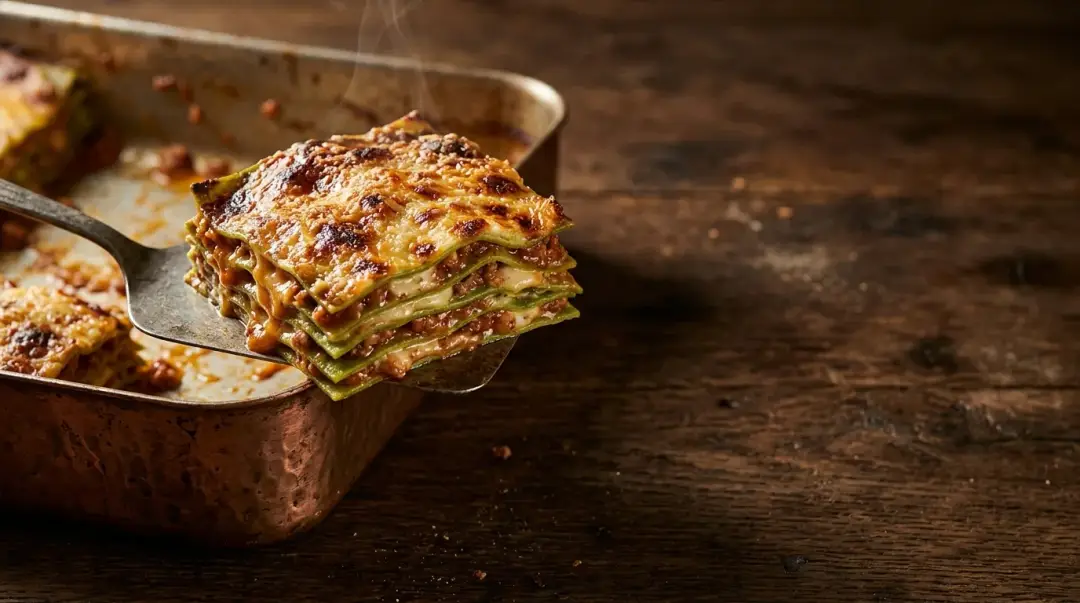
- Lasagna — Wide flat sheets. The layered baked dish.
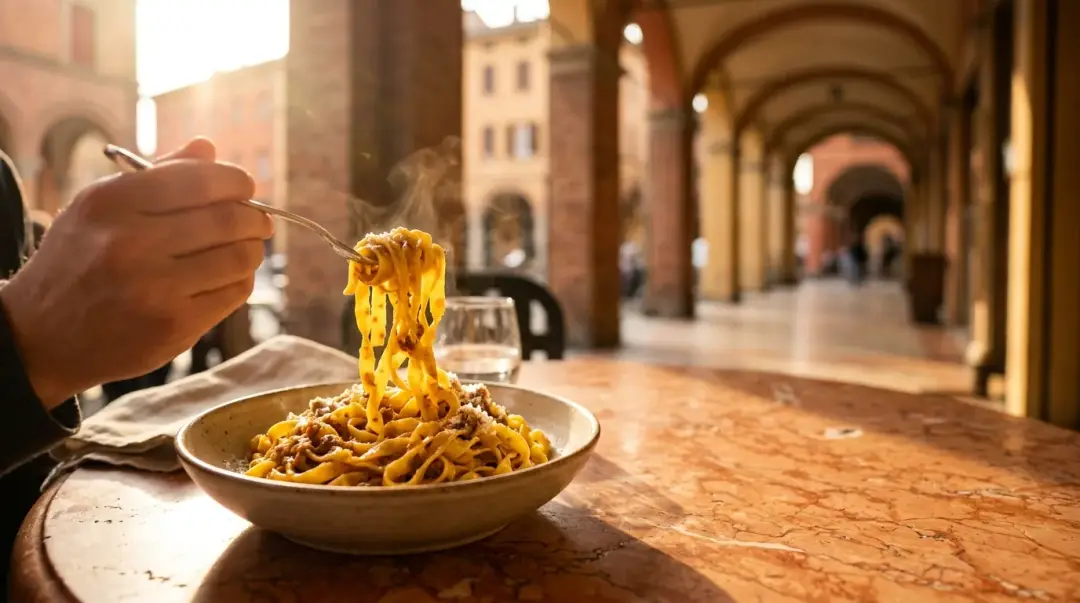
- Tagliatelle — Long flat ribbon, slightly narrower than fettuccine. The Bolognese pasta.
Italian Regional Identity
Italian pasta is sharply regional:
- North (Bologna, Emilia-Romagna) — Egg-based fresh pasta. Tagliatelle al ragù bolognese.
- Central (Rome, Lazio) — Tube-shaped dry pasta. Carbonara, amatriciana, cacio e pepe.
- South (Naples, Sicily) — Dry semolina pasta. Spaghetti al pomodoro, pasta alla norma.
- Puglia — Orecchiette + broccoli rabe (cime di rapa).
- Liguria — Trofie + pesto Genovese.
When an Italian restaurant lists pasta dishes, the regional naming usually signals the style.
The Pasta Quality Hierarchy
Not all pasta is equal:
- Premium bronze-die dry pasta — De Cecco, Rummo, Garofalo. Rough surface holds sauce. Cooks evenly.
- Mainstream dry pasta — Barilla, Mueller's, store brands. Teflon-die. Works fine but sauce slides more.
- Fresh pasta (refrigerated) — Best for filled pastas (ravioli, tortellini) and delicate ribbon pastas (tagliatelle). 2-3 minute cook.
- Artisanal Italian imports — Martelli, Setaro, Cavalieri. The best of the best.
For everyday cooking, premium bronze-die dry pasta is the sweet spot. A step up from Barilla.
How Italian Pasta Differs from Asian Noodles
- No alkaline treatment — pasta lacks the springy yellow texture of ramen/lamian
- Cooked al dente — Italians cook pasta to a slight firm bite, not soft
- Sauce is married to pasta, not poured over — the final 30 seconds of cooking happens in the sauce
- Cheese is integral, not optional — Pecorino, Parmigiano, Grana Padano
- Olive oil is foundational — Asian cuisines use sesame or peanut oil
Where to Buy Italian Pasta
In the US, Italian groceries are concentrated in:
- NYC (Eataly, multiple Italian neighborhoods)
- San Francisco's North Beach
- Boston's North End
- Chicago's Little Italy
- Philly's Italian Market
Online, Amazon carries every major brand:
- De Cecco, Rummo, Garofalo — premium bronze-die
- Barilla, San Giorgio — mainstream
- Eataly online — artisanal imports
FAQ
What makes Italian pasta different from Asian noodles?
Italian pasta uses durum wheat semolina with no alkaline treatment, is cooked al dente, and is finished in the sauce. Premium versions are extruded through bronze dies for a rougher surface.
How many pasta shapes are there in Italy?
Italians use more than 350 distinct pasta shapes, each engineered for specific sauces. This guide covers eight core shapes.
What is bronze-die pasta?
Bronze-die pasta is pushed through bronze dies instead of Teflon, which leaves a rough surface that holds sauce better. De Cecco, Rummo and Garofalo are examples.
Which pasta goes with which sauce?
Fettuccine suits creamy sauces, rigatoni suits Roman amatriciana and cacio e pepe, and orecchiette suits broccoli rabe and sausage. Fusilli suits chunky sauces and pasta salads.
What You Need
Three tools cover most Italian pasta cooking at home. Our best pasta pot with strainer guide compares pots in more detail.
Cook N Home 8-quart pasta pot with strainer lid. A big pot with a strainer insert is the base of every pasta dinner, because pasta needs a large volume of boiling water. This listing is an 8-quart stainless steel pot with strainer and steamer inserts and a tempered glass lid. View on Amazon
MARCATO Atlas 150 pasta machine. Making fresh pasta starts with a hand-crank roller, and this one rolls and cuts lasagne, fettuccine and tagliolini. This listing is a manual machine in chrome-plated steel and aluminum with a hand crank and clamp. See the pasta maker buying guide for how it compares. View on Amazon
Microplane Classic zester grater. Hard cheese is grated over nearly every bowl, from Pecorino to Parmigiano. This listing is a long-handled grater with a photo-etched stainless steel blade and a protective cover. View on Amazon
Buying guides: