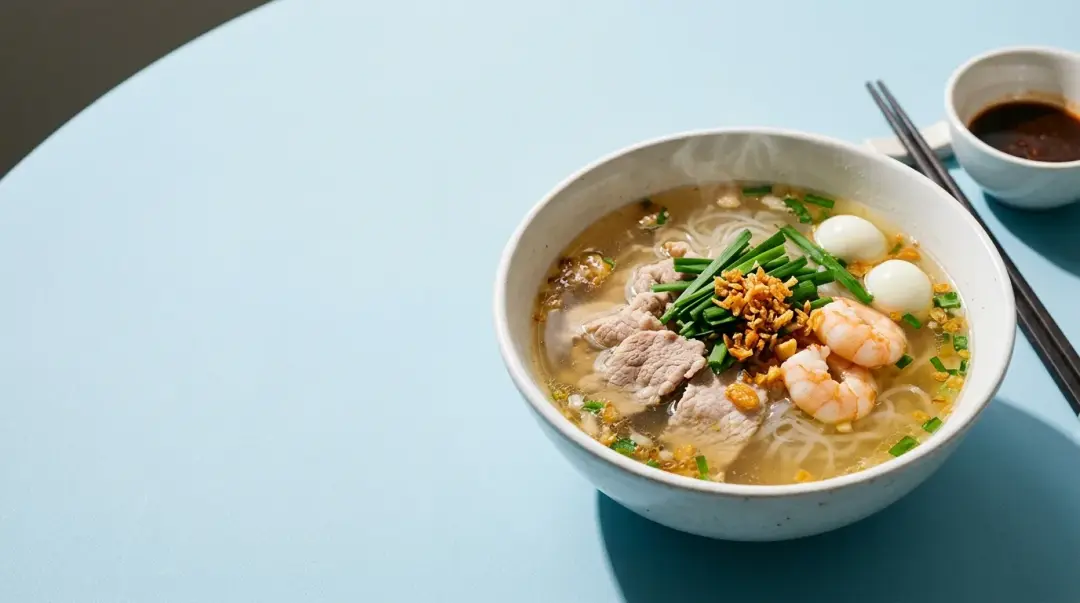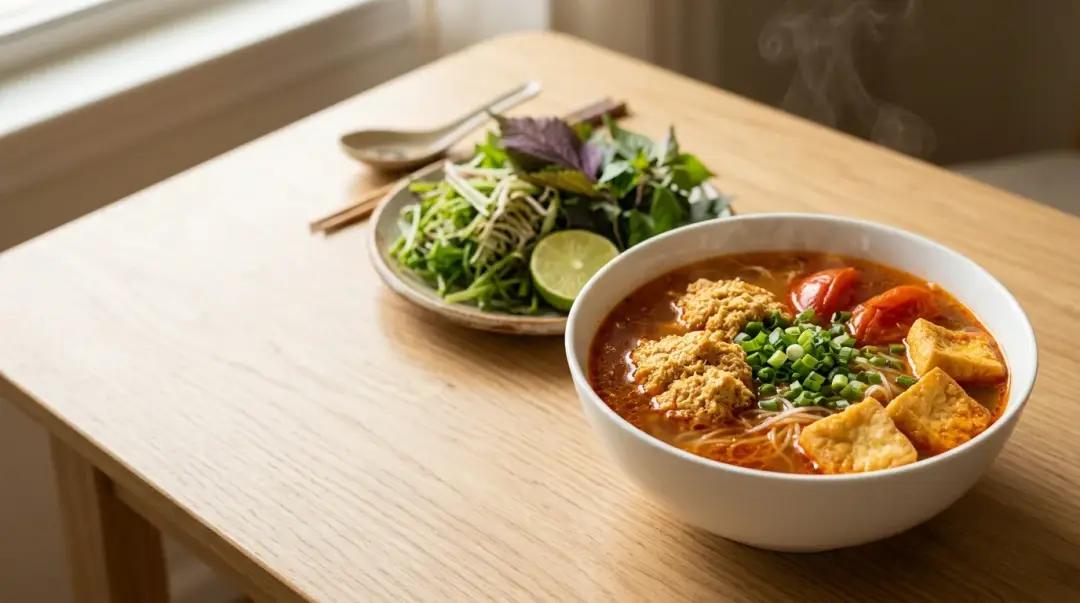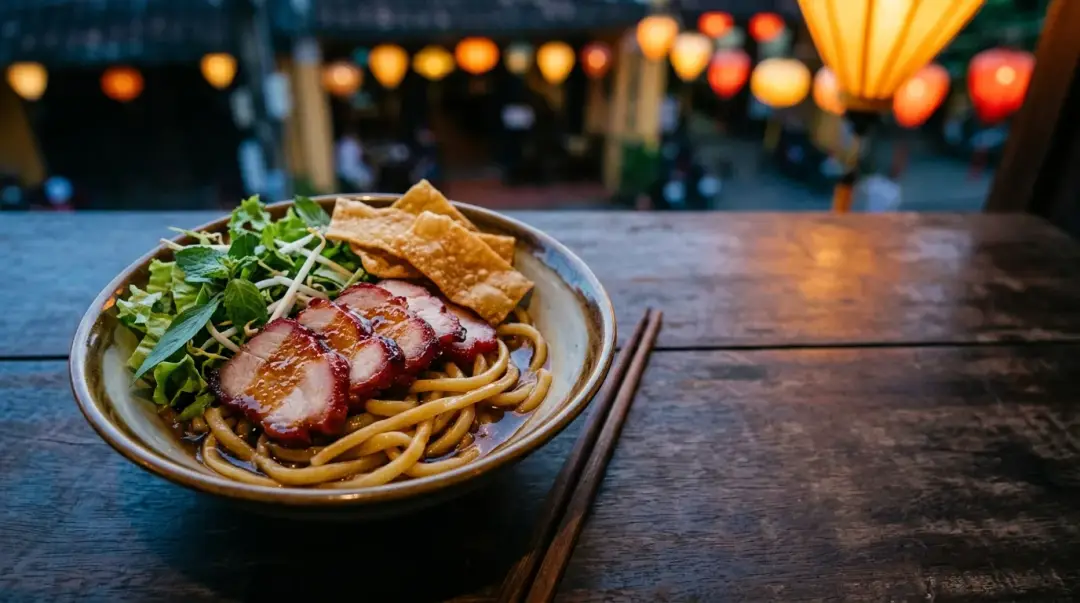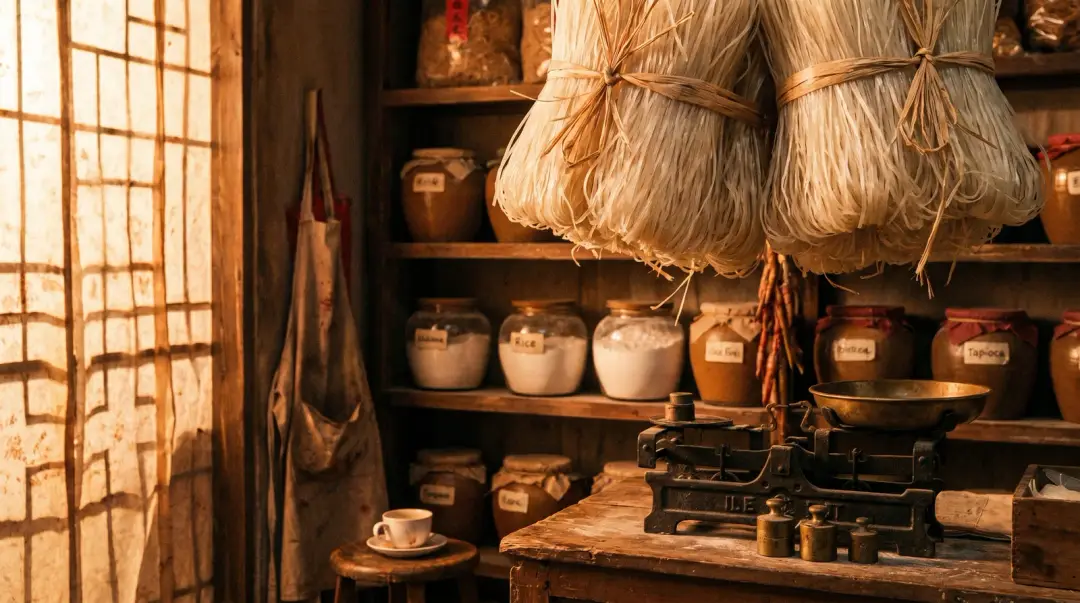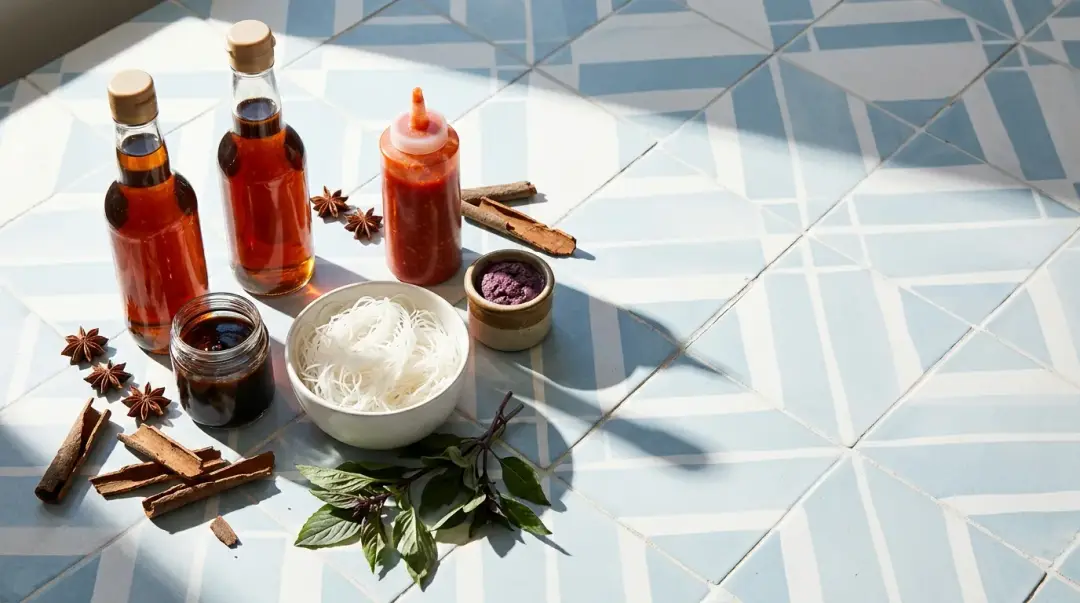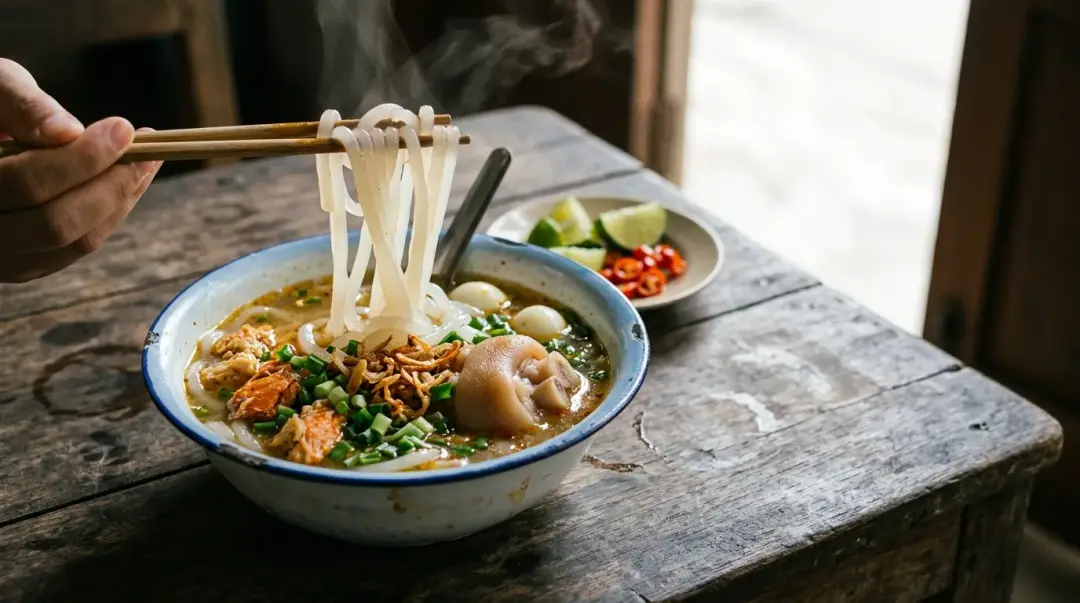
Bánh canh is Vietnam's thick chewy noodle soup — udon-shaped noodles made from a blend of rice flour and tapioca starch, served in broths that range from crab to pork hock to fish. In the US it's concentrated in Vietnamese-heavy metros like Westminster CA, Houston, San Jose, and Boston's Dorchester, usually served as the crab version (bánh canh cua). The noodle itself is the attraction — stretchy, slippery, dramatically chewy, the savory cousin of boba's tapioca bounce.
What Is Bánh Canh?
Bánh canh is Vietnam's thick, chewy noodle soup — built around noodles that look like Japanese udon but are made from a blend of rice flour and tapioca starch. The noodles are bouncy, slippery, dramatically chewy, and a complete textural departure from phở's delicate flat noodles.
The dish takes its name from the noodles themselves (literally "soup noodles"), and the broth varies wildly by region. The four most common variants:
- Bánh Canh Cua — Crab broth, gold standard in Saigon. Bright red, sweet-savory.
- Bánh Canh Giò Heo — Pork hock broth, thicker and more savory.
- Bánh Canh Cá — Fish broth, lighter, central-Vietnamese-style.
- Bánh Canh Bột Lọc — With chewy translucent shrimp dumplings added.
The Noodle Itself Is the Star
Bánh canh noodles are made by mixing rice flour and tapioca starch with hot water, kneading into a stretchy dough, then either rolling and cutting (for thicker noodles) or pressing through a perforated mold directly into boiling broth. The tapioca makes them stretchy and slightly translucent; the rice flour keeps them substantial.
When properly cooked, they're firmer than rice noodles, chewier than wheat udon, and have a unique slippery quality. Most Vietnamese restaurants outside Vietnam buy them fresh from local Vietnamese noodle makers — they're rarely served from dried packets.
Flavor Profile
Bánh canh leans rich, slightly thick (often the broth is lightly starchy), and texture-driven. The flavors depend on the broth — crab versions are sweet-bright, pork versions are deeply savory, fish versions are clean. What unifies them is the chewy noodle texture and the substantial mouthfeel.
How It Differs from Japanese Udon
Both are thick, chewy, white-ish noodles. But:
- Composition: Udon is pure wheat flour. Bánh canh is rice + tapioca (gluten-free).
- Texture: Udon is springy with chew. Bánh canh is stretchier and slipperier — the tapioca makes it almost gel-like.
- Broth: Udon swims in bonito-kelp dashi. Bánh canh broth varies widely (crab, pork, fish).
- Cultural context: Udon is core Japanese cuisine. Bánh canh is a regional specialty in Vietnam.
If you've eaten boba (tapioca pearls), you've already encountered tapioca's distinctive bouncy chew. Bánh canh noodles are the savory cousin of that texture.
Where to Find Bánh Canh Outside Vietnam
Less common than phở or bún bò Huế, but available in Vietnamese-heavy metros. In the US, look for it in:
- Westminster, CA (Little Saigon) — multiple specialist restaurants
- Houston, TX
- San Jose, CA
- Boston's Dorchester (Fields Corner)
Most restaurants there serve bánh canh cua (crab version) as their default. Pork hock and fish versions are rarer.
Making It at Home
Bánh canh is challenging because the noodles are usually made fresh. Your options:
- Buy fresh bánh canh noodles at a Vietnamese grocery (rare in non-coastal cities). Look in the refrigerated section.
- Buy frozen bánh canh — Some brands sell pre-cooked frozen noodles. Ottogi makes a Korean version (similar texture) that's an acceptable substitute.
- Make from scratch — Mix rice flour and tapioca starch 60/40 with boiling water; knead; roll; cut. Time-consuming but rewarding.
For the broth, crab version is the most accessible to home cooks:
- Fresh blue crabs or frozen crab paste (sold in Vietnamese groceries)
- Pork bones for the base broth
- Annatto seeds for the red-orange color
- Tomatoes for sweetness
- Fish sauce + rock sugar for seasoning
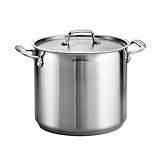
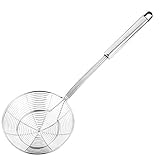
Cook the noodles in a large stockpot with plenty of broth, lift them out with a spider strainer (a wide, shallow wire-mesh scoop), and serve in a deep bowl. For more pots and bowls suited to Vietnamese soups, see our Vietnamese cookware guide.
See our Vietnamese Pantry Essentials guide.
Texture-First Eating
Bánh canh is unusual in Vietnamese food as served in Western restaurants because the noodles, not the broth, are the main attraction. Most Western diners taste it expecting phở and are surprised by the thick chewy mouthfeel. Once they recalibrate, bánh canh becomes a favorite — it's hearty, distinctive, and satisfying in a way other Vietnamese noodles aren't.
FAQ
What is banh canh?
Bánh canh is Vietnam's thick, chewy noodle soup. The udon-shaped noodles are made from rice flour and tapioca starch, and the broth is crab, pork hock or fish depending on the version.
Is banh canh gluten-free?
The noodles are made from rice flour and tapioca starch, so they contain no wheat, unlike Japanese udon. Check the broth and toppings at a restaurant.
How is banh canh different from udon?
Udon is pure wheat flour in a bonito-kelp dashi. Bánh canh noodles are rice and tapioca, stretchier and slipperier, in a crab, pork or fish broth.
Where can you eat banh canh?
In the US, Vietnamese-heavy metros such as Westminster CA, Houston, San Jose and Boston's Dorchester. Most restaurants serve the crab version, bánh canh cua.