Why Thai & SE Asian Noodles Cluster Together
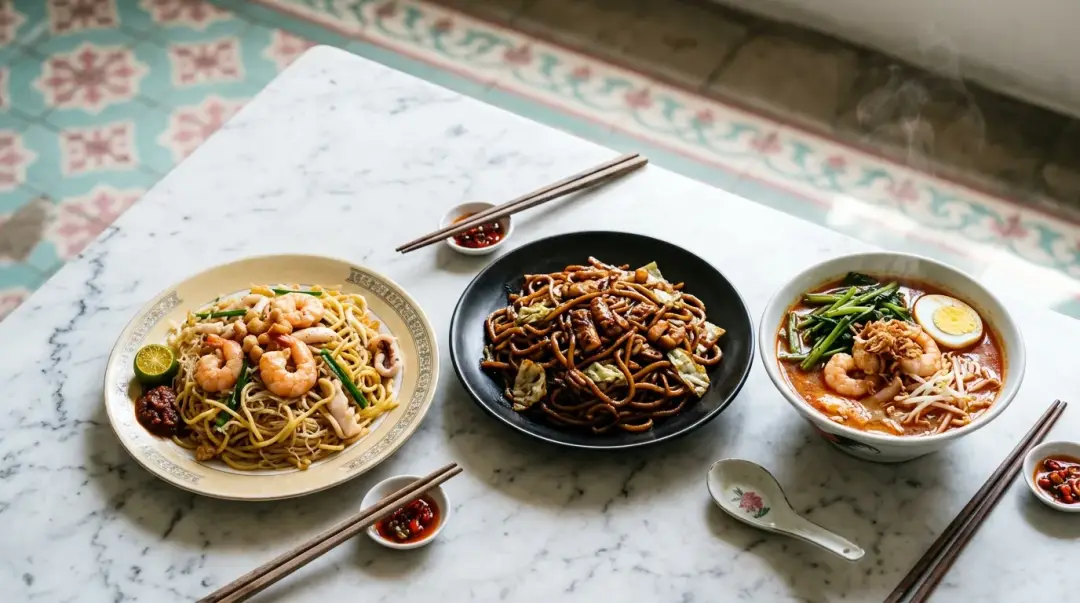
Thai, Malaysian, Singaporean, and Indonesian noodle dishes share a culinary DNA: the four-flavor balance (sour, salty, sweet, spicy in every bite), coconut milk used liberally, and a foundation of fish sauce + palm sugar + chili + lime. They emerged from related trade routes and shared agricultural conditions across Southeast Asia.
Despite this shared DNA, each country has its own noodle identity:
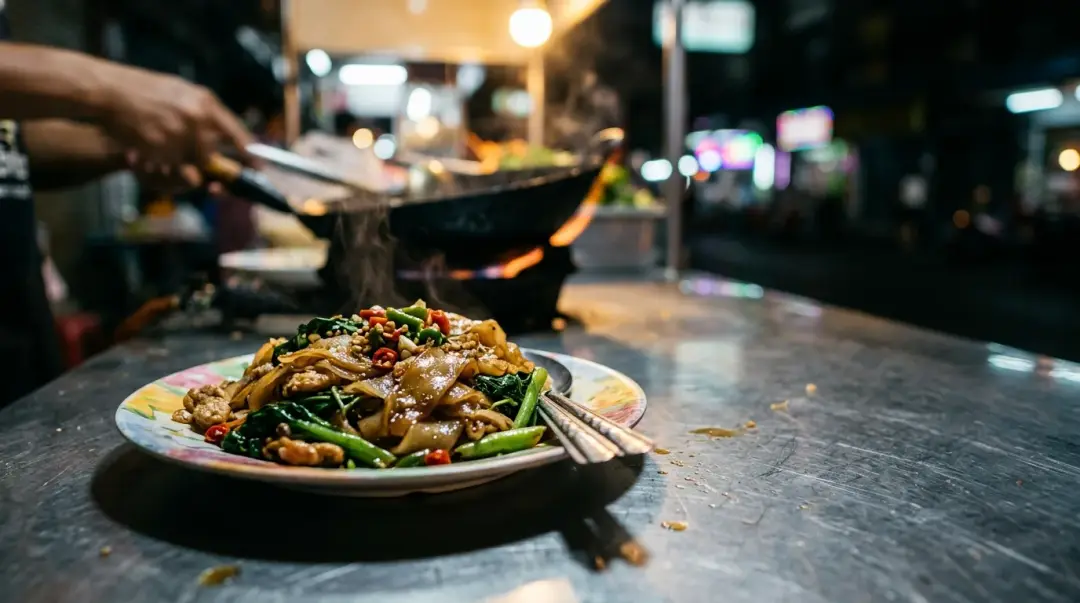
- Thailand — Pad thai, drunken noodles, boat noodles
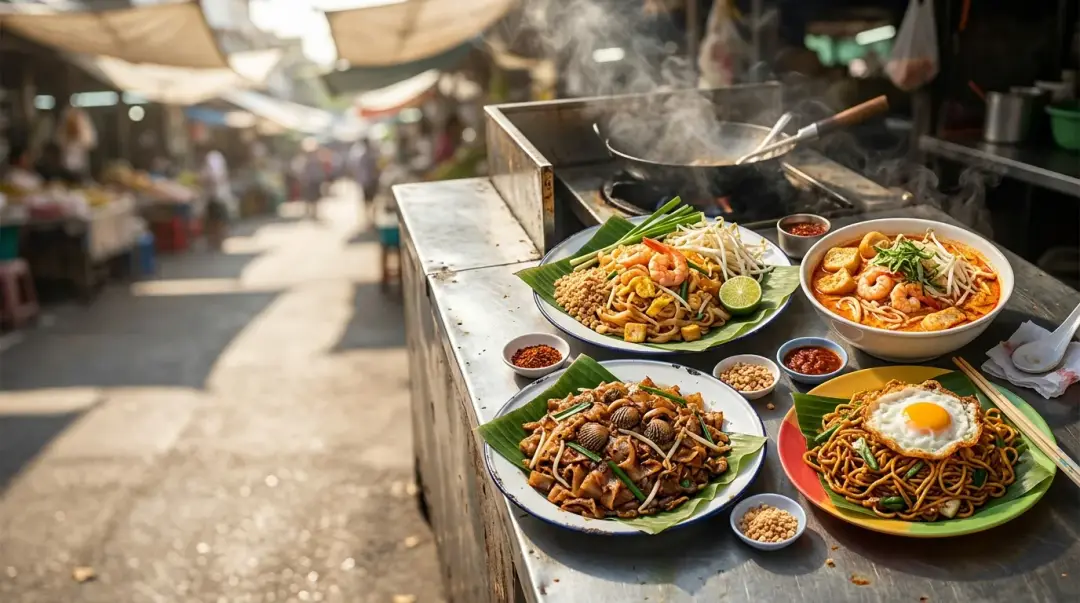
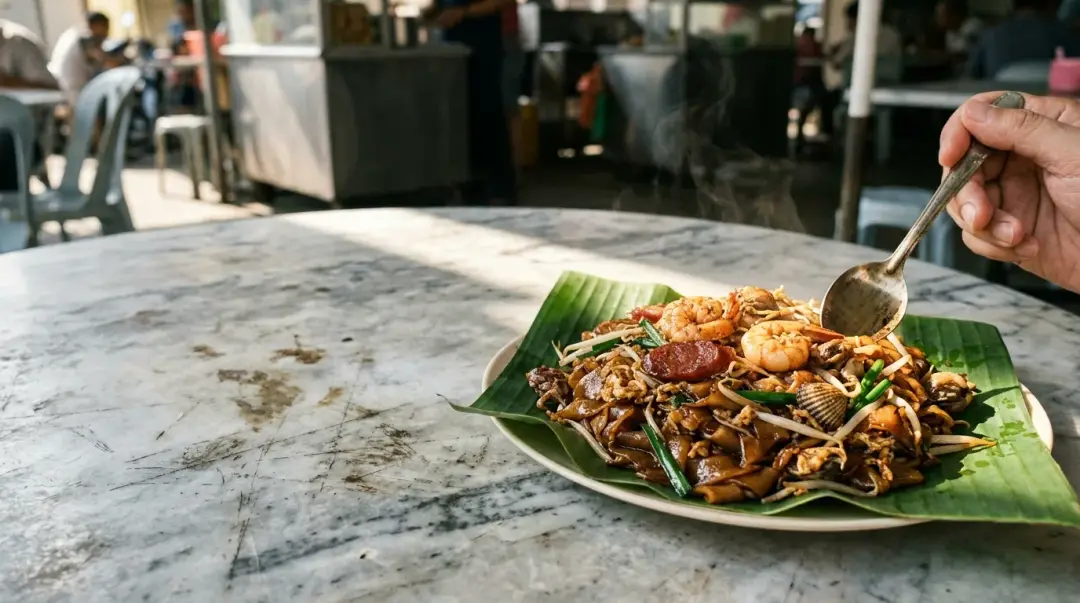
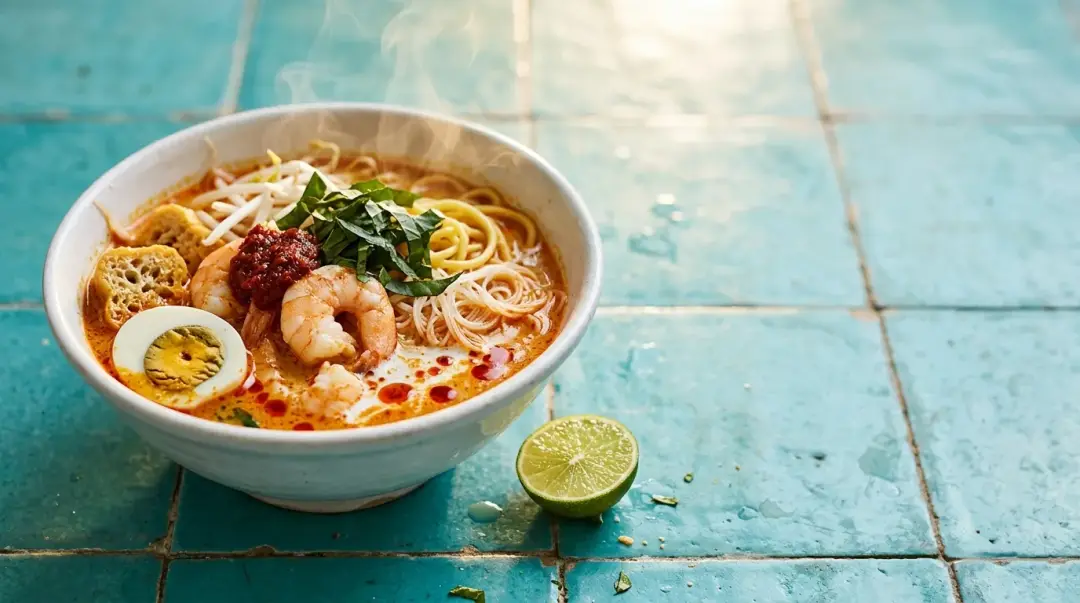
- Malaysia & Singapore — Char kway teow, laksa, Hokkien mee
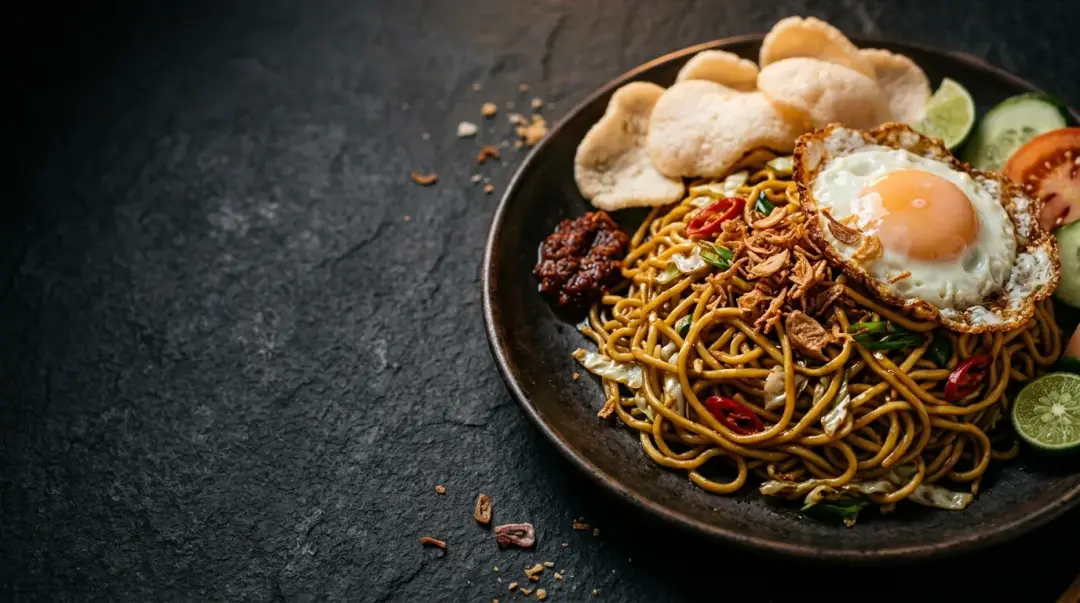
- Indonesia — Mì goreng, Indomie, soto mie
This cluster covers the most-eaten SE Asian noodles found in restaurants and grocery aisles outside Southeast Asia.
The Eight Core Thai & SE Asian Noodles
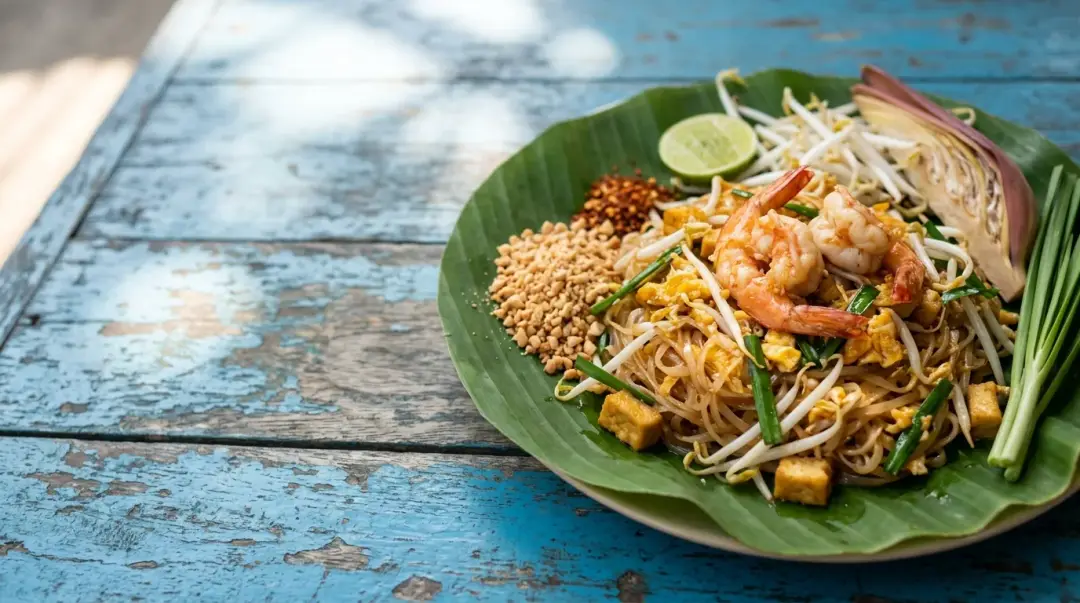
- Pad Thai — Thailand's most famous export. Tamarind-sour, peanut-rich, egg-tied rice noodles.
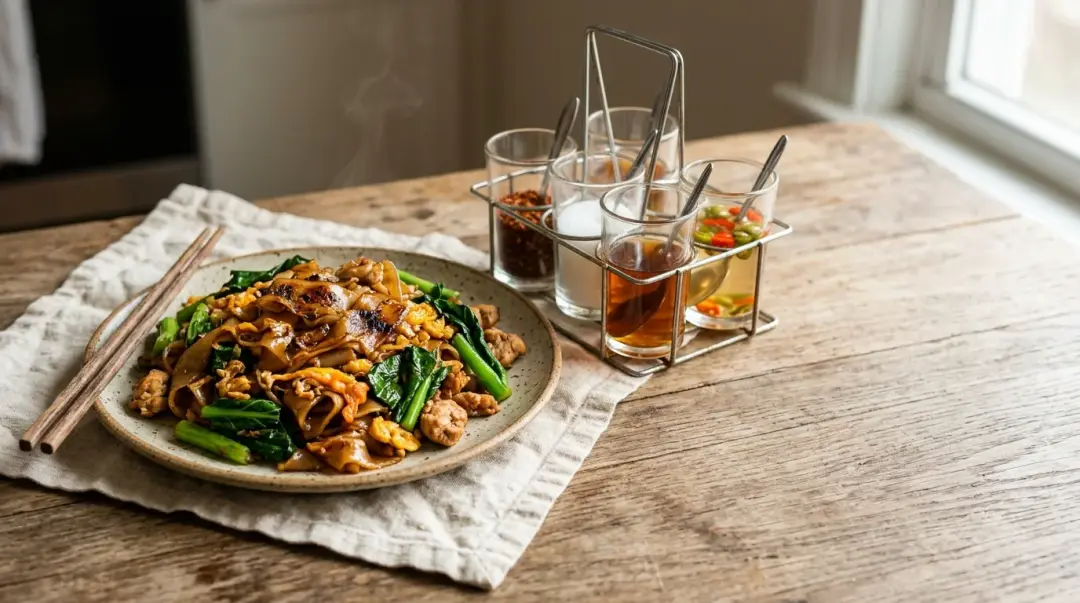
- Char Kway Teow — Malaysian/Singaporean stir-fried wide rice noodles with wok hei.
- Laksa — Spicy coconut-curry noodle soup, Malaysian-Peranakan icon.
- Mì Goreng — Indonesian sweet-savory fried noodles. Also Indomie, the iconic instant version.
- Drunken Noodles — Thai spicy basil noodle stir-fry (pad kee mao).
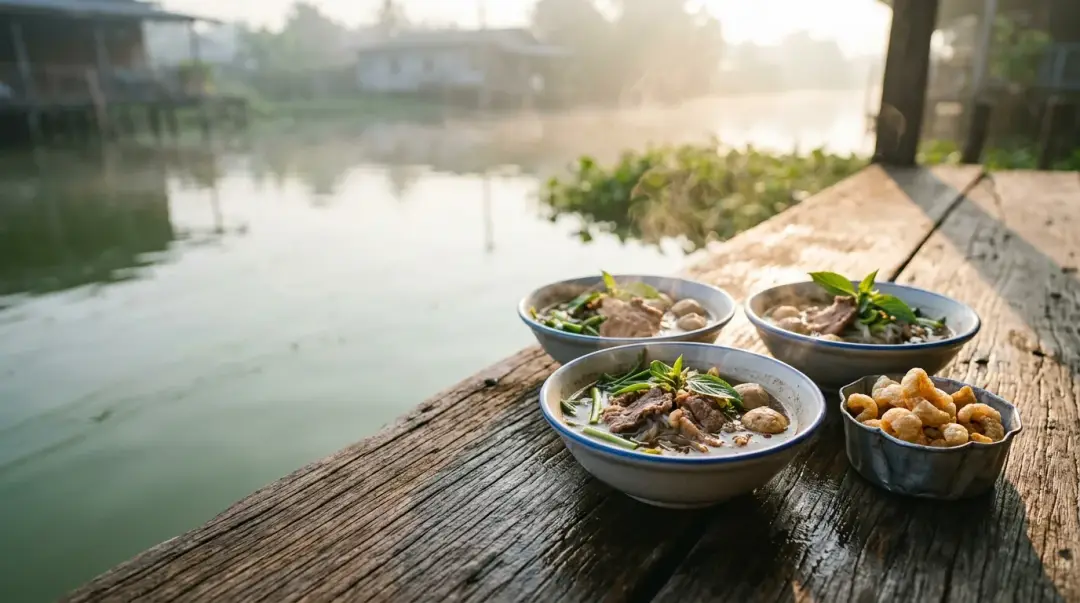
- Boat Noodles — Thai street noodle soup with blood-thickened broth, tiny portions.
- Hokkien Mee — Three different dishes share the name: Singapore's fried prawn noodles, KL's dark-soy noodles and Penang's prawn soup.
- Pad See Ew — Thai stir-fried wide noodles in dark soy sauce.
How SE Asian Noodles Differ from Chinese Noodles
Most SE Asian noodle dishes have Chinese DNA — Hokkien and Cantonese immigrants brought noodles to Southeast Asia in the 19th century, then they localized. The differences:
- Coconut milk is heavy in SE Asian cooking; rare in Chinese
- Lime + tamarind acidity is everywhere in SE Asian; rare in Chinese
- Chili levels range higher (Thai bird's eye, Indonesian sambal)
- Fish sauce is more central than soy sauce
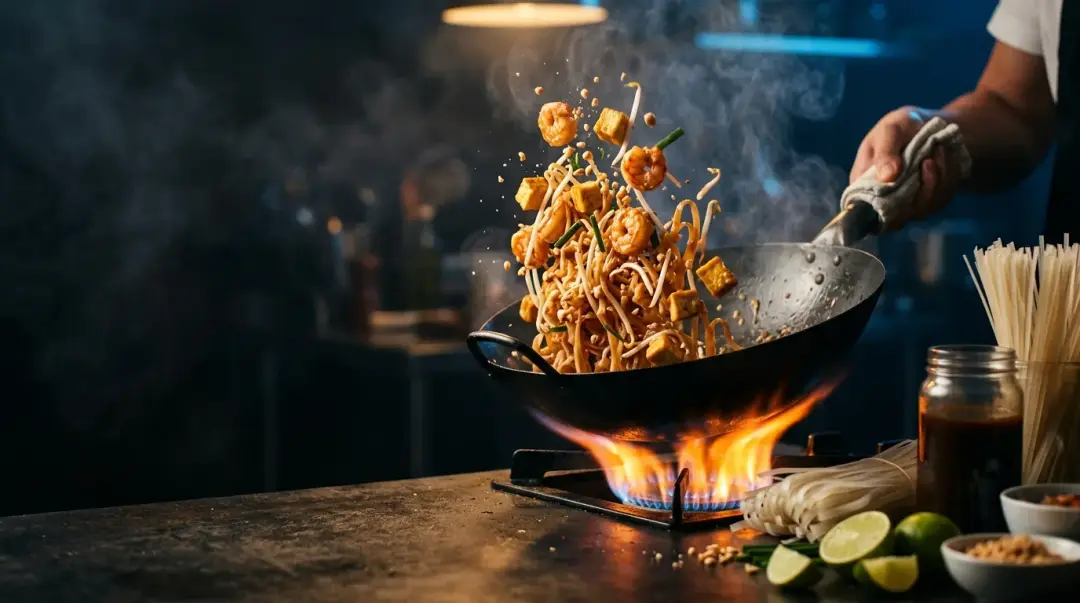
- Wok hei (the breath of the wok) is shared with Cantonese cooking, and it is why Thai and Malaysian stir-fries are cooked in a wok over high heat
- Curry pastes are pounded in a granite mortar and pestle, the traditional Thai tool
Read more in Vietnamese vs Thai vs Chinese Noodles.
Where to Buy SE Asian Noodles
In the US, Southeast Asian groceries are concentrated in:
- Westminster, CA (Vietnamese-dominant, also stocks Thai/Indonesian)
- Houston, TX
- NYC's Manhattan Chinatown and Sunset Park (Brooklyn)
- Los Angeles's Thai Town (East Hollywood)
For online, Amazon US ships every major brand:
- Three Ladies, Wel-Pac — rice noodles
- Mama Noodles — Thai instant noodles
- Indomie — Indonesian instant noodles
- Maesri, Mae Ploy — Thai curry pastes and sauces
Buying guides:
FAQ
What is the difference between Thai and Chinese noodles?
Southeast Asian noodle dishes lean on coconut milk, lime and tamarind acidity, higher chili levels and fish sauce, while Chinese cooking uses these rarely and centers on soy sauce. Many SE Asian dishes have Chinese roots from 19th-century Hokkien and Cantonese immigrants.
What are the main Thai and Southeast Asian noodle dishes?
Pad thai, drunken noodles, boat noodles and pad see ew from Thailand, char kway teow, laksa and Hokkien mee from Malaysia and Singapore, and mì goreng from Indonesia.
What is the four-flavor balance?
Sour, salty, sweet and spicy in every bite, built on fish sauce, palm sugar, chili and lime. It links the noodle dishes of Thailand, Malaysia, Singapore and Indonesia.
Where can you buy Southeast Asian noodles?
In the US, Southeast Asian groceries cluster in Westminster, CA, Houston, New York's Chinatown and Sunset Park, and Los Angeles's Thai Town. Amazon US ships brands such as Three Ladies, Wel-Pac, Mama Noodles and Indomie.
What You Need
Two tools do most of the work in this cluster: a wok for the stir-fries and a mortar for the pastes.
Craft Wok 14-inch hand-hammered carbon steel wok. Pad thai, drunken noodles and char kway teow are quick high-heat dishes, and the wok supplies the heat. This listing is a flat-bottom, 15-gauge (1.8 mm) carbon steel wok with a wooden handle and a steel helper handle, suited to flat electric or induction stoves. View on Amazon
Thai granite mortar and pestle, 8-inch. A granite mortar pounds lemongrass, galangal, chili and other aromatics into the pastes behind laksa and many curries. This listing is solid granite with a rough grinding interior, a deep Thai-style bowl and a large pestle. View on Amazon
For more wok options, see our Chinese wok buying guide.