Put a Ruler on It
Lay a cooked strand of tagliatelle flat and measure it. If it comes to 8 millimeters, it matches the official standard. On April 16, 1972, Francesco Majani and Alcino Cesari of the Accademia Italiana della Cucina (the Italian Academy of Cuisine) filed a recipe and a measurement with the Bologna Chamber of Commerce. The cooked ribbon should be 8 millimeters wide. Since pasta swells in the pot, that means roughly 6.5 to 7 millimeters when raw. The Academy also tied the width to a Bologna landmark. Eight millimeters is 1/12,270 of the height of the Torre degli Asinelli, the tallest of the city's medieval towers.
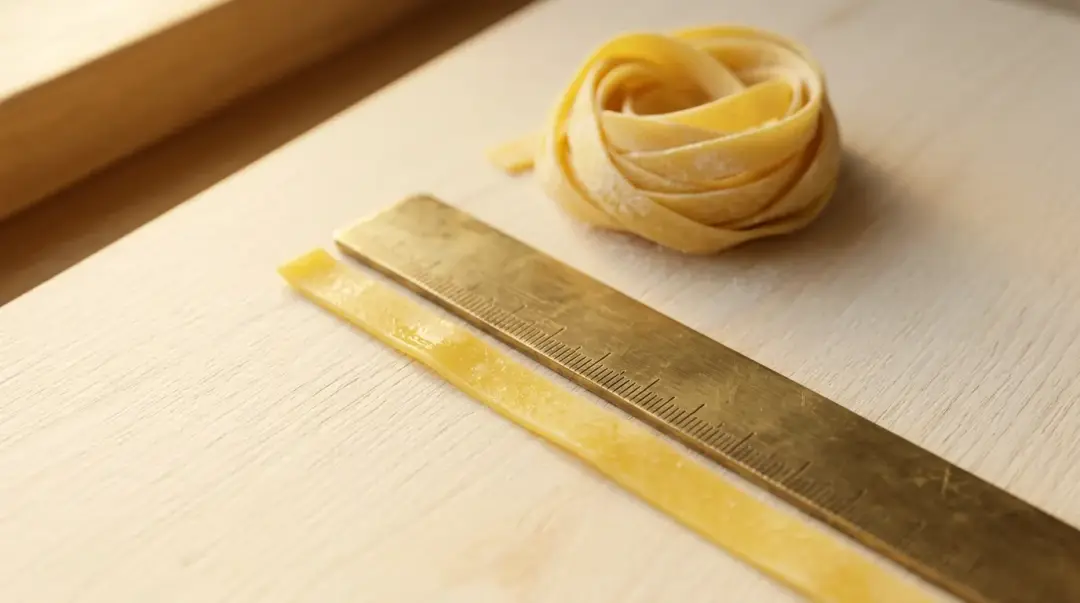
The Chamber still keeps the reference ribbon, a golden tagliatella stored in a case built for it. Bologna's commerce association, Confcommercio Ascom, marked the standard's 50th anniversary in 2022.
The standard doesn't set a thickness. Writers on Bolognese pasta usually give 0.6 to 0.8 millimeters.
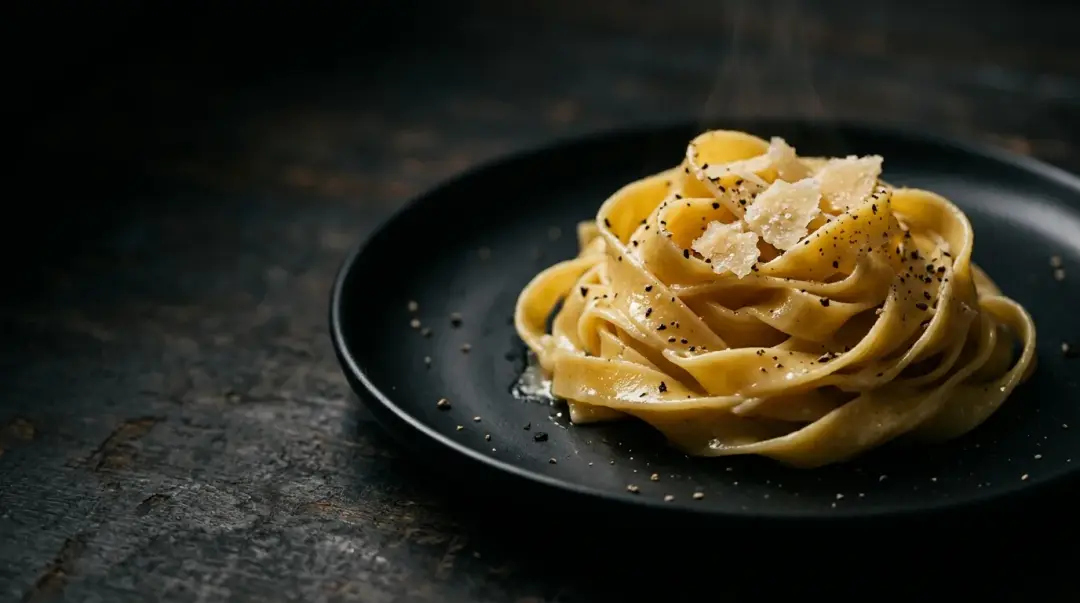
Fresh tagliatelle tastes mostly of egg, then wheat. The yolks make the dough yellow and give it a light, slightly sweet richness. Because the sheet is so thin, the ribbons cook soft but still springy, and the flat surface gives a meat sauce something to hold on to. Dried egg nests are firmer and chewier and still taste of egg, but lose some of that soft give.
What Tagliatelle Is
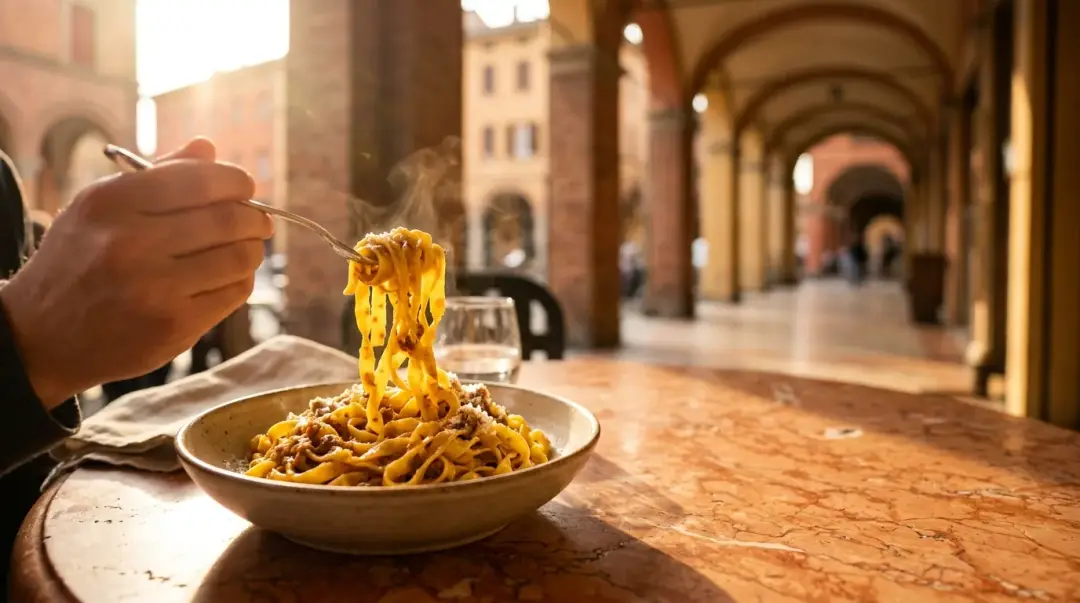
The name comes from tagliare, "to cut." That tells you how the shape is made. It's never extruded through a die. A cook rolls the dough into a sheet and cuts it into ribbons. Bologna's sheet is the sfoglia (SFOH-lyah), made from about one egg per 100 grams of flour, which works out to ten eggs per kilo. It's rolled out with a long mattarello (mat-tah-REL-loh, rolling pin). Bologna Welcome, the city's tourism office, says tagliatelle sfoglia should be about as thin as the dough for tortellini. Lasagna sheets are rolled thicker.
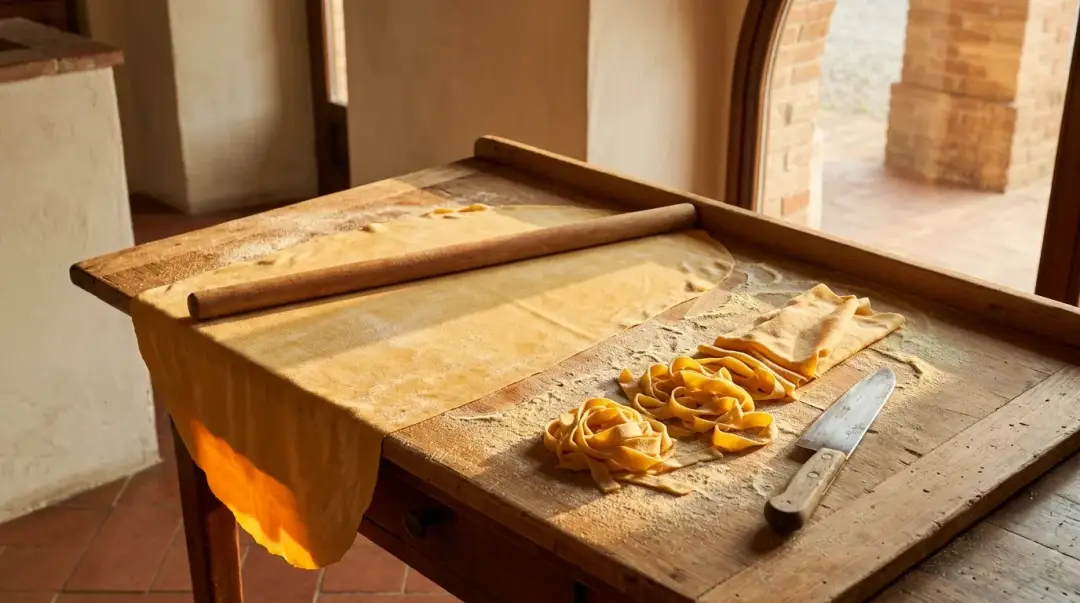
The finished sheet is cut into ribbons with a knife. Tagliatelle is mainly associated with Emilia-Romagna, but it's also a traditional pasta in the Marche, on the Adriatic coast to the south. Its thinner relative is tagliolini (tahl-yoh-LEE-nee).
A Legend, Then the Paper Trail
According to Bologna's favorite story, tagliatelle was invented in 1487 by a court cook named Zafirano, sometimes spelled Zefirano. It was supposedly made for a Bentivoglio family wedding, and the most popular version says he based the ribbons on Lucrezia Borgia's long blonde hair. The story is a joke. Augusto Majani, a Bolognese humorist, made up the Borgia version in 1931, and it is still widely repeated.
The real history is less romantic and older. Historians trace flat strips of dough back to the Roman lagane mentioned by the poet Horace. In the 16th century, Cristoforo di Messisbugo, steward at the Este court in Ferrara, wrote about lasagnuolle overo tagliatelle, "lasagnuolle, or tagliatelle." That puts the two shapes on the same family tree. Bartolomeo Scappi, cook to the popes, recorded a sweet version dressed with cheese, sugar and cinnamon. Pellegrino Artusi's 1891 cookbook argued that tagliatelle should be cut long.
Tagliatelle al Ragù
In Bologna, ragù is served on tagliatelle made with eggs and soft-wheat flour. The Academy deposited its ragù recipe with the same Chamber of Commerce on October 17, 1982. Its version uses 300 grams of coarsely ground beef, 150 grams of pancetta, 50 grams each of onion, carrot and celery, tomato, wine and milk. The 1982 text allowed a splash of cream but noted it shouldn't go on fresh tagliatelle.
The Academy replaced that recipe on April 20, 2023. The new version raises the meat to 400 grams and allows a 60/40 mix of beef and pork. It permits fresh pork belly where pancetta used to be, makes the milk optional and calls only for extra virgin olive oil as the fat. Both versions are mostly meat with a modest amount of tomato, a sauce that clings to a ribbon.
That's why spaghetti bolognese gets so much pushback in Bologna. A smooth, round strand drops crumbled meat. A flat, porous egg ribbon holds it. The spaghetti page covers how the Italian-American version came about.
Ragù isn't the only option. Other traditional dressings include breadcrumbs and nuts, eggs and cheese, or tomato and basil. In October 2006, the Academy deposited a second tagliatelle recipe with the Bologna Chamber, this one made with chestnut flour and dressed with pancetta and pecorino.
Tagliatelle vs Fettuccine
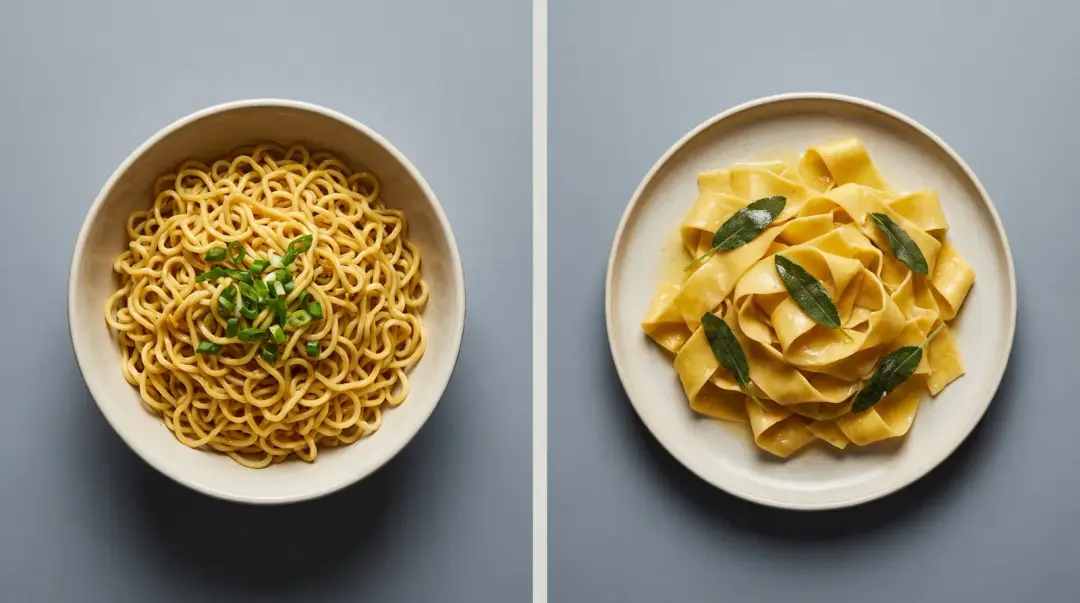
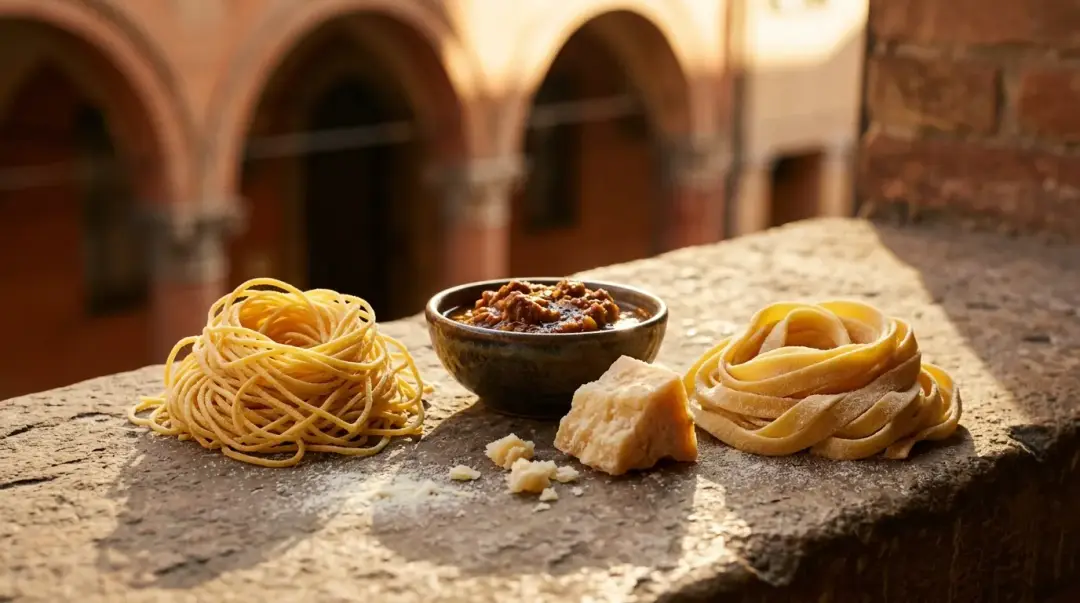
Fettuccine is the Roman cousin. It's also a flat egg ribbon, and American menus use the two names almost interchangeably. Width doesn't separate them very well. Wikipedia puts fettuccine at about 6.5 millimeters, which is close to Bologna's raw tagliatelle. The real differences are thickness, regional tradition and sauce.
Tagliatelle vs fettuccine
| Tagliatelle | Fettuccine | |
|---|---|---|
| Home city | Bologna (Emilia-Romagna), also the Marche | Rome (Lazio) |
| Dough | Egg + flour, about 1 egg per 100 g | Egg + flour |
| Width | 8 mm cooked, 6.5–7 mm raw (1972 standard) | About 6.5 mm, no registered standard |
| Thickness | Very thin, about 0.6–0.8 mm | Usually described as slightly thicker |
| Signature sauce | Ragù alla bolognese | Butter and Parmigiano (Alfredo) |
At home, either ribbon works with either sauce, and neither city will know. If you're ordering in a restaurant, the name tells you which tradition the kitchen is cooking from.
Buying Tagliatelle in the US

The noodle to buy
KITCHENDAO Collapsible Pasta Drying Rack
Freshly cut ribbons need somewhere to rest before they hit the water. This listing is a foldable, detachable rack with rotary arms that holds up to 6 lb of pasta.
There are three easy routes to tagliatelle in the US.
Dried egg nests. De Cecco's Tagliatelle n° 104 all'uovo is the widely sold option. The egg version is the one to buy for ragù. Read the ingredient list on other brands. Delverde's tagliatelle nest at Whole Foods, for example, is described as durum wheat and spring water, with no egg listed. An eggless nest cooks fine, but it lacks the yolk richness that defines the Bologna ribbon.
Gluten-free. Jovial's organic egg tagliatelle, made from brown rice flour and egg, is on the Whole Foods shelf and is the usual recommendation in our guide to gluten-free egg noodles.
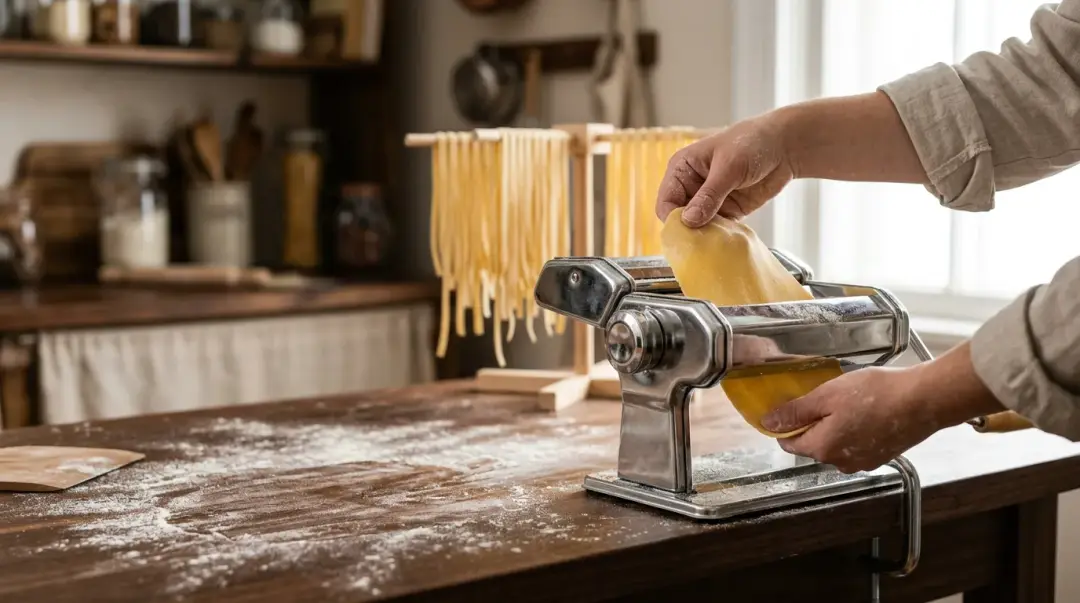
Fresh or homemade. Eataly's Il Pastaio counters, in New York's Flatiron District and in Dallas, make pasta from scratch every day, and you can watch the rolling and cutting from the counter. Making it yourself takes flour, eggs and a long rolling pin. A hand-crank machine helps a lot. The roller does the work of the mattarello, and you can cut the ribbons by knife to get the right width. If you roll by hand, a 35-inch mattarello gives the reach to thin the whole sheet, and a straight cutter wheel gives clean lines to cut along. Our pasta maker guide ranks the Marcato Atlas 150 first. For more on how fresh egg pasta differs from dried semolina, see egg noodles vs pasta.
Where to Eat It
Tagliatelle al ragù is easy to find on menus but less common made by hand. In Los Angeles, Felix Trattoria in Venice, opened in 2017, lists hand-rolled tagliatelle al ragù among its signature dishes. Chef Evan Funke trained in Bologna at La Vecchia Scuola Bolognese under the sfoglina Alessandra Spisni. In New York and Dallas, the Eataly counters mentioned above are the most accessible option.
A Cultural Note: The Sfogline
In Bologna, the people who roll the dough matter as much as the measurement. A sfoglina (sfoh-LYEE-nah; plural sfogline) is a woman who makes sfoglia by hand with only flour, eggs, a mattarello and a large wooden board. In local dialect she is also called azdora (ahz-DOH-rah) or zdoura. The craft is now taught at schools such as La Vecchia Scuola Bolognese, whose graduates work in 17 countries. Italian lawmakers proposed regulating the trade in 2004, when Franco Grillini filed a bill, and again in 2017 through Senator Sergio Lo Giudice.
FAQ
How wide is tagliatelle?
Officially, 8 millimeters once cooked, which works out to roughly 6.5 to 7 millimeters raw. The Accademia Italiana della Cucina deposited that measurement with the Bologna Chamber of Commerce on April 16, 1972, defining it as 1/12,270 of the height of the city's Asinelli tower. Thickness is commonly given as 0.6 to 0.8 millimeters.
What is the difference between tagliatelle and fettuccine?
Region more than width. Tagliatelle is Bologna's egg ribbon, rolled very thin and served with ragù. Fettuccine belongs to Rome and is usually described as a little thicker and is best known with butter and Parmigiano. Their widths overlap, so the two can be swapped at home, but each city treats its own as the correct one.
Is tagliatelle made with egg?
Traditional tagliatelle is egg pasta, made from about one egg per 100 grams of flour and rolled into a thin sheet called sfoglia. Not every box sold in the US follows that rule. Some imported tagliatelle nests are made from durum wheat and water only, so check the ingredient list if the egg matters to you.
What sauce goes with tagliatelle?
Ragù alla bolognese is the classic in Bologna, where it is served on tagliatelle and not on spaghetti. Other traditional dressings include breadcrumbs and nuts, eggs and cheese, or tomato and basil. Bologna's Chamber of Commerce even holds a 2006 chestnut-flour tagliatelle recipe, dressed with pancetta and pecorino.
Did Lucrezia Borgia's hair inspire tagliatelle?
No. The story that a cook named Zafirano invented tagliatelle in 1487 to honor Lucrezia Borgia's blonde hair was written as a joke in 1931 by the Bolognese humorist Augusto Majani. Tagliatelle shows up in 16th-century records from the Este court in Ferrara and in the papal cook Bartolomeo Scappi's writing.
How long do you cook tagliatelle?
Fresh egg tagliatelle needs only 2 to 4 minutes in salted boiling water, so start tasting early. Dried egg nests take longer, so follow the time on the package. Drain while the ribbons are slightly firm and let them finish in the sauce pan for the last minute, where they absorb some of the ragù.