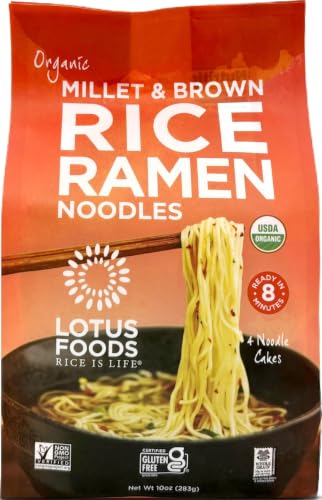


- Noodle cakes: Lotus Foods Organic Millet and Brown Rice Ramen
- Instant pack: Thai Kitchen Gluten Free Spring Onion Rice Noodle Soup
- Instant cup: Lotus Foods rice ramen cup
- Broth swap: San-J Tamari Gluten Free and Hikari organic miso
- Not ramen, but gluten-free: Eden 100% buckwheat soba
This is a research-based guide. We did not taste or buy these products for this page; the details come from makers' pages, certification bodies and retailer product listings, and we say where a fact could not be confirmed. This page is general information, not medical advice. Links to Amazon are affiliate links, and NoodleDex earns a commission on qualifying purchases at no cost to you.
Why Most Ramen Is Not Gluten-Free
Three parts of a ramen bowl carry wheat, and fixing the noodle alone does not fix the bowl.
- The noodle. Ramen noodles are wheat flour made springy with kansui (alkaline mineral water). The Celiac Disease Foundation lists ramen with the foods that contain gluten, next to udon and chow mein.
- The tare and broth. Tare (tah-reh) is the concentrated seasoning, usually soy-based, spooned into the bowl before the broth. Standard soy sauce is brewed with wheat. Kikkoman's regular Tamari Soy Sauce lists wheat as its fourth ingredient, and the company sells a separate Gluten-Free Tamari.
- The seasoning packet. Instant packs often add wheat to the packet on top of the wheat noodle. The Maruchan Chicken, Nissin Top Ramen Chicken and Nongshim Shin Ramyun labels all list wheat and soy as allergens. Our gluten-free noodles by cuisine guide notes that the Korean instant category is built on wheat noodles, and that its packets often add more wheat.
So a ramen is gluten-free only if every part of the bowl is. A rice noodle in a wheat-based broth is not gluten-free.
How to Read a Label
Four label signals matter, from strongest to weakest.
- A certification mark. The Gluten-Free Certification Organization (GFCO), run by the Gluten Intolerance Group, certifies products that test at or below 10 parts per million (ppm) of gluten, or the local legal limit if that is lower. Beyond Celiac also runs a certification program.
- The FDA claim. In the US, a food labeled gluten-free, no gluten, free of gluten or without gluten must contain less than 20 ppm of gluten, per the FDA. That is a legal minimum, and certification is the stricter bar.
- Facility wording. Phrases such as dedicated gluten-free facility describe how the product is made. They are a maker's statement, not a standard.
- A may-contain line. Advisory statements such as may contain wheat are voluntary in the US and are not required by the FDA, so a missing one does not prove a clean line. Treat a wheat advisory as a reason to skip the pack.
Read the ingredient list too. Soy sauce, wheat starch, barley malt and wheat in the broth base all show up there. The FDA rule covers products that make the claim, so a rice-only ingredient list with no claim is a lower-confidence pick. For celiac disease, ask your clinician what threshold applies to you.
Rice and Millet Ramen Noodle Cakes
A noodle cake is a dried block of noodles without a built-in broth, so you choose the soup. This is the format to pick if you want a ramen bowl and will control every other ingredient.
Lotus Foods Organic Millet and Brown Rice Ramen is the pick. The ingredients are organic brown rice and organic millet, and the 10 oz bag has no seasoning packet. Lotus Foods lists it as certified gluten-free. It cooks softer than a wheat noodle and overcooks fast, so pull it early. Our low-sodium noodles guide lists it as a blank canvas for a broth you salt yourself.
Real Naturals Brown Rice Ramen is a second brown-rice option sold as a 10-pack. We could not confirm a certification mark or a full ingredient list from a maker source, so treat it as a lower-confidence pick and read the pack, including any seasoning.
If you want a broader rice noodle, our best rice noodles guide covers pho and pad thai noodles. They are not ramen-shaped, but they work in the same bowl.
Gluten-Free Instant Cups and Packs
Instant gluten-free ramen exists, but it comes from rice-noodle brands rather than the big three.
Thai Kitchen Gluten Free Spring Onion Instant Rice Noodle Soup is a rice noodle pack with a seasoning packet and an oil packet. Retailer listings name Beyond Celiac's certification program as the certifier, and the noodles are listed as steam-cooked rather than fried. It contains soy. Ingredient lists differ between retailers, so read the pack you receive.
Lotus Foods rice ramen cups are rice instant cups, and retailer listings name a GFCO gluten-free certification for the Garlicky Veggie cup. Each flavor has its own ingredient list, so check the one you buy.
Gluten Free Meister Japanese Ramen is a rice-flour variety pack with Tonkotsu, Shoyu and Miso flavors, sold under a gluten-free brand name. Retailer listings mention a gluten-free facility and an ISO 9001 quality standard, which is not a gluten-free certification. No third-party gluten-free mark was found, so it is a read-the-label pack, not a certified one.
Other gluten-free instant cups exist, but we could not confirm a certification mark for them, so they are not on our list. For mainstream packs, see our best instant ramen guide; none of those is gluten-free.

Gluten Free Meister Japanese Ramen
Rice-flour noodles with three Japanese-style flavors in one pack
Kits and Broth: Tamari, Miso and Stock
We found no gluten-free ramen kit with a broth that we could confirm, so the broth is a build-your-own step. Three labels matter.
Soy sauce or tamari. Tamari (tah-MAH-ree) is Japanese-style soy sauce made mostly or entirely from soybeans, but the word alone does not guarantee gluten-free. San-J Tamari Gluten Free is made from 100% soybeans and certified by GFCO. It is thicker and darker than regular soy sauce, and the label lists 980 mg of sodium per tablespoon. Our best soy sauce for noodles guide covers it.
Miso. Rice and soybean miso is usually gluten-free, but barley miso is not, and some miso has other grains or additives. Hikari Miso Organic Red is made from organic rice and soybeans and labeled gluten-free by Hikari, at 830 mg of sodium per tablespoon. See our best miso paste guide.
Stock. Wheat can show up in stock concentrates, flavorings and oil sachets. Read each ingredient list, or pick a stock with a gluten-free claim. Our ramen broth guide explains how shops build broth.
Hidden Gluten: Packets, Sauces and Shared Lines
Gluten hides in five places in a ramen bowl.
- Seasoning packets. Mainstream instant packets list wheat. A gluten-free noodle with the original packet is not gluten-free.
- Soy sauce. Regular soy sauce is brewed with wheat. A splash of it in a gluten-free bowl can push the bowl above the 20 ppm limit.
- Miso. Barley miso is a gluten source. Rice and soybean miso usually is not.
- Oil sachets. Chili oil and aroma oil packets can carry other ingredients. Read them.
- Shared production lines. A rice noodle made on a line that also runs wheat noodles can pick up gluten, which is why a certification mark is the stronger signal. Our rice noodles gluten-free guide covers the cross-contact routes in detail.
Some people who avoid wheat are managing FODMAPs rather than gluten. See our low-FODMAP noodles guide if that is you.
Alternatives to Ramen Noodles
If a ramen-style noodle is not essential, 100% buckwheat soba is naturally gluten-free and works in a hot broth. Eden 100% Organic Buckwheat Soba is labeled gluten-free, and Eden says it is made in a facility dedicated to buckwheat. See our soba guide for the brand. Standard supermarket soba is a wheat and buckwheat blend, so read for 100% on the pack. Our soba versus ramen guide explains the difference, and the best gluten-free pasta guide covers pasta shapes if you want pasta instead. The specialty noodle guide covers more options.
Eating Out and Cross-Contact
The FDA's 20 ppm rule is written for packaged food labels. The FDA says restaurant gluten-free claims should be consistent with the federal definition, but oversight sits mostly with state and local governments. A gluten-free ramen on a menu is the kitchen's own claim, and shared noodle water, strainers and fryer oil can carry wheat onto a rice noodle. A ramen shop that boils wheat noodles all day cannot easily offer a safe gluten-free bowl.
If you eat out, ask three questions: Are the gluten-free noodles boiled in separate water? Is the broth made without soy sauce or wheat? Does the kitchen use a gluten-free tare? Our rice noodles gluten-free guide has a longer list of questions and the full breakdown of sauces.
FAQ
Is ramen gluten-free?
No, not by default. Ramen noodles are made with wheat flour, and the broth, soy-sauce tare and seasoning packet often add more wheat. The Celiac Disease Foundation lists ramen with the foods that contain gluten. Ramen is gluten-free only when it is built from rice or millet noodles and a broth and sauce that are labeled gluten-free.
Are rice-noodle ramens safe for celiac disease?
A rice noodle is naturally gluten-free, but safety depends on the factory and the packet. Look for a gluten-free certification mark and read the seasoning ingredients. A rice-only noodle with no claim may share a line with wheat. Ask a clinician about your own threshold; this page is general information.
Is tamari gluten-free?
Not always. Tamari is often made without wheat, but Kikkoman's regular Tamari lists wheat, and the company sells a separate Gluten-Free Tamari. San-J's Tamari Gluten Free is certified by GFCO. The label decides, and a certification mark is the clearest signal.
Is instant ramen ever gluten-free?
Yes, but not the mainstream packs. Maruchan, Top Ramen and Shin Ramyun list wheat. Gluten-free instant ramen exists in rice-noodle packs and cups, such as Thai Kitchen's rice noodle soup, and some carry a certification mark. Check the pack in your hand, because recipes change.
How do I know a ramen is certified gluten-free?
Look for a certification logo such as GFCO's on the pack, not only the words gluten-free. In the US, a gluten-free claim means under 20 parts per million (ppm) of gluten by FDA rule, and GFCO certification holds products to 10 ppm. A dedicated-facility note is a plus. A may-contain-wheat line is a warning.
Is miso ramen gluten-free?
Not as served. Standard miso ramen has wheat noodles and often a soy-sauce base, and some miso is made with barley. To make it gluten-free you need rice or millet noodles, a miso labeled gluten-free and a gluten-free broth. Hikari's organic miso is labeled gluten-free.