Yakisoba is Japan's stir-fried wheat noodle dish — ramen-style noodles griddled with cabbage, carrots, pork, and a Worcestershire-based sweet-savory sauce, topped with beni shoga (red pickled ginger) and aonori (powdered seaweed). Outside Japan it surfaces at Mitsuwa food courts, San Francisco Japantown izakaya menus, and on supermarket shelves as Maruchan instant kits. Despite the name, yakisoba contains no buckwheat — "soba" here is the older Japanese term for noodles, a 1930s Showa-era reworking of Chinese chow mein.
What Is Yakisoba?
Yakisoba ("fried soba") is a stir-fried wheat noodle dish with cabbage, carrots, onions, and pork (or seafood), tossed with yakisoba sauce — a sweet-savory blend resembling thickened Worcestershire. The name is misleading: yakisoba is not made from buckwheat (soba) — it's made from ramen-style wheat noodles. The "soba" in the name is a general Japanese term for "noodles" that survived from older usage.
The dish was popularized in 1930s Japan, when wheat-flour ramen noodles became cheap and accessible, and home cooks began stir-frying them with available vegetables and sauces. The Worcestershire base reflects Showa-era Japan's interest in Western flavors.
Festival Food
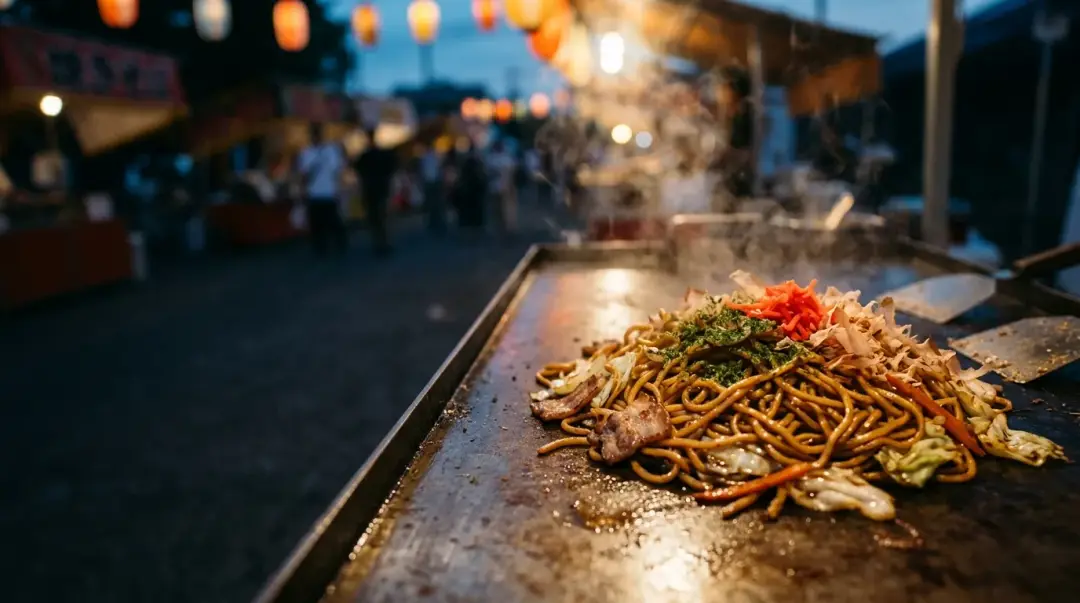
Yakisoba is Japan's quintessential festival food (called matsuri food). At any Japanese summer festival, you'll find yakisoba stalls — vendors stir-frying mountains of noodles on giant flat griddles, packaging individual portions in plastic trays with red pickled ginger on top. The smell of yakisoba on a flat griddle is one of Japan's most evocative festival scents.
It's also a bento staple — most Japanese convenience stores sell yakisoba bento boxes for lunch.
Yakisoba-Pan (Yakisoba Bread)
A weirder cousin: yakisoba-pan is a hot dog bun filled with yakisoba noodles. It exists. It's surprisingly delicious. Common at Japanese convenience stores and bakeries. The two carbs in sequence shouldn't work but they do.
Flavor Profile
Yakisoba is sweet-savory, slightly tangy, with Worcestershire-style depth. The sauce is the dominant flavor. Texturally, it's softer than ramen noodles because the noodles are par-cooked then stir-fried (they don't stay al dente).
How Yakisoba Differs from Chinese Chow Mein
Yakisoba descends from Chinese chow mein but evolved into something distinctly Japanese:
- Sauce: Yakisoba uses sweet Worcestershire-style. Chow mein uses soy + oyster sauce.
- Vegetables: Yakisoba is cabbage-heavy. Chow mein uses Chinese cabbage, bok choy.
- Toppings: Yakisoba gets beni shoga (red pickled ginger) and aonori (powdered seaweed). Chow mein doesn't.
- Egg: Yakisoba sometimes has a fried egg on top; chow mein doesn't traditionally.
Where to Find Yakisoba
Common at Japanese restaurants, particularly those advertising "izakaya" (Japanese gastropub) style. Also widely available at:
- Mitsuwa food courts (LA, NJ, TX)
- Japan Town districts (San Francisco, Seattle)
- Japanese summer festivals in major metros
Maruchan and Yakisoba Express make instant yakisoba kits sold at many supermarkets and on Amazon.
Making Yakisoba at Home
Yakisoba is the easiest authentic Japanese dish for home cooks:
- Noodles — Use fresh ramen noodles (from Sun Noodle or H Mart) OR pre-packaged yakisoba noodles (refrigerated section of Japanese groceries; pre-steamed)
- Vegetables — Cabbage, carrots, onions, scallions; pork belly or chicken
- Sauce — Buy bottled Otafuku yakisoba sauce (Amazon, Asian groceries) or mix: Worcestershire + ketchup + oyster sauce + soy + sugar
- Stir-fry hot, fast — Cabbage first, then meat, then noodles + sauce, toss to coat
- Top with beni shoga (red pickled ginger), aonori, sometimes a soft-fried egg
Festival stalls cook on a flat griddle, so a cast iron griddle or skillet and a pair of metal spatulas get closest to that sear. The Otafuku bottled sauce specifically transforms home yakisoba — it's the same sauce Japanese restaurants use. See Best Japanese Pantry Essentials.
A Note on Authenticity
Some restaurant "Japanese-style fried noodle" dishes are not yakisoba — they're Chinese-American chow mein renamed for menu legibility. Real yakisoba is distinctly sweet from the Worcestershire-style sauce, and it always includes red pickled ginger as garnish. If your yakisoba doesn't have beni shoga, it's probably not yakisoba.
FAQ
Is yakisoba made from buckwheat?
No. Yakisoba uses ramen-style wheat noodles. The "soba" in the name is an older Japanese word for noodles, not buckwheat.
What is in yakisoba sauce?
Yakisoba sauce is a sweet-savory, thickened Worcestershire-style sauce. Otafuku is the bottled brand sold at Asian groceries and on Amazon.
What is the difference between yakisoba and chow mein?
Yakisoba uses a sweet Worcestershire-style sauce and a cabbage-heavy mix, topped with beni shoga and aonori. Chow mein uses soy and oyster sauce with Chinese cabbage or bok choy.
What are the red and green toppings on yakisoba?
The red topping is beni shoga, pickled red ginger. The green flakes are aonori, powdered seaweed.
Where can I buy yakisoba?
Mitsuwa food courts, Japantown districts and Japanese summer festivals serve it. Maruchan and Yakisoba Express sell instant kits at many supermarkets.