Hot vs Cold Korean Noodles: Which to Order When
· 6 min read · NoodleDex Editorial
Compare hot Korean noodles like ramyeon and kalguksu against cold naengmyeon and bibim guksu by season, broth, and occasion. Pick your bowl for any month.
This page contains affiliate links. We may earn a commission at no extra cost to you. Disclosure
On this page(13 sections)
- The Headline Difference
- Korea's Noodle Calendar
- The Korean Restaurant Experience
- The Hot/Cold Split — At a Glance
- What Each Side Tastes Like
- Why Korea Has Such a Strong Cold Noodle Tradition
- Hot Korean Noodles — The Comfort Category
- Cold Korean Noodles — The Sharp Category
- The Texture Science Behind Cold Noodles
- How to Plan a Korean Noodle Meal
- If You Only Remember One Thing
- FAQ
- Products mentioned in this guide
Korean noodle culture splits in half along the calendar. Half the canon — naengmyeon, bibim guksu, kongguksu — is served ice cold. The other half — ramyeon, kalguksu, sundubu guksu — is served piping hot. Same cuisine, two completely different food categories the same diner orders six months apart.
The Headline Difference
Most noodle cultures don't operate this way. Japan has cold soba in summer, but it's a minor share of the noodle calendar. Italy has pasta salad, but no Italian thinks of it as the same category as a Sunday ragù. Korea is the rare cuisine that treats cold noodles and hot noodles as parallel traditions of equal weight — each with its own broth science, texture target, season, occasion, and matching banchan. Knowing which side of the calendar a dish lives on tells you what season to order it, what to expect at the table, and what its cultural job is.
Korea's Noodle Calendar
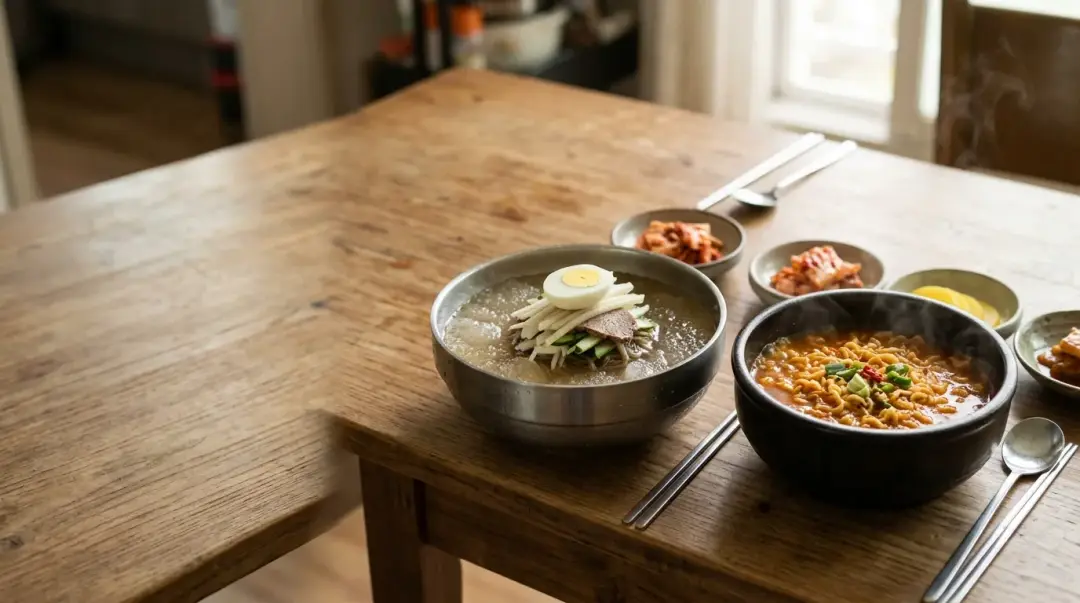
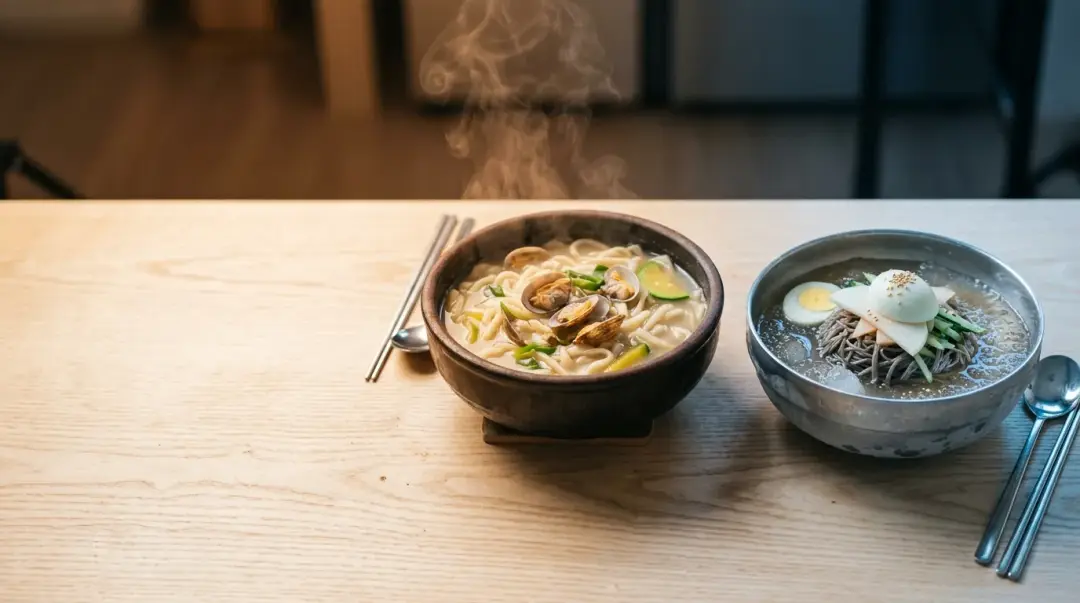
Half of the most-eaten Korean noodles are served cold; the other half are served piping-hot. Each has a season, an occasion, and a cultural role. The diner who orders ice-cold naengmyeon in August will order steaming sundubu guksu in December and treat them as different food categories entirely.
The Korean Restaurant Experience
In the US, Korean noodles split across two restaurant formats. Korean BBQ restaurants treat noodles as the closing course — naengmyeon ends almost every Korean BBQ meal, served ice cold to cut the grease of an hour of grilled short rib. Standalone Korean noodle shops are still rarer but expanding — Manhattan's NY Kalbi or Atlanta's Yet Tuh stock kalguksu, jjajangmyeon, and seasonal naengmyeon as the main act. H Mart food courts often run a noodle counter that covers both ends of the menu — order kalguksu in November, naengmyeon in July.
For a first-time diner, the working order is: try ramyeon at home, naengmyeon after Korean BBQ, jjajangmyeon for delivery, and kalguksu at a Korean restaurant on a rainy day. That covers the four roles Korean noodles play in Korean American life.
The Hot/Cold Split — At a Glance
Korean Noodles by Serving Temperature
| Dish | Temperature | Season | Occasion |
|---|---|---|---|
| Ramyeon | Hot | Year-round | Weeknight, drinking food, late night |
| Jjajangmyeon | Hot | Year-round | Delivery, moving day, celebration |
| Japchae | Warm or room temp | Year-round (banquet) | Weddings, holidays, banchan |
| Kalguksu | Hot | Cool & rainy weather | Comfort food, family meals |
| Sundubu Guksu | Hot (bubbling) | Winter | Hangover food, breakfast |
| Naengmyeon | Ice cold | Summer | After Korean BBQ, hot afternoons |
| Bibim Guksu | Cold | Summer | Weeknight lunch, drinking food |
| Kongguksu | Ice cold | Summer (specialty) | Lunch, traditional |
What Each Side Tastes Like
The flavor differences are not just temperature. Hot Korean noodles and cold Korean noodles use different seasoning architectures:
- Hot dishes lean on anchovy-and-kelp stock, doenjang (fermented soybean paste) or gochugaru, and slowly-developed savory depth. The broth carries most of the flavor; the noodle is the vehicle.
- Cold dishes lean on sharper acids and tighter seasoning — Korean white vinegar, Asian pear juice, mustard oil (yeon-gyeoja), gochujang for the bibim variants. The noodle texture is the headline; the sauce or broth is the accent.
This is why cold Korean noodles often taste brighter and cleaner than hot ones, even when both use chili — the cold temperature thins the perception of fat and amplifies the sharper notes.
Why Korea Has Such a Strong Cold Noodle Tradition
Three reasons converge:
-
The peninsula's extreme summer heat. Korean summers are 90°F+ with crushing humidity. Cold noodles are not a novelty — they're a necessity for eating in heat.
-
Pre-refrigeration history. Some cold noodle dishes (especially naengmyeon) date to the Joseon Dynasty, when ice cellars (called bingo) preserved blocks of winter ice for summer use. Cold noodles were a luxury expression of stored ice — eating them announced your status.
-
The complement to Korean BBQ. Eating grilled meat is hot work even in winter. Naengmyeon serves as a refreshing palate-cleanser and digestion aid after meat-heavy meals. This pairing is so iconic that "naengmyeon after Korean BBQ" is the default closing course at virtually every Korean BBQ restaurant.
Hot Korean Noodles — The Comfort Category
Hot Korean noodles cluster around two roles: quick weekday meals (ramyeon, jjajangmyeon) and homestyle comfort food (kalguksu, sundubu guksu). They share an aesthetic of generous broth, soft warmth, and easy accessibility.
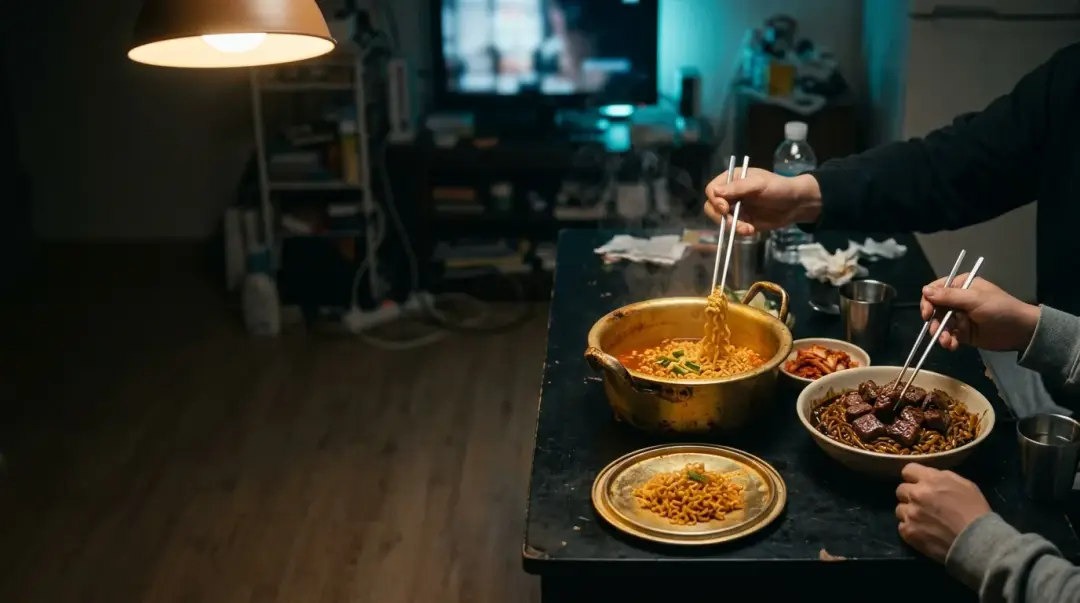
Ramyeon is traditionally cooked in a lidded yellow aluminum pot. For more options, see our Korean noodle pots buying guide.
The flavor profile leans savory-spicy — even non-spicy hot noodles like jjajangmyeon use deep umami from fermented soybeans. Kalguksu is the rare exception: a hot Korean noodle dish that's almost entirely mild.
Cold Korean Noodles — The Sharp Category
Cold Korean noodles cluster around two profiles: clean and mild (kongguksu) or sharp and acidic (naengmyeon, bibim guksu). The cold temperature makes flavors more linear — you taste each component distinctly rather than as a melded broth.
The texture goal of cold noodles is always chewy and bouncy. Hot Korean noodles tolerate softer textures (sundubu guksu's tender noodles), but cold dishes require dramatic chew — both functionally (cold noodles need texture to be satisfying) and culturally (the snap of naengmyeon is a defining feature).
The Texture Science Behind Cold Noodles
Cold noodles require different starch behavior than hot noodles. When wheat or buckwheat strands cook, the starch granules absorb water and swell — and as the noodle cools, those granules contract slightly, tightening the gluten network into the firm chewy texture that defines a great cold noodle. This is also why microwaved cold noodles taste wrong: reheating disrupts the retrogradation that makes cold noodles bouncy.
Specific texture targets across the cold canon:
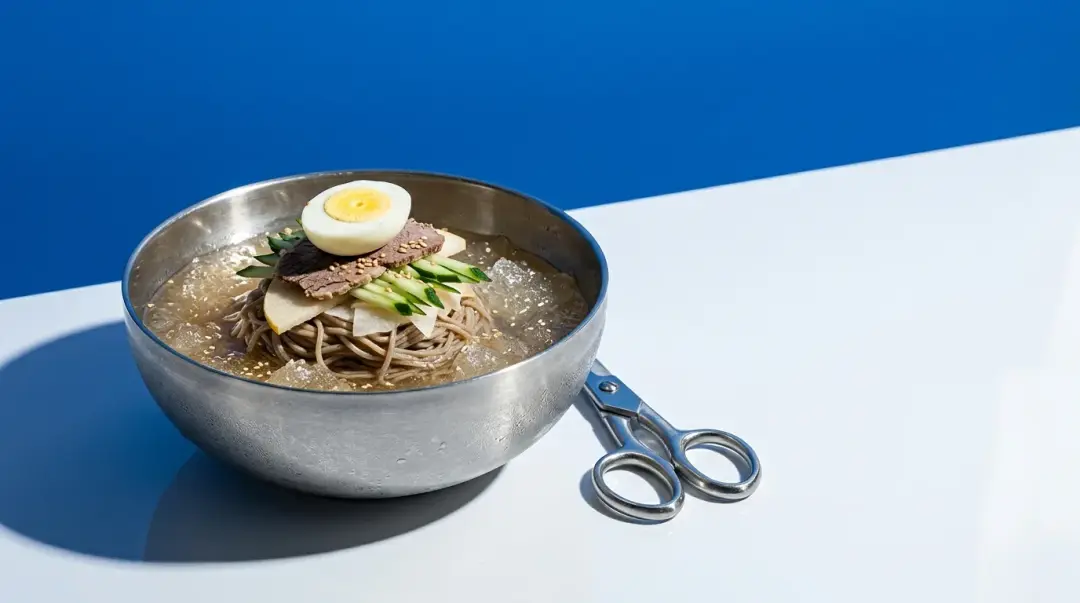
- Naengmyeon noodles (mostly buckwheat-and-sweet-potato-starch blend) cook for 90 seconds, ice-bath immediately, then rest in cold broth. The texture should be elastic enough that scissors are required to cut them at the table — every Korean BBQ restaurant that serves naengmyeon hands you scissors with the bowl, and a pair of Korean-style kitchen scissors does the same job at a home table.
- Bibim guksu noodles (so-myeon — thin wheat) cook in 3-4 minutes, ice-bath, drain dry. They should slip cleanly across each other in the gochujang sauce, not clump.
- Kongguksu noodles (so-myeon or kalguksu) cook to a slightly softer point than bibim guksu — the cold soybean broth needs the noodle to give a little.
If you've ever had cold Korean noodles served on warm noodles, you've had them done wrong. The ice bath is non-negotiable.
How to Plan a Korean Noodle Meal
For anyone building a Korean noodle rotation:
- Summer rotation — naengmyeon (after Korean BBQ), bibim guksu (weeknight), kongguksu (when you want something restorative)
- Winter rotation — sundubu guksu (warming), kalguksu (rainy days), ramyeon (any time)
- Year-round — jjajangmyeon (delivery), japchae (banquet/side dish), ramyeon (always)
- Group meals — japchae (everyone gets some), Korean BBQ + naengmyeon (the classic combination)
If You Only Remember One Thing
Korean noodles are not one tradition — they're two parallel ones tied to the calendar. The cold canon (naengmyeon, bibim guksu, kongguksu) is built for summer heat, ice baths, and chewy bounce. The hot canon (ramyeon, kalguksu, sundubu guksu) is built for cold weather, anchovy stock depth, and warming comfort. Eat seasonally and Korean noodle culture stops looking random and starts looking like a thermostat — one for August, one for December, and the same diner ordering both.
FAQ
Are Korean noodles served hot or cold?
Both. Naengmyeon, bibim guksu and kongguksu are served cold in summer, while ramyeon, kalguksu and sundubu guksu are served hot in cool weather. Korea treats the two as parallel traditions.
What do you eat after Korean BBQ?
Naengmyeon, served ice cold. It is the default closing course at Korean BBQ restaurants and cuts the grease of grilled short rib.
Why do Korean cold noodles come with scissors?
Naengmyeon noodles are elastic enough that scissors are needed to cut them at the table. Korean BBQ restaurants hand them out with the bowl.
Why is the ice bath needed for cold Korean noodles?
Chilling the noodles tightens their texture into the firm, bouncy chew that defines a cold noodle. Naengmyeon noodles cook for about 90 seconds and go straight into ice water.
Read Next
- Korean Noodles in K-Dramas — the cultural icons
- Naengmyeon (Cold Buckwheat Noodles) — the deep dive
- Korean Noodle Bowls — Buying Guide — proper serving vessels
- Liang Mian (Chinese Cold Noodles) — the Chinese take on a chilled noodle dish
Products mentioned in this guide
This section contains affiliate links. We may earn a commission at no extra cost to you.
- S
Samyang Naengmyeon Cold Noodles (4-Pack)
A four-pack of Korean cold noodles, the easiest way to try naengmyeon at home in summer. Check the pack for what sauce comes inside, and ice-bath the noodles before serving.
View on Amazon 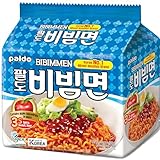
Paldo Bibim Men
Thin wheat noodles with a sweet, sharp gochujang sauce, served cold. A quick stand-in for bibim guksu on a hot weeknight.
View on Amazon
Nongshim Shin Ramyun Original (20-pack)
Covers the hot side of the calendar. Beefy, gochugaru-red broth that suits the winter rotation and late-night bowls.
View on Amazon
SVRITE Korea Noodle Pot, Korean Ramen Cooking Pot with Lid, Yellow Aluminum
Hot Korean ramyeon is traditionally cooked and served in a yellow aluminum pot, so the hot half of this guide has its own vessel. The listing is a yellow aluminum pot with a lid and side handles, sold in 14 to 22 cm sizes.
View on Amazon
Minecook Art of Kitchen Korean Galbi Scissors, stainless steel, 260mm
Cold naengmyeon is chewy enough that scissors are standard at the table, so the cold half of this guide needs a pair. This listing is a pair of Korean-style galbi shears, about 10.2 inches long, with stainless blades and an ABS grip, sold for cutting meat and fish.
View on Amazon
Browse more related items
Opens Amazon · affiliate links