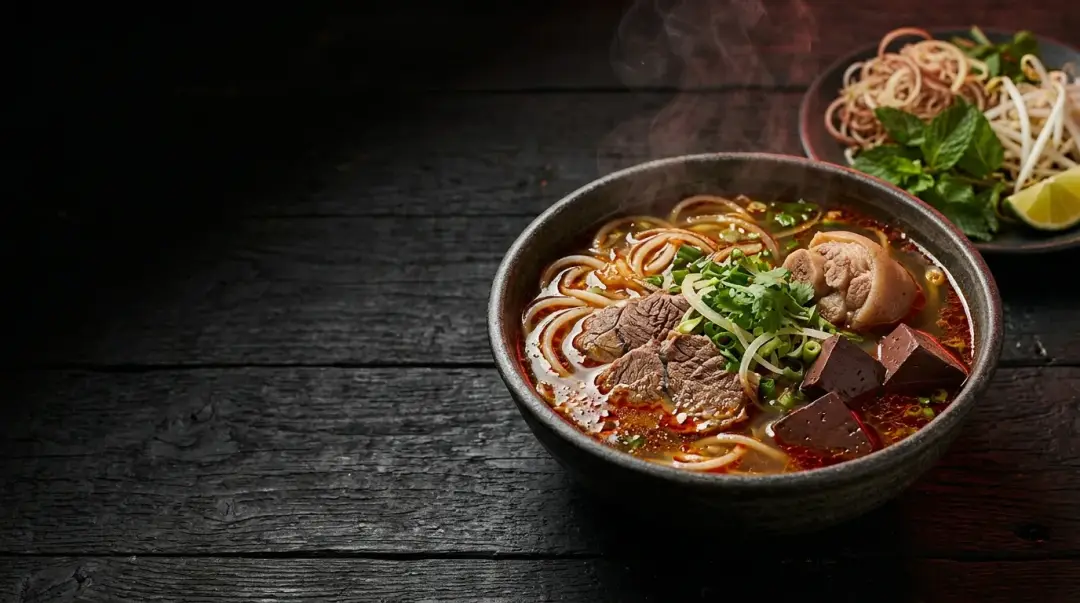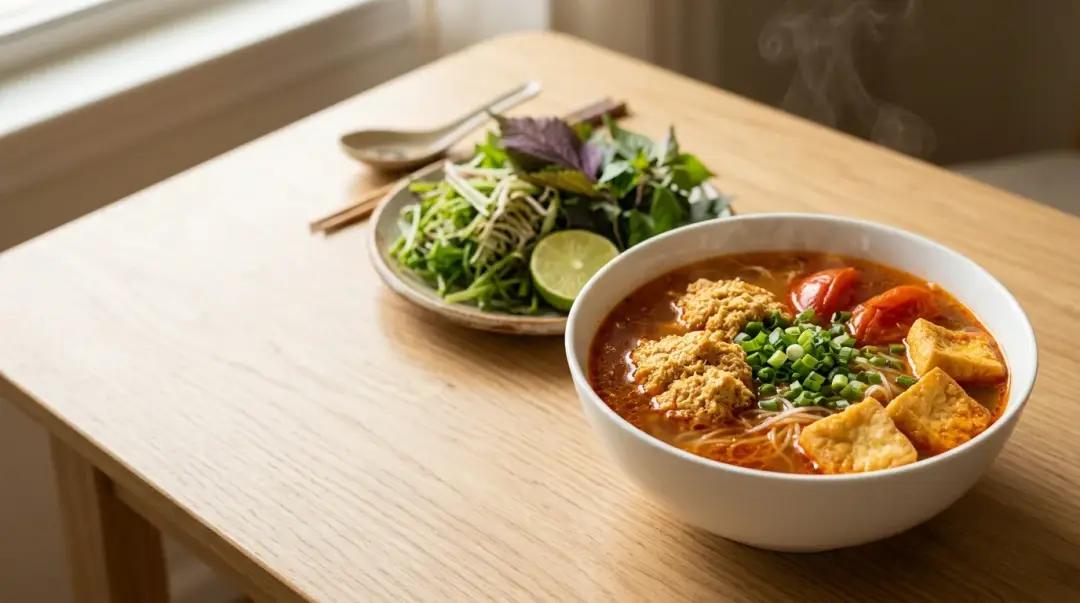
Bún riêu is Vietnam's freshwater crab and tomato noodle soup — bright red-orange broth, rice vermicelli, tofu, and fluffy crab "cakes" formed from pulverized rice-paddy crab. Many US Vietnamese restaurants carry it, particularly in Westminster CA, San Jose, Houston, and Falls Church VA, with vegetarian (bún riêu chay) versions increasingly common. The riêu cua technique is the differentiator — entire crabs blended, strained, and simmered until the proteins coagulate into delicate cakes floating on top.
What Is Bún Riêu?
Bún Riêu is Vietnam's freshwater crab noodle soup. It's defined by:
- Bright red-orange broth, colored by annatto and tomato
- Freshwater crab paste (called riêu cua) — pulverized rice-paddy crab simmered into the broth, then re-formed into fluffy crab "cakes" that float on top
- Bún (rice vermicelli) — same as bún chả
- Tofu, tomato wedges, and Vietnamese pork rolls as additional proteins
- Mắm tôm (shrimp paste) — optional but traditional condiment
The riêu cua process is genuinely unique. Vietnamese cooks blend the entire crab (shell and all), then strain it into water, then simmer the resulting cloudy liquid. The crab proteins coagulate into the fluffy "cakes" that are scooped off and arranged on top of the bowl at serving. Nothing else in Vietnamese cuisine has quite this technique.
How It Compares to Bún Bò Huế
Both are bún-based (rice vermicelli) soups with red broth. But:
- Protein: Bún riêu is crab-and-tofu-forward. Bún bò Huế is beef-and-pork-forward.
- Spice level: Bún riêu is mildly spicy (most heat is optional, added by diner). Bún bò Huế is overtly spicy.
- Origin: Bún riêu has both northern and southern variants. Bún bò Huế is specifically central Vietnamese.
- Flavor depth: Bún riêu is sweet-tangy from tomato. Bún bò Huế is herbal-funky from lemongrass and shrimp paste.
If bún bò Huế is the meat lover's red-broth soup, bún riêu is the seafood lover's version.
Flavor Profile
Bún Riêu balances sweet tomato, deep crab umami, gentle spice, and fresh herb brightness from the garnish plate. The texture is lighter than other Vietnamese soups — the tofu chunks are soft, the crab cakes are fluffy, the noodles are thin. It's a soup you can eat a lot of without feeling weighted down.
How Eaten in Vietnam
Bún riêu is weekend or holiday food in many Vietnamese households — the riêu cua process takes time and the dish has a celebratory feel. Northern Vietnamese versions are lighter and more restrained; southern versions can have additional ingredients (escargot, pork blood, fried tofu cubes).
The garnish plate is always: fresh shredded banana flower, mint, perilla, water spinach (rau muống), lime, and chilies.
Where to Find Bún Riêu in the US
Many Vietnamese restaurants serve it, particularly in:
- Westminster, CA (Little Saigon)
- San Jose, CA
- Houston, TX
- Falls Church, VA (Eden Center)
Vegetarian versions (using mushroom and tofu in place of crab) are increasingly available — bún riêu chay. Look for them at the same restaurants.
Making It at Home
The challenge is freshwater crab paste. Three approaches:
- Frozen freshwater crab paste — Sold at Vietnamese groceries in small tubs, labeled "crab paste" or "riêu cua." This is the easiest route.
- Canned crab paste in spices — A different product (more shelf-stable, slightly modified) — works in a pinch.
- Substitute with blue crab + dashi-style technique — Pulverize blue crabs, strain, simmer. More work but yields fresher flavor.
You also need:
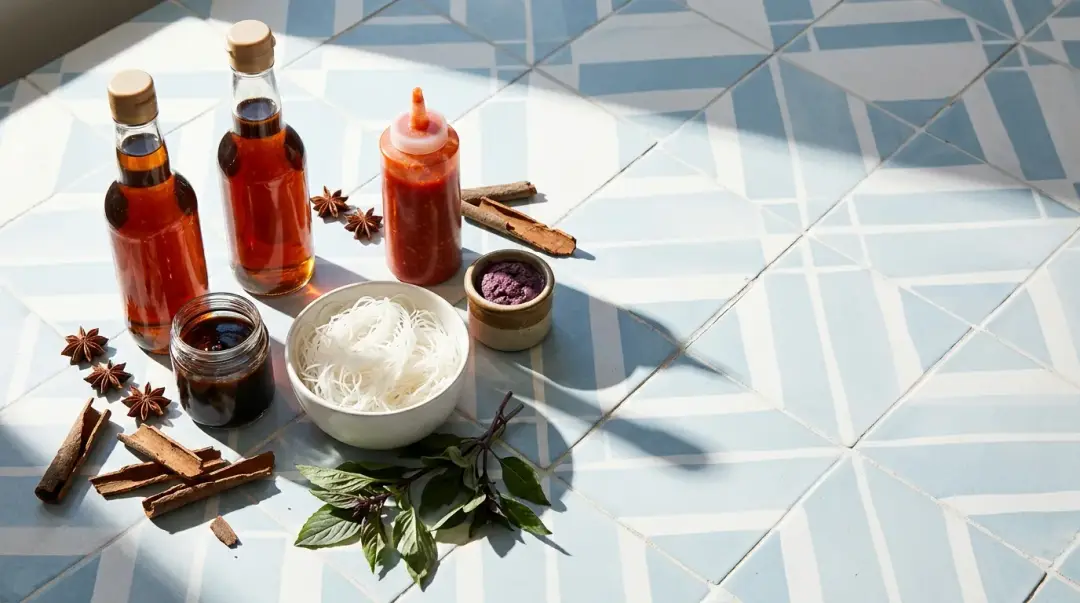
- Bún (rice vermicelli) — Three Ladies, dry
- Annatto seeds or annatto oil — for the red color
- Ripe tomatoes — quartered, simmered
- Vietnamese pork roll (chả lụa) — sold refrigerated at Vietnamese groceries
- Fish sauce — Three Crabs or Red Boat
- Mắm tôm (shrimp paste) — for the side dipping, optional but traditional
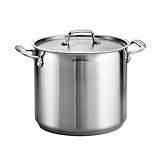
A fine-mesh strainer matters for the crab step, and a large stockpot gives the broth room to simmer. For stockpots and bowls suited to Vietnamese soups, see our Vietnamese cookware guide.
See our Vietnamese Pantry Essentials guide.
A Lesser-Known Vietnamese Classic
Bún riêu doesn't have phở's global fame, but in Vietnam it's beloved — particularly among the older generation. If you've worked your way through phở, bún chả, and bún bò Huế, bún riêu is the natural next step. It expands your sense of what Vietnamese noodle soups can be, in the direction of seafood-forward and sweet-savory rather than meat-and-spice.
FAQ
What is bun rieu?
Bún riêu is Vietnam's freshwater crab and tomato noodle soup. It has a red-orange broth colored by annatto and tomato, rice vermicelli, tofu, and fluffy crab cakes.
What are the crab cakes in bun rieu?
They come from riêu cua: whole rice-paddy crabs are blended, strained into water and simmered until the proteins coagulate into cakes that float on top.
Is bun rieu spicy?
Mildly. Most of the heat is optional and added by the diner, which makes it milder than bún bò Huế.
Is there a vegetarian bun rieu?
Yes. Bún riêu chay uses mushroom and tofu in place of crab and is increasingly available at Vietnamese restaurants in the US.