Tonkotsu Instant Ramen: Pork-Bone, Miso and Shoyu Packs
· 9 min read · NoodleDex Editorial
Tonkotsu instant ramen sorted by broth: pork-bone packs, creamy chicken paitan, miso and shoyu. What a packet can copy from a shop bowl, and which to buy.
This page contains affiliate links. We may earn a commission at no extra cost to you. Disclosure
On this page(10 sections)
Tonkotsu searches have climbed fast, and the people typing them want one thing: instant ramen that tastes rich, salty and savory like a bowl from a shop. This page sorts the savory styles (pork-bone, chicken paitan, miso and shoyu) by what a packet can really copy, then lists what to buy. The wider flavor index is the flavors hub.
What savory means in a packet
A shop broth is built in layers, and an instant pack has to fake most of them.
- Bone extract and fat. In a pork-bone bowl, collagen and fat from pork bones fill the soup. A packet gets there with pork bone extract, pork fat or a flavor made to taste like both.
- The tare. Tare (tah-REH) is the concentrated seasoning, soy sauce or miso or salt, that goes in the bowl before the broth. Our tare guide explains it. In a packet, the tare is the soy or miso part of the seasoning.
- Powder or liquid. A powder packet dissolves into hot water. A liquid base, like the one in RAOH Umami Soy Sauce or the Ichiran kit, is closer to a shop concentrate and tends to taste rounder.
- The noodle. Fried noodles carry oil into the soup. Non-fried noodles, such as RAOH's or Ichiran's, give a cleaner bite and let the broth lead.
What a packet does well is salt, umami and fat. What it cannot copy is the half-day boil, which is why the restaurant version is so far ahead on tonkotsu. See restaurant ramen vs instant for the full comparison.
Tonkotsu packs: pork-bone style, or flavor
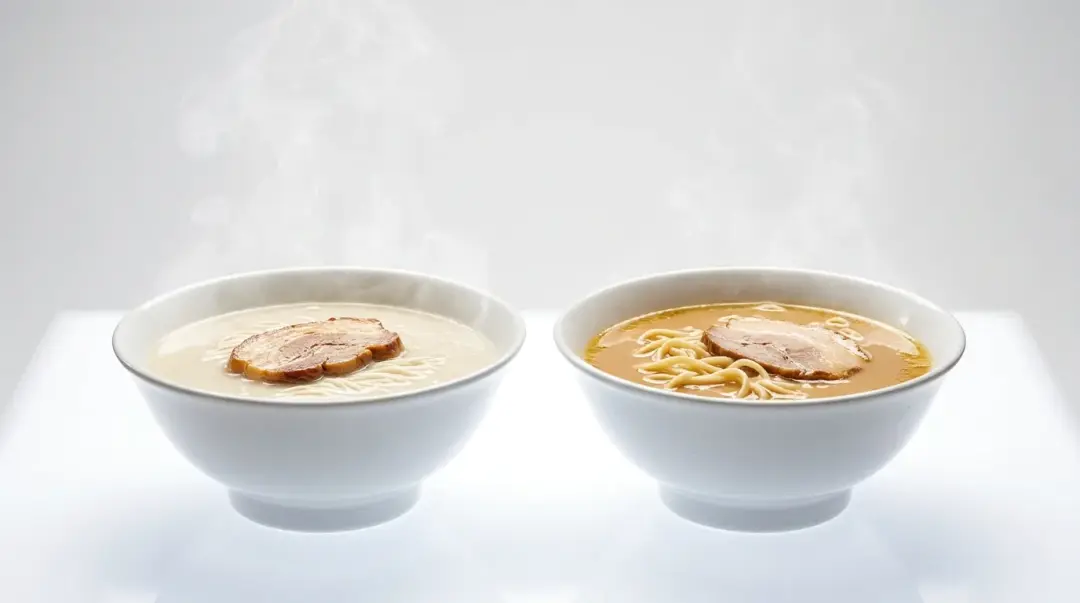
Tonkotsu (tohn-KOHT-soo) is pork-bone broth, boiled until it turns milky. The shop version is covered in tonkotsu vs tonkotsu shoyu, which also explains why a shop broth comes out white or tan. Our ramen type guide places tonkotsu among the four classic styles. Here is what matters in a pack.
The label decides. A pack can say tonkotsu and still not list pork. Nissin's US ingredient list for RAOH Tonkotsu names no pork; the flavor is listed as natural and artificial. The Ramen Rater scored it 3.75, with the broth looking creamy but not delivering the pork taste the reviewer wanted. Our premium instant ramen guide covers the RAOH line. Nongshim's Tonkotsu Ramen with Kuromayu, by contrast, lists pork bone extract and pork fat on Nongshim's US page, along with milk-derived flavor and anchovy and tuna extracts. It carries black garlic oil (kuromayu, kuroh-MAH-yoo) and comes with a spicy sauce packet, and retailer listings describe the heat as moderate. It also appears on our cheesy and creamy ramen page for its milk content.
The kit tier. If tonkotsu is the goal, the kits are the closest match. Ichiran's US online store sells a take-home kit, covered in the premium guide, with a liquid pork-bone soup concentrate, straight noodles and a red chili seasoning. Sun Noodle sells a Tonkotsu Ramen Kit with fresh noodles, chashu pork and seaweed for two. The thin, straight noodles in the 17.5 oz kit cook in 45 to 60 seconds, per Whole Foods' listing for it.
The bag and cup tier. Sapporo Ichiban sells a Tonkotsu bag, and Nissin's Top Ramen line has a Hot Pot Fusions garlic tonkotsu pork bowl. These are the easiest to find in a supermarket, and the labels differ. Sanyo's US page for Sapporo Ichiban Tonkotsu lists a pork fat flavor, made with rendered bacon fat, and chicken broth powder, but no pork meat or bone extract. Nissin's page for the Top Ramen Hot Pot Fusions Garlic Tonkotsu Pork bowl lists concentrated pork stock. For the rest of the mainstream aisle, best instant ramen is the place to start.
Chicken paitan: the creamy chicken cousin
Paitan (pie-TAHN) is chicken bone broth boiled hard until it turns creamy and pale. It is the chicken version of the tonkotsu method, and Menya Mugen puts the boil at 6 to 8 hours, against 12 or more for pork. Shops sell it as a lighter, creamier alternative to tonkotsu.
Instant paitan is rare. We found no pack confirmed as sold under that name. The nearest packs are creamy chicken soups, such as Maruchan's Creamy Chicken, which lists milk ingredients and is covered on the cheese and creamy ramen page, and chicken bone broth ramen. Mike's Mighty Good makes a Chicken Bone Broth ramen cup with organic noodles that are steamed, not fried, and our premium guide notes its broth is lighter than a shop tonkotsu. Treat it as a chicken-bone-style soup, not a paitan copy.
Miso instant ramen
Miso ramen puts fermented soybean paste in the tare, which makes a thicker, cloudier and saltier broth than shoyu. The ramen broth philosophy guide compares miso with the other three base styles, and puts restaurant miso at 2,200 to 3,000 mg of sodium a bowl.
Sapporo Ichiban Miso came out in September 1968 and is the heaviest of the brand's three classics, per the brand page. It stands up to corn, butter, bean sprouts and ground pork. Maruchan's air-dried Gold line has a Spicy Miso. If you want to build your own miso base from a tub, the miso paste buying guide covers red, white and mixed pastes. Sun Noodle's miso kit is another route, and its brand page lists the retail Miso kit as vegan-friendly with no MSG, though that depends on the store's mix, so check the pack.
Shoyu and umami-heavy packs
Shoyu (SHOH-yoo) is soy sauce, and a shoyu broth is clearer than tonkotsu or miso. Its savory weight comes from the soy and from whatever stock sits under it.
Nissin RAOH Umami Soy Sauce is the pick. The noodle is non-fried and triple-layered, the broth comes as a liquid base, and The Ramen Rater scored the US pack 5.0 out of 5. Our premium guide lists it at 2,400 mg of sodium, the top of its range. Sapporo Ichiban Original, a soy-sauce flavor first sold in 1966, is the plainer pick. If you grew up on Top Ramen, it is the easy step up. A spoon of chili crisp from our best chili crisp guide is a common way to add heat and crunch.
Taste is personal. The scores on this page are The Ramen Rater's, quoted where our other guides already use them, and they are not a NoodleDex ranking.
Cup, bag or fresh kit: which gets closest
- Fresh kit (Sun Noodle). Closest on noodle texture, since the noodles are fresh, not dried. Our fresh vs dried noodles guide explains why that matters.
- Liquid-base packet or kit (Ichiran, RAOH Umami Soy Sauce). Closest on broth.
- Bag (Sapporo Ichiban). Easy to find in a supermarket, with a powder packet.
- Cup or bowl (Nongshim's Kuromayu bowl, Top Ramen Hot Pot Fusions). Fastest, with the least control over water volume.
On the styles, restaurant ramen vs instant says the gap is smallest on shoyu, shio and miso, where a fresh-noodle kit gets most of the way to a shop bowl, and widest on tonkotsu and paitan. For the noodles on their own, best ramen noodles lists fresh and dried packs.
Sodium and fat check
Savory means salty and fatty, and the numbers are high.
- RAOH Umami Soy Sauce: 2,400 mg sodium per pack, per our premium guide.
- Maruchan Chicken block: 380 calories and 1,520 mg sodium, per our best instant ramen guide.
- Mike's Mighty Good Spicy Pork Tonkotsu: 830 mg per 70 g pack, from the Whole Foods label.
Leaving some broth in the bowl cuts what you drink. The ramen calories guide covers what a pack contains, and the low sodium noodles guide lists lower-salt options.
Who should check the label
Pork. Pork bone extract, pork stock and pork fat are the signs of real pork in a pack. A flavor name alone does not guarantee them, and the opposite also holds: a pack not named tonkotsu may still contain pork fat. Sapporo Ichiban's US Tonkotsu, for one, lists a pork fat flavor made with rendered bacon fat.
Halal. Tonkotsu is a pork-bone broth, so real tonkotsu is not halal. A tonkotsu-labeled pack may be pork-free, but only a certification mark proves it. The halal noodles guide explains what to look for.
Milk, fish, wheat, soy and sesame. Nongshim's US page lists wheat, sesame, soy, anchovy, milk and tuna for its Kuromayu bowl, so it is not a pack for anyone avoiding fish. Sapporo Ichiban's US Tonkotsu lists wheat, soy, sesame and milk, and Sun Noodle's Tonkotsu kit lists wheat and soy. Nissin's pages for RAOH Tonkotsu and the Hot Pot Fusions bowl list milk as well. Anyone with an allergy should read the full allergen line on the pack in hand.
FAQ
What is the best tonkotsu instant ramen?
For the closest thing to a shop bowl, Ichiran's take-home kit, which ships a liquid pork-bone concentrate with non-fried noodles. For a fresh-noodle kit, Sun Noodle's Tonkotsu Ramen Kit. For a bowl or bag you can find at a supermarket, Nongshim's Tonkotsu with Kuromayu bowl or Sapporo Ichiban's Tonkotsu pack. Nissin's RAOH Tonkotsu looks creamy but scored 3.75 with The Ramen Rater, which said it lacked the pork taste.
Is instant tonkotsu made with real pork bones?
Sometimes, and the label is the only reliable answer. Nongshim's Tonkotsu with Kuromayu lists pork bone extract and pork fat. Sapporo Ichiban's US Tonkotsu lists a pork fat flavor but no pork meat or bone extract, and Nissin's US ingredient list for RAOH Tonkotsu names no pork at all, so the word tonkotsu on a front panel does not guarantee any pork inside. Look for pork bone extract, pork stock or pork fat in the ingredient list.
What is the difference between tonkotsu and paitan?
Tonkotsu is a milky pork-bone broth, boiled hard for 12 hours or more. Chicken paitan is the same idea with chicken bones, and Menya Mugen puts it at 6 to 8 hours. Both turn white because collagen and fat emulsify into the water. Instant paitan is rare in US stores, so the closest packs are creamy chicken soups and chicken bone broth ramen.
Which instant ramen tastes closest to restaurant ramen?
Kits and liquid-base packs, not powder packets. Tonkotsu kits from Ichiran or Sun Noodle come nearest on the pork-bone styles. Among everyday packs, a liquid soy base like RAOH Umami Soy Sauce, which The Ramen Rater scored 5.0, gets close on shoyu. The gap is widest on tonkotsu, because a shop broth is boiled for half a day.
Is miso ramen richer than shoyu?
Usually, yes. Miso is a fermented soybean paste that thickens the broth and carries more salt. Our ramen broth guide puts restaurant miso at 2,200 to 3,000 mg of sodium a bowl, and Sapporo Ichiban's Miso is the heaviest of its three classic flavors. A shoyu broth is clearer and lighter, though a pack with a concentrated liquid base can still taste rich.
Is tonkotsu ramen halal?
Real tonkotsu is a pork-bone broth, so it is not halal. An instant pack called tonkotsu may be a pork-free flavor, but a flavor name is not a certification. Look for a halal mark from a named certifier on the pack, and read the halal noodles guide for how to check.
Read Next
Products mentioned in this guide
This section contains affiliate links. We may earn a commission at no extra cost to you.

Official ICHIRAN Take-Home Ramen Kit, Tonkotsu
A liquid pork-bone soup concentrate and straight, non-fried noodles from a Hakata tonkotsu chain. Our premium guide calls it the closest thing to a shop tonkotsu.
View on Amazon
Sun Noodle Tonkotsu Ramen Kit
A fresh-noodle kit for two with a pork-stock soup base, chashu and seaweed. It contains wheat and soy, and it is the kit route to a pork-bone bowl.
View on Amazon
Nissin RAOH Tonkotsu
Non-fried noodles and a creamy-looking broth. The Ramen Rater scored it 3.75, and Nissin's US ingredient list names no pork, only natural and artificial flavor.
View on Amazon
Nongshim Tonkotsu Ramen with Kuromayu Big Bowl
A big bowl with black garlic oil and a spicy sauce packet. Nongshim's US page lists pork bone extract and pork fat, and its allergen line includes milk, fish and sesame.
View on Amazon
Sapporo Ichiban Tonkotsu Ramen, 5-Packs
The tonkotsu-flavor pack from Sapporo Ichiban, the bag-ramen brand Sanyo Foods launched in 1966. Sanyo lists a pork fat flavor but no pork meat, and the pack contains milk. This listing is a multi-bag case, so check the count before you buy.
View on Amazon
Top Ramen Hot Pot Fusions Japanese Garlic Tonkotsu Pork
A garlic tonkotsu bowl from Nissin's Top Ramen line, the mainstream end of this page. Nissin's US page lists concentrated pork stock.
View on Amazon
Sapporo Ichiban Miso Ramen, 5-Pack
The miso bag, sold since 1968 and the heaviest of Sapporo Ichiban's three classics. It takes corn, butter and ground pork well.
View on Amazon
Nissin RAOH Umami Soy Sauce
The shoyu pick. A liquid soy-sauce broth on non-fried noodles, scored 5.0 out of 5 by The Ramen Rater for the US pack.
View on Amazon
Mike's Mighty Good Chicken Bone Broth Ramen Cup, 6-Pack
The nearest instant relative of chicken paitan here, though lighter than a shop bowl. A cup with organic noodles that are steamed rather than fried.
View on Amazon