Seafood Ramen: Neoguri, Jjamppong and Shrimp Noodles
· 7 min read · NoodleDex Editorial
Seafood ramen comes in three families: spicy Korean Neoguri and jjamppong, Japanese-style shrimp cups and Thai tom yum. Heat, allergens and what to buy.
This page contains affiliate links. We may earn a commission at no extra cost to you. Disclosure
On this page(9 sections)
- What seafood flavor means in a packet
- Korean spicy seafood ramyeon: Neoguri and kin
- Jjamppong: Korean champon in instant form
- Japanese seafood cup noodles and shrimp packs
- Thai tom yum shrimp: the sour cousin
- Shellfish, fish and MSG: who should check the label
- Add-ins that suit seafood broth
- FAQ
- Products mentioned in this guide
Searches for seafood ramen turn up three families. There is the Korean spicy seafood noodle, led by Neoguri. There is the Japanese-style cup and bag in shrimp and seafood flavors. And there is the Thai-style shrimp pack with tom yum. The categories are thin, so this page is short on purpose: it sorts the families, gives heat where we have a sourced figure, and flags the label checks. The wider flavor index is the flavors hub.
What seafood flavor means in a packet
Seafood broth in an instant pack comes from a short list of sources, and the label shows which one a given pack uses.
- Dried kelp and anchovy. The usual base of a Korean broth. Our ramyeon vs ramen guide describes the standard ramyeon powder as an anchovy-kelp base, and Neoguri's US ingredient list names dried seaweed flakes along with anchovy, bonito, tuna, clam, cuttlefish and mussel extracts, per Nongshim's product page.
- Shrimp or squid. Sold as powder, extract or dried pieces in the seasoning.
- Seafood extract. A concentrated flavoring, listed by name on the ingredient line.
- Flavoring only. Some packs use flavor with no seafood ingredient, which is why the front panel cannot answer an allergy question.
Whether a given pack uses real seafood, extract or flavor is a label question, and the US labels differ. Nongshim's standard Neoguri packet lists anchovy, bonito, tuna, clam, cuttlefish and mussel extracts, and its allergen line says wheat, soy and fish. The Neoguri cup lists shrimp, squid and mussel extracts and a fish sauce, and its allergen line adds shrimp. Champong lists cuttlefish, mussel, crab, scallop and shrimp extracts, and its allergen line names crab and shrimp. Nissin's Cup Noodle Seafood lists dried calamari and dried fish protein from pollock and Pacific whiting. Retailer listings for Maruchan's shrimp packs name shrimp, with lobster flavor in the bag and freeze-dried shrimp in the Instant Lunch cup. We could not confirm a US ingredient list for Ottogi's Jin Jjambbong.
Korean spicy seafood ramyeon: Neoguri and kin
Ramyeon (RAH-myun) is the Korean term for instant noodles. Neoguri (NUH-oh-goo-ree) is Nongshim's spicy seafood udon-style noodle, launched in 1982, with a thicker, chewier noodle than most ramyeon. The brand's full history is on the Nongshim page.
How hot is it? It is sold as spicy, and we found no Scoville figure for the standard pack. The 6,080 SHU number belongs to Angry Neoguri, a separate, hotter product, per the Korea Times in 2023. Do not read it onto the standard pack. For scale, Shin Ramyun is about 3,400 SHU on the same report. The Scoville chart lays out every sourced figure and flags the noodles with none. If you want less heat, Neoguri Mild is the reduced-heat version, also with no reported figure, and it is ranked on the mild Korean noodles guide.
Neoguri also comes as a cup and as a stir-fry pack, where the noodles are drained and tossed with the sauce. For the full Korean field, see Korean instant ramyeon and the variety packs guide.
Jjapaguri. One packet of Chapagetti (Nongshim's black-bean noodle) cooked with one of Neoguri is jjapaguri, the dish the household helper makes in the 2019 film Parasite. The film's subtitles called it ram-don. A Nongshim variety pack with Shin, Chapagetti and Neoguri covers both halves. This is a pairing, not a recipe, and we publish no quantities.
Jjamppong: Korean champon in instant form
Jjamppong (JJAHM-pong) is a Korean-Chinese noodle soup in a red, spicy seafood broth, usually with vegetables. Its name comes from Japan's champon, but the dish is a Korean-Chinese one, usually traced to a Chinese stir-fried noodle soup, and champon is a pale, rich soup that is not usually spicy. Our champon page covers the Japanese dish, so this section stays on the packs.
Two US packs carry the name, spelled differently:
- Nongshim Champong, spelled with an o.
- Ottogi Jin Jjambbong, spelled with bb.
The spelling on the pack varies, so search for jjamppong, jjambbong and champong. We found no Scoville figure for either. How they compare with Neoguri is a matter of the broth: Neoguri sits on a thick udon-style noodle, and the jjamppong packs are the soup-first style. Korean jjamppong also shows up on the stew side of the cookware aisle, which is where the Korean noodle bowls guide mentions a stoneware bowl for it.
Japanese seafood cup noodles and shrimp packs
This is the cup-and-bag family. Nissin Cup Noodles Seafood is a cup soup, and Maruchan Instant Lunch and Ramen Noodle Soup both come in Shrimp, with Maruchan also making a Lime Chili with Shrimp cup. Nissin's Top Ramen has a Shrimp bag too. See Maruchan vs Nissin for the brand comparison and cup noodles vs bagged ramen for how the formats differ.
Two checks apply here. First, Nissin's US site lists a Cup Noodle Seafood, a creamy seafood soup with calamari and imitation crab, and its allergen line names wheat, soy, egg, milk, sesame, shrimp, snow crab, pollock and Pacific whiting. Second, Maruchan's US consumer FAQ names lactose in its core ramen lines, so a shrimp pack is not dairy-free by default.
Thai tom yum shrimp: the sour cousin
Tom yum (tohm-yum) is Thai sour-and-spicy soup, flavored with lemongrass and lime. MAMA Tom Yum Shrimp is the pack to know, and our best Indomie guide covers it as the budget pick, as does the Vietnamese instant noodles guide. It is a sour-and-spicy Thai style, not a Korean or Japanese seafood noodle.
Tom yum noodles get their own page later, since they draw their own searches. This is only the pointer.
Shellfish, fish and MSG: who should check the label
Allergies. In the US, packaged foods must declare fish and crustacean shellfish as major allergens, either in a Contains line or in the ingredient list. A flavor name is not a safe guide. Fish and shellfish can appear in a pack named for something else, and a pack named shrimp can use flavoring only. Read the allergen line on the exact pack you buy.
Pescatarian. Seafood flavor does not rule out meat extracts or fat in the seasoning. Our vegan ramen guide shows what to look for on a label, including the fish-extract words.
Halal. Certification marks matter more than flavor names. The halal noodles guide explains what to look for, and notes that product-level halal databases list Maruchan's shrimp ramen as not certified.
MSG. Many instant seasonings add monosodium glutamate, listed by name on the pack. Our ramyeon vs ramen guide mentions it as a usual part of the powder.
Add-ins that suit seafood broth
This is technique, not a recipe. A soft-boiled egg, sliced green onion, bean sprouts and a little sesame oil suit a red seafood soup, and a squeeze of lime suits the tom yum pack. Our ramen toppings ranked ranks the common add-ins. Anything added to a seafood broth adds salt and fat, and the ramen calories guide covers what a pack already contains.
FAQ
What is the best seafood ramen?
For a spicy soup, Nongshim's Neoguri is the standard, with thick udon-style noodles and seafood extracts in the seasoning. For a cup soup, Nissin's Cup Noodles Seafood or Maruchan's Instant Lunch Shrimp. For a Korean red seafood soup closer to a restaurant jjamppong, Nongshim's Champong or Ottogi's Jin Jjambbong. Only the label tells you what each contains.
Is Neoguri spicy?
Yes. The standard Neoguri is sold as a spicy seafood udon-style noodle, and we found no Scoville figure for it. Neoguri Mild is a separate reduced-heat product, and Angry Neoguri, at 6,080 SHU per the Korea Times in 2023, is a hotter third product. For scale, Shin Ramyun is about 3,400 SHU.
What is jjamppong?
Jjamppong is a Korean-Chinese noodle soup in a red, spicy seafood broth, usually with vegetables. Instant versions come as Champong from Nongshim and Jjambbong from Ottogi, so the spelling on a pack varies. Its name comes from Japan's champon, and it is spicier.
Does seafood ramen contain real shrimp or fish?
It depends on the pack. Some use seafood extracts, powders or dried seafood, and some use only flavoring. A flavor name does not tell you which, so read the ingredient list. In the US, fish and crustacean shellfish must be declared as major allergens on packaged foods.
Is seafood ramen halal or pescatarian?
Neither by default. Seafood flavor does not mean the seasoning is free of meat extracts or fat, so a pescatarian should read the full list. For halal, look for a certification mark from a named certifier. Product-level halal databases list Maruchan's shrimp ramen as not certified.
What is the difference between champon and jjamppong?
Champon is Nagasaki's milky pork-and-seafood soup with thick noodles and many toppings, usually not spicy. Jjamppong is the Korean-Chinese relative, a red and spicy seafood soup. Our champon page covers the Japanese dish; this page covers the packs.
Read Next
Products mentioned in this guide
This section contains affiliate links. We may earn a commission at no extra cost to you.

Nongshim Neoguri Spicy Seafood Udon-Style Noodle, 10-Pack
The standard Neoguri: a spicy seafood soup with thick, udon-style noodles. We found no reported Scoville figure for this pack, and Nongshim's allergen line names fish (anchovy, bonito and tuna).
View on Amazon
Nongshim Neoguri Spicy Seafood Cup
The same flavor in a cup, for a desk or a dorm. It needs only hot water, and the noodle is the same thick udon cut. The cup's allergen line names shrimp as well as fish.
View on Amazon
Nongshim Neoguri Stir-Fry
A sauced, drained version of the Neoguri flavor rather than a soup. Check the pack for its heat and its seafood allergens.
View on Amazon
Nongshim Champong Noodle Soup
Nongshim's jjamppong-style pack, spelled Champong on the pack. We found no Scoville figure for it, and Nongshim's allergen line names crab and shrimp.
View on Amazon
Ottogi Jin Jjambbong
Ottogi's jjamppong pack, spelled Jjambbong here. Ottogi sells under the English name Otoki on some listings. We could not confirm the US ingredient list, so read the seafood line on the pack.
View on Amazon
Paldo Fun & Yum Seafood King Cup Noodles
A Korean seafood cup from Paldo, the maker of Teumsae. We found no reported heat figure for this one.
View on Amazon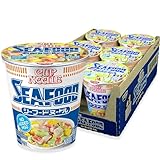
Nissin Cup Noodles Seafood
A creamy seafood cup soup from Nissin, the company that invented the cup in 1971. Nissin's US allergen line names shrimp, snow crab, pollock and Pacific whiting, plus milk and egg.
View on Amazon
Maruchan Instant Lunch Shrimp
A shrimp-flavor cup in the Japanese style, easy to find in a regular supermarket. Retailer listings show freeze-dried shrimp and milk, so read the allergen line on the pack.
View on Amazon
Maruchan Ramen Noodle Soup, Shrimp
The bag version of Maruchan's shrimp flavor, in the same line as its Chicken and Beef. Retailer listings name shrimp and lobster flavors and milk.
View on Amazon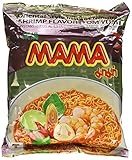
MAMA Instant Ramen Noodle, Tom Yum Shrimp
The Thai sour-and-spicy shrimp pack, covered as a budget pick in our Indomie guide. A different style from the Korean and Japanese seafood noodles here.
View on Amazon
Nongshim Variety Pack (Shin, Chapagetti and Neoguri)
A three-flavor Nongshim pack that includes Neoguri. Chapagetti plus Neoguri is jjapaguri, the dish from Parasite.
View on Amazon