Restaurant Ramen vs Instant Ramen: Key Differences
· 7 min read · NoodleDex Editorial
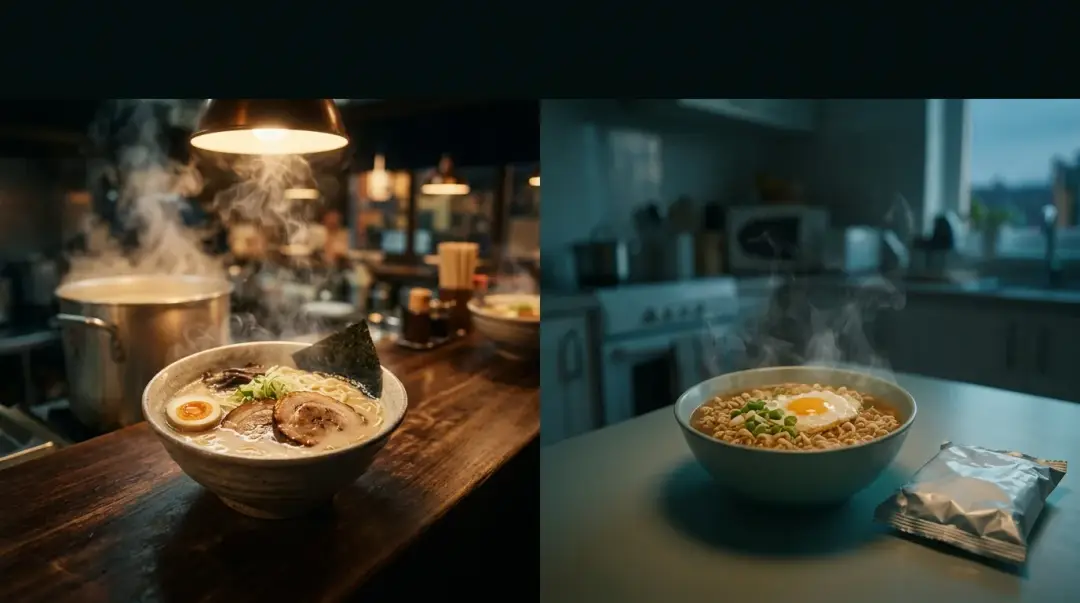
Restaurant ramen vs instant ramen: what 12 hours of broth buys you, what a home kitchen can't copy, and a five-rung upgrade path from packet to fresh noodles.
This page contains affiliate links. We may earn a commission at no extra cost to you. Disclosure
Twelve Hours or Three Minutes
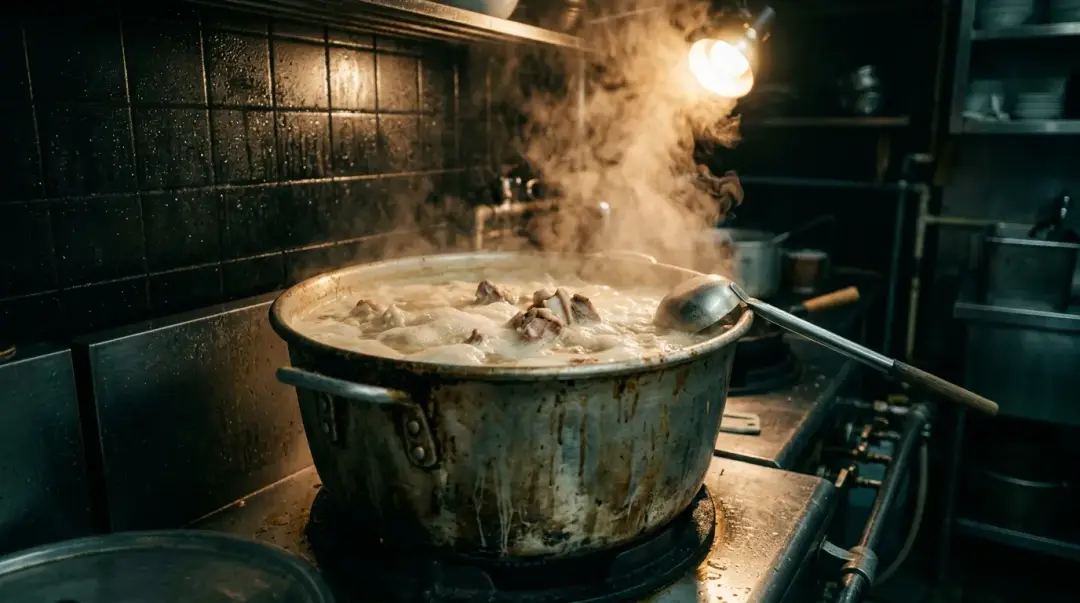
Start with the clock. A Top Ramen packet cooks in 3 minutes. A Sun Noodle shoyu kit boils its fresh noodles for 1 minute 30 seconds while you stir the liquid soup base into 1½ cups of hot water, so it is on the table in well under ten. A restaurant tonkotsu (tohn-KOH-tsoo, pork-bone broth) starts the day before you order it: pork bones held at a rolling boil for 12 hours or more, as our ramen broth guide explains. Menya Mugen, a ramen shop writing about its own economics, puts tonkotsu at 10 to 14 hours and quotes a Chicago owner: "We start our broth at 3 AM. By the time we open at 11, we've already been working for eight hours."
Now the bill. A shop bowl costs the most of the three, because 12 hours of broth, labor and rent are all in it. A fresh-noodle kit sits in the middle, and instant packets sit in the cheapest price tier on any shelf.
So the decision is about which hours you want to buy. The restaurant sells you time you can't spend at home: the overnight boil, the braise, the noodle made to the shop's spec. The kit and the packet sell you back your own evening.
The Two Bowls Side by Side
Restaurant ramen vs instant ramen
| Restaurant bowl | Instant packet | Fresh-noodle kit (middle ground) | |
|---|---|---|---|
| Time to eat | Travel plus wait; broth started 10–14 hours earlier | 3 minutes (Top Ramen) | Under 10 minutes (Sun Noodle shoyu) |
| Noodle | Fresh alkaline noodle made to the shop’s spec | Fried, dried block | Fresh alkaline noodle |
| Broth | Bones simmered or hard-boiled for hours, plus tare | Seasoning powder or paste | Liquid concentrate |
| Calories | About 700–1,300 per bowl | 380–520 per whole packet | About 510 (Sun Noodle miso, 192 g) |
| Sodium | High, mostly in the broth | 1,520–1,620 mg per packet | 2,650 mg (Sun Noodle miso, 192 g) |
| Customizing | Firmness, strength, oil, extra noodles | Whatever you add | Whatever you add |
The calorie and sodium figures come from our ramen calories guide, which builds a restaurant bowl component by component and checks the instant labels line by line. Two things stand out. A restaurant bowl carries roughly twice the calories of a packet, mostly from a bigger noodle portion, fattier broth and pork. And a fresh kit can carry more sodium than either, because its concentrate is built to taste like a shop broth.
What a Kitchen Can't Copy
Four things separate the shop bowl from anything you make on a Tuesday.
The boil
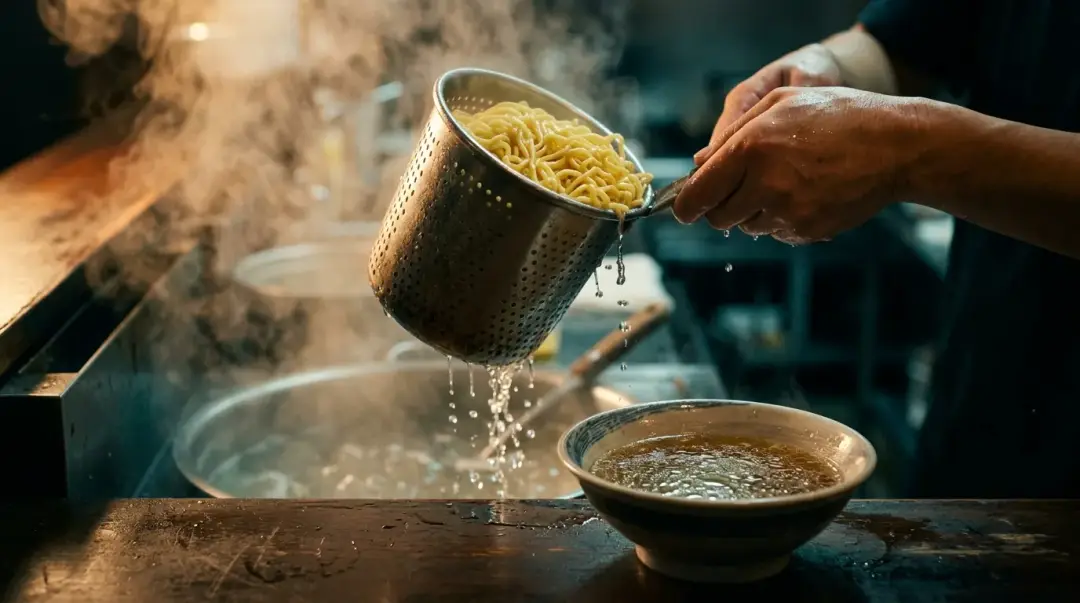
Tonkotsu turns milky because collagen and fat emulsify into the water under a hard, rolling boil held for half a day. A home stove can do it, but you have to keep the pot going and topped up from morning to night. Chicken paitan takes 6 to 8 hours by Menya Mugen's count, which is a little more reasonable and still a weekend project.
The noodle
Ramen shops order noodles to a specification. Sun Noodle, which supplies Momofuku Noodle Bar and Ivan Ramen in New York, told Forbes in 2020 that it makes more than 600 types of noodle and that 80 percent of its clients are restaurants and food service. The shop picks thickness, curl and hydration to match its broth. The retail pack in your fridge is a good noodle chosen for broad appeal.
The extras on demand
Fukuoka shops sell kaedama (kah-eh-DAH-mah), a second portion of noodles dropped into the broth you have left. Food in Japan traces the custom to workers at the city's Nagahama fish market. Shops also keep finishing fats ready, including seabura (pork back fat) shaken over the top.
The order sheet
At iekei shops, the Yokohama style founded in 1974, you choose noodle firmness, broth strength and oil level as you order. Ichiran's counters hand you a form for flavor strength, noodle tenderness and fat content. Some of that is theater, but the bowl does arrive tuned to you.
What you can match
Everything else on a shop bowl can be matched at home: the marinated egg, the chashu, the scallions, the tare. A tare (tah-reh) is the seasoning concentrate spooned into the empty bowl before the broth, and a good soy-based one takes about an afternoon. Our tare guide walks through the three classic types. Once it is made, a squeeze bottle holds the tare or an aroma oil ready to dose into each bowl.
When Instant Is the Right Call
Instant ramen wins when the constraint is time, money or the hour of night. A packet is ready in about ten minutes with no line, and a case keeps for months in the pantry. If you have no stove, our best ramen cookers guide covers microwave bowls and mini electric pots.
It also wins whenever the dish was designed as instant. Korean ramyeon (instant noodles) such as Shin Ramyun is its own food, made to be cooked at home in a pot with an egg and kimchi. The same goes for a Sapporo Ichiban or Nissin Hot & Spicy bowl you grew up on. For a tonkotsu-style packet, see our tonkotsu instant ramen guide.
And it wins as a base. A packet with a soft-boiled egg, scallions and a spoon of chili crisp costs a fraction of a shop bowl and fixes most of what is missing from the plain version, which is texture and something fresh. Use half the seasoning if sodium matters to you. For which packs to start with, see our best instant ramen guide.
When the Restaurant Is Worth It
Pay for the bowl when the broth is the point. That means tonkotsu, chicken paitan and the thick, rich styles the Japanese call kotteri. It also means iekei, where the pork-and-soy broth and thick noodles are a matched set, and tsukemen (tsoo-keh-men, dipping ramen), where the concentrated dipping broth is hours of reduction.
It is also worth it the first time you try any style. A shop bowl gives you the reference point. Without it, you can't tell whether your homemade miso or a kit is close or just pleasant.
Shoyu and shio are where the case for the trip is weakest. Their broths are clear chicken or seafood stocks with a seasoning tare, and a fresh noodle kit plus a good egg comes close. America's Test Kitchen put it plainly in 2022: "Short of making ramen yourself, Sun's kits are the best ramen you can eat at home."
The Upgrade Ladder
Each rung costs a little more time or money than the one below it and fixes one specific gap between a packet and a shop bowl. Stop on whichever rung you're happy with.
From packet to near-shop ramen, one rung at a time
| Rung | What you change | Gap it closes | Extra active time |
|---|---|---|---|
| 1. Doctored packet | Add an egg, scallions, chili crisp; use half the seasoning | Freshness, texture, less salt | About 5 minutes |
| 2. Premium instant | Swap to a non-fried pack such as Nissin RAOH or Maruchan Gold | Noodle chew, broth depth | None |
| 3. Fresh-noodle kit | Sun Noodle or Yamachan from the refrigerated case | A real alkaline noodle | None |
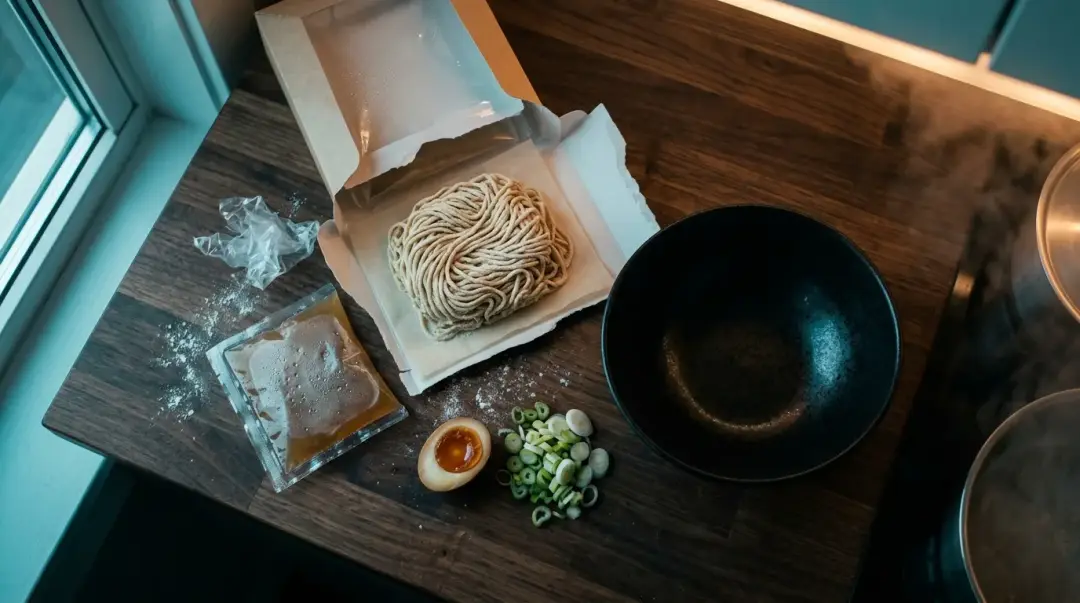
| 4. Fresh noodles, your own bowl | Kaedama noodles plus homemade tare, ajitama and chashu | Seasoning and toppings to your taste | An afternoon, ahead of time |
| 5. Full scratch | Your own stock: chicken in hours, tonkotsu in half a day | The broth itself | 6 to 12+ hours |
Rung 3 is the best value on the ladder. The noodle is the biggest single difference between a packet and a shop bowl, and a fresh pack fixes it for no extra work. Sun Noodle says it sells in more than 700 stores, and the Sun Noodle brand page lists where. Freeze extra packs the day you buy them; Sun Noodle's FAQ gives up to a year in the freezer, best within six months.
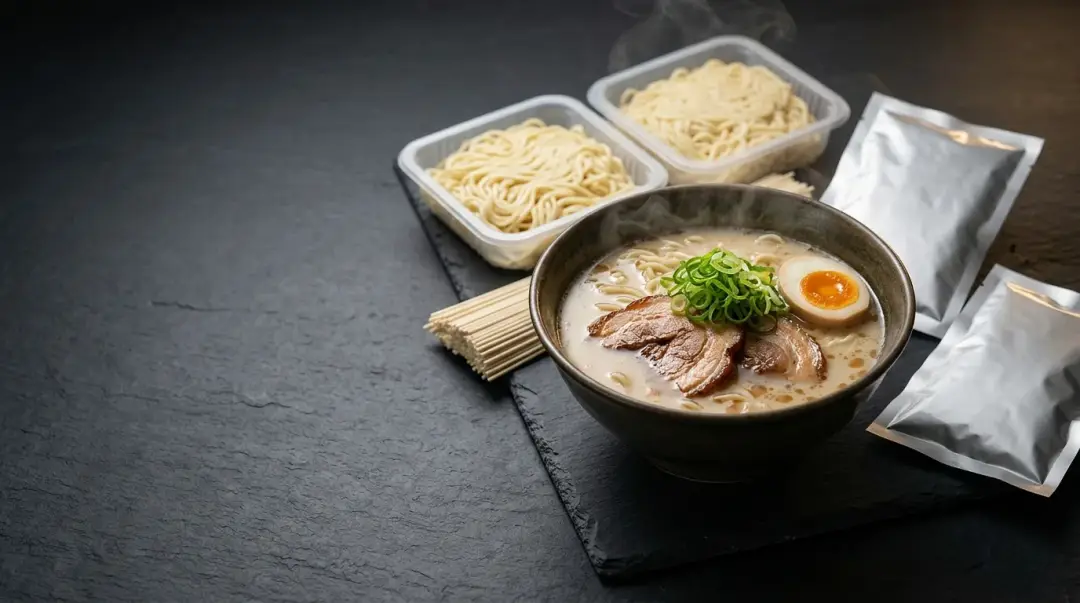
Rung 4 is where your bowl starts to taste like yours. Buy noodles only, then build the rest around them; our fresh vs dried noodles guide covers storage and cook times, and the best ramen noodles list ranks the fresh and dried packs worth buying, including the Ichiran take-home kit for tonkotsu fans without a shop nearby.
Rung 5 is for people who like the project as much as the bowl. It starts with a large stockpot, such as the 12-quart one in the picks box. Even then, plenty of cooks make chicken stock at home and still go out for tonkotsu. Whatever rung you stop on, a deep ceramic bowl changes how the result looks; our ramen bowl guide compares sizes and styles.
FAQ
Is restaurant ramen better than instant ramen?
For broth and noodles, usually yes. A restaurant tonkotsu boils for 12 hours or more and comes with fresh alkaline noodles made to the shop's specification. Instant ramen uses a fried, dried block and a powder or paste. Instant wins on time, cost and convenience, and a fresh-noodle kit from the refrigerated case closes much of the gap at home.
Is restaurant ramen healthier than instant ramen?
Not automatically. A restaurant bowl usually runs 700 to 1,300 calories, while a whole instant packet is 380 to 520 on the labels NoodleDex checked. Both carry a lot of sodium; most of it sits in the broth. Leaving some broth behind helps in either case. If you have a medical sodium or calorie target, ask your clinician what fits.
Why is restaurant ramen so expensive?
Mostly labor and time. A pork-bone broth needs 10 to 14 hours on the stove, and shop owners describe starting it before dawn. Fresh noodles, chashu that braises for hours, marinated eggs and big-city rent all go into the bowl price.
Can you make restaurant-quality ramen at home?
You can get close on noodles, eggs, chashu and tare in an afternoon. Fresh noodles from Sun Noodle or Yamachan, a soy-based tare and a marinated egg cover most of a shoyu or shio bowl. The hardest part to copy is a tonkotsu or chicken paitan broth, which needs a pot at a rolling boil for 12 hours or longer.
What instant ramen is closest to restaurant ramen?
Refrigerated fresh-noodle kits come closest. America's Test Kitchen wrote in 2022 that short of making ramen yourself, Sun Noodle's kits are the best ramen you can eat at home. On the shelf-stable side, non-fried premium packs such as Nissin RAOH and Maruchan Gold, or the Ichiran take-home kit, sit a step above standard fried packets.
What can a ramen shop do that I can't do at home?
Run a broth at a hard boil for half a day, buy noodles made to their own specification, and keep extras like pork back fat and a second noodle portion ready on demand. Shops also let you set noodle firmness, broth strength and oil level. You can copy the toppings and tare at home far more easily than the broth.
Read Next
Products mentioned in this guide
This section contains affiliate links. We may earn a commission at no extra cost to you.

Sun Noodle Tonkotsu Ramen Kit, 17.5 oz (2 servings)
The middle rung of the upgrade ladder: a two-serving tonkotsu kit with fresh noodles, chashu pork and seaweed. Contains wheat and soy.
View on Amazon
SUN NOODLE Kaedama Ramen Noodles, 10 OZ
Noodles only, no soup base. The step up for anyone ready to make their own tare and toppings around a ramen-shop noodle.
View on Amazon
Official ICHIRAN Take-Home Ramen Kit, Hakata Tonkotsu (5 servings)
A shelf-stable kit from the Fukuoka tonkotsu chain, with its red chili powder. Useful if the nearest real tonkotsu shop is a long drive away.
View on Amazon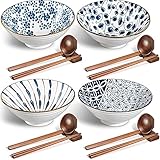
Geiserailie 40 oz Ceramic Japanese Ramen Bowls, Set of 4 with Chopsticks, Spoons and Rests
A shop serves ramen in a deep bowl, and the same shape lifts a doctored packet or a fresh-noodle kit at home. This listing is four 40 oz ceramic bowls, 8 inches across, with spoons, chopsticks and rests, microwave and dishwasher safe.
View on Amazon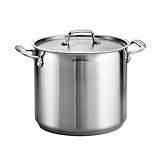
Tramontina Gourmet 12-Quart Stainless Steel Stock Pot with Lid
Rung 5 of the ladder, and any long chicken stock, starts with a big pot. This listing is a 12-quart stainless steel stockpot with lid and an impact-bonded tri-ply base, and it works on induction.
View on Amazon
Cornucopia Brands 8 oz HDPE Plastic Squeeze Bottles with Yorker Tips, 6 Pack
A squeeze bottle gives each bowl the same measured pour of tare or aroma oil, which helps a home bowl built on rung 4 come out the same every time. This listing is six empty 8 oz HDPE bottles with yorker tips.
View on Amazon
Browse more related items
Opens Amazon · affiliate links
Buying guides for this topic
- Buying guideBest Ramen Noodles & Kits in 2026The best fresh and dry ramen noodles, plus premium ramen kits, available on Amazon — Sun Noodle, Hakubaku, Marusan, and Maruchan Seimen ranked.
- Buying guideBest Japanese Pantry Essentials in 2026The 10 Japanese pantry items needed to cook ramen, udon, soba, and yakisoba at home. Soy, dashi, mirin, miso, and yakisoba sauce, ranked.
- Buying guideBest Japanese Cookware in 2026The donabe, ramen bowls, sōmen sets, and tools you need to cook Japanese noodles at home. Real US Amazon picks across budget tiers.
- Buying guideBest Korean Instant Ramyeon Brands in 2026The best Korean instant ramen brands ranked — Shin, Buldak, Paldo, Ottogi compared by spice, flavor, and value.