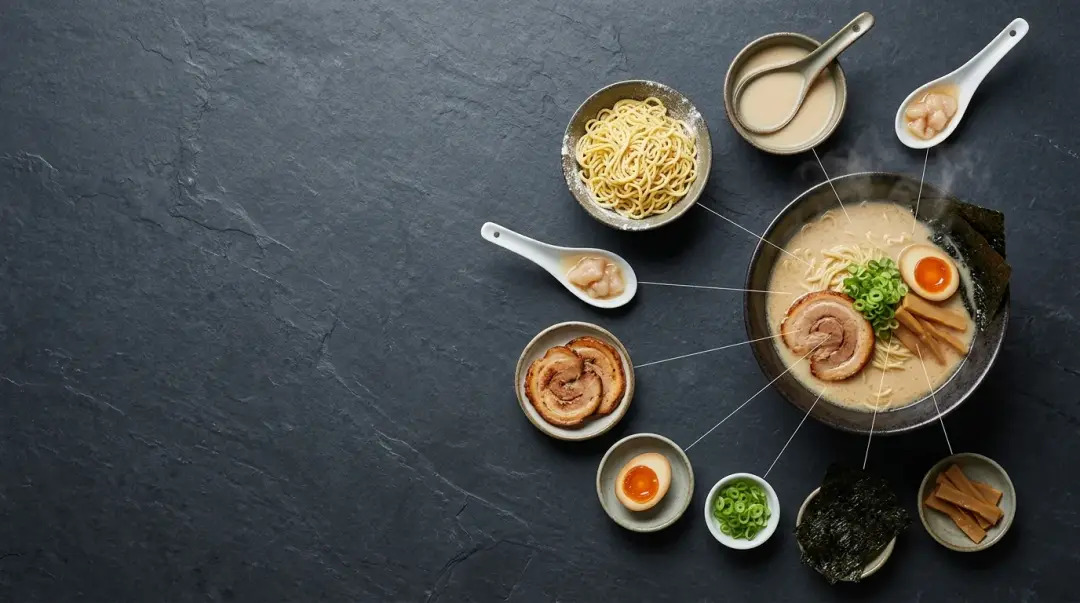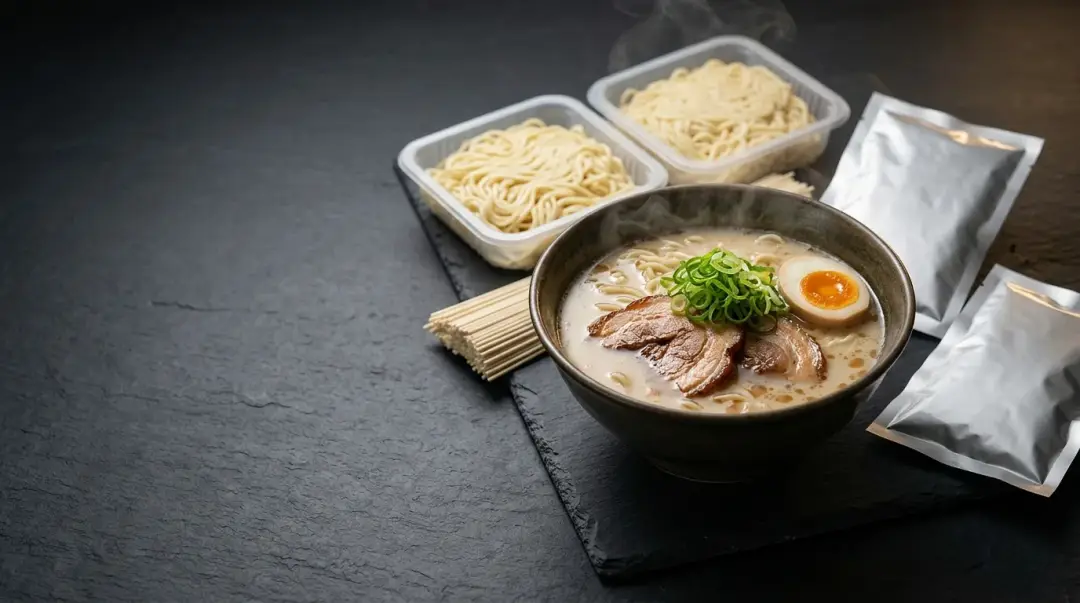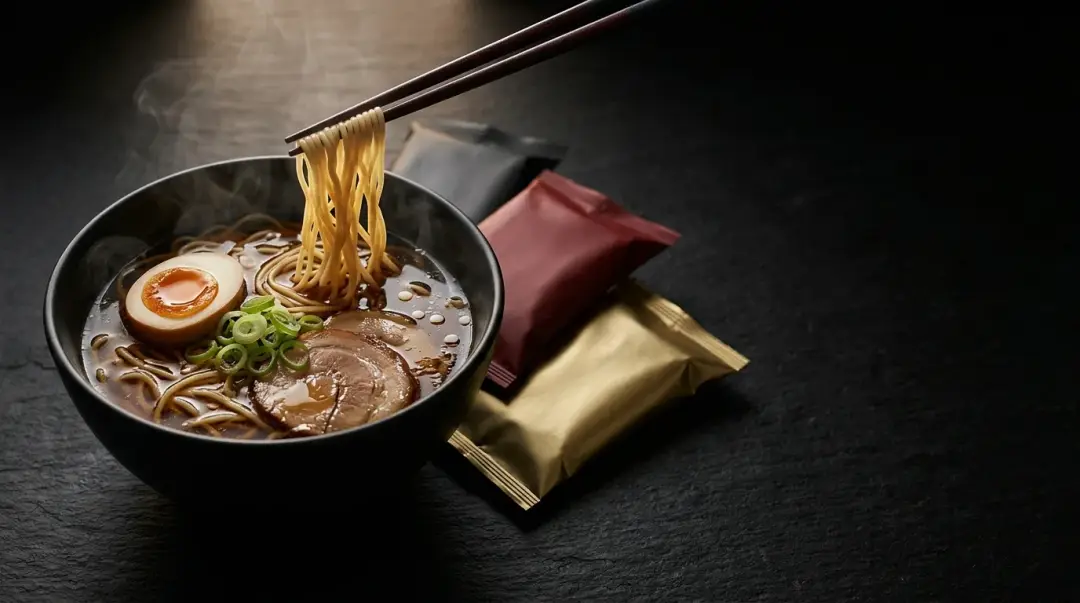


- Best overall: Nissin RAOH Umami Soy Sauce
- Best splurge: Official ICHIRAN Take-Home Ramen Kit
- Best value: Nongshim Shin Black
- Best spicy: Momofuku Tingly Chili Wavy
- Best for beginners: Maruchan Gold Soy Sauce
- Also worth buying: Myojo Chukazanmai, Mike's Mighty Good, immi
Premium Instant Ramen, Tier by Tier
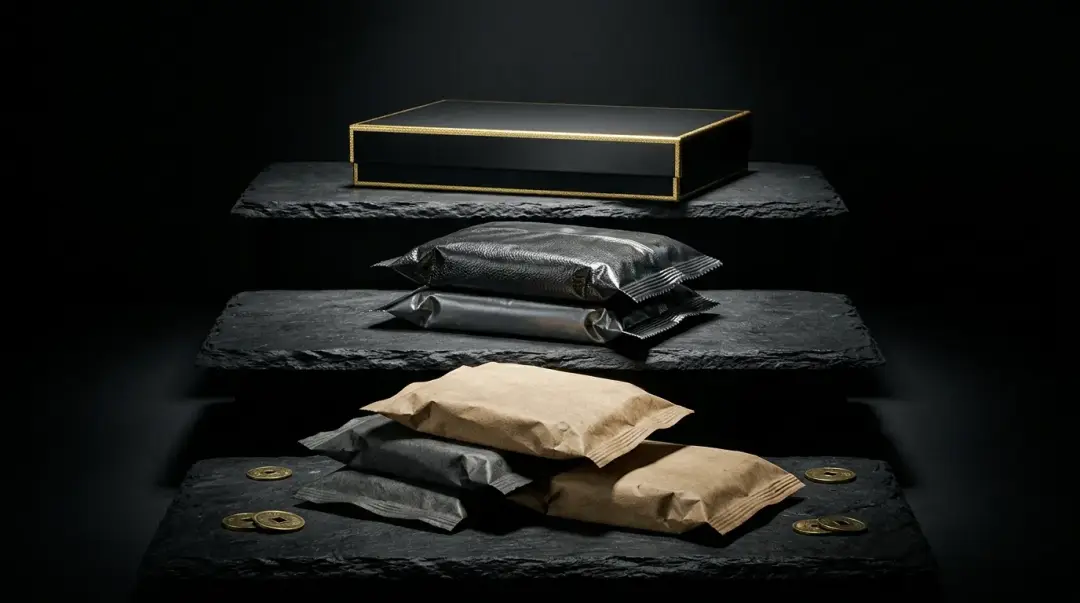
"Premium" on an instant ramen shelf covers a wide spread, from a packet that costs a little more than the regular red bag to a take-home kit that costs several times as much as a RAOH packet. Here is every pick sorted into three tiers by what one bowl costs relative to the others. Store prices move, so check the current listing.
Everyday upgrades
Shin Black comes in H-E-B's four-pack. Myojo Chukazanmai Soy Sauce is listed on Walmart.com, and Maruchan Gold comes in a 5-pack at Walmart. These packets cost a little more than a standard bag, and the upgrade is the broth and, in Gold's case, an air-dried noodle.
The noodle tier
Momofuku Tingly Chili comes in a five-count at Target, and a single RAOH packet sits at Walmart. Mike's Mighty Good sells a six-cup pack, and immi's Spicy "Beef" is at Target. Most of the noodle upgrades on this list live here: non-fried, air-dried or steamed blocks, and liquid soup bases. Each bowl costs noticeably more than the everyday tier.
The occasion bowl
Ichiran's US online store sells its tonkotsu kit in a three-serving box, and its vegan kit makes two. Each bowl costs several times what a RAOH packet does. That money buys one restaurant's broth concentrate shipped to your door.
The gap between the noodle tier and Ichiran shapes our ranking. RAOH wins because it gets most of the way to a shop-style bowl at a packet price.
The Picks at a Glance
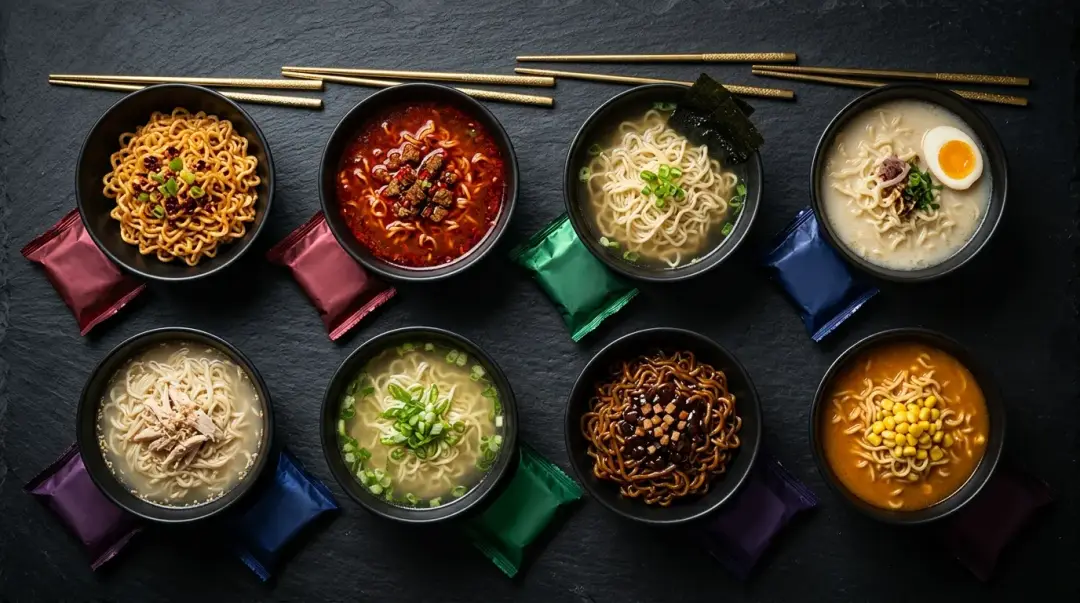
Premium instant ramen picks by noodle type, broth and sodium per packet
| Pick | Noodle | Broth | Sodium per packet |
|---|---|---|---|
| Nissin RAOH Umami Soy Sauce | Non-fried, triple-layered | Soy sauce, liquid base | 2,400 mg |
| ICHIRAN Take-Home Kit | Non-fried straight Hakata | Pork-bone concentrate | Not listed on store page |
| Nongshim Shin Black | Palm-oil block | Spicy beef bone | 1,770 mg |
| Momofuku Tingly Chili Wavy | Air-dried, thick wavy | Soy, chili, Sichuan pepper sauce | About 1,400 mg |
| Myojo Chukazanmai Soy Sauce | Premium Japanese noodle | Soy sauce, dry + liquid | Not on listing |
| Maruchan Gold Soy Sauce | Air-dried | Soy, bonito, sardine | 2,180 mg |
| Mike's Mighty Good Chicken | Steamed organic | Chicken bone broth | Check label |
| immi Spicy 'Beef' | Pea protein and wheat | Spicy plant-based | 890 mg |
How We Picked
We did not cook these side by side for this guide. The ranking is research-based: manufacturer nutrition labels, listings at Walmart, Target, H-E-B and the brands' own shops, The Ramen Rater's scored reviews and America's Test Kitchen's Momofuku tasting.
Every pick had to be sold through a national chain or the maker's own online store. A pack counted as premium if the noodle was non-fried, air-dried or steamed, or if the soup used a bone or liquid base instead of one powder packet. We then weighed each pick's relative cost against what reviewers said about noodle and broth, and listed sodium for each because premium packs often carry more salt than cheap ones.
The Picks
Best Overall: Nissin RAOH Umami Soy Sauce
RAOH (rah-oh, "king of ramen" in Japanese) is Nissin's premium line, and Nissin calls it the best-selling premium instant noodle brand in Japan. The US line has two flavors, Soy Sauce and Tonkotsu (tohn-KOH-tsoo, pork-bone broth), both built on what Nissin describes as triple-layered, non-fried noodles.
Buy the Soy Sauce. The Ramen Rater gave the US-market pack 5.0 out of 5 in 2020, describing the noodle as having "a soft bite then a nice toothy chew" and the broth as "perfectly oily and rich with shoyu umami." The reviewer noted the US version is made without pork. The Tonkotsu scored 3.75; its broth looked creamy but "didn't deliver the pork taste I crave." Both cook in about 4 minutes. Our tonkotsu instant ramen guide covers more pork-bone packs.
It fits anyone who wants a shoyu ramen on a weeknight at a packet price. The catch is salt. Nissin's label lists 350 calories and 2,400 mg of sodium for one 107 g packet, above the 2,300 mg Daily Value on its own. Pour off a third of the broth if that matters to you. Our Nissin brand guide covers where RAOH sits next to Top Ramen and Cup Noodles.

Nissin RAOH Ramen Noodle Soup
Non-fried, triple-layered noodle with a liquid soy sauce soup base
Best Splurge: Official ICHIRAN Take-Home Ramen Kit
Ichiran is a Hakata-style tonkotsu chain, and its US online store sells the kit that comes closest to eating at the counter. Each of the three servings has a 53 g pack of liquid soup concentrate, a 75 g pack of straight Hakata noodles and a 1 g packet of the chain's spicy red seasoning. The store lists the noodles as non-fried, with a firm bite meant to release less starch into the soup, and gives about 3 minutes of cooking.
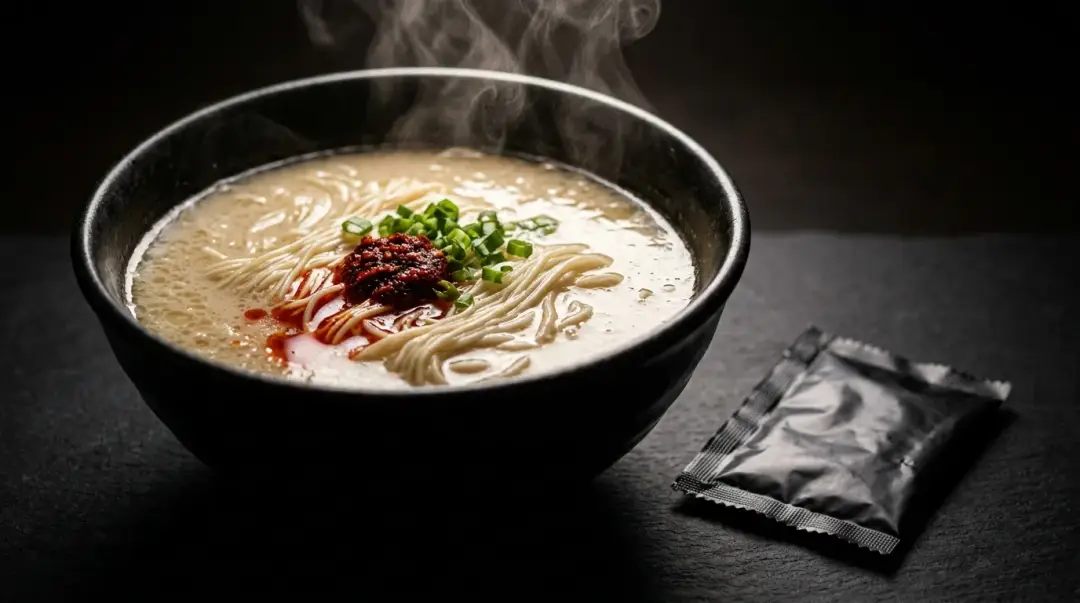
It is for someone who knows Ichiran's bowl and wants it at home a few times a year. The soup contains bonito as well as pork, so it isn't for pescatarians or anyone avoiding fish. Ichiran also sells a vegan kit, two servings per box, with a soy-milk broth certified vegan by VegeProject Japan and 12 g of protein per serving. The store warns that busy periods can stretch shipping to about a month.

Official ICHIRAN Take-Home Ramen Kit
Liquid pork-bone soup concentrate from the Hakata tonkotsu chain
Best Value: Nongshim Shin Black
Shin Black is the 2011 premium version of Shin Ramyun (sheen RAH-myun), and it costs less per packet than most picks here in H-E-B's four-pack. The soup lists beef bone extract and beef extract near the top of its seasoning, which gives it a heavier, cloudier broth than the regular red bag. The 4.6 oz packet is also bigger than most bags in this guide.
It suits a cook who wants a spicy bowl with body without paying noodle-tier prices. Costco also sells it as an 8-count case of cups. The catch is that the noodle is a standard palm-oil block, and the label lists 570 calories and 1,770 mg of sodium per bag. Our Shin Ramyun brand page covers how Black differs from the original.

Nongshim Shin Black Noodle Soup
Beef bone extract in the soup base, a step up from regular Shin Ramyun
Best Spicy: Momofuku Tingly Chili Wavy
Momofuku's noodles are made with A-Sha, a dry-noodle maker from Tainan, Taiwan, which air-dries them for about 18 hours. Tingly Chili is the flavor to buy. America's Test Kitchen called it "hands-down one of the best noodles in the instant noodle category," and the thick wavy cut holds the soy, chili and Sichuan peppercorn sauce well.
It is a sauced noodle that you drain, so it fits someone who prefers mala (MAH-lah, the numbing-spicy Sichuan heat) to broth. A 95 g packet has 300 calories and 1 g of fat on Target's label. The catch is about 1,400 mg of sodium per packet, and the numbing heat is strong. The Momofuku brand guide ranks the other four flavors.

Momofuku Tingly Chili Wavy Noodles
Air-dried A-Sha noodle with a thick, chewy wave
Myojo Chukazanmai Soy Sauce
Chukazanmai (choo-kah-ZAHN-my) is Myojo's premium Japanese line, and the US packs are Product of Japan. The Ramen Rater gave both the US Soy Sauce and Soybean Paste (miso) flavors 5.0 out of 5 in 2020. Of the soy sauce, the reviewer wrote that the noodles "have a nice chew to them – definitely a more premium mouthfeel." Each pack has a dry and a liquid soup sachet and cooks for 4 minutes in 500 ml of water.
It's the pick for a Japanese-made bowl at supermarket money: Walmart.com lists the Soy Sauce as a single packet. The catch is stock. That listing comes and goes, and multipacks mostly come through Asian grocers and online sellers. The Ramen Rater lists the Japanese-market version of the line as non-fried, but the US listings we read make no such claim, so don't buy it on that basis.

Myojo Chukazanmai Instant Ramen Soy Sauce Flavor
Product of Japan with a dry and a liquid soup sachet
Best for Beginners: Maruchan Gold Soy Sauce
Maruchan brought Gold to US stores in 2019 with four flavors: Soy Sauce, Spicy Miso, Spicy Tonkotsu and Spicy Creamy Chicken. Maruchan says the noodles use "advanced air dry technology," and the soy sauce label puts palm oil at under 1% of the noodle. The broth leans on bonito and sardine.
Start here if your reference point is a 3 oz chicken pack. The soy broth is mild, the noodle cooks in about 3 minutes, and Walmart sells it in a 5-pack. The catch: the label counts half a packet as a serving, at 180 calories and 1,090 mg of sodium. Eat the whole 3.79 oz packet and that doubles to 2,180 mg. The allergen line also lists almond, egg and milk.
Mike's Mighty Good Chicken Bone Broth
Mike's Mighty Good launched in mid-2017 under Bright People Foods. In a 2018 interview with The Ramen Rater, the company said it makes its noodles from scratch each day, mixing, steaming and drying them in house in Woodland, California, rather than frying them. The current line uses organic noodles with no palm oil or seed oil.
Buy the Chicken Bone Broth cup if you want an organic noodle made in California. Amazon lists it as a pack of six cups. The brand's pillow packs run smaller than RAOH: the Spicy Pork Tonkotsu flavor at Whole Foods weighs 70 g, with 270 calories, 830 mg of sodium and 13 g of protein. Big eaters may want two.

Mike's Mighty Good Chicken Bone Broth Ramen Cup
Organic noodles that are steamed and dried, never fried
immi Spicy "Beef"
immi rebuilt the instant noodle around protein. Target's label for the Spicy "Beef" packet lists 350 calories, 28 g of protein, 12 g of fiber, 17 g of net carbs and 890 mg of sodium. The noodle is made from pea protein, wheat gluten and wheat flour, and the broth carries Sichuan peppercorn, anise and fennel. It takes about 5 minutes.
It fits a reader tracking protein or carbs. Target sells it by the packet, and immi's own store sells six-packs in more flavors, including Black Garlic "Chicken." The catch is that the sodium figure doesn't carry across the line: immi's Creamy "Chicken" lists 1,200 mg. Check the label for the flavor you buy.

immi Spicy 'Beef' Plant Based Ramen Packet
28 g protein and 12 g fiber per packet on Target's label
What to Look For
- The noodle method on the front or the ingredient line. "Non-fried," "air-dried" or "steamed" on RAOH, Gold, Momofuku and Mike's tells you the noodle wasn't cooked in oil. Palm oil listed among the noodle ingredients usually signals a fried block.
- A liquid soup sachet. RAOH, Chukazanmai and Ichiran all ship a liquid base, which carries the soup's fat and aroma.
- Sodium for the whole packet. Maruchan Gold and Shin Black label half a packet as one serving. Double the number before comparing it with RAOH or immi, which label the full packet.
- The animal source in the broth. Shin Black lists beef bone extract; Ichiran lists bonito; RAOH's US Soy Sauce is pork-free. Our vegan ramen guide covers the plant-based options in detail.
- A store near you that restocks it. Walmart, Target and H-E-B cover most of this list.
Common Mistakes
- Judging the line by one flavor. RAOH Soy Sauce scored 5.0 with The Ramen Rater and RAOH Tonkotsu scored 3.75. Start with the strongest flavor in each line.
- Cooking a premium noodle like a cheap one. Use the time on the packet. RAOH and Chukazanmai want about 4 minutes, Ichiran about 3, and overcooking undoes the chew you paid for.
- Draining a soup ramen or souping a sauced one. Momofuku Tingly Chili is a sauced noodle; drain it. RAOH is a soup; keep the water.
- Assuming premium means healthier. Air-drying cuts fat, but RAOH Soy Sauce still lists 2,400 mg of sodium per packet. Our ramen calories guide compares labels across brands.
- Buying Ichiran for every night. At several times the cost of a RAOH packet, it's an occasion purchase. RAOH or Shin Black covers the routine.
What Each Step Up Buys You
Going from a standard 3 oz chicken pack to the everyday upgrades buys you broth. Shin Black adds beef bone, and Maruchan Gold adds bonito, sardine and an air-dried noodle, for a small step up from the regular bag. For the standard packs and cups themselves, see our best instant ramen guide.
Spending a little more per packet moves you to the noodle tier. RAOH's non-fried triple-layered noodle, Momofuku's 18-hour air-dried wave and Mike's steamed organic noodle all sit here. If you only upgrade once, upgrade here.
The last step, to the occasion bowl, buys one specific shop's broth. Ichiran's kit is the only pick where the soup is the product. Pay it when you want that bowl. To build a shop-style bowl from fresh noodles instead, our best ramen noodles guide picks the fresh and dried noodles to start with. If you have no stove, our best ramen cookers guide covers microwave bowls and mini electric pots.
FAQ
What is the best premium instant ramen?
Nissin RAOH Umami Soy Sauce is our pick for most shoppers. The noodle is non-fried and triple-layered, the broth comes as a liquid base, and The Ramen Rater scored the US pack 5.0 out of 5. Walmart sells it in singles and multipacks. For a once-in-a-while bowl, Ichiran's take-home kit is the closest thing to a shop tonkotsu.
Is Ichiran instant ramen worth it?
Worth it as a treat. Ichiran's US store sells a three-serving kit, and each bowl costs several times what a RAOH packet does. You get a liquid pork-bone soup concentrate, straight Hakata noodles and the chain's spicy red seasoning. Buy it for a specific craving, and stock RAOH or Shin Black for weeknights.
Is Shin Black better than regular Shin Ramyun?
It is richer. Shin Black adds beef bone extract to the Shin soup and comes in a heavier 4.6 oz packet. The heat stays about the same. The trade is salt and cost: H-E-B's label lists 1,770 mg of sodium per bag, and a packet costs more than the regular red bag.
What is the difference between fried and non-fried instant ramen?
Most cheap instant noodles are fried in oil during manufacturing, which sets their shape and leaves fat in the block. Premium lines such as RAOH, Maruchan Gold, Momofuku and Mike's Mighty Good dry the noodle with air or steam instead. The result is usually less fat and a chewier, more restaurant-like bite. Sodium is not lower, so check the label.
Which premium instant ramen has the least sodium?
Of the soup packets on this list, immi Spicy Beef is lowest at 890 mg per packet on Target's label, and Mike's Mighty Good Spicy Pork Tonkotsu lists 830 mg per 70 g pack at Whole Foods. RAOH Soy Sauce sits at the other end with 2,400 mg. Leaving some broth in the bowl cuts what you actually take in.
Where can I buy premium instant ramen?
Walmart sells RAOH and Maruchan Gold. Target carries Momofuku and immi. H-E-B, Walmart and Costco stock Shin Black in packets or cups. Mike's Mighty Good sells through its own store and natural grocers, and Ichiran sells its kit through its US online shop. Myojo Chukazanmai mostly turns up at Japanese and pan-Asian grocers.