2.5 Billion Servings by 2003
In September 2003, Sanyo Foods logged a milestone in its company history: Sapporo Ichiban had passed 2.5 billion servings sold. The count started 37 years earlier with one product, a soy-sauce instant ramen named after a city its future president liked to eat in. Sapporo Ichiban (sahp-POH-roh ee-chee-BAHN, written サッポロ一番) translates roughly as "Sapporo's number one."
In North America the brand sits in an odd spot. It shares the instant aisle with Top Ramen and Maruchan, yet ramen fans treat it as a step up. The reasons are measurable: a heavier block, a slightly wider noodle, and a 1971 Shio flavor that The Ramen Rater scored a perfect 5 in its US form.
Who Makes It
Sanyo Foods Co., Ltd. began in November 1953 as Fuji Seimen, a noodle factory in Maebashi, Gunma Prefecture, north of Tokyo. Its founders, Fumio Ida and Takeshi Ida, came from the sake distribution business. The company took the Sanyo Foods name in 1961 and sold its first instant ramen, Piyopiyo Ramen, in 1963.
Sapporo Ichiban followed three years later. Takeshi Ida named it after the ramen of Sapporo, the largest city on the northern island of Hokkaido, which had impressed him on a visit.
In the United States the brand belongs to Sanyo Foods Corp. of America, incorporated in Garden Grove, California, in 1978. The plant sits about 34 miles south of Los Angeles, and a company representative told The Ramen Rater in 2018 that noodles are the only thing it has ever made there. Garden Grove supplies the United States and Canada, and the company also distributes to Mexico, the Pacific Islands and parts of South America.
Three Dates That Built the Brand
January 1966: Soy Sauce First
The original Sapporo Ichiban was a mild shoyu (SHOH-yoo, soy-sauce) ramen. It is still the flagship, sold in the US as Original Flavor.
1968 to 1971: Miso and Salt
Sanyo added Miso Ramen in September 1968 and Shio Ramen (SHEE-oh, salt) in September 1971, per the company's own timeline. All three are still sold in Japan, and both Miso and Shio are standard 5-packs at Kroger in the US. Cup Star cup noodles followed in 1975.
1978: Garden Grove
Sanyo's US launch in 1978 was three flavors: Original, Chicken and Beef. The company told The Ramen Rater that the chicken and beef recipes took cues from Campbell's chicken and beef soups, while the later Shrimp flavor borrowed from saimin (SY-min), the noodle soup that Hawaii's immigrant communities developed together.
The US Lineup
Sanyo Foods of America lists 15 single-pouch flavors, 5-pack family bags, cups, bowls and a newer instant "stick" ramen line of three regional tonkotsu styles. The table covers the packs worth knowing.
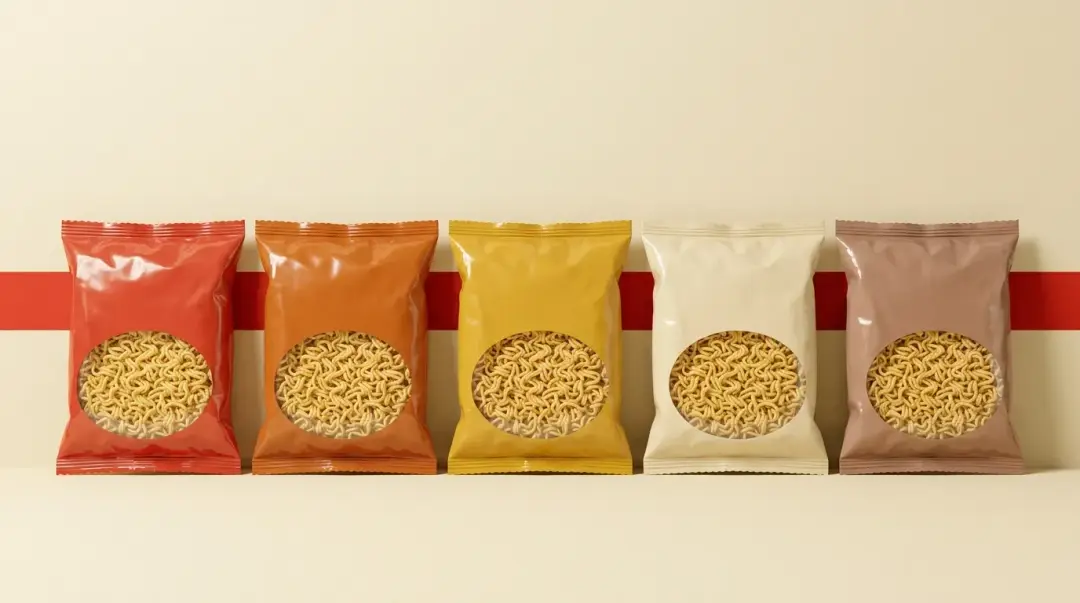
Sapporo Ichiban packs in US stores, with Japan launch dates where they apply
| Pack | Broth style | Japan launch | Worth knowing |
|---|---|---|---|
| Original | Clear soy sauce (shoyu) | January 1966 | The Ramen Rater: 4.25/5 for the US pack |
| Miso Ramen | Fermented soybean paste | September 1968 | Heaviest of the classic three |
| Shio Ramen | Salt-based, chicken-leaning | September 1971 | Comes with sesame seeds; 5/5 from The Ramen Rater |
| Tonkotsu Ramen | Pork-bone style | n/a | Sold as a 5-pack, 18.5 oz, at Kroger |
| Chicken, Beef, Shrimp | American-style soups | US-only, 1978 on | Campbell's and saimin inspired |
| Chow Mein, Sriracha Yakisoba | Drained, sauce-tossed | n/a | Yakisoba-style stir-fry noodles |
| Instant Stick Ramen | Hakata, Kumamoto and Kagoshima tonkotsu | n/a | Straight noodles; Hakata version made with Marutai |
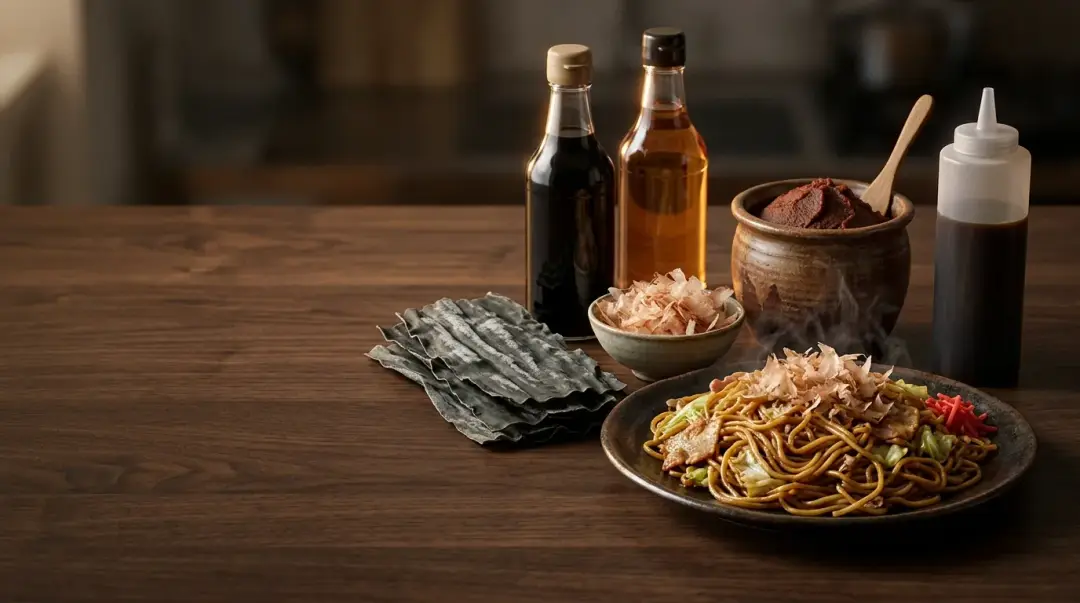
The yakisoba (yah-kee-SOH-bah) packs work differently from the soups. You boil the noodles, pour off most of the water and toss them with the seasoning, as you would for Japan's stir-fried street noodle. Our yakisoba guide covers the restaurant version. The stick ramen is the newest serious product in the range: The Ramen Rater gave the Hakata-style Original Tonkotsu, made by the Japanese company Marutai for Sapporo Ichiban, 5 out of 5 in October 2025, calling the pork-free broth "an absolutely perfect tonkotsu."
Why Shio Has a Following
Shio ramen is the lightest of the classic Japanese broth styles, seasoned with salt rather than soy sauce or miso. That makes it harder to hide behind: the noodle and the stock flavor carry the bowl. For background on how shio, shoyu and miso differ, see our ramen broth philosophy guide.
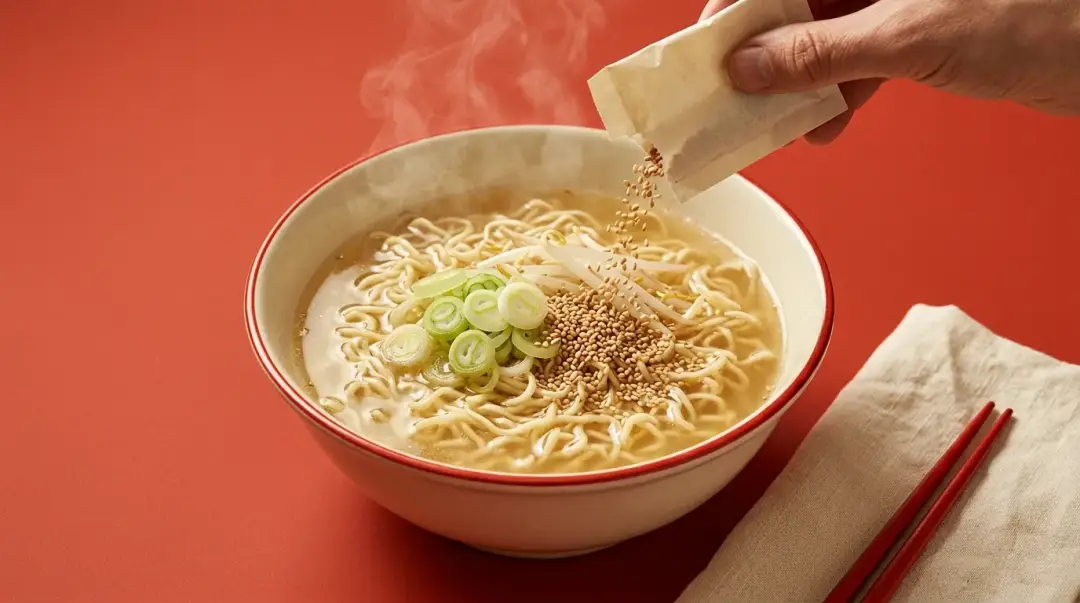
Sapporo Ichiban's version comes with a small extra packet of sesame seeds to sprinkle on at the end. The Ramen Rater re-reviewed the US Shio in 2018 and gave it 5 out of 5, describing "kind of a chicken shio" and noodles with "nice tooth and gauge." The Shio pillow pack is also the background image of The Ramen Rater's logo.
The Japanese cup version is a different product. The Ramen Rater scored it 3.25 in 2024, finding the cup noodles "a bit spongy" next to the boiled bag. If you want the version fans talk about, buy the 3.6-ounce bag.
What to Buy First
Buy a 5-pack of Shio and cook it the way the bag tells you: 3 minutes in boiling water (a small saucepan with a lid is all a single pack needs), then the soup packet, then the sesame seeds on top. Add a soft-boiled egg, sliced green onion, or a handful of bean sprouts if you have them. The broth is light enough that toppings change it more than they would a miso bowl.
Make Original your second bag. Its soy broth is the closest relative of the Top Ramen most Americans grew up with, so it is the easiest way to taste what the thicker block adds. Miso comes third and works best with heavier add-ins such as corn, butter or browned ground pork. For the brand's pork-bone style, see our tonkotsu instant ramen guide.
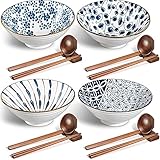
Serve it in a deep bowl; our ramen bowls guide covers sizes. Skip the cups if texture matters to you. The pillow packs are where Sapporo Ichiban's reputation comes from. For more ramen buying options, including fresh noodles, see our best ramen noodles guide.
Sapporo Ichiban vs Top Ramen
The nearest rival on a US shelf is Nissin's Top Ramen, which arrived in the early 1970s; The Ramen Rater dates the soy sauce flavor to 1972. Our Nissin brand page covers that company, and Maruchan is the other big name in the same aisle.
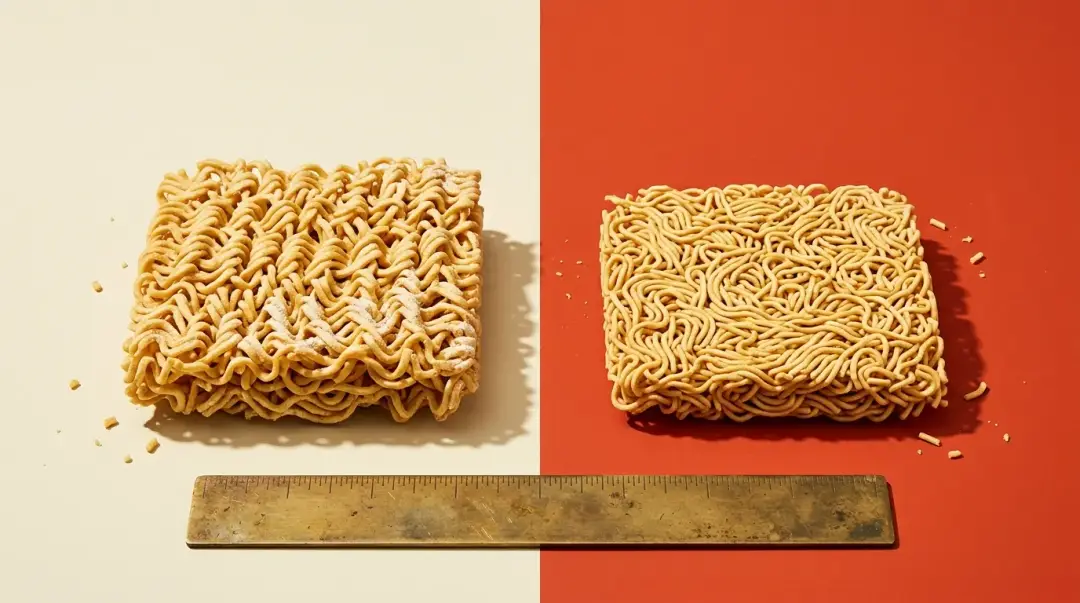
Sapporo Ichiban Original vs Top Ramen Soy Sauce, US packs
| Sapporo Ichiban Original | Top Ramen Soy Sauce | |
|---|---|---|
| Maker | Sanyo Foods (Garden Grove, CA) | Nissin Foods USA |
| Block weight | 3.5 oz | 3 oz |
| Noodle | Slightly wider gauge, firm chew | Standard instant gauge, "light tooth" |
| Broth | Clear shoyu, tangy and light | Shoyu with ginger |
| The Ramen Rater score | 4.25 / 5 (2020) | 4.0 / 5 (2023) |
The broth gap is small. The Ramen Rater liked both, and Top Ramen's soy sauce flavor has improved since its 2018 review. The noodle is where they split. Sapporo Ichiban's block weighs half an ounce more, and the 2020 review singled out a gauge "slightly wider" than a typical instant noodle with a chew that was "on point." If you like a noodle you have to bite through, that half ounce is the reason to switch.
Where to Find It in the US
Where Sapporo Ichiban shows up, and what each store lists
| Store | What it lists |
|---|---|
| Walmart | Original 5-count bag (3.5 oz each) and a 24-pack case of Original |
| Kroger and its banners (Foods Co. and others) | Shio and Miso 5-packs, Tonkotsu 5-pack, Chicken family pack |
| Amazon | Shio 5-count, Miso 5-pack, cases of Original and other flavors |
| Japanese grocers | Packs made in Japan, a separate product from the Garden Grove version |
At supermarkets, check the international or Asian foods aisle. Both the Garden Grove packs and the imports say Sapporo Ichiban on the front, so read the country of manufacture on the back if you want one or the other; The Ramen Rater reviews them as separate products. For a broader look at the Japanese side of the instant aisle, our Korean ramyeon vs Japanese ramen comparison explains how Japanese instant broths differ from Korean packs like Shin Ramyun.
FAQ
What does Sapporo Ichiban mean?
It means roughly Sapporo's number one. Sapporo is the largest city on Hokkaido, Japan's northern island, and ichiban means number one or best. Takeshi Ida, later president of Sanyo Foods, coined the name after he was impressed by the local ramen in Sapporo. Sanyo Foods launched the brand in January 1966.
Who makes Sapporo Ichiban?
Sanyo Foods, a Japanese company that began in November 1953 as Fuji Seimen in Maebashi, Gunma Prefecture, and took the Sanyo Foods name in 1961. Its US arm, Sanyo Foods Corp. of America, was set up in 1978 in Garden Grove, California, where it still makes the noodles sold in the United States and Canada.
Is Sapporo Ichiban better than Top Ramen?
For most ramen fans, yes. The Ramen Rater gave the US Sapporo Ichiban Original 4.25 out of 5 and Top Ramen Soy Sauce 4.0, and the Sapporo Ichiban Shio a full 5. The Sapporo block is heavier at 3.5 ounces against Top Ramen's 3 ounces, with a slightly wider noodle and a firmer chew.
What is the best Sapporo Ichiban flavor?
Shio is the fan favorite. It is a light salt-based broth with a separate packet of sesame seeds, and The Ramen Rater scored the US pack 5 out of 5. Original, a soy-sauce broth, is the safest pick for Top Ramen fans, and Miso is the richest of the three classics. Tonkotsu and the Chow Mein yakisoba pack round out the range.
Is Sapporo Ichiban made in Japan?
It depends on the pack. Sapporo Ichiban sold in the US and Canada is made at Sanyo Foods' plant in Garden Grove, California, which has produced it since the late 1970s. Packs imported from Japan, often sold at Japanese grocers, are made there and are a separate product; The Ramen Rater reviews the two versions separately. The label lists the country of manufacture.
Is Sapporo Ichiban yakisoba the same as chow mein?
In the US, the Sapporo Ichiban Chow Mein pack is a yakisoba-style noodle. You boil the noodles, drain most of the water and toss them with a sweet-savory seasoning instead of making soup. Sanyo also sells a Sriracha Yakisoba. Japanese yakisoba and Chinese American chow mein are related stir-fried wheat noodle dishes.