

Read the Color as a Clock
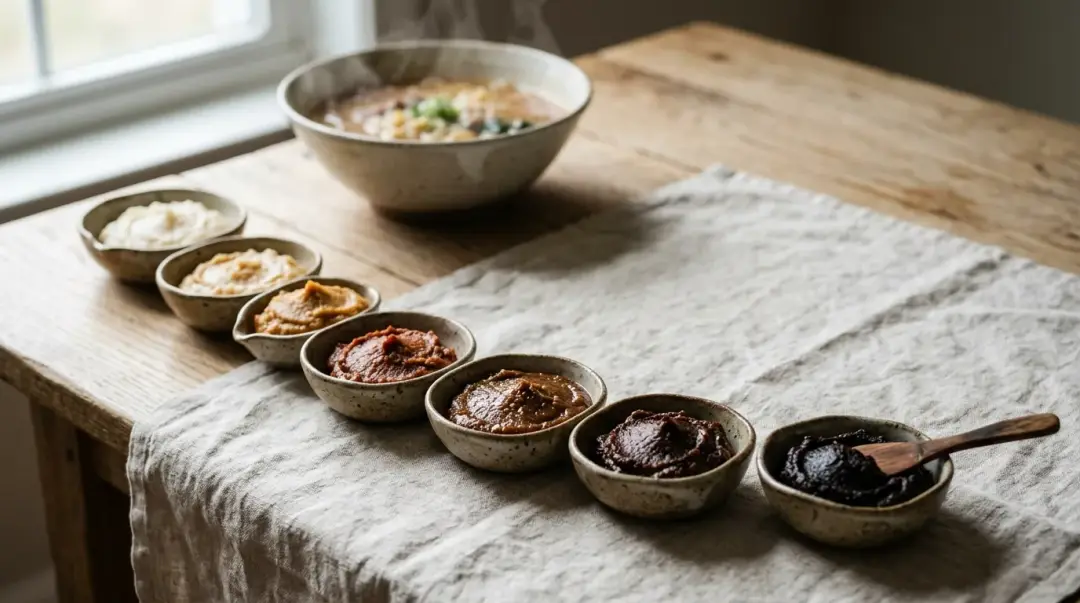
Miso color mostly tells you how long the paste fermented. A tub starts as cooked soybeans, salt and koji (KOH-jee, grain grown with the Aspergillus oryzae mold), and darkens the longer it sits.
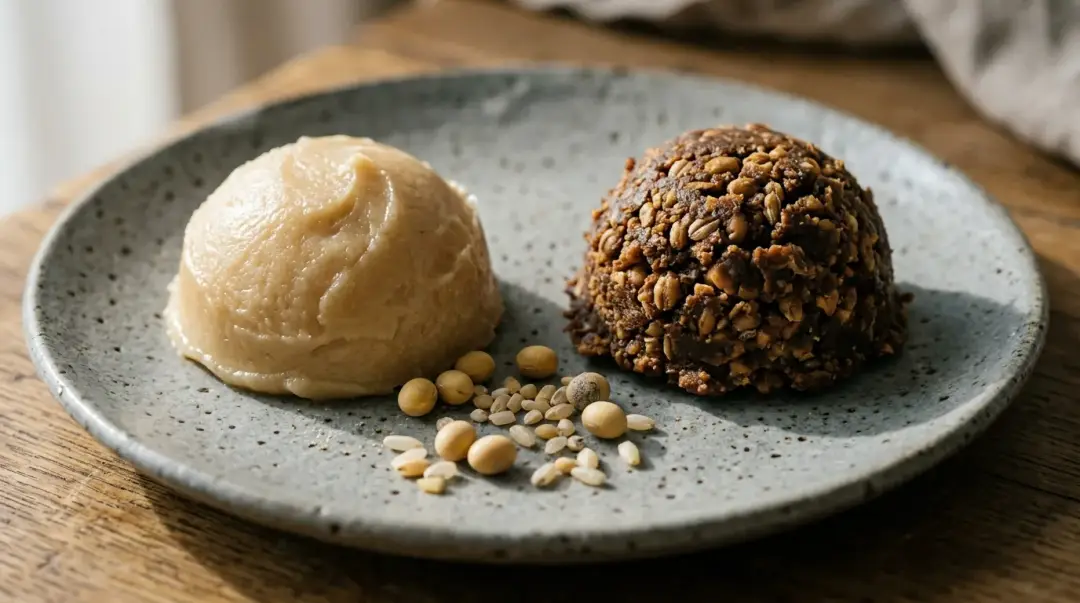
South River Miso in Conway, Massachusetts, puts real numbers on the range. Its Sweet White miso ages as little as three weeks. Its Three-Year Barley ages at least three summers, or 27 months, and comes out earthy and dark brown. Just One Cookbook gives red miso 1 to 1.5 years. Hikari Miso describes its organic red as shifting from bright red toward dark brown over time, and its Organic 3 Year Aged miso as dark brown with "slight astringency, and strong umami."
| Color | Typical fermentation | Flavor | Use with noodles |
|---|---|---|---|
| White (shiromiso, shee-roh-MEE-soh) | Weeks; South River's sweet white ages 3 | Sweet, mild | Light broths, blended into ramen tare |
| Yellow or Shinshu (SHIN-shoo) | Longer than white | Balanced, everyday | Miso soup, udon broth |
| Red (akamiso, ah-kah-MEE-soh) | About 1 to 1.5 years | Deep, salty, savory | Miso ramen tare, glazes |
| Dark aged | Up to 3 years | Earthy, slightly astringent | Stews, small amounts in ramen |
| Blended (awase, ah-WAH-seh) | Mix of styles | Middle ground | All-purpose |
Color doesn't predict salt as neatly. Hikari's organic white lists 820 mg of sodium per tablespoon and its organic red lists 830 mg. South River's Sweet White, its lowest-salt variety, lists 115 mg per 5 g teaspoon, while its Three-Year Barley lists 230 mg per 6 g. So within one maker's line, a younger miso may be less salty. Across brands, read the label.
The grain matters too. Kome (rice) miso is the most common type, mugi (barley) miso is a whitish style made in particular regions, and mame (soybean-only) miso is darker and redder than rice miso. Japan has roughly 2,500 miso makers, and Marukome alone makes about 13% of the country's miso.
The Picks
- Best overall: Hikari Miso Organic Red Miso
- Best white: Hikari Miso Organic White Miso
- Best for beginners: Hikari Miso Dashi Iri Awase Miso
- Best made in the USA: Marukome Organic Miso Paste
- Best lower sodium: Marukome Organic Reduced Sodium Miso
- Best long-aged: South River Organic Three-Year Barley Miso
- Best light and low-salt: South River Organic Sweet White Miso
Miso paste picks by color, age and sodium (manufacturer labels)
| Miso | Color | Aging | Sodium per label serving | Best for |
|---|---|---|---|---|
| Hikari Organic Red | Red | Long fermentation | 830 mg / 18 g | Miso ramen, glazes |
| Hikari Organic White | White (Shinshu-style) | Not stated | 820 mg / 18 g | Soup, dressings, blending |
| Hikari Dashi Iri Awase | Blended, dark brown | Blend | Not listed on page | Fast miso soup |
| Marukome Organic | Not stated | Not stated | 710 mg per serving | Everyday soup and cooking |
| Marukome Organic Reduced Sodium | Not stated | Not stated | 550 mg / 15 g | Lower-sodium cooking |
| South River Three-Year Barley | Dark brown | At least 27 months | 230 mg / 6 g | Stews, deep broths |
| South River Sweet White | White | At least 3 weeks | 115 mg / 5 g | Dressings, light broths |
How We Picked
We didn't taste these side by side for this guide. The picks come from research: each maker's product pages and nutrition labels, reference guides on miso styles (Just One Cookbook and Wikipedia), and the miso ramen tare recipe covered in our guide to tare.
Every pick had to be sold through a grocery chain, an Asian supermarket or the maker's own store. We favored short labels (soybeans, grain, salt, water, koji culture, and in Marukome's case organic alcohol) and called out tubs with added dashi or flavor enhancers. Then we covered the range from three-week white to three-year dark, because a single miso can't do every job.
The Tubs
Best Overall: Hikari Miso Organic Red Miso
Hikari Miso is a fourth-generation Japanese company, and its Organic Red is the miso we'd keep if we could keep one. The ingredient list is short: water, organic soybeans, organic rice, salt, yeast and koji culture. It's USDA Organic, vegan and gluten-free, in a 17.6 oz (500 g) tub that holds about 28 tablespoon servings.
Red miso is the base of a deep miso ramen (MEE-soh RAH-men) tare and of glazes for chicken, eggplant and tofu. The catch is strength. In a plain miso soup it can taste heavy, so many cooks blend it with a white miso. Each tablespoon lists 830 mg of sodium, about 36% of the Daily Value.

Hikari Miso Organic Red Miso
Long-fermented rice miso with the depth a miso ramen tare needs
Best White: Hikari Miso Organic White Miso
Hikari calls this a traditional Shinshu-style miso with "a light flavor, slightly umami with subtle sweetness." The ingredients match the red exactly; the difference is time and handling. It's the tub for miso soup, dressings, marinades and any baked or sweet use where red miso would take over.
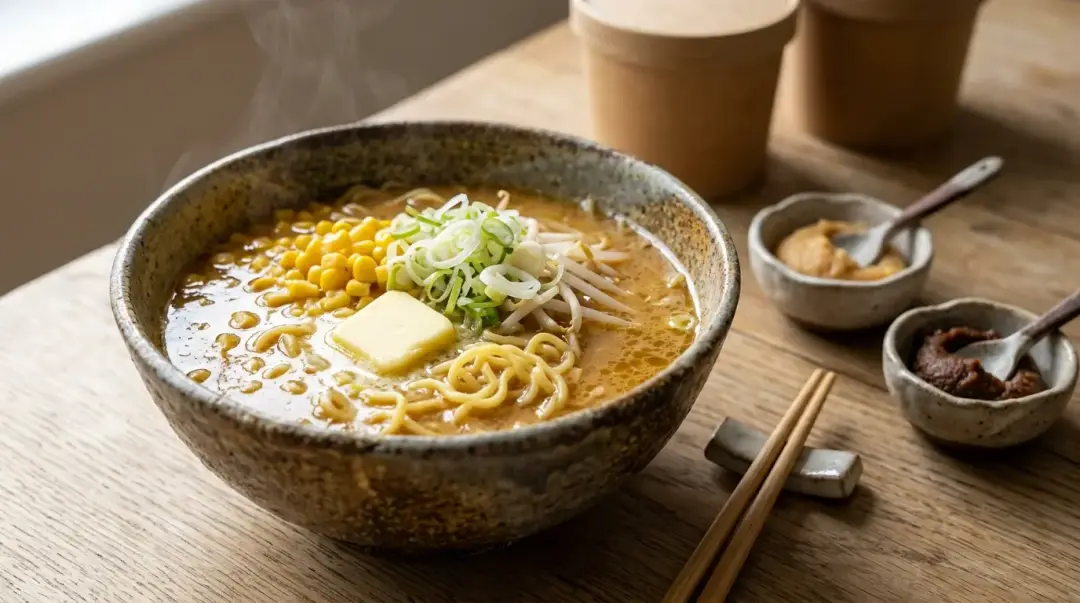
For noodles, its job is blending. Ramen Kaonashi's Sapporo-style miso tare, which our tare guide walks through, uses 80 g of white miso and 80 g of red with grated onion, garlic, sake and soy sauce. The catch is that "white" doesn't mean low-salt here: the label lists 820 mg per tablespoon, 10 mg less than the red.
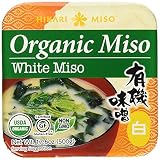
Hikari Miso Organic White Miso
Shinshu-style miso, light and slightly sweet
Best for Beginners: Hikari Miso Dashi Iri Awase Miso
Dashi iri means "with dashi added," and awase means blended. Hikari mixes Shinshu yellow miso with pure soybean miso, then adds a seasoned bonito and kelp extract, so the dark brown paste has its soup stock built in. Stir a spoonful into hot water and you have miso soup without making dashi first.
Buy it if you're new to miso and want soup or a quick noodle broth on a weeknight. Its flavor is deeper than white miso and milder than a straight red. The catch is in the ingredients: it contains fish and added MSG, so it doesn't suit vegetarians. Hikari's page also lists two net weights (17.6 oz and 26.4 oz), so check the size on the tub you pick up.
Best Made in the USA: Marukome Organic Miso Paste
Marukome has made miso since 1854 in Nagano and is one of Japan's largest producers. In 2007 it opened Marukome USA in Irvine, California, and its organic miso is labeled made in the USA. The ingredient list is five items: filtered water, organic soybeans, organic rice, sea salt and organic alcohol.
It's a good everyday tub for miso soup and for cooks who prefer a domestically made product. Marukome USA's own store sells the 375 g tub. The catch is size. A 375 g tub goes faster than Hikari's 500 g, and the label lists 710 mg of sodium per serving.
Best Lower Sodium: Marukome Organic Reduced Sodium Miso
This is the same organic recipe with "25% less sodium than the original," per Marukome, and the label lists 550 mg per 15 g serving. It also carries Non-GMO, gluten-free, vegan, kosher and USDA Organic marks.
It suits anyone counting sodium who still wants miso soup or a miso-seasoned udon broth. Our low-sodium noodles guide covers the noodles to pair with it. The catch: reduced isn't low. A full bowl of miso ramen built on it still carries plenty of salt from the broth and tare, so measure the miso instead of eyeballing it.

Marukome Organic Reduced Sodium Miso
25% less sodium than Marukome's original, per the label
Best Long-Aged: South River Organic Three-Year Barley Miso
South River Miso has made miso in Conway, Massachusetts, since 1979, cooking its beans over a wood fire for about 20 hours in total. The Three-Year Barley is its original hearty miso, aged at least three summers (27 months), made with deep well water, organic barley, organic soybeans, sun-dried sea salt, sea vegetables and koji. The company describes its miso as unpasteurized.
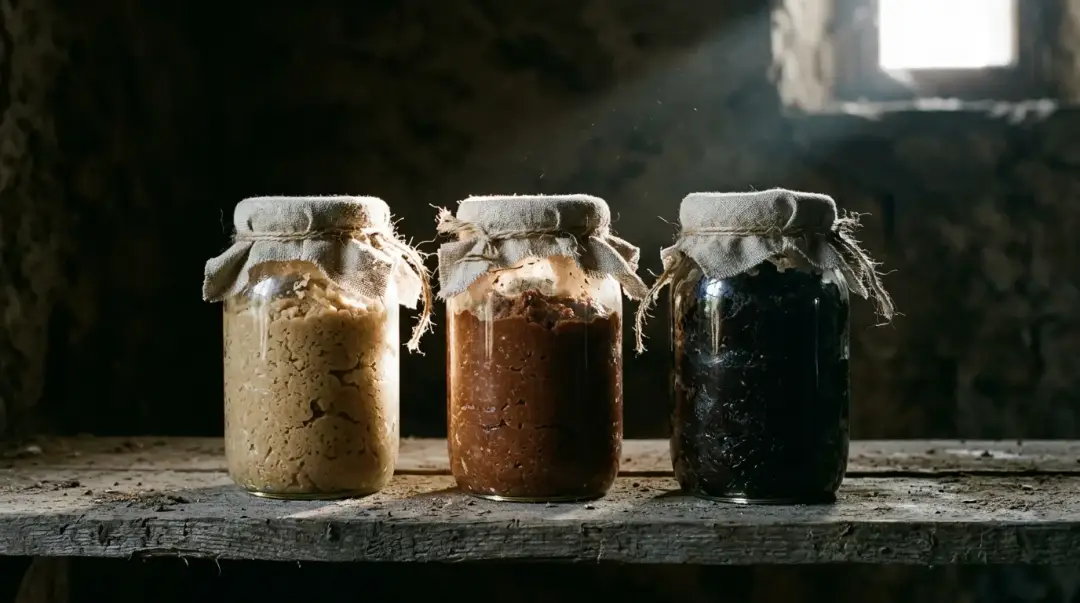
Use it where you want depth in a small amount: a spoonful in a pork or mushroom ramen broth, a stew, or a winter soup. The 1 lb glass jar is sold on South River's site, and Whole Foods and regional natural grocers carry the brand. The catch is twofold. Barley contains gluten, so this jar is out for celiac cooking, and South River ships only in cooler months.

South River Organic Three-Year Barley Miso
Aged at least three summers (27 months) in Massachusetts
Best Light and Low-Salt: South River Organic Sweet White Miso
The Sweet White is South River's youngest miso, aged a minimum of three weeks, and the lowest in salt the company makes. It's a Kyoto-style shiro (white) miso made with lightly polished organic brown rice, and the only South River miso that's mechanically puréed smooth. The label lists 115 mg of sodium per 5 g teaspoon, and it's gluten-free.
Whisk it into dressings and dips, or into a light broth for cold udon or somen. It comes in a 1 lb jar. The catch is the same as any young white miso: on its own it's too sweet and mild to carry a rich ramen broth.

South River Organic Sweet White Miso
Aged about three weeks; the lowest-salt miso South River makes
What to Look For
- The color and, where given, the aging time. Weeks for white, a year or more for red, up to three years for the darkest. The label or maker's site often states it.
- The grain. Rice (kome) for all-purpose, barley (mugi) for an earthier note, soybean-only (mame) for the darkest and strongest.
- Sodium per gram, not per serving. Hikari labels an 18 g tablespoon, Marukome's reduced-sodium tub a 15 g serving, South River a 5 to 6 g teaspoon.
- Added dashi or MSG. Both mean a seasoned miso, and bonito dashi means it isn't vegetarian.
- A gluten-free mark if it matters. Barley miso contains gluten. Our gluten-free noodles guide covers the rest of the bowl.
Common Mistakes
- Boiling the broth after the miso goes in. Our tare guide puts the ceiling at about 170°F (77°C), above which the fermented aroma fades. Whisk miso in off the heat.
- Using white miso alone for Sapporo-style ramen. It reads thin and sweet against pork or chicken stock. Blend it with red.
- Judging salt by color. Hikari's white and red are within 10 mg of each other per tablespoon.
- Dumping miso straight into the pot. Loosen it with a ladle of warm broth in a small bowl first, or it clumps.
- Buying a dashi-blended miso for a vegetarian bowl. Dashi Iri Awase contains bonito.
A Three-Tub Buying Ladder
Most cooks don't need seven tubs. Build up in this order.
- Start with Hikari Organic Red. It covers miso ramen tare, glazes and stews, and makes soup if you use a little less.
- Add a white, either Hikari Organic White or South River Sweet White. With two tubs you can blend a Sapporo-style tare at 1:1 and make a lighter soup on other nights.
- Add one specialist. Marukome Organic Reduced Sodium if you're watching salt, South River Three-Year Barley if you want depth in winter broths, or Hikari Dashi Iri Awase if speed matters most.
That third tub is where taste takes over. To see how miso fits against shoyu, shio and tonkotsu bowls, read our ramen broth guide, and for the noodles to go in the bowl, our best ramen noodles guide.
FAQ
What is the best miso paste to buy?
For most kitchens, Hikari Miso's Organic Red is the best all-round tub. It is a long-fermented rice miso with enough depth for miso ramen and glazes, and it is widely sold. Add Hikari's Organic White if you also make light miso soup or dressings, or buy Hikari's Dashi Iri Awase if you want soup with the stock already mixed in.
Which miso is best for ramen?
Red or blended miso. Sapporo-style miso ramen tare often blends white and red: Ramen Kaonashi's recipe uses 80 g of each, plus grated onion, garlic, sake and soy sauce. Red miso alone gives a deeper, saltier bowl. White alone tends to taste thin and sweet in a pork or chicken broth.
What is the difference between white and red miso?
Mostly time. White miso ferments for a matter of weeks and stays pale and sweet. Red miso ferments longer, often a year or more, and darkens as it ages. Just One Cookbook puts red miso at 1 to 1.5 years, and South River's darkest miso ages three summers. Salt depends on the brand, so read the label.
Is white miso less salty than red miso?
Not reliably. Hikari's organic white lists 820 mg of sodium per tablespoon and its organic red lists 830 mg, nearly identical. Some makers do brew their youngest miso with less salt: South River says its Sweet White is its lowest-salt variety. Compare sodium per gram on the labels instead of judging by color.
How long does miso last after opening?
Keep opened miso in the fridge with the lid or a sheet of plastic pressed tight against the surface. Refrigerated and sealed, it keeps for months. It may darken over time, which Hikari notes is normal as the color deepens with age. Throw it out if you see fuzzy mold or it smells off.
Is miso gluten-free?
Rice and soybean miso usually is, and Hikari labels its organic white and red gluten-free. Barley miso is not, because barley contains gluten. Some miso also contains other grains or additives, so check the label and look for a gluten-free mark if you cook for someone with celiac disease.