Halal Noodles: Which Instant Ramen Is Certified
· 10 min read · NoodleDex Editorial
Halal noodles, brand by brand: which Buldak, Shin Ramyun, Indomie and Maruchan packs carry certification, who certifies them, and what to check on the pack.
This page contains affiliate links. We may earn a commission at no extra cost to you. Disclosure
Read the Packet Before the Flavor Name
The flavor name tells you nothing. A Buldak Hot Chicken Flavor Ramen from a halal-certified run and one from an uncertified run can share the same red-and-black bag, the same chicken cartoon and the same 140 g block of noodles. What separates them is a small seal, often with a certificate number printed near it.
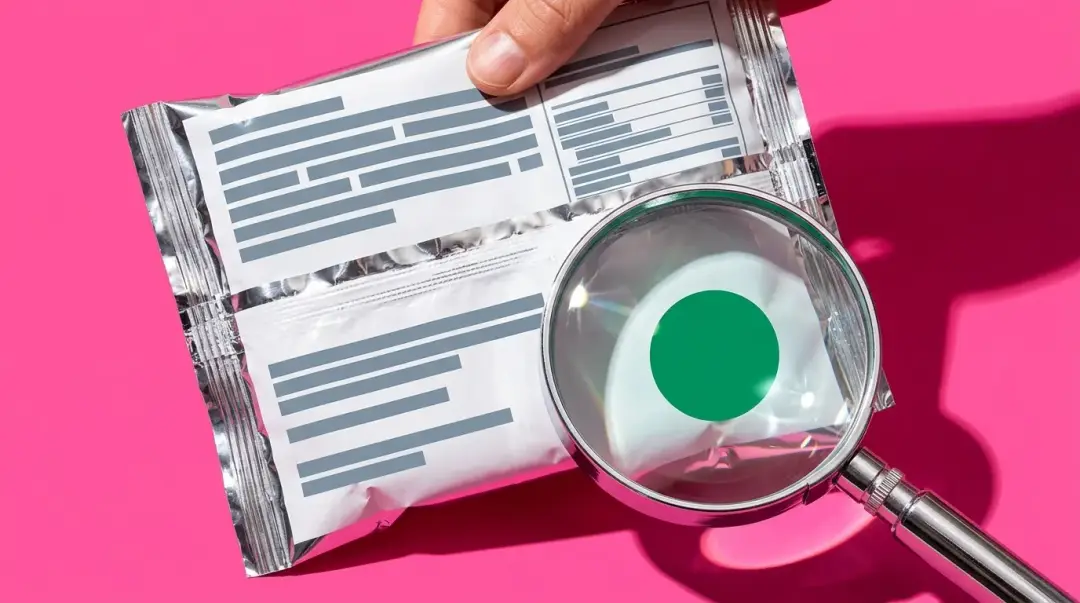
Start by turning the packet over. The mark can sit on the front, but on imported packs it often lands on the back or side panel, near the ingredient list and the importer's sticker. Check every face of the bag, and on a 5-pack check the outer wrap and one single packet, since the halal claim has to hold for the packet you actually cook.
A real certification mark names who issued it. "Halal" on its own, or a green crescent with no organization name, tells you very little. Wikipedia's entry on Buldak notes that some Chinese imitation products print misleading "Halal-certified" and "product of Korea" marks on packaging, which is one more reason to look for a named body.
The certifiers you will actually see
Five organizations cover almost every halal noodle sold in the US.
- KMF, the Korea Muslim Federation, was founded in 1967 and is the main halal certifier in South Korea. Samyang's Korean-made halal Buldak carries its mark. KMF signed a mutual recognition agreement with Indonesia's BPJPH in December 2022.
- MUI (Majelis Ulama Indonesia, the Indonesian Ulema Council) owns the long-standing Indonesian halal logo, found on Indomie, Mi Sedaap and on Korean noodles sold into Indonesia.
- BPJPH, Indonesia's Halal Product Assurance Organizing Agency, has issued Indonesian certificates since March 1, 2022, after an MUI fatwa (religious ruling). New packs carry its national "Halal Indonesia" label. Pre-printed MUI-logo packaging is allowed until October 17, 2026, so both marks are on shelves this year.
- JAKIM (Jabatan Kemajuan Islam Malaysia, Malaysia's Department of Islamic Development) certifies Malaysian-made products and keeps a list of foreign bodies it recognizes. KMF, IFANCA and ISA are all on it.
- IFANCA and ISA are the two big US certifiers. IFANCA (Islamic Food and Nutrition Council of America, est. 1982, Des Plaines, Illinois) uses a Crescent-M symbol. ISA (Islamic Services of America, est. 1975, Cedar Rapids, Iowa) is accredited by BPJPH, JAKIM and Singapore's MUIS. Expect them more on broth and bouillon than on Asian noodle packets.
The three ingredients that usually decide it
When a pack has no seal, three lines on the ingredient panel do most of the deciding.
- Meat extracts and broth powder: "beef bone extract," "chicken powder," "pork extract" or a generic "meat flavor" in the seasoning sachet. Pork rules a pack out. Beef or chicken extract from animals not slaughtered by halal rules is a problem for most halal observers, and the label rarely says which kind it is.
- Emulsifiers and glycerides. Mono- and diglycerides (E471) can come from soybean or sunflower oil, or from beef or pork fat. ISA notes that manufacturers rarely disclose the source, which turns a vegetarian-looking ingredient list into an open question.
- Alcohol in sauces and seasoning oils. Japanese-style seasonings sometimes use mirin, a sweet rice seasoning; hon mirin (true mirin) is about 14% alcohol, per Just One Cookbook. Cooking sake is another one to watch for.
Where scholars differ, for example on trace alcohol from natural fermentation in soy sauce, your own scholar's or community's standard applies. This guide sticks to what the packet and the certificate say.
Brand by Brand: Who Is Certified, by Whom
The pattern across brands is simple. Indonesian makers certify everything. Korean makers run separate halal lines for export markets. US and Japanese mainstream ramen has no halal line on American shelves that we could confirm.
Halal certification by noodle brand, as of October 2026
| Brand / product | Certified? | By whom | Which market's packs | What to check |
|---|---|---|---|---|
| Samyang Buldak (Original, Cheese, Honey, others) | Yes, on dedicated halal runs | KMF; MUI since 2017 | Korean export packs for Indonesia, Malaysia and other halal markets; some US online listings | A named KMF or MUI/Halal Indonesia seal. Same flavor also sold uncertified. |
| Nongshim Shin Ramyun | Yes, a separate halal version | Varies by market; MUI for packs sold in Indonesia | Export packs for Indonesia, Malaysia, the Gulf and other markets | US-market pack: not certified as far as we can confirm. Check the pack. |
| Indomie (Indofood) | Yes, whole line | MUI; BPJPH label on newer packs | Indonesian-made packs, including those imported to the US | MUI logo or the newer Halal Indonesia label |
| Mi Sedaap (Wings Food) | Yes, whole line | MUI | Indonesian-made packs sold in the US | MUI seal on the pack |
| Maruchan (US) | No | None found | US-made packs and cups | Not certified as far as we can confirm. Contains lactose. |
| Nissin Top Ramen / Cup Noodles (US) | No | None found | US-made packs and cups | Not certified as far as we can confirm. Nissin Indonesia and Malaysia lines are separate products. |
| Mama (Thai President Foods) | Some products | Halal-labeled export line; body not named on the product page | Export packs labeled "(Halal)", English and Arabic packaging | The word Halal in the product name plus a named seal |
| Ottogi Jin Ramen | Yes, for Indonesia | MUI (December 2024) | Indonesian-market Jin Ramen and Cheese Ramen | US-market pack: not certified as far as we can confirm. Check the pack. |
| Paldo (Bibim Men, Jjajangmen, others) | Not found | None found | All markets we checked | Not certified as far as we can confirm. Check the pack. |
Samyang Buldak
Buldak (BOOL-dahk, "fire chicken") has the most tangled halal story of any noodle in this table. In June 2017 Indonesia's food agency, BPOM, pulled Samyang and three other Korean noodle brands from shelves after detecting pork DNA in products that lacked the required pork labeling. Samyang already held KMF certificates for 23 products at the time, but Indonesian law wanted MUI. On September 28, 2017, MUI certified three Buldak flavors: Original, Cheese and Kkul (honey) Buldak. Samyang Green, the Indonesian distributor, added more MUI-certified items in 2021, including Jjajang and Stew Buldak.
KMF certificates are issued per product and per plant. One public KMF record, for example, covers Buldak Ramen Tomato Pasta from Samyang's Wonju plant, valid May 2022 to May 2025. The practical takeaway is that a halal Buldak and a non-halal Buldak of the same flavor can both be on sale in the same week. Some US online listings are explicitly labeled "Halal Certified," and those are the safest buy; a standard pack at a US supermarket needs the seal check. Our Buldak flavors guide covers the flavors themselves.
Nongshim Shin Ramyun
Nongshim started producing halal-certified Shin Ramyun and Yukgaejang noodle soup in 2011 at facilities in Busan, according to Korea.net. By October 2024 the Korea Herald counted roughly 40 halal products across 10 Nongshim brands, sold into more than 40 countries including Indonesia, Malaysia, Saudi Arabia, the UAE and Kazakhstan. In 2019 MUI also certified five Nongshim products made at its Shanghai factory for Indonesia, sold there under the Farmer's Heart name.
The standard Shin Ramyun bag in US supermarkets is a different product. Its soup base uses beef bone extract, and we found no halal certification for it, so treat it as uncertified unless the pack shows a seal. The same split between export and US stock applies to Samyang, which our Samyang brand page covers in more detail.
Indomie and Mi Sedaap
These are the easy ones. Indomie's FAQ states that "all Indomie products are Halal certified by the Indonesian Ulema Council," and Indofood picked up a Global Halal Brand award at the 2024 Top Halal Award. Mi Sedaap, made by Wings Food since 2002, says the same on its US site and lists MUI certification across its full line. Both brands cover the mie goreng (MEE GOH-reng, Indonesian fried noodles) category, which makes them the default for a halal kitchen. Our Indomie buying guide ranks the flavors worth stocking.
Maruchan and Nissin in the US
Maruchan's US consumer FAQ says nothing about halal and confirms that every product contains lactose. Nissin Foods USA's site makes no halal claim either, Mustakshif's halal database lists US Top Ramen chicken and beef as not halal, and Nissin's European arm states plainly, "Our products are not halal." Nissin does run separate locally certified lines in Indonesia (MUI) and Malaysia (JAKIM), but those are different recipes from different factories, and they rarely reach US shelves.
Mama, Ottogi and Paldo
Mama, from Thai President Foods, lists halal certification among its company certifications and sells an export line with "(Halal)" in the product name, such as Oriental Style Chicken Flavour in 60 g packs with English and Arabic printing. Ottogi received MUI certification for Jin Ramen and Cheese Ramen in December 2024 and began selling them in Indonesia in November 2025. We found no halal certification for Paldo at all.
Halal vs "No Pork" vs Vegetarian
These three labels get treated as the same thing and they aren't.
A "no pork" label removes one ingredient. A chicken or beef ramen with no pork can still use meat extract from animals that were not zabiha (slaughtered by Islamic rules), and the factory may run pork products on the same line. Many halal-observant shoppers treat these packs as mushbooh, an Arabic term meaning doubtful.
A vegetarian label removes all meat, which settles the extract question. It leaves the other two. A vegetarian sauce can still contain mirin or cooking wine, and an emulsifier like E471 can come from beef or pork fat even in a meatless recipe, because a vegetarian claim usually refers to the visible ingredients. Halal certification also audits the production line for cross-contact. A certified pack answers all three questions at once; a vegetarian pack answers one.
That said, plenty of halal-observant cooks do buy uncertified vegetarian noodles after reading the label, especially plain dried noodles like udon or rice sticks that list only flour, salt and water. That is a personal and community call.
Where to Find Certified Packs
The most reliable source is any grocer that stocks Indonesian brands, since Indomie and Mi Sedaap are certified across the board. On Walmart.com, several Mi Sedaap 30- and 40-pack listings carry "Halal Certified" in the product name. Asian supermarkets, Middle Eastern and South Asian grocers and Indonesian specialty shops carry deeper ranges, sometimes including halal Korean export packs that never reach mainstream chains.
For Buldak, online listings are where the halal export version shows up most often. Amazon carries Samyang 30-packs titled "Halal Certified." Judge the listing by its photos: if the images don't show the back panel with a named seal, ask the seller or buy elsewhere. Our Korean instant ramyeon guide and Vietnamese instant noodles guide both flag certified options where they exist.
Cooking Halal Noodles at Home
Fixing a recipe is easier than finding a certified packet, because the problem ingredients have direct swaps.
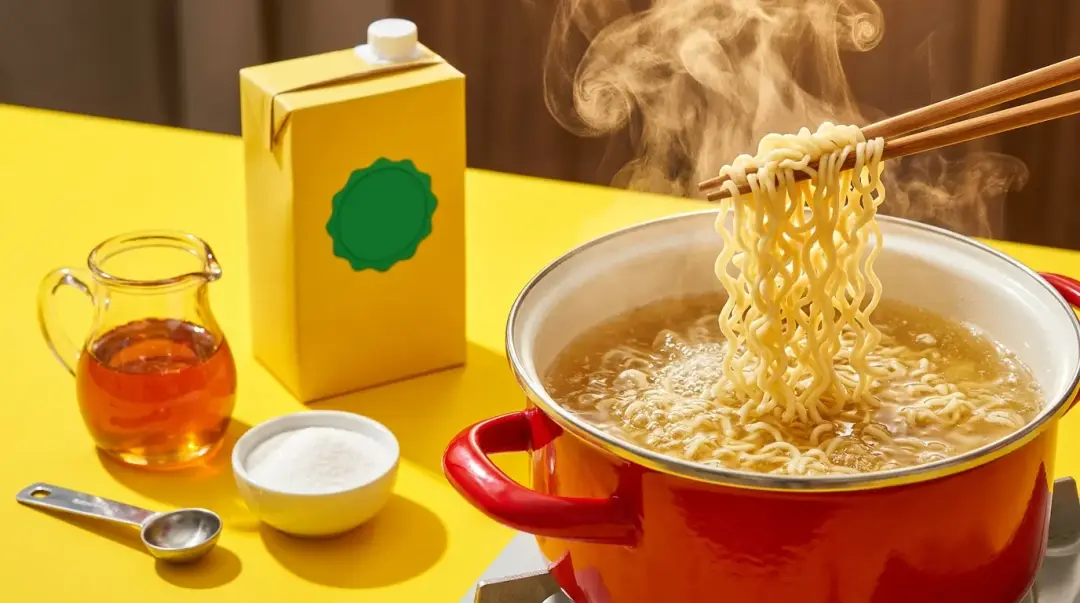
- For mirin, use an alcohol-free mirin-style seasoning (Mizkan Honteri is one, per Just One Cookbook) or mix 3 parts water or halal stock with 1 part sugar. Mirin-style seasonings vary in alcohol content, so read the label before assuming one is alcohol-free.
- For cooking sake, leave it out, or replace it with halal stock and a splash of rice vinegar.
- For chicken or beef broth, buy a broth or bouillon that shows an IFANCA, ISA or other named halal mark, or simmer bones from a halal butcher into your own stock for homemade ramen.
- For seasoning packets: if you like a particular uncertified noodle block (plain wheat, salt, water, palm oil), you can cook the noodles and discard the sachet, then season with a halal broth, gochujang (Korean chili paste) with a halal mark, or kecap manis (sweet Indonesian soy sauce).
Soy sauce is the one swap that depends on your standard. Naturally brewed soy sauce contains trace alcohol from fermentation; some certifiers have certified specific batches, and some households avoid it. Halal-certified soy sauces exist if you want to sidestep the question.
Quick Checklist Before You Buy
- The pack shows a halal seal with a named body (KMF, MUI, Halal Indonesia, JAKIM, IFANCA, ISA), on any face of the bag.
- The seal is on the exact pack you're holding, not just on a different market's version of the same flavor.
- If there's no seal, the seasoning panel lists no pork, no unspecified meat extract and no generic "meat flavor."
- Emulsifiers like E471 are marked plant-based, or the pack is certified.
- Sauces and oils list no mirin, sake, wine or added alcohol, judged by your own scholar's or community's standard on traces.
FAQ
Is Buldak halal?
Some Buldak is. Samyang holds halal certificates from KMF (Korea Muslim Federation) and, since September 2017, from Indonesia's MUI for Buldak, Cheese Buldak and Honey Buldak. Samyang also makes uncertified packs of the same flavors that look almost identical. Only a packet that shows a recognized halal mark counts. Online listings labeled halal-certified exist in the US; ordinary shelf packs need a check.
Is Shin Ramyun halal?
A halal Shin Ramyun exists. Nongshim began making halal-certified Shin Ramyun at a dedicated line in Busan in 2011 and by 2024 had about 40 halal products across 10 brands for markets including Indonesia, Malaysia, Saudi Arabia and the UAE. We could not confirm certification on the standard US-market pack, so check the side panel for a halal mark.
Is Maruchan halal?
Not as far as we can confirm. Maruchan's US consumer FAQ makes no halal claim, and product-level halal databases list its chicken, beef and shrimp ramen as not certified. Maruchan also says every product contains lactose. If you need a certified cheap packet in a US supermarket, look at Indonesian brands like Indomie or Mi Sedaap instead.
Is Indomie halal?
Indomie's own FAQ says all Indomie products are halal certified by MUI, the Indonesian Ulema Council. Indonesia now issues certificates through its government agency BPJPH after an MUI fatwa, so newer packs may show the national Halal Indonesia label instead of the older MUI logo. Either mark on the pack confirms certification.
Are vegetarian instant noodles automatically halal?
No. A vegetarian seasoning packet removes the meat question, but halal also excludes alcohol used as an ingredient and requires the factory to avoid cross-contact with pork. Some vegetarian sauces use mirin or cooking wine, and emulsifiers can come from animal fat. A vegetarian pack without a halal mark is unverified, though many shoppers accept it after reading the ingredients.
Which halal certification logos should I trust on noodles?
Look for a named body, not a generic word. For the brands in US stores, the common ones are KMF for Korean makers, MUI or BPJPH for Indonesian makers, JAKIM for Malaysia, and IFANCA or ISA for US-certified products. Malaysia's JAKIM recognizes KMF, IFANCA and ISA, which is a useful cross-check for a logo you don't know.
Read Next
Products mentioned in this guide
This section contains affiliate links. We may earn a commission at no extra cost to you.

Indomie Mi Goreng Instant Stir Fry Noodles, Halal Certified, Original Flavor (Pack of 30)
Indomie certifies its whole line through MUI, so this is the simplest halal pantry staple. Newer packs may carry the Halal Indonesia label instead.
View on Amazon
Samyang Instant Ramen Noodles, Halal Certified, Spicy Stir-Fried Chicken Flavor (Pack of 30)
A Buldak from a certified run. Check the listing photos for a named KMF or MUI seal on the back panel before you order.
View on Amazon
Mi Sedaap Instant Noodles, Korean Style Spicy Chicken Flavor, 3.03 oz (Pack of 40), Halal Certified
Korean-style heat from an MUI-certified Indonesian maker, for anyone who wants the spicy chicken profile without checking every bag.
View on Amazon
Buying guides for this topic
- Buying guideBest Korean Instant Ramyeon Brands in 2026The best Korean instant ramen brands ranked — Shin, Buldak, Paldo, Ottogi compared by spice, flavor, and value.
- Buying guideBest Indomie & Indonesian Instant Noodles in 2026Indomie Mì Goreng and the best Indonesian instant noodles on Amazon — the cult favorite of global instant ramen, ranked.
- Buying guideBest Vietnamese Instant Noodles in 2026Vietnamese instant noodles ranked — Vifon, Acecook, Mama, and Hảo Hảo on Amazon. The convenient way to taste Vietnamese noodle culture.
- Buying guideBest Ramen Noodles & Kits in 2026The best fresh and dry ramen noodles, plus premium ramen kits, available on Amazon — Sun Noodle, Hakubaku, Marusan, and Maruchan Seimen ranked.