One Suitcase and One Noodle Machine
In 1981 a 19-year-old from Tochigi Prefecture, the son of a Japanese noodle maker, landed on Oahu carrying one suitcase and a single noodle machine. Hidehito Uki looked up at the Honolulu sun and named his company after it, according to a 2025 Honolulu Civil Beat profile. He had no restaurant accounts, so he walked noodle samples door to door and adjusted the dough for each chef who would take a meeting.
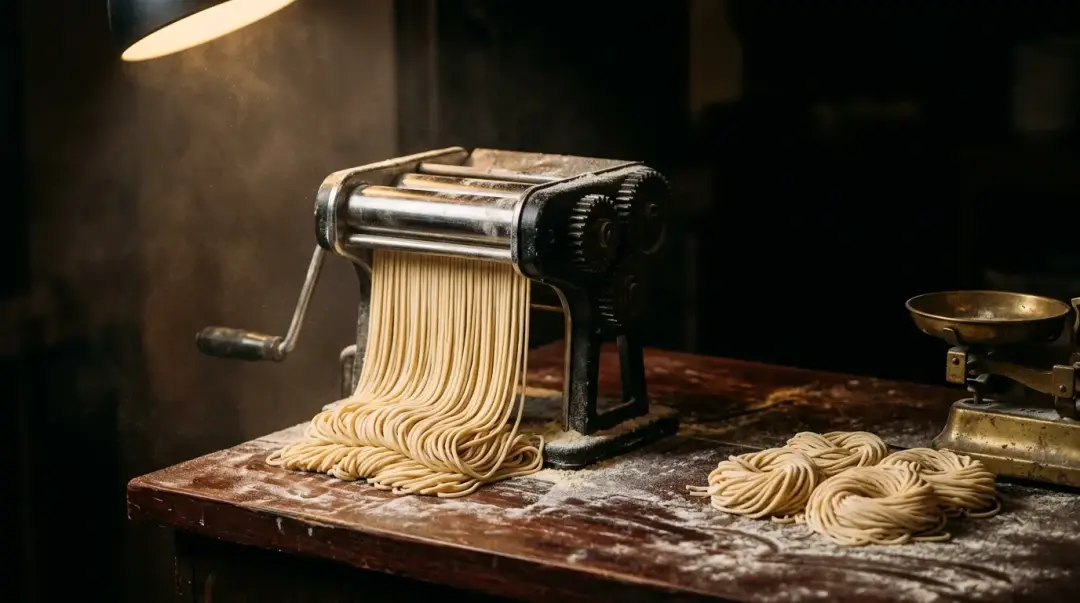
That habit of building a noodle around one customer's soup is still the company's whole pitch. "We provide a noodle match with the soup," Uki told Hawaii Business in 2014. Forty-five years later the same family runs Sun Noodle, and it now makes noodles in Hawaii, California, New Jersey and the Netherlands.
What Sun Noodle Is
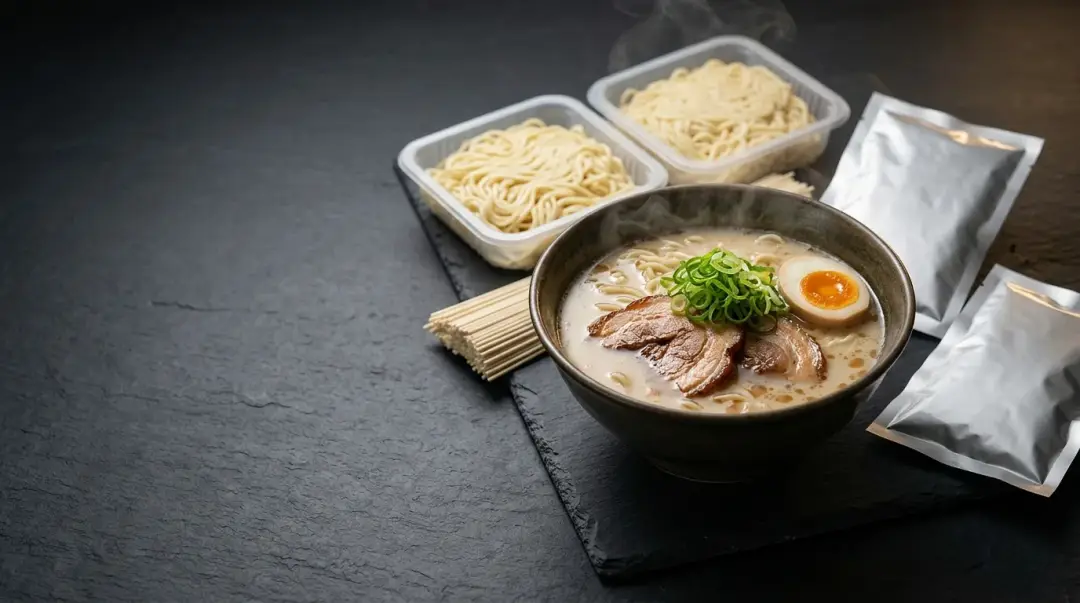
Sun Noodle (pronounced sun NOO-dul) makes fresh, refrigerated noodles for restaurants first and grocery shoppers second. Forbes reported in 2020 that about 80 percent of its clients are ramen shops, restaurants and food-service buyers. The noodles are alkaline wheat noodles made with kansui (kahn-SOO-ee, alkaline mineral salts; the shoyu kit lists potassium and sodium carbonate), the ingredient that gives ramen its spring and yellow tint. Our kansui explainer covers the chemistry.
The company is privately held by the Uki family. Hidehito's wife Keiko, who owned a Japanese delicatessen when they met, joined the business early. Their son Kenshiro joined in 2008 with a fresh MBA and now runs North America and Europe; the company names him and his sister Hisae as its third generation of noodle makers.
The numbers depend on who counted and when, so here they are with dates attached:
| Year reported | Source | Figure |
|---|---|---|
| 2014 | Hawaii Business | About 190 noodle types; roughly 70% of NYC ramen restaurants supplied |
| 2020 | Forbes | More than 600 noodle types |
| 2022 | America's Test Kitchen | About 300,000 servings a day across all plants |
| 2025 | Honolulu Civil Beat | New Jersey plant alone: 150,000 servings a day, 108 varieties |
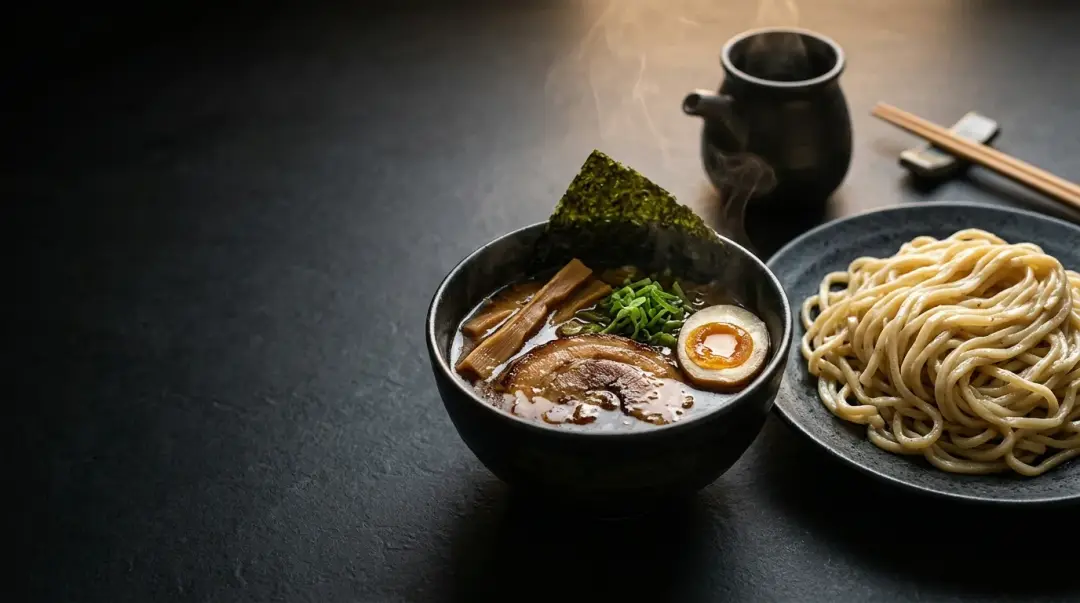
The catalog runs well past ramen. In Hawaii, Sun Noodle built its business on local staples such as saimin (SY-min, Hawaii's light-broth noodle soup), Okinawa soba, chow mein and chow fun. Its current site sorts products into ramen, tsukemen (TSKEH-men, dipping ramen), mazemen (MAH-zeh-men, brothless mixed ramen), regional styles and yakisoba (yah-kee-SOH-bah, stir-fried noodles).
Four Moves Off the Island
2004: California
Sun Noodle opened its first mainland plant in Southern California, which it expanded in 2009. Forbes placed the current California factory in Rancho Dominguez in 2020.
2011: New Jersey and Ramen Lab
The company dates its East Coast plant to 2011. Reports from 2014 placed it in Teterboro, and Forbes placed it in Carlstadt in 2020. A 2014 MetroFocus segment counted 30,000 custom servings a day there and found a research kitchen called RamenLab inside the building. The company took the name to Manhattan as Ramen Lab, a 10-seat blond-wood bar at 70 Kenmare Street in Nolita. Ramen Lab worked as a testing room by day and a rotating guest counter at night. In May 2015, chef Noel Cruz cooked there while preparing to open Ichicoro in Tampa. Time Out now lists it as closed.
2014: The Grocery Case
On October 22, 2014, Whole Foods launched exclusive Sun Noodle Shoyu and Miso ramen kits, plus plain Kaedama noodles, in its New York City stores. That release named Momofuku Noodle Bar and Ivan Ramen as existing restaurant customers.
2020 and 2023: Direct Sales and Europe
Sun Noodle opened its own online store on May 29, 2020, shipping two-serving shoyu, miso and spicy sesame kits on ice packs to Western states first. In 2023 it opened a factory in Rotterdam, its first outside the United States.
Who Cooks With It
Sun Noodle's own site does not publish a client list, so the names here come from press coverage. Beyond Momofuku and Ivan Ramen, Forbes named Momosan by Morimoto, Mission Chinese, Ramen San in Chicago and Tatsuya in Texas; America's Test Kitchen named Ramen Nakamura in New York and the Tsujita chain; Hawaii Business named S&S Saimin and Menchanko Tei in Honolulu.
The Grocery Lineup
Sun Noodle sells two kinds of retail packs. The core line, sold at Whole Foods, Wegmans and Central Market, comes as two portions of fresh noodles plus a liquid soup base, and the Shoyu, Miso and Spicy Sesame versions are labeled vegan-friendly with no MSG. A wider set, including tonkotsu, shows up at H Mart, and kits such as shio sell on sunnoodle.com. Shelf mixes vary by store.
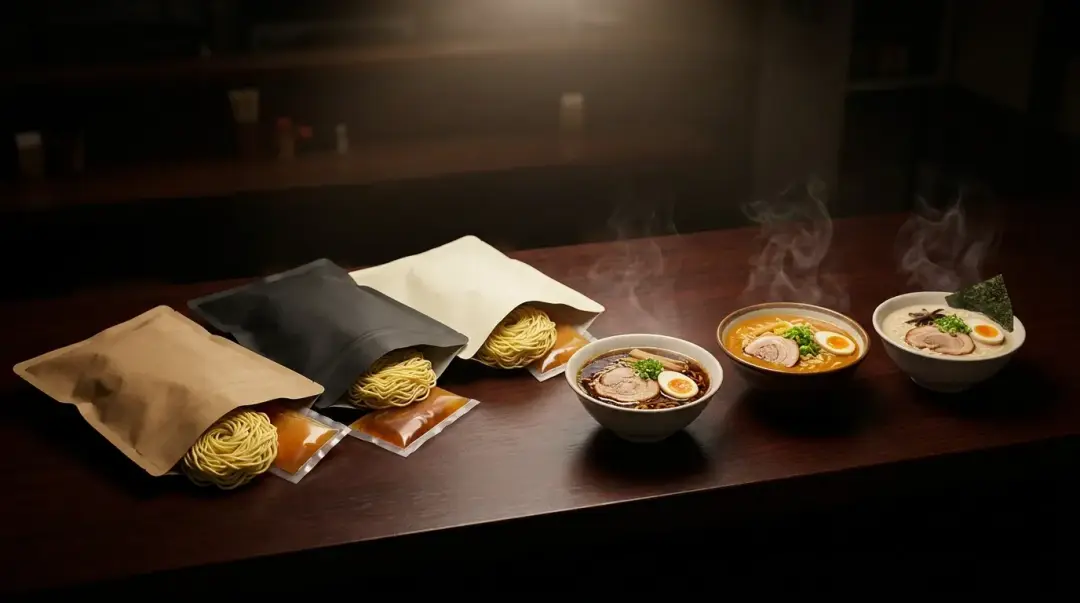
Sun Noodle retail packs most shoppers will see
| Pack | Soup style | Noodle cook time | Notes |
|---|---|---|---|
| Shoyu | Light soy-sauce broth, 1910-style "Tokyo Shoyu" | 2 min | Vegan-friendly, no MSG |
| Miso | Red miso and soy with roasted sesame | 2 min | Vegan-friendly; ATK found the noodles chewy and curly |
| Spicy Sesame | Japanese take on Sichuan tantanmen | 2 min | Vegan-friendly, no MSG |
| Tonkotsu Ramen with Toppings | Creamy Fukuoka-style pork bone | About 2 min | Includes chashu pork and nori |
| Tonkotsu Ramen Kit | Hakata-inspired pork bone | 45 to 60 sec | Firm, straight, thin noodles |
| Shio Ramen Kit | Salt-based broth with bonito and seaweed | 90 sec | Two servings |
| Kaedama | None, noodles only | 2 min | Pairs with homemade broth |
A few terms on those labels. Shoyu (SHOH-yoo) is soy-sauce ramen. Tonkotsu (tohn-KOHT-soo) is pork-bone broth boiled until it turns milky. Tantanmen (TAHN-tahn-men) is the Japanese version of Sichuan dan dan noodles, with sesame paste and chili oil. Chashu (CHAH-shoo) is braised pork belly. Kaedama (kah-eh-DAH-mah) is the extra noodle portion you order at a ramen counter after finishing the first; Sun Noodle breaks it down as kae (additional) and dama (portion).
America's Test Kitchen tested the Whole Foods shoyu, miso and tantanmen kits in November 2022 and concluded: "Short of making ramen yourself, Sun's kits are the best ramen you can eat at home."
What to Buy First
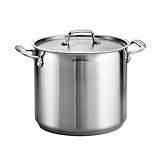
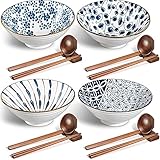
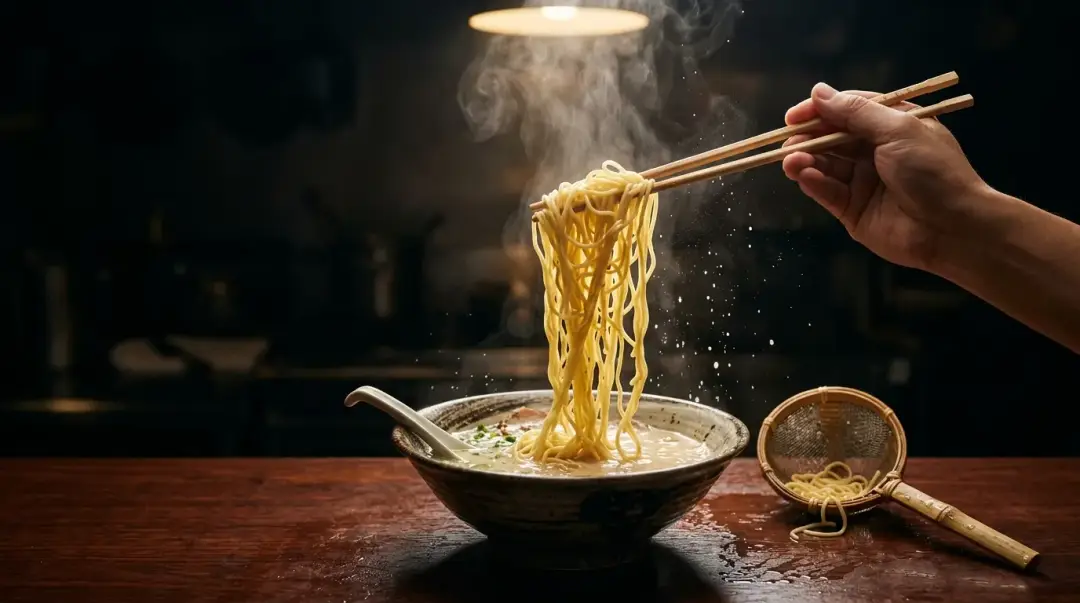
Start with Shoyu. It is the lightest broth in the line, it shows off the noodle more than any other pack, and the label says it is vegan-friendly with no MSG, so it works for most tables. Cook the noodles for the full 2 minutes in a big pot, such as a 12-quart stockpot, drain them hard, and add a soft-boiled egg and sliced green onion. Serve it in a deep ceramic bowl; our ramen bowls guide covers the options.
Your second pack depends on what you like. Pork-bone fans should go to Tonkotsu; H Mart lists a 12.5-ounce two-serving pack, and Amazon lists a 17.5-ounce two-serving kit with chashu pork and seaweed. For dried and instant tonkotsu packs, see our tonkotsu instant ramen guide. Anyone who already makes stock should buy Kaedama, the noodles-only pack, and skip the soup bases entirely. Season a quart of homemade chicken stock with soy sauce and a little mirin, and the noodle pack carries the whole bowl.
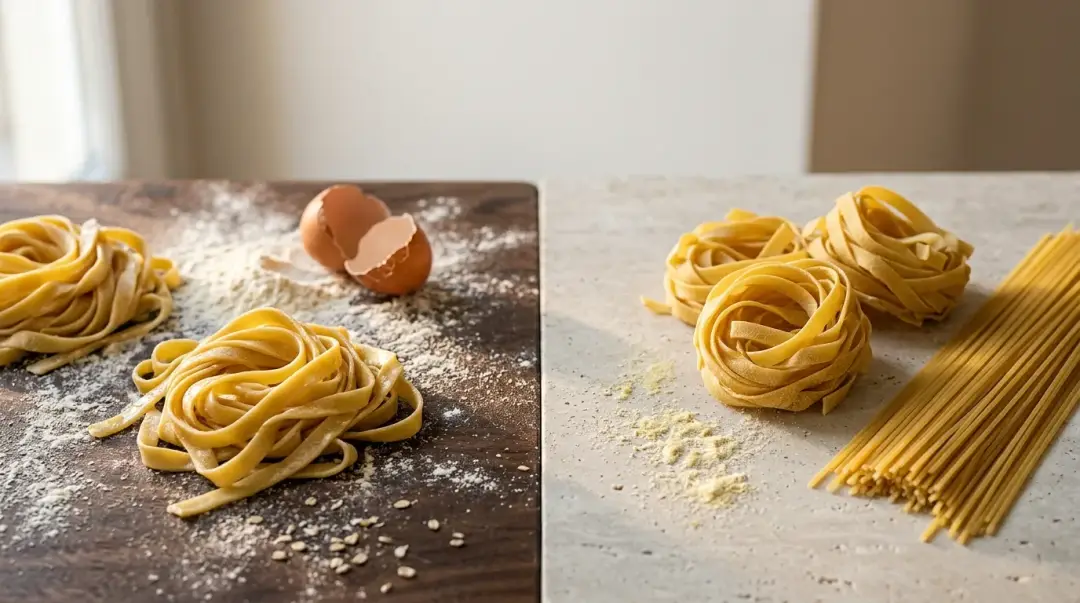
If Sun Noodle is your first fresh ramen, read our fresh vs dried noodles guide before you cook. Fresh ramen overcooks fast; at 3 minutes the strands go soft and start drinking the broth. Set a timer.
Sun Noodle vs Yamachan vs Dried Kaedama
Sun Noodle's nearest grocery rival is Yamachan, a San Jose company founded in 2000 that also began as a restaurant supplier. A shelf-stable alternative is a dried, non-fried kaedama noodle such as Hakubaku's, which keeps in the pantry.
Sun Noodle against the two alternatives shoppers most often see
| Sun Noodle | Yamachan | Hakubaku dried kaedama | |
|---|---|---|---|
| Founded | Honolulu, 1981 | San Jose, 2000 | Japan, 1941 (company) |
| Format | Fresh, refrigerated or frozen | Fresh, refrigerated | Dried, non-fried, shelf-stable |
| Noodle cook time | 45 sec to 2 min | 1.5 to 3 min | 2 min |
| Reach | National: Whole Foods, Wegmans, H Mart, online | Strongest in California and Japanese markets | Online; shelf-stable |
| Best for | Any broth; widest flavor range | Tonkotsu and shoyu | A pantry backup |
Our fresh ramen noodle roundup covers all three. The short version, going by maker descriptions: Yamachan's thin Hakata-style noodles are excellent with tonkotsu, but outside California you may only find them at specialty Japanese markets. Sun Noodle is the brand you can count on finding in most metro areas, and its miso noodle is the one built for thick soup. Our ranked best ramen noodles list puts Sun Noodle's fresh pack first and explains where the dried options fit.
Finding It in the Refrigerated Case
Sun Noodle never sits in the dry noodle aisle. Check the refrigerated case near the tofu and fresh udon, and at Asian grocers look for the noodle freezer too.
The company's store locator lists H Mart, Whole Foods, Wegmans, Central Market and 99 Ranch for in-store shopping, and Weee!, FreshDirect, Instacart and Amazon for delivery. Civil Beat's 2025 profile adds Costco. H Mart typically carries the widest spread, including tonkotsu and other kits that Whole Foods does not stock, while Whole Foods and Wegmans lean on the vegan-friendly core three. The sunnoodle.com shop ships kits packed with ice, and that is the place to find less common styles such as tsukemen and mazemen.
Once it is home, keep it cold. The package says to refrigerate the noodles, or freeze them if you won't cook them soon. Frozen packs keep for up to a year, with the best texture in the first six months, and they cook straight from the freezer with a few extra seconds in the pot. Don't thaw them first; thawed fresh noodles stick together.
FAQ
Who owns Sun Noodle?
Sun Noodle is a family business. Hidehito Uki founded it in Honolulu in 1981, and his wife Keiko joined him early on. Their son Kenshiro Uki joined in 2008 and is president of the North America and Europe operations, and the company describes Kenshiro and his sister Hisae as third-generation noodle makers. The Uki family still runs it.
Which restaurants use Sun Noodle?
Publicly documented customers include Momofuku Noodle Bar and Ivan Ramen in New York, Momosan by Morimoto, Ramen Nakamura, the Tsujita chain, Ramen San in Chicago and Tatsuya in Texas. In Hawaii it has supplied S&S Saimin and Menchanko Tei. A 2014 Hawaii Business profile estimated Sun Noodle supplied about 70 percent of New York City ramen restaurants.
Where can I buy Sun Noodle ramen?
Look in the refrigerated case near the tofu at H Mart, Whole Foods, Wegmans, Central Market and 99 Ranch. The company also lists Weee!, FreshDirect, Instacart and Amazon for delivery, and Costco has carried it. The store locator at sunnoodle.com searches by ZIP code.
How long do you cook Sun Noodle ramen?
Most retail packs say 2 minutes for the noodles. The thin, straight tonkotsu kit noodles take 45 to 60 seconds, and the shoyu and shio kits about 90 seconds. Boil in a large pot of unsalted water, shake the noodles loose as they go in, and drain hard so extra water does not thin the soup.
Is Sun Noodle ramen vegan?
Some of it. The retail Shoyu, Miso and Spicy Sesame packs are labeled vegan-friendly with no MSG, and the noodles contain no egg, though they are made in a facility that handles egg and fish. Tonkotsu uses pork, and some kits include bonito or sardine. Check the label on each pack, since the lineup differs by store.
Can you freeze Sun Noodle?
Yes. The packaging says to keep the noodles refrigerated or freeze them if you will not use them right away. Freeze the sealed pack and cook the noodles straight from frozen, adding a few seconds to the time. Sun Noodle rates its frozen noodles for up to a year, with the best texture inside six months.