Tonkotsu vs Tonkotsu Shoyu: Color, Broth and Taste
· 8 min read · NoodleDex Editorial
Tonkotsu vs tonkotsu shoyu: why one pork-bone broth is milky white and the other tan, how soy tare, chicken oil and noodles change it, and which to order.
This page contains affiliate links. We may earn a commission at no extra cost to you. Disclosure
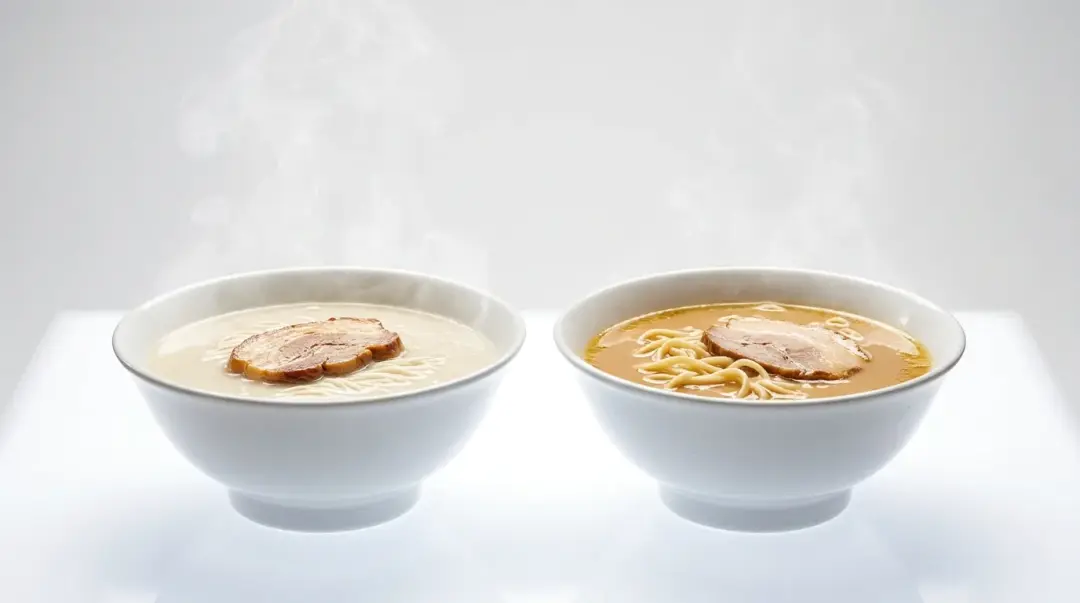
Set the two bowls side by side under a counter light. The tonkotsu (tohn-KOHT-soo) is white, the off-white of whole milk, and fully opaque; a noodle lifted to the surface vanishes the moment it sinks back. The tonkotsu shoyu (SHOW-yoo) is the color of milky tea, a tan that runs toward caramel at the edge of the bowl, and just as opaque. In the iekei version a thin layer of clear gold oil floats on top, catching the light in a way the white bowl does not. One looks like dairy; the other looks like a cream gravy. Everything that separates them, from flavor to noodles to how you order, follows from what made those two colors.
Why Tonkotsu Turns White
Tonkotsu means "pork bone." It names the broth, not the seasoning, which is what makes this comparison confusing.
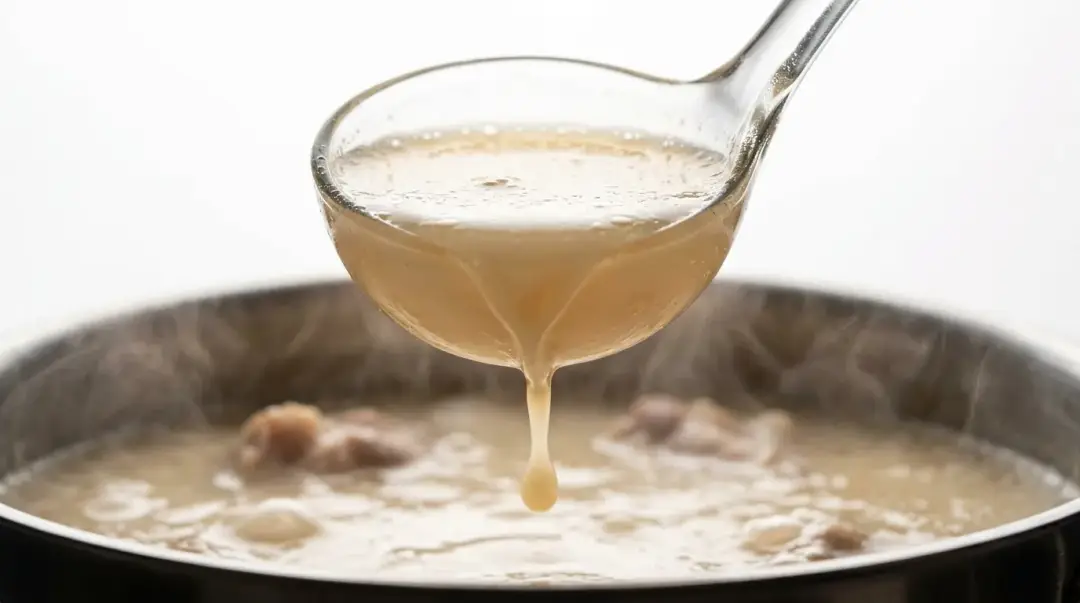
The white comes from the boil. Many clear stocks are held at a gentle simmer; tonkotsu goes the other way. The bones go into water at a hard, rolling boil and stay there. As Yamachan's broth explainer puts it, long high-heat boiling breaks down pork fat, collagen and marrow, and the agitation disperses them into microscopic particles that stay suspended. That suspension is an emulsion, the same physical state as milk, and it scatters light the same way. Collagen, broken down into gelatin, gives the body: a broth that coats the lips.
How long depends on whom you ask. Wikipedia describes boiling the bones for up to eighteen hours; the Michelin Guide's ramen primer cites eight. Either way, the broth is a project measured in a working day.
The style began in Fukuoka Prefecture. Per Fukuoka Now, a stall called Nankin Senryo in Kurume first served pork-bone ramen in 1937; its owner, a former udon vendor, chose pork bones because they were cheaper than chicken. The milky color came ten years later. In 1947 the owner of a Kurume shop called Sankyu left the heat on under his broth by accident, and the overcooked result became the white soup the region is known for. Wikipedia credits the accidental overcooking that produced the milky look to Katsumi Sugino.
Hakata, the old name for central Fukuoka, built the style everyone outside Japan now knows. Hakata shops pair the white broth with thin, straight noodles, often ordered extra firm (barikata, bah-ree-KAH-tah) and refilled with kaedama (kah-eh-DAH-mah), a second serving of noodles dropped into the leftover soup. Fukuoka Now traces kaedama to the Nagahama stalls by the fish market, where thin noodles cooked fast for workers in a hurry.
The bowl is seasoned, of course. Our ramen broth guide notes that a tonkotsu shop typically pairs its broth with a shoyu or shio (salt) tare. In a classic Hakata bowl, though, the color you see is the broth.
Why Tonkotsu Shoyu Turns Tan
Shoyu is soy sauce, and soy sauce is dark because of chemistry that happens months before it reaches a ramen shop. Kikkoman explains that during brewing, sugars and amino acids react in the Maillard reaction and form a brown pigment called melanoidin, which gives soy sauce its reddish-brown color. That reaction starts two or three months into brewing.
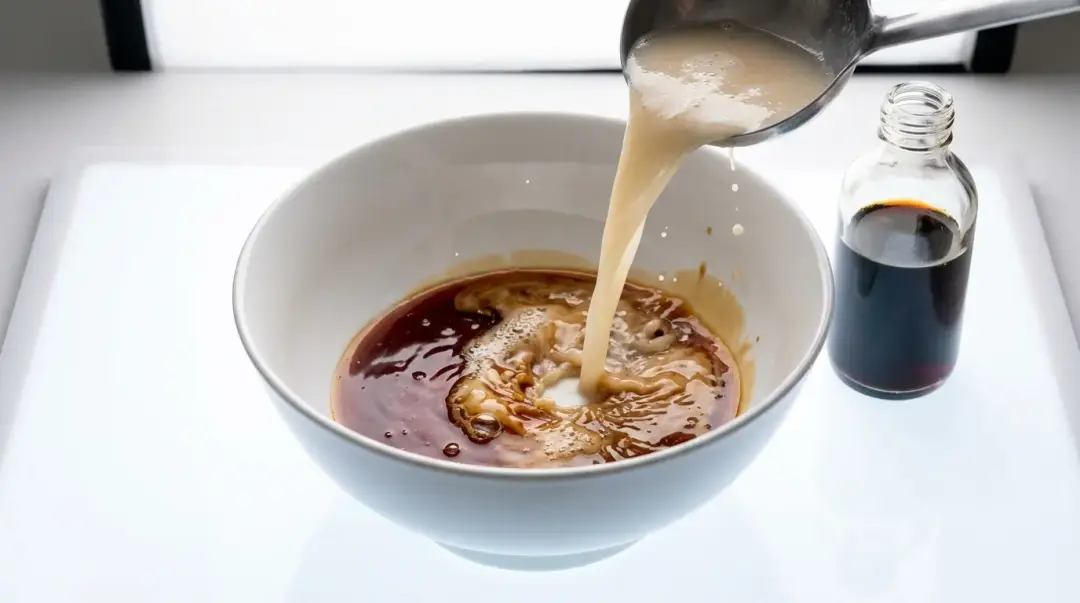
A ramen shop concentrates that soy sauce into tare (TAH-reh), the seasoning base ladled into the empty bowl before the broth goes in. Pour an opaque white emulsion over a dark soy tare and you are mixing pigment into a cloudy liquid. The suspended fat droplets keep the soup opaque, and the melanoidin tints it. The result is tan instead of brown, because the white base dilutes the color; a clear chicken broth over the same tare would look amber and see-through instead.
The more tare, the darker the bowl and the louder the soy. That is why tonkotsu shoyu reads as a separate style even though plain tonkotsu can carry some soy too: in tonkotsu shoyu the soy leads.
With the same pork bones underneath, the color tells you how hard the tare is working.
Two Tonkotsu-Shoyu Families
The category is wider than one city, but two regional styles define it.
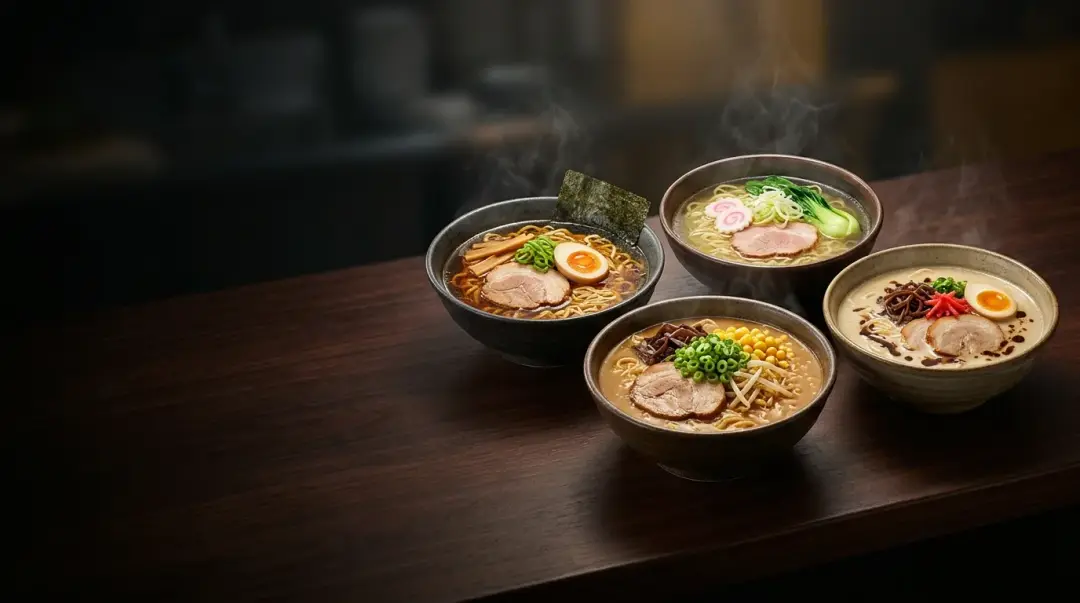
Yokohama iekei. In 1974, Minoru Yoshimura, a former long-haul truck driver, opened Yoshimuraya near Shin-Sugita station in Yokohama. His idea, per the Kanagawa tourism board, was to mix Kyushu pork-bone soup with Tokyo's soy-sauce ramen. Iekei broth blends pork and chicken bones, takes a strong soy tare, and gets a layer of chiyu (chee-yoo), chicken fat rendered from the skin, on top. That oil is the gold sheen in the opening description. The noodles are thick, straight and short, with toppings of chashu, spinach, green onion and three sheets of nori. Diners set noodle firmness, tare strength and oil level when they order. The full story is in our iekei ramen guide.
Wakayama chuka soba. In Wakayama Prefecture, south of Osaka, locals call ramen chuka soba (choo-kah SOH-bah), "Chinese noodles." The Michelin Guide describes Wakayama's style as "a thick tonkotsu-shoyu broth with thin noodles." The best-known shop is Ide Shoten, which started as a food cart in 1958. According to the ramen blog 5AM Ramen, it cooks pork trotters at high heat and combines three separately made broths, producing a soup that is "more tonkotsu than shoyu," with soy as "a tangy vessel." Ide Shoten serves hayazushi, pressed mackerel sushi, and boiled eggs seasoned deeply in soy sauce on the side. The shop has also had a counter in the Shin-Yokohama Raumen Museum's food court.
The two families split on the noodle. Iekei goes thick and chewy; Wakayama stays thin, closer to Hakata. Both keep the opaque pork base and let soy color it.
Side by Side
Hakata tonkotsu vs tonkotsu shoyu (iekei and Wakayama)
| Hakata tonkotsu | Iekei (Yokohama) | Wakayama chuka soba | |
|---|---|---|---|
| Color | Milky white | Tan, gold oil on top | Tan, soy-tinted |
| Opacity | Opaque | Opaque | Opaque |
| Bones | Pork | Pork and chicken | Pork, trotters at Ide Shoten |
| Tare | Shoyu or shio, in the background | Strong shoyu, adjustable | Shoyu |
| Fat layer | Pork fat in the emulsion | Chicken oil (chiyu), adjustable | Pork fat in the emulsion |
| Noodles | Thin, straight, firm | Thick, straight, short | Thin |
| Signature toppings | Varies by shop | Chashu, spinach, three nori | Hayazushi and soy eggs on the side |
| What you customize | Noodle firmness, kaedama refills | Firmness, tare strength, oil | Not a signature of the style |
| Born | Kurume 1937; white broth 1947 | Yoshimuraya, 1974 | Ide Shoten cart, 1958 |
How the Difference Tastes
Color is a fair preview. A Hakata tonkotsu tastes of pork first, rounded by the gelatin; the seasoning sits underneath, and the thin noodles make each mouthful light on starch. Yamachan's explainer describes the texture as silky, a coating feel "without feeling heavy."
Tonkotsu shoyu adds salt and the toasty, fermented depth of soy, and in iekei the chicken oil adds aroma and keeps the soup hot. The Ramen Rater, reviewing Yamachan's packaged Yokohama Tonkotsu Shoyu, called the broth salty with prominent pork-bone flavor and soy sauce on top, and gave it 5 out of 5. Thick noodles change the balance again, giving each bite more chew against the heavier soup.
If you like the clean pork of Hakata, Wakayama is the smaller step, since its noodles stay thin. If you want the biggest contrast, go to iekei and order it koime (strong tare) and oome (extra oil). Our ramen type guide places both styles among the rest of Japan's regional bowls. If you would rather buy than cook, our guide to tonkotsu instant ramen packs lists the ones to try.
A Two-Bowl Tasting at Home
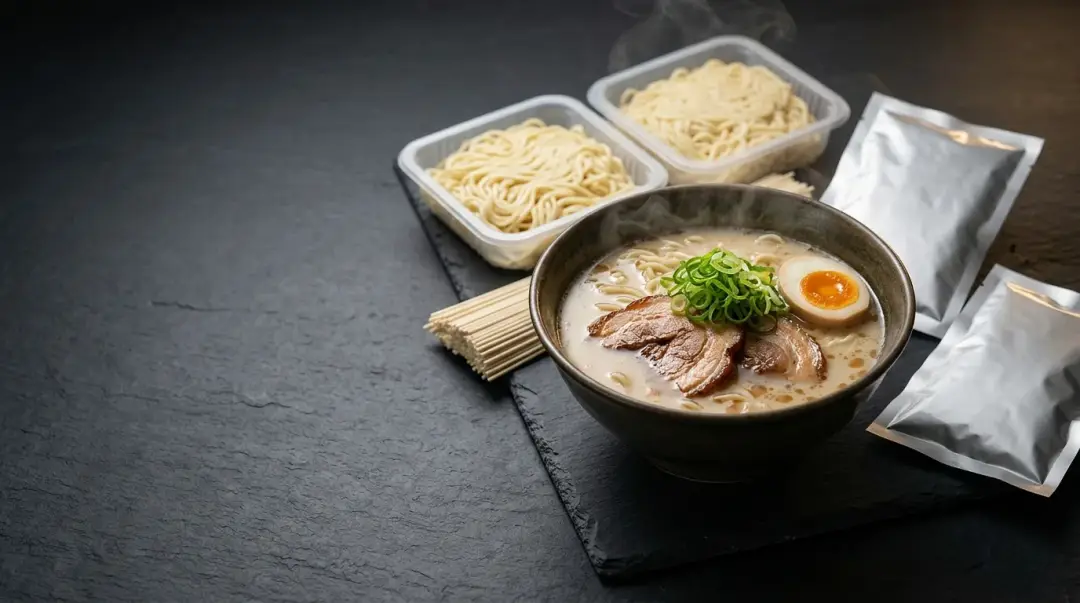
You don't need a trip to Yokohama to see the difference. Two packaged kits cover it.
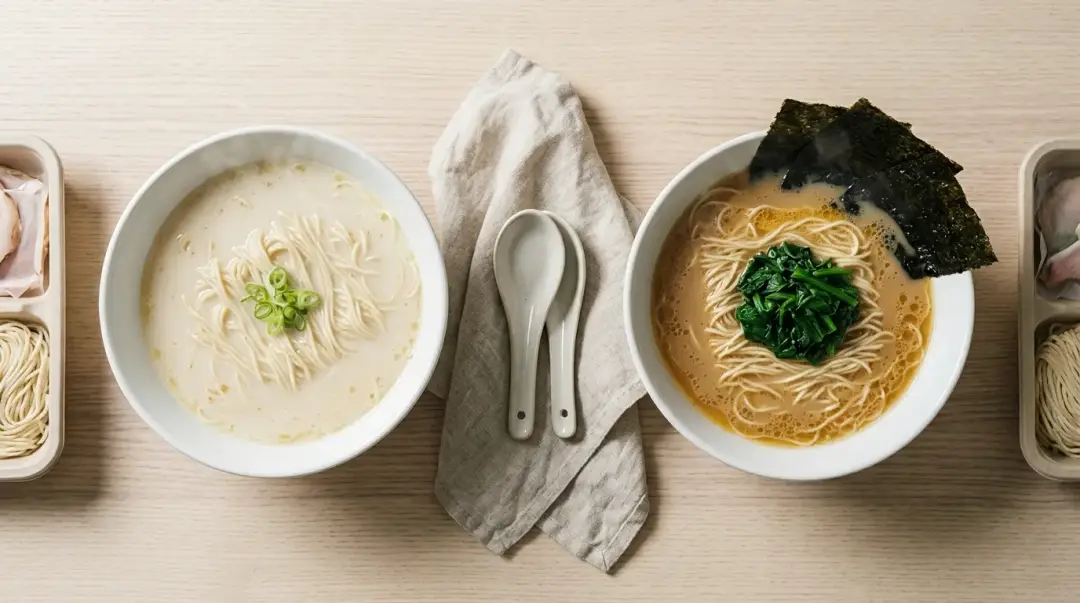
What to buy. One Hakata-style tonkotsu kit and one tonkotsu-shoyu kit. Sun Noodle's Tonkotsu Ramen Kit (17.5 oz, two servings, with chashu and seaweed) is sold at Whole Foods and, frozen, at Walmart. Yamachan's Yokohama Tonkotsu Shoyu comes in a two-serving pack with thick wavy noodles, and The Ramen Rater found Yamachan products easy to find at Japanese and Asian supermarkets. Our best ramen noodles guide lists other kits if either is out of stock.
How to set it up.
- Use two identical white bowls, so the color comparison is fair.
- Prepare each soup base in its bowl with the water amount on its own package.
- Cook each noodle for its own package time in separate pots.
- Before adding toppings, look at the two soups side by side in daylight. Note the white versus tan, and look for any oil layer.
- Taste each broth on a spoon before the noodles go in. Then taste a noodle from each with its own broth.
From scratch instead. The other route is your own pork-bone broth, and the hard boil is the demanding part. A pressure cooker gets a home pot to that heat without a day at the stove; see our pressure cooker guide for ramen broth. A fat separator then lets you pull the fat off a broth and add back only as much as you want, the way an iekei diner sets the oil level.
What to notice. The white bowl should taste of pork with the seasoning in the background. The tan bowl should taste saltier, with soy up front. For an iekei finish on the Yamachan bowl, add blanched spinach, three sheets of nori and a spoon of rendered chicken fat, and eat a bite of rice wrapped in broth-soaked nori.
FAQ
What is the difference between tonkotsu and tonkotsu shoyu?
Both start with pork-bone broth boiled hard until it turns opaque. Tonkotsu, the Hakata style from Fukuoka, keeps the broth milky white and pairs it with thin, firm noodles. Tonkotsu shoyu adds a stronger soy-sauce tare, which tints the soup tan and makes it saltier, and its best-known styles, Yokohama iekei and Wakayama chuka soba, change the noodles and toppings too.
Why is tonkotsu broth white?
Pork bones are boiled at a hard, rolling boil for many hours, which breaks down collagen and marrow and breaks the fat into tiny droplets that stay suspended in the water. That emulsion scatters light the way milk does, so the broth looks white and opaque. Wikipedia describes boiling for up to eighteen hours; the Michelin Guide cites eight.
Is tonkotsu shoyu the same as iekei ramen?
Iekei is one kind of tonkotsu shoyu. It comes from Yoshimuraya in Yokohama, founded in 1974, and blends pork and chicken bones with soy-sauce tare under a layer of chicken oil, served with thick straight noodles, spinach and nori. Wakayama chuka soba is another tonkotsu-shoyu style, with thin noodles and its own toppings.
Which is saltier, tonkotsu or tonkotsu shoyu?
Tonkotsu shoyu usually tastes saltier, because a soy-sauce tare carries more visible seasoning into the bowl. At iekei shops you can adjust it: ask for usume for a lighter tare or koime for a stronger one. The Ramen Rater described Yamachan's packaged Yokohama Tonkotsu Shoyu as salty with a strong pork-bone flavor.
Does tonkotsu ramen have soy sauce in it?
Often a little, yes. Tonkotsu names the broth, not the seasoning, and tonkotsu shops season it with a tare that can be soy-based or salt-based. What makes a bowl read as tonkotsu shoyu is a soy tare strong enough to change the color and lead the flavor.
Which should I order first?
If you have only had ramen at Ippudo, Ichiran or a similar Hakata-style shop, order tonkotsu shoyu next, ideally an iekei bowl, because it shows how much soy and chicken oil change the same pork base. If you have never had ramen with pork-bone broth, start with classic tonkotsu, which is easier to find in the US.
Read Next
Products mentioned in this guide
This section contains affiliate links. We may earn a commission at no extra cost to you.

Sun Noodle Tonkotsu Ramen Kit, 17.5 oz (2 servings)
The white side of the comparison: a pork-stock soup base with fresh noodles, chashu and seaweed in one box. Sold at Whole Foods and in Walmart's freezer case.
View on Amazon- Y
Yamachan Yokohama Tonkotsu Shoyu Ramen (2 servings, 12.56 oz)
The tan side: pork and chicken broth with soy sauce and thick wavy noodles, modeled on Yokohama's iekei style. Cook it next to a tonkotsu kit to see and taste the difference.

Official ICHIRAN Take-Home Ramen Kit, Hakata Tonkotsu (5 servings)
A Hakata tonkotsu reference from one of the chains that made the style famous abroad. Thin noodles and a pork-bone soup, the template iekei and Wakayama bowls depart from.
View on Amazon
Instant Pot Duo 7-in-1 Electric Pressure Cooker, 8 Quart
Both bowls start with pork bones boiled hard for hours, and a pressure cooker is the home route to that kind of heat in a smaller pot. This listing is an 8-quart electric pressure cooker that also slow cooks and sautés.
View on Amazon
OXO Good Grips 4-Cup Fat Separator
Iekei shops let diners set the oil level, and a separator gives a home cook the same control over fat on a broth. This listing is a 4-cup, heat-resistant separator with a strainer lid.
View on Amazon
Browse more related items
Opens Amazon · affiliate links
Buying guides for this topic
- Buying guideBest Ramen Noodles & Kits in 2026The best fresh and dry ramen noodles, plus premium ramen kits, available on Amazon — Sun Noodle, Hakubaku, Marusan, and Maruchan Seimen ranked.
- Buying guideBest Japanese Pantry Essentials in 2026The 10 Japanese pantry items needed to cook ramen, udon, soba, and yakisoba at home. Soy, dashi, mirin, miso, and yakisoba sauce, ranked.
- Buying guideBest Japanese Cookware in 2026The donabe, ramen bowls, sōmen sets, and tools you need to cook Japanese noodles at home. Real US Amazon picks across budget tiers.