Vietnamese vs Thai vs Chinese Noodles Compared
· 6 min read · NoodleDex Editorial
Compare Vietnamese, Thai, and Chinese noodles by broth, spice level, herb use, and serving style. Pick the right bowl on your next Pan-Asian menu.
This page contains affiliate links. We may earn a commission at no extra cost to you. Disclosure
On this page(15 sections)
- The Headline Difference
- Why These Three Get Confused
- At a Glance
- Side-by-Side: Stir-Fry Sauces
- Vietnamese: Clarity and Layering
- Thai: Balance Through Intensity
- Chinese: Regional Diversity, Wheat Tradition
- The Gear Behind Each Bowl
- The Herb Question
- How to Tell Them Apart in a US Restaurant
- The Fish Sauce Distinction
- Why This Matters for Cooking
- If You Only Remember One Thing
- FAQ
- Products mentioned in this guide
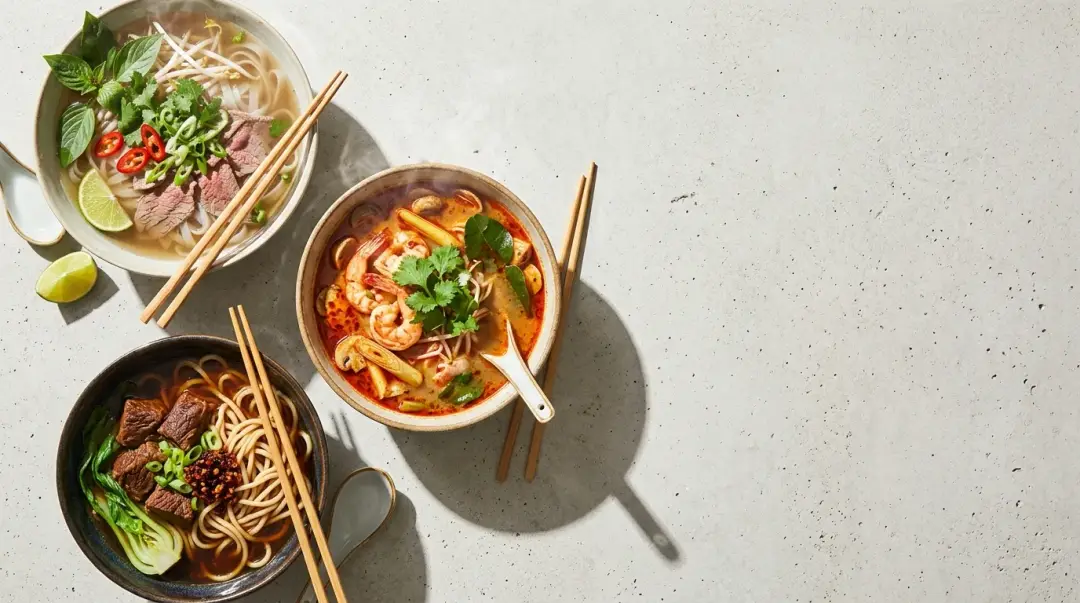
Vietnamese cooking serves you components and trusts you to finish the bowl. Thai cooking front-loads the balance — sour, salty, sweet, spicy all hitting at once. Chinese cooking refuses to be one cuisine and instead operates as eight regional traditions stapled together. Same shelf at the grocery store; three completely different design philosophies once you cook them.
The Headline Difference
The three cuisines diverge on who finishes the dish. A Vietnamese cook hands you a bowl half-built — clear broth, noodles, sliced meat — plus a garnish plate with herbs, lime, sprouts, chili, and the trust that you'll season the bowl yourself across the meal. A Thai cook hands you a bowl already balanced four ways (sour/salty/sweet/spicy) and expects you to eat it as served. A Chinese cook hands you whatever the regional kitchen handed them — there's no single Chinese answer, only the answer that belongs to Sichuan, Cantonese, Shanxi, or Lanzhou cooking. Identifying the philosophy first tells you what to expect on the table.
Why These Three Get Confused
Vietnamese, Thai, and Chinese noodles share rice as a foundational ingredient, fish sauce or fermented seafood as savory bases, and centuries of cultural exchange across the South China Sea and Southeast Asian land borders. From a Western diner's perspective they often look interchangeable — three "Asian noodle" categories on a Pan-Asian menu.
They aren't. Each represents a distinct cooking philosophy, and once you can tell them apart, you understand Asian food at a deeper level.
At a Glance
Vietnamese vs Thai vs Chinese — Cooking Philosophy
| Aspect | Vietnamese | Thai | Chinese |
|---|---|---|---|
| Primary broth | Clear, long-simmered bone broth | Often coconut-milk-rich or sour-spicy | Pork bone, regional variants |
| Spice level | Generally mild (except central VN) | Generally high; chili-forward | Highly regional |
| Sweetness | Subtle, balanced | Often pronounced; palm sugar | Mostly absent; rare regional sweet |
| Herb role | Fresh, raw, added at table | Cooked into broth; sometimes raw | Mostly cooked-in |
| Fish sauce style | Nước mắm — refined, lighter | Nam pla — bolder, fishier | Less common; uses soy |
| Noodle base | Mostly rice | Mix of rice and wheat | Strong wheat tradition; some rice |
| Iconic dish | Phở | Pad Thai, Tom Yum | Lamian, hand-pulled noodles |
| Eating style | Garnish-plate-based, customize at table | Pre-seasoned, eat as served | Built-in-bowl with chopsticks |
Side-by-Side: Stir-Fry Sauces
A useful comparison if you cook at home: each cuisine builds its stir-fries on a distinct sauce architecture.
Stir-Fry Sauce Architecture
| Cuisine | Primary Sauce | Sweetness | Aromatic Anchor |
|---|---|---|---|
| Vietnamese (rare in noodle stir-fry) | Fish sauce + sugar + garlic | Moderate | Lemongrass, shallot |
| Thai pad thai | Tamarind + fish sauce + palm sugar | Pronounced | Garlic, dried shrimp, peanut |
| Thai pad see ew | Dark soy + oyster + light soy | Mild (dark soy is slightly sweet) | Garlic, gai lan |
| Chinese Cantonese (chow mein) | Light soy + oyster + sesame oil | Subtle | Ginger, scallion, garlic |
| Chinese Sichuan (dan dan) | Soy + chili oil + Sichuan peppercorn | Minimal | Garlic, preserved vegetable |
The takeaway: Thai stir-fries lean noticeably sweeter than Chinese stir-fries; Vietnamese rarely uses the stir-fry-on-rice-noodle format at all (Vietnamese noodles are mostly broth-based).
Vietnamese: Clarity and Layering
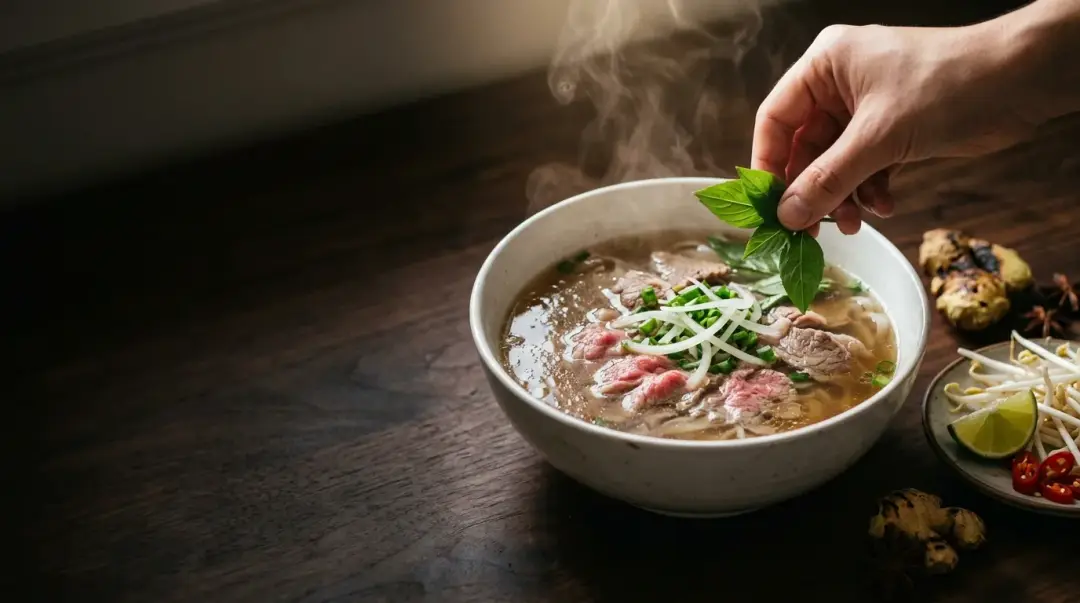
Vietnamese cooking philosophy is built around clean broths, fresh herbs, and table customization. A bowl of phở arrives looking simple — clear broth, noodles, a few slices of beef — and a garnish plate sits next to it: Thai basil, cilantro, bean sprouts, lime, jalapeño. The diner is the final cook. You taste, you adjust, you add what you want.
This reflects Vietnam's longer-cuisine philosophy: simplicity at the core, complexity through customization. Vietnamese restaurants don't serve "ready" dishes the way Italian or Japanese restaurants do — they serve components that you assemble.
Best examples: phở, bún chả, hủ tiếu.
Thai: Balance Through Intensity
Thai cooking philosophy is the four flavors — sour, salty, sweet, spicy — balanced in every dish. Where Vietnamese cooking trusts the diner to balance, Thai cooking front-loads the balance for you. A bowl of pad thai arrives already sweet, sour, salty, slightly spicy — all four hitting at once.
Coconut milk is heavier in Thai cooking than Vietnamese (used in laksa, green curry, etc.). Lemongrass appears in both cuisines but works differently — Thai cooks bruise it and steep it into broths; Vietnamese cooks use it as a top-note flavor in marinades and certain regional dishes (like bún bò Huế).
Best examples: pad thai, kway teow, laksa.
Chinese: Regional Diversity, Wheat Tradition
Chinese noodle cooking has the deepest regional variation of the three. Northern China is wheat country (hand-pulled lamian, dan dan, biang biang). Southern China is rice country (lo mein, ho fun, mai fun). The flavor profiles vary by region too — Sichuan is numbing-and-spicy, Cantonese is clean-and-savory, Shanxi is vinegar-forward.
Unlike Vietnamese and Thai cooking, Chinese cooking doesn't have a single defining flavor profile. It has dozens, by region. This is what makes Chinese noodle dishes hard to categorize.
Best examples: lo mein, dan dan, biang biang, lamian.
The Gear Behind Each Bowl
The three styles also call for different tools. Vietnamese soups arrive in wide, deep bowls with space for a herb plate's worth of additions. Chinese stir-fried noodles are wok-fried, and a flat-bottom carbon steel wok suits a home stove; our Chinese wok buying guide sorts the options. Thai stir-fried noodle plates such as pad thai usually come with a fork and spoon, the fork pushing food onto the spoon, while Thai noodle soups are eaten with chopsticks and a spoon.
The Herb Question
A diagnostic question: where do the fresh herbs go?
- Vietnamese: Always on a separate plate, raw, added by the diner.
- Thai: Usually cooked into the dish (basil leaves in pad krapow, kaffir lime leaves in green curry). Occasionally raw garnish.
- Chinese: Almost always cooked into the dish (scallion, cilantro, garlic). Raw garnish is rare except for specific dishes.
If your noodle bowl came with a side plate of herbs, it's Vietnamese (or Vietnamese-influenced Cambodian/Lao).
How to Tell Them Apart in a US Restaurant
Look at the broth color and clarity:
- Clear, almost translucent, garnish plate on the side → Vietnamese
- Opaque (often orange or white from coconut milk), no garnish plate, served pre-spiced → Thai
- Either clear-and-savory or thick-and-rich, eaten with chopsticks-and-spoon together → Chinese
Look at the seasoning side dishes:
- Hoisin, sriracha, lime wedges, jalapeños → Vietnamese
- Fish sauce with chilies, sugar, peanuts → Thai
- Black vinegar, chili crisp, sesame oil → Chinese
The Fish Sauce Distinction
All three cuisines use fermented fish products, but in noticeably different forms:
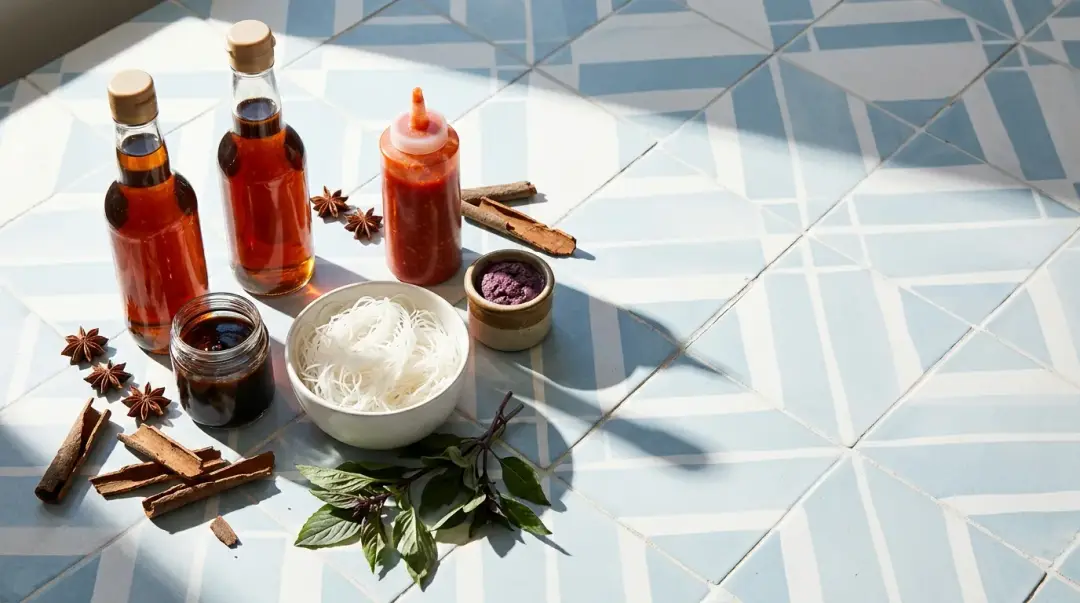
- Vietnamese nước mắm — long-fermented (12 months minimum, often longer), filtered to clarity, lighter in body. The premium tier (Phu Quoc-origin Red Boat 40°N) is golden-brown, almost wine-like, used as a finishing sauce as much as a cooking ingredient.
- Thai nam pla — fermented similarly but typically less aged, bolder and fishier on the nose. Most US-available brands (Squid, Three Crabs, Tiparos) sit in this category. Used as a heavy cooking ingredient.
- Chinese fish sauce — uncommon. Chinese cuisine reaches for soy and oyster sauce far more than fish sauce. Where fish sauce appears, it's usually in southern coastal cooking and called yu lu.
The Vietnamese-Thai split here is real. Buy a bottle of Red Boat 40°N and a bottle of Squid Brand and taste both side by side — they belong in different cuisines.
Why This Matters for Cooking
If you understand the three cuisines as philosophies rather than as random recipes, you can navigate menus better, shop better at Asian groceries, and substitute more intelligently when cooking at home. The next time you see "Asian noodle bowl" on an American menu, you can ask the right follow-up: Which one?
If You Only Remember One Thing
Vietnamese hands you components; Thai hands you a balanced four-flavor finish; Chinese hands you whichever regional answer the kitchen comes from. Identify who's finishing the dish — you, the chef, or the region — and you've identified the cuisine.
FAQ
What is the main difference between Vietnamese, Thai and Chinese noodles?
Who finishes the dish. Vietnamese bowls arrive half-built with a raw herb plate for the diner, Thai dishes arrive balanced sour, salty, sweet and spicy, and Chinese noodles follow regional traditions with a strong wheat base.
Which is spicier, Vietnamese or Thai noodles?
Thai noodles are generally more chili-forward. Vietnamese bowls are usually mild, except in central Vietnam, and spice is added at the table.
How can you tell a Vietnamese noodle soup from a Thai one?
A clear, translucent broth with a side plate of herbs points to Vietnamese. An opaque orange or white broth, often coconut-based and served pre-spiced, points to Thai.
How does Vietnamese fish sauce differ from Thai fish sauce?
Vietnamese nước mắm is long-fermented, filtered and lighter, often used as a finishing sauce. Thai nam pla is typically less aged, bolder and fishier, used as a heavy cooking ingredient.
Read Next
- The 8 Core Vietnamese Noodles — full encyclopedia
- The 8 Core Korean Noodles — Korean noodle culture
- Rice Noodles vs Wheat Noodles vs Glass Noodles — the technical comparison
Products mentioned in this guide
This section contains affiliate links. We may earn a commission at no extra cost to you.

Red Boat 40°N Fish Sauce, 8.45 oz
The Vietnamese half of the fish sauce taste test on this page. Golden, clean and light enough to use as a finishing sauce.
View on Amazon
Squid Brand Fish Sauce
A bolder Thai nam pla to taste next to Red Boat. Built for cooking, as in pad thai sauce.
View on Amazon
Lao Gan Ma Chili Crisp (Original)
One of the Chinese table condiments this page uses to spot a Chinese noodle shop. A spoonful finishes dan dan or plain wheat noodles.
View on Amazon
Gold Plum Chinkiang Vinegar
Black vinegar from Zhenjiang, the other Chinese table cue named here. Its malty sourness suits dumplings and Shanxi-style noodles.
View on Amazon
YALONG Ceramic Ramen Bowls, Set of 4, 40 oz, 8 Inch
A phở bowl is wide and deep, with room for broth, noodles and the herbs and lime a Vietnamese diner adds at the table. This set is four 8-inch, 40 oz ceramic bowls sold for pho and ramen.
View on Amazon
Craft Wok 14-Inch Flat Hand-Hammered Carbon Steel Pow Wok
Chinese stir-fried noodles such as chow mein and lo mein are built on wok heat. This is a 14-inch flat-bottom carbon steel wok, 1.8 mm thick, with a wooden handle and a steel helper handle.
View on Amazon
Browse more related items
Opens Amazon · affiliate links