


Pad thai lives or dies on noodle width. Buy sen lek (Thai 5mm flat rice noodle) for pad thai itself, sen yai (Thai 10mm wide rice noodle) for drunken noodles and pad see ew (Thai stir-fried wide noodle), and a pre-made tamarind sauce if you're cooking it for the first time and don't want to chase down a jar of tamarind paste. A Taste of Thai is the top pick because it sits on shelves at Whole Foods, Trader Joe's, and most supermarkets.
How We Pick
- Width before brand. A wrong-width Thai rice noodle is a worse pad thai than a mediocre brand at the right width. 5mm for pad thai. 10mm for drunken noodles, pad see ew, and rad na (Thai gravy noodle). Anything labeled "Asian rice noodles" without a millimeter number gets skipped.
- Brand authenticity. Rice-only ingredient lists. Single-country origin — Thailand for sen lek and sen yai, full stop. No corn starch fillers, no maltodextrin in the sauce, no high-fructose corn syrup on the back label.
- Distribution. A product earns the top slot only if a reader can buy it without a trip to a Thai grocery. Mainstream Amazon stocking, Whole Foods or Trader Joe's shelving, or both.
The Top Pick: A Taste of Thai
A Taste of Thai is the answer when you want pad thai on a Wednesday and don't want to plan ahead. The brand sells a 6-pack of 9-oz sen lek bags at the correct 5mm pad thai width, and it stocks at the three places most home cooks already shop — Trader Joe's near the dry pasta, Whole Foods in the international aisle, and Amazon Prime with two-day delivery. There's nothing exotic on the back label: rice flour and water. The 9-oz format is right-sized for one weeknight dinner of four servings, with no half-bag leftovers to seal back up.
The noodle itself behaves like sen lek should. A 7-minute warm-water soak (not a boil) brings the ribbons to a pliable, white-translucent state that finishes in the wok with the sauce. The width holds tamarind-and-fish-sauce coating without snapping into rice-noodle confetti the way thinner vermicelli does. It's also the most kid-friendly pick — the rice flour is naturally gluten-free, vegan, and Non-GMO Project verified, which clears the usual weeknight gauntlet of dietary asks.
Where it loses to the budget pick is cost by weight. A 9-oz bag costs more per ounce than the larger bag of the budget option below. If you're cooking pad thai once a month, the convenience is worth the markup. If you're cooking it every week, scroll down.

A Taste of Thai Pad Thai Rice Noodles
Widely available at mainstream supermarkets
Best Budget: Authentic Thai 5mm Sen Lek
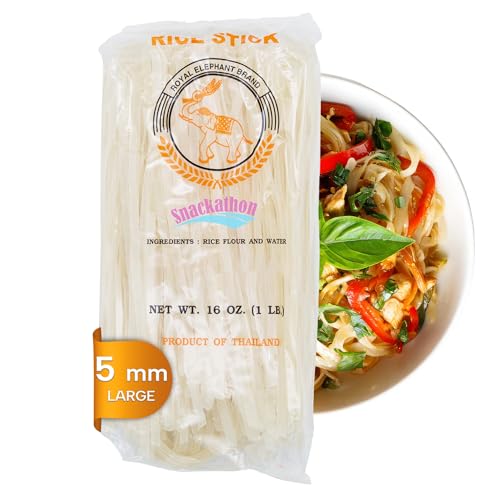
Authentic Thai (the brand literally named that) sells a single 16-oz bag of 5mm sen lek. The bag is nearly twice the size of A Taste of Thai's 9-oz format, so a household cooking pad thai twice a week buys fewer packages and stores them flatter. The product page markets it as "Authentic Rice Noodles From Thailand," and the spec confirms it: 5mm flat, rice flour and water, naturally gluten-free, cholesterol-free, all-natural. Imported direct from Thailand rather than re-bagged by a co-packer.
The trade-offs are honest. There's no multi-pack option, so a weekly pad thai habit means re-buying single bags. The Thailand shipping pipeline also stretches past Amazon's standard two-day window — expect three to five days in most metro areas. Neither is a dealbreaker for a pantry stock-up. This is the bag to buy when you've made pad thai enough times to know your way around the tamarind jar and you'd rather spend the savings on a better fish sauce.

Authentic Thai Pad Thai Rice Stick Noodles
Direct-from-Thailand import marketed as "Authentic Rice Noodles From Thailand" — naturally gluten-free, cholesterol-free, all-natural
Standard Pick: Authentic Thai Wide Sen Yai 10mm
The same Thailand importer also runs a 10mm wide sen yai line, sold as a 6-pack of 16-oz bags. This is the noodle for pad kee mao (drunken noodles), pad see ew, and rad na — three dishes that are emphatically not pad thai and require a structurally different rice ribbon. A 5mm sen lek in a drunken-noodle stir-fry tears into a sauce-coated mush. The 10mm sen yai stands up to wok-tossing, char on the edges, and the heavier dark-soy-and-chili profile of the three wide-noodle dishes.
The 6-pack format is the standout. Wide-noodle dishes burn through 1 to 1.5 bags per family-size serving — more noodle per stir-fry than pad thai — so a single bag goes fast. Bought by the 6-pack, this is a restaurant-pantry buy for a household that's added drunken noodles or pad see ew to the weeknight rotation. Two cons to flag: the wider ribbons need a longer 15-minute warm-water soak (cold water will leave them stiff in the middle), and the wide format tears more easily than sen lek when you flip the wok. Plate them with chopsticks, not tongs.

Authentic Thai Wide Sen Yai Rice Stick Noodles
Correct 10mm sen yai (wide) width for drunken noodles (*pad kee mao*), pad see ew, and rad na — not interchangeable with the 5mm sen lek
Best for Beginners: Thai Kitchen Pad Thai Sauce
Tamarind paste is the single hardest pad thai ingredient to source in a suburb. You can find it at Thai groceries and the larger H Mart locations, but most non-coastal readers will hit a wall — and substituting ketchup, which the bad recipes suggest, produces something that isn't pad thai. Thai Kitchen's pre-made Pad Thai Sauce is the workaround. The 2-pack of 8-oz bottles is built on real tamarind, not ketchup. It's gluten-free, sold at Target and most mainstream grocers, and shelf-stable in the pantry.
The sauce is slightly sweeter than the restaurant version, which is the standard trade-off for any pre-made Thai sauce calibrated to a sweeter taste. Compensate with a squeeze of lime at the table and an extra dash of fish sauce in the wok. The point isn't to match a Bangkok street stall on the first try — it's to get a recognizable pad thai on the plate without four trips to source dry ingredients. Once you've made it three or four times with the bottle, the tamarind-paste version is a 15-minute upgrade.

Thai Kitchen Pad Thai Sauce
Pre-made pad thai sauce — skip the tamarind sourcing
What to Look For
- 5mm sen lek for pad thai — full stop. The width is printed in millimeters on any serious Thai-import bag. If the package only says "rice stick" or "Asian rice noodles," it's likely a vermicelli or a 3mm noodle that won't hold sauce.
- Soak, don't boil. Sen lek goes into warm tap water for 7 minutes. Sen yai needs 15. Boiling overcooks the noodle before it ever hits the wok, and the stir-fry finishes the texture.
- Rice and water only. The cleanest Thai rice noodles have a two-ingredient back label. Tapioca starch is acceptable in trace amounts; corn starch and maltodextrin are not.
- Thailand-imported, not generic. A "Product of Thailand" line on the bag matters. Thai noodle factories cut and dry rice noodles at specifications most co-packers don't replicate.
- No tamarind substitutes in the sauce. Read the label on any pre-made pad thai sauce. The first sweet-sour ingredient should be tamarind. If it's tomato paste, ketchup, or "natural sour flavor," put it back.
Common Mistakes
- Using ketchup instead of tamarind. This is the single most common pad thai error outside Thailand, and it shows up in recipes from major food sites. Ketchup is tomato, vinegar, and sugar. Tamarind is a fruit pulp with a sweet-sour-funky profile that ketchup doesn't approximate. The finished plates taste meaningfully different — one is pad thai, the other is sweet-and-sour stir-fry over rice noodles.
- Buying the wrong width. Sen lek (5mm) in a drunken-noodle stir-fry is wrong. Sen yai (10mm) in a pad thai is also wrong. Both noodles are flat, both are rice, both come from Thailand — and they are not interchangeable. Check the millimeter number before checking out.
- Pre-cooked pad thai meal kits. The refrigerated "Pad Thai Kit" at most supermarkets pairs pre-cooked noodles with a sauce packet. Pre-cooked rice noodles go gummy on reheating, and the kit sauce is reliably the corn-syrup-first version. Buy the dry sen lek and a bottle of Thai Kitchen sauce for the same total cost and a better result.
- Boiling instead of soaking. Dry sen lek soaks in warm water, then finishes in the wok. Boiling produces a noodle that's already past its peak texture before the sauce touches it. The instructions on most Thailand-imported bags say warm-water soak for a reason.
- Skipping the lime and the fish sauce at the table. Pad thai is balanced at the table, not in the pan. A wedge of lime, a small bowl of crushed peanuts, and a side dish of fish sauce with sliced chilies are how the dish is served in Bangkok. Plating without them is a common restaurant shortcut.
FAQ
What's the difference between sen lek and sen yai?
Both are flat rice noodles from Thailand. Sen lek is 5mm wide — the pad thai noodle. Sen yai is 10mm wide and goes into drunken noodles, pad see ew, and rad na. The noodles are not interchangeable; the wider sen yai holds heavier dark-soy sauces, while sen lek is calibrated for tamarind-and-fish-sauce pad thai.
Do I need to boil rice noodles before stir-frying?
No. Sen lek soaks in warm tap water for about 7 minutes; sen yai needs 15. They finish cooking in the wok with the sauce. Boiling overshoots the texture before the stir-fry begins.
Can I substitute ketchup for tamarind?
No. Tamarind paste is the defining ingredient in pad thai sauce — a sweet-sour fruit pulp with a funky depth ketchup doesn't have. If the recipe says "ketchup or tamarind paste," the recipe is wrong. Thai Kitchen's pre-made sauce uses real tamarind and is the easier fallback.
Is pad thai gluten-free?
The noodles are — they're rice flour and water. The sauce is the variable. Tamarind, fish sauce, palm sugar, and lime are gluten-free, but soy sauce is not. Read the bottle if you're buying pre-made, or use Thai Kitchen's labeled gluten-free version.
Where do I find tamarind paste?
Thai and Indian groceries stock it cheap, usually in jars or as compressed blocks. H Mart locations carry it inconsistently — call ahead. Amazon ships several brands, but the freshest source is a Thai grocery. If you can't find any, start with the Thai Kitchen pre-made sauce.