Japanese vs Korean vs Chinese Noodles
· 6 min read · NoodleDex Editorial
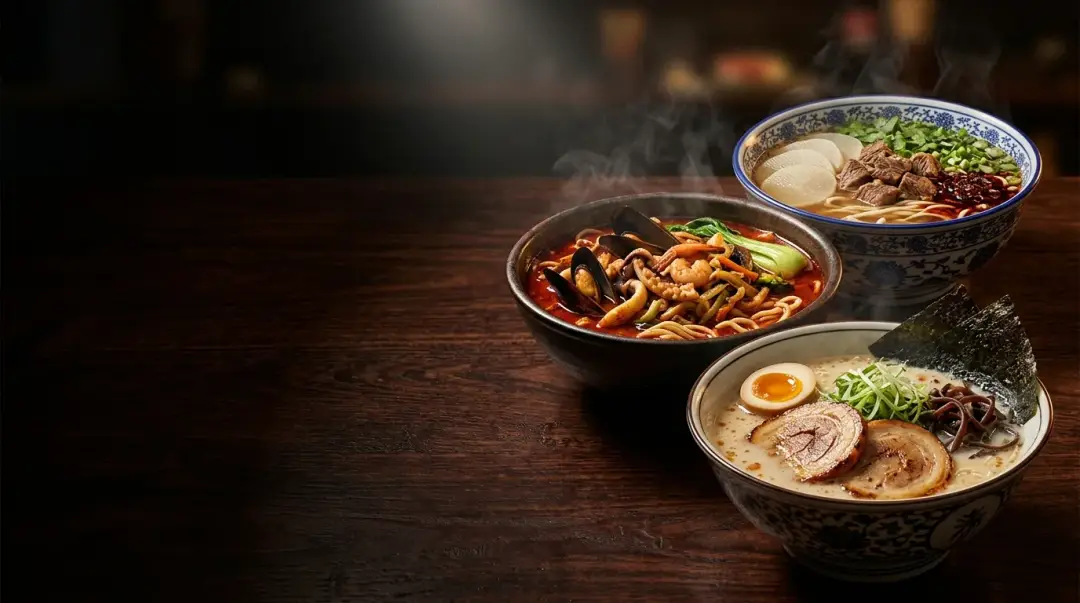
Compare Japanese precision, Korean layering, and Chinese regional cooking by broth, kansui use, and shop bowl. See which cuisine matches your craving.
This page contains affiliate links. We may earn a commission at no extra cost to you. Disclosure
On this page(11 sections)
Japanese noodle cuisine is built on precision — measured ratios, regulated grain percentages, repeatable shop bowls. Korean noodle cuisine is built on layering — gochugaru, gochujang, doenjang, sesame, soy, all stacked. Chinese noodle cuisine is built on regional difference so wide that "Chinese food" barely functions as a category. The three share one ancestor (lamian) and almost nothing else.
The Headline Difference
The fastest way to separate the three is by what the chef is optimizing for. The Japanese chef is hitting a target — kansui ratio, dashi steep time, juwari buckwheat percentage — that has a correct answer. The Korean cook is balancing a deck of fermented red-savory ingredients with no exact Japanese or Chinese equivalents (gochugaru, gochujang, doenjang). The Chinese cook is working somewhere on a map of eight regional traditions, and the answer to "what should this taste like?" depends entirely on whether the kitchen is Cantonese, Sichuan, Shanxi, Shaanxi, or northwest Hui-Muslim. One target, one stack, eight maps.
Side-by-Side: Three Cuisines at a Glance
Japanese vs Korean vs Chinese — Noodle Philosophy
| Aspect | Japanese | Korean | Chinese |
|---|---|---|---|
| Defining technique | Precision (alkaline noodles, exact dashi ratios) | Layering (gochugaru + sesame + soy + fermented paste) | Regional variation (8 distinct traditions) |
| Broth foundation | Dashi (bonito + kelp) | Anchovy + kelp, tinted with gochugaru | Pork bone, chicken, regional |
| Spice level | Generally mild | Often spicy | Highly regional (mild to fiery) |
| Wheat treatment | Alkaline (kansui) for ramen | Mostly non-alkaline | Strong alkaline tradition (lamian) |
| Cold noodle role | Moderate (zaru soba, sōmen, hiyashi chuka) | Strong (naengmyeon, bibim guksu, kongguksu) | Limited (liang mian, regional) |
| Eating posture | Slurp loudly = compliment | Spoon + chopsticks in tandem; table scissors | Chopsticks + spoon |
| Iconic example | Ramen, Udon, Soba | Ramyeon, Japchae, Jjajangmyeon | Lamian, Lo Mein, Dan Dan |
| Default US shop | Ippudo, Jinya, local ramen-ya | Korean BBQ + noodle joint, H Mart cafeteria | Sichuan / Cantonese / Lanzhou specialist |
Japanese: Precision
Japanese noodle cooking is the most technically dialed-in of the three. The kansui ratio in ramen noodles is measured to the gram. The dashi steeping time for udon broth is timed to the minute — 30 minutes for konbu at 60°C, then 1-2 minutes for bonito off-heat. The buckwheat percentage in soba is regulated by Japanese food law: juwari is 100% buckwheat, nihachi is 80% buckwheat / 20% wheat. Each parameter belongs to a specific style, and a chef following that style is hitting a target.
This precision is exactly why Japanese ramen has spread globally — it's reproducible. American ramen shops following Tokyo or Fukuoka training routinely hit 90% of the source bowl. Sun Noodle in California supplies most serious US ramen shops with kansui-correct alkaline noodles by twice-weekly delivery. Try doing that with Chinese hand-pulled lamian or Korean homemade kalguksu — those traditions live in the cook's hand, not the recipe card. Japanese ramen ports better than either.
Best examples: ramen, udon, soba.
Korean: Layering
Korean noodle cooking stacks flavors rather than picking one dominant note. Bibim guksu carries gochujang + sesame oil + vinegar + soy + sugar + garlic, all of which you taste distinctly in a single bite. Sundubu guksu builds anchovy stock + gochugaru + garlic + scallion + soft tofu, each ingredient still readable in the bowl. The technique is accumulation: many specific ingredients, each contributing, none drowning the others.
The character of Korean noodles is set by three fermented Korean ingredients that have no Japanese or Chinese equivalent:
- Gochugaru — coarse Korean red pepper flake. Smoky, fruity, less acrid than cayenne. Used in nearly every spicy Korean noodle.
- Gochujang — fermented chili paste, sweet-spicy-savory. The base of bibim sauces.
- Doenjang — fermented soybean paste, funkier than miso, used in soups and stews.
The other defining touch: Korean noodle dishes are nearly always served with banchan — a spread of small side dishes (kimchi, pickled radish, seasoned vegetables) that you eat alongside the noodle. The bowl is rarely a solo act.
Best examples: ramyeon, japchae, naengmyeon.
Chinese: Regional Diversity
Chinese noodle cooking has the most variation by region of any cuisine on earth. Northern China (wheat country) gave the world lamian, dan dan, biang biang, and zhajiangmian. Southern China (rice country) gave the world chow mein, ho fun, and crossing-the-bridge noodles. The flavor profiles vary as widely as the regions — Sichuan numbs, Cantonese cleans, Shanxi sours, Lanzhou builds clear beef broth around hand-pulled wheat. This regionality is exactly why "Chinese food" is a frustrating category for a Western diner — it's actually 6 to 8 different cuisines that share a flag. A Cantonese chef and a Sichuan chef share roughly as much culinary technique as a Tuscan chef and a Sicilian chef do — which is to say, real common ground, but not enough to call it one cuisine. Our regional Chinese noodle guide maps each tradition.
Best examples: lamian, lo mein, dan dan noodles, biang biang noodles.
Japanese aims at a target. Korean stacks a deck. Chinese works on a map. Pick the wrong frame and the cuisine looks chaotic.
The Three Together: Where They Overlap
The three cultures swapped ingredients and dishes for two millennia, and the seams still show:
- Japanese ramen descends from Chinese wheat-noodle traditions brought to Yokohama in the late 1800s.
- Korean jjajangmyeon descends from Beijing's zhajiangmian, modified for Korean palates after Chinese immigrants opened restaurants in 1880s Incheon.
- Korean ramyeon descends from Japanese instant ramen, which Samyang Foods licensed from Myojo in 1963 before localizing.
- Japanese chuka soba ("Chinese-style noodle") is the antecedent of much of modern ramen — the word ramen itself comes from lamian.
What's not shared: alkaline kansui in Korean noodles is rare, Korean gochugaru-driven heat doesn't appear in classical Japanese or northern Chinese cuisines, Japanese dashi has no real Korean or Chinese equivalent.
A Diagnostic for the Confused Diner
If you're served a bowl of East Asian noodles and can't tell which cuisine it came from, three checks usually resolve it:
- The side situation. A side plate of fresh herbs and lime = not East Asian (it's Vietnamese — see the herb-table guide). A spread of small pickle and vegetable dishes = Korean banchan. Soy + chili crisp + vinegar trio on the table = Chinese. Built-in toppings only, no side plates = Japanese.
- The broth color. Clear pale gold = Japanese (shoyu) or Cantonese clear broth. Milky white = Japanese tonkotsu (or rare Chinese pork bone). Red-orange = Korean (gochugaru) or Sichuan (chili oil + má-là). Black-glossy = Korean jjajangmyeon or Chinese zhajiangmian.
- The noodle color. Bright yellow alkaline = ramen (Japanese) or lamian (Chinese). White wheat, soft = udon (Japanese), sōmen (Japanese), or Cantonese egg noodle. Gray translucent and chewy = Korean naengmyeon or buckwheat soba. Translucent slippery = glass noodle (Korean japchae or Chinese fensi).
Where to Eat Each in the US
- Japanese ramen: Ippudo (NYC, LA, SF, Berkeley), Ichiran (NYC), Jinya (CA-rooted nationwide), Tsuta and Afuri in select cities. Sun Noodle's distribution map is a proxy for "good ramen exists here."
- Korean noodles: H Mart food courts are an underrated entry point — most stock a kalguksu/jjajangmyeon counter. Standalone Korean noodle shops are still rarer than Korean BBQ in most US metros, but growing in NYC, LA, and Atlanta.
- Chinese regional noodles: Xi'an Famous Foods (NYC, Shaanxi), Chengdu Taste (LA, Sichuan), Tasty Hand-Pulled Noodles (NYC, Lanzhou), Mission Chinese (NYC, Sichuan-American), Han Dynasty (Philadelphia, Sichuan).
If You Only Remember One Thing
Japanese aims, Korean layers, Chinese diverges. Once you know what each cuisine is trying to do, you stop reading three menus as one and start ordering on purpose at all three.
FAQ
What is the main difference between Japanese, Korean and Chinese noodles?
Japanese noodle cooking is built on precision, such as kansui ratios and dashi timing. Korean noodle cooking is built on layering fermented and spicy ingredients like gochugaru, gochujang and doenjang. Chinese noodle cooking is built on regional difference across eight traditions.
Which of the three cuisines has the spiciest noodles?
Korean noodles are often spicy, Japanese noodles are generally mild, and Chinese heat depends on the region, from mild Cantonese to fiery Sichuan.
Which noodle cuisine uses kansui?
Japanese ramen uses alkaline kansui for its yellow color and bounce, and Chinese lamian has a strong alkaline tradition. Korean noodles are mostly non-alkaline.
How can you tell which cuisine a bowl of noodles came from?
Check three things: the side plates (small pickle and vegetable dishes mean Korean banchan), the broth color (red-orange suggests Korean gochugaru or Sichuan chili oil) and the noodle color (bright yellow alkaline noodles mean ramen or lamian).
Read Next
Products mentioned in this guide
This section contains affiliate links. We may earn a commission at no extra cost to you.

SUN NOODLE Kaedama Ramen Noodles, 10 OZ
Fresh alkaline ramen noodles from the supplier behind many US ramen shops. The easiest way to taste Japanese precision at home.
View on Amazon
CJ Haechandle Gochujang (Red Pepper Paste, 17 oz)
The fermented chili paste at the base of bibim sauces. Start here if you want to cook the Korean layering this page describes.
View on Amazon
Lao Gan Ma Chili Crisp (Original)
Crunchy chili oil from Guizhou that shows up on Chinese noodle tables. Spoon it onto plain wheat noodles or into a bowl of broth.
View on Amazon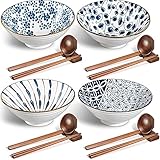
Geiserailie 40 oz Ceramic Japanese Ramen Bowls, Set of 4 with Chopsticks and Spoons
Japanese noodle soups are served in a deep, wide bowl that holds noodles, broth and toppings together. This set is four 8-inch ceramic bowls of 40 oz each, with spoons, chopsticks and chopstick rests.
View on Amazon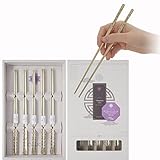
BALWOO Korean Flat Stainless Steel Chopsticks, 5 Pairs, 9 1/4 Inches
Flat metal chopsticks are the standard at Korean tables, for japchae and naengmyeon as much as for rice. This listing is a five-pair set in 304 stainless steel, made in Korea.
View on Amazon
Browse more related items
Opens Amazon · affiliate links