Vegan Ramen: Noodles, Instant Packs & Broth (2026)
· 9 min read · NoodleDex Editorial
Vegan ramen, checked against real labels: noodles that hide egg, instant packs with beef, lard or milk, verified vegan brands, and a kombu-shiitake broth.
This page contains affiliate links. We may earn a commission at no extra cost to you. Disclosure
Six Ramen Myths, Checked Against the Label
Vegan ramen goes wrong in two places: assumptions about the noodle, and assumptions about the soup. Each claim below is one people make in the grocery aisle or at the counter, with the verdict from a manufacturer label or the brand itself.
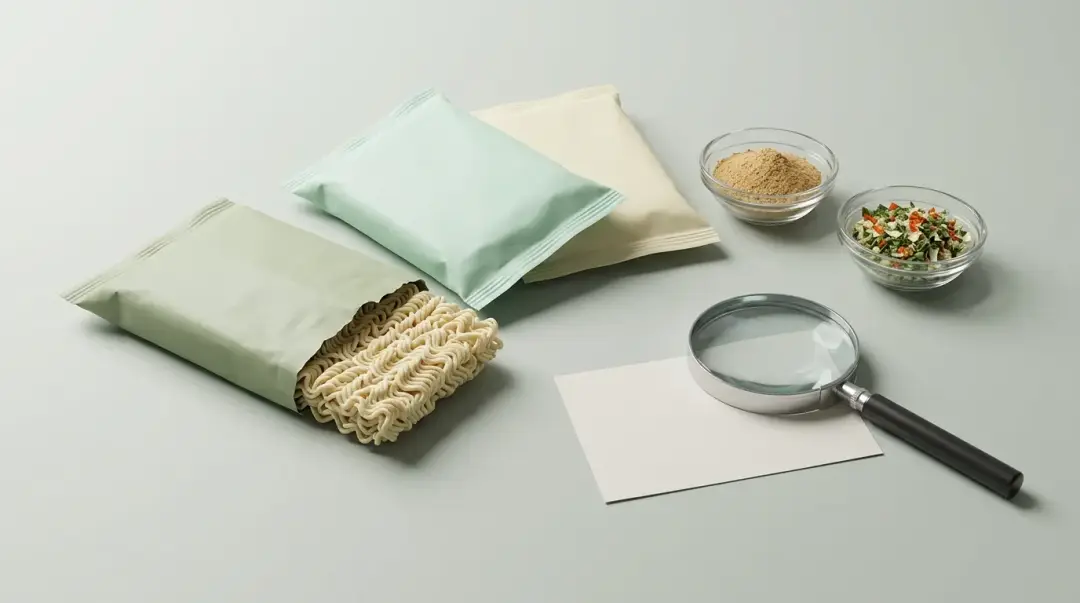
"Ramen noodles always contain egg"
Mostly false for the classic recipe, often true for packaged noodles in Japan. A traditional ramen noodle is wheat flour, water, salt and kansui (kahn-SOO-ee), an alkaline mineral water. Just One Cookbook spells out that these noodles are egg-free despite their yellow color, and our kansui explainer covers why: alkaline dough turns natural flavonoid pigments in wheat yellow, no yolk required. Sun Noodle, whose fresh ramen noodles are sold in US grocery stores, says its retail noodles contain no egg as an ingredient, though they are made in a facility that uses egg.
The Japanese shelf is a different story. Is It Vegan Japan, a site that reads Japanese ingredient labels for vegans, estimates that 80 to 90% of ramen noodles sold there contain egg in some form: egg powder, egg white (卵白) or eggshell calcium (卵殻カルシウム). Nissin's Chikin Ramen lists egg powder inside the noodle block. Check the noodle line of the ingredient list, not only the soup base.
"If the flavor says vegetable, it's vegan"
False often enough to matter. Maruchan's consumer affairs FAQ names lactose, a sugar derived from milk, as the milk ingredient in its bagged ramen, bowl, Instant Lunch and Yakisoba products, so those lines are not compatible with a strict vegan diet. Check the allergen line on any flavor, whatever the name on the front. The reverse case exists too: Nongshim USA calls its Soon Veggie noodles "a vegan noodles product," and they are made in a facility that also processes fish, shellfish, eggs and milk. Most vegans accept shared-facility products; anyone with a milk or egg allergy should not.
"The meat is only in the seasoning packet"
False for some of the best-known packs. Nissin's Chikin Ramen has no seasoning packet at all because the flavor is cooked into the noodle block. Its Japanese ingredient list puts chicken extract (チキンエキス) and egg powder inside the fried noodle, with dairy listed among its allergens. Throwing away the packet does not make a pack like this vegan.
"Instant noodles are fried in vegetable oil"
Not always. Maruchan's Japanese-market Shio Ramen lists refined lard (精製ラード) alongside vegetable oil in the noodle block, plus egg white, chicken extract and pork extract in the seasoning. On imported packs, look for "lard" in English or ラード in Japanese. Koyo and Lotus Foods avoid the question by not frying at all: Koyo's noodles are baked, and Lotus Foods sells its brown rice ramen as never fried.
"Spicy Korean ramyeon is just chili and vegetables"
False for the bestseller. The US Shin Ramyun pack lists beef extract, beef fat and beef stock, and the Shin Ramyun cup lists beef bone extract and beef fat. The heat comes from chili; the broth base is beef. Nongshim makes the vegan option itself: Soon Veggie, in one bag and two cup formats, plus a Soon Kimchi cup the company describes as vegan friendly.
"Miso and shoyu ramen are plant-based"
Usually false at a ramen shop. Miso is fermented soybean paste and shoyu is soy sauce, but in ramen those are the seasoning, called tare (tah-REH), and they sit on top of a stock. That stock is commonly pork or chicken, and the umami layer is often dashi (DAH-shee), which in its standard form is kombu kelp plus shavings of katsuobushi (kaht-soo-oh-BOO-shee, dried, smoked bonito). Some cooks use dried sardines instead. Japan's national tourism organization warns vegetarian visitors that bonito flakes and dashi turn up in dishes with no visible meat or fish. Our ramen broth types guide breaks down what goes into each style.
Building a Vegan Ramen Broth
A good ramen broth has three parts: a stock for depth, a tare for salt and character, and an aroma oil on top. A vegan bowl needs a replacement for all three.
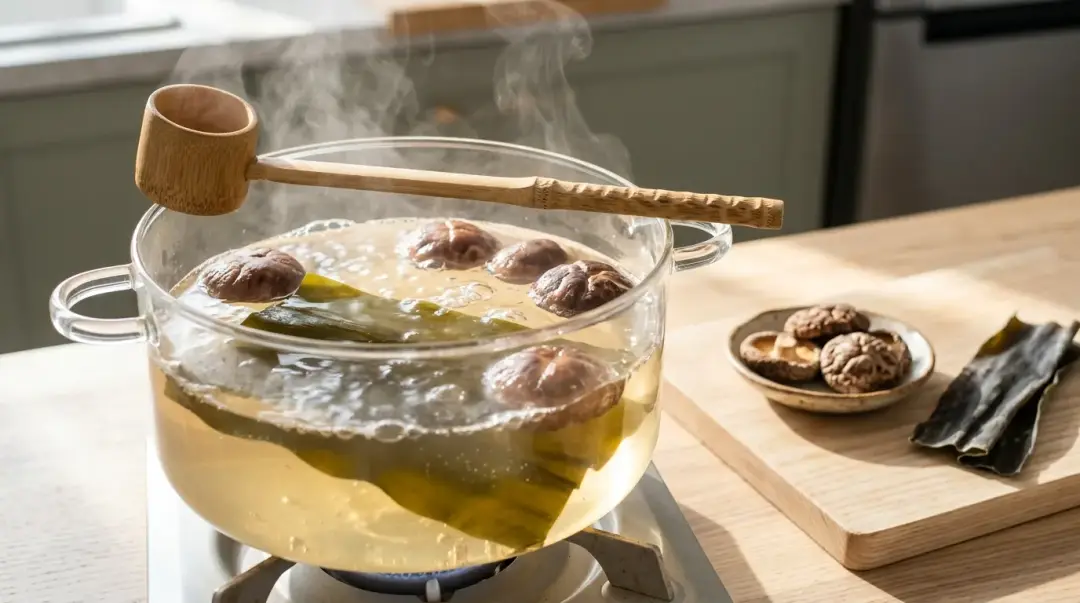
The stock is shojin dashi (SHOH-jin, after the Buddhist temple cooking that has always been plant-based), made from kombu and dried shiitake. Just One Cookbook's version steeps a piece of kombu and a couple of dried shiitake in cold water, for at least 30 minutes and longer for more flavor, or overnight in the fridge. The pot then heats slowly to a bare simmer, and the kombu and mushrooms come out just before it boils. Boiling kombu makes the stock bitter. The dashi keeps 4 to 5 days in the fridge or 2 weeks frozen, and freezing it in measured portions means you thaw only what you need. A big pot with a lid helps if you double the batch, and an immersion blender smooths the soy milk and sesame into the soup. For broth gear in general, see our pressure cooker guide for ramen broth.
The chemistry explains why this works. Kombu is high in glutamate, and in a classic dashi the bonito adds inosinate, which compounds the savory effect. Without the fish, dried shiitake carries the second layer of savoriness; dried mushrooms have a noticeably stronger umami than fresh ones, which is why Japanese cooks reach for them.
For the tare and body, Just One Cookbook's vegetarian ramen (vegan if you skip the egg topping) is a reliable template. Its tare combines miso, doubanjiang (Chinese chili bean paste), soy sauce, sake and ground toasted white sesame seeds. Unsweetened soy milk and a share of the dashi make the soup, and the soy milk and sesame give the creamy, opaque body that pork-bone broths get from collagen.
The aroma oil starts the pot: toasted sesame oil cooked with garlic, ginger and the white parts of scallions until fragrant. Chili oil over the finished bowl adds a second layer.
What gives ramen its depth, and the vegan replacement
| Job in the bowl | Usual ingredient | Vegan replacement |
|---|---|---|
| Stock body | Pork bones (tonkotsu) or chicken | Unsweetened soy milk plus ground sesame |
| Umami base | Dashi with katsuobushi (bonito) | Kombu and dried shiitake dashi |
| Tare (seasoning) | Shoyu or miso, sometimes with fish | Miso, soy sauce, doubanjiang, sake |
| Aroma oil | Lard or chicken fat | Sesame oil with garlic, ginger, scallion; chili oil |
| Protein topping | Chashu pork, soft egg | Pan-fried tofu; skip the egg |
| Noodle | Wheat noodles, sometimes with egg | Egg-free kansui noodles; check the label |
Read the miso label before you start, and skip any tub that lists dashi, bonito (katsuo) or fish extract.
For noodles, fresh egg-free ramen noodles give the springiest bowl. Our best ramen noodles guide covers the fresh and dried options worth buying; check each pack's ingredient line for egg before you add it to the cart.
Vegan Instant Ramen You Can Verify
These instant products are labeled vegan by their makers or on a major retailer's product page. Labels change between markets and production runs, so the pack in your hand is the final word.
Instant ramen labeled vegan in the US, and what the label says
| Product | Noodle | Vegan claim | Worth knowing |
|---|---|---|---|
| Nongshim Soon Veggie (bag, two cups) | Wheat | Nongshim USA: "a vegan noodles product" | Shared facility with fish, eggs, milk |
| Nongshim Soon Kimchi Cup | Wheat | Nongshim USA: "vegan friendly" | Same facility note |
| Lotus Foods Millet & Brown Rice Ramen | Organic millet and brown rice | Vegan and gluten-free, per the listing | No seasoning packet; add your own broth |
| Dr. McDougall's vegan cups | Organic steamed ramen noodles | Badged vegan by the brand | Vegan Chicken, Vegan Miso, Hot & Sour |
| Koyo organic ramen | Baked, not fried | Brand claim; Whole Foods lists as vegan | No added MSG; flavors include Tofu & Miso |
Soon Veggie is the closest vegan match to a standard Korean ramyeon, and it comes from the company behind Shin Ramyun. If you already buy Korean noodles, our Korean instant ramyeon guide explains where it sits next to the beef-based bestsellers.
Lotus Foods takes the opposite route. Its Millet and Brown Rice Ramen is a 10 oz bag of organic noodles with no seasoning packet. The listing carries vegan and gluten-free labels, which makes it the pick for anyone avoiding wheat as well as animal products. You supply the broth, such as the kombu-shiitake base on this page.
Dr. McDougall's Right Foods sells a sampler of four vegan cups: Vegan Chicken Ramen, Vegan Miso Ramen, Hot & Sour Ramen, and a gluten-free Spring Onion soup, all using organic steamed noodles. Koyo, sold at Whole Foods and regional chains such as Haggen and Erewhon, makes organic, non-GMO packets in flavors like Asian Vegetable, Tofu & Miso and Buckwheat Shoyu.
Every one of these benefits from the same upgrade: a handful of blanched bok choy, a few cubes of tofu, a spoon of corn and a swirl of chili oil turn a 5-minute cup into dinner. Vegan packs are not automatically low in sodium, so check our low-sodium noodles guide, and see our best instant ramen guide for how mainstream packs compare.
Ordering Vegan Ramen Away From Home
At most ramen shops, vegan means asking specific questions. "Vegetarian" on an English menu sometimes means "no visible meat," and the broth can still be chicken or dashi-based. Japan's national tourism organization advises naming exactly what you don't eat: no meat, no seafood, no animal products, and no dashi or stocks. It also suggests carrying a printed card that explains this in Japanese.
Learn the words that signal animal ingredients on a ramen menu. Tonkotsu (tohn-KOHT-soo) is pork-bone broth, boiled 12 hours or more. Gyokai (gyoh-KAI) means fish and shellfish. Dashi, unless the shop says kombu or shojin, means bonito. Chashu is braised pork, and ajitama is a marinated soft egg.
On Japanese packaging, Is It Vegan Japan lists the label terms to watch for, and the Maruchan and Nissin packs above add a few more:
| On the label | Reading | Meaning |
|---|---|---|
| 動物性 | dōbutsusei | Animal-derived |
| エキス | ekisu | Extract, often meat or fish |
| チキンエキス / ポークエキス | chikin / pōku ekisu | Chicken / pork extract |
| ラード / 精製ラード | rādo / seisei rādo | Lard / refined lard |
| 乳 / 乳成分 | nyū / nyū seibun | Milk / dairy components |
| 卵白 / 卵粉 | ranpaku / ranpun | Egg white / egg powder |
| 卵殻カルシウム | rankaku karushiumu | Eggshell calcium |
Fully vegan ramen shops do exist. T's TanTan, in the Gransta Tokyo shopping area on the basement level of JR Tokyo Station (outside the ticket gates), serves only vegan ramen and states that it uses no meat, seafood, dairy, eggs or other animal ingredients. At a mixed menu, ask what the vegan broth is built on and whether it shares a pot or ladle with the pork broth.
How a Vegan Ramen Bowl Comes Together
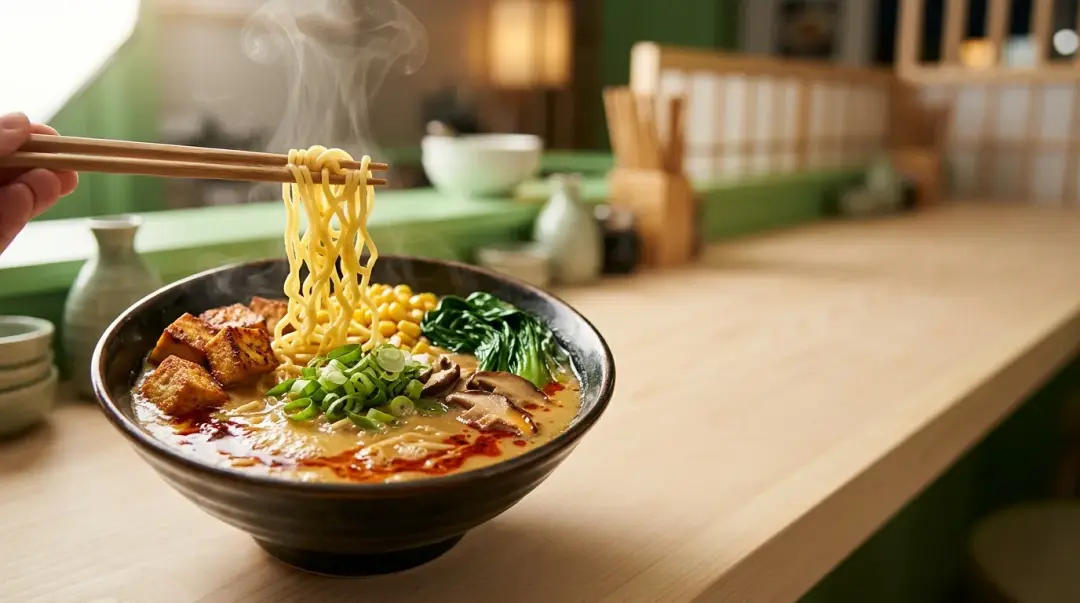
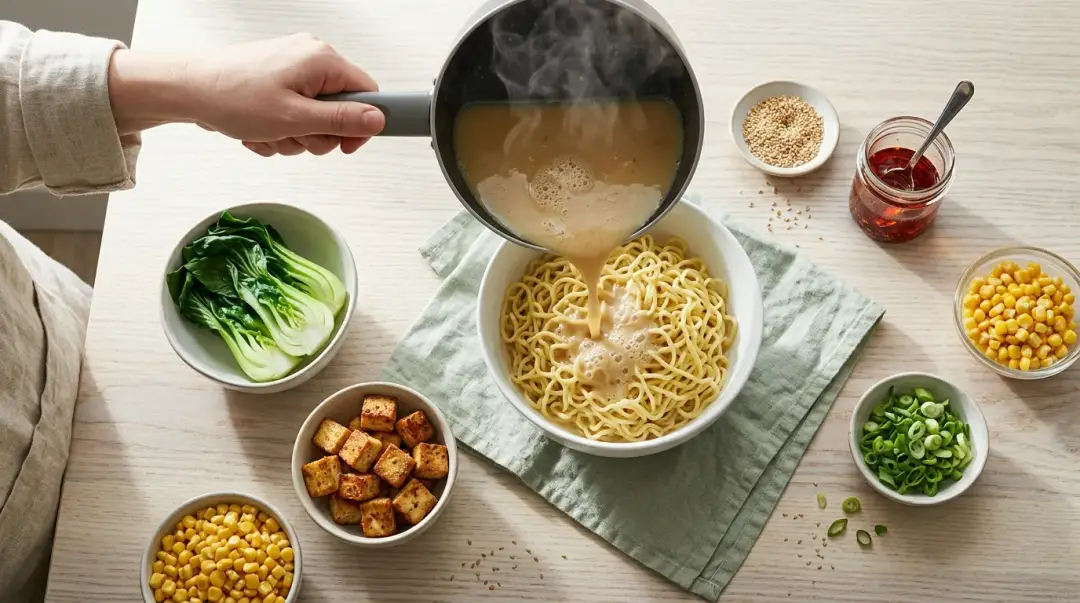
Just One Cookbook's vegetarian ramen, which is vegan once the egg topping is left off, shows the method. The kombu and dried shiitake steep cold in water first, then the dashi warms slowly and the solids come out before it boils. A small pan of sesame oil, garlic, ginger and scallion whites forms the aroma base, and doubanjiang, miso, sake, ground sesame and soy sauce go into it. Unsweetened soy milk is whisked in gradually with the dashi, so the pastes dissolve and the soup turns creamy. Blanched bok choy and egg-free ramen noodles cook separately, and the hot soup goes over the noodles with bok choy, scallion greens, corn, pan-fried tofu and chili oil on top.
FAQ
Is ramen vegan?
Usually not as served. Most restaurant ramen broths are built on pork bones, chicken or dashi made with bonito flakes, and many instant packs carry beef, chicken, pork, lard or milk ingredients. Vegan ramen is easy to make, though: kombu and dried shiitake give a plant-based dashi, miso and soy milk give body, and several instant brands sell products labeled vegan.
Are ramen noodles vegan?
The classic recipe is vegan: wheat flour, water, salt and kansui, an alkaline mineral water that turns the noodles yellow without egg. Sun Noodle says its US retail noodles contain no egg. Many packaged noodles in Japan add egg white, egg powder or eggshell calcium, and some instant blocks are fried in lard, so read the noodle ingredients, not just the soup packet.
Is Shin Ramyun vegan?
No. The US Shin Ramyun pack lists beef extract, beef fat and beef stock, and the Shin Ramyun cup lists beef bone extract and beef fat. Nongshim's vegan option in the US is Soon Veggie, which the company describes as a vegan noodle product, plus Soon Kimchi, described as vegan friendly. Both are made in a facility that also handles fish, eggs and milk.
Is Maruchan ramen vegan?
No. Maruchan's consumer affairs FAQ names lactose, a milk sugar, as the milk ingredient in its bagged ramen, bowl, Instant Lunch and Yakisoba products, so they do not fit a strict vegetarian or vegan diet. That includes flavors that sound plant-based. For a cheap vegan packet, look at Nongshim Soon Veggie, Koyo, Lotus Foods or Dr. McDougall's, and confirm the vegan label on the pack you buy.
Is miso ramen vegan?
Not by default. Miso is fermented soybean paste, but restaurant miso ramen usually sits on a pork or chicken stock, often with dashi made from bonito flakes. A vegan miso ramen swaps in kombu and shiitake dashi, often enriched with unsweetened soy milk and sesame. Check the miso tub too, and skip any that lists dashi or fish extract.
What can I use instead of dashi in vegan ramen?
Kombu and dried shiitake. Just One Cookbook's shojin dashi cold-soaks kombu and dried shiitake in water for at least 30 minutes, then heats it slowly and lifts the solids out just before it boils. Kombu brings glutamate, and dried shiitake has a stronger savory flavor than fresh, which makes up for the missing bonito.
Read Next
Products mentioned in this guide
This section contains affiliate links. We may earn a commission at no extra cost to you.
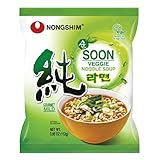
Nongshim Soon Veggie Noodle Soup
Nongshim calls this a vegan noodle product, and it is the closest plant-based match to Shin Ramyun. Made in a facility that also handles fish, eggs and milk.
View on Amazon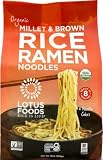
Lotus Foods Organic Millet and Brown Rice Ramen, 10 oz
Millet and brown rice noodles labeled organic, vegan and gluten-free. The pick if you avoid wheat as well as animal products. The bag has no seasoning packet, so you bring the broth.
View on Amazon
Sun Noodle Kaedama Ramen Noodles, 10 oz
Sun Noodle says its US retail noodles contain no egg, which makes these a fresh base for the kombu-shiitake bowl on this page.
View on Amazon
Hikari Organic Red Miso, 17.6 oz
A miso for the tare in the vegan broth recipe. Read the tub before buying and skip any that lists dashi or bonito.
View on Amazon
Tramontina Gourmet Stainless Steel 12-Quart Stock Pot with Lid
A vegan broth is kombu, dried shiitake and water heated slowly, and a roomy lidded pot gives you space to make a double batch. This listing is a 12-quart stainless steel pot with a tri-ply base and a lid, and it works on induction.
View on Amazon
Braun MultiQuick 5 Vario Hand Blender MQ5025, 400 W
Blending the soy milk, sesame and miso gives the soup the creamy body that pork-bone broths get from collagen. This listing is a 400 W variable-speed immersion blender with a stainless steel shaft.
View on Amazon
Souper Cubes 2 Cup Silicone Freezer Trays with Lids, 2-Pack
This page says shojin dashi keeps about 2 weeks frozen, and portioned blocks let you thaw only what one batch of soup needs. This listing is a 2-pack of silicone trays with lids and fill lines at 1 and 2 cups.
View on Amazon
Buying guides for this topic
- Buying guideBest Ramen Noodles & Kits in 2026The best fresh and dry ramen noodles, plus premium ramen kits, available on Amazon — Sun Noodle, Hakubaku, Marusan, and Maruchan Seimen ranked.
- Buying guideBest Korean Instant Ramyeon Brands in 2026The best Korean instant ramen brands ranked — Shin, Buldak, Paldo, Ottogi compared by spice, flavor, and value.
- Buying guideBest Japanese Pantry Essentials in 2026The 10 Japanese pantry items needed to cook ramen, udon, soba, and yakisoba at home. Soy, dashi, mirin, miso, and yakisoba sauce, ranked.