A Restaurant Named After the Man Who Invented Instant Noodles
Momofuku translates as "lucky peach," and the name also nods to Momofuku Ando, the Nissin founder who invented instant ramen. In August 2004 Chang opened Momofuku Noodle Bar at 171 First Avenue in Manhattan's East Village, a plywood-lined room serving ramen. Seventeen years later, in August 2021, the company started selling its own instant noodles, and A-Sha says the first co-branded run sold out in one day.
The restaurant name and sauce recipes come from New York, and the noodle comes from A-Sha, a dry-noodle brand from Tainan, Taiwan, that makes its noodles from wheat, salt and water and dries them in air rather than frying them. That one manufacturing choice explains most of what is different about Momofuku noodles, from the chew to the nutrition label.
What Momofuku Is Today
Momofuku is a restaurant and packaged-food company founded by David Chang, born in 1977 in Arlington County, Virginia, to parents who emigrated from Korea. Chang trained at the French Culinary Institute, worked at Tom Colicchio's Craft, spent time in a Tokyo soba shop, and later co-founded Lucky Peach magazine (2011) and hosted Netflix's Ugly Delicious. The chief executive is Marguerite Zabar Mariscal, who joined Momofuku as an intern in 2011.
The restaurant side is smaller than it was a decade ago. Momofuku Ko, opened in 2008, and Ssäm Bar have both closed. Fast Company's 2024 count listed two Noodle Bars and Bang Bar in New York, Momofuku and Bang Bar in Las Vegas, and Majordomo in Los Angeles. Its grocery line, mainly noodles and chili crisp (our chili crisp comparison covers the jar), now sells through Target, Whole Foods, Walmart and Momofuku's own online shop.
Three Beats From Noodle Bar to Grocery Shelf
2004. Noodle Bar opens in the East Village. Chang's first restaurant serves noodles and steamed buns. Momofuku Ko follows in 2008.
2018 to 2020. Momofuku launches Chili Crunch, its chili crisp, in 2018 and begins selling it in jars in 2020. Momofuku's pantry line formally starts that year, according to A-Sha. The jar is a blend of grapeseed oil, three Mexican chilis (puya, japones and de árbol), garlic, shallots and coconut sugar.
2021. The noodle line launches on August 25, 2021 with three flavors, sold as a five-pack or a fifteen-packet Noodle Lover's Box. Two more flavors, Spicy Chili and Sweet & Spicy, arrive in 2023.
The 2024 Chili Crunch Trademark Dispute
Momofuku's grocery business drew its biggest headlines in 2024, from a trademark fight reported by NBC News, CNBC and Today.
Momofuku received a cease-and-desist letter from Chile Colonial, a Colorado company that held a registered trademark for "Chile Crunch." Instead of renaming its product, Momofuku bought that registration in 2023. On March 29, 2024, it also filed a new application to register "Chili Crunch." In early April 2024, Momofuku sent cease-and-desist letters to several smaller chili-sauce makers, including Homiah, a New York-based Malaysian food brand, giving them 90 days to change product names. Homiah founder Michelle Tew told reporters the letter "felt like a punch in the gut." Fly by Jing founder Jing Gao said "there is enough space for everyone."
Momofuku's position was that it had "intentionally picked 'Chili Crunch' to further differentiate it from the broader chili crisp category." Critics argued the phrase describes a whole style of condiment. The Guardian reported on the letters on April 4, and the story spread from there.
On the April 12, 2024 episode of The Dave Chang Show, Chang apologized "to everyone in the AAPI community who's been hurt" and said, "We're not going to enforce the trademark." He added that had Momofuku known "chili crunch was a tautology, basically the same as chili crisp, we would have never named it chili crunch." Mariscal described the legal bind on the same episode: trademark owners generally have to enforce a mark to keep it. The jar is still sold as Chili Crunch.
The Noodle Line, Flavor by Flavor
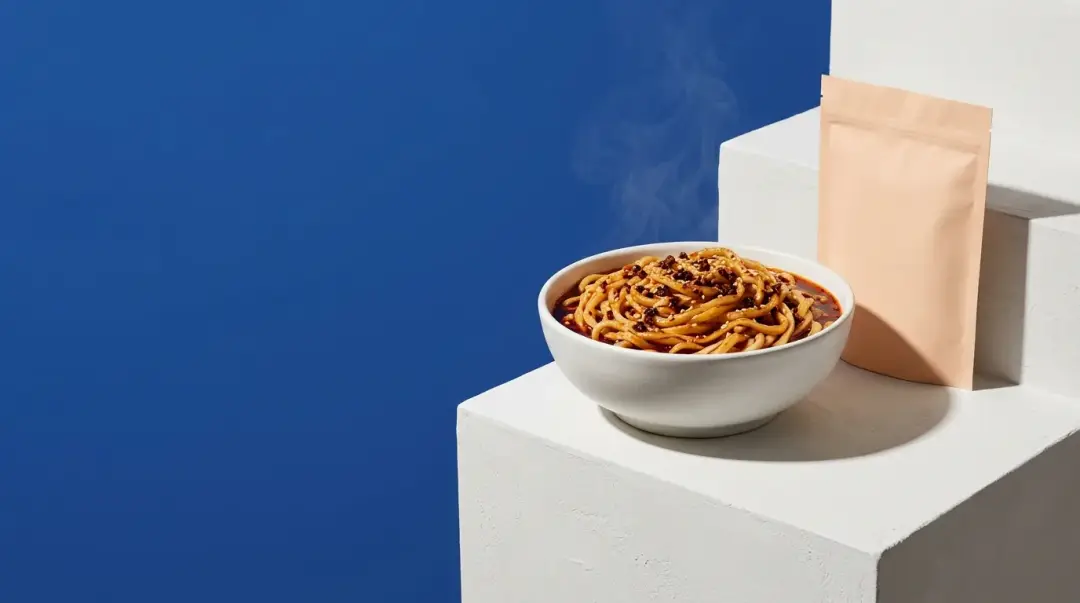
Five flavors make up the current line. Each five-pack holds individually wrapped 95 g servings (Soy & Scallion is listed at 96 g), and each serving cooks in about four minutes.
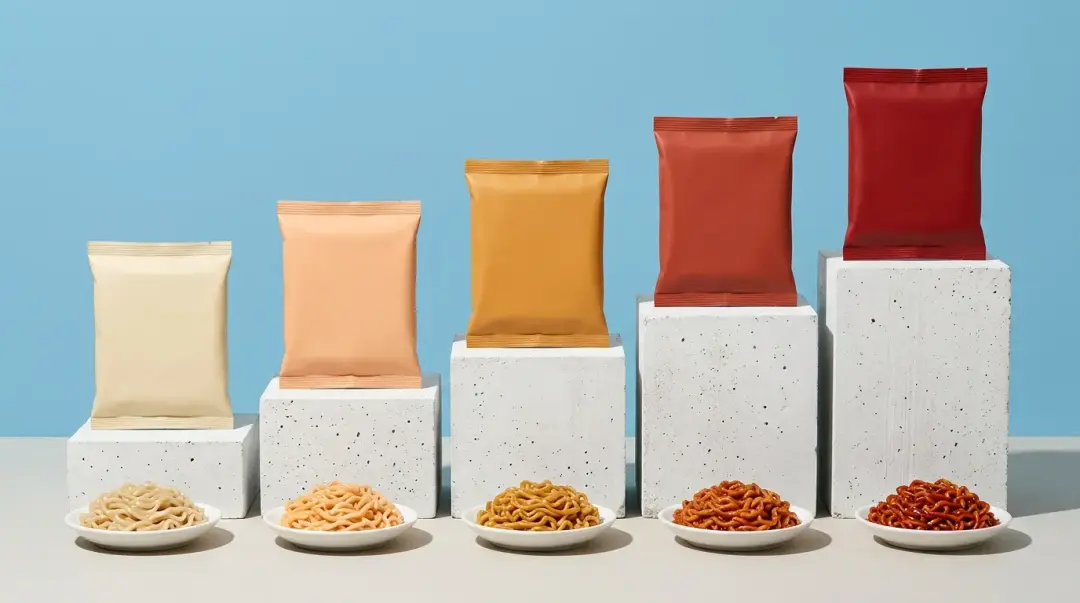
Momofuku noodle flavors, from mildest to most numbing
| Flavor | Launched | Sauce | Noodle | Heat |
|---|---|---|---|---|
| Soy & Scallion | 2021 | Soy, sesame oil, dried scallion | Thinnest cut | None |
| Sweet & Spicy | 2023 | Korean chili paste, sweet | Wider, flatter cut | Mild |
| Spicy Soy | 2021 | Soy, chili, sesame oil | Standard thin | Medium, slow build |
| Spicy Chili | 2023 | Soy, chili, Sichuan peppercorn | Standard | Hot, prickly |
| Tingly Chili Wavy | 2021 | Soy, chili paste, Sichuan spices, sesame oil | Thick, wavy | Hot, numbing |
The Sichuan peppercorn in the two hottest flavors produces mala (MAH-lah, the numbing-spicy sensation of Sichuan cooking), a buzzing tingle on the lips rather than straight capsaicin heat. Sweet & Spicy uses a sweet Korean chili paste sauce and a wider noodle that Tasting Table compared to kalguksu (KAHL-gook-soo, Korean knife-cut noodles).
What to Buy First
Tingly Chili Wavy, without much debate. America's Test Kitchen reviewed the original three and told readers to skip Soy & Scallion and Spicy Soy but buy Tingly Chili, calling it "hands-down one of the best noodles in the instant noodle category." Tasting Table ranked all five flavors in August 2025 and also put Tingly Chili first. The thicker wavy noodle holds more sauce, and the chew is where the 18-hour air-drying shows.
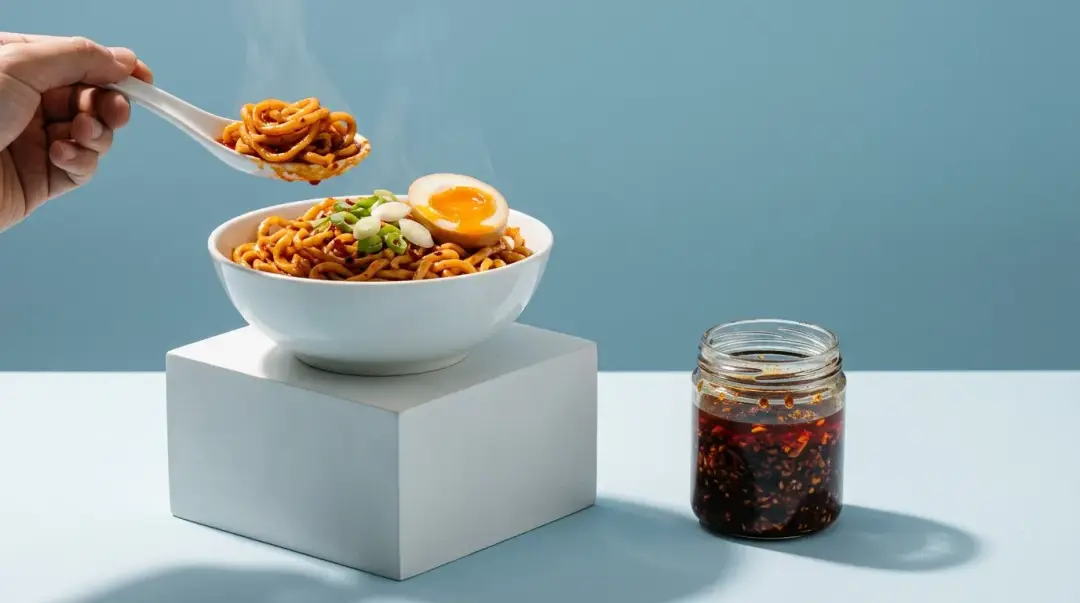
Spicy Soy comes second. Tasting Table ranked it just behind Tingly Chili for its sesame-oil balance, and it is the most flexible base for adding a soft egg or sautéed greens. Skip Soy & Scallion unless you plan to build on it; America's Test Kitchen found its sauce thin and one-note. A jar of Chili Crunch helps there, adding the heat and crunch that the plain flavor lacks. For the whole category ranked against fresh and Japanese options, see our best ramen noodles guide.
Air-drying takes the fat out of an instant noodle. It does not take out the salt.
Momofuku vs Fried Instant Ramen
Most instant ramen in a US supermarket is fried. The noodle block is cooked in oil during manufacturing, and that oil stays in the noodle. A-Sha's noodles are dried slowly in air for about 18 hours instead. The difference shows up on the label and in the bowl.
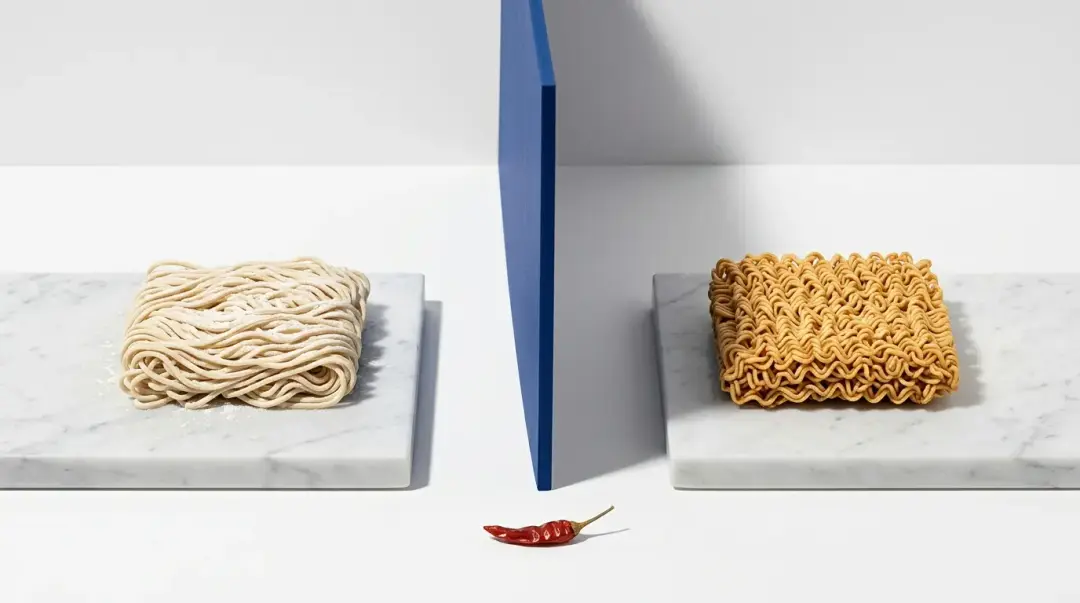
One packet, three ways of making an instant noodle
| Momofuku Tingly Chili | Indomie Mi Goreng | Top Ramen (3 oz) | |
|---|---|---|---|
| Noodle process | Air-dried ~18 hours | Fried in palm oil | Fried in palm oil |
| Calories | 300 (95 g) | 400 (85 g) | 380 |
| Fat | 1 g | 17 g | 14 g |
| Sodium | About 1,400 mg | 780 mg | n/a |
| Cook time | About 4 minutes | About 5 minutes, then drain | n/a |
The fat gap is large. A Momofuku packet has 1 g of fat against 14 g for Top Ramen and 17 g for Indomie, which is why the calorie count is lower even though the Momofuku serving is heavier. Sodium runs the other way: at about 1,400 mg, Tingly Chili sits closer to Korean soup ramyeon like Shin Ramyun (about 1,620 mg) than to a drained Indonesian packet. Our ramen calories guide breaks down where those numbers come from across more brands.
Texture is the other difference. America's Test Kitchen described the Tingly Chili noodle as having "an extra-chewy mouthfeel, which sets Momofuku apart from a cheap instant noodle brand," and Tasting Table called A-Sha's noodles springy with a wheaty taste.
The closest like-for-like rival is Trader Joe's Squiggly Knife Cut Style Noodles, another thick, wavy noodle sold with a sauce packet, and The Takeout compared the two in early 2024. Its reviewer preferred Trader Joe's sauce and Momofuku's noodle.
Where to Buy Momofuku Noodles in the US
Momofuku has moved from an online-only launch to national grocery. Target lists Tingly Chili Wavy in the 16.75 oz five-pack and Extra Spicy Chili Crunch in a 5.5 oz jar. Whole Foods lists the noodles and the original Chili Crunch. Walmart carries Soy & Scallion and Spicy Soy five-packs, and Momofuku's own shop sells the noodles, including a variety pack.
If you are building a pantry around these, the sauces pair with the staples on our Japanese pantry essentials list, and a jar of chili crisp covers the gap on the plainer flavors.
Are Momofuku Noodles Worth It?
Tingly Chili is worth the price for anyone who eats instant noodles as a real meal rather than a snack, and especially for anyone avoiding fried noodles. It costs more per packet than a fried one like Indomie, and you get a better noodle, a sauce built around Sichuan pepper, and a fraction of the fat. Soy & Scallion is the weak link, and buying it alone will make the line look overpriced. Watch the sodium if you eat these more than a couple of times a week.
FAQ
Are Momofuku noodles worth it?
For Tingly Chili, yes. America's Test Kitchen called it one of the best noodles in the instant category, and the chewy air-dried noodle is a real step up from a fried block. The plainer flavors are harder to justify next to a fried packet. Buy a five-pack of Tingly Chili before committing to a variety box.
Who makes Momofuku noodles?
Momofuku, David Chang's New York restaurant company, sells them under its name, but the noodles are made with A-Sha, a dry-noodle brand from Tainan, Taiwan. The partnership launched in August 2021. A-Sha air-dries the noodles for about 18 hours instead of frying them, using wheat flour, water and salt.
How spicy are Momofuku Spicy Soy noodles?
Moderate. Spicy Soy builds slowly to a warm finish, with sesame oil softening the chili. It is milder than Tingly Chili and Spicy Chili, which both use Sichuan peppercorns for a numbing effect. Momofuku does not publish a Scoville figure for any of its noodles.
Are Momofuku noodles healthier than regular instant ramen?
Lower in fat, not in salt. A 95 g packet of Tingly Chili has 300 calories and 1 g of fat because the noodles are air-dried, compared with 14 g of fat in a 3 oz fried Top Ramen block. Sodium is high at about 1,400 mg per 95 g packet, around 61% of the daily value, so check the label.
What happened with Momofuku and the chili crunch trademark?
In 2023 Momofuku bought the Chile Crunch trademark from Colorado's Chile Colonial, filed to register Chili Crunch in March 2024, and sent cease-and-desist letters to smaller brands. After public criticism, David Chang apologized on his podcast on April 12, 2024 and said Momofuku would not enforce the mark.
Are Momofuku noodles vegan?
Retail listings at Walmart and Amazon describe the noodles as vegan, and the noodle itself is wheat, water and salt. The sauce packets contain soy, wheat and sesame. Ingredients can change between batches and flavors, so check the label on the five-pack you buy if you avoid animal products strictly.