In 1957 a credit union collapsed and Momofuku Ando lost his property with it. Over the next year he worked alone in a shed behind his house in Ikeda, a suburb of Osaka, trying to make noodles that could sit on a shelf and cook in a few minutes. The answer came from watching his wife fry tempura. "The flour coating placed in the hot cooking oil was giving off moisture," he later explained. Frying could pull the water out of seasoned noodles, and hot water could soften them again. On August 25, 1958, Nissin put Chicken Ramen on sale, and instant noodles became a product category.
Who Nissin Is
Nissin (NEE-sheen) is Nissin Foods Holdings Co., Ltd., headquartered in Yodogawa ward, Osaka, with a second office in Tokyo's Shinjuku. Ando founded the company on September 4, 1948, a decade before Chicken Ramen, and the group moved to a holding-company structure on October 1, 2008. Cup Noodles alone had passed 50 billion servings across more than 100 countries by 2021.
The American business is Nissin Foods USA, established in 1970 and headquartered in Gardena, California, in the South Bay of Los Angeles County. Its site lists two US factories, Gardena and Lancaster, Pennsylvania. In November 2023 the company announced a third: a $228 million, 640,640-square-foot plant in Greenville County, South Carolina, with production planned from August 2025 for Top Ramen, Cup Noodles and Hot & Spicy Fire Wok.
Ando died on January 5, 2007, at 96. The New York Times called him "Mr. Noodles." Nissin's US site still quotes his founding idea: "Peace will come to the world when people have enough to eat."
Two Inventions, Thirteen Years Apart
Chicken Ramen had its seasoning cooked into the noodle block, with no separate packet, and Nissin still sells it in Japan. Our ramen type guide shows how far the instant block and the shop bowl have drifted apart since.
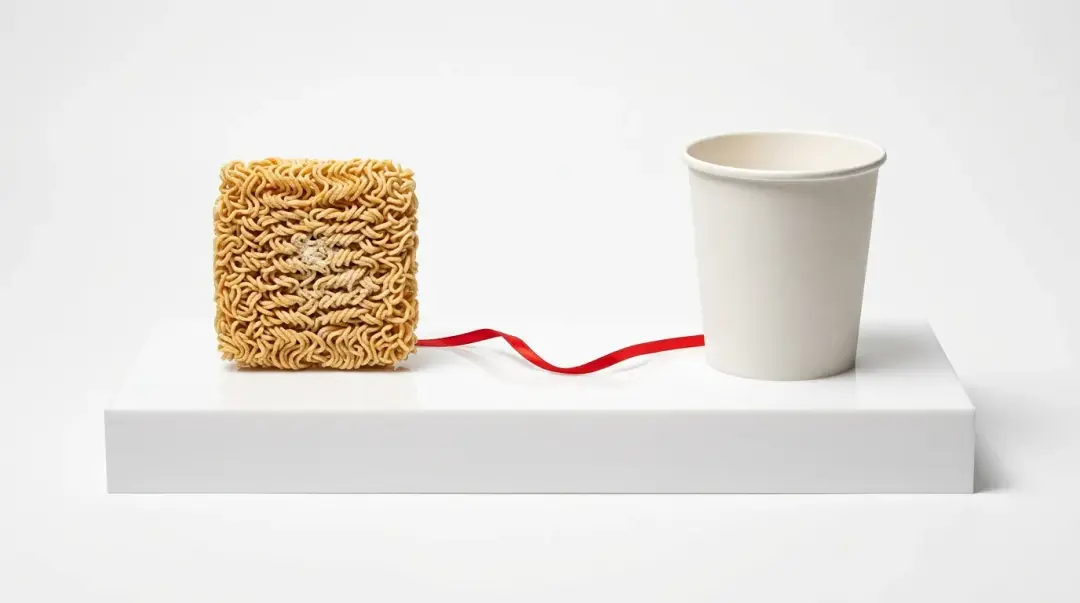
The second idea came from America. On a 1966 trip to the US, Ando watched Americans break Chicken Ramen into paper cups and eat it with forks. That image became the brief for a noodle sold in its own cup, and it took Nissin five years to bring it to market.
Nissin launched Cup Noodles in Japan on September 18, 1971, and began handing out samples in Tokyo's Ginza district that November. The US version arrived in November 1973 as Cup O'Noodles, later shortened to Cup Noodles. Between those two dates, in 1972, Nissin's Gardena plant began making Top Ramen, which Nissin calls the first instant ramen manufactured and sold in the US.
A coda: at 91, Ando led the development of Space Ram, an instant ramen built with Japan's space agency JAXA for astronauts, which flew on the Space Shuttle Discovery in July 2005.
The Nissin Lineup in America
Nissin Foods USA sells seven product families on its site: Cup Noodles, Top Ramen, Hot & Spicy, Chow Mein, RAOH, Geki and Bold Tastes of Tokyo. The four below are the ones shoppers meet most often.
Nissin's main US lines, with figures from nissinfoods.com labels
| Line | Format | Example | Label numbers | What it is for |
|---|---|---|---|---|
| Top Ramen | Bag, fried block + powder | Chicken, 85 g | 380 kcal, 1,590 mg sodium per package | Everyday base, 3-minute cook |
| Cup Noodles | Paper cup, hot water only | Chicken, 64 g | 290 kcal, 1,160 mg sodium per cup | No stove needed, ready in 2:15 |
| Hot & Spicy | Bowl + liquid chili sauce | Chicken, 94.2 g | 430 kcal, 1,300 mg sodium per bowl | Heat with a citrus edge |
| RAOH | Bag, non-fried noodle | Soy Sauce, 107 g serving | 350 kcal, 2,400 mg sodium | Closest to a shop bowl |
Top Ramen is the bag. Nissin markets it as "the original instant ramen noodle since 1970," sells Chicken, Beef, Shrimp, Soy Sauce and Chili flavors, and adds microwave bowls in Chicken and Beef. The label is unusually honest: it prints nutrition for half a package and for the whole 85 g package side by side, so you see 380 calories and 1,590 mg of sodium without doing the math. The noodles are fried in palm oil and get their bounce from potassium and sodium carbonate.
Cup Noodles is the 1971 design with American flavors. The current US range on Nissin's site is Chicken, Beef, Shrimp, Spicy Jalapeño Chicken and Spicy Birria Beef, plus Protein, Ramen Bistro and Stir Fry sub-lines. The chicken cup lists dried carrot, corn and parsley, cooks in 2 minutes 15 seconds and comes in a paper cup. Hot water is the only equipment it needs, so an electric kettle on a desk covers it.
Hot & Spicy bowls pair the noodle with a separate liquid chili sauce packet and, in the chicken version, a citrus note. A Fire Wok sub-line adds five flavors, among them Molten Chili Chicken and Screamin' Sichuan Beef. Nissin's separate Chow Mein line is the nearest thing in its US range to Japanese yakisoba (yah-kee-SOH-bah, stir-fried wheat noodles).
RAOH (rah-oh, Japanese for "king of ramen") is the premium tier, sold in Soy Sauce and Tonkotsu (tohn-KOH-tsoo, pork-bone broth). Nissin describes the noodles as triple-layered and non-fried, and calls RAOH a best-selling premium instant brand in Japan. The trade-off is salt: the soy sauce label lists 2,400 mg of sodium for one 107 g serving.
Demae Ramen (deh-mah-eh, from the Japanese for "home delivery") is the brand its own US packaging bills as the No. 1 ramen noodle soup in Hong Kong. Nissin launched it in Japan in 1969 and in Hong Kong in 1970, and the Hong Kong sesame-oil version is easy to find in US Asian groceries. In 2020 The Ramen Rater also found a California-made US version of Demae Ramen Original Soy Sauce at a Walmart Neighborhood Market and gave it 4 out of 5 stars.
What to Buy First
Buy one bag of Top Ramen Chicken and one Cup Noodles Chicken. That pair covers the two inventions Nissin is famous for, and The Ramen Rater gave Top Ramen Chicken 3.5 out of 5 stars in its 50th-anniversary review, praising noodles with "a nice light chew" that "slurp up broth well." Crack an egg into the Top Ramen in its last minute for a more filling bowl.
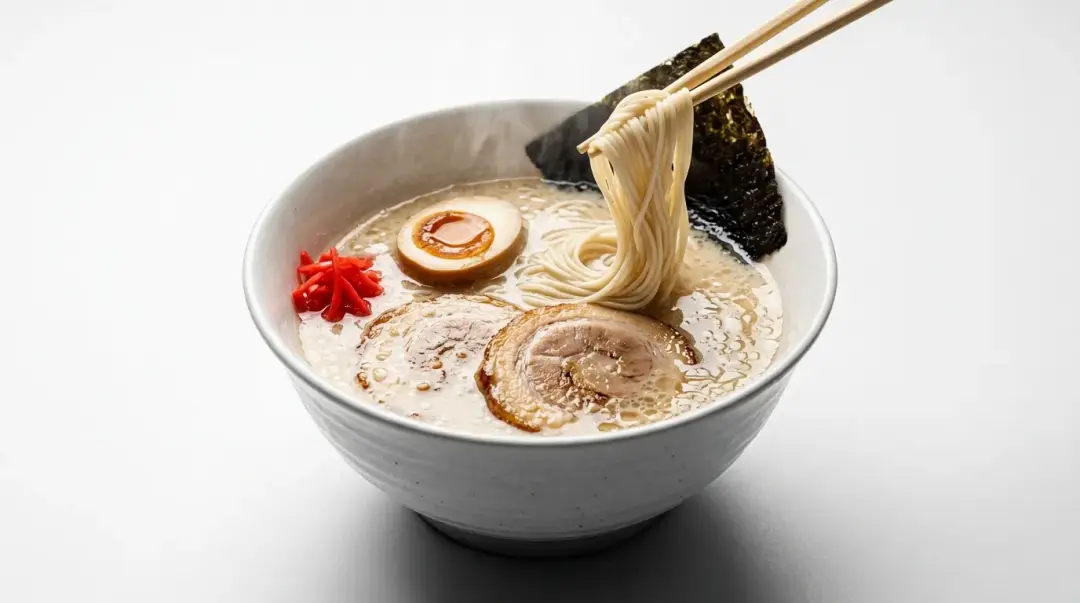
If those taste flat to you, skip the rest of the budget range and go straight to RAOH Tonkotsu, which sells in 6-packs at Walmart. Our tonkotsu instant ramen guide sets it next to other tonkotsu packs. If you want heat without moving to Korean brands, Hot & Spicy Chicken is the gentle step; Korean packs like Shin Ramyun are the next one, and our Korean instant ramyeon guide lists the ones we cover. For a ranking of packs and cups across brands, see our best instant ramen guide. For Japanese packs beyond Nissin, the Japanese pantry essentials list is the place to shop.
Two label notes. Top Ramen Chicken and Cup Noodles Chicken both list egg and milk among their allergens, along with wheat and soy. And Top Ramen, Cup Noodles and Hot & Spicy are labeled "no added MSG," though Top Ramen still uses flavor enhancers such as disodium inosinate and yeast extract. Our ramen calories guide puts Top Ramen's full-package numbers next to Maruchan and Shin Ramyun.
Nissin vs Maruchan
Maruchan, owned by Tokyo's Toyo Suisan, is Nissin's closest rival in the US and makes almost a mirror image of the lineup: a 3 oz chicken bag against Top Ramen, Instant Lunch against Cup Noodles, air-dried Gold against RAOH. The labels are close. Both chicken bags weigh 85 g and total 380 calories; Top Ramen carries 70 mg more sodium per package (1,590 against Maruchan's 1,520) and lists egg white, which Maruchan's chicken pack does not. The cups are nearly identical at 290 calories, with Cup Noodles at 1,160 mg of sodium and Instant Lunch at 1,150 mg.
Nissin has more lines beyond the basics, including RAOH, Geki and Bold Tastes of Tokyo; Maruchan has more flavors of its basic bag, 14 against Top Ramen's five. Our Maruchan vs Nissin guide walks through both labels, texture and broth, and names a winner per use.
Where to Buy Nissin in the US
Nissin's store locator names its featured retailers: Walmart, BJ's Wholesale Club, Kroger, Albertsons, H-E-B, Meijer, Weis Markets, WinCo Foods, Stop & Shop, Giant Food and Hy-Vee. Where each line turns up most reliably:
| Product | Where it is listed | Pack sizes listed |
|---|---|---|
| Top Ramen Chicken | Walmart | Single bag, 24-pack |
| Top Ramen Bowl Chicken | Costco | 12-count, 3.42 oz bowls |
| Cup Noodles Chicken | Walmart | 12-count, variety 12-pack |
| RAOH Tonkotsu | Walmart; Costco (reported in Hawaii) | Single, 3-, 4- and 6-packs |
| Demae Ramen (Hong Kong) | Asian grocers such as Pacific East West | Single, 5-pack, 30-pack cases |
Top Ramen and Cup Noodles sit in the lowest price tier of the noodle aisle and RAOH a tier above. Check the Nissin locator for the exact store near you before hunting for RAOH or the Fire Wok line.
FAQ
Who invented instant ramen?
Momofuku Ando, founder of Nissin. Working alone in a backyard shed in Ikeda, near Osaka, he spent a year developing a way to flash-fry seasoned noodles so they dried and rehydrated in hot water. The result, Chicken Ramen, went on sale on August 25, 1958. Ando was 48 and had lost his property in a 1957 credit union collapse.
Is Top Ramen made by Nissin?
Yes. Top Ramen is Nissin Foods USA's flagship bag, sold under the line "The original instant ramen noodle since 1970." Nissin says its Gardena, California plant began producing Top Ramen in 1972, making it the first instant ramen manufactured and sold in the US. Today it comes in Chicken, Beef, Shrimp, Soy Sauce, Chili and bowl versions.
When did Cup Noodles come out?
Nissin launched Cup Noodles in Japan on September 18, 1971. The idea came from Momofuku Ando's 1966 trip to the US, where he saw people breaking Chicken Ramen into paper cups and eating it with forks. The product reached US stores in November 1973 under the name Cup O'Noodles and was later renamed Cup Noodles.
Is Nissin Japanese or American?
Japanese. Nissin Foods Holdings is based in Osaka and traces its founding to 1948. Its US arm, Nissin Foods USA, was established in 1970, is headquartered in Gardena, California, and makes its American products at plants in Gardena and Lancaster, Pennsylvania. A third US plant in Greenville County, South Carolina was announced in 2023.
Does Nissin use MSG?
Not as an added ingredient in its main US lines. Nissin labels Top Ramen, Cup Noodles and the Hot & Spicy range "no added MSG." The labels still list flavor enhancers such as disodium guanylate, disodium inosinate and yeast extract, and Top Ramen Chicken carries 1,590 mg of sodium per package, so check the panel if salt matters to you.
What is the best Nissin ramen?
For a cheap everyday bag, Top Ramen Chicken. For a cup, Cup Noodles Chicken. For the closest thing to a ramen-shop bowl, RAOH, Nissin's non-fried premium line, in Tonkotsu or Soy Sauce. If you want heat, Hot & Spicy Chicken adds a liquid chili sauce packet and a citrus note. Which one wins depends on how much cooking you want to do.