

Gluten-free pasta has crossed the line from "tolerable substitute" to "actually good," but the brand matters more than for wheat. Banza chickpea pasta is the daily-driver pick — 14 g of protein per serving and the closest texture to wheat. Jovial bronze-die rice pasta is the splurge for hosting Italian dinners. Barilla GF covers the budget tier. For ramen-style bowls, see our best gluten-free ramen guide. Here's how to pick by use case.
How We Pick
- We compared spaghetti and penne from 8 GF brands across chickpea, rice, corn and lentil bases, using ingredient lists, cook-time guidance and published reviews of bite, sauce cling and aftertaste.
- We weighted protein content and ingredient simplicity. A two-ingredient chickpea-pasta beats a six-ingredient gum-stabilized blend.
- We named the texture trade-off. Even the best GF pasta cooks differently from wheat. Knowing how is half the battle.
The Top Pick: Banza Chickpea Pasta Variety Pack
Banza is the breakout brand of the US gluten-free aisle, and it has a defensible reason: chickpea flour gives the pasta 14 g of protein per 2-oz serving compared to 7 g for standard wheat, and the texture is the closest of any GF pasta to actual wheat al dente. Whole Foods and most Kroger locations stock it. Amazon US sells a 6-box variety pack (spaghetti, penne, rotini, shells).
The ingredient list is short: chickpeas, tapioca, pea protein, xanthan gum. That's it. Compare to corn-blend GF pastas with 8-10 stabilizers, or rice pastas that hold together with gums and oils. The simpler formulation translates to a cleaner-tasting bowl.
The trade-off is a faint chickpea bean flavor — most prominent in oily sauces (aglio e olio, pesto), least noticeable in tomato or cream sauces. The texture is firmer than wheat at the package-time mark and softer at 90 seconds past, which is the inverse of bronze-die wheat behavior. Pull Banza 60 seconds early and finish in the sauce.

Banza Gluten-Free Chickpea Pasta
High protein (14g+) + gluten-free
Best Budget: Barilla Gluten-Free Pasta
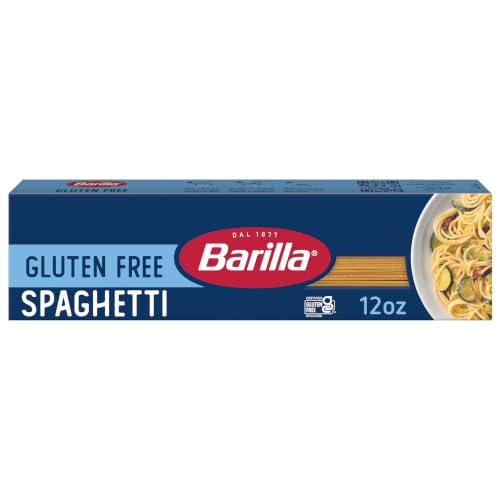
Barilla GF sits on the shelf at every US supermarket and uses a corn-and-rice blend, which produces a softer noodle than chickpea but a more familiar one to anyone raised on wheat pasta. Reliable cooking, predictable texture, and the lowest cost of any reputable GF brand. Buy this for baked dishes (mac and cheese, ziti al forno) where the surface texture matters less than the structure.
BARILLA Gluten Free Spaghetti Pasta
Cheapest reliable GF pasta
Best Splurge: Jovial Foods Brown Rice Penne (Bronze-Die)
Jovial is Italian-made, bronze-die-extruded, and slow-dried — the same production process the premium wheat-pasta brands use. Whole Foods stocks it, and Amazon US sells it in an 8-pack. The bronze-die surface is the killer feature: most GF pastas use Teflon dies because the doughs are easier to extrude that way, which produces smooth strands that shed sauce. Jovial's bronze-die roughness holds tomato and oil sauces the way wheat does.
Buy this when you're hosting a GF guest at an Italian-leaning dinner. It's the version that won't read as a compromise.

Jovial Organic Brown Rice Penne Rigate
Premium Italian-style GF — bronze-die, slow-dried
Best for Beginners: Tinkyada Brown Rice Pasta
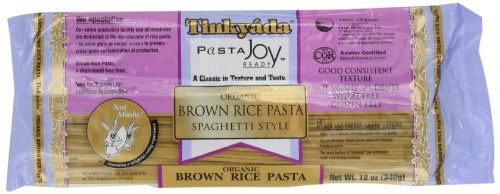
Tinkyada is the GF specialist brand — they've made nothing but rice pasta since 1995, which shows in the consistency. Whole Foods and Amazon US both carry it. The brown rice base produces a mildly nutty noodle that holds together better than most rice pastas (which tend to disintegrate at 8 minutes). Use it as the entry into rice-based pasta, especially in tomato-cream or meat sauces where the slight rice note adds warmth instead of competing.
Tinkyada Brown Rice Pasta
GF specialist brand — focused only on rice pasta
What to Look For
- A short ingredient list — ideally under 5 items. Long lists with multiple gums, starches, and oils signal a brand compensating for poor formulation.
- Single-source base (chickpea, brown rice, lentil) over multi-ingredient blends if texture quality is the priority. Blends cook more inconsistently.
- Bronze-die extrusion if you want the closest possible wheat-pasta texture. Look for trafilato al bronzo or "bronze die" on the box.
- A certified gluten-free logo, not just a "no wheat" claim. The certification requires under 20 ppm gluten — the FDA threshold.
- Manufactured in a dedicated GF facility, especially for celiac eaters. Cross-contamination from shared wheat-pasta production lines is real.
- Protein content of 8+ grams per serving, ideally. Chickpea and lentil pastas hit 14-15 g; rice pastas land at 4-6 g.
Common Mistakes
- Cooking GF pasta to the package time. Most GF pasta needs to be pulled 30-60 seconds early. The window between al dente and mush is shorter than wheat — sometimes 90 seconds total. Set a timer and taste a strand.
- Boiling in too little water. GF pasta releases more starch than wheat. Use at least 4 quarts of water per pound, or the result is gummy.
- Skipping the cold rinse on rice pasta. Surface starch is heavier on rice. A quick cold rinse stops the cook and removes the sticky coating.
- Using GF pasta in long-baked dishes. The texture breaks down. Use Barilla GF specifically for baked dishes, and pull it 2 minutes earlier than the recipe suggests.
- Trusting "wheat-free" without GF certification. Wheat-free isn't the same as gluten-free. Spelt, kamut, and triticale all contain gluten.
- Adding GF pasta to soup hours in advance. It disintegrates faster than wheat in liquid. Cook separately and add to bowls at serving.
FAQ
Is gluten-free pasta healthier than wheat?
Not categorically. Chickpea and lentil GF pastas are higher in protein and fiber than wheat. Rice and corn GF pastas are similar in carb load to wheat, sometimes higher in glycemic impact.
Why does my GF pasta fall apart?
Overcooked or under-rinsed. Most GF pasta needs to be pulled 30-60 seconds before the package time. Cold-rinse it briefly to stop the cook, then return to a hot sauce.
Which GF pasta tastes most like wheat?
Banza chickpea (closest texture; faint bean flavor) for daily use, and Jovial bronze-die brown rice (closest behavior with sauce) for showcase dinners. No GF pasta is identical to wheat — they're parallel categories, not substitutes.
Can celiacs eat any pasta labeled "gluten-free"?
Look for the certified GF logo and "manufactured in a dedicated gluten-free facility" on the label. Both matter — certified GF guarantees under 20 ppm gluten; dedicated facility eliminates cross-contamination risk.
Is fresh GF pasta available?
Yes, in a small number of US specialty stores and via specialty mail-order. Most home cooks stick with dry. Fresh GF pasta is harder to make at home because the dough lacks gluten to bind — you need xanthan gum or psyllium husk to substitute.