Are Rice Noodles Gluten-Free? Labels, Sauces, Takeout
· 6 min read · NoodleDex Editorial
Are rice noodles gluten free? The noodle usually is. The soy sauce, oyster sauce and shared woks behind pad see ew and chow fun often aren't. How to check.
This page contains affiliate links. We may earn a commission at no extra cost to you. Disclosure
"Water, Soybeans, Salt, Wheat, Alcohol, Glucose."
That is the ingredient line on a bottle of Kikkoman Tamari Soy Sauce, and the fourth word is the problem (Kikkoman). Tamari has a reputation as the wheat-free soy sauce, and gluten-free cooks reach for it by name. Kikkoman also sells a separate bottle labeled Gluten-Free Tamari. The Celiac Disease Foundation words it carefully: tamari made without wheat is gluten-free (Sources of Gluten).
Rice noodle dishes share that weak point. In most of them the noodle is clean and the gluten arrives from the bottles around it.
The noodle on its own
The Celiac Disease Foundation's sources-of-gluten list puts it plainly: rice noodles and mung bean noodles are gluten-free, while ramen, udon and chow mein are not. Rice-flour ramen does exist, and our best gluten-free ramen guide lists what to buy. A standard dried rice noodle is rice flour and water. Lotus Foods' Organic Traditional Pad Thai Rice Noodles list a single ingredient, organic white rice flour, and carry the Gluten-Free Certification Organization (GFCO) mark (Lotus Foods).
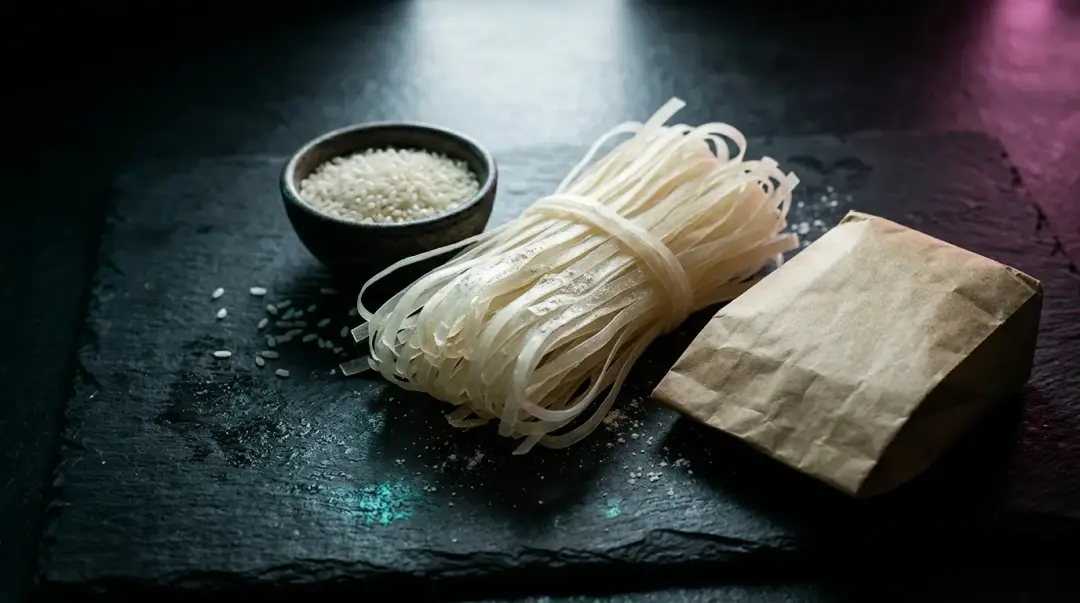
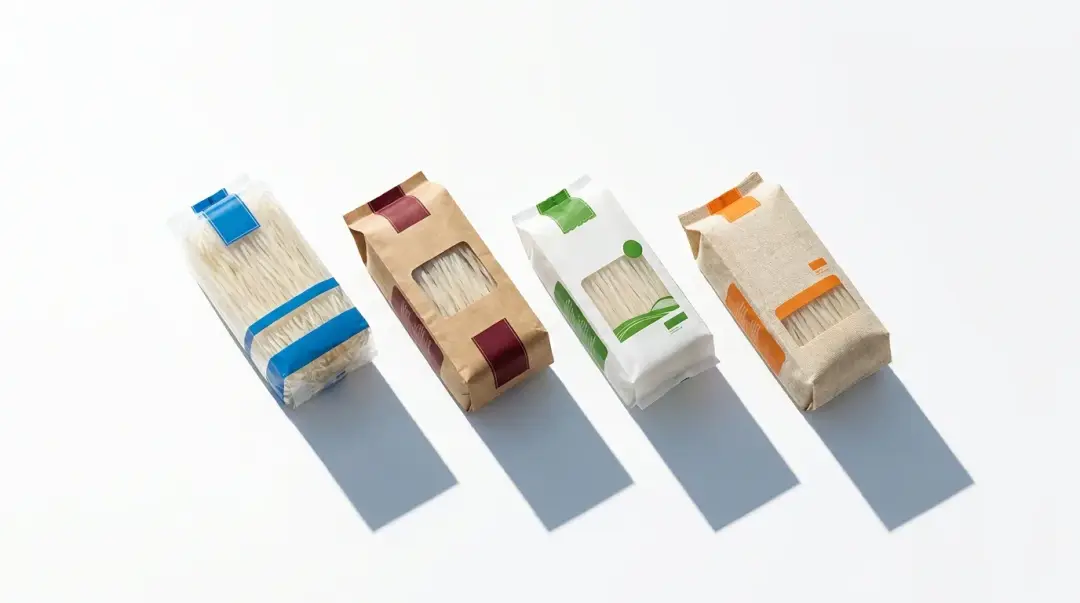
Three things on a rice noodle bag deserve a second look:
- Wheat starch in the ingredients. A few budget brands blend it into rice noodles to cut cost, as NoodleDex's rice noodles guide notes, and the Celiac Disease Foundation counts wheat starch as a gluten source unless it has been processed below 20 parts per million and labeled under FDA rules.
- A rice-only ingredient list with no gluten-free claim. The noodle may be clean while the factory also runs wheat noodles. A "gluten-free" claim on a US package means under 20 ppm, and GFCO-certified products are held to 10 ppm.
- "Egg," "mì" or "mee" on the front. These usually mean wheat, even on the Asian noodle shelf next to the rice sticks.
For celiac disease, a certified mark is the cleaner signal. For most gluten-avoiding shoppers, a rice-and-water ingredient list plus a gluten-free claim covers it.
Rice noodle dishes that aren't all rice
Some dishes built on rice noodles have a wheat version sharing the name. Pad see ew (pad see-YEW) normally uses wide rice noodles called sen yai, but in southern Thailand a version made with yellow egg noodles, mi lueang, goes by the same dish name (Phat si-io). Vietnamese menus pair rice noodles with wheat egg noodles in hủ tiếu mì (hoo tee-oo mee), and NoodleDex's gluten-free noodles by cuisine guide covers more of those pairings country by country.
Where the gluten actually enters takeout
Many restaurant rice noodle dishes are seasoned with soy sauce and oyster sauce, and those are where wheat turns up. Kikkoman's standard soy sauce lists "Water, Soybeans, Wheat, Salt." Lee Kum Kee Premium Oyster Sauce lists wheat flour among its ingredients and declares wheat as an allergen (Lee Kum Kee). NoodleDex's own recipe pages for pad see ew, drunken noodles and Singapore noodles all call for Lee Kum Kee Premium.
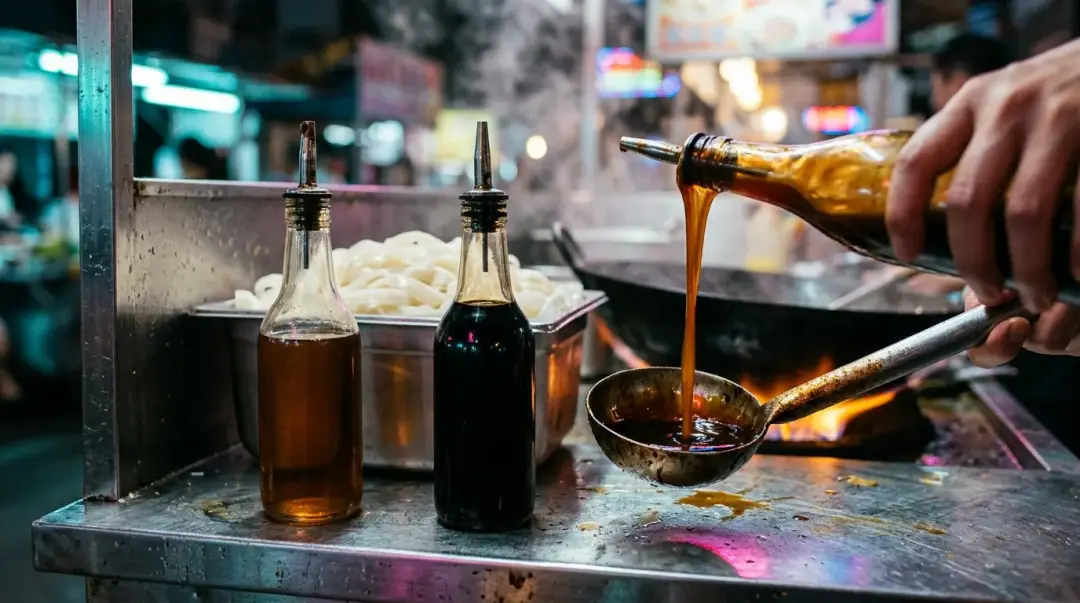
Common rice noodle dishes and their usual gluten sources
| Dish | Noodle | Usual gluten source | What to ask |
|---|---|---|---|
| Pad see ew | Wide rice (sen yai) | Light and dark soy, oyster sauce | Can it be made with gluten-free soy and oyster sauce? |
| Drunken noodles (pad kee mao) | Wide rice (sen yai) | Dark soy, oyster sauce | Same as pad see ew |
| Beef chow fun | Wide rice (ho fun) | Soy sauce | Is there a gluten-free soy in the kitchen? |
| Singapore noodles | Thin rice vermicelli (mei fun) | Light soy, oyster sauce | Which sauces go into the wok? |
| Pad thai | Medium rice (sen lek) | Soy added by some kitchens; traditional sauce is tamarind, fish sauce, palm sugar | Is there soy sauce in your pad thai sauce? |
| Pho | Flat rice (bánh phở) | Hoisin at the table; any added wheat noodles | What seasons the broth? |
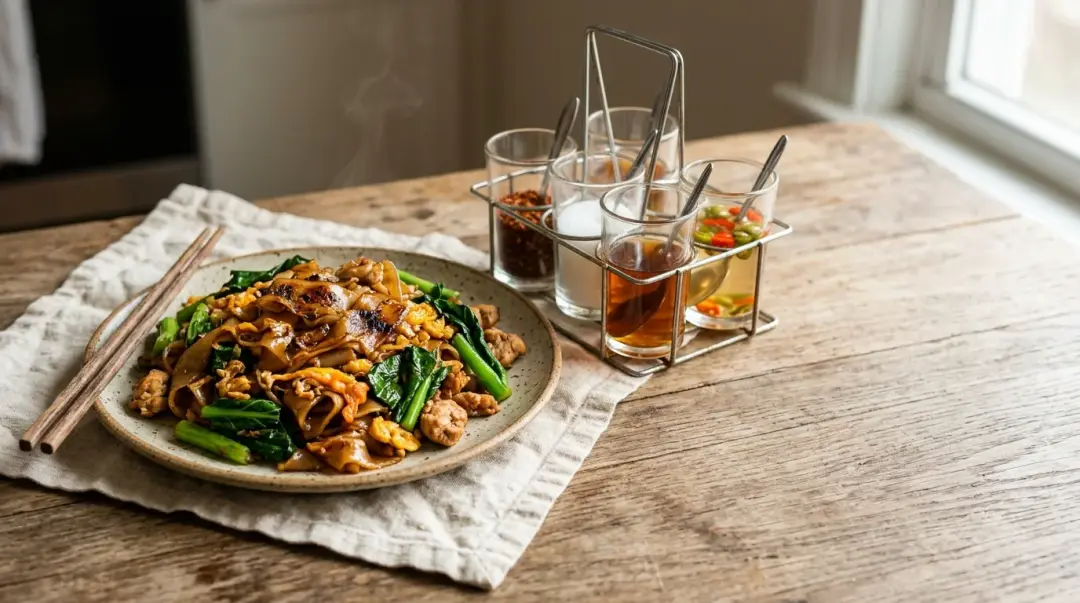
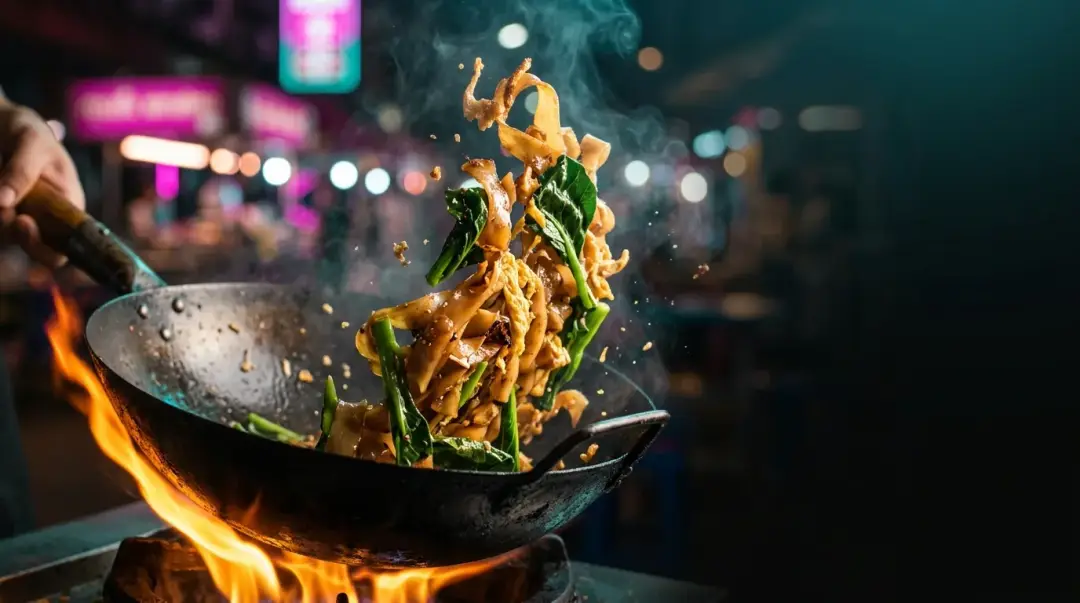
Pad see ew is the hardest one. The Thai name, phat si-io, translates to "fried with soy sauce," and the dish depends on both light soy (si-io khao) and the thick dark soy (si-io dam) that chars on the wok. Without soy it becomes a different plate of noodles, so a gluten-free pad see ew depends on the kitchen stocking gluten-free soy sauce.
Pad thai has more room. The traditional sauce is tamarind, fish sauce and palm sugar, which are naturally gluten-free, although many restaurant kitchens add soy anyway. Bottled options like Thai Kitchen's gluten-free pad thai sauce, and the brands in NoodleDex's pad thai noodle buying guide, make the home version simple.
Cross-contact in a noodle kitchen
Even a correctly sauced dish can pick up gluten on the way to the plate. The Celiac Disease Foundation names colanders and fryer oil shared with breaded foods among common cross-contact routes. A noodle kitchen has its own versions: a pot of boiling water used for wheat noodles and then rice noodles, a wok wiped instead of washed between a lo mein and a chow fun, a strainer basket that serves both.
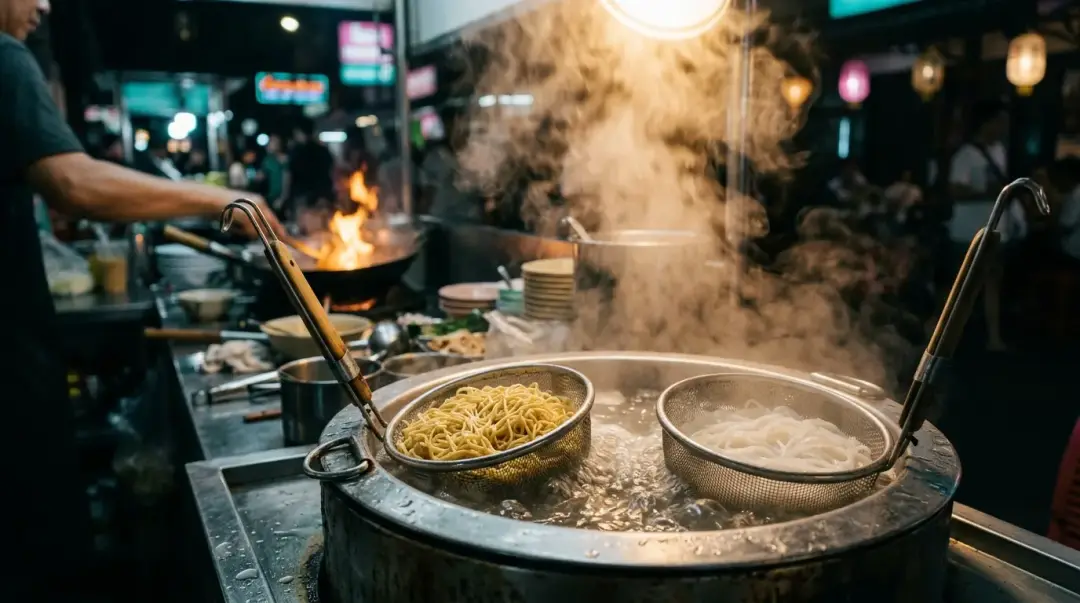
The FDA's 20 ppm rule covers packaged food labels, not restaurant menus. A "GF" mark next to a rice noodle dish is the kitchen's own claim, and how much it means depends on how that kitchen handles its noodle water and woks.
Cooking rice noodles gluten-free at home
At home the fixes are short. Buy rice noodles with a gluten-free claim. Swap the soy for a labeled gluten-free one: Kikkoman's Gluten-Free Soy Sauce is brewed from "Water, Soybeans, Rice, Salt" and certified by the Gluten Intolerance Group (Kikkoman). Lee Kum Kee sells a gluten-free oyster sauce alongside its standard bottles. Fish sauce, tamarind and palm sugar, the base of a traditional pad thai sauce, need no substitution.
Keep a colander and strainer that never touch wheat noodles, since shared ones are a cross-contact route, and rinse the cooked noodles in a fine-mesh strainer. Soaking and boiling times don't change; the rice noodle cooking guide covers soak versus boil by width.
What to say when you order
Asking "is this gluten-free?" can get a yes that only covers the noodle. These questions get at the sauce and the station:
- "Which sauces go into the pad see ew? Is there oyster sauce?"
- "Do you have a gluten-free soy sauce or tamari in the kitchen, and can the cook use it?"
- "Are the rice noodles boiled in the same water as the egg noodles?"
- "Can the wok be washed before my order?"
- For pho: "Is anything with wheat added to the broth?" Then skip the hoisin bottle on the table.
A server who has to go and check the oyster sauce bottle is giving you a more useful answer than one who says yes straight away.
FAQ
Are rice noodles gluten-free?
Plain rice noodles are. The Celiac Disease Foundation lists rice noodles and mung bean noodles as gluten-free. The risks come from a few dried brands that add wheat starch, from shared factory lines, and above all from the soy and oyster sauces used in restaurant rice noodle dishes. Check the ingredient list and look for a gluten-free claim.
Is pad see ew gluten-free?
Usually not as served. The rice noodles are gluten-free, but the dish is named for soy sauce and is typically seasoned with light and dark soy, both usually brewed with wheat, plus oyster sauce such as Lee Kum Kee Premium, which lists wheat flour. A gluten-free version needs gluten-free soy and oyster sauce.
Is tamari always gluten-free?
No. Tamari is often made without wheat, but not always. Kikkoman's regular Tamari Soy Sauce lists wheat as its fourth ingredient, and the company sells a separate Gluten-Free Tamari. The Celiac Disease Foundation's wording is that tamari made without wheat is gluten-free, so the label decides.
Is pho gluten-free?
The noodles in pho are flat rice noodles, and the classic broth is beef bones simmered with charred ginger, onion and whole spices. The usual gluten sources are the hoisin sauce on the table, which often contains wheat, and any noodle combination that adds Vietnamese wheat egg noodles. Ask the kitchen about the broth seasoning if you need certainty.
Can rice noodles be cross-contaminated with gluten?
Yes. In factories, rice noodles can share lines with wheat noodles, which is why a certified gluten-free claim matters for celiac disease. In restaurants, shared noodle-boiling water, colanders, woks and fryer oil can all carry gluten onto a rice noodle that started out clean.
Read Next
- Gluten-Free Noodles by Cuisine: safe picks across six cuisines
- Pad See Ew vs Pad Thai vs Drunken Noodles
- Are Egg Noodles Gluten-Free?
- Best Rice Noodles
Products mentioned in this guide
This section contains affiliate links. We may earn a commission at no extra cost to you.

Lotus Foods Organic Traditional Pad Thai Rice Noodles, 8 oz
One ingredient, organic white rice flour, with GFCO certification on the bag. A safe base for pad see ew or pad thai at home.
View on Amazon
Kikkoman Gluten-Free Soy Sauce
Brewed with rice in place of wheat and certified by the Gluten Intolerance Group. Use it for the light soy in pad see ew and chow fun.
View on Amazon
Thai Kitchen Pad Thai Sauce (Gluten Free), 8 fl oz (Pack of 2)
A bottled tamarind-based pad thai sauce labeled gluten-free, for nights when making the sauce from scratch is not happening.
View on Amazon
DLD stainless steel micro-perforated 5-quart colander
Shared colanders are a named cross-contact route, so a colander used only for rice noodles removes one. This listing is a 5-quart micro-perforated stainless steel colander with a wide base and an easy-grasp handle.
View on Amazon
OXO Good Grips 3-piece fine mesh strainer set
Rice noodles are rinsed after cooking to stop the cooking and wash off surface starch, and a fine-mesh strainer holds thin vermicelli. This listing is a nesting set of 3-inch, 6-inch and 8-inch strainers with handles that hook over a bowl.
View on Amazon
Browse more related items
Opens Amazon · affiliate links
Buying guides for this topic
- Buying guideBest Rice Noodles for Pho, Pad Thai, and MoreThe best rice noodles on Amazon: Three Ladies bánh phở, A Taste of Thai, Annie Chun's and Lotus Foods, ranked for pho, pad thai and more.
- Buying guideBest Pad Thai Noodles & Sauces in 2026The best sen lek rice noodles and pad thai sauce kits on Amazon — A Taste of Thai, Erawan, and premium Thai brands ranked.
- Buying guideBest Gluten-Free Pasta in 2026Banza, Jovial, Tinkyada, Barilla GF — the best gluten-free pasta brands on US Amazon, ranked by texture and use case.
- Buying guideBest SE Asian Pantry Essentials in 2026The 10 Southeast Asian pantry items needed to cook pad thai, laksa, mì goreng, and more. Fish sauce, kecap manis, sambal, curry pastes, ranked.