
Five Bottles, One Table
Most soy sauce confusion comes from one word. "Light" means less salty-tasting and thinner on a Chinese label and paler in color on a Japanese one. This table sorts the five styles a US noodle cook meets.
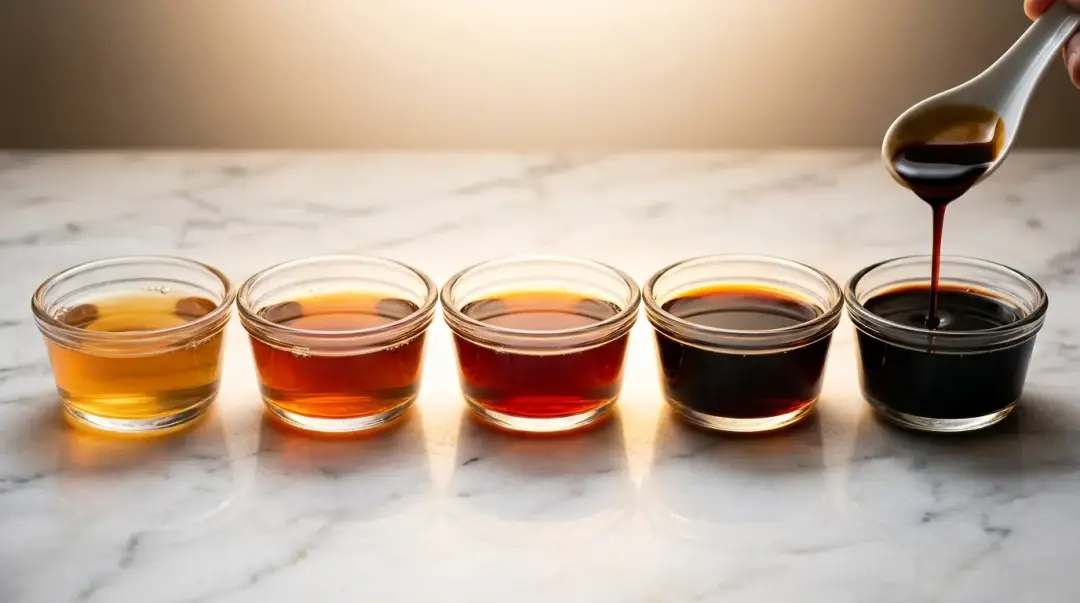
| Style | What it is | Salt and color | Share or role | Best noodle use |
|---|---|---|---|---|
| Koikuchi (KOY-koo-chee) | Standard Japanese shoyu, about equal soybeans and wheat | About 16% salt; reddish brown | Over 80% of soy sauce made in Japan | Ramen tare, soba dipping sauce, yakisoba |
| Usukuchi (OO-soo-koo-chee) | Japanese "light color" shoyu | 18 to 19% salt; pale amber | Around 11% of Japan's production | Pale udon and noodle broths |
| Tamari (tah-MAH-ree) | Japanese shoyu made mostly or entirely from soybeans | Thick, dark | Around 2% of Japan's production | Gluten-free swaps, dipping |
| Chinese light soy | Thin, salty everyday seasoning soy, higher in soybeans than Japanese shoyu | Brown, thin | The main seasoning soy in Chinese kitchens | Lo mein, chow mein, cold noodles |
| Chinese dark soy | Thicker, sweeter soy used for color | Near black, glossy | A coloring sauce used in small amounts | Color and gloss on stir-fried noodles |
Salt figures are from Just One Cookbook. Production shares are from the Japan Soy Sauce Association's guide in The Japan Times. Japan also brews saishikomi (re-fermented, about 1%) and shiro (wheat-heavy and very pale, under 1%), which you will rarely need for noodles.
The Picks
- Best overall: Kikkoman Naturally Brewed Soy Sauce
- Best second Japanese bottle: Yamasa Shoyu
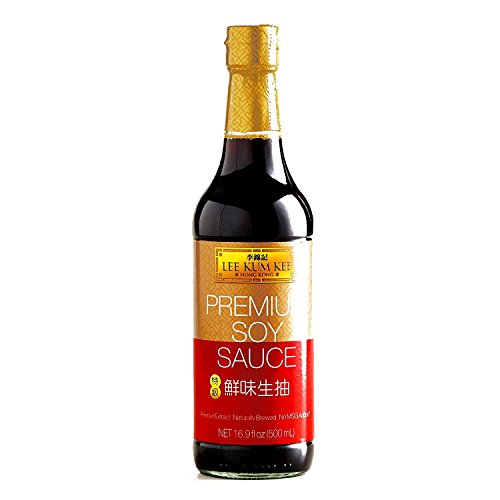
- Best Chinese light soy: Lee Kum Kee Premium Soy Sauce
- Best Chinese dark soy: Lee Kum Kee Premium Dark Soy Sauce
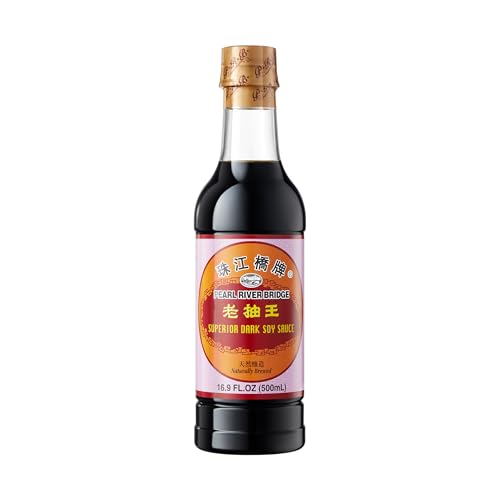
- Best mushroom dark soy: Pearl River Bridge Superior Dark, Mushroom Flavored
- Best finishing shoyu: Takesan Kishibori Shoyu
- Best gluten-free: San-J Tamari Gluten Free
Soy sauce picks for noodle cooking, by style and job
| Bottle | Style | Made in | Main noodle job |
|---|---|---|---|
| Kikkoman Naturally Brewed | Koikuchi | Walworth, Wisconsin (US bottles) | Ramen tare, tsuyu, yakisoba |
| Yamasa Shoyu | Koikuchi | Oregon | Ramen tare, dipping sauce |
| Lee Kum Kee Premium | Chinese light | Check label | Lo mein, chow mein seasoning |
| Lee Kum Kee Premium Dark | Chinese dark | Check label | Color on stir-fried noodles |
| Pearl River Bridge Mushroom Dark | Chinese dark | Guangzhou, China | Color plus savory depth |
| Takesan Kishibori Shoyu | Barrel-aged koikuchi | Shodoshima, Japan | Finishing cold noodles and dips |
| San-J Tamari Gluten Free | Tamari | Virginia | Gluten-free tare and stir-fries |
How We Picked
This guide is research-based. We did not run a side-by-side tasting for it. We read each maker's own product and process pages, retailer listings at Walmart, H Mart, Giant and ChefShop, and reference sources on soy sauce styles: Just One Cookbook, The Woks of Life and the Japan Soy Sauce Association guide.
We required a brewed sauce, since Kikkoman's own explainer describes how chemically made soy uses hydrolyzed vegetable protein plus caramel color and corn syrup and can ship in days. Every pick is sold in the US through a supermarket, an Asian grocer or the maker's US store. We then matched bottles to noodle jobs instead of naming one winner for everything, because a Japanese koikuchi and a Chinese dark soy aren't interchangeable.
The Bottles
Best Overall: Kikkoman Naturally Brewed Soy Sauce
Kikkoman is the most popular soy sauce brand in the US, and its all-purpose and Less Sodium bottles sold here are brewed at the company's plant in Walworth, Wisconsin. The company formed in 1917 from a merger of eight family-owned brewers and traded as Noda Shoyu until it took the Kikkoman name in 1940. Its process starts with a three-day koji (KOH-jee, soybeans and wheat grown with a mold culture) stage, then moromi (moh-ROH-mee, the fermenting mash of koji and brine) ages for several months before roughly ten hours of pressing. Kikkoman says that brewing produces more than 300 flavor and aroma components.
For noodles, that profile is the baseline of Japanese cooking. It's the soy sauce in a home shoyu (SHOW-yoo) tare at the common 4:2:1 ratio with mirin and sake, which our guide to tare walks through. It also works in soba dipping sauce and yakisoba. Buy it if you can only own one bottle.
The catch is color. Kikkoman is a koikuchi, so in a Chinese stir-fry it seasons well but leaves the noodles pale. Pair it with a dark soy if you cook both cuisines.

Kikkoman Naturally Brewed Soy Sauce
Brewed koikuchi, the style behind most Japanese noodle sauces
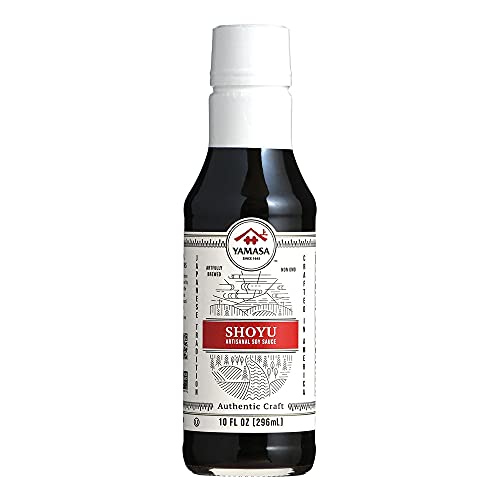
Yamasa Shoyu
Yamasa is older than Kikkoman's merger by almost three centuries. Gihei Hamaguchi founded it in 1645 in Choshi, a fishing town in Chiba Prefecture, and the company completed its US brewery in Oregon's Willamette Valley in 1994. The US line includes Yamasa Shoyu and Reduced Sodium Shoyu in 10 fl oz bottles, an organic gluten-free tamari and restaurant-size nikiri, a finishing sauce with kombu.
It is a second Japanese bottle for cooks who like to taste side by side, and the obvious choice if your Japanese grocer stocks it and not Kikkoman. The catch is availability. Mainstream supermarkets carry it less often, and Yamasa's own site points buyers to Amazon and a store locator.
Yamasa Shoyu
From a Choshi brewer founded in 1645, brewed in Oregon since 1994
Best Chinese Light Soy: Lee Kum Kee Premium Soy Sauce
Lee Kum Kee is a Hong Kong sauce maker founded in 1888. Its Premium Soy Sauce plays the role of Chinese light soy (shēngchōu, shung-CHOH): the thin, salty sauce that carries most of the seasoning in a stir-fry. It comes in 5.1, 8.4 and 16.9 fl oz bottles, uses non-GM soybeans and has no preservatives added.
Use it for the salt in lo mein and chow mein, in cold sesame noodles, and in a dipping sauce for dumplings on the side. The catch is the ingredient list, which includes sugar plus disodium inosinate and guanylate, flavor enhancers that boost savoriness. If you'd rather avoid those, Lee Kum Kee's Supreme Authentic First Draw Soy Sauce lists only water, soybeans, salt, sugar and wheat. "First draw" means the first pressing of a double-fermented batch, and The Woks of Life suggests saving that style for dishes where soy is the main flavor.

Lee Kum Kee Premium Soy Sauce
The light-soy workhorse for lo mein, chow mein and cold sesame noodles
Best Chinese Dark Soy: Lee Kum Kee Premium Dark Soy Sauce
Dark soy (lǎochōu, lao-CHOH) is the bottle that turns chow mein brown. It's thicker and sweeter than light soy, and The Woks of Life describes it as a coloring and glossing sauce that works alongside light soy, with "a little goes a long way" as the rule. Lee Kum Kee's version lists water, salt, caramel color, sugar, soybeans and wheat, and comes in 8.4 and 16.9 fl oz bottles plus a 59 fl oz pail.
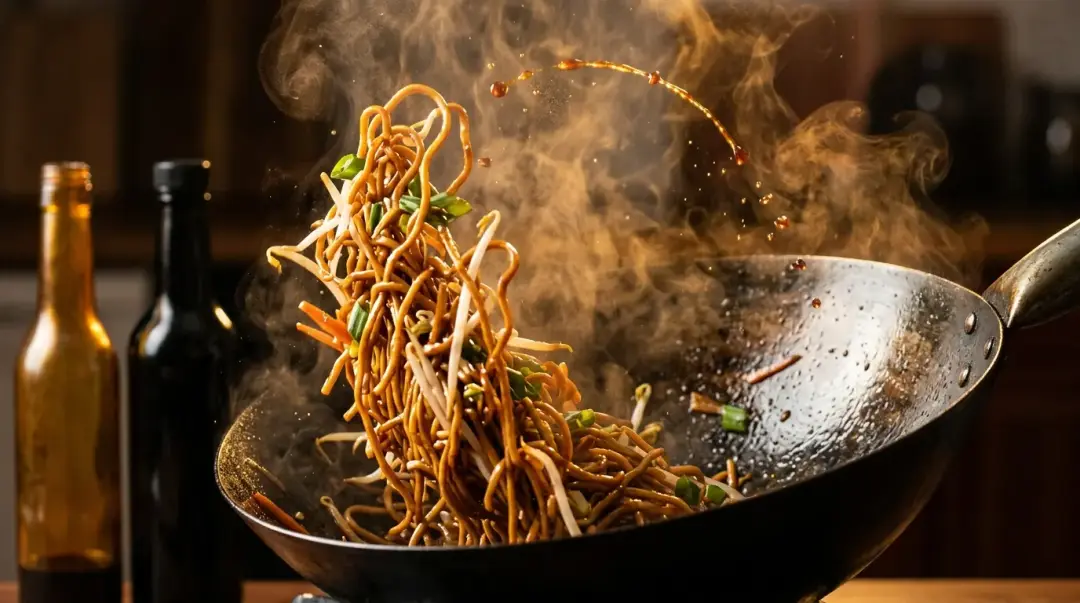
Buy it if you cook Cantonese-style noodles at home. A teaspoon or two in a pan of noodles is usually enough, so a bottle lasts a long time. The catch: it's a finishing color, not a seasoning. Swap it in for light soy and the dish turns sweet and muddy.

Lee Kum Kee Premium Dark Soy Sauce
Gives stir-fried noodles their mahogany color
Pearl River Bridge Superior Dark Soy Sauce, Mushroom Flavored
Pearl River Bridge is made by GuangDong PRB Bio-tech in Guangzhou, which says it sells in 159 countries. Its Superior Dark goes through more than 100 days of fermentation, and the Mushroom Flavored version adds mushroom extract on top of that base. H Mart stocks it in 16.9 oz bottles. Walmart sells the brand's Golden Label Superior Light in the same size if you want a matched pair.
The mushroom version suits braised and stir-fried noodles with beef or shiitake, where its earthy note fits. The catch is that you'll taste the mushroom in a clean broth, so keep plain dark soy for anything delicate.
Pearl River Bridge Superior Dark Soy Sauce
Mushroom extract adds savory depth to dark soy's color
Best Finishing Shoyu: Takesan Kishibori Shoyu
Kishibori is brewed by Takesan on Shodoshima, an island in Japan's Seto Inland Sea. Per ChefShop, it ferments for a year in cedar barrels that have been in use for more than 100 years, from whole soybeans, toasted wheat, sea salt and mineral water. It is pasteurized, with no added alcohol or preservatives. Takesan is one of 14 member brewers of the Shodoshima Shoyu Association. Walmart.com lists the 12.2 fl oz bottle with "Barrel Aged 1 Year" in the title.
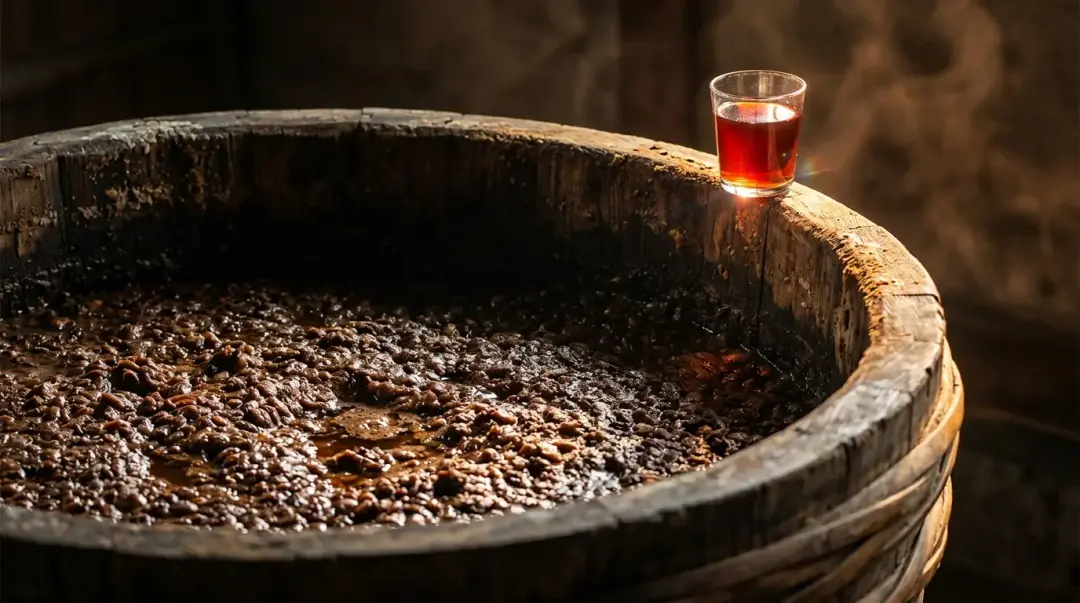
Use it where you taste it straight: drizzled over cold tofu next to a bowl of chilled soba, in a dipping sauce, or as the last splash on a finished noodle bowl. The catch is price. It costs several times a supermarket bottle, and cooking it down in a wok or a long simmer wastes the reason you paid for it.

Takesan Kishibori Shoyu
Fermented one year in cedar barrels on Shodoshima
Best Gluten-Free: San-J Tamari Gluten Free
San-J was founded in 1804 by the Sato family and brews in Virginia. Its tamari is made from 100% soybeans with no wheat, fermented up to 6 months, and carries certification from the Gluten-Free Certification Organization (GFCO) plus Non-GMO Project verification. The label at Giant lists water, soybeans, salt and alcohol, at 980 mg of sodium per tablespoon.
This is the bottle for cooking rice noodles or gluten-free ramen for someone with celiac disease. Our guide to gluten-free noodles by cuisine pairs it with the right noodles. The catch is that tamari is thicker and darker than koikuchi, so a shoyu tare made with it comes out deeper in color. Also check the label: not every tamari on the shelf is wheat-free, and Just One Cookbook advises reading it first.
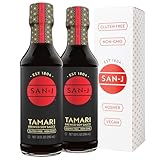
San-J Tamari Gluten Free Soy Sauce
Certified gluten-free by GFCO and made with 100% soybeans, no wheat
What to Look For
- "Brewed" or "naturally brewed" on the label, and soybeans, wheat (or not, for tamari), salt and water at the top of the ingredient list. Hydrolyzed soy or vegetable protein means a chemically made sauce.
- The style word on the label. Japanese usukuchi and Chinese light soy both get called "light," and they are different sauces: one is paler and saltier, the other is the main seasoning soy.
- A gluten-free certification mark if anyone at the table needs it. "Tamari" alone does not guarantee it.
- Sodium per tablespoon. USDA lists about 879 mg for soy sauce; reduced-sodium bottles from Kikkoman, Yamasa, Lee Kum Kee and San-J cut that. Our low-sodium noodles guide covers the rest of the bowl.
- Additives you'd rather skip, such as caramel color in light soy or flavor enhancers. Dark soy is expected to carry caramel color; light soy doesn't need it.
Common Mistakes
- Seasoning lo mein with dark soy only. The noodles go sweet and heavy. Use light soy for salt and add dark for color.
- Cutting salt by buying usukuchi. It's the saltiest common Japanese style. Buy a labeled reduced-sodium bottle instead.
- Pouring Chinese light soy into soba dipping sauce. It works, but the sauce turns sharper than a koikuchi-based tsuyu (TSOO-yoo, soba dipping sauce).
- Cooking with the barrel-aged bottle. Kishibori's year in cedar shows up best raw.
- Assuming every tamari is gluten-free. Some contain wheat. Look for GFCO or another certifier's mark.
Which Bottle for Which Noodle
| Noodle dish | Main bottle | Add |
|---|---|---|
| Shoyu ramen tare | Kikkoman or Yamasa | Mirin and sake at 4:2:1 |
| Gluten-free ramen or rice noodle stir-fry | San-J Tamari Gluten Free | Rice vinegar for brightness |
| Lo mein, chow mein | Lee Kum Kee Premium (light) | 1 to 2 tsp Lee Kum Kee Premium Dark or Pearl River Bridge Mushroom Dark |
| Beef or mushroom stir-fried noodles | Lee Kum Kee Premium | Pearl River Bridge Mushroom Dark |
| Zaru soba, cold tofu on the side | Kikkoman for the tsuyu | Kishibori for drizzling |
| Yakisoba | Kikkoman | Yakisoba sauce, per our Japanese pantry essentials |
Two bottles, one koikuchi and one Chinese light-dark pair, cover nearly every noodle on this site. Add tamari if you cook gluten-free and Kishibori if you eat a lot of cold soba.
FAQ
What is the best soy sauce for noodles?
It depends on the noodle. For Japanese dishes like ramen tare, soba dipping sauce and yakisoba, a brewed koikuchi such as Kikkoman is the default. For Chinese stir-fried noodles like lo mein and chow mein, use a Chinese light soy such as Lee Kum Kee Premium for salt and a splash of dark soy for color.
What is the difference between light and dark soy sauce?
In Chinese cooking, light soy is the thin, salty everyday sauce used for seasoning. Dark soy is thicker and sweeter and is used mostly for color and gloss. Lee Kum Kee's dark soy lists caramel color and sugar. Japanese usukuchi is also called light, but it means light in color, and it is saltier than regular koikuchi.
Should I use light or dark soy sauce for lo mein?
Both. Light soy carries the salt and savory flavor, and a small amount of dark soy turns the noodles brown and glossy. A common split is mostly light soy with a teaspoon or two of dark per batch. Using only dark soy gives a sweet, heavy noodle, and using only light soy leaves it pale.
Is tamari gluten-free?
Not always. Tamari is traditionally made with little or no wheat, but some tamari contains wheat. San-J's Tamari Gluten Free uses 100% soybeans and is certified by the Gluten-Free Certification Organization. Read the label and look for a certification mark if you are cooking for someone with celiac disease.
Is usukuchi soy sauce less salty?
No. Usukuchi is lighter in color but saltier, around 18 to 19 percent salt against about 16 percent for koikuchi, according to Just One Cookbook. Brewers add extra salt partly to keep the color pale. It is a Kansai (western Japan) style, used in soups and simmered dishes where cooks want a pale color.
How much sodium is in soy sauce?
USDA lists about 879 mg of sodium in one tablespoon of soy sauce. San-J's tamari label lists 980 mg per tablespoon. Kikkoman, Yamasa, Lee Kum Kee and San-J all sell reduced or less sodium versions. Amounts vary by brand and bottle, so check the label on the one you buy.