Soba vs Ramen: Buckwheat, Kansui & Which to Eat
· 9 min read · NoodleDex Editorial
Soba vs ramen: buckwheat vs alkaline wheat, USDA calories per 100g, gluten, hot or cold service, and which noodle fits tonight's dinner, from Tokyo counters.
This page contains affiliate links. We may earn a commission at no extra cost to you. Disclosure
Spot It: A Standing Soba Counter vs a Ramen Shop
Walk into a tachigui (tah-chee-GOO-ee, "eat standing") soba shop near a Tokyo train station and the ritual takes about as long as reading this paragraph. You buy a ticket from the machine by the door, hand it across the counter, and a bowl appears in under a minute. Standing soba runs 300 to 500 yen. Fuji Soba, the chain that brought fresh noodles to the format in 1987, opens at 5 a.m. for commuters. The bowl is usually kake soba (kah-KEH soh-bah): noodles in a clear brown broth of dashi and soy, a scatter of sliced green onion, maybe a disc of kakiage (a fried tangle of vegetable tempura) sliding off the side. You eat fast and leave.
Look at the noodle itself. Soba is ashen brown with visible flecks, and the surface has a slightly grainy feel against the lips. The broth is thin enough to read through. Nobody is lingering.
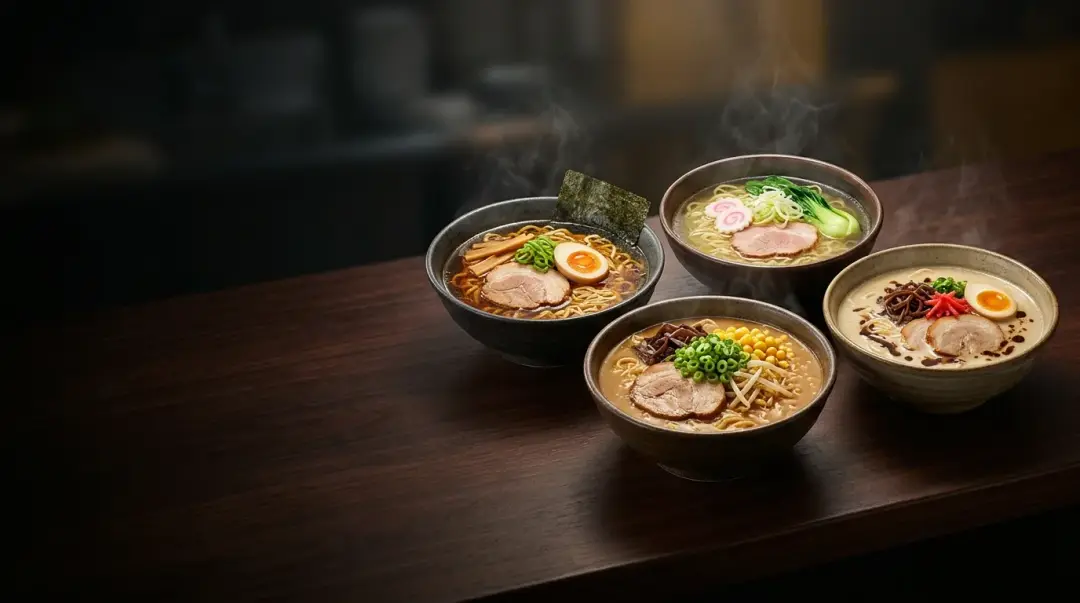
Two blocks away, a ramen shop runs on the same ticket machine but feels nothing like it. The noodles are pale yellow and glossy, and they spring back when you lift them. In a Hakata-style tonkotsu (tohn-KOHT-soo) bowl the broth is opaque and milky, the result of boiling pork bones at high heat for hours, and slices of chashu (braised pork belly) usually sit across the noodles. The bowl is heavier, hotter and saltier, and people sit for it.
Both rooms are loud with slurping. In Japan, noisy slurping is acceptable for both noodles, and it has a practical job: drawing noodles into the mouth fast pulls in air and cools them on the way.
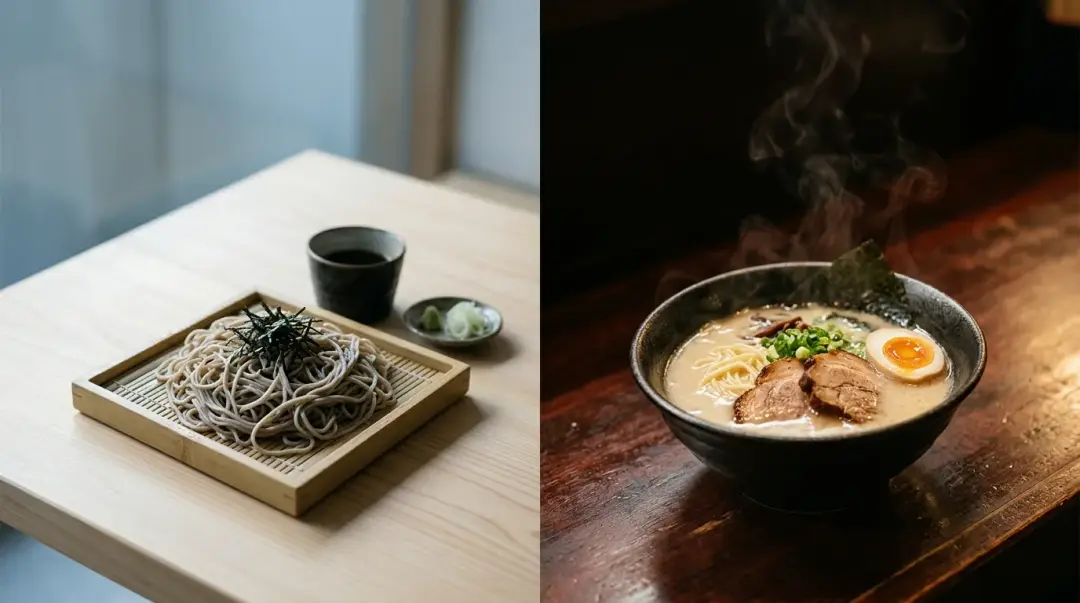
The quickest field test is color. Brown-gray and matte means soba. Yellow and shiny means ramen.
Why They Look and Eat So Differently
The split comes down to two ingredients: buckwheat on one side, kansui on the other.
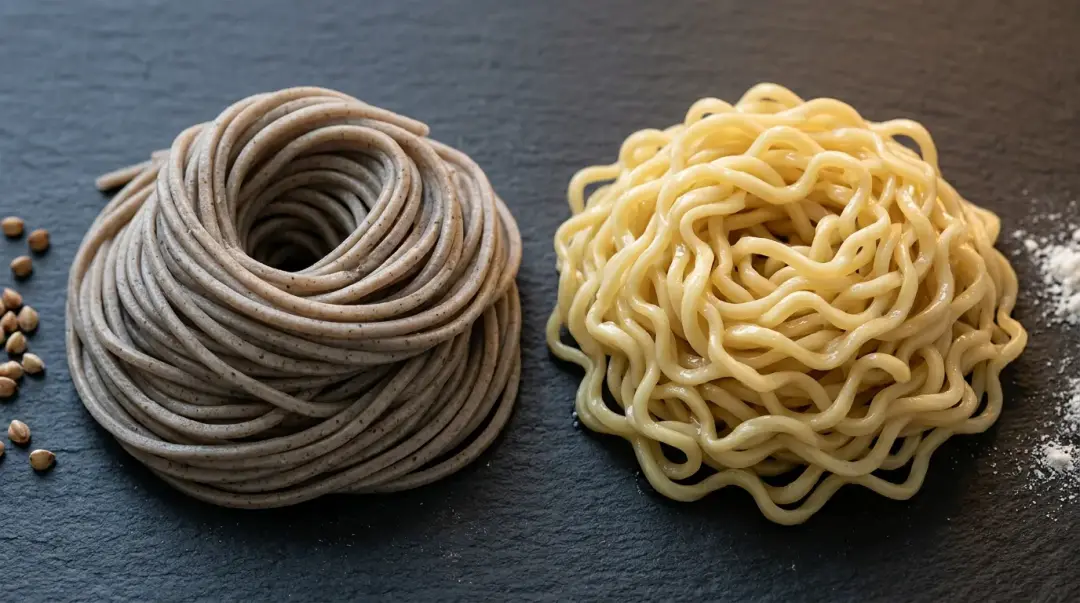
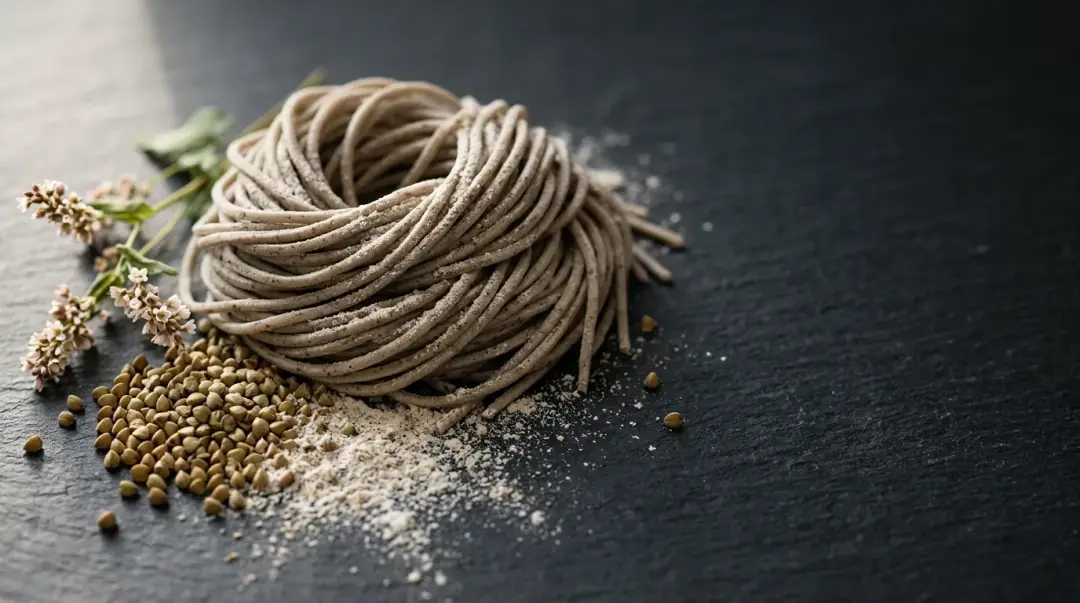
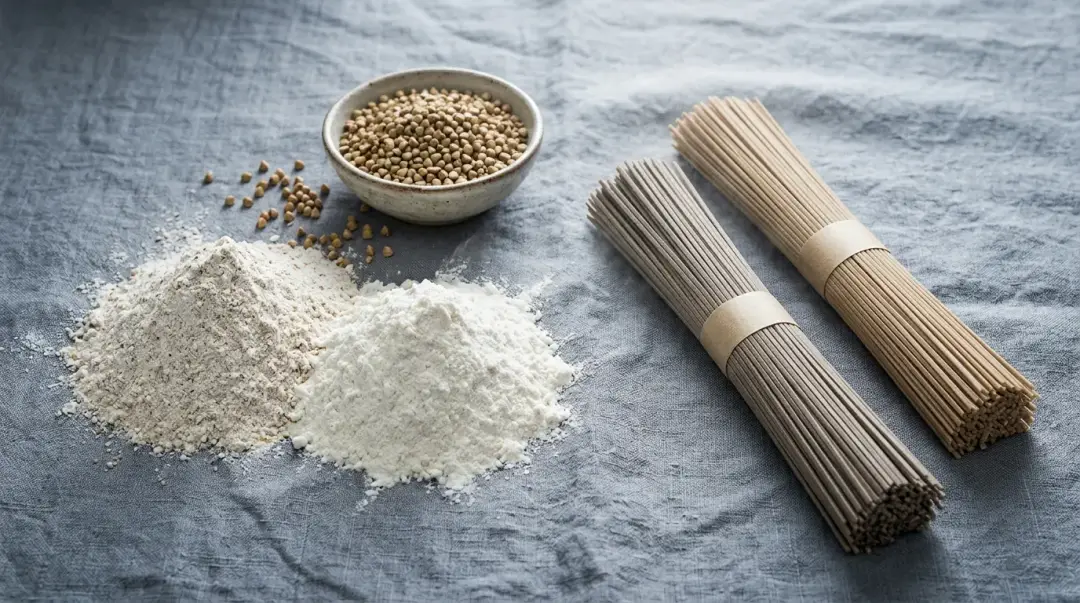
Soba starts from buckwheat flour. Buckwheat is a seed, unrelated to wheat, and has no gluten of its own. That makes an all-buckwheat dough short and crumbly, so most soba makers add wheat flour as a binder. The ratio has names:
- Juwari soba (joo-WAH-ree, "ten parts"), also called towari, is 100% buckwheat.
- Nihachi soba (nee-HAH-chee, "two-eight") is 80% buckwheat and 20% wheat, the standard modern ratio.
- Shinshu soba, the regional name from Nagano, must contain at least 40% buckwheat.
Supermarket soba often sits well below those numbers. Hakubaku's organic soba, one of the most widely stocked brands in the US, lists 69% wheat flour and 29% buckwheat on its Australian label. It still cooks and tastes like soba, but by weight it is mostly a wheat noodle.
Ramen starts from wheat plus kansui. Ramen noodles, called chukamen (Chinese-style noodles), are wheat flour, salt, water and kansui: an alkaline mineral water of sodium carbonate and potassium carbonate. Kansui raises the dough pH from roughly 6–7 to between 9 and 11. At that pH, flavonoid pigments in wheat turn yellow, and the gluten proteins form more cross-links, which gives the firm, springy bite Japanese cooks call koshi. Our kansui explainer covers the chemistry in full. The practical result is a noodle that survives several minutes in boiling broth without going soft.
Soba has no such armor. It goes from cooked to mushy quickly, which is one reason it is so often served cold, rinsed and drained.
Soba vs ramen: the noodle, the bowl, the room
| Soba | Ramen | |
|---|---|---|
| Main flour | Buckwheat, often with wheat | Wheat |
| Key additive | None (wheat as binder) | Kansui (alkaline salts) |
| Color | Gray-brown, matte | Pale yellow, glossy |
| Bite | Short, slightly grainy | Firm, springy (koshi) |
| Served | Cold with dipping sauce or hot in dashi | Hot in broth (tsukemen is the dipping exception) |
| Typical broth | Light dashi and soy | Shio, shoyu, miso or tonkotsu |
| Gluten | Usually yes; only 100% buckwheat is free of it | Yes |
| Classic setting | Tachigui counter, 300–500 yen | Ramen-ya with ticket machine |
Hot, Cold, and the Soba-yu Ritual
Ramen is a hot dish. The broth styles differ (shio, shoyu, miso and tonkotsu are the main four), but almost every bowl is served steaming. The main exception is tsukemen (TSOO-keh-men), thick noodles served apart from a concentrated broth and dipped bite by bite.
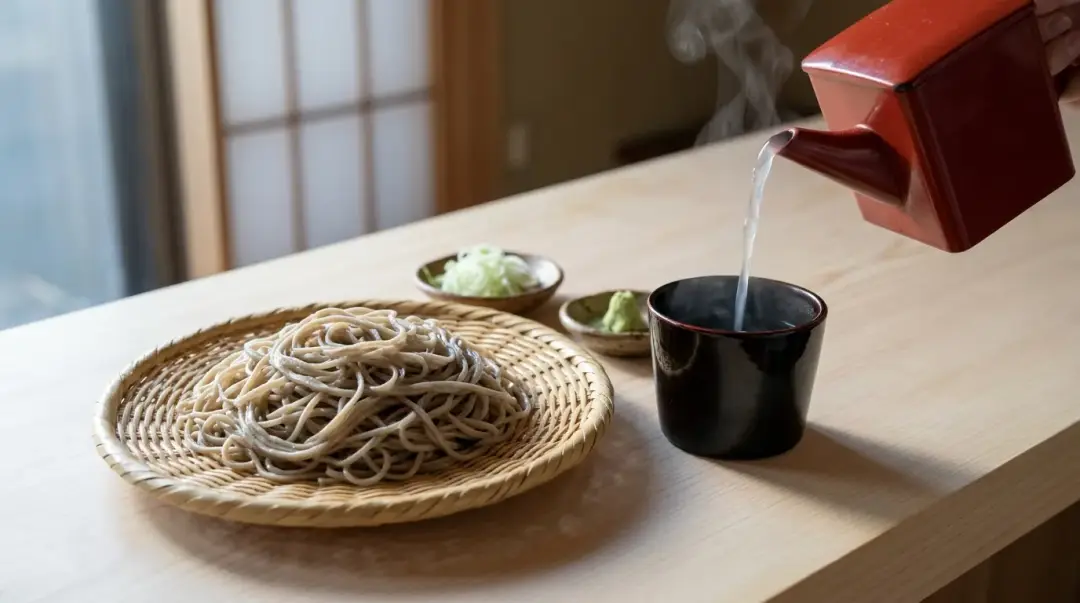
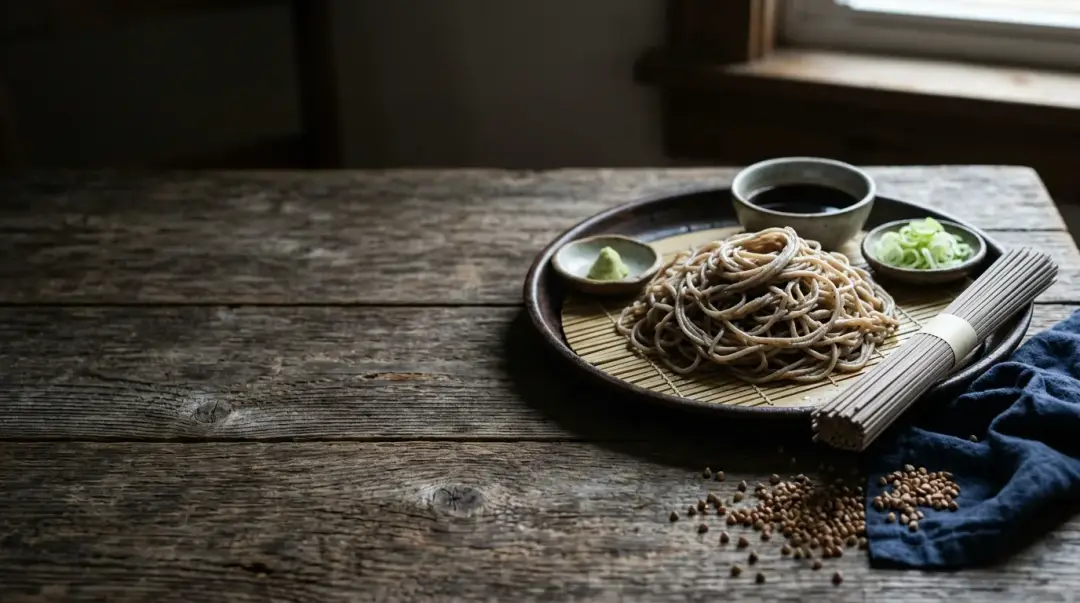
Soba goes both directions, and the cold versions are the ones soba shops are known for. Mori soba is chilled noodles on a flat slatted basket or plate. Add shredded nori on top and it becomes zaru soba (ZAH-roo). You lift a bite with chopsticks, dip it partway into a small cup of tsuyu (TSOO-yoo, a soy-mirin-dashi sauce), and slurp. Cold service suits soba because the noodle is already rinsed in cold water after cooking, which washes off loose surface starch.
At a sit-down soba shop the meal often ends with soba-yu: the cloudy water the noodles were cooked in, poured into the leftover tsuyu and drunk like a light soup. Ramen has no equivalent.
Hot kake soba is the other half, and it is what the station counters sell to the morning commute. If you are deciding between the two soba temperatures, our hot soba vs cold soba guide goes through when each one fits.
Nutrition Per 100 g, From USDA Data
"Is soba healthier than ramen?" is the question behind most searches for this comparison. The noodle-to-noodle answer is fairly clear. The bowl-to-bowl answer depends on what's in the broth.
USDA FoodData Central has a cooked soba entry. It has no entry for fresh alkaline ramen noodles, so the table uses the two closest references: plain cooked wheat noodles (enriched pasta, the generic USDA wheat-noodle benchmark, made without kansui) and the dry instant ramen block as sold.
Per 100 g, USDA FoodData Central (SR Legacy)
| Per 100 g | Soba, cooked (FDC 168907) | Wheat noodles, cooked, unsalted (FDC 169737) | Instant ramen block, dry (FDC 171177) |
|---|---|---|---|
| Calories | 99 kcal | 158 kcal | 439 kcal |
| Carbohydrate | 21.4 g | 30.9 g | 60.2 g |
| Protein | 5.1 g | 5.8 g | 10.1 g |
| Fat | 0.1 g | 1.0 g | 17.5 g |
| Sodium | 60 mg | 1 mg | 1,855 mg |
Three things stand out. Cooked soba carries about 37% fewer calories than cooked plain wheat noodles at the same weight, largely because the cooked strand holds more water and less starch per gram (the USDA soba entry is 73% water). Soba's fat is close to zero. And the instant ramen column is a different animal: most instant blocks are flash-fried to dry them, which is where the 17.5 g of fat per 100 g comes from, and USDA lists one 81 g block at 356 calories and about 1,500 mg sodium before you cook it.
Buckwheat also carries rutin and quercetin, two plant antioxidants. How much ends up in your bowl depends on how much buckwheat is in the noodle, so a 29% buckwheat supermarket soba gives you less of it than a juwari one.
What the table cannot show is the broth. A tonkotsu bowl adds pork fat, chashu and a soup that most people drink at least partly. A zaru soba adds a few tablespoons of tsuyu. If you are tracking sodium, look at the broth and dipping sauce before the noodle. Leaving part of the ramen broth in the bowl is the simplest cut.
The Gluten Question
Most soba contains wheat, and that catches people out. Buckwheat itself is gluten-free, but the Celiac Disease Foundation lists soba "made with only a percentage of buckwheat flour" among sources of gluten. A nihachi noodle is 20% wheat. A supermarket noodle can be close to 70%.
If you avoid gluten:
- Look for juwari or 100% buckwheat on the front and a wheat-free ingredient list on the back.
- Prefer a certified gluten-free mark where you can find one. Eden's 100% buckwheat soba carries one. Without a mark, the ingredient list tells you what went in on purpose, not what the factory line also handles.
- Remember the tsuyu. The Celiac Disease Foundation lists traditional soy sauce as a gluten source, so a gluten-free noodle in regular dipping sauce is not a gluten-free meal. Tamari made without wheat is the swap.
Ramen noodles are wheat by definition. There is no traditional gluten-free ramen noodle, only substitutes. Our gluten-free noodles by cuisine page lists what works in their place, and our best gluten-free ramen guide covers ramen-style bowls.
One more allergen note: buckwheat is one of the eight ingredients Japan requires food labels to declare, alongside wheat, egg, milk, peanuts, walnuts, shrimp and crab. If you are cooking for someone with a buckwheat allergy, treat soba the way you would treat peanuts.
Cooking Each at Home
Soba wants a large pot of unsalted water and a short boil. Hakubaku specifies 4 minutes for its organic soba, 3 if it is going into a stir-fry. Drain, then rinse hard under cold running water, rubbing the noodles between your hands to wash off surface starch. For cold zaru soba, drain well and serve right away on a bamboo zaru tray, with the tsuyu in a small cup beside it; our Japanese cookware guide covers the tray and cup options. For hot kake soba, dip the rinsed noodles briefly in hot water and add them to hot dashi broth at the last moment.
For a first pack, start with a nihachi-style dry soba, then try a 100% buckwheat one to taste the difference. Our best soba noodles list ranks both styles, and the ones that hold together best when cooked.
Ramen at home splits into two routes. Fresh or frozen alkaline noodles from a Japanese grocery cook in a couple of minutes (follow the packet, since thickness varies) and go straight from the pot into hot broth without a cold rinse. Instant blocks cook in their own seasoned water. For fresh noodles worth building a bowl around, see our best ramen noodles picks.
One naming trap: yakisoba is not buckwheat. It uses Chinese-style wheat noodles from the ramen family. In older Japanese, soba could mean noodles in general, which is also why early ramen shops sold their bowls as shina soba and later chuka soba. Rairaiken, which opened in Asakusa in 1910 as Tokyo's first dedicated ramen shop, sold its bowls as shina soba.
Which One Tonight?
- It is 33°C outside and you want food that cools you down: zaru soba, rinsed ice-cold, with a cup of tsuyu and a pinch of wasabi.
- You avoid gluten: 100% buckwheat juwari soba with gluten-free tamari in place of regular soy sauce. Skip ramen entirely.
- It is January and the radiator is losing: tonkotsu or miso ramen. The fat and heat are the point.
- You were out late last night and want something hot that will not sit heavy: kake soba with kakiage, the few-hundred-yen commuter breakfast at Tokyo station counters.
- You have 10 minutes and an empty fridge: instant ramen, with an egg cracked into the last minute of cooking and half the broth left in the pot.
- You are cooking for a date and want a dish that is calm to eat across a table: cold soba with tempura on the side. Neither of you will be wiping broth off your shirt.
- You want the most filling bowl after a long run: ramen with chashu and a soft-boiled egg.
- It is New Year's Eve: soba, without question. Toshikoshi soba ("year-crossing soba") is eaten across most of Japan on December 31.
FAQ
Is soba healthier than ramen?
Per 100 g cooked, USDA lists soba at 99 calories and 0.1 g fat, against 158 calories for plain cooked wheat noodles. Instant ramen is fried and runs about 1,855 mg sodium per 100 g dry. The bigger variable is the bowl: a cold soba with dipping sauce is far lighter than a tonkotsu ramen with pork-bone broth and chashu.
Is soba gluten-free?
Only if it is 100% buckwheat, called juwari soba, and the label says so. Most soba contains wheat. Hakubaku's organic soba, a common supermarket brand, lists 69% wheat flour on its Australian label. The Celiac Disease Foundation lists soba made with only a percentage of buckwheat as a gluten source. Check the label every time.
What is the difference between soba noodles and ramen noodles?
Soba is made from buckwheat flour, often blended with some wheat, and is gray-brown with a grainy, nutty bite. Ramen noodles are wheat flour, salt, water and kansui, an alkaline mineral water that turns them yellow and makes them firm and springy. Soba is served hot or cold; ramen almost always comes in hot broth.
Can I use soba noodles in ramen broth?
You can, but the bowl changes. Soba has no kansui, so it softens faster in hot broth and loses the springy bite ramen depends on. Its buckwheat flavor also fights heavy pork or miso broths. Soba works better in a light dashi broth, which is how Japan serves it hot as kake soba.
Why are ramen noodles yellow?
Kansui. The alkaline salts, sodium and potassium carbonate, raise the dough's pH, and natural flavonoid pigments in wheat flour shift to yellow at that pH. Egg is not required. The same alkalinity tightens the gluten network, which is why ramen noodles stay firm in hot broth longer than plain wheat noodles.
Is yakisoba made with soba noodles?
No. Despite the name, yakisoba uses Chinese-style wheat noodles (chuka men), the same family as ramen noodles. In Japanese, soba once meant noodles in a general sense, which is also why early ramen was sold as shina soba and later chuka soba. Buckwheat soba and yakisoba are different products.
Read Next
Products mentioned in this guide
This section contains affiliate links. We may earn a commission at no extra cost to you.
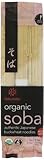
Hakubaku Organic Soba Noodles, 9.5 oz (Pack of 3)
The supermarket soba this page cites: a wheat-heavy blend that cooks in 4 minutes and holds up as cold zaru soba. Not for gluten-free diets.
View on Amazon
Eden Organic 100% Buckwheat Soba, 8 oz (3-Pack)
A 100% buckwheat noodle with a gluten-free mark, the pack to buy if you avoid wheat. Pair it with tamari, not regular soy sauce, in the tsuyu.
View on Amazon
Sun Noodle Kaedama Ramen Noodles, 10 oz
Fresh alkaline ramen noodles from a US maker, for the yellow, springy side of this comparison. They go straight from the pot into hot broth, no cold rinse.
View on Amazon
Japanese Mino Ware Ceramic Soba Choko Cups, 7.4 fl oz (Set of 2)
Soba is dipped, not slurped from a bowl, so the tsuyu needs its own small cup. This listing is a set of 2 Mino ware ceramic cups, 7.4 fl oz each.
View on Amazon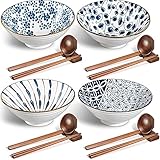
Geiserailie 40 oz Ceramic Japanese Ramen Bowls, Set of 4 with Chopsticks and Spoons
Hot ramen and kake soba both want a deep bowl that holds broth and noodles together. This set is four ceramic bowls, 40 oz and 8 inches across, with chopsticks, spoons and rests.
View on Amazon
Bamboo Round Zaru Soba Tray and Colander, 7.87 in (21 cm)
A zaru is the slatted tray cold soba is drained and served on. This listing is a round bamboo tray, 7.87 inches across and 1.2 inches high.
View on Amazon
Browse more related items
Opens Amazon · affiliate links
Buying guides for this topic
- Buying guideBest Soba Noodles in 2026The best dry soba noodles available on US Amazon — Hakubaku, Mishima, and premium juwari (100% buckwheat) brands ranked.
- Buying guideBest Ramen Noodles & Kits in 2026The best fresh and dry ramen noodles, plus premium ramen kits, available on Amazon — Sun Noodle, Hakubaku, Marusan, and Maruchan Seimen ranked.
- Buying guideBest Japanese Pantry Essentials in 2026The 10 Japanese pantry items needed to cook ramen, udon, soba, and yakisoba at home. Soy, dashi, mirin, miso, and yakisoba sauce, ranked.
- Buying guideBest Japanese Cookware in 2026The donabe, ramen bowls, sōmen sets, and tools you need to cook Japanese noodles at home. Real US Amazon picks across budget tiers.