Hot Soba vs Cold Soba: Which to Order When
· 7 min read · NoodleDex Editorial
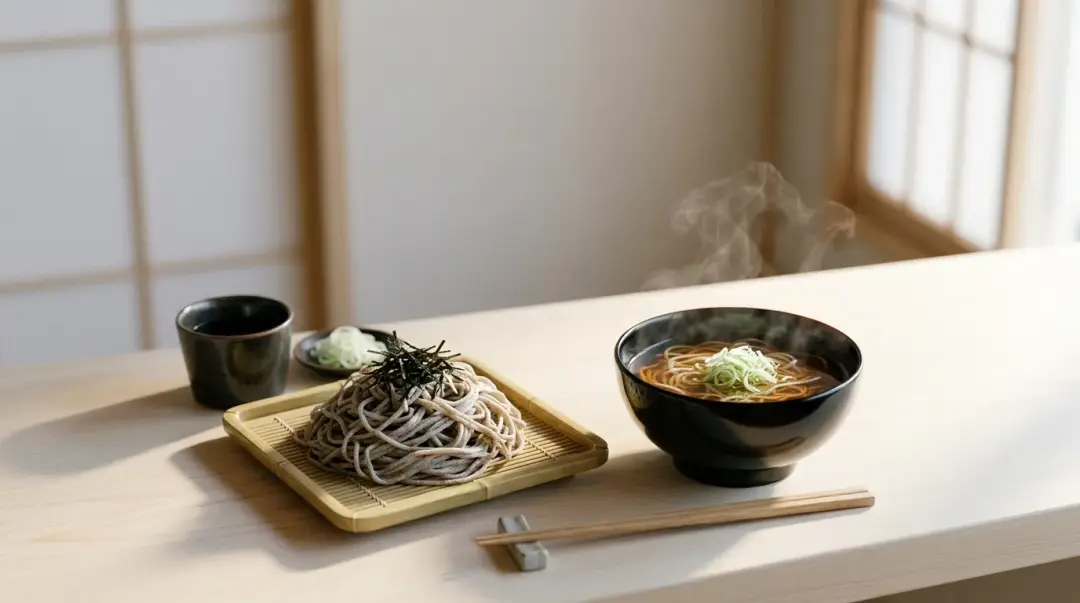
Hot soba vs cold soba, settled: how kake and zaru differ in broth, texture, and buckwheat aroma, and which one a good soba shop wants you to order first.
This page contains affiliate links. We may earn a commission at no extra cost to you. Disclosure
On this page(9 sections)
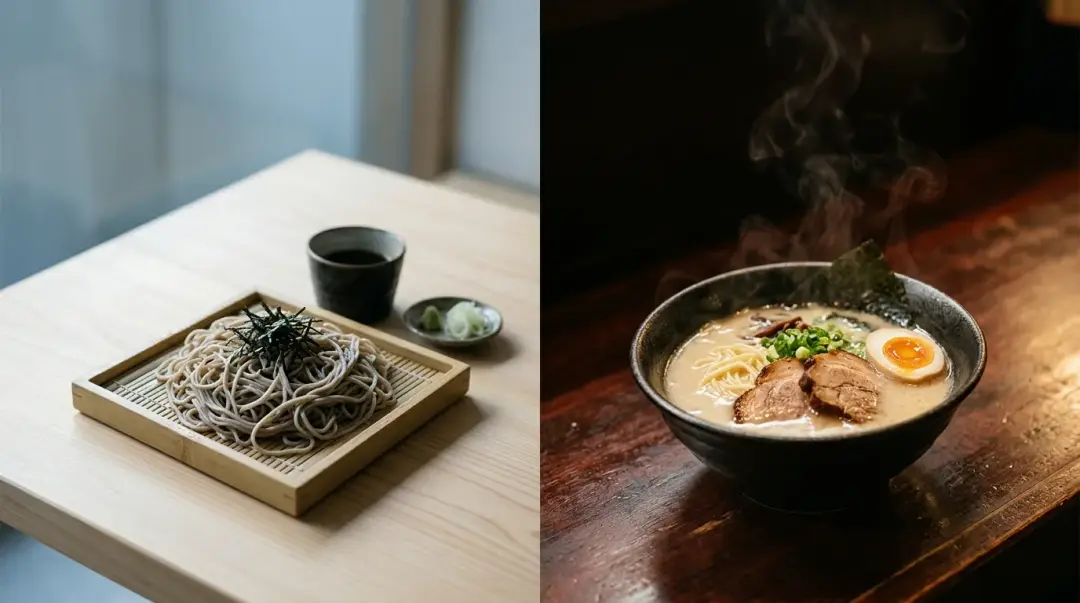
Soba is served two ways, and the gap between them is wider than temperature. Cold soba arrives drained on a bamboo tray with a small cup of concentrated dipping sauce on the side. Hot soba arrives submerged in a thin, drinkable broth. The noodle is the same; what you taste is not.
English-language menus tend to list the two as a hot-or-cold checkbox, which hides the real choice. The cold version is how soba shops ask to be judged, and the hot version is how most of Japan actually eats soba on a Tuesday.
Hot vs Cold Soba at a Glance
Hot and Cold Soba Compared
| Cold Soba | Hot Soba | |
|---|---|---|
| Common names | Zaru soba, mori soba, seiro soba | Kake soba, ten soba, kitsune soba |
| Vessel | Bamboo zaru tray or seiro box | Donburi bowl |
| Sauce | Concentrated tsuyu in a separate cup | Diluted broth poured over the noodles |
| Texture | Firm, tight, springy | Softer, loosening as you eat |
| What you taste most | Buckwheat | Dashi |
| Season | Summer | Winter |
| Typical setting | Specialist soba shops | Station stands, casual lunch counters |
Cold Soba: Zaru, Mori, and the Dipping Cup
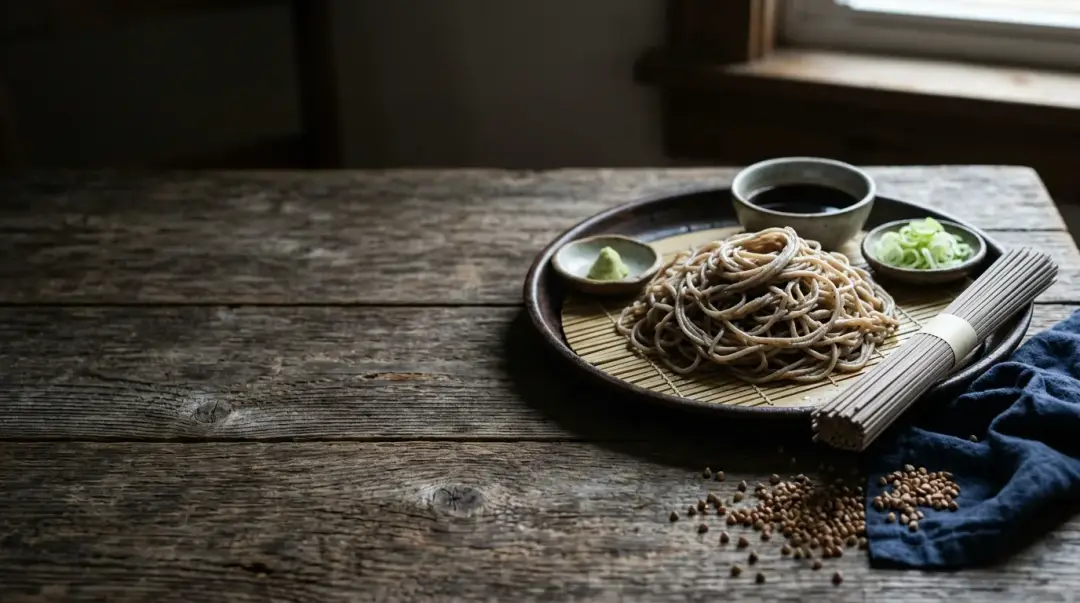
Cold soba is boiled, rinsed, chilled, drained, and served naked. The sauce never touches it until you decide.
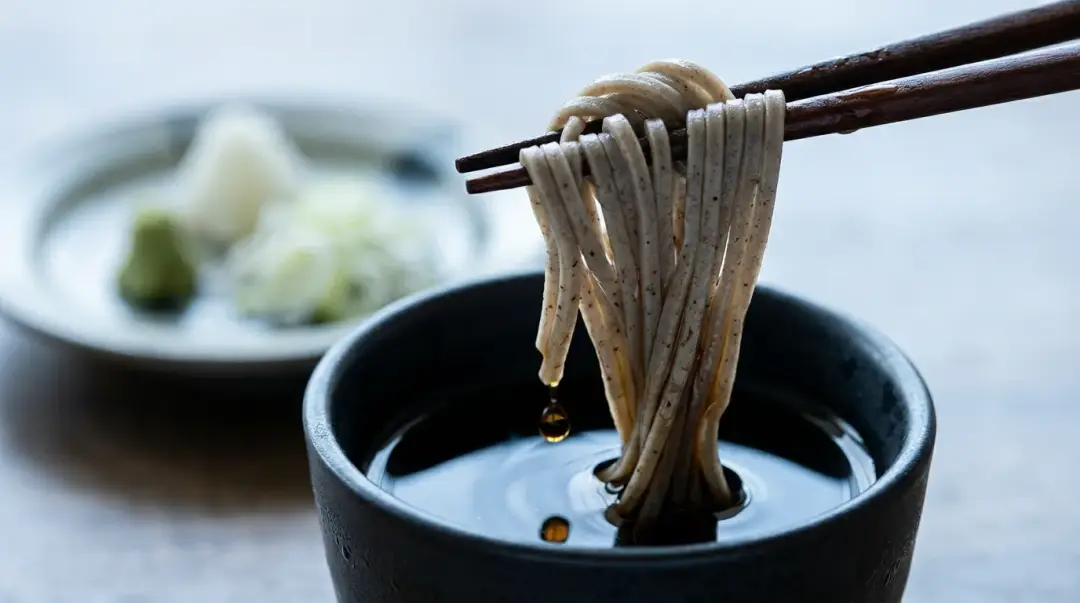
The two names you will see most are zaru soba and mori soba. The noodles are identical and so is the sauce. Zaru comes with shredded nori scattered on top; mori comes bare. That is the whole distinction, though plenty of shops muddy it by serving either one in a seiro, the small wooden steamer box, and naming the dish after the box instead.
The dipping sauce is tsuyu: dashi, soy sauce, and mirin, mixed strong. It is not a soup. A first-timer who drinks it straight will find it aggressively salty, which is the point, because only part of each mouthful passes through it.
Alongside the cup you usually get a small plate of condiments. Grated daikon, wasabi, thin-sliced negi, sometimes grated ginger. These go into the tsuyu, not onto the noodles.
The one piece of etiquette worth knowing: dip the bottom third of the strand and stop. Full submersion soaks the noodle in salt and buries the buckwheat you came for. Regulars at good shops often eat the first few mouthfuls with no sauce at all.
Bukkake soba sits between the two styles. Cold noodles, cold tsuyu, but the sauce is poured over the bowl instead of served in a cup. It is faster and less fussy, and it gives up some of the control that makes dipping worthwhile.
Hot Soba: Kake and Its Toppings
Hot soba starts with kake soba, the plain version. Cooked noodles in a bowl, hot broth poured over, maybe a scatter of negi. Nothing else.
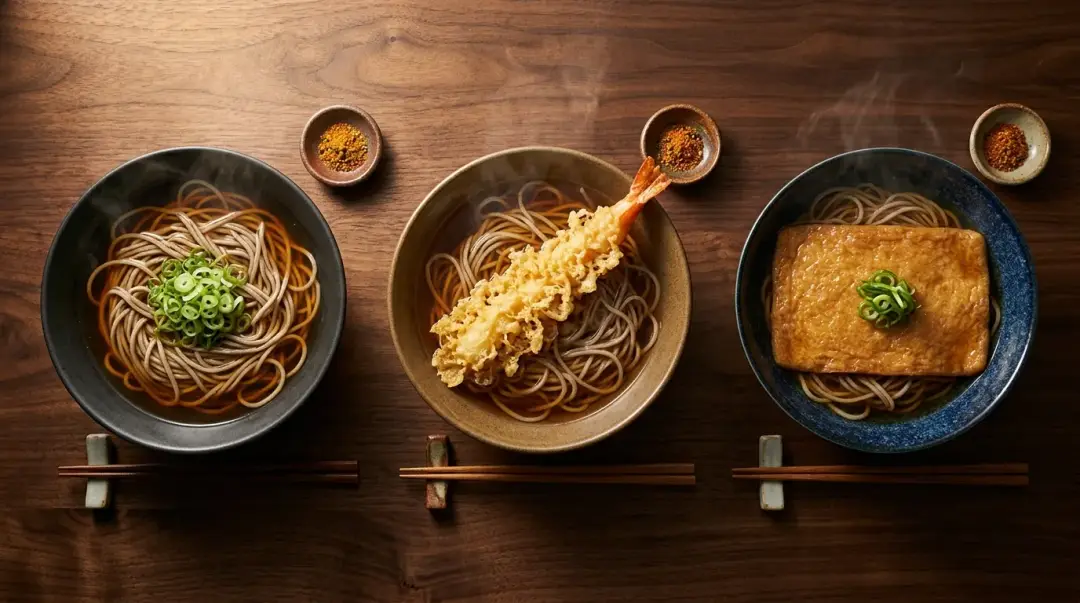
The broth is called kakejiru. It comes from the same three ingredients as the dipping sauce but diluted far enough that you can drink the whole bowl, which people do.
From there the toppings name the dish:
- Ten soba, with tempura, usually shrimp
- Kitsune soba, with sweet simmered abura-age (fried tofu)
- Tanuki soba, with tenkasu, the crunchy scraps left over from frying tempura
- Tsukimi soba, with a raw egg cracked in, the yolk standing in for the moon
- Tororo soba, with grated mountain yam
- Kamo nanban, with duck and charred negi
This is the everyday face of soba. Japanese train stations run tachigui counters where you order at a machine, stand at a rail, and get a bowl of hot kake in about a minute. Nobody is contemplating buckwheat terroir at 8am on the Yamanote line.
Why the Same Noodle Tastes Different Cold
Both versions start the same way. Soba goes into a large pot of unsalted water, because salt toughens buckwheat rather than seasoning it, and cooks for roughly four to five minutes.
What happens next is the whole difference.
For cold service, the noodles are drained and rinsed under cold running water while you rub them with your hands. This strips the loose starch off the surface. Then they go into ice water to chill and firm, and get drained thoroughly. Removing that starch layer does two things: it tightens the strand into something with real snap, and it clears away the dull, pasty coating that mutes flavor. What is left is buckwheat.
For hot service, the noodles land in broth and keep absorbing it. They soften while you eat, which is fine, and the dashi aroma sits on top of everything. You taste the broth first and the noodle second.
That asymmetry is why soba shops are judged on their cold service. If a shop mills its own buckwheat and makes noodles that morning, ordering kake soba is like judging a wine by the sangria. Order mori or zaru on a first visit, then come back for the tempura bowl.
It also explains a practical constraint. Juwari soba, made with 100% buckwheat and no wheat flour to bind it, is fragile. It breaks down faster sitting in hot broth, which is part of why specialist shops steer their juwari toward the cold tray and keep a wheat-blended noodle for the hot bowls.
Soba-yu, the Course Most People Miss
Finish a plate of cold soba at a proper shop and someone will bring you a lacquered pot of cloudy, warm liquid. That is soba-yu, the water the noodles were boiled in, thick with buckwheat starch.
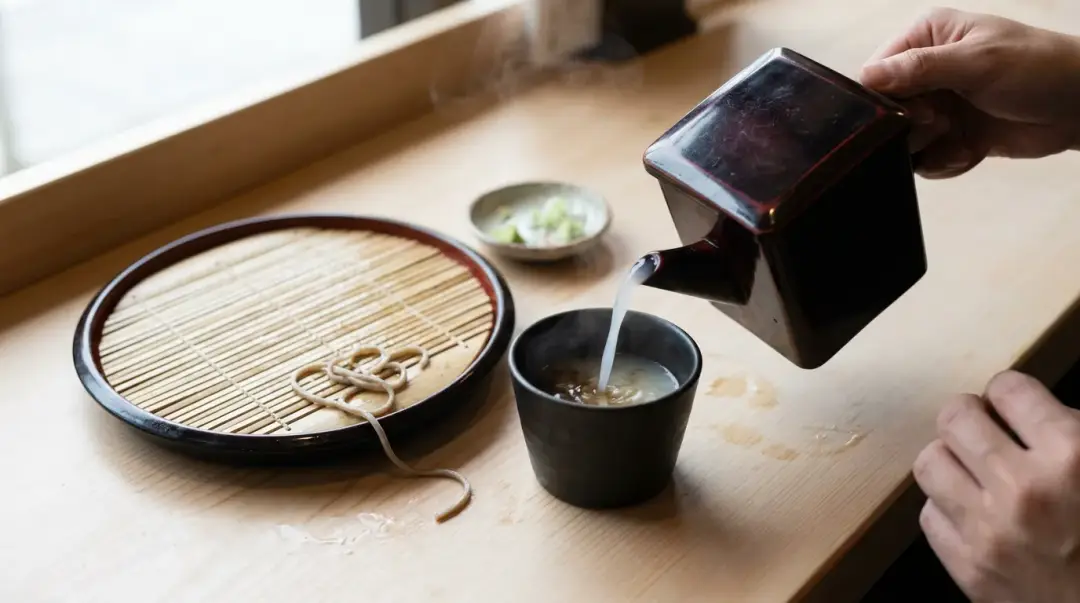
You pour it into your cup, on top of whatever tsuyu you did not use, and drink it. The concentrated sauce that was too salty for sipping becomes a light, nutty broth at the end of the meal.
Hot soba has no equivalent, because there is no leftover dipping sauce to dilute. It is also a small tell about the kitchen: soba-yu is only worth serving when noodles are cooked to order in a dedicated pot, so a shop offering it is telling you something about how the back of house runs.
Which to Order, and When
Season is the obvious factor and the one Japan actually follows. Cold soba in July, hot soba in January. Nobody polices this, and every shop serves both year-round, but the default exists for a reason.
Beyond weather:
Go cold when you are at a specialist shop for the first time, when the shop advertises stone-milled or house-made noodles, or when you want to know whether the soba itself is any good.
Go hot when you are eating fast, when it is cold out, when you want tempura, or when the soba is a means to an end rather than the point.
There is one nutrition wrinkle worth naming. The noodles are the same either way, so any difference comes from the sauce. Cold soba leaves most of its salt sitting in the cup you walk away from. Hot soba dissolves the seasoning through the broth, so finishing the bowl means finishing the sodium.
On New Year's Eve, toshikoshi soba is most often served hot, though households vary and nobody will object if yours is cold.
Cooking Each at Home
The shared part is short. Big pot, plenty of water, no salt. Four to five minutes, and start tasting at three, because soba goes from firm to mush quickly and the package time usually runs long. A tebo (a long-handled mesh basket) lifts the noodles out of the pot in one move, which helps when timing is tight; see our Japanese cookware buying guide for the tools soba shops use, and our spider strainer guide for tebo baskets.
For cold soba, drain and rinse under cold running water, rubbing the strands until they stop feeling slippery. Drop them into ice water for a moment, then drain hard. Wet soba on the tray is a limp tray. Serve with chilled tsuyu mixed at roughly one part soy sauce to one part mirin to three parts dashi.
For hot soba, rinse the noodles the same way even though they are going into broth. The starch you rinse off would otherwise cloud the bowl. Warm them briefly in plain hot water, drain, put them in the bowl, and pour the hot broth over. Do not boil the noodles directly in the broth to save a pot, unless you want a murky bowl with a gluey finish.
Frequently Asked Questions
Is soba supposed to be eaten hot or cold?
Both are traditional. Cold soba is served drained on a bamboo tray with a cup of concentrated dipping sauce, and hot soba is served in a thin broth you can drink. Specialist shops usually want you to try the cold version first, because rinsing the noodles in cold water makes the buckwheat flavor easier to taste.
What is the difference between zaru soba and mori soba?
The noodles and the sauce are the same. Zaru soba comes topped with shredded nori, and mori soba comes without it. Some shops serve either one on a seiro box instead of a flat zaru tray and name the dish after the vessel.
Is cold soba healthier than hot soba?
The noodles are identical, so the difference is sodium. With cold soba you dip and leave most of the sauce behind in the cup. With hot soba the seasoning is dissolved through the broth, so drinking the bowl means drinking the salt.
Can you use the same sauce for hot and cold soba?
Not at the same strength. Both start from dashi, soy sauce, and mirin, but dipping tsuyu is concentrated because only part of the noodle passes through it. Hot soba broth is the same base diluted much further so it can be sipped on its own.
What is the cloudy water served after cold soba?
That is soba-yu, the starchy water the noodles were boiled in. You pour it into whatever dipping sauce is left in your cup and drink it as a light broth at the end of the meal. It is only served with cold soba, since hot soba leaves no concentrated sauce to dilute.
Read Next
- Soba Noodles, the full entry on buckwheat ratios, regional styles, and how to buy
- Japanese vs Korean vs Chinese Noodles, where soba sits in the wider map
- Best Soba Brands, what to buy in the US
Products mentioned in this guide
This section contains affiliate links. We may earn a commission at no extra cost to you.
Hakubaku Organic Soba Noodles (Pack of 3)
A wheat-blended soba that holds up in hot kake broth and still has enough snap for a cold zaru tray. Good first bag for cooking both versions side by side.
View on Amazon
Eden Organic 100% Buckwheat Soba, 8 oz (3-Pack)
All-buckwheat noodles, closer to the juwari a specialist shop serves cold. Rinse them hard and eat them with dipping tsuyu to taste the buckwheat this page describes.
View on Amazon
Kikkoman Memmi Noodle Soup Base
A bottled dashi, soy, and mirin concentrate. Mix it strong for cold dipping tsuyu or cut it further with water for a sippable hot broth.
View on Amazon
Bamboo Round Zaru Soba Tray and Colander, 7.87 inch
Cold soba sits on a zaru tray so the rinsed noodles stay drained and dry. This listing is a single round bamboo zaru basket, 7.87 inches across and 1.2 inches high, sold for soba, udon and other noodles.
View on Amazon
Japanese Mino Ware Ceramic Soba Choko Cups, Set of 2
Cold soba is dipped in a cup of tsuyu, and a choko is the small cup made for it. These are two Mino ware ceramic cups of 7.4 fl oz each, 3.4 inches across.
View on Amazon
Buying guides for this topic
- Buying guideBest Soba Noodles in 2026The best dry soba noodles available on US Amazon — Hakubaku, Mishima, and premium juwari (100% buckwheat) brands ranked.
- Buying guideBest Japanese Pantry Essentials in 2026The 10 Japanese pantry items needed to cook ramen, udon, soba, and yakisoba at home. Soy, dashi, mirin, miso, and yakisoba sauce, ranked.
- Buying guideBest Japanese Cookware in 2026The donabe, ramen bowls, sōmen sets, and tools you need to cook Japanese noodles at home. Real US Amazon picks across budget tiers.