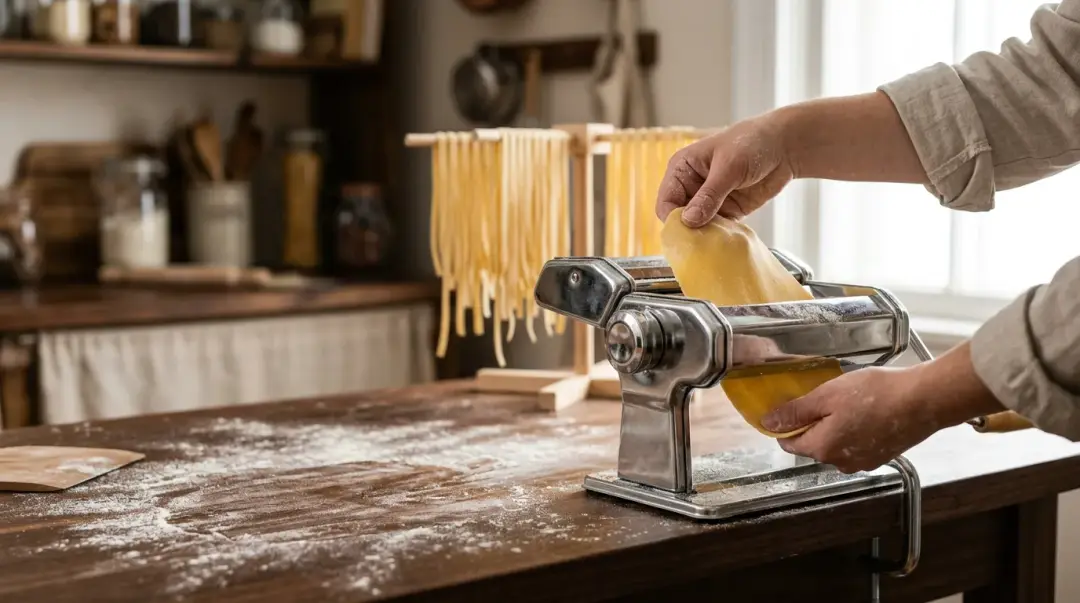


A pasta maker is either a roller, which flattens dough into sheets and cuts strands, or an extruder, which pushes dough through a shaped plate called a die. The electric noodle machines, standalone extruders and drying racks below are all variations on those two jobs. Pick the type first, then the model.
Which type to pick
- Flat pasta (fettuccine, tagliatelle, lasagna sheets, ravioli): a roller. The hand-crank Atlas 150 or Imperia, or a roller attachment on a stand mixer.
- Tubes and shapes (macaroni, rigatoni, penne, spaghetti, fusilli): an extruder. Standalone or a stand-mixer attachment.
- Dough mixed and extruded for you, with no kneading: an electric noodle maker machine.
- Any fresh pasta: a drying rack, so cut strands do not fuse together.
How We Pick
- We compared specs, product listings and published reviews. NoodleDex has not made pasta on these machines.
- We weighted longevity. A pasta maker is a long-term tool; build quality and parts availability matter more than features.
- We named the workflow. Rolling or extruding is one step. Cutting, drying, and storing are the rest of the kitchen.
Rollers and attachments
Rollers are the traditional choice and the right one for flat pasta. The three picks below cover hand-crank steel rollers and the stand-mixer version.
The Top Pick: Marcato Atlas 150
The Atlas 150 is a long-running hand-crank pasta machine for home cooks, made by Marcato of Campodarsego, near Padua, Italy. Marcato describes the Atlas as a design that dates to 1965. The frame is chrome-plated steel, and the machine clamps to a counter or table and rolls dough across 10 thickness settings, from 4.8 mm down to 0.6 mm. The listing names lasagna, fettuccine and tagliolini; check what ships in the box before you buy, because cutters and ravioli attachments vary by model.
The reason it wins is parts. Retailers sell Marcato spare parts for the Atlas line, such as replacement cranks and dough scrapers, so a worn piece can be swapped. A plastic-bodied machine can crack at the housing, and a cracked housing ends its life.
Operation is a hand crank. Roll dough through setting 1 (the thickest), fold in thirds, roll again. Step down to setting 2, then 3, and so on. By setting 6 or 7, the dough is in fettuccine-ready territory. Rolling a batch is slow, repetitive work, meditative rather than punishing.

Marcato Atlas 150 Manual Pasta Maker
Italian-made; Marcato dates the Atlas design to 1965
Best Splurge: KitchenAid Pasta Roller Attachment Set
The KitchenAid pasta roller attachment clips onto the front hub of a KitchenAid stand mixer. The listing on this page is the KSMPSA roller; the separate KSMPRA set pairs the roller with fettuccine and spaghetti cutters, so check which one you are buying. It comes on top of what you have already spent on the mixer itself. The advantage is hands-free rolling: the mixer's motor drives the rollers, freeing both your hands to feed and catch the sheet. For long pasta sessions (a holiday dinner's worth of lasagna), the wrist relief is real.
The trade-off is the same one with all attachment systems: you are tied to the KitchenAid mixer. Worth it only if the mixer already lives on your counter.

KitchenAid KSMPSA Pasta Roller Attachment
Powered by a KitchenAid stand mixer, so there is no cranking
Best for Beginners: Imperia Italian Pasta Maker
Imperia, also Italian-made (its company address is Moncalieri, near Turin), has made hand-crank pasta machines since 1932. The Classic Line listing describes heavy-duty steel construction, a wood grip handle and a cleaning brush. It is the same hand-crank format as the Atlas. Thickness settings differ between Imperia models, so check the listing for the count. Choose it if you want a second Italian-made hand-crank option.

Imperia Pasta Maker Machine- 100% Made in Italy
Italian-made alternative to Marcato
Electric noodle maker machines (automatic)
An electric noodle maker machine is an automatic extruder. You add flour and liquid, the machine mixes and kneads the dough, and a motor pushes it through a die to cut it into pasta. You choose the shape by swapping the shaping disc. Two are on this page: the Philips 7000 Series and the VEVOR electric pasta maker. Wattage, disc count and batch size differ between versions and listings (Philips notes that the number of discs varies by model, and VEVOR lists a 500 g flour capacity), so check the specs on the version you buy.
The appeal is that it removes the kneading and the rolling. The trade-offs are control and cleanup. You work within the machine's dough ratio and its supplied discs, and you cannot make lasagna sheets or fine ravioli sheets the way a roller does. The shaping discs also need cleaning after each batch, since leftover dough hardens in the holes. Choose one if you want fresh pasta regularly and do not want to knead.
If you want to make Asian-style noodles, see the FAQ on ramen and udon below; a machine does the shaping, but the dough sets the noodle.
Pasta extruders: standalone and stand-mixer attachments
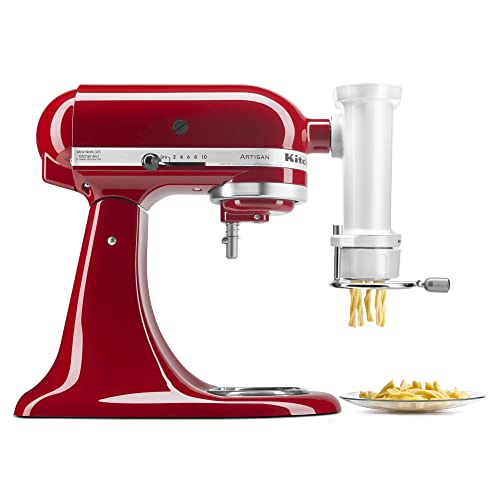
An extruder presses dough through a die, a plate with holes. The hole pattern sets the shape: round holes for spaghetti and bucatini, shaped openings for macaroni, rigatoni and fusilli, and a different die for each. Extruder models come with a handful of dies: the Marcato Regina ships with five and the KitchenAid Gourmet Pasta Press with six plates. Dies come in bronze and in Teflon-coated metal or plastic; America's Test Kitchen reports that bronze dies leave a coarser surface that grips sauce better, though the difference is modest.
There are two formats on this page.
- Standalone hand-crank extruder. The Marcato Regina clamps to a counter and pushes dough through the die by hand. It needs no other appliance, and it costs effort on firm dough.
- Stand-mixer attachment. The KitchenAid Gourmet Pasta Press fits the mixer's attachment hub, and the mixer's motor does the work. It requires the mixer, which is a separate and larger purchase.
Extruder dough is usually mixed drier and crumblier than roller dough, so the recipe changes with the machine; follow the machine's own ratio. Extruded shapes also come out in different forms from rolled pasta. For the shapes and which sauces suit them, see our Italian pasta shape guide. For how fresh pasta compares with dried, see fresh vs dried noodles.
Drying racks: folding, standing and hanging
A pasta drying rack holds cut strands in the air so they do not fuse into a clump. Long strands such as fettuccine, tagliatelle and spaghetti hang over bars or arms. Short extruded shapes lie flat on a tray or mesh screen instead, which is why a rack only matters for strand pasta.
Three formats cover most racks.
- Folding or collapsible. Arms or bars fold flat to store in a drawer. The KITCHENDAO rack is a folding design.
- Standing. A wooden or metal stand with bars, like the Eppicotispai beechwood rack, sits on the counter and holds more strands.
- Hanging. Rods or a wall-mounted hanger hold strands above a bench and save counter space.
Choose by storage space and how much pasta you make at once. Wood is traditional, but avoid soaking it and follow the maker's care notes. A rack is the secondary tool that makes everything else work; fresh-cut fettuccine or spaghetti needs to dry briefly before cooking or longer before storage, and piling it on a sheet tray fuses the strands. Buy it with the machine, not after. Once the pasta is dry, cook it in a big pot; our best pasta pot with strainer guide compares them.
Best Budget: Pasta Drying Rack
The KITCHENDAO folding rack is the simplest item on this page. It folds flat for storage, and you will use it every time you make pasta.

KITCHENDAO Collapsible Pasta Drying Rack
Rotary arms hold fresh-cut strands in the air
What to Look For
These points apply to hand-crank rollers.
- A metal body. The Atlas has a chrome-plated steel frame. Plastic housings can flex or crack under dough pressure.
- Hand-crank with a removable handle. Single-piece welded handles are a maintenance dead-end.
- At least 9 thickness settings. Fewer settings means coarser increments and less control on delicate doughs.
- Replaceable cutter heads, not built-in cutters. A modular system lets you add fettuccine, spaghetti, and ravioli cutters over time without buying a new machine.
- A counter clamp included. The clamp keeps the machine stable; the alternative is wrestling the unit while you crank.
- Country of origin. Imperia and Marcato both make their machines in Italy. For other roller machines, check the listing for where they are made and what the body is made of.
Common Mistakes
- Buying a machine before owning a bench scraper and a wooden board. The pasta-making workflow needs a flour surface and a tool to portion dough. Don't skip the prep gear.
- Rolling at setting 7 in one pass. Each pass should drop one setting. Skipping settings tears the dough.
- Forgetting to flour between passes. Sticky dough fouls the rollers. Dust both sides of the sheet with semolina between each setting.
- Washing the machine with water. Marcato says never to wash its machines under running water or in a dishwasher; clean them with a brush and a cloth.
- Buying the KitchenAid attachment without owning the mixer. The attachment needs the mixer to run. A standalone hand-crank roller does the same job without one.
- Using roller dough in an extruder. Extruders need a stiffer dough than rollers. Follow the machine's own flour-and-liquid ratio.
- Buying an extruder for lasagna. Extruders make shapes and strands, not sheets. Use a roller for flat pasta.
- Leaving dough on the rollers. Let stray dough dry, then brush it off, as Marcato advises. Do not smear it wet.
FAQ
Is fresh pasta actually better than dry?
Different. Fresh is softer, eggier, and cooks in a few minutes. Dry pasta has a firmer bite and works better with tomato and oil sauces. For filled pasta (ravioli, tortellini) and broad cuts (tagliatelle, pappardelle), fresh is the traditional and better path.
Can I roll pasta dough with a rolling pin?
Yes, and Italian nonne in Emilia-Romagna still do. It takes practice and a long wooden pin (a mattarello). For most home cooks, a machine makes the learning curve easier.
Do I need an electric pasta extruder?
Only for tubed and shaped pasta: penne, rigatoni, macaroni. Roller machines (Marcato, Imperia, KitchenAid) make flat sheets and cut strands. Extruders, standalone or as a mixer attachment, are a separate category covered above.
Should I buy a pasta roller or an extruder?
Buy a roller for flat pasta: lasagna sheets, fettuccine, tagliatelle and ravioli. Buy an extruder for tubes and shapes such as macaroni, rigatoni and penne. A roller is the better first purchase because it does more with simple dough; add an extruder if you want shapes a roller cannot make.
How long does fresh pasta take to dry?
For same-day cooking, strands need only enough time to lose surface moisture, roughly 10 to 30 minutes on a rack according to home-cooking guides. For storing it as dried pasta, drying takes much longer, often overnight or up to a day depending on thickness and humidity, and the pasta is dry when it snaps instead of bending. Thicker shapes take longer.
Can a noodle maker make ramen or udon noodles?
Partly. A machine shapes the dough; the dough defines the noodle. Ramen noodles are wheat noodles made with alkaline water (kansui, see what is kansui). A roller with a narrow cutter can cut ramen-style strands from the right dough, which is a stiff, dry one. We found no maker guidance on ramen or udon for the electric machines here, so check the manual before trying either. For ready-made noodles, see best Chinese wheat noodles.
How long does fresh pasta keep?
Fresh-cut and dried for 30 minutes on a rack: 2 days refrigerated. Frozen on a tray, then transferred to a bag: 3 months. Don't freeze stacked or it fuses into a brick.
What flour should I use?
Tipo 00 (Italian-milled soft wheat) for tender sheets, especially filled pasta. Semolina for firmer cuts (orecchiette, cavatelli). Many home cooks use a 50/50 blend with 2-3 eggs per 200 g of flour as the starting ratio.