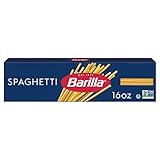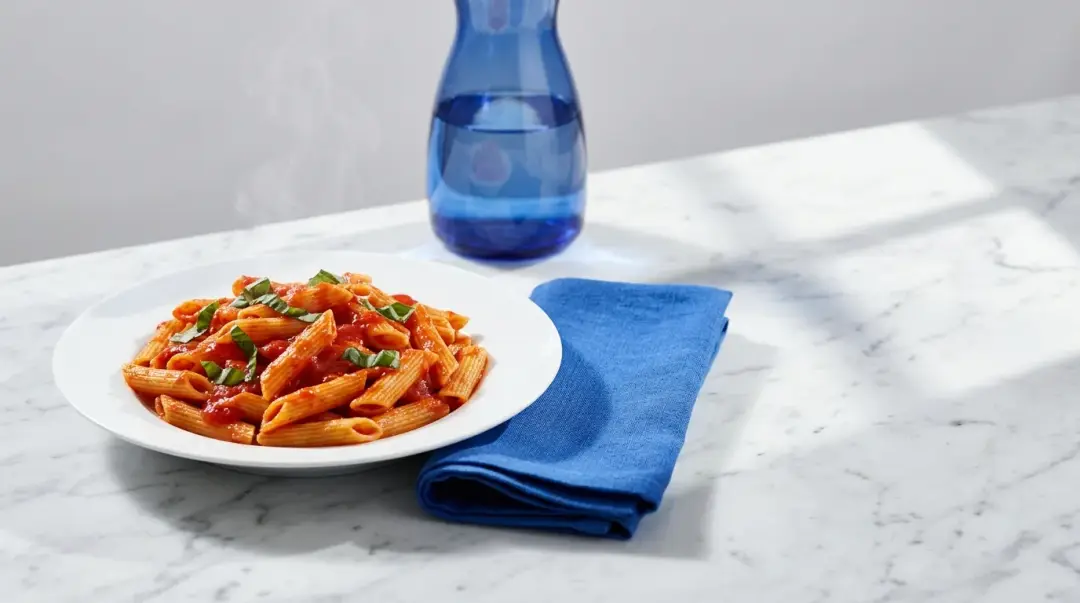
In 2022, two California shoppers sued Barilla America over a slogan on the blue box: "Italy's #1 Brand of Pasta." Matthew Sinatro had bought angel hair and Jessica Prost had bought spaghetti, and both said the slogan and the Italian-flag imagery led them to think the pasta came from Italy. By Barilla's own account, its US pasta comes from Iowa and New York, with a few exceptions. A federal judge in the Northern District of California let the case go forward, certified a class of California buyers on May 30, 2024, and approved a notice to class members in July 2025. Barilla denies the allegations, and the case had no final ruling at the time of that notice.
The lawsuit is the shortest route to the question most people search, where Barilla is made, and the answer depends on which box you pick up.
The Company Behind the Blue Box
Barilla Group is the world's largest pasta producer, per Wikipedia, and it is still family-owned. Brothers Guido, Luca and Paolo Barilla chair the group, which is not publicly traded. It reported €4.883 billion in revenue for 2024, about 1.7% higher than 2023 at constant exchange rates, with roughly 9,000 employees and more than 2 million tonnes of food produced, according to Il Sole 24 Ore.
Pasta is only part of that. The group runs 21 brands, including Mulino Bianco cookies and Pan di Stelle in Italy, Wasa crispbread from Sweden and Harrys bread in France. In Italy's dry pasta aisle, Barilla holds 19.8% of sales by value, ahead of De Cecco at 12.6%.
The US arm is Barilla America, Inc., headquartered at 885 Sunset Ridge Road in Northbrook, Illinois.
Four Turns in 149 Years
A shop in Parma, 1877. Pietro Barilla Sr. (1845–1912) opened a bread and pasta shop at Strada Vittorio Emanuele no. 252. By 1910 the family had its first factory, with 80 workers turning out 8 tons of pasta a day.
Going industrial, 1950s–1960s. Pietro Barilla, the founder's grandson, traveled to the US in 1950 to study packaging and marketing. In 1952 the company closed the bakery to focus on pasta, and from 1957 the whole range shipped in boxes designed by Erberto Carboni. The Pedrignano plant outside Parma opened in 1969 with capacity for 1,000 tons a day.
The box itself kept changing after Carboni. The Barilla historical archive credits the Lippincott & Margulies studio with a 1969 brand redesign, Vittorio Mancini with the forkful of pasta that appeared on the packaging in 1985, and Giò Rossi with the 1996 boxes that added a transparent cellulose window. Today the packaging is shorthand for the product: Barilla's US site sells the core range as the Classic Blue Box, "an Italian favorite for over 145 years."
Sold and bought back, 1971–1979. Gianni and Pietro Barilla sold control of the company to the American chemicals group W.R. Grace in 1971. Pietro bought the majority back in 1979, and the family has held it since.
America, 1990s onward. Barilla opened a US commercial office in Norwalk, Connecticut, in 1993. Supermarket News reported in May 1996 that the brand had launched in New York about nine months earlier, into a US market where dry spaghetti and macaroni sales totaled $1.05 billion and Hershey and Borden, each running 15 to 20 regional brands, controlled about half. The first US plant, in Ames, Iowa, followed at the end of the decade (Barilla's own pages give both 1998 and 1999). A second plant in Avon, New York opened in 2007.
In September 2013, chairman Guido Barilla said in a radio interview that the company would not show a gay family in its advertising. After boycott calls he apologized, and in November 2013 Barilla set up a diversity and inclusion board, appointed its first chief diversity officer and committed to taking part in the Human Rights Campaign's Corporate Equality Index. Barilla appeared on HRC's 2015 list, per Fortune.
Is Barilla Made in Italy?
For most boxes on a US shelf, no. Barilla's own answer, repeated in its statement to the press about the 2022 lawsuit, is that pasta sold in the US is "made in our plants in Ames, IA and Avon, NY, with a few exceptions." The exceptions it names are tortellini and oven-ready lasagne, and its US company page adds Al Bronzo and pesto. Some items come from Canada.
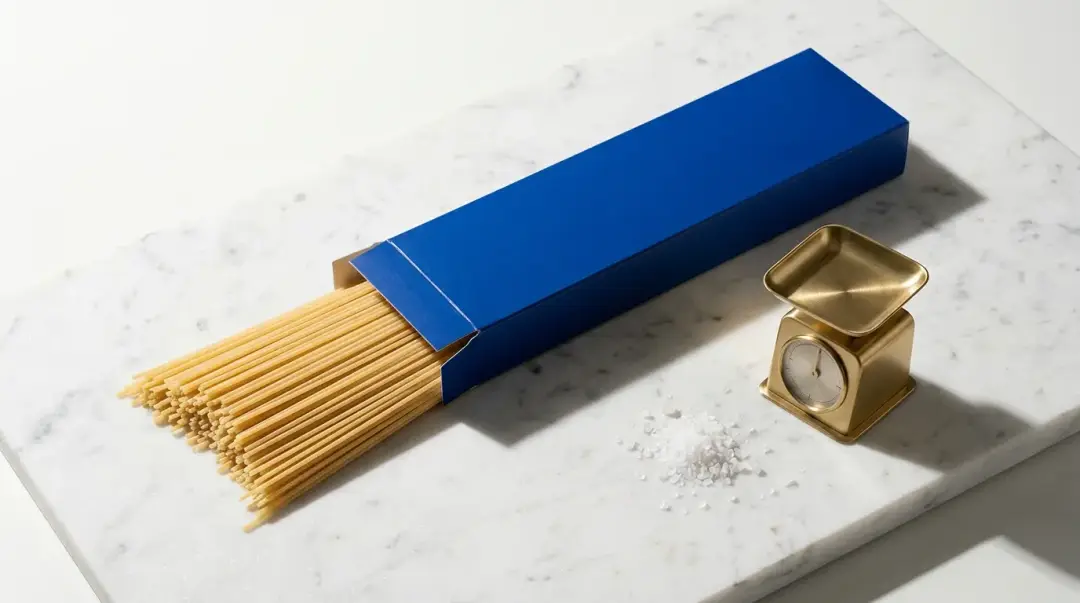
Barilla says the Ames and Avon plants use the same machines and recipe as its Parma plant. Wheat comes from "the best wheat available," which is not a statement of origin.
To check a box, read the small print. Pasta made in Italy carries "Product of Italy" (or "Made in Italy") and "Distributed by Barilla America, Inc." Without that line, the box most likely came from Iowa or New York. The slogan on the front tells you nothing about where that particular box was made.
The Barilla Lines a US Shopper Will See
Barilla's US site lists seven pasta lines. Here is what separates them.
Barilla's US pasta lines, from barilla.com/en-us
| Line | Made from | Notable facts | Buy it for |
|---|---|---|---|
| Classic Blue Box | Durum wheat semolina | Mostly made in Ames, IA and Avon, NY; standard (non-bronze) extrusion | Marinara, baked pasta, weeknight volume |
| Al Bronzo | Organic durum wheat | Bronze-cut, made in Italy, 16 oz, 11 to 13 min; launched 2022 | Oil, egg and cheese sauces |
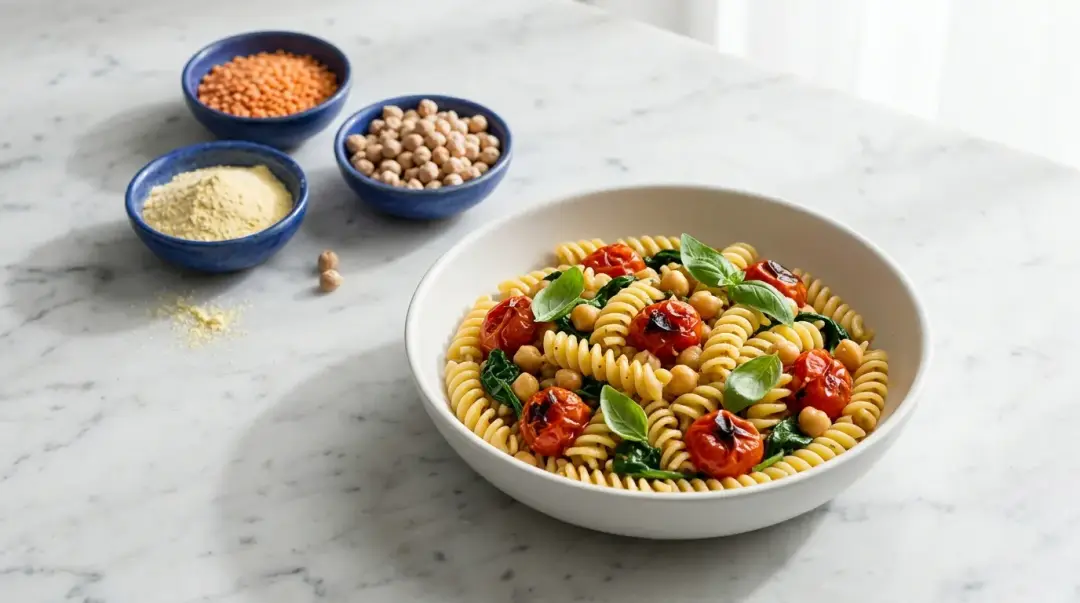
| Protein+ | Wheat plus lentil, chickpea and pea flours | 17 g protein per 3.5 oz (label); 14.5 oz box; 8 to 10 min | Higher protein with a familiar taste |
| Gluten Free | Corn and rice | Certified gluten free; dedicated gluten-free line; 12 oz; 10 to 11 min | Celiac and gluten-free households |
| Chickpea / Red Lentil | One ingredient: chickpea or red lentil | Legume-only, no wheat | Legume pasta fans |
| Whole Grain | 100% whole grain wheat | Whole grain version of the classic line | Extra fiber |
| Ready Pasta | Pre-cooked pasta | Heats in 60 seconds | Desk lunches |
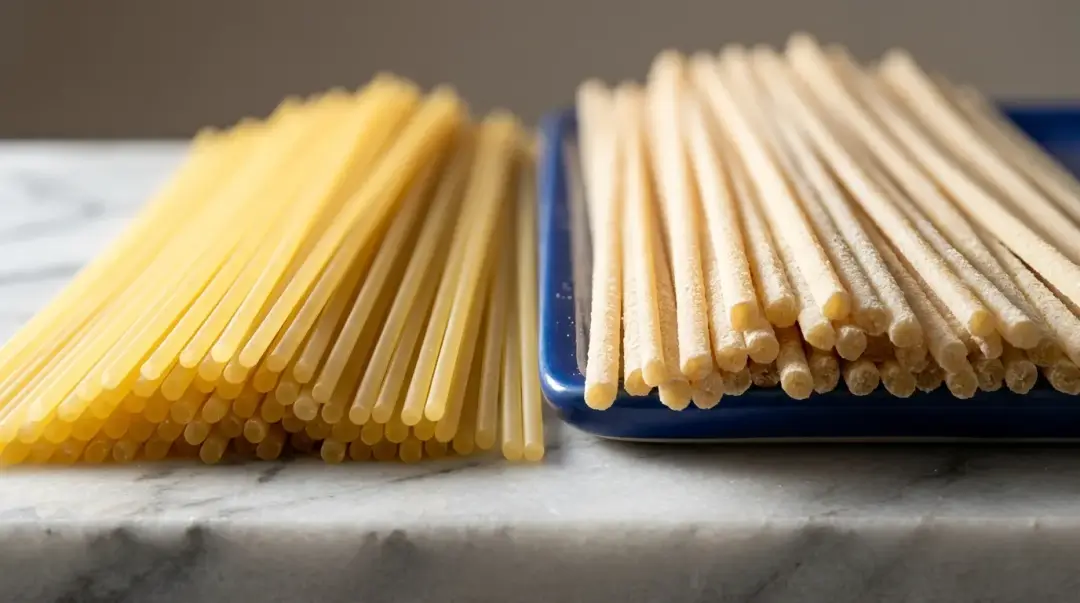
Al Bronzo is the line people ask about most. Barilla launched it in 2022 alongside a new brand identity for its 145th anniversary. In the US it is organic and Non-GMO Project Verified, and Barilla describes the surface as "uniquely rough, porous." It answers the main complaint pasta cooks have about the blue box, that sauce slides off a smooth noodle. It also costs more and shows up in fewer stores.
Protein+ swaps part of the wheat for lentil, chickpea and pea flours. The label claim of 17 g protein per 3.5 oz serving is a manufacturer figure; check the panel on your box. Our highest-protein noodles page compares it with chickpea and lentil pastas.
The gluten-free line launched globally in 2014. NoodleDex's best gluten-free pasta guide ranks Barilla GF as the budget pick and suggests it for baked dishes such as mac and cheese.
What to Buy First
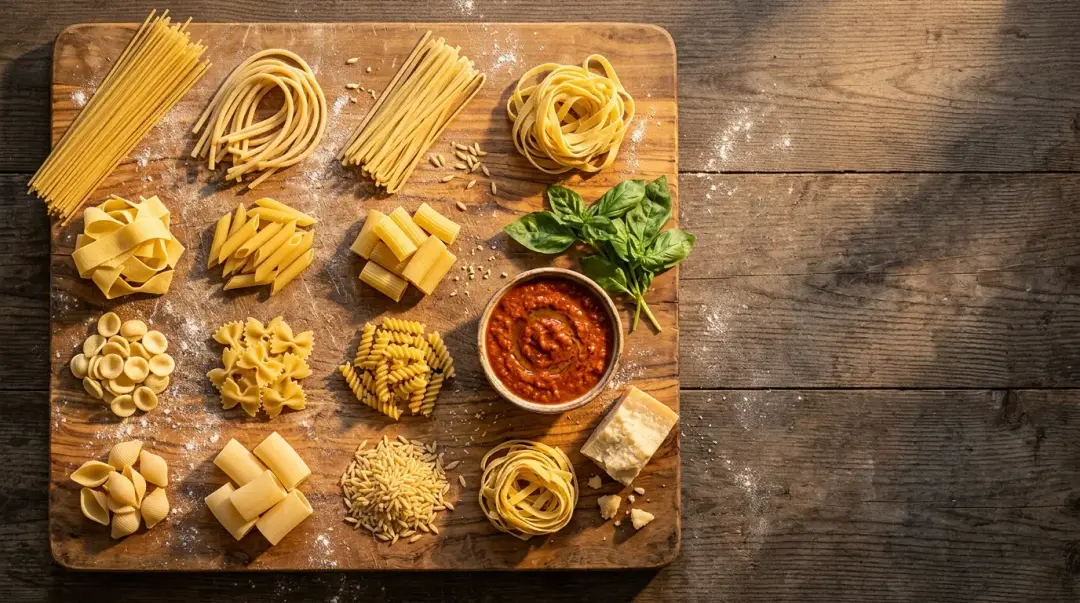
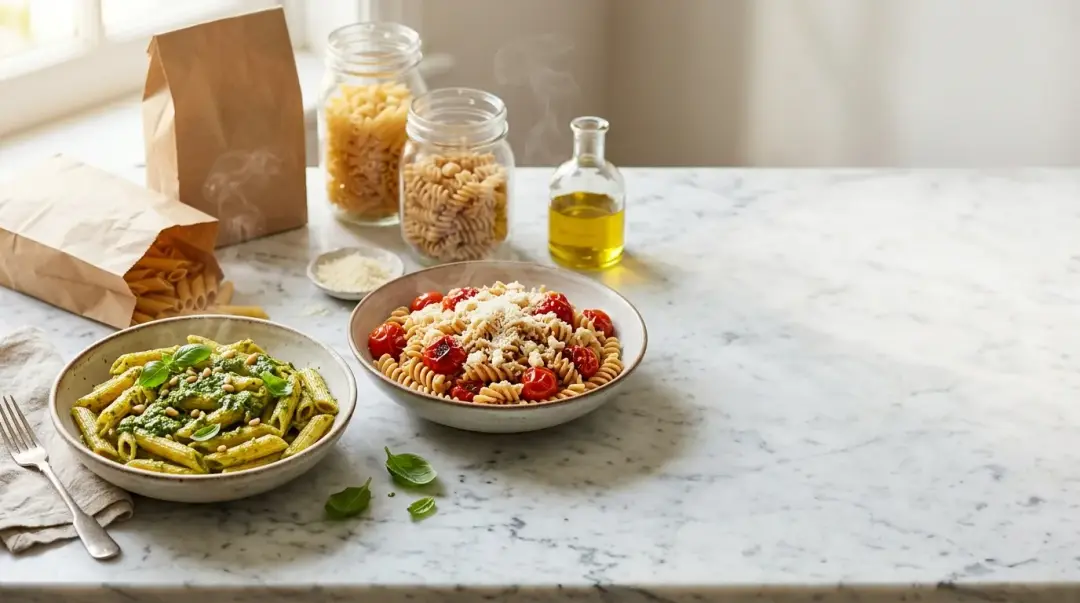
Start with the blue box in the shape you cook most. Spaghetti and penne are the two shapes every store carries; fusilli is the third worth keeping, since its spirals hold pesto and chunky vegetable sauces.
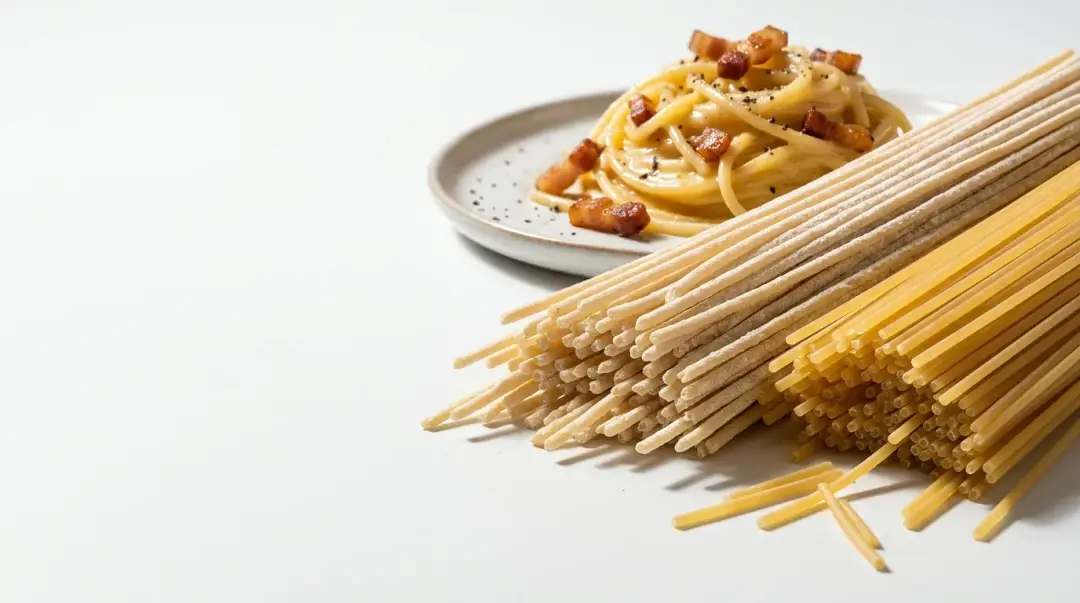
Add Al Bronzo spaghetti if you make carbonara, cacio e pepe (pecorino and black pepper) or aglio e olio (garlic and oil) often. Those sauces have little body, so they depend on surface texture.
Choose Protein+ or Gluten Free only if your diet calls for them. Neither is a straight upgrade on the blue box for a cook who has no reason to avoid wheat or to chase protein. Whichever box you buy, a 6 to 8 quart pot with a strainer lid makes draining easy; see our best pasta pot with strainer guide.
Barilla vs De Cecco
De Cecco is Barilla's nearest rival on US shelves, and the two are built differently. De Cecco extrudes its whole standard line through bronze and dries it slowly; Barilla's blue box uses smoother standard dies and costs less, and Barilla answers De Cecco with Al Bronzo. De Cecco's durum pasta comes from Abruzzo, while most blue-box Barilla comes from Iowa and New York. For the bite and sauce cling, read De Cecco vs Barilla.
Where to Buy Barilla in the US
Barilla is easier to find than any other Italian pasta brand in America, but not every line goes everywhere. This is how the range splits by store, from retailer listings:
- The blue box is at Walmart, H-E-B, Stop & Shop, Ralphs, Smart & Final and practically every other supermarket, in 16 oz boxes and multipacks.
- Gluten Free spaghetti in 12 oz boxes is listed at Stop & Shop, Ralphs and Smart & Final.
- Protein+ penne and rotini show up at Walmart and QFC in 14.5 oz boxes.
- Al Bronzo has narrower distribution; in a store that stocks it, look for darker packaging on the premium end of the pasta shelf, or order it online in single boxes and four-packs.
For a full Italian shelf around the pasta, including olive oil and canned tomatoes, see our Italian pantry essentials.
FAQ
Is Barilla pasta made in Italy?
Most Barilla pasta sold in the US is not. Barilla says US pasta comes from its plants in Ames, Iowa and Avon, New York, with a few exceptions. Al Bronzo, tortellini and oven-ready lasagne are made in Italy, and some items come from Canada. Boxes made in Italy say Product of Italy on the label.
Is Barilla an Italian company?
Yes. Barilla was founded in Parma in 1877 and is still family-owned, chaired by brothers Guido, Luca and Paolo Barilla. The group reported about 4.9 billion euros in 2024 revenue and owns brands such as Mulino Bianco and Wasa. Its US arm, Barilla America, is based in Northbrook, Illinois.
What is Barilla Al Bronzo?
Al Bronzo is Barilla's bronze-cut line, launched in 2022 for the company's 145th anniversary. In the US it is organic, made in Italy and sold in 16 oz boxes. Bronze dies give the pasta a rougher, more porous surface than the classic blue box, which helps oil and cheese sauces cling.
How much protein is in Barilla Protein+?
Barilla lists Protein+ Penne at 17 grams of protein per 3.5 oz serving. The pasta is made from wheat plus flours from lentils, chickpeas and peas, and it cooks in 8 to 10 minutes. Protein figures can change with reformulation, so check the nutrition panel on the box you buy.
Is Barilla gluten-free pasta safe for celiacs?
Barilla says its US gluten-free pasta is certified gluten free and produced on a dedicated gluten-free line. It is made from corn and rice. That covers most celiac needs, but certification marks and facility statements can change, so check the box each time and follow your doctor's advice.
What was the Barilla controversy in 2013?
In September 2013, chairman Guido Barilla said in a radio interview that the company would not feature a gay family in its ads. Boycott calls followed and he apologized. In November 2013 Barilla created a diversity and inclusion board, appointed its first chief diversity officer and committed to the Human Rights Campaign's Corporate Equality Index.