Ramen Egg Explained: Ajitama and Onsen Tamago
· 8 min read · NoodleDex Editorial
A ramen egg is a soft-boiled egg cured in soy and mirin. Yolk texture minute by minute, five marinade styles compared, and how onsen tamago differs.
This page contains affiliate links. We may earn a commission at no extra cost to you. Disclosure
The Yolk, Minute by Minute
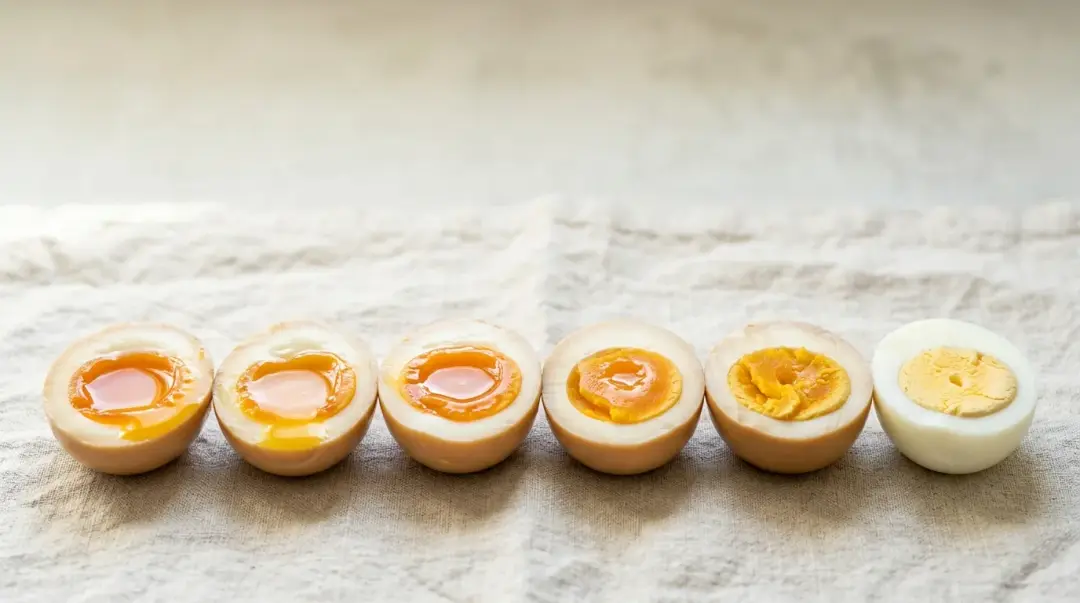
Cut a boiled egg in half at each minute mark and the yolk tells you exactly how long it spent in the pot. The timing chart from Fond, written for large refrigerated eggs lowered into boiling water, reads like a cross-section series:
- 6 minutes. The white is set but delicate, and wobbles as the knife goes through. The yolk is liquid and runs onto the board.
- 7 minutes. The white is set. The yolk is thick and flowing, more syrup than juice, and holds a dome before it slumps.
- 8 minutes. Firm white. The yolk is jammy, glossy in the center and holding its shape at the cut.
- 9 minutes. The yolk is mostly set, with only a moist ring left at the very middle.
- 11 to 12 minutes. Fully set from edge to center. A hard-boiled egg.
The ramen egg lives in the 6-to-8-minute band, but recipes disagree about where in that band the "jammy" yolk sits.
What each source calls the yolk at each boil time (large eggs)
| Boil time | Fond | Just One Cookbook | The Flavor Bender |
|---|---|---|---|
| 5½ min | — | — | Runny; whites soft and very delicate |
| 6 min | Liquid | Runny (6–6½ min) | Runny, white set |
| 6½ min | — | Runny (6–6½ min) | Jammy/runny (recommended) |
| 7 min | Thick and flowing | Jammy (recommended) | Half-set |
| 8 min | Jammy | Custard-like (8–9 min) | — |
| 9 min | Mostly set, moist center | Custard-like (8–9 min) | — |
A minute of disagreement sounds small until you see the cuts side by side. The Flavor Bender's 7-minute egg is "half-set"; Fond's 7-minute egg still flows. The likely reasons are the variables each recipe states: The Flavor Bender specifies large eggs of about 57 g, Fond assumes a small batch with water covering the eggs by an inch, and Just One Cookbook insists on eggs straight from the fridge. A bigger egg, a crowded pot or a lazy simmer all push the yolk the other way. NoodleDex's bowl-building guide splits the difference at 6 minutes 30 seconds from the fridge.
Mike Satinover, known online as Ramen Lord, explains why cold eggs matter: the white is fully set at about seven minutes, when the yolk is "just starting to come up to temperature." A cold interior slows the heat getting to the center, so the white finishes before the yolk catches up. His target is a yolk that is "custardy, not liquid nor hard," which he compares to fudge.
What the Names Mean
Japanese has several names for the same egg.
Ajitsuke tamago (味付け玉子, ah-jee-TSOO-keh tah-MAH-goh) means "seasoned egg." Ajitama (味玉) is the shortened form. Nitamago (煮玉子, nee-tah-MAH-goh), literally "simmered egg," is the alternative name Just One Cookbook lists for the same thing. Wikipedia's ramen entry files them all under one topping: a seasoned, usually salted boiled egg.
Japan-guide's ramen primer notes that hard-boiled, soft-boiled, raw and marinated eggs are all common ramen toppings. At US shops an extra ajitama is a common add-on, and our ramen toppings ranking places it against chashu, menma and the rest.
The Marinade Is a Cure
Peeled eggs go into a soy-based liquid and sit there for hours. The liquid seasons the white and colors it, but it also changes the texture of the whole egg. Adam Liaw puts it directly in his ramen school series: the salty-sweet marinade "acts as a cure to firm the whites and yolks." His eggs boil for 6 minutes and come out of the marinade with savory, jammy yolks.
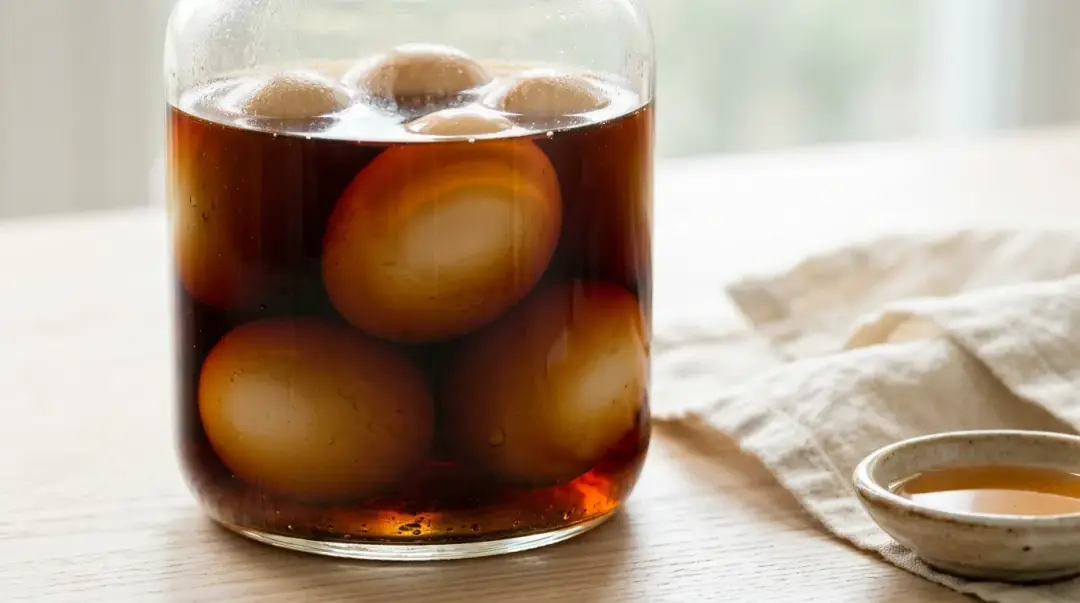
That cure has a ceiling. Ramen Lord warns that leaving eggs in soy too long "may result in a grainy, cured yolk, as the salt changes the texture of the undercooked interior." Just One Cookbook sets the limit at 12 to 24 hours for its strong marinade, after which the eggs get too salty.
The fix most cooks use is dilution. A strong marinade works fast and needs watching; a weak one takes longer but is forgiving.
Five ramen egg marinades, strongest to most diluted
| Source | Marinade | Soak time |
|---|---|---|
| NoodleDex bowl guide | Soy sauce and mirin, undiluted | 4–12 hours |
| Just One Cookbook | Soy sauce, mirin and sake with a little sugar, simmered briefly and cooled | 8 hours or overnight; no more than 12–24 hours |
| The Flavor Bender | Mirin-heavy mix of light and dark soy sauce, optionally thinned with water | At least 2 hours; 8–12 best; up to 24 |
| Ramen Lord (Mike Satinover) | Soy sauce heavily diluted with water | Longer soak, lower salt risk |
| Adam Liaw | Marinade diluted with water | 48 hours |
Look at the soak column against the marinade column and the pattern is plain: the more water in the jar, the longer the eggs can stay. Adam Liaw's diluted version runs a full 48 hours, and he notes the eggs are likely fully cured after two days.
There is also a free marinade if you make chashu. The soy, sake and sugar liquid left after braising pork belly is the classic second use: both Just One Cookbook and Sudachi Recipes recommend it for ramen eggs. Our chashu guide covers that braise.
How Ajitama Is Made
The method is short, and the sources above agree on its main points.
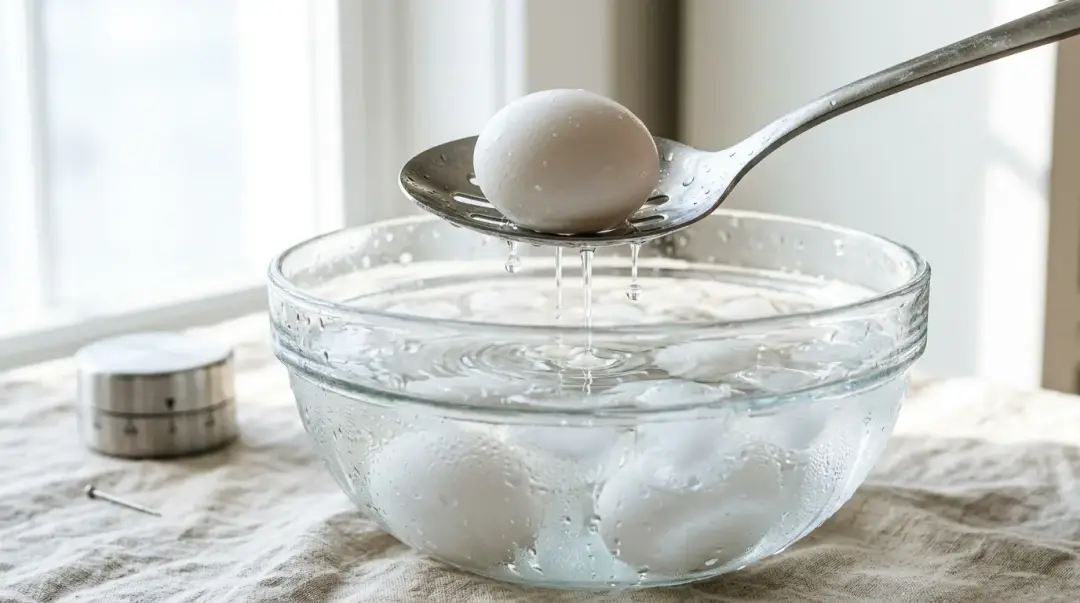
Cooks start with large eggs straight from the fridge. Just One Cookbook and Ramen Lord both rely on the cold interior to keep the yolk soft while the white sets. Ramen Lord also pricks the heel, the wide end of the egg, because it "seems to help with peeling."
The eggs go into boiling water for the jammy window, roughly six and a half to seven minutes by most sources, and then straight into ice water. Ramen Lord calls that shock critical, since carryover heat keeps cooking the yolk. Just One Cookbook chills for 15 minutes; The Flavor Bender says 2 to 3 minutes under cold running water is enough to stop the cooking.
Peeled eggs then sit fully submerged in the marinade in the fridge for the soak time that marinade calls for. A zip-top bag with the air pressed out keeps them covered in less liquid than a bowl needs.
Marinated soft-boiled eggs keep 3 to 4 days by Just One Cookbook's count, around 4 by Adam Liaw's and up to 5 by The Flavor Bender's. Halve them just before serving rather than ahead of time. If you boil eggs often, an electric egg cooker with a soft setting is a hands-off alternative to step 3; test one egg first, since the minute marks above are for boiling.
One egg adds about 78 kcal by USDA's figures for a 50 g egg, and the soy marinade adds salt more than calories, per our ramen calorie breakdown.
Onsen Tamago: The Egg Turned Inside Out
The other egg on Japanese menus works backward. Onsen tamago (温泉卵, OHN-sen tah-MAH-goh) means "hot spring egg," and it was originally cooked in the hot water of Japan's onsen, the natural springs.
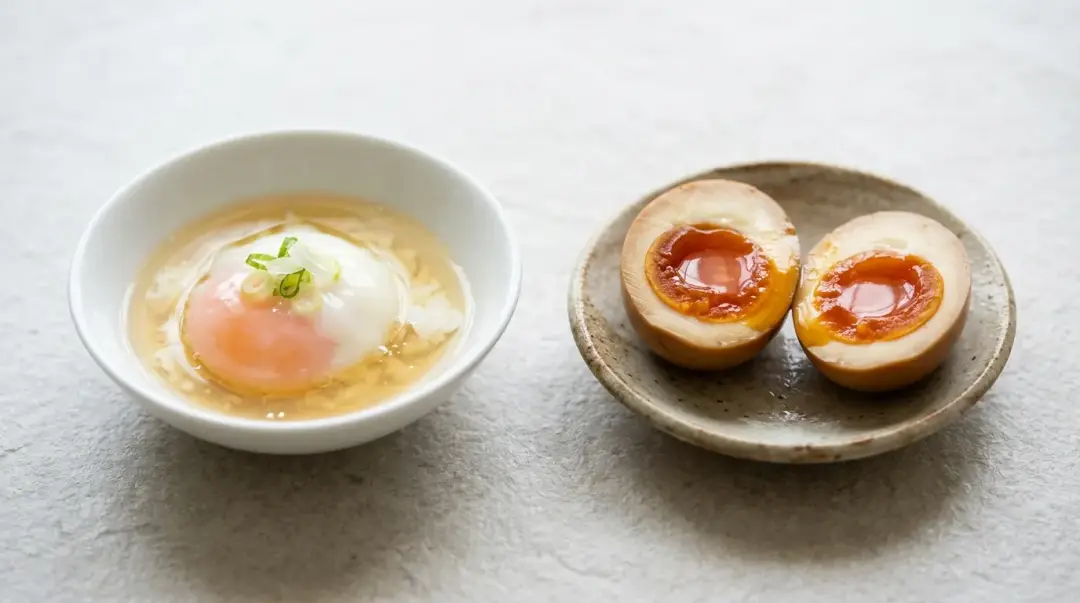
Wikipedia gives the method as water held at about 65 to 68°C (149 to 154°F) for 20 minutes. That temperature is high enough to set the yolk and too low to set most of the white, because yolk proteins coagulate at a lower heat than white proteins. Crack one open and the cross-section is the reverse of an ajitama: a loose, milky white around a yolk that is soft but holds together.
Ajitama vs onsen tamago
| Ajitama (ajitsuke tamago) | Onsen tamago | |
|---|---|---|
| Cooking | Boiled 6–7 min, then iced | Held at ~65–68°C for ~20 min |
| White | Set, firm, tan from marinade | Loose and milky |
| Yolk | Jammy to custardy | Soft-set, holds together |
| Seasoning | Marinated in soy-based liquid for hours | Served in seasoned dashi or soy |
| How you get it out | Peeled, then halved | Cracked straight into a bowl |
Onsen tamago is traditionally served in seasoned bonito dashi or soy sauce with chopped scallions. You can't peel and halve one, so on ramen it gets cracked straight onto the noodles. A sous vide circulator or a careful pot with a thermometer is the home route; our Japanese cookware guide covers the pots.
A note on safety
The FDA's guidance is to cook eggs until both the yolk and the white are firm, and it names children, older adults, pregnant women and people with weakened immune systems as the groups at greater risk from Salmonella. Both eggs on this page are undercooked by that standard. The FDA recommends pasteurized shell eggs for any dish served raw or undercooked, which is the simple choice if you're cooking for someone in those groups.
When the Egg Goes Wrong
The yolk runs everywhere when you cut it. The egg came out too early or started warm. Use eggs straight from the fridge and add 30 seconds. Remember the marinade will firm it a little more over a day.
The yolk is pale yellow and chalky. Too long in the pot, or not iced fast enough. Carryover heat keeps cooking a hot egg sitting on the counter. Move it to ice water the moment the timer goes.
The yolk is grainy and dense. Too long in a strong marinade. That is the cure Ramen Lord describes. Cut the soak time, or dilute the marinade with water and let it run longer.
The egg tastes like soy sauce and nothing else. Same cause, different symptom. Just One Cookbook's cutoff for its soy-mirin-sake marinade is 12 to 24 hours.
The white is pale and the flavor stops at the surface. Not long enough. The Flavor Bender's minimum is 2 hours and its sweet spot is 8 to 12.
Half the white comes away with the shell. Pierce the heel before boiling, which Ramen Lord finds helps, and give the eggs their full ice bath so the white firms before you peel.
FAQ
What is a ramen egg?
A ramen egg, called ajitsuke tamago or ajitama in Japanese, is a soft-boiled egg that is peeled and marinated in a soy-based liquid, usually with mirin and sometimes sake or sugar. The marinade tints the white tan, seasons it, and firms the yolk into a jammy, fudge-like texture. It is halved and set on top of the bowl.
How long do you boil a ramen egg?
Most recipes boil large eggs straight from the fridge for 6 to 7 minutes, then move them to ice water at once. The Flavor Bender calls 6 and a half minutes jammy; Just One Cookbook calls 7 minutes jammy. Egg size, pot size and how hard the water boils account for the difference, so test one egg first.
How long should ramen eggs marinate?
It depends on the marinade's strength. An undiluted soy-mirin marinade needs only 4 to 12 hours. Diluted marinades, like Ramen Lord's soy sauce thinned with water, can go longer, and Adam Liaw's diluted version runs 48 hours. Just One Cookbook warns that past 12 to 24 hours a strong marinade makes the egg too salty.
What is the difference between ajitama and onsen tamago?
Ajitama is a soft-boiled egg marinated in soy, with a set white and a jammy yolk. Onsen tamago, or hot spring egg, is cooked slowly in water around 65 to 68 C for about 20 minutes. At that heat the yolk sets but the white stays loose and milky. It is usually served in seasoned dashi.
How long do ramen eggs keep?
Soft-boiled marinated eggs keep about 3 to 5 days in the fridge, depending on the recipe: Just One Cookbook says 3 to 4 days, Adam Liaw about 4 and The Flavor Bender up to 5. Hard-boiled versions keep closer to a week. The longer they sit in strong marinade, the saltier and firmer they get.
Why is my ramen egg yolk grainy?
Usually because it sat too long in the marinade. Mike Satinover, known as Ramen Lord, notes that salt in the soy changes the texture of the undercooked yolk, and too much time produces a grainy, cured yolk. Shorten the soak or dilute the marinade with water.
Read Next
Products mentioned in this guide
This section contains affiliate links. We may earn a commission at no extra cost to you.

Kikkoman Naturally Brewed Soy Sauce, 15 oz
The salt and color in every marinade on this page. A 15 oz bottle covers several batches of eggs whichever ratio you follow.
View on Amazon
Kikkoman Manjo Aji-Mirin, 10 fl oz
Mirin brings the sweetness that balances the soy in Just One Cookbook's and The Flavor Bender's marinades. Buy it with the soy sauce.
View on Amazon
Sun Noodle Shoyu Ramen Soup Mix, 12.8 oz
A fast way to put your first batch of ajitama on a proper bowl: fresh noodles and a shoyu base, sold at Whole Foods.
View on Amazon
Dash Rapid Egg Cooker: 6 Egg Capacity Electric Egg Cooker
The yolk chart above shows how a minute changes the result, and an electric cooker takes the timing out of your hands. This listing holds six eggs, cooks soft, medium or hard, shuts off automatically and includes a measuring cup.
View on Amazon
Browse more related items
Opens Amazon · affiliate links
Buying guides for this topic
- Buying guideBest Japanese Pantry Essentials in 2026The 10 Japanese pantry items needed to cook ramen, udon, soba, and yakisoba at home. Soy, dashi, mirin, miso, and yakisoba sauce, ranked.
- Buying guideBest Japanese Cookware in 2026The donabe, ramen bowls, sōmen sets, and tools you need to cook Japanese noodles at home. Real US Amazon picks across budget tiers.
- Buying guideBest Ramen Noodles & Kits in 2026The best fresh and dry ramen noodles, plus premium ramen kits, available on Amazon — Sun Noodle, Hakubaku, Marusan, and Maruchan Seimen ranked.