Pad Thai History: Phibun and a Contested Origin
· 8 min read · NoodleDex Editorial
Pad thai history in plain terms: what Phibun's 1939–42 nationalism and noodle campaign did, what the record doesn't show, and how the dish reached the US.
This page contains affiliate links. We may earn a commission at no extra cost to you. Disclosure
On this page(10 sections)
- Who Was Phibun, and What Was He Building?
- Why Would a Government Push Noodles?
- Did Phibun Invent Pad Thai?
- What Happened to the Program When Phibun Fell?
- Why Is It Called "Thai" If the Noodle Is Chinese?
- Where Does Thipsamai Fit?
- How Did Pad Thai Reach the US?
- The Verdict, Claim by Claim
- FAQ
- Products mentioned in this guide
On November 7, 1942, Thailand's prime minister, Field Marshal Plaek Phibunsongkhram, spoke to the country about lunch. "อยากให้พี่น้องกินก๋วยเตี๋ยวให้ทั่วกัน เพราะก๋วยเตี๋ยวมีประโยชน์แก่ร่างกาย," he said, according to Thailand's Office of Knowledge Management and Development: "I want everyone to eat noodles, because noodles are good for the body."
The word he used was kuaitiao (gway-tee-ow), rice noodles in general. He didn't say pad thai. The gap between that sentence and the story most menus tell, that Phibun invented pad thai as a national dish, is what this page is about. The questions below go through the record in order.
Who Was Phibun, and What Was He Building?
Plaek Phibunsongkhram, usually shortened to Phibun, was an army officer who took part in the 1932 coup that ended absolute monarchy in what was then Siam. He was prime minister from 1938 to 1944 and again from 1948 to 1957, when he was overthrown. He died in exile in Japan in 1964.
His first term was a nation-building program run by decree. Between 1939 and 1942 his government issued twelve cultural mandates (ratthaniyom). The first, on June 24, 1939, changed the country's name from Siam to Thailand. The fifth, dated November 1, 1939, told citizens that "Thai people should make an effort to consume only food made from Thai products." The eleventh, of September 8, 1941, set out a daily routine, including meals "at set times, no more than four daily." None of the twelve mentions noodles.
The program also had a sharp edge toward Thailand's Chinese community. Atlas Obscura, drawing on historians of the period, notes that Phibun's government banned Chinese from schools, removed ethnic Chinese from prominent posts and pushed Chinese food vendors off the streets. Phibun's own explanation for the cultural push was that Thailand had to be "as cultured as other nations," or it "would be helpless and soon become colonized."
Why Would a Government Push Noodles?
Rice. War and flooding caused rice shortages, and in 1942 Thailand had flooding so severe that nothing matched it until 2011. Noodles made from rice flour stretched the grain: The Takeout repeats the claim that one bowl of rice could make two bowls of noodles. The OKMD account adds an economic motive, getting money circulating through rice farmers.
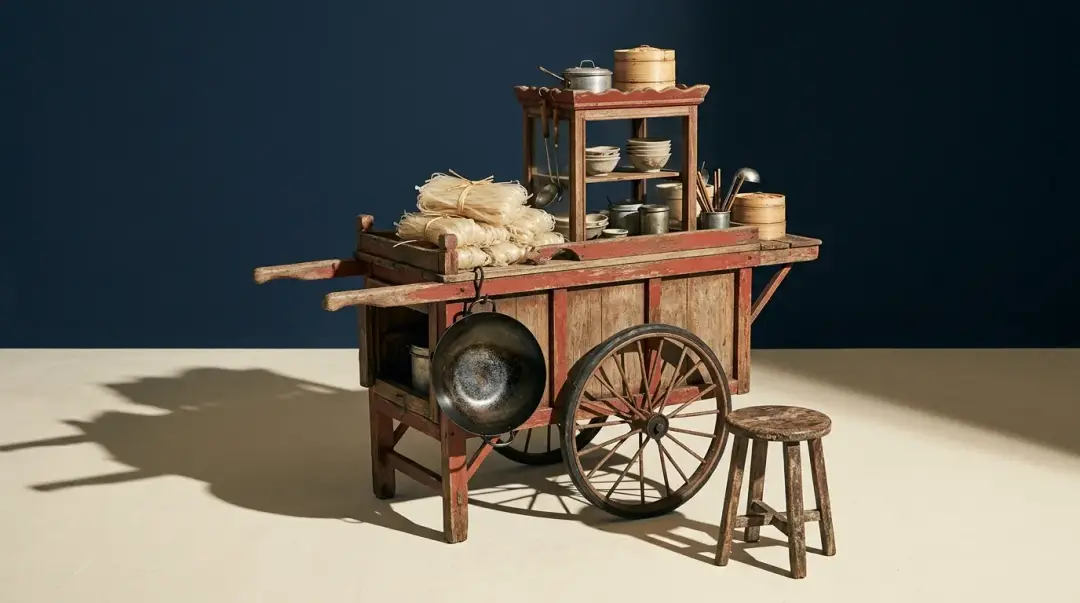
The campaign had a slogan, "Noodle is your lunch," and the government put money behind it. According to Atlas Obscura, the Public Welfare Department handed out free noodle carts and recipes. This part of the story is well supported, and the November 1942 speech fits it.
The campaign also ran into its own rules. Mandate 5 asked Thais to eat food made from Thai products, yet the noodle at the center of the push came from Chinese cooking, and the dish now called pad thai uses mung beans, peanuts and chilies. The Takeout notes that whether Phibun overlooked the contradiction or accepted it on purpose "remains unclear."
Did Phibun Invent Pad Thai?
This is the contested part, and the evidence leans against it.
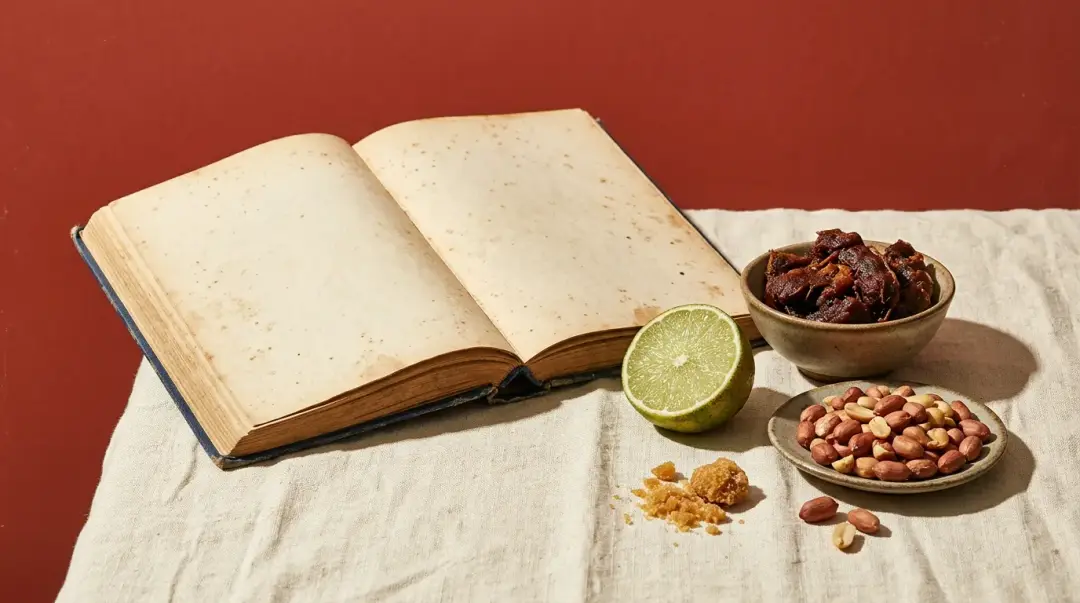
The case for Phibun rests mostly on family memory. The anthropologist Penny Van Esterik, in Materializing Thailand, reports that the version Phibun liked was made by his housekeeper and that he simply "really liked it." His son, Nitya Pibulsonggram, told the food journal Gastronomica in 2009 that his parents "made pad Thai popular during the War." The author Mark Padoongpatt has written that the dish "was actually created in the 1930s in Thailand." None of these points to a document.
The case against is stronger on paper. In a 2016 article for Silpa Wattanatham, a Thai history magazine, Krut Lueolmai reported that he could find no one who had seen a document showing Phibun created the dish. The political historian Nattapol Jaijing relayed the family's account that they already ate stir-fried noodles before Phibun became prime minister. OKMD quotes Phibun's daughter, Jiravat: "พ่อไม่รู้เรื่องก๋วยเตี๋ยวผัดไทยมาก่อนเลย" ("Father never knew about kuaitiao phat thai beforehand"). And the dish has a paper ancestor. A recipe for stir-fried rice noodles appears in the Thai cookbook Mae Khrua Hua Pa in 1911, decades before Phibun took office. Lueolmai points to another recipe in that book, written by Lady Plian Phassakornwong: khao phat mee, which already uses tamarind water, lime and roasted peanuts.
Both sides can be partly right. The government clearly promoted noodles, and pad thai may well have spread and taken its name in those years. What the record doesn't support is a single inventor, a single kitchen or an official recipe.
What Happened to the Program When Phibun Fell?
It was rolled back, for a while. Phibun lost power in 1944, and from 1946 the governments led by Khuang Aphaiwong and Pridi Banomyong set out to abolish the 1939–1942 mandates. On September 7, 1946, the government announced that the country's name would revert to Siam, on the grounds that it "did not only belong to the Thai race." Songkran was restored as a holiday and the old dress codes were dropped.
The reversal lasted less than two years. A coup on April 8, 1948 put Phibun back in office, the restoration policy was cancelled, and the name Thailand returned in 1949. He held power until 1957. The street stall that became Thipsamai opened in the 1950s, in the same years.
Why Is It Called "Thai" If the Noodle Is Chinese?
The full name, kuaitiao phat thai (gway-tee-ow pad tie), means "Thai-style stir-fried rice noodles." Pad or phat means stir-fried. Kuaitiao comes from the Teochew Chinese 粿條 (guê2 diao5), and the same word turns up across Southeast Asia, as kuyteav in Cambodia and hủ tiếu in Vietnam. Rice noodles came to Thailand with Chinese traders, likely centuries before the 1940s, and Silpa Wattanatham dates kuaitiao in Thailand to the Ayutthaya kingdom.
The Thai-American food writer Kasma Loha-unchit makes the sharpest version of the argument: "for a dish to be so named in its own country clearly suggests an origin that isn't Thai."
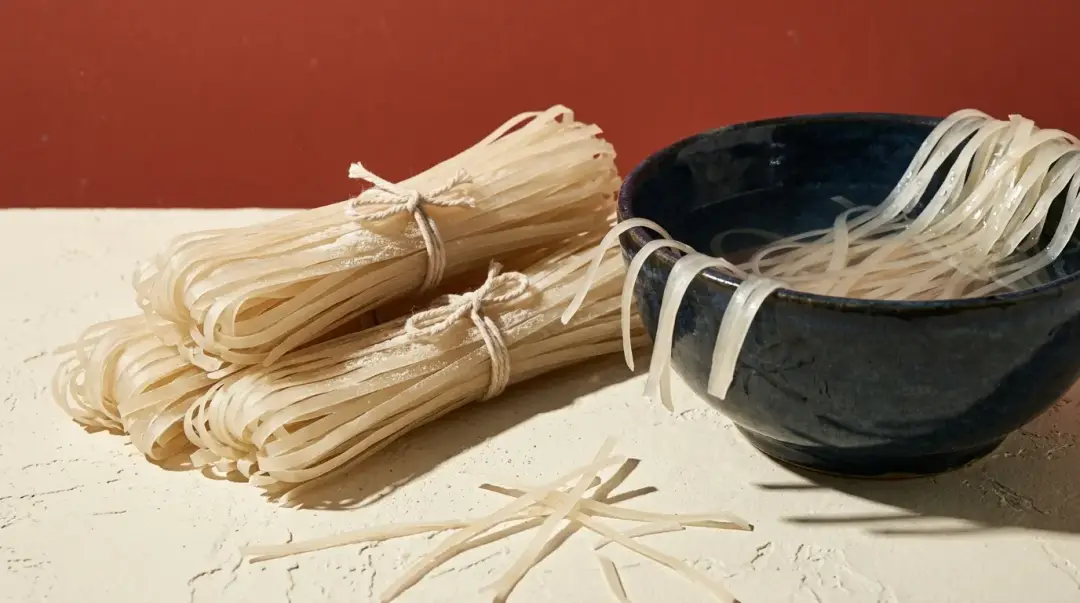
The noodle itself has a regional name. Sen chan (sen jun) are flat rice noodles named for Chanthaburi Province, and the dish is built on that narrow ribbon, now usually sold as sen lek (about 5 mm wide). Our pad thai page covers the cooking side, and the Thai noodles guide places it beside pad see ew and drunken noodles. Our three-way comparison breaks down how the three differ in the wok.
Where Does Thipsamai Fit?
The restaurant most tied to the Phibun story is Thipsamai, on Maha Chai Road in the Pratu Phi ("Ghost Gate") area. Samai and Chote Baisamut started it as a street stall in the 1950s and moved into a storefront in 1966. The restaurant says Phibun visited and praised its pad thai as what the dish "is truly supposed to taste like."
That claim is disputed as well. The historian Siripote Laomanacharoen calls the story that Phibun promoted noodles during the war "more of an anecdotal claim than verified fact," at least in the form usually told. A neighboring vendor known as Lung Pa has said Thipsamai "only came recently" and that recipes were shared among the vendors on the street. Thipsamai is a famous shop with a long history. Whether it holds a special place in the dish's origin is a different question.
How Did Pad Thai Reach the US?
Through restaurants, and with government help. In 2002 Thailand launched Global Thai, a program to grow the number of Thai restaurants abroad. VinePair reports the worldwide count rose from about 5,500 in 2002 to more than 17,000 by January 2024, and US Thai restaurants grew from about 2,000 to just under 7,000. The US has only about 300,000 Thai Americans, which gives Thai food an unusually high ratio of restaurants to community.
Pad thai anchors the menu at almost every one of them, a mild, sweet-sour dish that needs no explaining to a first-time diner. If you want to cook it at home, soak the noodles rather than boil them, and see our best pad thai noodles for the brands worth buying.
The Verdict, Claim by Claim
Pad thai origin claims and what the record shows
| Claim | What the record shows | Verdict |
|---|---|---|
| Phibun pushed Thai nationalism by decree | Twelve cultural mandates, 1939–1942, including the Siam-to-Thailand rename | Documented |
| The government promoted rice noodles in wartime | November 7, 1942 speech; free noodle carts and recipes | Documented |
| Phibun invented pad thai | No document found; daughter says he did not know the dish | Unsupported |
| Pad thai did not exist before the 1940s | Stir-fried rice noodle recipe in a 1911 cookbook | Unlikely as stated |
| Pad thai is Chinese in origin | Teochew noodle word, Chinese-introduced noodle, Thai seasoning | Partly true |
| Thipsamai holds the original recipe | Restaurant claim; disputed by a historian and a neighboring vendor | Unproven |
| Global Thai spread it abroad | Program launched 2002; US Thai restaurants grew about 250% | Supported |
FAQ
Who invented pad thai?
No one can be named. The popular story credits Prime Minister Plaek Phibunsongkhram in the early 1940s, but historians have found no document showing he created it, and his daughter has said he did not know the dish beforehand. Stir-fried rice noodles were already cooked in Thailand, and a stir-fried noodle recipe appears in a 1911 Thai cookbook.
Did Phibun really promote noodles?
Yes. That part is documented. Phibun's government urged people to eat kuaitiao, rice noodles, during World War II, partly to save rice. On November 7, 1942, he told the public he wanted everyone to eat noodles because they were good for the body. What lacks evidence is that he invented or named pad thai.
Why is it called pad thai?
Pad means stir-fried, and the full name, kuaitiao phat thai, means Thai-style stir-fried rice noodles. The Thai label likely marked the dish as national during a period when the government renamed Siam as Thailand and pushed Thai products. Kuaitiao itself comes from a Teochew Chinese word, so the name joins a Chinese noodle to a Thai identity.
Is pad thai originally Chinese?
Its noodle and technique are Chinese in origin. Rice noodles came to Thailand with Chinese traders and immigrants, and the word kuaitiao is Teochew. The flavoring with tamarind, fish sauce, palm sugar, lime and peanuts is Thai. The Thai-American food writer Kasma Loha-unchit argues that a dish named Thai in its own country probably did not start out Thai.
When did pad thai become popular in the US?
It traveled with Thai restaurants, which multiplied after Thailand's government launched its Global Thai program in 2002 to promote the cuisine abroad. US Thai restaurants grew from roughly 2,000 to just under 7,000 by early 2024. Pad thai, mild and sweet-sour, now anchors the menu at almost every US Thai restaurant.
What is Thipsamai and did it invent pad thai?
Thipsamai is a pad thai restaurant on Maha Chai Road in Bangkok's Pratu Phi area. It began as a street stall in the 1950s and moved into a storefront in 1966. It says Phibun praised its pad thai, but historian Siripote Laomanacharoen calls the Phibun noodle story more anecdote than verified fact, and neighboring vendors say recipes were shared.
Read Next
Products mentioned in this guide
This section contains affiliate links. We may earn a commission at no extra cost to you.

Authentic Thai Pad Thai Rice Stick Noodles, 5mm Sen Lek (16 oz)
The narrow flat rice noodle at the center of this story. Soak it, don't boil it, and it holds up in a hot wok the way a street vendor's noodles do.
View on Amazon
Thai Kitchen Pad Thai Sauce (Gluten Free), 8 fl oz (Pack of 2)
A shortcut for the tamarind, fish sauce and sugar balance if you want to cook the dish tonight rather than build the sauce from scratch.
View on Amazon
Buying guides for this topic
- Buying guideBest Pad Thai Noodles & Sauces in 2026The best sen lek rice noodles and pad thai sauce kits on Amazon — A Taste of Thai, Erawan, and premium Thai brands ranked.
- Buying guideBest SE Asian Pantry Essentials in 2026The 10 Southeast Asian pantry items needed to cook pad thai, laksa, mì goreng, and more. Fish sauce, kecap manis, sambal, curry pastes, ranked.
- Buying guideBest Rice Noodles for Pho, Pad Thai, and MoreThe best rice noodles on Amazon: Three Ladies bánh phở, A Taste of Thai, Annie Chun's and Lotus Foods, ranked for pho, pad thai and more.
- Buying guideBest Carbon Steel Wok for Home Cooks: Size and Care (2026)The best carbon steel woks for home stoves: size, flat or round bottom, hand-hammered or machine-made, and how to season one and keep it rust-free.