Thai Noodles Explained: 7 Dishes by Sauce & Width
· 6 min read · NoodleDex Editorial
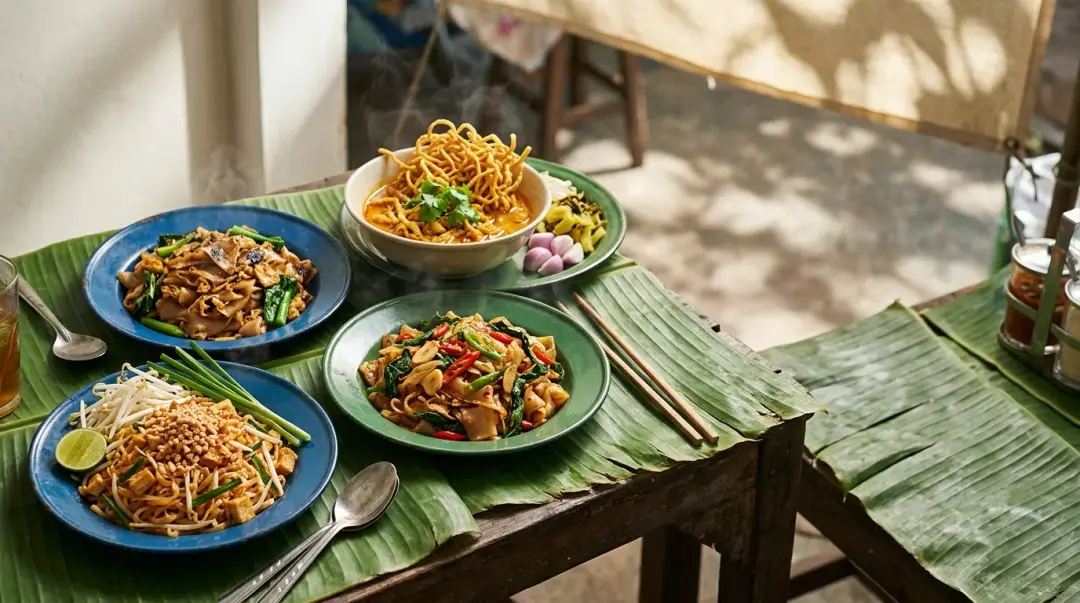
Find your Thai dish in seconds — pad thai, pad see ew, drunken noodles, khao soi, boat noodles. Decoded by sauce base, noodle width, and menu cues.
This page contains affiliate links. We may earn a commission at no extra cost to you. Disclosure
On this page(10 sections)
A typical Thai restaurant menu lists eight to ten noodle dishes with confusingly similar descriptions — "stir-fried noodles with vegetables," "noodle soup," "wide noodles in dark sauce." The actual differences come down to two variables: which noodle and which sauce base. Get those two right and every Thai noodle dish is identifiable.
The Headline Difference
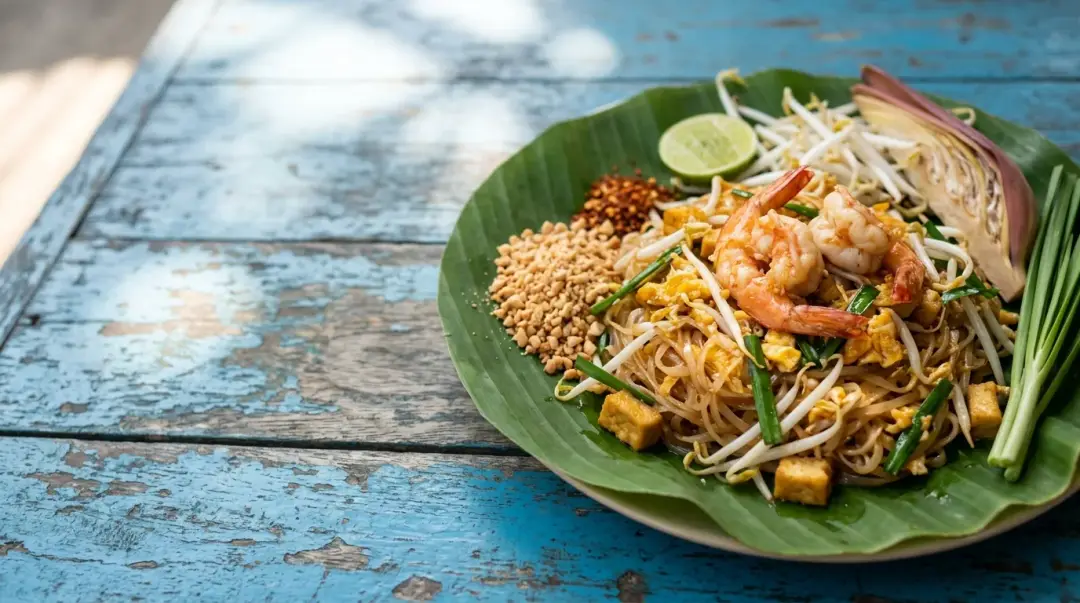
Thai noodle dishes split first by noodle width — thin flat (sen lek), wide flat (sen yai), threadlike (sen mee), egg noodle (bamee), glass (woon sen) — then by sauce family. Pad thai and pad see ew look similar from across the restaurant, but pad thai is built on tamarind-fish sauce-palm sugar (sweet-sour-salty), while pad see ew is built on dark soy and oyster (caramelized-savory). The noodle width and the sauce together identify the dish. Ask one question — "which noodle?" — and you've narrowed the menu to two or three options.
Side-by-Side: The Three Stir-Fry Classics
Thailand's Three Stir-Fried Noodle Classics
| Dish | Noodle | Sauce Base | Spice | Defining Feature |
|---|---|---|---|---|
| Pad Thai | Sen lek (thin flat) | Tamarind + fish sauce + palm sugar | Mild | Peanut-crusted, egg-bound, sweet-sour |
| Pad See Ew | Sen yai (wide flat) | Dark soy + oyster + light soy | None (mild) | Caramelized dark soy + gai lan |
| Drunken Noodles | Sen yai (wide flat) | Oyster + dark soy + fish sauce + holy basil | High | Holy basil + bird's eye chili |
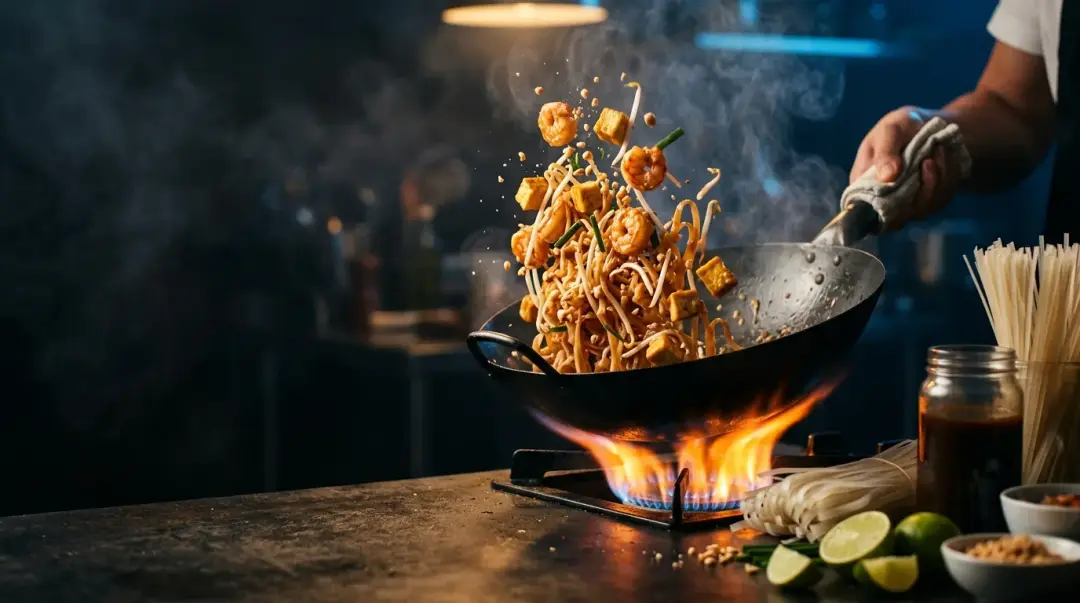
The three share the same wok technique — high heat, oil, garlic, protein, noodle, sauce, vegetable, plate — but the sauce and noodle change everything. A carbon steel wok holds that heat better than a thin nonstick pan, and our wok buying guide explains what to look for. Thai cooks traditionally pound chili-garlic bases and curry pastes in a granite mortar.
Beyond the Big Three
Pad Woon Sen — Stir-fried glass noodles (mung bean starch). Lighter and more textural than wheat-or-rice noodle stir-fries. The vegetarian-friendly Thai noodle dish on most menus, because glass noodles take egg, mushroom, and vegetable well.
Boat Noodles (Kuay Tiew Reua) — A spicy beef-or-pork noodle soup served in tiny portions (originally served on canal boats; the small bowls were boat-portable). The broth thickens with pig's blood for body and is heavily spiced with cinnamon, star anise, and chili. Found at specialty Bangkok shops; rare in the US — Pa Ord Noodle in LA and a handful of Thai Town spots in NYC do real versions.
Khao Soi — Northern Thai (Chiang Mai) curry noodle soup. Egg noodles in coconut-yellow curry broth, topped with crispy fried noodles. Garnished with pickled mustard greens, lime, shallot, and chili oil. The most unique Thai noodle dish — closer in spirit to Burmese ohn-no khao swè than to anything else on a Thai menu. Spicy Sugar Thai Cuisine and Night + Market in LA do textbook khao soi.
Rad Na — Wide rice noodles in thick gravy with Chinese broccoli (gai lan) and pork or chicken. Lighter than pad see ew, more gravy than fried-on. Often described as "the Thai cousin of beef chow fun in gravy."
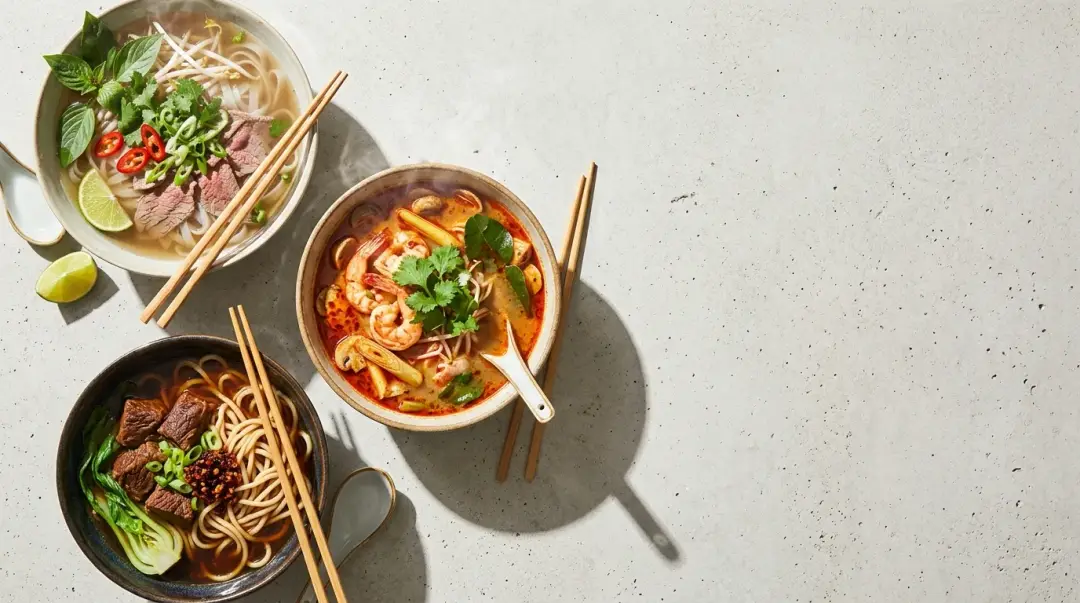
Tom Yum Noodles — Tom yum soup with rice noodles added. Spicy-sour, lemongrass-forward, with shrimp or pork. The cleanest entry point to Thai sour-spicy flavor.
Kuay Tiew (general clear noodle soup) — Thai clear-broth noodle soup with options for noodle (sen lek, sen yai, sen mee) and protein at the counter. Found at most Thai restaurants under "noodle soup" — the workhorse lunch in Bangkok.
Bamee Moo Daeng — Egg noodles with red BBQ pork. Thai-Chinese, descended from Cantonese noodle shop culture. Often dry (noodles plus sauce, no broth) with the soup served on the side.
A Diagnostic Question
If you can ask only one question about a Thai noodle dish, ask: "What noodle is it?"
- Thin flat (sen lek) → Pad Thai, Tom Yum Noodles, or kuay tiew (clear soup)
- Wide flat (sen yai) → Pad See Ew, Drunken Noodles, or Rad Na
- Thin round / threadlike (sen mee) → Stir-fried rice vermicelli, kuay tiew
- Egg noodles (bamee) → Khao Soi or bamee moo daeng
- Glass noodles (woon sen) → Pad Woon Sen, yum woon sen (cold glass noodle salad)
Pair the noodle answer with the sauce description and you've identified the dish in under 10 seconds.
How to Order if You're New
A working strategy for someone walking into a Thai restaurant for the first time:
- Start with pad thai or pad see ew for the first visit. Both are mild and approachable. Pad thai is sweeter; pad see ew is savory-smoky.
- Add drunken noodles when you want spice. The chili is real — Thai bird's eye, not bell pepper.
- Try khao soi when you want something unusual. It's not like any other Thai noodle on the menu.
- Order rad na when you want comfort food and gravy texture.
- Try boat noodles if you find a Bangkok-style specialist with the small-bowl service.
- Spice level: many Thai restaurants outside Thailand run mild by default. "Thai spicy" or "level 8" is the diner's request for the real bird-chili profile. Order it once before you order it often.
Brand Picks for Cooking Thai Noodles at Home
For pad thai and other sen lek dishes:
- Erawan brand Sen Lek (Three Elephants logo) — the gold standard at most Asian groceries.
- A Taste of Thai Pad Thai Rice Noodles — widely available at mainstream grocery stores, slightly thicker than the Thai-grocery version but workable.
- Maesri Pad Thai Sauce — for the lazy route. One can plus tamarind paste finishes the sauce.
For pad see ew, drunken noodles, and rad na (sen yai):
- Wai Wai Sen Yai (dry) — wide-flat dry rice noodle. Reconstitute carefully — these go from undercooked to mushy in 90 seconds.
- Fresh ho fun (Cantonese) at Asian grocery refrigerated section — substitutes well for sen yai, often better than dry sen yai.
- Healthy Boy dark soy sauce and Maekrua sweet soy (kecap manis) — the two sauces that make pad see ew taste like pad see ew. Both at H Mart, 99 Ranch, and most Thai grocery.
- Holy basil (krapow) for drunken noodles — H Mart sometimes has it; Vietnamese groceries usually do. Italian basil is a poor substitute; Thai basil is closer but milder. Per chef Andy Ricker's Pok Pok cookbook (2013), holy basil is the non-negotiable aromatic for the dish.
For khao soi:
- Thai egg noodles (bamee) dry or fresh, at any Asian grocery.
- Mae Ploy yellow curry paste or Pantai Norasingh khao soi paste — both at most Thai-stocked groceries.
- Coconut milk: Aroy-D or Chaokoh, both with cream-on-top consistency. Avoid the watery "lite" versions.
For pad woon sen and yum woon sen:
- Lung Fung or Sailing Boat woon sen (mung bean glass noodles) — sold in standard and larger family-size packs.
What Thai Restaurants Outside Thailand Get Wrong
A short list of restaurant moves that don't reflect Thailand:
- Default "Thai spicy" is too mild. Many kitchens outside Thailand scale heat down for local palates. If you want the real heat level, say "Thai hot" or "level 8-10."
- Pad thai topped with crushed peanuts is right; pad thai built around peanut butter is wrong. The peanut is a garnish, not a sauce ingredient.
- "Pad see ew with broccoli" should be Chinese broccoli (gai lan), not standard supermarket broccoli. Western broccoli changes the dish.
- Drunken noodles need holy basil, not Thai basil. Many Thai restaurants outside Thailand substitute Thai basil for availability — it's noticeably different.
- Khao soi should have crispy fried egg noodles on top. If it doesn't, the kitchen skipped a step.
If You Only Remember One Thing
Identify the noodle (sen lek thin flat, sen yai wide flat, woon sen glass, bamee egg) and identify the sauce family (tamarind-fish-palm for pad thai, dark-soy for pad see ew and drunken, coconut-curry for khao soi). Those two facts give you every Thai noodle dish on the menu in under a minute.
FAQ
What is the difference between pad thai and pad see ew?
Pad thai uses thin flat sen lek noodles with a tamarind, fish sauce and palm sugar sauce, so it tastes sweet, sour and salty. Pad see ew uses wide flat sen yai noodles with dark soy and oyster sauce, which gives a caramelized, savory-smoky flavor.
What are drunken noodles?
Wide flat sen yai noodles stir-fried with oyster sauce, dark soy, fish sauce, holy basil and bird's eye chili. It is the spicy one of Thailand's three stir-fried noodle classics.
What is khao soi?
A northern Thai curry noodle soup from Chiang Mai. Egg noodles sit in a coconut-yellow curry broth, topped with crispy fried noodles and garnished with pickled mustard greens, lime, shallot and chili oil.
Which Thai noodle dish is good for vegetarians?
Pad woon sen, stir-fried glass noodles made from mung bean starch, is the vegetarian-friendly choice on most Thai restaurant menus. Glass noodles take egg, mushroom and vegetables well.
What does sen lek mean?
Sen lek is the thin flat rice noodle used in pad thai, tom yum noodles and clear noodle soup. Sen yai is the wide flat version, and sen mee is the thin round one.
Read Next
Products mentioned in this guide
This section contains affiliate links. We may earn a commission at no extra cost to you.

A Taste of Thai Pad Thai Rice Noodles, 9 oz (Pack of 6)
The mainstream-grocery sen lek this page names for pad thai. Slightly thicker than Thai-market bags, but it works.
View on Amazon
Healthy Boy Thai Black Soy Sauce
One of the two sauces that make pad see ew taste right. It brings the dark, caramelized color to wide sen yai noodles.
View on Amazon
Mae Ploy Yellow Curry Paste, 14 oz
A base for khao soi at home when you can't find a dedicated khao soi paste. Fry it in coconut cream before adding stock.
View on Amazon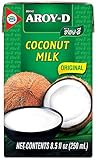
Aroy-D Coconut Milk, 13.5 oz
Full-fat coconut milk with cream on top, as this page recommends for khao soi broth. Skip the lite versions.
View on Amazon
Craft Wok Flat Hand Hammered Carbon Steel Pow Wok, 14 Inch Flat Bottom
Pad thai, pad see ew and drunken noodles are all high-heat wok dishes, and a wok that holds heat keeps the noodles from steaming. This listing is a hand-hammered, flat-bottom carbon steel wok (15 gauge, 1.8 mm) with a wooden handle and a steel helper handle.
View on Amazon
Large 8 Inch Thai Granite Mortar and Pestle
Thai kitchens traditionally pound curry pastes and chili-garlic bases in a deep granite mortar, from a homemade khao soi paste to the garlic and chilies for drunken noodles. This listing is a solid granite, 8-inch Thai-style mortar with a large pestle.
View on Amazon
Browse more related items
Opens Amazon · affiliate links